40 under 40

Take 10 seconds to nominate a colleague, mentee or friend for our Forbes-style list. Must be under the age of 40 in 2026. Open to all maritime professions associated with naval architecture. See eligibility criteria. [hyperlinked].  


Nominate with LinkedIn profile 


JOIN TO ADVANCE

Renowned for the technical excellence of our events, publications and learning, we offer career pathways for naval architects and 16 associated professions [hyperlink to 16 professions].

join to influence

We cover everything from super yachts and green propulsion to warship resilience. Network 1-2-1 with top talent at our events or influence the maritime industry by joining one of our comittees.  

JOIN TO INNOVATE

We promote the interdisciplinary conversation at the heart of maritime innovation. Speak at our events, publish in our journals or simply join the discussion forums on our website.  

Not quite ready to join yet? 


?? HOW?? FILL IN EMAIL HERE AND SIGN UP WITH 1 CLICK 

DISCOVER

View All

>

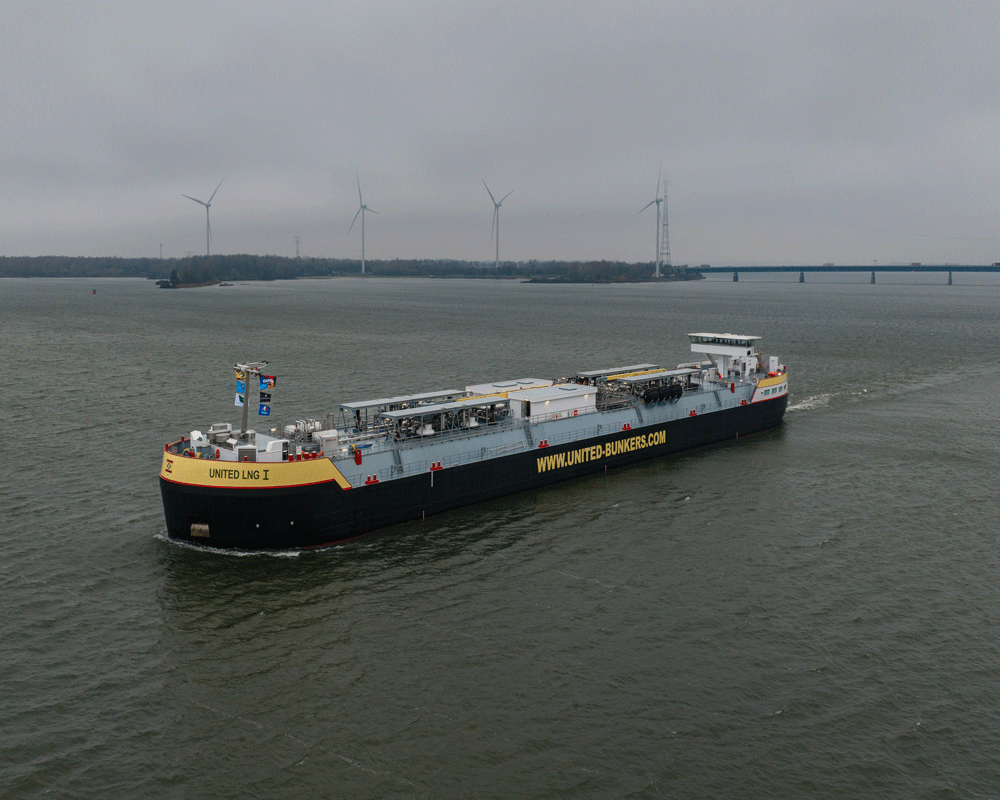
Somtrans' latest United bunker barge an international affair

Outfitted in the Netherlands, with a hull built in China, Somtrans’ new bunker barge, United LNG I, will help the company to extend its LNG bunkering capacity across various Belgian and Dutch seaports

Detail Link
>

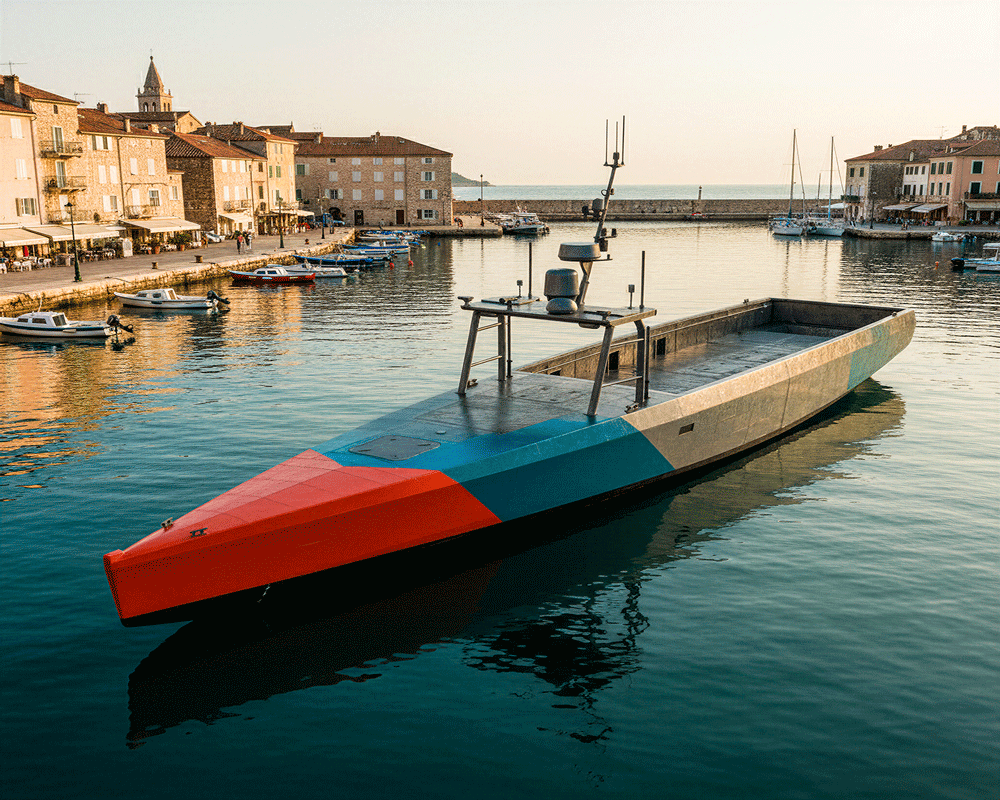
ZeroUSV's Oceanus17 USV builds on core values

The forthcoming Oceanus17 USV from UK-based ZeroUSV will incorporate most of the components and design features that characterised its earlier, smaller, Oceanus12 model, speeding up the design, engineering and build phases

Detail Link


???HOW??? what is the best slice to display TESTIMONIALS [LARGE photo + COLOURED BACKGROUND with LARGE quote imposed over it?]

  • Graduate Naval Architect [eg. Aidan Atkinson]

  • Prime Career [eg. Chris Nair]

  • Iconic Status and Giving back to Global Community [eg. Ian Buxton]

 
Global Events Connecting Maritime Leaders


Events


From flagship international conferences to specialist technical seminars, RINA events bring together experts, innovators, and professionals to share knowledge and shape the future of naval architecture.


Explore Upcoming Events

Events

Lorem ipsum dolor sit amet, consectetur adipiscing elit, sed do eiusmod tempor incididunt ut labore et dolore magna aliqua. Ut enim ad minim veniam, quis nostrud exercitation ullamco laboris nisi ut aliquip ex ea commodo consequat. Duis aute irure dolor in reprehenderit in voluptate velit esse cillum dolore eu fugiat nulla pariatur. Excepteur sint occaecat cupidatat non proident, sunt in culpa qui officia deserunt mollit anim id est laborum.

View All

CORPORATE PARTNERS

Somtrans' latest United bunker barge an international affair
ZeroUSV's Oceanus17 USV builds on core values

HEADING


Lorem ipsum dolor sit amet, consectetur adipiscing elit, sed do eiusmod tempor incididunt ut labore et dolore magna aliqua.


CLICK HERE

HEADING


Lorem ipsum dolor sit amet, consectetur adipiscing elit, sed do eiusmod tempor incididunt ut labore et dolore magna aliqua.


CLICK HERE

Lorem ipsum dolor sit amet, consectetur adipiscing elit, sed do eiusmod tempor incididunt ut labore et dolore magna aliqua. Ut enim ad minim veniam, quis nostrud exercitation ullamco laboris nisi ut aliquip ex ea commodo consequat. Duis aute irure dolor in reprehenderit in voluptate velit esse cillum dolore eu fugiat nulla pariatur. Excepteur sint occaecat cupidatat non proident, sunt in culpa qui officia deserunt mollit anim id est laborum.

Shipbuilding has always absorbed the technologies of its era, from iron hulls to diesel propulsion to computer-aided design. The current transition is no different in kind, but it is different in scale. Digitalisation and artificial intelligence (AI) are not simply new tools added to an existing process, they are reshaping the logic of how vessels are conceived, built and operated. For shipyards that move quickly, the competitive implications are substantial.


Machine learning algorithms can evaluate thousands of hull configurations, propulsion options and internal layouts in the time it would take a design team to assess a handful. Predictive analytics can flag structural risks and schedule delays before they materialise on the shop floor. The effect is not just faster work, but qualitatively better decisions, made earlier, when they are still cheap to act on.


The design imperative

Design typically accounts for 5 to 10% of a vessel’s total production cost, yet that investment determines roughly 85% of final construction expenditure and conditions nearly 90% of operational performance across the vessel’s lifetime. The early decisions made regarding hull form, structural approach, propulsion and energy systems cascade through every subsequent phase. Getting them right is not merely a design office concern, it is the single greatest lever available to improve project economics.


Fragmented or linear workflows are no longer adequate to manage this responsibility. The interdependence between hull, structure, mechanical systems, piping and electrical architecture means that changes in one domain propagate unpredictably through others. AI-assisted integrated design environments address this directly: optimising weight distribution, identifying interference risks between components, and running multiphysics simulations that analyse several interacting physical phenomena simultaneously. Engineers can explore a far larger solution space in the concept phase, which is where that exploration has the highest return.


The traditional spiral design model, iterating sequentially through concept, preliminary and detailed phases, struggles to accommodate this level of interdisciplinary integration. A model-based approach, closer to the V-model used in other advanced engineering disciplines, better reflects how modern design actually works: in parallel, with continuous validation against requirements rather than staged handoffs.


Dr Rodrigo Pérez Fernández is senior director for software engineering at Siemens Digital Industries Software
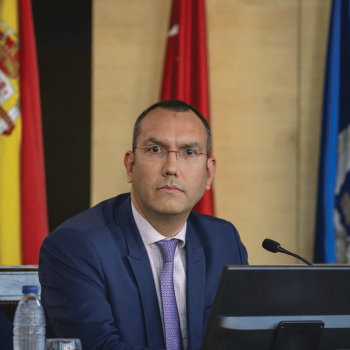
Rodrigo-Perez

Digital twins across the lifecycle

The digital twin has become a central concept in next-generation shipbuilding, although its value depends entirely on how it is implemented. A static geometric model is not a digital twin in any meaningful sense. The useful version is a live, data-enriched representation of the vessel that is updated throughout its lifecycle, first with design and simulation data, then with construction data, and finally with operational data from IoT sensors monitoring systems at sea.


This continuous feedback loop changes the economics of both construction and operation. Validating vessel behaviour under a wide range of conditions before the first steel plate is cut reduces costly late-stage design changes. Once in service, condition-based monitoring and predictive maintenance strategies, driven by real-time sensor data, can extend equipment lifespan and reduce unplanned downtime. Crucially, the operational data also feeds back into future design processes, improving the accuracy of the models used on the next vessel.


Underpinning all of this is what practitioners call the digital thread: a single, authoritative data environment that consolidates mechanical, electrical, piping and structural design into one system. Global teams work from the same model regardless of location or time zone, eliminating the version-control failures and conflicting drawings that have historically generated rework. The digital thread does not just accelerate the process; it changes its error profile, removing entire categories of mistake.


AI in the shipyard

The application of AI extends well beyond the design office. On the production floor, AI-driven planning systems optimise construction sequences, predict schedule risk and identify inefficiencies before they compound. Computer vision algorithms inspect welds and component alignment in real time, catching defects that human inspectors may miss under production-line conditions and that, if left undetected, become exponentially more expensive to rectify.


The integration of machine learning into computational fluid dynamics (CFD) simulations is particularly significant. CFD has long been a bottleneck in hull optimisation, computationally expensive and therefore limited in how many alternatives a design team can practically evaluate. Machine-learning-accelerated CFD dramatically shortens computation times, allowing iterative hull form optimisation across resistance, energy efficiency and fuel consumption without proportionally increasing engineering cost.


Augmented and virtual reality tools are changing workforce training and assembly guidance. Rather than relying on paper drawings or static digital files, technicians can work with spatially accurate overlays that guide complex assembly tasks, reducing errors and accelerating the learning curve for less experienced workers. As yards compete for skilled labour in a tight market, these tools have operational as well as quality implications.


Challenges that remain

None of this is straightforward to implement. Technological interoperability, getting legacy systems, supplier data and new platforms to communicate cleanly, remains a significant operational headache. Initial investment costs are substantial and the return on investment, while real, is distributed over years rather than visible in a single project. Cybersecurity risks increase as shipyard infrastructure becomes more connected. And workforce transformation requires sustained investment in training that many yards have historically under-resourced.


Regulatory compliance adds another layer of complexity. IMO emission reduction targets – 70 to 80% reduction in greenhouse gas emissions by 2040 and net zero by 2050 – create design requirements that did not exist a decade ago. Meeting those targets while managing cost and schedule pressure demands exactly the kind of multi-variable optimisation that AI tools are best suited to support. But it also requires regulatory frameworks to keep pace with the technologies being adopted, which is not always the case.


Product Lifecycle Management solutions have proven their value in managing the data complexity associated with these challenges. Yards that have centralised their data environments report improved resilience against supply chain disruptions, better customisation capability for client requirements, and more reliable planning processes. The pandemic-era supply chain failures accelerated adoption in a number of cases, demonstrating that digital integration is not just a competitive advantage but an operational necessity.


The direction of travel

The convergence of naval engineering and AI is not a future prospect – it is already visible in yards across Europe, Asia and the Americas. Digital twins are reducing construction time and cost. AI is cutting material waste and catching operational issues before delivery. Simulation tools are informing maintenance planning in military and commercial contexts alike. The technology is available; the differentiating variable is the organisational will and capability to deploy it effectively.


The next step in this evolution is the genuinely paperless vessel – not just a ship designed without drawings, but one operated and maintained through precise digital records, live system data and AI-supported decision-making throughout its service life. That is a more significant transformation than the industry has seen in generations, and the yards that position themselves for it now will have an advantage that compounds over time.


For naval architects, this shift redefines the scope of the discipline. The skills required to design a hull remain essential; the skills required to model its behaviour in a connected digital environment, and to interpret what that model tells you, are becoming equally so. The best engineering judgement has always been informed by the best available data. The change is that the data is now better, faster and more comprehensive than anything the industry has previously worked with.


This article appeared in Features, TNA Mar/Apr 2026

American shipbuilder Davie Defense has been awarded a contract by the United States Coast Guard to construct five Arctic Security Cutters (ASC), a new class of polar icebreaker intended to strengthen US presence in the High North. The award, announced in early 2026, forms part of a wider programme of up to 11 vessels authorised by Presidential Memorandum and represents one of the most significant US polar shipbuilding contracts in a generation.


The ASC is a substantial vessel: 99.9m in length, 21m in beam, displacing 9,000tonnes at normal operating draught of 7m. Ice Class PC3 rated, she is designed to maintain 3knots through 1.5m of ice. A diesel-electric propulsion system delivers 22MW of total installed power through two azimuth thrusters of 6.5MW each, supplemented by two 1.3MW bow thrusters, generating a bollard pull of 150tonnes.


Two independent engine rooms provide redundancy critical for operations in remote polar waters. Top speed is 16knots, with a range exceeding 6,500nm at 12knots in normal operating mode, extending beyond 12,000nm in high endurance configuration at deeper draught.


Endurance is up to 60 days, with accommodation for up to 124 crew and passengers. Mission payload capacity stands at 650m2 of covered and uncovered main deck space, capable of carrying up to 17 TEU, ground vehicles, unmanned systems and boats. The vessel also carries a helicopter platform and hangar sized for the MH-60 and UAVs.


The design draws on a proven platform with seven previous variants delivered from Helsinki Shipyard, accumulating a combined 85 years of winter operation in Arctic regions. One vessel from the existing fleet has transited the Northeast Passage unescorted in 8.5 days, a data point that speaks directly to the platform’s operational credibility in the conditions the Coast Guard requires.


The programme’s construction strategy is split across two countries. To meet the accelerated delivery schedule, the first two hulls will be built at Helsinki Shipyard in Finland, a sister facility within the UK-owned Inocea maritime group, targeting delivery of the inaugural vessel in 2028. The remaining three cutters will follow at Davie’s facilities in Galveston and Port Arthur, Texas, yards acquired from Gulf Copper & Manufacturing in 2025 and bringing over 75 years of Gulf Coast fabrication experience.


The rationale for opening the programme in Finland is that no active American yard has the icebreaker construction expertise needed to hit the schedule. The technology transfer dimension is therefore the most industrially significant aspect of the contract.


US shipbuilders will work alongside Helsinki’s specialists during the Finnish builds to develop the domestic competency needed for series production in Texas. It is an ambitious timeline, and whether Galveston and Port Arthur can absorb that knowledge base within the compressed window of the first two hulls will be the programme’s defining industrial challenge.


The strategic impetus is clear. Russia operates the world’s largest icebreaker fleet, including nuclear-powered vessels capable of year-round polar transit, while China has been steadily expanding its polar capabilities.


The United States has operated with a critically thin polar fleet for decades, and the Presidential Memorandum authorising the ASC programme reflects a belated but determined effort to address that deficit.


Davie Defense sits within Inocea, a privately held British marine industrial group with operations across the US, Canada and Finland. The Coast Guard’s decision to award to a group with operationally proven icebreaker heritage, rather than a domestic yard learning the discipline from scratch, reflects the urgency of the delivery timeline.


With Arctic competition intensifying and the Polar Security Cutter programme still unresolved, Washington needed a credible near-term answer. The ASC’s specifications and its platform’s track record suggest the design is capable of providing one. Whether the industrial strategy can match the vessel’s ambition will become clear as the first hull takes shape in Helsinki.


Kai Skvarla, CEO of Davie Defense, said: “We’re deeply honoured by this vote of confidence. We can’t wait to get started on delivering mission-ready cutters to our valued US Coast Guard partner. By anchoring construction in Texas, while drawing on Helsinki Shipyard’s proven icebreaker expertise, we can deliver the ASCs to meet the Coast Guard’s operational needs in the world’s harshest environments.”


This article appeared in In depth, TNA Mar/Apr 2026


ARCTIC SECURITY CUTTER STATISTICS
Length 99.9m
Breadth 21m
Draught 6.5m-7.9m
Normal operation mode 7m draught
High endurance/max cargo mode 7.6m draught
Displacement 9,000tonnes
Ice Class PC3 1.5m ice@3knots. Breaks ice 5ft thick @3knots ahead and astern
Speed 16knots
Range 6,500+nm @12knots, normal operational mode; 12,000+nm @12knots, high endurance mode
Endurance up to 60days
Crew/PAX max 124
Machinery Diesel-electric total installed power 22MW, two independant engine rooms
Propulsion Azimuth thrusters (2x 6.5MW), bow thrusters (2x 1.3MW), bollard pull 150tonnes
Seakeeping Roll reduction tanks for roll damping
Helicopter Platform and hanger for MH-60 and UAVs
Mission payload capacity 650m2 covered/uncovered main deck space; e.g. 17TEU, ground vehicles, UXVs, boats
Large deck cranes Loading and unloading; launch and recovery
Enclosed reconfigurable mission space e.g. for medical treatment, disaster relief, vehicle transport, special mission equipment


There is a temptation, amid the complexity of global shipping regulation and the slow grind of intergovernmental negotiation, to conclude that the maritime sector’s decarbonisation agenda has stalled. That temptation should be firmly resisted. The wind has not gone out of the sails of maritime decarbonisation, and those who work in wind propulsion are among the clearest proof of it.


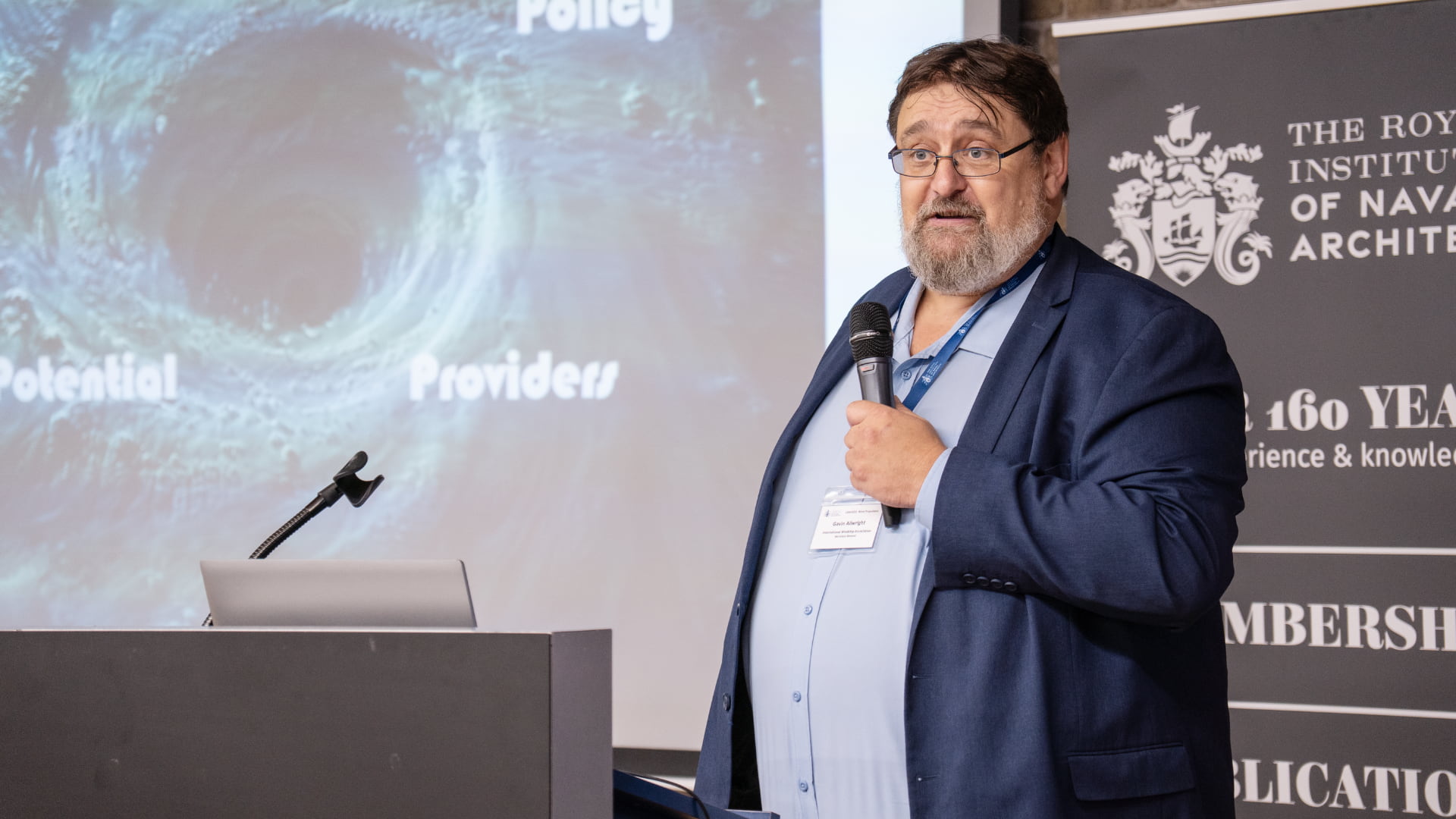
That was the central message I brought to the Wind Propulsion Conference, hosted jointly by the International Windship Association and the Royal Institution of Naval Architects in February. Speaking to an audience of naval architects, operators and technology developers, people who have committed careers and capital to the practical deployment of wind-assisted propulsion, I wanted to make one point above all others: progress continues, and we must maintain our course.


The IMO’s World Maritime Day theme for 2026 and 2027, ‘From Policy to Practice: Powering Maritime Excellence’, captures precisely the challenge and the opportunity. It is not enough to have agreed ambitious targets. The real work lies in turning collective regulatory decisions into real-world results that deliver tangible benefits for the sector and for the planet. No single organisation can do that alone. It requires administrations, classification societies, naval architects, shipowners, operators and individual mariners all pulling in the same direction.


Wind propulsion sits squarely within that ‘policy to practice’ agenda. It is a mature, cost-effective solution to reducing greenhouse gas emissions from international shipping and, crucially, it is available today. Not in 10 years’ time. Not in five years. Now.


The regulatory framework that underpins this is already well established. For more than a decade, IMO has developed and strengthened a suite of energy efficiency standards – the Energy Efficiency Design Index, the Energy Efficiency Existing Ship Index, the Carbon Intensity Indicator, and the Ship Energy Efficiency Management Plan – that have delivered concrete results.


Taken together, these measures have reduced the carbon intensity of international shipping by more than 38%, compared with 2008 levels. Ships today emit roughly 38% less CO₂ for the same transport work than they did at the start of this century. That is a significant achievement, and one that is too often overlooked in debate dominated by what remains to be done.


Market data reinforces the direction of travel. According to recent figures from Clarksons Research, nearly half the global fleet, 47% of world tonnage, is now fitted with at least one energy-saving technology. The trend towards further uptake is clear and accelerating. Wind propulsion technologies are part of that picture, and the industry’s investment in them continues to grow.


I must be clear on one point: IMO is technology neutral. The Secretariat does not promote or discourage any particular solution. There is no silver bullet and no one-size-fits-all pathway. Multiple routes to decarbonisation will coexist, and that is as it should be. What the regulatory framework must do, and what it is actively being designed to do, is ensure that all fuels and technologies are treated fairly and consistently, based on their well-to-wake emissions.


This is where wind propulsion faces both an opportunity and a challenge. In January 2026, the IMO’s Sub-Committee on Ship Design and Construction developed a draft safety workplan for greenhouse gas-reducing technologies, explicitly including wind propulsion. That workplan will go to the Maritime Safety Committee for approval in May 2026. It marks an important step: the formal integration of wind technologies into IMO’s safety framework, providing the regulatory clarity that owners and operators need to invest with confidence.

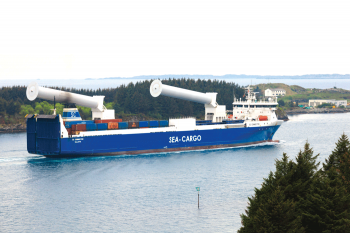
SC Connector has Norsepower Rotor Sails (image: Alamy)

TNA MA26 Seaconnector-Norsepower-rotor-sails Alamy


On the regulatory horizon, the picture is more complex. Discussions on the next set of measures under the IMO Net-Zero Framework were adjourned last October. This was not a retreat from ambition. The commitment among Member States and industry to global regulation remains strong. But it created additional time, and that time is being used. MEPC 84, scheduled for April 2026, will continue discussions on the way forward, including the greenhouse gas fuel intensity (GFI) reduction requirements that will form the core of the next regulatory package.


Within that work, the development of GFI Calculation Guidelines is giving due consideration to the inclusion and fair treatment of wind propulsion, a recognition that its contribution to fuel saving must be properly accounted for if owners are to have the certainty they need. Contributions from the International Windship Association have been genuinely valuable here, helping to shape how the GFI will function in practice. That kind of direct industry engagement with the regulatory process is exactly what is needed.


Yet there is a shadow over the progress. Despite the improvement in carbon intensity, total fuel consumption by ships has remained broadly stable in recent years. Absolute greenhouse gas emissions have not yet declined significantly. Efficiency gains are being absorbed by growth in trade and fleet size. This is why the next regulatory package matters so much, and why inaction is not an option.


For naval architects and marine engineers, the message is one of both validation and urgency. The technologies you design, specify and integrate are not peripheral to the decarbonisation agenda, they are central to it. Wind propulsion, in particular, offers something rare in the energy transition: a proven, scalable, fuel-free reduction in emissions that can be retrofitted to existing vessels and designed into new ones. The regulatory framework is catching up. The market is moving. The only question is pace.


There may be diplomatic storms to navigate and regulatory mechanisms to refine, but the direction is set. We must maintain our course. The wind is with us.


This article appeared in Features, TNA Mar/Apr 2026

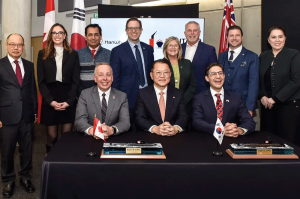
Hanwha Ocean is embedding its shipbuilding expertise directly into Canadian industry. The South Korean shipbuilder has signed a Memorandum of Understanding (MoU) with Ontario Shipyards and a trilateral Letter of Intent (LoI) with Ontario Shipyards and Mohawk College, establishing a technology transfer, industrial modernisation and workforce development framework in the Great Lakes region. The move is part of an effort to position itself for the Canadian Patrol Submarine Project (CPSP), one of the most consequential naval procurement decisions in Canadian history.


The CPSP aims to replace the Royal Canadian Navy’s ageing Victoria-class submarines with up to 12 modern vessels. Hanwha’s proposed platform is the KSS-III, a conventionally powered submarine designed for long-range operations and sustained presence at sea, including in Arctic environments, with a mature, production-ready design and lithium-ion propulsion.


The lithium-ion battery system offers significantly higher energy density than traditional lead-acid batteries. Combined with a fuel cell-based Air Independent Propulsion system, this advanced configuration enables the submarine to remain submerged for extended periods and sustain maximum underwater speed up to three times longer than submarines using lead-acid batteries. This system has enabled the KSS-III to set a world record for the longest continuous underwater operation by a conventional submarine. In addition, lithium-ion batteries provide longer life cycles and simplified maintenance, lowering both operational and sustainment costs.


Hanwha Ocean claims the programme would generate 200,000 job-years over 15 years and support approximately 15,000 jobs per year on average across a pan-Canadian industrial alliance of more than 100 companies.


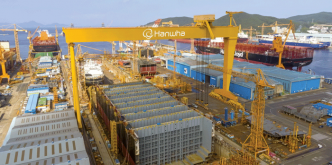
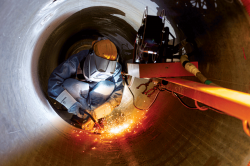
Left: Hanwha’s Geoje shipyard has built more than 1,400 vessels since 1973. Right: Mohawk College will teach welding

TNA-MA26 HANWHA-GEOJE-Shipyard-KSS TNA-MA26 MOHAWK-KSS-welding

The bilateral MoU commits Hanwha Ocean to structured technical and operational support across design and engineering, production planning, construction sequencing, quality management and smart-yard best practices. A near-term proof-of-concept is built into the agreement: Hanwha Ocean will support the design and construction of a training and recruitment vessel that Ontario Shipyards will begin building in 2026, providing a live demonstration of the partnership’s industrial intent rather than relying on declarations alone.


Workforce development will be addressed through the trilateral LOI, which establishes an embedded training hub at Ontario Shipyards’ Hamilton facility in partnership with Mohawk College. The college will lead programming across welding, electrical trades, marine mechanics, robotics and non-destructive evaluation. It is a curriculum mapped directly onto the skilled trades shortfall that has constrained Canadian shipbuilding for years.


Apprenticeship pathways will be integrated with production schedules, with applied research in automation and digital manufacturing on the agenda too. Hanwha Ocean will contribute technical advisory support and access to its global industrial networks to align training with international standards. 


Both documents contain conditional language tying further Hanwha investment, including a dedicated training centre and expanded supply chain engagement, to the award of the CPSP contract.

Front row, from left: Paul Armstrong, president of Mohawk College, Hee-cheul Kim, president and CEO of Hanwha Ocean, and Shaun Padulo, president and CEO of Ontario Shipyards, pictured with other attendees (back row) after signing a Letter of Intent

TNA-MA26 HANWHA-CANADA-LoI-signing


Hanwha has been active across Canada, with Quebec’s minister of international relations, Christopher Skeete, visiting the Geoje shipyard in February, and Canadian yard leaders separately touring the facility to discuss collaboration and MRO opportunities. Hanwha’s Geoje shipyard covers 5km2, employs more than 31,000 people and has delivered more than 1,400 vessels since 1973, including submarines and surface combatants for the Republic of Korea Navy.


Ontario Shipyards, the largest ship repair and construction company on the Great Lakes, now has facilities at Hamilton, Port Weller and Thunder Bay.


The combination of Hanwha’s production systems and Ontario’s existing infrastructure represents a credible industrial base, although execution of the knowledge transfer at the pace and depth the CPSP would require remains the programme’s defining test.


This article appeared in In depth, TNA Mar/Apr 2026

Lloyd’s Register (LR) has verified the sea trials performance assessment methodology used by GT Wings for its AirWing Jet Sail system. This provides an independent stamp of approval for the way the company measures fuel and emissions savings from its wind-assisted propulsion technology.


Announced at RINA’s Wind Propulsion Conference, the verification follows nearly 10 months of commercial operation of a 20m AirWing unit onboard Vectis Progress, a general cargo vessel operated by Carisbrooke Shipping. Installed in March 2025, the system has accumulated service experience across various routes and conditions, including North Atlantic winter passages, Great Lakes transits and Caribbean voyages.


Lloyd’s Register confirmed that GT Wings’ methodology aligns with recognised industry standards, including ISO 19030, and ITTC performance analysis practices, and that the approach used to isolate and quantify wind propulsion benefits is technically sound for in-service evaluation.


Andrew Hurford, senior specialist at Lloyd’s Register, said that independent verification of such methodologies is essential to building confidence in emerging maritime technologies.


As wind-assisted propulsion moves towards broader commercial adoption, the ability to demonstrate performance through independently verified, standardised methods is increasingly important for shipowners, charterers and project financiers weighing the business case for such systems. GT Wings said that data collection and analysis from Vectis Progress will continue as part of its ongoing validation programme.


Liam Campbell, chief commercial officer at GT Wings, said: “From the start, our vision has been to drive the transition through measurable, data‐driven performance. Lloyd’s Register’s verification confirms our alignment with international standards and validates that our performance predictions are grounded in real‐world evidence. It is an important step toward scaling wind‐assisted propulsion across global shipping and strengthening confidence in this technology as a viable pathway to reducing carbon emissions.”


This article appeared in News, TNA Mar/Apr 2026

The Grimaldi Group has taken delivery of Grande Michigan, the eighth ammonia-ready pure car and truck carrier (PCTC) in its fleet, from China Merchants Heavy Industries Jiangsu. Built to 220m in length with a beam of 38m, a gross tonnage of 93,145 and a service speed of 18knots, the vessel continues a fleet renewal programme that has established Grimaldi as one of the more technically progressive operators in the automotive shipping sector.


Across its 14 decks, Grande Michigan has a maximum capacity of 9,000 car equivalent units, with stowage arrangements capable of accommodating battery electric vehicles alongside those running on conventional fuels, a flexibility that has become a commercial requirement as the automotive sector’s transition to electrification continues at uneven pace across different markets.


The vessel is fitted with a gate rudder, a configuration first introduced to the PCTC sector on Grande Shanghai, the lead vessel of this series, delivered in July 2025, and now standard across the class. Developed originally by Kuribayashi Steamship in Japan and licensed globally by Wärtsilä, the arrangement positions two foil-shaped blades symmetrically either side of the propeller centreline. It functions simultaneously as a post-swirl energy recovery device, capturing rotational energy from the propeller slipstream that would otherwise be lost, and as a conventional steering system, with the claimed benefit of improved low-speed manoeuvrability at the automotive terminals at which the vessel will regularly call.


Grimaldi claims a 50% reduction in fuel consumption compared with earlier-generation car carriers, attributing the figure to a package of efficiency measures. These include an air lubrication system reducing frictional resistance at the hull-water interface, a silicone-based foul-release hull coating, and 2,500m2 of solar panels across the upper decks. Smart building management systems govern ventilation and air conditioning loads to reduce hotel power demand. The 50% figure is presented without a defined baseline vessel or operational condition and should be read as a comparative design estimate rather than a demonstrated in-service figure.


The main engine is electronically controlled and fitted with an exhaust gas cleaning system to limit sulphur oxide and particulate matter output. Selective catalytic reduction maintains nitrogen oxide emissions below IMO Tier III limits.


A lithium-ion battery energy storage system with a combined capacity of 5MWh supports onboard power management. The vessel is also fitted for cold ironing, enabling zero-emission port operations wherever shore power infrastructure is available, a capability of growing relevance as EU regulations extend onshore power supply obligations at European terminals.


Grande Michigan has received the Ammonia Ready notation from Italian classification society RINA, confirming that her structural arrangements, piping routing, ventilation provisions, and safety systems have been designed to facilitate future conversion to ammonia-fuelled propulsion without major structural intervention. The notation reflects the industry’s broader effort to preserve conversion optionality on newbuilds, given the current immaturity of ammonia bunkering infrastructure and the unresolved challenges surrounding the fuel’s toxicity in a shipboard environment.


Additional RINA notations include Green Plus, Green Star 3, Comfort Vibration, and Comfort Noise Port. The Comfort notations address habitability standards, a consideration of some weight on a vessel that will operate on a continuous deep-sea rotation.


Grande Michigan departed on her maiden voyage from Taicang, China, the commercial loading port proximate to the CMHI Jiangsu yard, carrying more than 7,000 cars and vans alongside more than 100 rolling units including heavy vehicles, MAFI trailers, and project cargo, bound for Mediterranean ports on Grimaldi’s Asia–Europe service.


The delivery extends a newbuild programme that has seen Grimaldi take eight ammonia-ready PCTCs in relatively quick succession. Whether the efficiency package’s cumulative gains can be validated under operational conditions across varied load factors and seasonal routing will be of material interest to competitors and the wider automotive logistics market.


This article appeared in News, TNA Mar/Apr 2026

rtsilä Gas Solutions has been awarded a contract to supply cargo handling and fuel gas supply systems for two new LNG bunkering vessels currently under construction at Zhejiang Xinle Shipbuilding in China.


The vessels, each with a capacity of 20,000m³, will be owned by a Hong Kong-based shipowner. The order was booked in Q4 2025 and reinforces Wärtsilä Gas Solutions’ position as a leading systems integrator for small-scale LNG applications.


The contract covers a comprehensive systems package including LNG cargo handling and fuel gas supply equipment, full system engineering and design, and integrated control and monitoring of all cargo handling operations. This level of systems integration is critical in bunkering vessel design, where operational reliability and safety margins are paramount.


“The use of LNG is key in enabling a green shipping future,” said Barry Yang, general manager of sales China at Wärtsilä Gas Solutions, adding that the systems offer a flexible and proven solution supporting operational efficiency for vessels bunkering LNG-fuelled ships.


The vessels will fill an increasingly important role in the marine energy transition. LNG continues to be adopted as a bridging fuel between conventional diesel and future zero-carbon alternatives, driving demand for purpose-built bunkering infrastructure.


Equipment delivery to the Zhejiang Xinle yard is scheduled to commence in Q4 2026, with both vessels expected to enter service during the latter half of 2027.


The number of LNG-fuelled ships in operation doubled between 2021 and 2024, with a record number of deliveries (169) in 2024, according to DNV, a Norway-based independent assurance and risk management provider. By the end of last year, 641 LNG-powered ships were in operation. According to the orderbook, this number is expected to double by the end of the decade.


While the bunkering infrastructure for some alternative fuels remains underdeveloped, DNV said LNG bunkering is maturing, adding that the significant gap between LNG bunkering supply and demand is expected to widen over the next five years based on the orderbook.


This article appeared in News, TNA Mar/Apr 2026

The UK’s Marine Accident Investigation Branch (MAIB) has appointed Rob Loder as its new chief inspector of marine accidents, succeeding Andrew Moll OBE, who retired earlier this month after 21 years at the organisation.


Loder’s career began at sea: after training in heavy engineering ashore, he joined the Merchant Navy, completed a rating to officer conversion course, and rose to chief engineer across a varied fleet, including oil tankers, cable ships, ferries and superyachts. He subsequently moved into fleet management, ship repair, ship build supervision and project management before a period of industry consultancy.


His experience spans design-adjacent disciplines such as ship-build supervision and project management alongside deep operational knowledge. Loder joined MAIB in 2020 as an inspector, progressing to principal inspector and then deputy chief inspector before his current appointment. He is a chartered engineer, marine engineer and Fellow of IMarEST.

Rob Loder, newly appointed chief inspector of MIAB

TNA-MA26 RobLoder-ChiefInspectorMAIB


Headquartered in Southampton, MAIB was established in 1989 following a recommendation from the public inquiry into the Herald of Free Enterprise disaster in 1987, when a ro-ro passenger ferry capsized off Zeebrugge with the loss of 193 lives. It is authorised to investigate all maritime accidents in UK waters and accidents involving UK-registered ships worldwide.


In 2024, MAIB recorded 1,631 reports of accidents involving UK vessels worldwide or vessels within UK coastal waters, with 1,753 vessels involved.


Loder said: “Working alongside the outstanding MAIB team, I am committed to ensuring our work continues to drive meaningful improvements in safety across the maritime sector.”

This article appeared in News, TNA Mar/Apr 2026

Ocean transportation company Sallaum Lines has shifted toward ordering LNG newbuilds, following initial reliance on second-hand vessels for its PCTC fleet, as part of an ambitious goal to achieve net-zero operational emissions by 2050.

“The decision to order newbuilds was driven by technical and environmental performance objectives, not by cost alone,” Charbel Khoueiry, maritime sustainability manager, says. “Sallaum Lines required vessels that could fully comply with IMO Tier III, the IGF Code, EEDI Phase 3 and forthcoming CII targets, while integrating dual-fuel LNG propulsion, electric vehicle-ready cargo decks and advanced hydrodynamic features.

“These parameters would have been impossible to achieve through retrofit without extensive structural and machinery compromises. Newbuilds designed from the keel up provide optimised hull efficiency, lower emissions and long-term lifecycle compliance with current and anticipated regulations.”

Consequently, Sallaum Lines is adding six large, dual-fuel LNG PCTC newbuilds to its fleet. The first duo in the series – the 199.9m, Ocean Breeze and Ocean Explorer – were designed by Shanghai Merchant Ship Design & Research Institute (SDARI) and constructed by Fujian Mawei Shipyard, with Ocean Breeze delivered in Q3 2025 and Ocean Explorer scheduled for delivery in Q1 2026. A further four PCTCs, designed by Deltamarin are currently under construction at China Merchants Heavy Industries (CMHI) and scheduled for delivery throughout 2026-2027.

Ocean Breeze runs on LNG, MGO and VLSFO, and can operate in LNG-only, fuel oil-only or dual-fuel modes, depending on prevailing voyage or port conditions. Khoueiry explains: “We selected LNG because it offers a proven, commercially available and technically mature, low-emission pathway that complies with current environmental regulations. It eliminates SOx and PM, reduces NOx by up to 80% through exhaust gas recirculation [EGR] and lowers CO2 by approximately 20–25%.”

At a continuous sailing speed of 17knots, the vessel is estimated to achieve a range of approximately 12,600nm when operating on LNG, 3,000nm on MGO and 7,800nm on VLSFO. Taken together, the vessel’s total potential sailing range with full tank capacity is approximately 23,400nm.

The powertrain aboard Ocean Breeze incorporates a MAN B&W main engine, rated 12,614kW at 99rpm, and three auxiliary Wärtsilä 9L20DF engines, rated 1,613kW apiece, in addition to a 200kW emergency generator. “All machinery is installed in an aft engine room with segregated LNG and ventilation spaces, in accordance with the IGF Code and ABS requirements,” says Khoueiry.

The ship is also fitted with two Type C LNG storage tanks, each featuring the capacity for about 1,768m3 of LNG.

LNG is vaporised and supplied to the engines via a dual-pressure fuel gas supply arrangement, providing high-pressure gas at approximately 315bar to the main engine and low-pressure gas to the dual-fuel generator engines.

The PCTC is equipped with a single fixed-pitch propeller and a semi-balanced twisted rudder with bulb, developed by SDARI to enhance propulsive efficiency. The vessel is designed for a service speed of 18.5knots at design draught, allowing for a 15% sea margin.

The ship was classed by ABS, achieving full IGF, ENVIRO and operational notations. “Safety features include gas-tight LNG spaces, independent ventilation, double-walled gas piping, ESD systems, CO₂ fire protection and EV fire zones with continuous detection for the hydrogen/CNG vehicle areas,” says Khoueiry. This was accompanied by crew training in LNG handling, carried out in line with IMO/IGF Code competence standards.

As another green bonus, the ship has been treated with Chugoku Marine Paints’ SEAFLO NEO SLZ low-friction antifouling coating, developed to keep the hull continuously smooth, reducing hydrodynamic drag and fuel consumption and enabling higher vessel speeds.

After decades of building purpose-designed and built ships that sometimes failed to meet requirements and often experienced significant cost overruns, the US Navy is pioneering a new approach to shipbuilding with its Landing Ship Medium (LSM) programme, an approach it hopes will enable it to quickly bring large numbers of newbuilds into service on time and on budget.

US Navy secretary John Phelan said the new approach adopted for the LSM procurement would be based on a “non-developmental design” that will not require significant adaptation.

The design selected by the Naval Sea Systems Command (NAVSEA), Damen Shipyards Group’s LST100, has already been adopted by the Royal Australian Navy, for whom eight examples will be built in Australian yards, and will, said the Naval Sea Systems Command, “enable rapid fielding of this urgently needed capability… and shorten acquisition timelines”.

The LST100 was selected after a ‘side-by-side’ analysis of existing designs that had the potential to meet the LSM requirement. NAVSEA’s analysis of the designs was informed by technical data packages, augmented by hands-on ship visits. Up to 35 LSMs will now be built at US yards that will compete with one another for contracts to build the landing ships.

Speaking at the time that selection of the Damen design was announced, chief of naval operations Admiral Daryl Caudle said: “A year ago, the US Navy cancelled the LSM request for proposals, when the conceptual design produced bids that were simply unaffordable. We applied common sense, went back to basics, and reassessed the programme.

“We identified existing, proven designs that meet the concept of operations requirements, and then scrutinised them for producibility.”

Secretary Phelan said with the LSM decision the US Navy is “fundamentally reshaping how the Navy builds and fields its fleet”, making what he called an “operationally driven and fiscally disciplined choice”. He said with the LSM the US Navy has – for the first time – adopted what he described as a “build to print approach” that drives down cost, schedule and technical risks.

Commandant of the Marine Corps General Eric Smith said: “For the Marine Corps, the LST100 will provide an organic littoral capability in the Indo Pacific and around the world. It will provide us with a critical, inter-theatre manoeuvre asset that is able to embark and transport marines, weapons, supplies and equipment, without requiring access to a pier.”

The Secretary of the Navy described the LST100 as a 4,000tonne design, with a range of more than 3,400nm “that gives us the right balance of affordability, capability and speed”. General Smith said the LST 100’s cargo capacity, helicopter capacity and crane “make it an excellent choice for the Marine Corps’ requirement of no less than 35 medium landing ships to support naval expeditionary forces.”

Admiral Caudle said the US Navy “is incorporating a disciplined set of class standard equipment, so that the ships will be maintainable, repairable and able to meet operational availability targets”.

In July 2025, Damen received a technical data package award from NAVSEA for the LST100, and that design has now been selected as the basis for the LSM, all of which will be constructed at American yards.

The Dutch company describes the LST100 as 100.68m in length with a beam of 16m and a draught of 3.58m. Able to support a wide range of operations, with the ability to transport personnel, vehicles, equipment and cargo, the design has accommodation for 282 Marine Corps personnel.

The vessel can transit at speeds of up to 14knots, with an endurance speed of 10knots, and a range of up to 7,530nm. The LST100 is also a highly flexible unit, with a modular design that enables straightforward adaptation and upgrade without compromising the benefits of standardisation.

December 2025 saw Belgian shipowner Somtrans christen its latest delivery, the estuary-class bunker barge United LNG I, in a ceremony hosted at the Port of Antwerp. The family-run company plans to put the barge into service in February 2026, where it will be used to fulfil growing demand for LNG bunkering in various Belgian and Dutch seaports, a spokesperson for Somtrans confirms.

The 135m x 21.46m vessel has been designed for both inland waterways and coastal service up to the Port of Zeebrugge. The barge’s construction was an international affair: the hull was built in China and then transported to the Netherlands for outfitting. Here, RensenDriessen, a shipyard-independent, Dutch newbuild projects specialist, acted as the main contractor, with Heusden-based TeamCo Shipyard overseeing tank integration, engineering and final outfitting of the vessel.

Italian engineering firm Gas and Heat, which specialises in designing and building cryogenic tank systems and LNG-fuel supply systems for maritime applications, supplied the barge’s eight cylindrical, single-walled Type C LNG tanks. Each LNG tank features a capacity of 1,000m3 and has been engineered to store this alt-fuel at -165°C, and with a boil-off rate of 0.30% per day.

The tanks are pressure-rated 400kPa. According to Somtrans, the tanks will remain closed during operations, monitored by pressure and temperature sensors, and will only require direct internal checks during the barge’s five-year class inspections. The vessel’s eight cargo pumps are each rated 165m3 per hour. The barge’s LNG bunker arm measures 25m in length and has a capacity of 920m3 per hour.

Somtrans says that the completion of United LNG I ndicates how the model of hull construction in China, followed by final outfitting in Western Europe, is becoming increasingly common in European shortsea shipping.

Wim Driessen, MD of RensenDriessen, comments: “By combining efficient hull construction in China with local outfitting in Western Europe, we are now offering our hull-building expertise more widely to the shortsea shipping segment. These cylindrical LNG tanks take this project into new territory: integrating them at this scale is unique. It shows what is possible when a shipowner, contractor and yard work as one team.” TeamCo Shipyard MD Marcel Zweers adds: “This was not a standard build. The LNG systems, the tank integration, the bunkering equipment, all demanded precision.”

United LNG I features a moulded depth of 7.5m and a draught of approximately 4m, and is arranged to accommodate a crew of six. Onboard tank capacities include: 5,113m3 of ballast water; 30m3 of fresh water; and approximately 39.7m3 of fuel oil, split between one fore tank (1.7m3) and two aft tanks (19m3 each). This latter arrangement reflects the positioning of the engines, which include four MAN Rollo LNG models, each rated 525kW, at the fore of the vessel and two 800kW diesel generators and a single 117kW auxiliary diesel generator at its aft. The barge also carries two battery packs, each rated 200kWh.

Propulsion-wise, the barge incorporates two main azimuth thrusters, rated 1,305kW apiece and featuring propeller diameters of 1,900mm. These are complemented by a pair of 550kW bow thrusters.

Somtrans is now expecting delivery of a second sister barge, also under build at TeamCo Shipyard, aligned to plans to extend its bunkering capacity within the Amsterdam-Rotterdam-Antwerp (ARA) region. “This comes as LNG bunker demand in Northwest Europe continues to expand, driven by new dual-fuel tonnage in the container, tanker, bulk, ro-ro and cruise segments,” the Somtrans spokesperson explains. “The global fleet of LNG-fuelled vessels continues to grow by double digits each year, driven by owners seeking cleaner operations and reliable access to alternative fuels.”

TeamCo Shipyard’s Zweers says that outfitting of the forthcoming sister, United LNG II, will commence in March 2026.

Already under construction at Manor Marine, with a scheduled launch date of June 2026, the first Oceanus17 will “have a flavour of the military about it, but be very much a dual-role vessel,” Matthew Ratsey, founder and MD of ZeroUSV, says. “The feedback we’re getting from wind farm service operators is that they want to increasingly use remote-operated vehicles [ROVs], and the Oceanus17 can function as a ‘mothership’ to launch and recover ROVs, and as a ‘comms node’, tracking the ROVs’ positions when they are deployed – which has massive benefits in not losing a single ROV.”

Ratsey adds that ZeroUSV was recently approached by a company that manages the offshore facilities for several energy majors, with a view to using a fleet of USVs to deliver post and spares to these sites, as a cost-efficient alternative to expensive helicopter hire. This is a task the forthcoming Oceanus17 could easily handle given its aft deck payload capacity of 4tonnes, Ratsey points out.

Oceanus17 will comprise an all-aluminium, 16.97m x 3.17m monohull with the ability to maintain range for more than 50 days.

One of ZeroUSV’s goals was to “compress traditional defence acquisition timelines”, where the journey from design to prototype can roll on for years, Ratsey notes. So, for the Oceanus17, ZeroUSV chose to use a ‘spiral development process’, accelerating the design, engineering and build phase by basing the new model heavily on the Oceanus12 – essentially treating the existing USV as a ‘building block’ for the newer, bigger model.

Ratsey elaborates: “We’ve taken most of the core engineering we used for the Oceanus12 – what we know works and is reliable – and asked ourselves, what is the biggest vessel we can build with this engineering package? This includes the engines, the batteries, the battery chargers and the generators used in the Oceanus12 – we designed enough capacity into those components the first time around, we can reuse them in the Oceanus17.”

Another benefit of the spiral development process is that, by using the same components as the Oceanus12, end users can utilise the same spares packages with the newer model. USV familiarisation is another bonus. The biggest boon, though, from a USV manufacturer’s perspective, is perhaps the ability to speed up necessary certification. Ratsey explains: “The fact that we’re using 95% of the same equipment from the Oceanus12 on the Oceanus17 means that, when we come to enter the Maritime and Coastguard Agency [MCA] Workboat Code 3 process, all our current mitigations and submissions are transferrable – they just apply to a slightly larger version of the vessel.”

The Oceanus17’s payload bay will measure 9m x 2.8m, and will have the capacity to accommodate a 20’ container, with power and data connection points. The USV will also feature Starlink and Iridium connectivity and will incorporate an autonomous software package provided by ZeroUSV’s long-term partner Marine AI – rated to level 4 autonomy, but future-proofed for further upgrades. In addition to the boat’s primary sensors, customers will be able to select FLIR thermal IP cameras and W-band HD radar, among other options.

While Manor Marine puts the USV together, working with materials and components pre-issued by ZeroUSV, an independent contractor will oversee the boat’s electrical fit-out. If all goes to plan, the Oceanus17 will be launched in time for this year’s Seawork expo, to be hosted in Southampton, UK between 9-11 June. Then, in July, the boat will be certified by MECAL to meet the MCA Workboat Code 3, Annex II requirements for uncrewed vessels and unlimited operations.

Frequently Asked Questions

Lorem ipsum dolor sit amet, consectetur adipiscing elit, sed do eiusmod tempor incididunt ut labore et dolore magna aliqua. Ut enim ad minim veniam, quis nostrud exercitation ullamco laboris nisi ut aliquip ex ea commodo consequat.

Tab1

Lorem ipsum dolor sit amet, consectetur adipiscing elit, sed do eiusmod tempor incididunt ut labore et dolore magna aliqua. Ut enim ad minim veniam, quis nostrud exercitation ullamco laboris nisi ut aliquip ex ea commodo consequat. Duis aute irure dolor in reprehenderit in voluptate velit esse cillum dolore eu fugiat nulla pariatur. Excepteur sint occaecat cupidatat non proident, sunt in culpa qui officia deserunt mollit anim id est laborum.

Tab2

Lorem ipsum dolor sit amet, consectetur adipiscing elit, sed do eiusmod tempor incididunt ut labore et dolore magna aliqua. Ut enim ad minim veniam, quis nostrud exercitation ullamco laboris nisi ut aliquip ex ea commodo consequat. Duis aute irure dolor in reprehenderit in voluptate velit esse cillum dolore eu fugiat nulla pariatur. Excepteur sint occaecat cupidatat non proident, sunt in culpa qui officia deserunt mollit anim id est laborum.

Frequently Asked Questions

Lorem ipsum dolor sit amet, consectetur adipiscing elit, sed do eiusmod tempor incididunt ut labore et dolore magna aliqua. Ut enim ad minim veniam, quis nostrud exercitation ullamco laboris nisi ut aliquip ex ea commodo consequat.

Tab1

Lorem ipsum dolor sit amet, consectetur adipiscing elit, sed do eiusmod tempor incididunt ut labore et dolore magna aliqua. Ut enim ad minim veniam, quis nostrud exercitation ullamco laboris nisi ut aliquip ex ea commodo consequat. Duis aute irure dolor in reprehenderit in voluptate velit esse cillum dolore eu fugiat nulla pariatur. Excepteur sint occaecat cupidatat non proident, sunt in culpa qui officia deserunt mollit anim id est laborum.

Tab2

Lorem ipsum dolor sit amet, consectetur adipiscing elit, sed do eiusmod tempor incididunt ut labore et dolore magna aliqua. Ut enim ad minim veniam, quis nostrud exercitation ullamco laboris nisi ut aliquip ex ea commodo consequat. Duis aute irure dolor in reprehenderit in voluptate velit esse cillum dolore eu fugiat nulla pariatur. Excepteur sint occaecat cupidatat non proident, sunt in culpa qui officia deserunt mollit anim id est laborum.

Tab3

Lorem ipsum dolor sit amet, consectetur adipiscing elit, sed do eiusmod tempor incididunt ut labore et dolore magna aliqua. Ut enim ad minim veniam, quis nostrud exercitation ullamco laboris nisi ut aliquip ex ea commodo consequat. Duis aute irure dolor in reprehenderit in voluptate velit esse cillum dolore eu fugiat nulla pariatur. Excepteur sint occaecat cupidatat non proident, sunt in culpa qui officia deserunt mollit anim id est laborum.

Tab4

Lorem ipsum dolor sit amet, consectetur adipiscing elit, sed do eiusmod tempor incididunt ut labore et dolore magna aliqua. Ut enim ad minim veniam, quis nostrud exercitation ullamco laboris nisi ut aliquip ex ea commodo consequat. Duis aute irure dolor in reprehenderit in voluptate velit esse cillum dolore eu fugiat nulla pariatur. Excepteur sint occaecat cupidatat non proident, sunt in culpa qui officia deserunt mollit anim id est laborum.

text one

Lorem ipsum dolor sit amet, consectetur adipiscing elit, sed do eiusmod tempor incididunt ut labore et dolore magna aliqua. Ut enim ad minim veniam, quis nostrud exercitation ullamco laboris nisi ut aliquip ex ea commodo consequat. Duis aute irure dolor in reprehenderit in voluptate velit esse cillum dolore eu fugiat nulla pariatur. Excepteur sint occaecat cupidatat non proident, sunt in culpa qui officia deserunt mollit anim id est laborum.

Somtrans' latest United bunker barge an international affair

December 2025 saw Belgian shipowner Somtrans christen its latest delivery, the estuary-class bunker barge United LNG I, in a ceremony hosted at the Port of Antwerp. The family-run company plans to put the barge into service in February 2026, where it will be used to fulfil growing demand for LNG bunkering in various Belgian and Dutch seaports, a spokesperson for Somtrans confirms.

The 135m x 21.46m vessel has been designed for both inland waterways and coastal service up to the Port of Zeebrugge. The barge’s construction was an international affair: the hull was built in China and then transported to the Netherlands for outfitting. Here, RensenDriessen, a shipyard-independent, Dutch newbuild projects specialist, acted as the main contractor, with Heusden-based TeamCo Shipyard overseeing tank integration, engineering and final outfitting of the vessel.

Italian engineering firm Gas and Heat, which specialises in designing and building cryogenic tank systems and LNG-fuel supply systems for maritime applications, supplied the barge’s eight cylindrical, single-walled Type C LNG tanks. Each LNG tank features a capacity of 1,000m3 and has been engineered to store this alt-fuel at -165°C, and with a boil-off rate of 0.30% per day.

The tanks are pressure-rated 400kPa. According to Somtrans, the tanks will remain closed during operations, monitored by pressure and temperature sensors, and will only require direct internal checks during the barge’s five-year class inspections. The vessel’s eight cargo pumps are each rated 165m3 per hour. The barge’s LNG bunker arm measures 25m in length and has a capacity of 920m3 per hour.

Somtrans says that the completion of United LNG I ndicates how the model of hull construction in China, followed by final outfitting in Western Europe, is becoming increasingly common in European shortsea shipping.

Wim Driessen, MD of RensenDriessen, comments: “By combining efficient hull construction in China with local outfitting in Western Europe, we are now offering our hull-building expertise more widely to the shortsea shipping segment. These cylindrical LNG tanks take this project into new territory: integrating them at this scale is unique. It shows what is possible when a shipowner, contractor and yard work as one team.” TeamCo Shipyard MD Marcel Zweers adds: “This was not a standard build. The LNG systems, the tank integration, the bunkering equipment, all demanded precision.”

United LNG I features a moulded depth of 7.5m and a draught of approximately 4m, and is arranged to accommodate a crew of six. Onboard tank capacities include: 5,113m3 of ballast water; 30m3 of fresh water; and approximately 39.7m3 of fuel oil, split between one fore tank (1.7m3) and two aft tanks (19m3 each). This latter arrangement reflects the positioning of the engines, which include four MAN Rollo LNG models, each rated 525kW, at the fore of the vessel and two 800kW diesel generators and a single 117kW auxiliary diesel generator at its aft. The barge also carries two battery packs, each rated 200kWh.

Propulsion-wise, the barge incorporates two main azimuth thrusters, rated 1,305kW apiece and featuring propeller diameters of 1,900mm. These are complemented by a pair of 550kW bow thrusters.

Somtrans is now expecting delivery of a second sister barge, also under build at TeamCo Shipyard, aligned to plans to extend its bunkering capacity within the Amsterdam-Rotterdam-Antwerp (ARA) region. “This comes as LNG bunker demand in Northwest Europe continues to expand, driven by new dual-fuel tonnage in the container, tanker, bulk, ro-ro and cruise segments,” the Somtrans spokesperson explains. “The global fleet of LNG-fuelled vessels continues to grow by double digits each year, driven by owners seeking cleaner operations and reliable access to alternative fuels.”

TeamCo Shipyard’s Zweers says that outfitting of the forthcoming sister, United LNG II, will commence in March 2026.

ZeroUSV's Oceanus17 USV builds on core values

Already under construction at Manor Marine, with a scheduled launch date of June 2026, the first Oceanus17 will “have a flavour of the military about it, but be very much a dual-role vessel,” Matthew Ratsey, founder and MD of ZeroUSV, says. “The feedback we’re getting from wind farm service operators is that they want to increasingly use remote-operated vehicles [ROVs], and the Oceanus17 can function as a ‘mothership’ to launch and recover ROVs, and as a ‘comms node’, tracking the ROVs’ positions when they are deployed – which has massive benefits in not losing a single ROV.”

Ratsey adds that ZeroUSV was recently approached by a company that manages the offshore facilities for several energy majors, with a view to using a fleet of USVs to deliver post and spares to these sites, as a cost-efficient alternative to expensive helicopter hire. This is a task the forthcoming Oceanus17 could easily handle given its aft deck payload capacity of 4tonnes, Ratsey points out.

Oceanus17 will comprise an all-aluminium, 16.97m x 3.17m monohull with the ability to maintain range for more than 50 days.

One of ZeroUSV’s goals was to “compress traditional defence acquisition timelines”, where the journey from design to prototype can roll on for years, Ratsey notes. So, for the Oceanus17, ZeroUSV chose to use a ‘spiral development process’, accelerating the design, engineering and build phase by basing the new model heavily on the Oceanus12 – essentially treating the existing USV as a ‘building block’ for the newer, bigger model.

Ratsey elaborates: “We’ve taken most of the core engineering we used for the Oceanus12 – what we know works and is reliable – and asked ourselves, what is the biggest vessel we can build with this engineering package? This includes the engines, the batteries, the battery chargers and the generators used in the Oceanus12 – we designed enough capacity into those components the first time around, we can reuse them in the Oceanus17.”

Another benefit of the spiral development process is that, by using the same components as the Oceanus12, end users can utilise the same spares packages with the newer model. USV familiarisation is another bonus. The biggest boon, though, from a USV manufacturer’s perspective, is perhaps the ability to speed up necessary certification. Ratsey explains: “The fact that we’re using 95% of the same equipment from the Oceanus12 on the Oceanus17 means that, when we come to enter the Maritime and Coastguard Agency [MCA] Workboat Code 3 process, all our current mitigations and submissions are transferrable – they just apply to a slightly larger version of the vessel.”

The Oceanus17’s payload bay will measure 9m x 2.8m, and will have the capacity to accommodate a 20’ container, with power and data connection points. The USV will also feature Starlink and Iridium connectivity and will incorporate an autonomous software package provided by ZeroUSV’s long-term partner Marine AI – rated to level 4 autonomy, but future-proofed for further upgrades. In addition to the boat’s primary sensors, customers will be able to select FLIR thermal IP cameras and W-band HD radar, among other options.

While Manor Marine puts the USV together, working with materials and components pre-issued by ZeroUSV, an independent contractor will oversee the boat’s electrical fit-out. If all goes to plan, the Oceanus17 will be launched in time for this year’s Seawork expo, to be hosted in Southampton, UK between 9-11 June. Then, in July, the boat will be certified by MECAL to meet the MCA Workboat Code 3, Annex II requirements for uncrewed vessels and unlimited operations.

Awards 2026


Nominate a colleague, a mentee or a friend for one of our prestiguous Naval Architecture Awards. Chosen by our Committees, the winners will be announced at our Annual Dinner attended by more than 300 maritime professionals, industry leaders and academics. Taking place on 28th May, this will be an evening of celebration at the historic De Vere Grand Connaught Rooms in London. 

Nominations deadline: on 31st December. Award categories include Innovation, Safety and Diversity.

Nominate Now