We advance your career through shared expertise and innovation. You influence the art and science of naval architecture. Join naval architects, maritime engineers and associated professionals in 140 countries.
Join RINA
Take 10 seconds to nominate a colleague, mentee or friend for our Forbes-style list. Must be under the age of 40 in 2026. Open to all maritime professions associated with naval architecture. See eligibility criteria. [hyperlinked].
"Ours is the generation facing challenges like decarbonization and autonomy. We don't have the solutions yet, but one thing is clear - collaboration will be key. At RINA, our mission is to advance top talent and create liquid networks between all maritime professions [hyperlink to 16 professions graphics] so interdisciplinary innovation can flourish."
Catriona Savage FREng, RINA President and BMT Programme Director
Join RINA
Renowned for the technical excellence of our events, publications and learning, we offer career pathways for naval architects and 16 associated professions [hyperlink to 16 professions].
We cover everything from super yachts and green propulsion to warship resilience. Network 1-2-1 with top talent at our events or influence the maritime industry by joining one of our comittees.
We promote the interdisciplinary conversation at the heart of maritime innovation. Speak at our events, publish in our journals or simply join the discussion forums on our website.
?? HOW?? FILL IN EMAIL HERE AND SIGN UP WITH 1 CLICK
From flagship international conferences to specialist technical seminars, RINA events bring together experts, innovators, and professionals to share knowledge and shape the future of naval architecture.
Explore Upcoming Events
Lorem ipsum dolor sit amet, consectetur adipiscing elit, sed do eiusmod tempor incididunt ut labore et dolore magna aliqua. Ut enim ad minim veniam, quis nostrud exercitation ullamco laboris nisi ut aliquip ex ea commodo consequat. Duis aute irure dolor in reprehenderit in voluptate velit esse cillum dolore eu fugiat nulla pariatur. Excepteur sint occaecat cupidatat non proident, sunt in culpa qui officia deserunt mollit anim id est laborum.
Lorem ipsum dolor sit amet, consectetur adipiscing elit, sed do eiusmod tempor incididunt ut labore et dolore magna aliqua.
CLICK HERE
Lorem ipsum dolor sit amet, consectetur adipiscing elit, sed do eiusmod tempor incididunt ut labore et dolore magna aliqua.
CLICK HERE


Lorem ipsum dolor sit amet, consectetur adipiscing elit, sed do eiusmod tempor incididunt ut labore et dolore magna aliqua. Ut enim ad minim veniam, quis nostrud exercitation ullamco laboris nisi ut aliquip ex ea commodo consequat. Duis aute irure dolor in reprehenderit in voluptate velit esse cillum dolore eu fugiat nulla pariatur. Excepteur sint occaecat cupidatat non proident, sunt in culpa qui officia deserunt mollit anim id est laborum.
Italy’s Fincantieri, one of Europe’s premier cruise shipbuilders, has achieved considerable success of late in this sector. Recently, its Monfalcone shipyard delivered the 160,000gt Mein Schiff Relax, the first of two environmentally friendly InTUItion-class cruise ships with dual-fuel (LNG and MGO) capability that Fincantieri is building for this shipowner. The sister ship will set sail in mid-2026.
The new design features: catalytic converters meeting Euro 6 emissions standards; a generative turbine, using the residual heat from the diesel generators; and an electrical shore-power connection. The vessel is also equipped with an innovative waste treatment system capable of transforming organic materials into recyclable components through a thermal process.
Fincantieri also confirms that a letter of intent signed with Norwegian Cruise Line (NCL) last year has been converted into a firm order for four new cruise ships, each approximately 226,000gt. These vessels, the largest ever built for NCL, will also be constructed at Fincantieri’s Monfalcone yard, with deliveries scheduled for 2030, 2032, 2034 and 2036. This order strengthens the long-standing partnership between Fincantieri and NCL, with Norwegian Aqua, the first unit in the Prima Plus class, set for delivery in the next few months. Additionally, three other vessels are currently in various stages of design and construction.
Alongside its thriving cruise newbuilding activities, Fincantieri has been busy in recent months with several significant vessel refit and upgrade projects. In September 2024, the company completed an important drydock project, including the overhaul of the davits and thruster, and the refurbishment of the laundry, on the Princess Cruises Island Princess. Then, from October to November, Fincantieri undertook a complex engine room overhaul aboard Caribbean Princess in Palermo. Additionally, it carried out mechanical work on the propulsion system, and significant engine maintenance for Costa Deliziosa in its Trieste yard. Then, towards the end of 2024, Fincantieri completed essential maintenance, and five-year class checks, for Virgin Voyages’ Scarlet Lady in Palermo.
Many of these cruise refit and repair projects have had a clear environmental focus. A notable example involved the installation of the advanced wastewater system for Silversea Cruises’ Silver Whisper in Trieste. Furthermore, on many projects, Fincantieri applied silicone paint to reduce friction, save fuel and make the vessels’ cruises more energy-efficient. Fincantieri also has a contract to implement high-voltage shore connection (HVSC) systems on four cruise ships to enable them to shut down their engines during port stays, and is carrying out engineering studies to assess the viability of retrofitting existing cruise vessels to run on methanol or HVO.
Now, Fincantieri seems set to enjoy another busy year for its cruise refit activities. In March and April 2025, it plans back-to-back drydockings of Majestic Princess and Emerald Princess, including five-year class special surveys, hull blasting and silicone painting, thruster and stabiliser overhauls, scrubber work, steel repairs and the installation of new air lubrication and membrane bioreactor systems. The work will also include Americans with Disabilities Act (ADA)-associated upgrades for cabins and public spaces. All of these work packages will be undertaken at Fincantieri’s Palermo shipyard.
In Q3 2025, MSC Lirica and Viking Sea will visit Fincantieri yards for special class survey renewals and planned maintenance activities, while, in November, Silver Muse will undergo a series of conversions and modifications, together with scheduled maintenance works, in Palermo.
Fincantieri is currently investing to enhance its logistics capabilities for cruise projects in Trieste and Palermo, with the aim of improving warehousing, materials handling, maintenance scheduling and transportation for both inbound and outbound logistics. These investments are expected to lead to greater operational efficiency, minimise waste and ensure timely deliveries for clients and suppliers. Additionally, the company is strengthening its Miami subsidiary, Fincantieri Services USA, to provide cruise operators with quick responses to their specific requirements, including ship inspections and onboard assistance for repair and refurbishment activities in North America.
Damen Shipyards Group has unveiled a new range of naval support vessels. The Logistics Support Ship (LSS) design consists of two vessel types, the LSS 9000 and LSS 11000, which are 127m and 140m in length respectively.
“The vessels will be equipped with NATO-standard replenishment-at-sea technology, and will have roll-on/roll-off capability and substantial cargo transportation capacity,” says Damen. They are designed to facilitate the efficient transfer and transport of fuel, munitions, provisions, personnel and other essential supplies, enabling fleets to remain operational during extended deployments.
Damen adds: “With a modular design, the LSS can be easily and rapidly configured and upgraded for special operational requirements, such as disaster relief, humanitarian assistance and training exercises.
“A key feature of the LSS is the ability to operate in diverse maritime environments, from the open ocean to littoral waters. This versatility arises from an advanced design and engineering process and the combination of both military and commercial technology, a combination that helps to reduce OPEX and CAPEX.”
In addition to operational efficiency, and in line with the ambitions of many navies, the LSS design has a focus on sustainability, with the vessels fitted with propulsions systems that will reduce fuel consumption and emissions.
Damen commercial manager for defence and security Piet van Rooij says: “We have developed the LSS based on discussions with our naval clients around the world. As such, we are confident they represent an appropriate response to the operational challenges they are facing, now and in the future. The LSS offers enhanced capabilities, efficiency and sustainability at a very competitive price.”
A report jointly issued by tech firm CORE POWER, marine insurer NorthStandard and class society Lloyd’s Register (LR) paints an optimistic picture for the safe development and installation of small nuclear reactors aboard commercial ships and floating nuclear power plants (FNPPs) in the UK – provided the government gets behind the effort.
The paper, entitled Advanced Maritime Nuclear: A Unique Opportunity for the UK, argues that the Department for Transport must incorporate nuclear-fuelled vessels and FNPPs into an updated version of its Clean Maritime Plan, to meet IMO greenhouse gas (GHG) emissions reduction targets and to benefit from a £2.5 trillion economic opportunity, potentially revitalising the UK shipbuilding segment.
Over the past five years, attitudes toward using nuclear energy as ship’s fuel have shifted significantly. Since the 1950s, nuclear reactors have powered multiple warships and submarines. However, the concept of installing small reactors aboard commercial vessels, such as ferries, cruise ships, OSVs or superyachts, was generally discounted, largely because of nuclear power’s ‘bad’ reputation.
However, rising energy costs, plus growing doubts about the accessibility of alternative fuels such as hydrogen, HVO, methanol and ammonia, have sparked new interest in nuclear energy for ships. A small but growing band of shipping professionals now view the deployment of small modular reactors aboard commercial vessels as one of the most likely means of meeting IMO’s plan to realise net-zero greenhouse gas emissions from international shipping by 2050.
Additionally, at COP 28, hosted in Dubai in 2023, the UK pledged to triple nuclear energy generation with the launch of its Civil Nuclear Roadmap to 2050 – a publication that included nuclear-fuelled ships on the agenda. In December 2022, the UK’s Merchant Shipping (Nuclear Ships) Regulations came into effect, accompanied by Marine Guidance Note on nuclear ships MGN 679 (M), which addresses areas such as safety assessments, design and construction, radiation safety and reactor installation suitability.
In the foreword to the recent joint paper, British hereditary peer and shipbroker Lord Mountevans writes: “The UK has the skills, expertise and history of innovation to lead the development of nuclear-powered shipping. By leveraging our decades of experience with small reactors for the Royal Navy, we can decarbonise maritime transport, create jobs and strengthen Britain’s position as a clean energy world power. This is a unique opportunity for the UK.”
The paper also proposes that nuclear-powered ships could feed energy back into land-based grids, providing electricity to homes and ports, as well as to areas affected by power blackouts. “FNPPs could also be used to alleviate the issues surrounding shore power and expensive connections to the UK national grid,” the authors state.
Outstanding insurance and regulatory gaps must also be addressed, though, the paper notes. Paul Jennings, MD of NorthStandard, comments: “The ability to commercially insure nuclear-propelled ships will be vital to the success of bringing nuclear to maritime. It is important that governments understand the need for a civil marine nuclear liability convention within the framework of IMO and work towards creating an appropriate liability regime.”
Jennings is echoed by Andy McKeran, LR’s chief commercial officer, who says: “Global regulatory alignment is crucial. Existing frameworks must be updated to reflect modern reactor designs and operational needs. The UK has the expertise to lead these efforts at IMO and with the International Atomic Energy Agency [IAEA], setting the foundation for safe, insurable and scalable nuclear-powered shipping.”
Meanwhile, CORE POWER CEO Mikal Bøe remarks: “Maritime nuclear is the catalyst that can reverse the trajectory of the British shipping sector, creating unique competition to Chinese shipbuilding and ocean transport.” He warns: “Over time, the cost of inaction will far outweigh the cost of being the champion in this rapidly emerging market.”
The March issue of The Naval Architect features an interview with pro-nuclear advocate Dr Jonathan Stephens, manager, core design at BWX Technologies, assessing the current and future viability of small reactor installations aboard various vessel types and FNPPs
The UK shipbuilding sector needs to address significant skills shortages in AI, robotics and automation if it is to thrive in the long term, a report from National Manufacturing Institute Scotland (NMIS) claims.
The report outlines the need to further adopt these three emerging technologies to enhance operations such as welding, joining and inspections in confined or hazardous spaces.
“The roles of some welders will evolve to combine traditional skills with expertise in new technologies and materials, as advanced technologies such as robotics and additive manufacturing are integrated into operations,” NMIS writes.
Greg Cranstoun, industry and skills engagement lead at NMIS, comments: “Scotland has a deep-rooted history of shipbuilding, particularly on the Clyde, but the challenges of a skills shortage apply to the whole of the UK.”
NMIS notes that, in 2022, shipbuilding contributed £3.1 billion to the UK economy, supporting more than 44,600 jobs. That year also marked the introduction of the National Shipbuilding Strategy, which has called for a 50% reduction in the UK sector’s skills shortage by 2030.
“We need to ensure we have the right people with the right skills lined up to meet demand,” says Cranstoun. “Technology is only going to become more prevalent as the adoption of AI and robotics increases in all sectors, and there are significant gains that could come from using advanced equipment to improve both health and safety and productivity in shipyards.
“Manufacturers need to think ahead to the types of roles this will create, and how to equip the current workforce and future employees with the skills to take this forward.”
As for how to get there, the report calls for a “collaborative approach between industry and training providers, to design programmes that prepare workers for these hybrid roles”. This approach would include the updating (and tailoring) of existing training courses for relevance, and the development of new training courses. Stakeholders should also drive new educational standards and targeted curricula while implementing short courses and continuous professional development (CPD) programmes to plug current knowledge and skills gaps.
The report also recommends the creation of new job descriptions, including (but not limited to): quality control inspector in shipbuilding; robotics integration engineer; welding engineer; industrial equipment maintenance technician; and robotics systems design and implementation engineer, for example. These newly defined roles should help manufacturers to evaluate gaps between existing roles and future requirements, the report opines.
NMIS, which is operated by the University of Strathclyde, collaborated with Innovate UK’s Workforce Foresighting Hub to produce the report, drawing on the latter’s advanced AI tools and workshop and survey findings to capture and analyse the data. NMIS adds that these collated insights could also be adopted and acted on by other sectors, including offshore wind and oil and gas.
Meanwhile, Mantas Lukauskas, self-styled ‘AI evangelist’ at neoxis.ai, says that the current “AI gold rush era” has accelerated developments in AI and machine learning to the extent that some companies may struggle to keep up with the pace of change.
“The more models appear, the harder it becomes to keep track of them all, let alone experiment and deploy them effectively,” Lukauskas says. “However, the multi-model ambitions quickly become technically and logistically complex.” He warns that the AI landscape “will only get more crowded” in the run-up to 2030.
Lukaskaus recommends weighing up considerations such as complexity, security and compliance, performance variance and cost before committing to new AI or machine-learning tech. The best solution may be to rely on a centralised platform that can speak to multiple providers via a single interface, he continues, adding: “The real competitive advantage is to stay nimble.”
Ulstein Design & Solutions has been contracted to provide the design for a heavy-lift ship for Japanese contractor Penta-Ocean Construction (POC). The vessel will specialise in offshore wind foundation installation work within the country’s waters, and will comprise a customised version of Ulstein’s HX118 design, which features a length of 215m, a 56m beam and a maximum draught of between 7.5-10m.
The customised design includes a tub-mounted, revolving, 5,000tonne-capacity Huisman main crane, permitting heavy-duty monopile installations. The crane comes with a main hoist and a universal quick connector, and has been designed with a compact tail swing, to optimise available deck space. Huisman will also supply the ship’s monopile-handling system, which features a motion-compensated pile gripper.
Ulstein has also incorporated its U-STERN concept into the vessel’s design. The U-STERN enables longitudinal storage of large components, such as monopiles, meaning these components can be stored along the length of the ship rather than across it, thereby maximising space and preventing overhanging.
When it’s time to install these components, the U-STERN enables them to be upended (lifted vertically) directly along the ship’s centreline. The U-STERN design also allows the ship to face directly into the waves during the installation process, reducing the impact of wave motion on the ship, to make the installation process smoother and safer – as well as to reduce fuel consumption by minimising the ship’s need to compensate for wave-induced movements.
Ulstein comments: “Combining the U-STERN with transverse and longitudinal skidding systems, offshore lifts for monopiles are eliminated as the main crane is only used to support the upending and lowering of the foundation.”
Both Ulstein and POC have been tweaking the ship’s basic design since summer 2024, including a round of extensive model tests. The heavy-lifter will be built by Singapore’s Seatrium Group, with completion scheduled for May 2028 and operations set to commence in the autumn of that year, Ulstein tells The Naval Architect.
The Bundestag and the Federal Government have agreed to exercise an option to procure four more Type 212CD submarines for the German Navy. The contract for the new submarines, which are being acquired by the German Navy and Royal Norwegian Navy under a joint programme, is one of the largest secured by thyssenkrupp Marine Systems.
The deal was initialled by the president of the Bundeswehr Procurement Agency, Annette Lehnigk-Emden, and thyssenkrupp Marine Systems CEO Oliver Burkhard in late December 2024. Germany will now build six Type 212CDs. Norway has also recently signalled its intention to increase the number of submarines it builds under the joint programme from four to six.
Speaking as that deal was confirmed, Burkhard said: “A turning point in history is finally arriving in the maritime sector. We are delighted at the trust that the German government has once again placed in us with the additional order. We are making a decisive contribution to Germany’s response to changing times and strengthening our defence capabilities with this strategically important project between Germany and Norway.”
The Type 212CD submarines will be significantly more capable than the German Navy’s existing Type 212A boats, with enhanced situational awareness, superior networking with allied units and a reduced signature.
In advance of the construction of the submarines, thyssenkrupp Marine Systems has invested more than €250 million at the company’s yard in Kiel, including a new shipbuilding hall. The group has also acquired additional shipyard capacity at the former MV Werften site in Wismar, to be able to build submarines and surface vessels there at the same time.
“Our order books are well-filled and we are strongly positioned nationally and internationally,” said Burkhard, noting that now that the number of Type 212CD submarines on order has been increased, other countries could join the project in the near future. “Our strong position has now become even stronger,” he concluded.
A team-up between boatbuilder/USV manufacturer Tuco Marine and maritime survey tech company EIVA aims to establish an all-in-one autonomous package for subsea asset inspections, matching a Tuco-built ProZero 8m Naval Intelligence USV to EIVA’s ViperFish remotely operated towed vehicle (ROTV).
In practice, the USV would sail to an area of interest, towing and remotely launching the ViperFish. The ViperFish would be equipped with sensors and survey software, and would undertake high-resolution seabed imaging, with area coverage rates of 1.6km2/hr, while using magnetic signals to monitor subsea assets, such as power cables.
Jonas Pedersen, MD of Tuco Marine, comments: “By combining…our ProZero with EIVA’s ROTV, it’s possible to monitor the conditions of critical subsea infrastructure much more thoroughly and frequently than with conventional set-ups.”
Launched in 2023, the ViperFish measures 3,200mm x 1,300mm x 620mm and is rated for depths descending to 200m. The ROTV is designed for surveys at 2-10knots, and has a reported target positioning accuracy of 1m. EIVA suggests that, when integrated with an USV, the ViperFish can also be used for mine countermeasures, rapid environmental assessment, surveillance and salvage missions.
The commissioning this week of three frontline naval vessels by the Indian Navy marks a “significant milestone in India’s shipbuilding and design capabilities”, according to analytics firm GlobalData.
January 15 saw the entries of INS Surat (163m), the fourth and final unit of the Visakhapatnam class of stealth guided-missile destroyers; INS Nilgiri (149m), the lead ship of the Nilgiri class of stealth guided-missile frigates; and INS Vagsheer (67.5m), the sixth of six Kalvari-class diesel-electric submarines. The vessels were constructed by Mazagon Dock Shipbuilders Limited (MDL), Mumbai.
Rithik Rao, aerospace and defence analyst at GlobalData, writes: “Armed with advanced weaponry such as BrahMos and Barak 8 missiles, both INS Surat and INS Nilgiri provide the Indian Navy with enhanced anti-surface and anti-air warfare capabilities, excelling in both offensive and defensive roles.
“INS Vagsheer excels in a range of operations, including anti-surface and anti-submarine warfare, intelligence gathering and area surveillance. Together, these domestically built platforms demonstrate India’s growing competence in developing cutting-edge naval technologies, thereby strengthening its maritime security and reinforcing its strategic autonomy in defence production.”
Rao adds that India has felt the need to step up its naval defence capabilities due to “the increasing maritime presence” of the Chinese People’s Liberation Army Navy (PLA Navy) in the Indian Ocean Region. “[India] is trying to catch up with its Chinese counterparts in terms of quantity and technology advancements,” Rao says. GlobalData has forecast that India will spend just over US$35 billion on various domestically built naval vessels and subs in the run-up to 2029.
“Shipbuilders such as MDL stand to benefit significantly, leveraging the expertise gained from constructing complex naval platforms,” says Rao. “Such advancements will lay a strong foundation for future collaborations between major domestic defence contractors and many small and medium suppliers in upcoming next-generation submarine and naval vessel construction programmes, ensuring the Indian Navy remains well-equipped to meet evolving challenges in the upcoming decades.”
Speaking at the commissioning ceremony, Indian prime minister Narender Modi commented: “I am happy that our Navy has expanded the ‘Make In India’ campaign to a great extent. In the last 10 years, 33 ships and seven submarines have been inducted into the Indian Navy. Out of these 40 naval vessels, 39 have been built in Indian shipyards.
“Along with increasing the strength of the Indian armed forces, ‘Make In India’ is also opening new doors of economic progress. The shipbuilding ecosystem is an example. Experts also say that the more investment is made in shipbuilding, the more positive impact it has on the economy.”
The International Association of Classification Societies (IACS) has published a new recommendation, titled Rec. 182, to provide a “comprehensive framework” to support the adoption of onshore power supply (OPS) systems.
Rec. 182 was drawn up to provide “detailed guidance for ship designers, builders, operators and owners on integrating OPS systems into both newbuilds and retrofits, while addressing the technical and operational challenges associated with its implementation”, IACS states. The recommendation is intended to complement IMO’s MSC.1/Circ.1675 – Interim Guidelines on the Safe Operation of OPS Service in Port for Ships Engaged on International Voyages, IACS adds.
Subsequently, Rec. 182 outlines aspects such as: ship requirements for OPS; ship-to-shore connection protocols, with an emphasis on safe connection and disconnection; and testing procedures, for both the first connection and periodic check-ups. IACS states: “At the first call at a shore supply point, ships should undergo mandatory tests, including visual inspections, insulation resistance measurements, functional tests of protection devices and integration tests, to ensure proper operation between ship and shore installations.
“If the time between repeated port calls does not exceed 12 months and no modifications have been made, only limited verification tests are required. However, if the interval exceeds 12 months, comprehensive testing as outlined in the document should be conducted.”
Rec. 182 also covers operational safety measures, including the use of suitable PPE, plus ensuring “effective communication” between shipboard crew and shoreside personnel during connection/disconnection procedures. Documentation of OPS operation procedures – which would include circuit diagrams, compatibility assessments and emergency shutdown protocols – is also underscored in the recommendation, as is a pre-connection safety checklist.
IACS says: “The shift towards decarbonisation has placed a spotlight on reducing emissions from seagoing vessels while at ports, where vessels often rely on auxiliary engines that contribute to greenhouse gas [GHG] emissions. OPS, commonly referred to as ‘cold ironing’ or shore-to-ship power, has emerged as a promising solution, allowing vessels to connect to a land-based electrical grid while at berth, enabling their onboard generators to be switched off.” Cold ironing has been credited with significantly cuttting NOx and SOx emissions, plus particulate matter (PM) levels, in port areas, enabling the future development of sustainable ports.
Rec. 182 can be accessed at the IACS website.
Damen Shiprepair Oranjewerf is strengthening its commitment to green ship repair, maintenance, conversion and refit projects with a recent shore power installation. The yard had already installed a shore power unit which was suited to many of its projects. However, with this latest installation, developed by Elma Systems, the availability of clean onshore power, converted to 60Hz, has been widened to cover all types of vessel that call at the yard.
Commercial manager Jeen van der Werf explains: “Previously, we were able to provide shore power at 50Hz. However, we get a lot of offshore, navy and fishing vessels come to the yard for work, and many of these vessels operate on 60Hz.” As a result, he says, the yard often had to hire in a diesel-powered generator; something the company was keen to avoid.
Damen Shiprepair Oranjewerf began discussions with Elma Systems to address this issue. Together, the two companies set about the development of a solution that was more in tune with the yard’s needs, and Elma came up with a rotary convertor, which converts the shore power to the desired 60Hz rating.
The shore power system, which is installed on the yard’s floating dock, can support up to 250kVA. Should more power be required, there is an option to add a battery or secondary power source. The Elma-designed rotary converter is therefore also equipped with a load sharing system.
With this new shore power system now fully operational, Damen Shiprepair Oranjewerf expects to significantly reduce its carbon emissions. As an additional benefit, the wider use of shore power means that the yard no longer has to hire in costly diesel generators, and is, therefore, able to offer its clients a more competitively priced project.
Lorem ipsum dolor sit amet, consectetur adipiscing elit, sed do eiusmod tempor incididunt ut labore et dolore magna aliqua. Ut enim ad minim veniam, quis nostrud exercitation ullamco laboris nisi ut aliquip ex ea commodo consequat.
Lorem ipsum dolor sit amet, consectetur adipiscing elit, sed do eiusmod tempor incididunt ut labore et dolore magna aliqua. Ut enim ad minim veniam, quis nostrud exercitation ullamco laboris nisi ut aliquip ex ea commodo consequat. Duis aute irure dolor in reprehenderit in voluptate velit esse cillum dolore eu fugiat nulla pariatur. Excepteur sint occaecat cupidatat non proident, sunt in culpa qui officia deserunt mollit anim id est laborum.
Lorem ipsum dolor sit amet, consectetur adipiscing elit, sed do eiusmod tempor incididunt ut labore et dolore magna aliqua. Ut enim ad minim veniam, quis nostrud exercitation ullamco laboris nisi ut aliquip ex ea commodo consequat.
Lorem ipsum dolor sit amet, consectetur adipiscing elit, sed do eiusmod tempor incididunt ut labore et dolore magna aliqua. Ut enim ad minim veniam, quis nostrud exercitation ullamco laboris nisi ut aliquip ex ea commodo consequat. Duis aute irure dolor in reprehenderit in voluptate velit esse cillum dolore eu fugiat nulla pariatur. Excepteur sint occaecat cupidatat non proident, sunt in culpa qui officia deserunt mollit anim id est laborum.
text one
Lorem ipsum dolor sit amet, consectetur adipiscing elit, sed do eiusmod tempor incididunt ut labore et dolore magna aliqua. Ut enim ad minim veniam, quis nostrud exercitation ullamco laboris nisi ut aliquip ex ea commodo consequat. Duis aute irure dolor in reprehenderit in voluptate velit esse cillum dolore eu fugiat nulla pariatur. Excepteur sint occaecat cupidatat non proident, sunt in culpa qui officia deserunt mollit anim id est laborum.
I can’t remember the first time I covered the Worldwide Ferry Safety Association’s (WFSA’s) international student design contest for a safe, affordable domestic ferry, but our report on the 12th instalment of the competition in the June 2025 issue of The Naval Architect reminds me of the many winners that the dearly departed Ship & Boat International profiled over the past seven to eight years – to the point that the contest became an annual fixture of SBI‘s Ferries reports.
So, this year’s contest – the first to appear in The Naval Architect, in what I hope will become as regular a feature – saw Team Black Pearl of Bangladesh University of Engineering and Technology wow the WFSA judges with its design for a 200-pax aluminium catamaran, Naija Spirit, devised as a safe, affordable and eco-friendly ferry for the waterways of Lagos…and perhaps for other countries, including the team’s native Bangladesh.
It’s a shame we don’t have the space to feature the runner-up teams too; one could dedicate the best part of an issue to profiling most of the contest entrants’ original and innovative designs. What’s for sure: the WFSA’s annual contests demonstrate that skilled naval architecture is far from at risk of extinction. Anyone concerned about its future should follow these events closely: there’s no shortage of talent out there, and the WFSA deserves the utmost respect for encouraging students to get to grips with the processes of ferry design, from determining weight distribution, depth clearance and construction overheads, to assessing evacuation plans and financial/operational viability. Don’t miss the June issue for an in-depth interview with Team Black Pearl leader Md. Safayet Hossain Shishir, and a comprehensive overview of the winning design – published soon.
MPC Container Ships reports that it has installed Berg Propulsion’s green-fuel technology aboard its 150m, dual-fuel sister vessels NCL Nordland and NCL Vestland. As part of the contract, Berg also acted as “co-designer” for each ship’s engine room layout and propeller arrangement, comments Mattias Hansson, senior global sales manager at Berg.
Built this year by China’s Taizhou Sanfu Ship Engineering, NCL Nordland and NCL Vestland feature a 28.6m beam, a draught of 9.9m and 380 reefer plugs apiece. The vessels have been placed under a 15-year charter to North Sea Container Line (NCL), which will utilise them on a route linking Norway and Rotterdam.
Mattias Dombrowe, business manager for electric system integration at Berg, explains: “The hybridised set-up optimises energy use from gensets, the shaft alternator and 250kWh battery for load balancing during thruster or other peak loads, also accommodating the shore connector for zero emissions when the vessels are in port.” Both 1,300teu vessels can operate on methanol and/or MGO, and come equipped with Berg’s MPP 1410 controllable-pitch props and MTT bow and stern thrusters. Berg estimates that these propulsive systems could slash energy consumption per teu “by 63% per nautical mile compared to their predecessors”.
NCL has also signed a contract with Equinor to bunker bio-methanol, “initially running on a 5% blend, but increasing bio-methanol content over time to support carbon-neutral operations as the supply chain matures”, Berg says.
The UK Government is to build up to a dozen new attack submarines as part of the AUKUS programme, in response to “rapidly increasing threats”. The decision means that the UK’s conventionally armed, nuclear-powered submarine fleet will be significantly expanded.
In a statement, the government said: “The increase in submarines will transform the UK’s submarine-building industry…and deliver on the Plan for Change, supporting 30,000 highly skilled jobs up and down the country well into the 2030s, as well as helping to deliver 30,000 apprenticeships and 14,000 graduate roles across the next 10 years.”
Currently, the UK is set to operate seven Astute-class attack submarines, which will be replaced with an increased fleet of up to 12 SSN-AUKUS submarines from the late 2030s.
The boost to the SSN-AUKUS programme will see a major expansion of industrial capability at Barrow and Raynesway, Derby, with the build of a new submarine every 18 months in the future. To ensure the demands of this expanded programme can be met, government is working closely with industry partners to rapidly expand training and development opportunities, aiming to double defence and civil nuclear apprentice and graduate intakes.
The announcement came as the government prepared to unveil its Strategic Defence Review (SDR), an externally led review expected to recommend that the UK’s armed forces move to warfighting readiness to deter growing threats. Defence secretary John Healey MP said: “We know that threats are increasing and we must act decisively to face down Russian aggression. With new submarines patrolling international waters and our own nuclear warhead programme on British shores, we are making Britain secure at home and strong abroad.” The SDR also calls for significant investment into the UK sovereign warhead programme this parliament, while maintaining the existing stockpile.
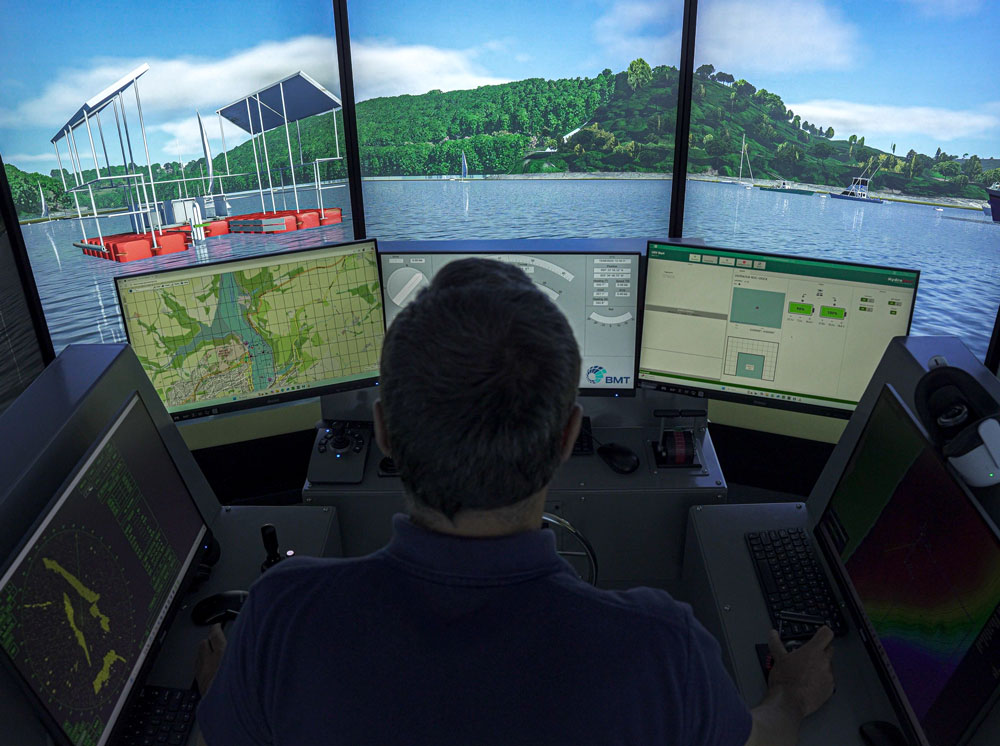
As cruise ships grow in size and complexity, digitalizing onboard systems becomes increasingly critical – not only to improve operational efficiency and safety, but also to enhance the working environment for crews navigating these advanced ships at sea.
With the first delivery of its SeaQ Bridge system aboard the cruise vessel Mein Schiff Relax, built by Fincantieri, the subsidiary Vard Electro introduces a fully digitalized and ergonomically optimized solution that sets a new benchmark in bridge design and shipboard operations within the cruise industry. The group’s highest level of bridge integration is a bridge solution with an extended architecture, utilizing a combination of integrated solutions, combined with touch monitors to gather various systems into one operator station.
The project is the result of a close collaboration between shipowner, shipbuilder, technology supplier, navigational officers and the crew, ensuring a seamless integration of design, construction and system implementation tailored for the needs of a modern cruise vessel.
Type-approved design and custom function testing
The SeaQ Bridge is type-approved by DNV, one of the world’s leading classification societies, ensuring compliance with the highest maritime standards. For each project, a separate test is conducted in collaboration with class and ship owners, ensuring that the system meets specific operational requirements. The process has started to have approval in RINA as well.
Expandable integrated applications
What sets the SeaQ bridge as benchmark is its integration of key shipboard systems, including also third-party solutions, into a centralized human-machine-interface (HMI), operable via touchscreens featuring intuitive apps and drag-and-drop functionality.
This setup allows operators to configure personalized layouts, granting immediate access to critical functions. Importantly, the number and arrangement of screens on the bridge are now determined by customer requirements, rather than system limitations, offering a tailored solution that aligns with specific operational needs.
Designed for scalability, the SeaQ Bridge integrates additional applications – such as intercom directories and alarm management – and supports the development of new functionalities as operational needs evolve, while also allowing existing systems to expand.
Extended integration across the ship
The SeaQ Bridge system extends its advanced capabilities to the Safety Command Centre, featuring a large video wall composed of 55-inch multi-displays, each capable of four-way splits, providing operators with a complete overview of critical systems. Dedicated workstations ensure each operator access to essential controls and information.
This integrated SeaQ approach supports coordinated action and faster decision-making across the ship. The same concept is applicable to the Engine Control Room (ECR). All relevant systems from the traditional ECR are now integrated into a common interface. This redundant solution offers user-driven flexibility without compromising system reliability.
In every aspect, this installation demonstrates how digitalization, collaboration, and smart design can transform cruise ship automation and navigation systems. With Mein Schiff Relax, Vard Electro, TUI Cruises, and Fincantieri have created a solution that sets a new standard for future cruise ships.
Also, SeaQ contributes to Fincantieri’s strategy to evolve from Physical vessel design authority to Digital vessel design authority, strengthening its leadership position in technological innovation applied to shipbuilding and to the whole shipping industry.
Zero USV has launched the extra-long-range (XLR) version of its Oceanus12 USV, which is intended to ramp up the 20 days/2,500nm endurance of the original Oceanus12 to 60+ days/7,500nm+.
Zero USV says: “[The XLR Oceanus12] is built for missions in remote areas or regions where access to traditional fuelling points is limited, ensuring that operations can continue uninterrupted.” Other modifications include a lengthening of the USV, from 11.55m to 13m, and the drone’s fuel capacity has been increased, from 1,200litres to 4,000litres.
Matthew Ratsey, Zero USV founder and MD, comments: “Uncrewed vessels are a force multiplier. The ability to conduct sustained operations at sea without the need for regular refuelling or crew-related logistics is becoming increasingly crucial as operational pressure on resources and time become more demanding.”
The XLR Oceanus12 features an aluminium hull with a 2.33m beam. The vessel draws 1.76m, displaces 8tonnes and can accommodate a payload of up to 1tonne – enabling it to carry kit such as Marine AI’s GuardianAI suite, plus an autonomous sensor suite featuring an HD radar from Navtech. Powered by a hybrid diesel-electric powertrain, the USV has a cruising speed of 6knots and a sprint speed of 10knots, depending on payload.
The Naval Architect recently caught up with Mikal Bøe, CEO of CORE POWER, for an exclusive, in-depth interview focusing on the potential adoption of nuclear power within the commercial shipping sector.
Since its formation in 2018, CORE POWER has pushed the development and deployment of advanced nuclear energy technologies, specifically modular molten salt reactors (MSRs) and floating nuclear power plants (FNPPs).
“To save fuel and reduce emissions, the global shipping fleet is sailing at its slowest average speed since the launch of the first diesel engine,” Boe told The Naval Architect. “The fleet is becoming less competitive and, with the increased cost of emissions compliance, it will also become more expensive to run.
“Nuclear-powered ships are not constrained by fuel consumption or emissions concerns; they emit nothing and can operate at their design speed without refuelling, enabling faster transoceanic voyages with minimal downtime. Nuclear-powered ships offer a host of additional benefits, from reverse cold ironing to creating new career opportunities for the next generation of marine engineers and ship’s crews.
“The market opportunity for nuclear-powered ships is nearly US$3 trillion, as the global fleet ages and conventionally powered vessels are replaced by nuclear-powered ships to meet emission-reduction targets of 70% by 2040.”
In the interview, Bøe also addressed areas such as international regulations and insurance, waste disposal and best end-of-lifecycle practice, and especially public attitudes towards nuclear power.
Bøe is resolute in his belief that “fearlessly using nuclear technology is essential to combatting the real dangers we face, including water, food and energy shortages, and maintaining social stability”. Regarding nuclear energy’s relative pariah status compared to other alt-fuels, he added: “The historical record should be re-examined…an important question is how society has persisted with such a gross misperception for 70 years.
“The work to educate the public about the real effects of nuclear energy is not ours alone. We therefore strive to work with organisations and groups that are dedicated to scientific truth and good scientific communication.”
Turkish boatbuilder and tug specialist Sanmar Shipyards has launched what it describes as its first high-performance tugboat for a client in Greece. The newbuild, which was ordered by harbour towage and salvage fleet owner/operator NEMECA, is based on Canadian naval architect Robert Allan Ltd’s (RAL’s) RAstar 2900SX design, which was drawn up exclusively for Sanmar. This class features an overall length of 29.4m, a moulded beam of 13.3m and a moulded depth of 5.5m, and can accommodate a crew of up to 10.
The vessel is equipped to FiFi 1 firefighting capability and powered by a pair of CAT 3516E main engines, each rated 2,350kW at 1,800rpm. The builder says that this is sufficient to guarantee a bollard pull in excess of 80tonnes.
NEMECA’s fleet services Piraeus, Thessaloniki and Kavala, where, in addition to towage and salvage duties, it offers anchor-handling, rig-moving and supply-duty operations.
Rüçhan Çıvgın, commercial director at Sanmar, comments: “This is a relatively compact tug that punches well above its weight…outperforming larger rivals.”
A UK consortium comprising Morek Engineering, Solis Marine Engineering, Tope Ocean, First Marine Solutions and Celtic Sea Power has devised a new class of floating wind installation vessel, primed for energy efficiency and sustainable operations. Having formally unveiled the concept at a Society of Maritime Industries event in London in May, the partners say they are now “advancing toward the next design stage” in the hope of attaining approval in principle (AiP) for the concept from a major class society by December.
Dubbed the Future FLOW Installation Vessel (FFIV) (the ‘FLOW’ standing for ‘floating offshore wind’), the ship would run on methanol and would feature a hydrodynamically optimised hull, azimuth thrusters and a DP2-rated dynamic positioning system. The vessel would also feature expanded mooring line capacity, care of a sizeable below-deck cable tank for synthetic mooring ropes, and lockers capable of holding “kilometres of chain”, the consortium states.
The partners envisage a length of 95m overall (or 88m between perpendiculars), a moulded breadth of 25m and a draught of 8.5m, with onboard accommodation provided for 42 personnel. The FFIV will also feature a tow winch and anchor-handling winch, a work-class ROV and a bollard pull capacity of 104te.
The consortium adds: “[The vessel] will work with any of the three main anchor types for floating wind turbines being considered by the industry: drag embedment anchors, which require installation by high-bollard pull anchor-handling vessels; suction piles; and driven piles, which require large subsea cranes to install them into the seabed. In each case, the FFIV meets the requirements of the next phase by installing the mooring lines onto the installed anchors, enabling quick connection to floating foundations towed to the offshore site.”
The project was conducted as part of the Clean Maritime Demonstration Competition Round 4 (CMDC4), a £206 million initiative to decarbonise the UK domestic shipping sector, funded by the UK Department for Transport and delivered by Innovate UK. Catch the July 2025 issue of The Naval Architect for more on this vessel, including an interview with Bob Colclough, naval architect, MD and founder of project lead Morek Engineering.