Home : Bin : Home - OLD : News : News : News : News : News : News

40 under 40

Take 10 seconds to nominate a colleague, mentee or friend for our Forbes-style list. Must be under the age of 40 in 2026. Open to all maritime professions associated with naval architecture. See eligibility criteria. [hyperlinked].  


Nominate with LinkedIn profile 


JOIN TO ADVANCE

Renowned for the technical excellence of our events, publications and learning, we offer career pathways for naval architects and 16 associated professions [hyperlink to 16 professions].

join to influence

We cover everything from super yachts and green propulsion to warship resilience. Network 1-2-1 with top talent at our events or influence the maritime industry by joining one of our comittees.  

JOIN TO INNOVATE

We promote the interdisciplinary conversation at the heart of maritime innovation. Speak at our events, publish in our journals or simply join the discussion forums on our website.  

Not quite ready to join yet? 


?? HOW?? FILL IN EMAIL HERE AND SIGN UP WITH 1 CLICK 

DISCOVER

View All

>

Sponsored: Engineering the next decade of maritime innovation

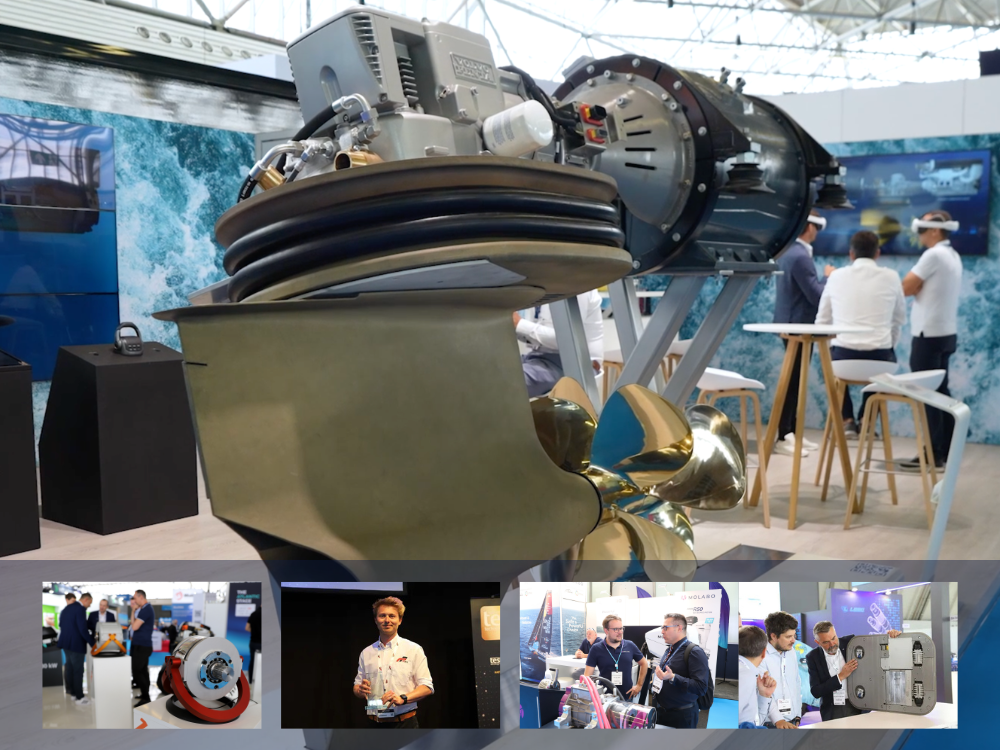
Explore the emergent engineering challenges shaping vessel architectures, from integrated electric propulsion and advanced control systems to autonomy‑enabling sensor suites and evolving regulatory frameworks. Register now for Advanced Maritime Technology Expo & Conference, 16–18 June 2026 in Amsterdam.

Detail Link
>

Immersive simulation accelerates warship design

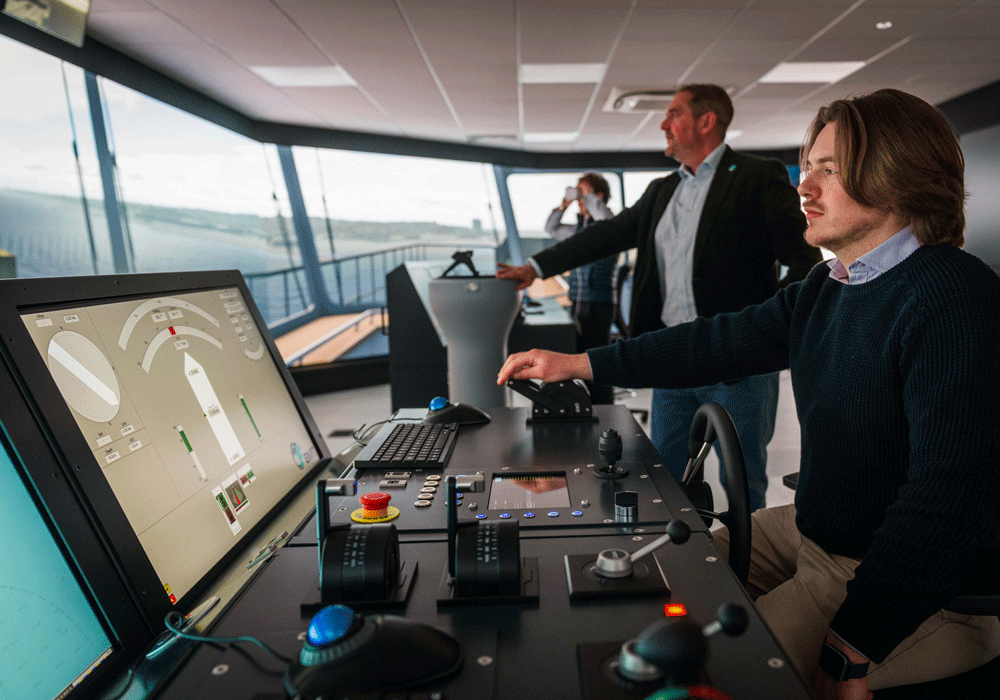
BMT’s new Digital Innovation & Simulation Centre (DISC) aims to reshape how naval architects design, test and validate vessels. In this exclusive interview, discover how it uses immersive simulation to de-risk decision-making

Detail Link
>

Building in better cyber resilience

Cyberattackers are streamlining tactics and adopting new technologies to expand their capabilities. Pole Star Defense talks to RINA exclusively on why embedding cyber resilience into warship design from the outset is critical

Detail Link
>

Autonomy as a capability multiplier

In light of growing maritime autonomy across the defence sector, RINA questions AI developer MarineAI on how autonomous systems can complement warship capability and streamline decision-making, rather than replace the process

Detail Link
>

New Membership pathway for maritime professionals

RINA is delighted to introduce two new tiers for those with expertise outside of our core of naval architecture and maritime engineering. The new tiers recognise the indisputable value of associated disciplines to maritime innovation and the need for interdisciplinary collaboration.

Detail Link
>

China: ship repair's hotspot

A surge in vessel building in the first 10 years of this century means that vessels are now approaching their third, fourth or fifth surveys, and they must meet evolving decarbonisation regulations to remain viable

Detail Link
>

AI emerges as maintenance tool

AI is emerging as a legitimate tool for predictive maintenance, analysing component wear and tear symptoms for improved maintenance downtime costs

Detail Link
>

The BWM Convention compliance myth

The latest survey shows significant deficiencies in ballast water systems technology. Can land-based facilities help bridge gap between rules and reality?

Detail Link
>

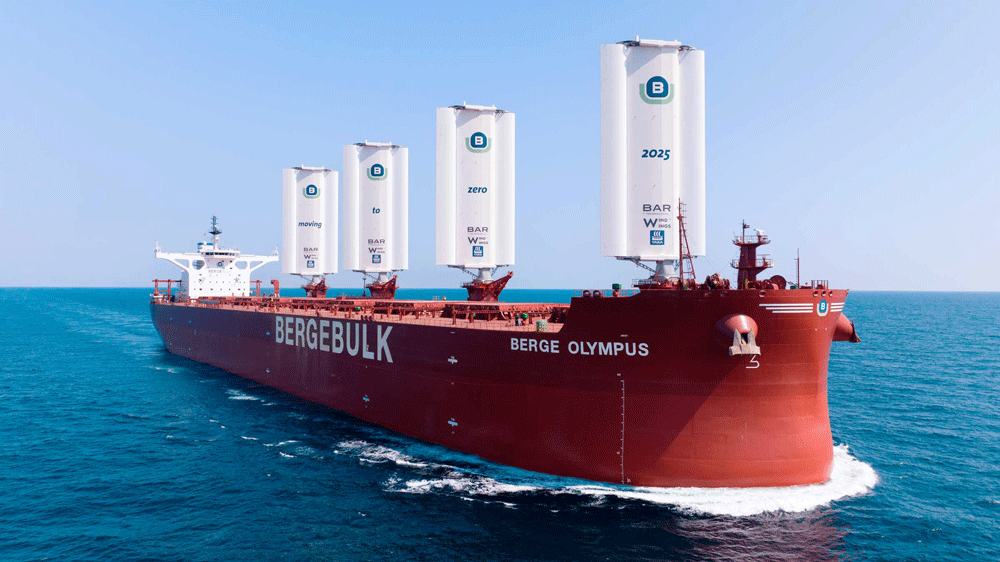
Wind power's struggles to get airborne

Full slots in a building boom for shipyards has seen concerns over unfamiliar wind power, added to vessel designs, with yards refusing to build to non-standard plans, rejecting orders. Two owners describe how they have managed to persuade yards otherwise

Detail Link
>

The acceleration of electrification

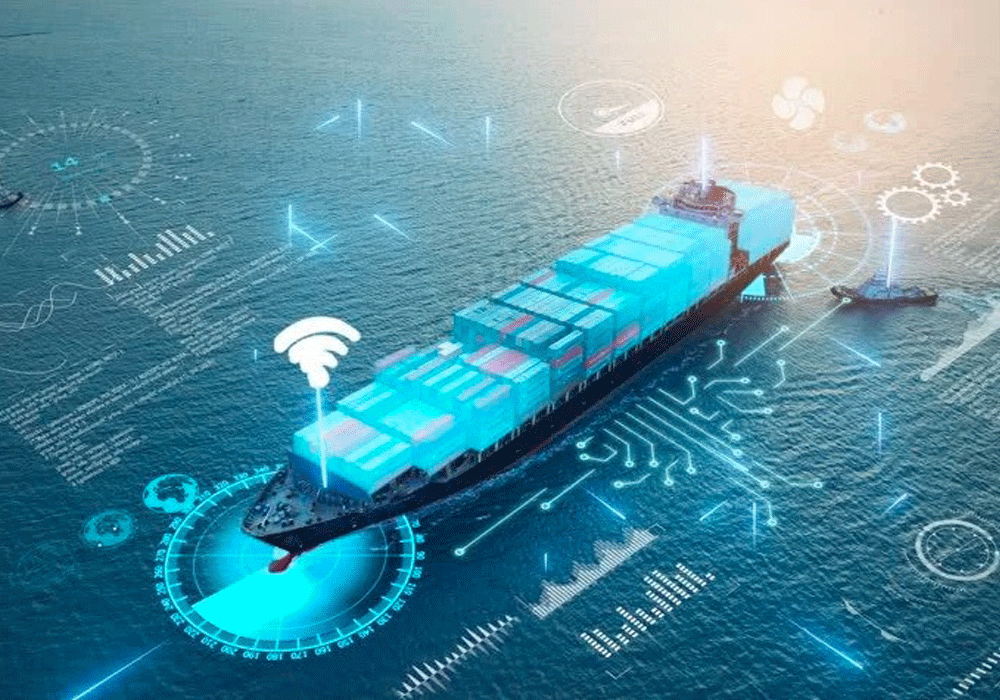
Advances in battery technology make it possible for short-sea ships and feeder vessels to electrify. That simultaneously offers the possibility to cut costs and emissions and improve vessel efficiency

Detail Link


???HOW??? what is the best slice to display TESTIMONIALS [LARGE photo + COLOURED BACKGROUND with LARGE quote imposed over it?]

  • Graduate Naval Architect [eg. Aidan Atkinson]

  • Prime Career [eg. Chris Nair]

  • Iconic Status and Giving back to Global Community [eg. Ian Buxton]

 
Global Events Connecting Maritime Leaders


Events


From flagship international conferences to specialist technical seminars, RINA events bring together experts, innovators, and professionals to share knowledge and shape the future of naval architecture.


Explore Upcoming Events

Events

Lorem ipsum dolor sit amet, consectetur adipiscing elit, sed do eiusmod tempor incididunt ut labore et dolore magna aliqua. Ut enim ad minim veniam, quis nostrud exercitation ullamco laboris nisi ut aliquip ex ea commodo consequat. Duis aute irure dolor in reprehenderit in voluptate velit esse cillum dolore eu fugiat nulla pariatur. Excepteur sint occaecat cupidatat non proident, sunt in culpa qui officia deserunt mollit anim id est laborum.

View All

CORPORATE PARTNERS

Sponsored: Engineering the next decade of maritime innovation
Immersive simulation accelerates warship design
Building in better cyber resilience
Autonomy as a capability multiplier
New Membership pathway for maritime professionals
China: ship repair's hotspot
AI emerges as maintenance tool
The BWM Convention compliance myth
Wind power's struggles to get airborne
The acceleration of electrification
LNG, a transitional fuel or GHG?
Wind Propulsion 2026 overview: Momentum meets method

HEADING


Lorem ipsum dolor sit amet, consectetur adipiscing elit, sed do eiusmod tempor incididunt ut labore et dolore magna aliqua.


CLICK HERE

HEADING


Lorem ipsum dolor sit amet, consectetur adipiscing elit, sed do eiusmod tempor incididunt ut labore et dolore magna aliqua.


CLICK HERE

Lorem ipsum dolor sit amet, consectetur adipiscing elit, sed do eiusmod tempor incididunt ut labore et dolore magna aliqua. Ut enim ad minim veniam, quis nostrud exercitation ullamco laboris nisi ut aliquip ex ea commodo consequat. Duis aute irure dolor in reprehenderit in voluptate velit esse cillum dolore eu fugiat nulla pariatur. Excepteur sint occaecat cupidatat non proident, sunt in culpa qui officia deserunt mollit anim id est laborum.

Advanced Maritime Technology expo & conference, June 16–18, 2026, RAI Amsterdam


As the maritime sector enters a decisive decade of technological transition, naval architects and marine engineers are confronting a convergence of complex challenges: electrification, hybrid power integration, autonomous vessel systems, digital control architectures, regulatory evolution, and new expectations for commercially viable sustainability. This June, Advanced Maritime Technology expo & conference provides a dedicated platform to explore these engineering frontiers.


Hosted at the RAI Amsterdam from June 16–18, 2026, the expanded event unites the former Electric & Hybrid Marine and Autonomous Ship events into one single, integrated technical environment. The consolidation reflects the reality that modern vessel development no longer occurs within discrete silos. Instead, naval architecture increasingly demands cross disciplinary engineering, program-level systems thinking, and a holistic view of vessel performance and lifecycle efficiency.


A technical platform built for today’s naval architect

The 2026 edition has been shaped directly by industry feedback, with a program designed to support engineers seeking rigorous insight and practical solutions. All conference and expo content is organised around four focused technology streams:


Electrification & Hybridization: Advances in energy storage, power conversion, thermal management, and propulsion integration.


Automation & Autonomy: Control systems, perception technologies, fault management, and operational safety. MASS and Remote Operation.


Ports and Infrastructure:  Shoreside systems, energy infrastructure, and port electrification and integration.


Regulation & Finance: Regulatory overviews and strategies, commercial modelling, investment pathways, risk frameworks, and cost-of-ownership considerations.


This structure allows naval architects, systems engineers, and program managers to navigate the event according to their specialist priorities while maintaining visibility across adjacent technical domains.


Why attend: relevant insight for working designers and engineers

Attendees can expect a uniquely application-driven event, emphasising real-world challenges faced by designers, yards, and operators. The 2026 program prioritises:

Cross disciplinary technical knowledge

Content for propulsion architects, structural and systems engineers, control specialists, integration engineers, and vessel programme leads.

Direct connections to live project data

Including prototypes, demonstrators, and commercial deployments across multiple vessel classes.

Current interpretation of class rules and regulation

Particularly for battery systems, hybrid architectures, autonomous functions, digitalised vessels, and energy management technologies.

Engagement with OEMs, integrators, and research institutions

Featuring organisations developing the systems naval architects will specify in the next wave of vessel designs.


A more conversational, engineer-focused conference format

This year’s conference introduces longer Q&A sessions, expanded panel discussions, and more opportunity for technical exchange. Instead of short, isolated presentations, the new format encourages open discussion between speakers, delegates, and OEMs, supporting deeper exploration of engineering challenges and solution pathways. A limited number of Early Bird delegate rates are available until May 4, 2026, across singled ay, multiday, and full conference passes. With a more flexible pricing structure, attendees can tailor their participation to the specific technical streams and sessions most relevant to their work.


First confirmed speakers and preliminary program announced

The first wave of speakers includes engineering authorities from classification societies, system integrators, R&D institutes, and advanced technology developers. Sessions will address methodologies for next-generation vessel modelling, performance data from operational projects, safety and reliability analysis, and future design considerations for increasingly autonomous and electrified fleets. Visit advancedmaritimetechnologyexpo.com for all conference program details.


Join the maritime engineering community in Amsterdam

Advanced Maritime Technology expo & conference invites RINA members to three days of high-level engineering dialogue, industry insight, and technical discovery. Whether you are designing future hybrid propulsion systems, evaluating autonomy requirements, navigating the regulatory landscape, or exploring new integration strategies, this year’s event provides the knowledge and network to support your work.


Registration for free expo passes is now open.

QR1


Delegate passes, including Early Bird options, are available for those seeking full access to the conference program.

QR2


Visit advancedmaritimetechnologyexpo.com for all the latest event information.


BMT’s new state-of-the-art Digital Innovation & Simulation Centre (DISC) aims to accelerate immersive engineering, autonomous systems assurance and digital twin solutions for defence and commercial customers.

Underpinning the Full Mission Bridge is the DNV-accredited BMT REMBRANDT high‑fidelity hydrodynamic engine, which enables everything from tug and pilot training, through to litigation‑grade reconstruction.

DISC also hosts the Marine Autonomous Surface Ship Synthetic Environment Assurance System (MASS SEAS) synthetic environment and BMT ENGAGE, which allows users to create photorealistic digital twins and cyber and wargaming scenarios, as well as immersive VR/AR training programmes.

These capabilities directly support BMT’s autonomous vessel, de-risking provision and marine incident analysis services for defence and commercial customers.

High-fidelity simulation

“High-fidelity simulation environments allow the naval design spiral to be exercised in a more integrated and evidence-driven manner, particularly in the early design phases,” says Andrew Gray, head of emerging products and programmes at BMT.

He explains that immersive simulation and digital twin environments enable naval architects, operators and assurance specialists to interrogate ship behaviour, operability and system interactions before physical assets exist.

This supports earlier identification of design sensitivities relating to manoeuvrability, human–systems integration, autonomy behaviours and operational constraints.

“As a result, a greater proportion of design learning can be achieved virtually, reducing reliance on late-stage physical prototyping,” he says.

“Physical trials remain essential, but their emphasis increasingly shifts toward validation and confirmation rather than discovery. This approach supports more rapid convergence of the design spiral and reduces the risk of costly design change during integration and sea trials.”

Andrew Gray, head of emerging products and programmes at BMT (left) and Monty Long, regional future business director at BMT (right)

Warship Mar-26 BMT-3 Gray V2 Warship Mar-26 BMT-2 Long V2

Digital twin strategy

Integrated digital twin environments are increasingly capable of forming a central component of assurance strategies for complex naval programmes, provided they are appropriately governed and validated, says Monty Long, regional future business director, BMT.

These environments allow scenarios to be exercised repeatedly and consistently, generating traceable evidence that supports technical decision-making.

“Digital twins do not remove the requirement for physical testing; however, they allow assurance activity to be distributed across the programme lifecycle rather than concentrated at the end,” Long says.

“In this sense, they increasingly act as the primary mechanism for risk exploration and evidence generation, with physical trials providing confirmation against an already well understood design envelope.”

BMT’s work on SEAS/MASS SEAS shows how this plays out when autonomy moves from trials into fleet concepts. By running DNV‑grade synthetic trials against MASS and COLREGs requirements, autonomous system behaviour can be demonstrated across thousands of encounters that would be prohibitively risky or expensive to recreate at sea.

Sea trials can then be used to prove the most demanding edge cases and build human confidence in what the models already show.

Assurance driven simulation

Simulator-based autonomy assurance influences design requirements by forcing earlier consideration of system behaviour, control authority and human interaction across a wide range of operational conditions.

“For both crewed and uncrewed platforms, this approach encourages autonomy to be considered as an integral part of platform design rather than an add-on capability,” says Gray.

“Assurance-driven simulation therefore plays an important role in shaping hull form, systems integration and concepts of operation, supporting safer and more trusted deployment of autonomy at scale.”

BMT is already using these environments to explore mixed‑fleet concepts in which crewed ships, modular USVs and remote operations centres share situational awareness and control, testing how design choices around hull size, payload modularity, comms architecture and human–machine interfaces play out when vessels are operating at scale and under pressure.

This helps customers refine requirements for everything from bridge layout and ROC design to sensor fit and redundancy, ensuring future platforms are engineered from day one for trusted autonomy, lean crewing and rapid upgrade paths, rather than having those demands bolted on mid‑life at far higher cost.

Multi-stakeholder design

DISC also provides a shared digital environment in which designers, operators, regulators and assurance stakeholders can align assumptions and expectations earlier in the programme.

This reduces the likelihood of late-stage disagreement over design intent or evidential sufficiency.

BMT sees this most clearly in programmes where DISC is used as a neutral ’digital canvas’ to bring together Royal Navy sponsors, regulators such as NATG, industry partners and classification societies.

“That doesn’t change who holds ultimate design authority, but it does create a more commercial, programme‑savvy environment in which risk is shared more intelligently and the evidence is visible to all,” Long says.

Digital innovation hubs

The emergence of digital innovation hubs reflects a broader shift toward continuous design and assurance across the naval platform lifecycle.

Warships are increasingly required to evolve over extended service lives, incorporating new technologies, autonomy functions and mission requirements.

Facilities such as DISC provide the infrastructure to support persistent digital twins, ongoing simulation-based assurance and iterative engagement with stakeholders throughout the lifecycle.

“This supports a more adaptive approach to warship development, in which capability evolution is informed by continuous evidence rather than isolated programme milestones,” says Long.

For BMT, DISC is deliberately set up as more than a one-off facility – it is a template for how navies and industry can manage continuous evolution of complex fleets, including hybrid crewed–uncrewed constructs like MODUS.

“Digital hubs don’t replace discrete build programmes, but they do enable a more ‘evergreen’ warship model – where capability is refreshed, re-certified and re-commercialised through a persistent digital twin,” says Gray.

Alongside DISC, BMT’s work on modular payload programmes – including its partnership with Force Development Services (FDS) in support of the Royal Navy’s NavyPODS vision, underlines this shift from one-off builds to a continuously adaptable fleet.  

“By treating PODS-style payloads, uncrewed platforms and motherships as parts of a coherent system, we can use digital hubs to prototype new load-outs, rehearse mission switches and refine support models before they are rolled out across the fleet,” says Long.

That combination of modular hardware and persistent digital assurance is what ultimately enables a ‘continuous warship design’ mindset in practice – allowing navies to re-role ships and refresh capability at the speed of relevance, while maintaining control over risk, availability and through-life cost.

Not a day goes by without hearing about cyberattacks wreaking havoc for organisations and consumers around the world and the shipping and marine sectors are no exception.

Marinelink’s Security Operations Centre (SOC) report is quick to point out that for the second half of 2024, cybercriminals targeting the maritime sector have streamlined their tactics, enhanced their operational efficiency and worse, adopted emerging technologies to expand their attack capabilities.

Maritime intelligence company, Pole Star Global explains that Automatic Identification System (AIS) spoofing and GPS jamming are frequently used techniques that provide a false idea of ship locations while at sea and so it makes the case for using more effective persistent tracking methods.

But how should warship design and technology evolve to remain operational under GNSS denial, AIS spoofing, or degraded positioning environments?

“Today's warfighters train extensively in GNSS-denied environments and already navigate using layered methods: Inertial systems, celestial techniques and traditional seamanship, all feeding into combat management systems that fuse multiple PNT sources,” explains Alex Field, managing director, Pole Star Defense.

“But the evolution needed is threefold. First, broaden the PNT portfolio as emerging technologies like automated celestial navigation, magnetic anomaly navigation and eLoran reach maturity. Second, adopt open modular architectures so ships can integrate new PNT sources without redesign. Third, treat AIS as adversarial data and harden the recognised maritime picture through multi-sensor fusion with confidence scoring.”

Alex Field, managing director of Pole Star Defense

Warship Mar-26 Pole-Star-1 V2

Design implications

Field explains that there are design implications arising from adopting persistent, multi-source vessel tracking onboard naval platforms.

Persistent, multi-source vessel tracking creates tension across several design dimensions.

Every active sensor improves the track picture but increases the ship's electromagnetic signature. Emissions Control (EMCON) becomes a first-order design consideration, favouring passive sensors like Electronic Support Measures (ESM) and electro-optical/infrared (EO/IR) systems that maintain situational awareness without broadcasting the ship's position.

“Fusing continuous data from radar, ESM, EO/IR, AIS and off-board sources demands significant onboard compute and cooling that legacy platforms were not designed to provide,” he says.

“Software-defined, modular computing architectures need to be designed in from the outset on newbuilds.

He explains that the combat management system must automatically correlate tracks across sensors, assign confidence scores and flag anomalies, particularly when AIS contradicts radar or EO/IR observations. AI and machine learning are increasingly applied to this correlation problem.

Sharing the fused picture across a task group requires bandwidth that may itself be contested. Each platform must therefore maintain a credible local picture independently and reconcile when connectivity is restored.

“The overarching design shift is treating tracking as an information architecture problem rather than a sensor problem: Open data architectures that decouple sensors from processing, allowing new sources and algorithms to be integrated without hardware changes,” Field says.

Reshaping shipboard systems

Field says cyber resilience is reshaping shipboard system architecture from perimeter defence to assuming compromise.

Zero trust principles, continuous verification of every user, device and data flow, are being adopted across Navy networks.

Initial implementation focuses on shore infrastructure and unmanned platforms, with extension to manned warship combat networks still maturing.

The complexity of legacy systems, real-time operational demands and Denied, Disrupted, Intermittent and Limited (DDIL) connectivity make this a significant engineering challenge.

Software-defined warships expand the attack surface. Over-the-air combat system updates are operationally transformative but demand rigorous supply chain assurance as commercial hardware and third-party code replace bespoke, air-gapped systems.

“Network segmentation must isolate combat systems, navigation, propulsion and damage control so breaches cannot cascade laterally. Systems must degrade gracefully under cyberattack in known, predictable ways that crews can manage, mirroring how damage control doctrine handles kinetic battle damage,” Field says.

Architectural discipline

Cyber survivability is now a naval architectural discipline equivalent to damage stability or shock resistance.

The DOD's System Survivability Key Performance Parameter, one of four mandatory KPPs for all weapon systems, includes a Cyber Survivability Endorsement that places cyber threats in the same acquisition trade space as kinetic ones.

On the commercial side, IACS unified requirements E26 and E27, mandatory for new construction contracts from July 2024, codify cyber resilience as a classification requirement alongside structural and stability standards.

“But the harder question is whether practice matches policy. Damage stability and shock resistance benefit from decades of test data, mature modeling tools and deeply ingrained design culture,” says Field.

“Cyber survivability is newer, the threat evolves faster than ship design cycles and testing a ship's cyber resilience under realistic conditions is inherently more complex than a shock trial. The formal discipline exists. Building the same depth of rigor and instinct around it is still work underway.”

Future bridge systems

Field says that cyber threats will continue to reshape bridge design around one core problem into the future: The operator can no longer implicitly trust what the screens are showing.

“Traditional bridge integration assumes sensor data is reliable. A cyber-compromised bridge may display spoofed positions, false contacts, or manipulated propulsion data and the danger is that operators act on it without recognising the tampering, says Field.

This drives several design implications. Displays need data integrity indicators that flag when inputs are inconsistent or potentially compromised, making the trustworthiness of data visible to the operator, not just the data itself. Manual fallback must be genuinely operable, not theoretically available.

And the deeper Human-Machine Interface (HMI) challenge is cognitive: Designing ship bridge interfaces that help operators recognise when they're being deceived rather than simply presenting data faster and in higher resolution.

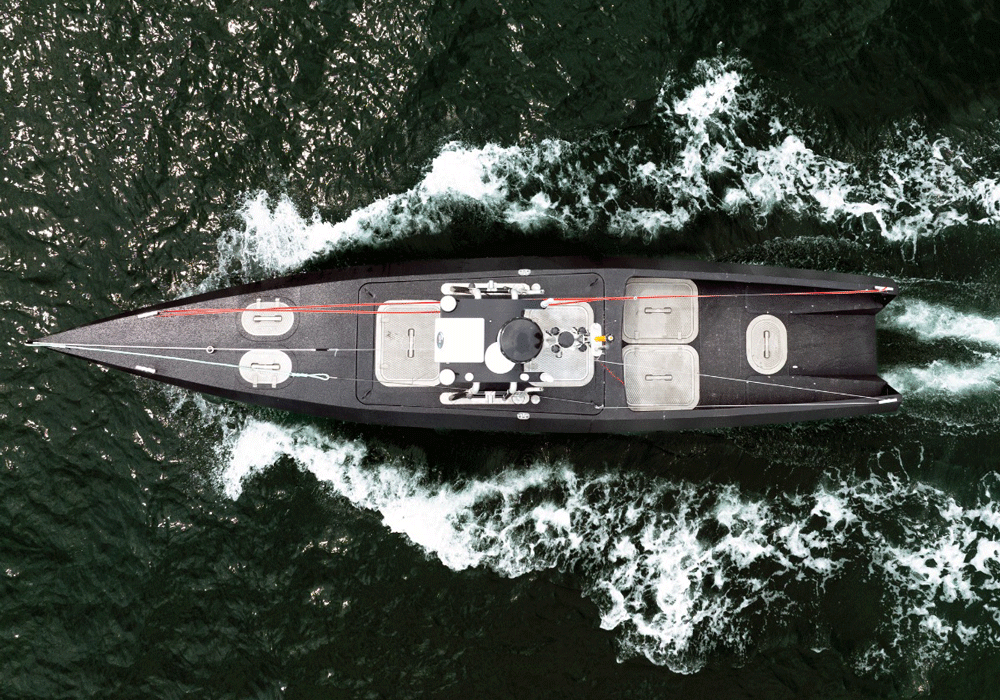
AI system developer, MarineAI has formed a close partnership with the uncrewed surface vessel designer and builder, ZeroUSV, reflecting a growing concentration of operational maritime autonomy capability across the defence sector.

Together, they have created a first-of-its-kind programme to create a distributed sensing network that supports underwater monitoring and secure communications for submersible fleet operations.

Funded by UK Defence Innovation (UKDI), the initiative will deploy autonomous vessel platforms and acoustic systems to maintain covert contact with underwater assets without relying on high-bandwidth or detectable links, enabling more resilient subsea mapping, intelligence and infrastructure monitoring.

Simplifying decision-making

Central to the MarineAI ethos is the view that the introduction of onboard decision-support systems should not make the bridge more complicated.

Modern warships already manage large volumes of information from navigation systems, sensors and mission equipment. Simply adding further displays or alert systems increases operator workload and does little to promote efficient or accurate decision making.

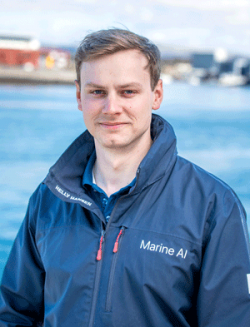
“The opportunity with autonomous systems is to simplify the decision-making pathway. Autonomy software can process large volumes of onboard data and distilling it into clear, actionable information,” says Oliver Thompson, director of engineering at MarineAI.

“This can then be presented to operators as recommendations, or, in specific trusted cases such as navigational routing, can be executed by the system itself.”

One of the key requirements of autonomous capability is decision transparency, he says.

 Oliver Thompson, director of engineering at MarineAI

Warship Mar-26 Marine-AI-2 V2

Operators must be able to understand how a recommendation has been reached and what informed a decision and that builds trust in the system.

For this reason, autonomous capability should be accessible to operators through existing bridge and command interfaces rather than appearing as a separate and isolated console on an additional screen.

Reliability, fidelity and availability

So, what platform design requirements can emerge from deploying autonomy systems in operational naval environments?

From a platform perspective, the requirements are broadly consistent with those for other critical naval systems. Reliability, fidelity and availability are fundamental, Thompson says.

Autonomous capability must remain functional during operations if it is to be trusted in theatre.

The overall system must also account for hardware faults and routine maintenance cycles. Redundancy and failover therefore need to be built into the onboard computing architecture in the same way they are for navigation, propulsion or combat systems.

Modern operational autonomy systems typically run on compact edge computing platforms or similar embedded processors. These are notably different from the hardware required to train models, which can require substantial computing resources. Once trained, however, the software that operates onboard a vessel is typically far less demanding.

Thompson says that a key platform consideration is therefore reliability, integration with existing ship systems and cyber resilience rather than large-scale computing infrastructure.

An autonomy system’s decision making is informed by the data it receives, whether from the vessel itself, other vessels in a fleet, or shoreside command centres. It is therefore essential that this data is reliable and of high quality.

Autonomous vessels rely on sensors such as high-quality cameras and other systems to provide situational awareness. This represents a shift from a traditional operator-driven awareness to awareness generated by autonomous system capabilities.

A capability multiplier

An interesting point for discussion is how autonomy will influence the make-up of future fleets, particularly the balance between crewed warships and uncrewed surface vessels.

Thompson says that autonomous vessels are best viewed as a capability multiplier, rather than a replacement for crewed warships.

They are particularly suited to missions that are dangerous, dull or dirty. These are tasks that either expose crews to unnecessary risk or involve long periods of repetitive activity.

Persistent surveillance, reconnaissance and operations in hazardous environments are typical examples.

“Using autonomous platforms in these roles allows crewed ships to focus on missions that require human judgement, command authority and coordination within the wider task group or fleet,” he says.

In addition, autonomous systems also make it possible to deploy a larger number of platforms across an operational area, increasing coverage and persistence. This effectively expands the number of assets available to commanders without increasing crew requirements.

This concept can already be seen in developments such as the Royal Navy’s “loyal wingman” approach, in which traditional crewed platforms are supported by autonomous or remotely operated systems.

“The likely outcome is therefore a mixed fleet structure in which crewed ships remain central, supported by autonomous vessels that extend operational reach and maritime presence,” says Thompson.

Autonomy challenges

One challenge with advanced autonomy is, as Thompson describes, the “genie problem”.

An operator may believe they have issued a precise instruction, yet the system may interpret that instruction in a way that technically fulfils the request while producing outcomes that were not anticipated.

“For this reason, autonomy should not be treated as something that can simply be deployed and left to operate independently without oversight. Its role is to analyse information and propose options, while authority to act remains within a human-supervised chain of control,” he says.

On an uncrewed vessel, decision making must remain observable and controllable, when necessary, much as it is on a crewed ship. Operators should retain the ability to monitor system behaviour, review recommendations and intervene if required.

In practice, the level of oversight varies depending on the type of decision involved. Navigation and collision avoidance are relatively bounded problems with established regulatory frameworks and can allow for some degree of autonomous action.

Mission management and operational tasking, however, involve more complex judgement and therefore require closer human supervision, often precluding autonomous systems from acting independently.

Ultimately, Thompson says, trust in autonomy within safety-critical naval environments will depend on transparency, human oversight and predictable system behaviour.

Designing systems that keep humans informed and within the decision chain will be central to the safe adoption of autonomy at sea.

RINA is delighted to introduce two new tiers for those with expertise outside of our core of naval architecture and maritime engineering. The new tiers recognise the indisputable value of associated disciplines to maritime innovation and the need for interdisciplinary collaboration.

Designed specifically for professionals working across the wider maritime sector, this new progression pathway supports their continued professional development, as well as enriching the talent pool of our global maritime community.


What’s new?

We’ve introduced two membership levels to reflect career progression:

  • Associate Fellow (AFRINA) – for senior professionals demonstrating leadership and significant contribution.
  • Associate Professional (APRINA) – for established professionals with recognised competence and responsibility.


Why this matters

This new structure provides:

  • A clearer pathway for career progression.
  • Recognition of expertise across a broader range of maritime roles.
  • Opportunities to engage more deeply with the professional community.


Click here to review the full criteria, share with colleagues and friends, and join our global maritime community.

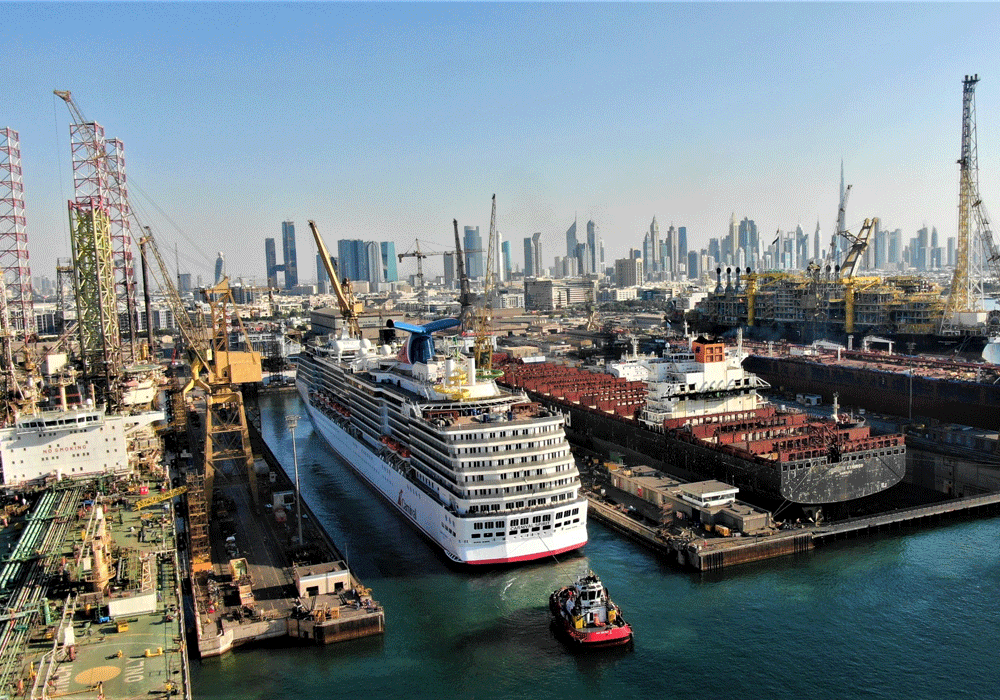
Global ship repair work spiked 7% in the first nine months of 2025 following a surge in aging ships along with installations of energy saving devices.

According to data released by Clarksons Research last year, following surges in vessel building in the first 10 years of this century, vessels are now approaching their third, fourth or fifth surveys and that, along with the race to install energy saving devices, has prompted the increase in demand for yard space.

China’s repair yards accounted for 17 of the top 20 busiest repair yards in the world with some 4,841 ships completing repairs, aggregating nearly US$5 billion, up 13.14% during up to and including the third quarter of last year.

Scrubber units fitted during 2019–2020 saw the last major upsurge of retrofit activity, however, decarbonisation is the new driver, with a rapid uptick in efficiency upgrade orders recorded following the postponement of the IMO’s Net Zero Framework (NZF) in October.

More than 540 ships completed efficiency upgrades in 2025, with many retrofitting carbon capture and storage systems and fuel conversions.

Hanwha’s Hyoung‑Seog Kim, argues that there are two types of retrofit projects, those driven by regulation and those that offer improved vessel performance.

Kim, head of the South Korean yard’s Marine Solution Business Division at Hanwha Power Systems and head of Commercial Ship Engineering and Technology at Hanwha Ocean, noted that the retrofit of ballast water treatment systems and scrubbers meet regulations on invasive species and SOx emissions respectively, and these are effectively cost driven.

This first type of retrofit is essentially a cost to the owner, with the main benefit being that the vessel owner or operator does not pay a penalty for non-compliance.

Retrofits that improve efficiency such as wind-assisted propulsion systems, air lubrication and any hydrodynamic device that reduces resistance and cuts fuel use and emissions will have a period where the capital cost of the system is repaid through reduced operating costs.

“I think verification of effectiveness is paramount. While the theoretical benefits are quite clear, the burden to prove real-world gains is on the technology providers,” said Kim, adding, “Until the firm contract is made, the primary hurdle is how we can provide the owner with confidence on the ROI.”

Container shipping is the leading shipping sector, as far as shipping’s decarbonisation is concerned, driven mainly by the demands of the sector’s customer base, which is largely consumer facing.

Chen Bing, president and CEO of independent ship owner Seaspan Corporation, believes that the decarbonisation process in shipping is not a revolution, but a gradual evolution.

“Facing further enhanced green decarbonisation targets and unclear green energy supply, we should focus more on feasible, affordable, and sustainable development,” added Chen.

Chen’s colleague at Seaspan Corporation, COO Torsten Holst Pedersen identified a third retrofitting sector, to add to Kim’s decarbonisation and regulation driven modernisation, that of safety systems.

Human error, according to many experts, is the major cause of maritime accidents, minimising the incidence of such incidents can save lives, the environment, and money by destressing watchkeeping.

For some years Seaspan has been actively retrofitting Orca AI technology to its ships as an aid to navigation, and Pedersen argues: “The system is specifically designed for use in challenging navigational conditions, such as low visibility and crowded waters, but the crew is encouraged to utilise it consistently for better situational awareness around the vessel.”

According to Pedersen, the Orca AI system uses thermal imaging too, so it can see in dense fog, in regions such as the East China Sea, “where you'll have vessels that are not necessarily on AIS or ‘forgot’ to switch on any lights because they're illegally fishing”.

In fog, said Pedersen, often you see fishing boat lights, and they look like they are on the horizon. “But when you see it with the thermal imaging, then you notice that there are loads of ships before you get to the light and you didn't notice them and you can't see which way they're going, but with Orca AI it gives you that information,” he explained.

Yarden Gross, CEO and founder of Orca AI, told The Naval Architect that the average installation time for Orca AI is six hours.

In addition, the system is easy to use, and Orca offers a crew training session lasting 15-20 minutes, followed by a five-minute computer-based training.

A legitimate use of AI has emerged in predictive maintenance, where the symptoms produced by a component are analysed over time to identify patterns of wear and degradation.

It is thought that using an AI trained on data from everyday smooth running, it will be possible to identify outliers and warning signs early, enabling parts to be replaced at precisely the right time.

The hope is that if a part is diagnosed early, a replacement can be sourced, a repair booked during an existing downtime interval, and that the worst-case scenario of a catastrophic failure – leading to huge costs and long downtime – can be avoided.

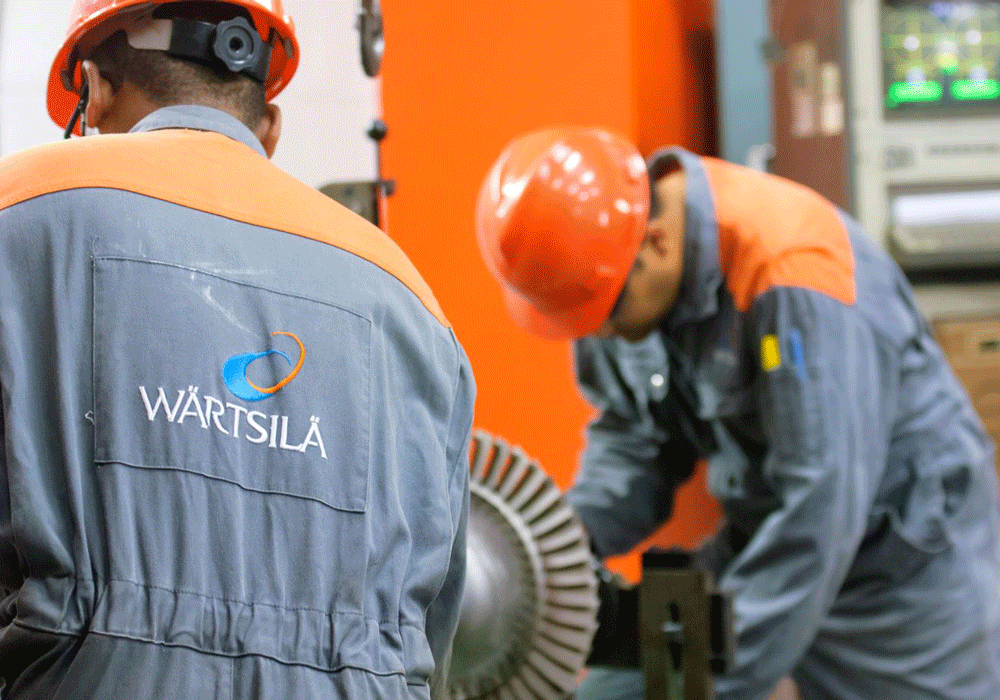
In October 2025, Opearl LNG Ship Management, based in Hong Kong, made an agreement with Wärtsilä to provide AI-enabled predictive maintenance on 14 LNG carriers, combining its Dynamic Maintenance Planning (DMP) and Expert Insight (EI) predictive maintenance platform. The system uses AI to hunt for anomalous readings which could indicate potential failures.

“We currently manage tight delivery schedules and require operations with minimal downtime and reduced maintenance interruptions,” said general manager Captain Nomura, OPearl LNG Ship Management. “This long-term agreement with Wärtsilä is intended to support these operational requirements and assist us in reliably meeting our delivery commitments to our customers.”

Shortly afterward, in January of this year, Wärtsilä signed another agreement, this time for 12 LNG Carriers with MOL Global Ship Management and incorporating both DMP and EI.

“Wärtsilä’s Lifecycle Agreement will optimise our vessel operations and maintenance, ensuring that we can maximise uptime and performance,” said Namit Mathur, director, MOL Global Ship Management. “In addition, this agreement will play a crucial role in supporting the sustainable operations of our fleet by helping us reduce emissions and operate more efficiently.”

Semi-submersible crane vessel Saipem 7000, in partnership with BIP, and ultra-deep-water drillship Saipem 12000, in collaboration with rig assurance company ADC, are now having essential systems monitored by AI predictive maintenance systems.

Rigged with networks of internet-of-things (IOT) sensors, the vessels are watched for early signs of wear or degradation in shipboard components.

As a drillship, maintenance downtime on Saipem 12000 is extremely costly. But in the low-tolerance context of deep-water drilling, the vessel incorporates various systems which could lead to severe negative consequences if there is a critical failure in an important component.

In 2010, some 11 workers were killed and 4.9m barrels of oil discharged into the Gulf of Mexico after the failure of a blowout-preventer (BOP) on ultra-deep-water semi-submersible drilling rig Deepwater Horizon. An internal BP audit months before the explosion revealed that 3,900 maintenance tasks were overdue, including on the BOP, and that deferred maintenance – of the sort Saipem 12000’s AI predictive maintenance system could help to avoid – was an endemic issue.

But the industry should take care that it does not over-rely on AI, and allow human inspection, maintenance and repair skills to atrophy. In recent studies of AI predictive maintenance by Lloyd’s Register, it was found that AIs have not only supposed degradation where none existed (a ‘false positive’); but have overlooked problems when they have occurred (‘false negative’).

As usual, the accuracy of models will improve over time when there is more training data present, but shipowners should not assume pinpoint accuracy from the outset. Particularly on such critical vessels as drillships, operators must resist the urge to neglect maintenance of a crucial wear part, on the say-so of an AI.

In the ninth year since enforcement of the Ballast Water Management Convention (BWMC) the latest Concentrated Inspection Campaign (CIC) on ballast water treatment systems makes depressing reading.

The CIC report followed a three-month survey, ending 30 November 2025, into the actual performance, operation and maintenance of installed ballast water treatment systems and was published in February this year.

Deficiencies found by the survey revealed that operational failures of BWTS were failures of the technology itself, in 46% of detainable deficiencies, while crew training deficiencies resulted in 21% problems and the vessel’s Ballast Water Management Plan was deficient in 15% of surveyed ships.

A year earlier, a Paris Memorandum of Understanding report on Port State Control recorded similar failures, including poor ballast water record keeping, inadequate crew training, system unfamiliarity, and invalid or missing certificates.

These failures have led to the development of land-based reception facilities (LBRF) that have been commissioned mainly in Europe, with the Denmark-based Bawat offering a simple solution for vessels arriving in port with untreated ballast.

Bawat’s mobile BWTS system, operated from a 40ft container, help ships that cannot carry on loading operations without first managing the ballast water in their tanks. Bawat’s system effectively pasteurises ballast water, heating and cooling it to render it clear of live invasive species.

LBRF technology is one way of dealing with failed BWTS, but Charlène Ceresola, BWT project manager and regulatory expert at BIO-UV Group, noted: “Once you focus specifically on deficiencies serious enough to result in a ship being detained, the majority are associated with the ballast water treatment system itself.”

Dubai’s Drydocks World shared this view, telling The Naval Architect: “Between 2021 and 2024, yard capacity was the dominant constraint.”

Today Port State Control has shifted its emphasis in Europe, the Gulf and Asia to demonstrable compliance with D-2 discharge standards, operational testing and sampling, calibration and maintenance documentation and crew familiarity with system procedures, taking on more importance said Drydocks World.

“This enforcement shift exposed a structural issue: systems compliant on paper may not perform optimally in varied salinity and sediment conditions if integration, commissioning or maintenance has been insufficient. The real test now is whether these installed systems consistently function,” added the yard.

Drydocks World worked on 12 BWTS in 2025, two of which ended this year, in total the yard has completed more than 300 retrofits of ballast systems on tankers, gas carriers and container ships, among other vessel types. According to the yard there has been a transition from installation to “performance-led engagement”.

The reasons behind that are precisely as the CIC report suggests, many systems are not operating as they should, while some manufacturers have discontinued production of their BWTS in a highly competitive market, leaving owners without spare parts.

“While the majority of vessels are operating effectively, the post-deadline environment is revealing a second wave of activity. In addition to new installations, yards are also supporting system recalibration and optimisations, repairs and modifications as well as the removal and complete replacement of underperforming systems,” explained Drydocks World.

The industry trend is to make repair yards a strategic partner, and that requires the yards to offer integrated design prefabrication planning to protect yard schedules, and, additionally, collaboration on upgrades, removals of legacy systems and what Drydocks World calls long-term performance economics.

“Technical integration capability, constructability foresight and lifecycle support are no longer differentiators at the margin, they are prerequisites for sustained compliance,” the yard claims, and it says they are well positioned to meet industry needs with a vast team of 400 engineers.

However, the yard concludes: “Ballast water management has moved beyond the question of whether systems are fitted. The decisive question now is whether they perform consistently, predictably and under scrutiny.”

Since the approval of the Ballast Water Management Convention by the IMO in 2004, the regulation has been fraught with industry concerns, with the US having more stringent regulations than the IMO. That made BWTS approvals far more complicated. Member state ratification was slow, taking 13 years, with final ratification and enforcement delayed until September 2017.

Since the Convention entered into the full enforcement phase, the industry has been confronted by a new and more complex reality, that has changed the way yards, particularly larger repair yard, approach BWTS repairs and replacements.

“In the enforcement era, engineering discipline is no longer procedural, it is commercial infrastructure, shaping both fleet reliability and the competitive position of yards equipped to deliver it,” said Drydocks World.

Full shipyards do not like complications. As slots are filled into 2029, yards are becoming increasingly reluctant to build vessels that do not meet a standard design.

Vessel operators at RINA’s fifth Wind Propulsion Conference, held in London in February, told how they had worked to convince yards to add wind power to vessels, whether it was newbuildings or retrofits.

Wind installations on ships should be the most straight forward of retrofits, particularly on liquid or dry bulk ships which have open decks with cargo stored underneath.

Bulk ship operators typically operate at lower speeds and not always on the same routes, and are less inclined to shift to alternative fuels, which can be difficult to source, costly to buy, and will require extensive modernisation of ships or new vessels altogether.

One company, which operates a fleet of chemical tankers, has developed a methodology that will allow the company to meet net zero emissions up to 2040 with its existing 70 vessels of varying ages.

Erik Hjortland, vice-president of technology at Odfjell Ship Management, said the company had cut the emissions from its fleet simply by utilising existing technologies to improve efficiency without converting to low-carbon fuels.

By using simple and comparatively low-cost operational and technological changes to its fleet the Norwegian company’s fuel costs have been cut by an independently corroborated 53%.

With more than a decade in the planning Odfjell’s fleet optimisation programme has culminated in the testing of Bound4Blue suction sails on its tanker Bow Olympus, but the company has said it intends to add wind propulsion to its fleet.

“We have done that [reduced emissions] without putting any stress on the renewable electricity infrastructure in the world, which we would have to do if we had gone through alternative fuels route,” explained Hjortland, who referenced last year’s Clarkson study that revealed some 63% of the world’s fleet has not installed any energy saving devices.

Jan Opedal, project manager at Odjfell Tankers, told the Wind Propulsion conference: “For medium-sized ship owners, it's much cheaper to retrofit sails on a five-year dry docking than try to get them on a new building contract.”

Asian yards, who build 80-90% of all new ships are not keen on fitting sail technology.

“If you want three vessels in a standard series, the price is just crazy because of the equipment price, plus they price in risk because they're afraid of delays,” he said. “It’s very costly if you're not controlling the design or have a really long series of vessels.”

Speaking on the same panel, Jesse Bryce, Union Maritime’s commercial performance manager said, initially the company found the cost of newbuildings with sail “quite high”.

“They were the first time the shipyards were installing wind, and there was a lot of uncertainty there, but with the manufacturers helping to explain that actually it's not a terrifying process, it's all quite predictable, quite routine,” that made each new project easier.

Union Maritime operates a fleet of 56 tankers, 11 bulkers and three offshore vessels, with a further 34 ships on order and has been adapting its fleet to wind power.

Bryce, told the conference the company had approached yards to build a series of seven vessels, taking a standard design and asking each yard how they could improve on it.

“It's been a mixed response,” said Bryce, “Some shipyards are very open to considering all sorts of things, and some we get what we're given, and that’s the end of it.”

According to Bryce, by building a series of seven ships it allows the operator to get all the steel work and installation completed and you can operate from day one with the fuel-saving sails.

Union Maritime used Blue Wasp Maritime consultancy which specialises in modelling the effects of wind propulsion on commercial ships, to develop the seven newbuildings, of 18,000dwt each, six have been delivered with another one to come.

These ships are fitted with Norsepower rotor sails, on what Bryce said were small vessels, and the Norsepower sails were compact, winning out in simulations, “The cost benefit worked out for us.”

The next batch of seven aframax newbuilds will be fitted with BAR Technologies WindWings, rigid sails.

“They are very large, very powerful devices, and we can fit a lot of power onto the LR2s,” said Bryce.

He added that things are always changing with technologies improving, new designs, materials and lower prices.

Regulators approving a global form of carbon pricing would also improve the savings, and payback time.

Though their engines are among the most efficient on the planet, ships waste 50-70% of their energy as heat, although waste heat recovery devices can save a small percentage of the energy loss.

Electrical systems, on the other hand, are far more efficient. Electric cars may have had their problems storing energy, but once they come to use it, 90% goes to the wheels; the same is true of heat pumps and electric stoves.

There may be scant prospect of building enough wind turbines and solar panels to replace all of the fossil fuels on Earth; but it will not be necessary to do so, because running all of the same processes on electrical energy would more than halve the energy required.

Shipping could be part of the solution. Along with their cargoes, COSCO Shipping’s Green Water 01 & 02, two riverine container vessels of 700TEU, load and offload containerised batteries to power their propulsion. Though each is fitted with a 50,000kWh battery pack, the 20ft containerised batteries, which contain 1,600kWh each, can be loaded to support longer voyages.

Meanwhile, Eitzen Electric has received a US$19 million grant from Norway’s Enova for the development of two similarly sized 850TEU feeder containerships, with some 100MWh of energy storage each, double that of Green Water 01 & 02. Preliminary renderings show a house-forward design similar to the COSCO vessels – but instead of river trade, the two vessels would operate on open sea, carrying cargoes between Norway, Sweden and Germany.

The project was granted funding from Enova, a research fund operated by the Norwegian Government, in June last year.

“The Eitzen Group sees great potential in the electrification of regional shipping,” said Fridtjof C. Eitzen, CEO of the Eitzen Group, at the time. “Battery prices have decreased by over 80% in the last decade and will continue to fall as demand increases worldwide. Like a train that cannot be stopped, the use of electric ships will force itself forward as the most cost-effective way to transport goods at sea over time."

Powering shortsea trade requires a lot less electricity than might be expected: recently, the Captain of Yara Birkeland told The Naval Architect that the vessel, with 6.7MWh of capacity, reliably has around a third of its energy left after a round-trip voyage between Herøya and Brevik.

In the five years since that vessel was delivered in 2021, batteries have improved by around 35% in energy-by-volume and energy-by-weight. At the higher end, at the Columbia University School of Engineering and Applied Science, researchers believe they have identified a new gel electrolyte, which could be a solution to the problem of dendrites holding back anode-free batteries. If it works, it could double the volumetric energy capacity of batteries.

But the business case could improve yet further if shipping implements a suggestion by researchers at the Mærsk Mc-Kinney Møller Centre for Zero Carbon Shipping, in a 2024 research paper. Instead of displacing cargoes, the size and weight of battery systems are used as an asset.

Located at the bottom of the vessel, heavier than cargoes, batteries could act as ballast. Unlike bunker fuel, the weight of batteries does not change as they discharge, meaning that there is no need to alter ballast to account for it. While there would still need to be some ballast water, therefore, it could lead to much less ballast being transported around in tanks.

The study expects a theoretical 1,100TEU battery-hybrid feeder vessel to be on par with a methanol-fuelled ship in terms of cost, with the increased capital costs of the former offsetting the operating costs of the latter.

“We could note that, for very heavy cargo and a stratified loading scenario (i.e., heavier containers at the bottom, lighter at the top), the amount of ballast water required is reduced and, at some point, the loss of cargo intake will approach the deadweight loss in the fully loaded condition,” the Centre determined.

A great deal of effort is going into reducing the size, weight and cost of batteries, which are already being containerised; meanwhile, large amounts of renewable electricity are being produced that is, in effect, unsellable. Perhaps it is not a huge stretch of the imagination that short sea vessels might someday carry around cargoes of electricity, rather than oil and gas.

Last October’s Extraordinary Session of the MEPC delayed the approval of the IMO’s Net Zero Framework largely on the basis that some member states regarded the regulation as too harsh on LNG.

Methane, a highly potent greenhouse gas, is the main component of LNG but its supporters point to a number of benefits, it cuts NOx by around 80%, SOx by 100%, burns cleaner than crude, cutting particulates and is readily available around the globe.

“LNG has come up in the discussions several times [at MEPC], and how it should be addressed in the framework,” admitted the secretary general of the IMO, Arsenio Dominguez in discussion with RINA.

Dominguez believes that the technology, investment and progress made with LNG as a transitional fuel should be acknowledged.

Peter Keller, Chairman of SEA-LNG, which promotes the use of gas, believes the “regulatory drama” at IMO exposes the complexity of decarbonisation which he says makes the need for a single global GHG framework greater than ever.

Most owners and operators in the industry would agree that a global patchwork of regulations would be costly and unworkable.

But Keller argues: “This framework must be goal-based and technology-neutral. It must allow some flexibility so companies can plan their fleet modernisation. We need a framework which is practical and realistic, incentivising solutions that are scalable and investable.”

LNG, however, is also meant to cut carbon emissions by around 20%, though that will depend on the type of engine installed. Broadly speaking low-pressure LNG units can produce more GHG than high-pressure engines and conventional diesel power.

Methane slip, where not all the gas is burnt in the cylinder and is then emitted into the atmosphere via the exhaust, is a challenge that is improving, according to many industry figures, including the secretary general of the IMO, Arsenio Dominguez.

Complex technology, requiring heavy investment in bunkering ports, bunker barges, with owners paying a 10% premium for newbuildings, is more than complex, it is a costly transition. Effectively about an extra US$20 million on a large container ship.

High-cost transitions can be mitigated according to one Norwegian chemical tanker owner that operates a fleet of 70 units, of various ages. The company has undergone a fleet-wide GHG cutting programme that has taken more than a decade in total, but will ultimately see its fleet cut emissions by around 58%.

Erik Hjortland, vice-president of technology at Odfjell Ship Management, said the company had cut its emissions by simply utilising existing technologies to improve efficiency without resorting to low-carbon fuels.

The tanker company has installed energy saving devices such as Mewis Ducts, propeller boss caps shaft generators and weather routing technology. And last year installed four Bound4Blue suction sails, to test the technology on the Bow Olympus, a 48,500dwt tanker, cutting emissions further. The intention is to eventually fit suction sails to its entire fleet.

Odfjell has fitted 140 energy saving devices to its fleet, each with a return on investment of two years and under, “But most of them have an ROI of between four and six months”, according to Odfjell.

Moreover, the company has designed a digital system for noon reports, which collates information from across the fleet, and can spot inefficient operations that are shared with all the company’s crews. Coupled with weather routing the efficiency gains of the vessel designs are given an operational boost too.

In total the company spent US$40 million on efficiency, and because some of the more modern tonnage overperforms on GHG intensity measures, the less efficient vessels can be offset for emission charges such as FuelEU and the EU ETS, through a system of ‘pooling’.

Hjortland explained the company’s vision has allowed it to prolong the working life of its fleet well into the 2030s, pointing out, that the company achieved its targets without investing in expensive alternative fuels.

Citing a Clarkson study from last year, Hjortland said some 63% of the world’s fleet has not installed any energy saving devices.

“Imagine the potential, what we as a sector could have accomplished if everybody had made these changes,” he said.

He went on to say that many in the industry are talking about LNG, ammonia, methanol and hydrogen, “These are huge projects… multi-billion-dollar investments,” some of which will be needed in the future to reach net zero.

However, the business case for cutting a company’s fuel bill in half by efficiency measures is something that all companies can do today.

“It’s the only propulsion solution that actually pays for itself.”

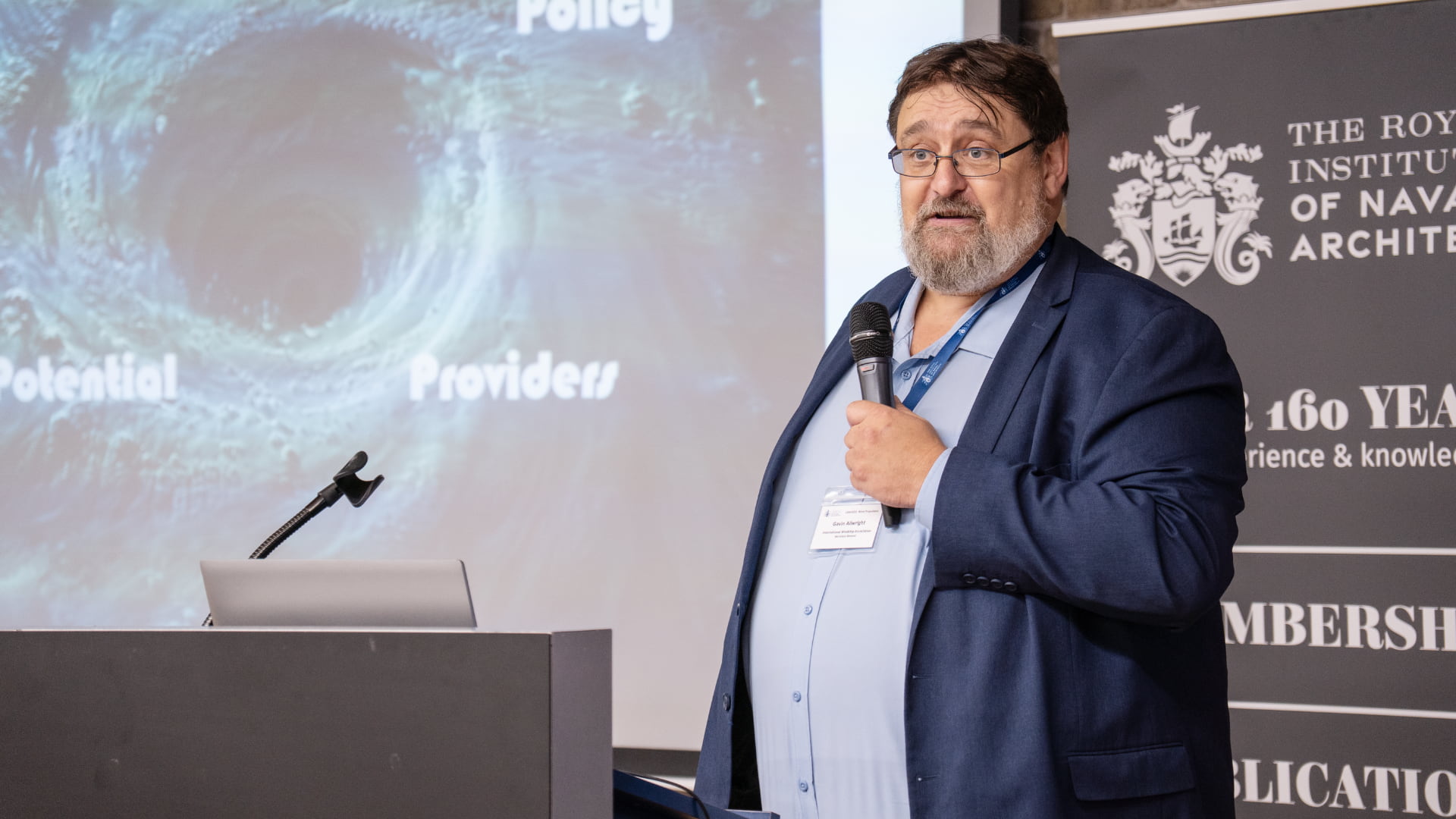
The statement made by Gavin Allwright, Secretary general of the International Windship Association (IWSA), during his keynote speech at the Royal Institution of Naval Architects (RINA) Wind Propulsion 2026 Conference captured the commercial logic increasingly underpinning wind-assisted propulsion (WAPS).

Held on 17–18 February at Convene 133 Houndsditch in the City of London, the conference opened to a sold-out audience, a clear signal of the growing centrality of wind propulsion within maritime decarbonisation strategy.

Hosted by the Royal Institution of Naval Architects (RINA) in association with the IWSA, the event continues to serve as an important early-year marker in the decarbonisation calendar, setting context ahead of further debate at gatherings such as RINA’s Ship Energy Efficiency Conference in Athens.

Gold sponsorship came from DNV, with silver sponsors including Lloyd's Register and Vaisala, underscoring the degree to which wind propulsion is now embedded within mainstream classification, verification and risk management frameworks. Bronze sponsorship was provided by Mitsui O.S.K. Lines.

An underlying theme across the first day of the conference was the industry’s response to the recent impasse at the latest MEPC meeting at the International Maritime Organization (IMO). However, while a hoped-for consensus on mid-term greenhouse gas measures was not reached in 2025, conference attendees were optimistic that it would not prevent wind-propulsion technology from developing apace.

In one of the conference’s opening speeches Aakash Dua, Regional Business Development Director at DNV, framed the broader challenge that new fuels and technologies are introducing uncertainty into the system, but that also provides new opportunities to evolve. Decarbonisation, he argued, is not a “chicken and egg” dilemma but a full-system transformation requiring early dialogue rather than competition between sectors. The pathway must be “safe, scalable and irreversible.”


Maintaining course

That framing set the stage for the keynote from David Osborn, Director, Marine Environment Division, IMO, whose remarks carried particular weight given the recent regulatory turbulence.

Recalling advice from his time at naval college in Australia, Osborn stated that the maritime sector must “remain flexible, and roll with the punches.” He addressed concerns that policy momentum might be faltering. “Wind has not gone out the sails of decarbonisation in the maritime sector,” he insisted. “Progress continues, we must keep our focus on action.”

While acknowledging that turning policy into practice cannot rest with one organisation alone, he pointed to the IMO’s track record of delivering tangible outcomes through regulation. The organisation remains technology agnostic, he stressed, but “concrete action to reduce emissions can be undertaken now,” as demonstrated by accelerating technological deployment.

The message was one of continuity amid recent disruption. “We must maintain our course.”

In the technical streams, presentations examined verification methodologies, digital twins and performance modelling, all essential for translating projected savings into bankable outcomes. The integration of wind systems into hull design, manoeuvring standards and structural assessments featured prominently. Post-presentation panel discussions agreed that as installations scale, wind devices must be treated as part of vessel architecture rather than appendages.


Policy and regulation

The Policy and Regulation roundtable that followed also revealed a more candid assessment of the current moment.

Chaired by Stefano Scarpa, Director of Maritime Decarbonisation, ABL Group, the discussion began with what he described as the “big shock” of the most recent MEPC meeting. Regulations had not been approved; consensus had fractured. Yet, he argued, work on practical implementation must continue regardless.

Decarbonisation is a matter of “when, not if,” argued David Connolly, Head of Operations, UMAS, who also suggested the outcome of the previous MEPC meeting was less surprising than some perceived. Connolly stated that while the regulatory trajectory may be uneven, directionally it remains clear.

John Taukave, Policy Advisor, Micronesian Centre for Sustainable Transport, provided a stark reminder of the stakes: “Every delay is an existential delay for the communities of the Pacific.” He made it clear that for small island developing states, wind propulsion is not merely a commercial efficiency tool but part of a broader zero-carbon transition framework, and one that also reconnects with long maritime traditions of wind-powered navigation.

The concept of a just and equitable transition surfaced repeatedly. How does wind propulsion contribute not only to emissions reduction but also to inclusive decarbonisation pathways? The Marshall Islands’ historic and cultural relationship with wind-powered vessels was cited as a powerful symbolic and practical reference point.

Connolly argued that a “fundamental reset” may be necessary: newbuilds should be prepared for wind in the same way they are increasingly designed to accommodate alternative fuels. The implication was structural. Wind should not remain an afterthought retrofit, but a design consideration from the outset.

Parallel presentation streams throughout the first day demonstrated that scaling wind propulsion requires more than aerodynamic efficiency.


Legal and contractual risk

Elsewhere, legal and contractual risk was scrutinised. Professor Orestis Schinas, Specialist in Ship Finance, HHX.blue, chaired a roundtable exploring how construction contracts, charterparty arrangements and insurance frameworks must evolve.

Dr Pia Rebelo, Legal Analyst, Stephenson & Harwood, noted that contractual obligations will require reshuffling as wind propulsion becomes embedded within design and regulatory compliance. New areas of risk, performance guarantees, downtime exposure, repair logistics, must be allocated clearly.

The complexity of maritime contractual relationships, voyage charters, time charters, sale contracts, bills of lading, remains “incredibly antagonistic” in places. Introducing new propulsion technologies adds further friction.

François Luigi, Client Director, Filhet Allard, observed that insurers do not fear risk; they fear uncertainty. The challenge lies in limited repair infrastructure, sparse spare parts networks and geographically dispersed manufacturing. Data, therefore, becomes central to risk assessment and premium stability.


Delivering measurable savings

Gavin Allwright’s keynote on the morning of the second day placed wind propulsion within a pragmatic commercial frame. Ninety-three large vessels are now operating with wind systems, representing around 5 million dwt, with a further 120 installations in the pipeline, the majority expected in 2026. The sector, he suggested, is “rapidly approaching an inflection point,” where operational data, production capacity and commercial familiarity begin reinforcing one another.

Framing wind not as a novelty but as continuity, he observed, “we are coming back to an energy source that has been there forever, we’re just doing it better.” At the same time, he was clear that integration matters: “If we take energy efficiency, voyage optimisation and wind together, cumulatively, we’re getting close” to longer-term decarbonisation targets.

“If the shipping industry doesn’t see a way to make money, these will fail,” he cautioned. But, wind propulsion’s distinguishing feature is its ability to deliver measurable savings now, he stated, layered alongside CII compliance, FuelEU Maritime incentives and EU ETS exposure.

The Shipowners’ Debate, overseen by Dimitris Monioudis, Technical Committee Chair, INTERCARGO, reinforced that this is no longer theoretical.

“It’s quite complex to really put the two lines under the answer of how much you’re saving,” observed Jan Opedal, Project Manager, Odjfell Tankers, who described a decarbonisation journey rooted in fuel efficiency long before regulatory compulsion intensified. With incremental measures largely exhausted, suction sails were introduced as a next step. Yet quantifying savings precisely was noted as still being complex.

Union Maritime’s, Commercial Performance Manager, Jesse Bryce described a portfolio approach across vessel classes, embedding flexibility into newbuild foundations. “If things look good, the price looks good, the performance looks good, and we can get it on the ship, why not?,” he stated.


Keeping sights on safety

Concluding the conference, the roundtable on safety and hazards reinforced that scaling must not outpace safeguards.

Where the panellists explained that crew require understanding of wind dynamics; simulator training and updated company procedures must align with regulatory development. Again, focus was placed on the IMO, which faces a deadline to produce a dedicated safety code for wind-assisted propulsion, and has acknowledged gaps in expertise. Collaboration between class, insurers and owners was also emphasised as essential.

Redundancy, including retention of conventional propulsion systems, was framed as reasonable and necessary. Commercial realities, cargo considerations and operational risk must be balanced carefully.

Wind Propulsion 2026 demonstrated the scale and industrial growth of the segment within the maritime sector, technically, commercially and institutionally. While regulatory uncertainty remains, deployment across the global fleet continues.

The narrative has shifted from “if” to “how”.

As Osborn cautioned, maintaining course matters. But as Allwright argued, commercial logic must underpin ambition.

Frequently Asked Questions

Lorem ipsum dolor sit amet, consectetur adipiscing elit, sed do eiusmod tempor incididunt ut labore et dolore magna aliqua. Ut enim ad minim veniam, quis nostrud exercitation ullamco laboris nisi ut aliquip ex ea commodo consequat.

Tab1

Lorem ipsum dolor sit amet, consectetur adipiscing elit, sed do eiusmod tempor incididunt ut labore et dolore magna aliqua. Ut enim ad minim veniam, quis nostrud exercitation ullamco laboris nisi ut aliquip ex ea commodo consequat. Duis aute irure dolor in reprehenderit in voluptate velit esse cillum dolore eu fugiat nulla pariatur. Excepteur sint occaecat cupidatat non proident, sunt in culpa qui officia deserunt mollit anim id est laborum.

Tab2

Lorem ipsum dolor sit amet, consectetur adipiscing elit, sed do eiusmod tempor incididunt ut labore et dolore magna aliqua. Ut enim ad minim veniam, quis nostrud exercitation ullamco laboris nisi ut aliquip ex ea commodo consequat. Duis aute irure dolor in reprehenderit in voluptate velit esse cillum dolore eu fugiat nulla pariatur. Excepteur sint occaecat cupidatat non proident, sunt in culpa qui officia deserunt mollit anim id est laborum.

Frequently Asked Questions

Lorem ipsum dolor sit amet, consectetur adipiscing elit, sed do eiusmod tempor incididunt ut labore et dolore magna aliqua. Ut enim ad minim veniam, quis nostrud exercitation ullamco laboris nisi ut aliquip ex ea commodo consequat.

Tab1

Lorem ipsum dolor sit amet, consectetur adipiscing elit, sed do eiusmod tempor incididunt ut labore et dolore magna aliqua. Ut enim ad minim veniam, quis nostrud exercitation ullamco laboris nisi ut aliquip ex ea commodo consequat. Duis aute irure dolor in reprehenderit in voluptate velit esse cillum dolore eu fugiat nulla pariatur. Excepteur sint occaecat cupidatat non proident, sunt in culpa qui officia deserunt mollit anim id est laborum.

Tab2

Lorem ipsum dolor sit amet, consectetur adipiscing elit, sed do eiusmod tempor incididunt ut labore et dolore magna aliqua. Ut enim ad minim veniam, quis nostrud exercitation ullamco laboris nisi ut aliquip ex ea commodo consequat. Duis aute irure dolor in reprehenderit in voluptate velit esse cillum dolore eu fugiat nulla pariatur. Excepteur sint occaecat cupidatat non proident, sunt in culpa qui officia deserunt mollit anim id est laborum.

Tab3

Lorem ipsum dolor sit amet, consectetur adipiscing elit, sed do eiusmod tempor incididunt ut labore et dolore magna aliqua. Ut enim ad minim veniam, quis nostrud exercitation ullamco laboris nisi ut aliquip ex ea commodo consequat. Duis aute irure dolor in reprehenderit in voluptate velit esse cillum dolore eu fugiat nulla pariatur. Excepteur sint occaecat cupidatat non proident, sunt in culpa qui officia deserunt mollit anim id est laborum.

Tab4

Lorem ipsum dolor sit amet, consectetur adipiscing elit, sed do eiusmod tempor incididunt ut labore et dolore magna aliqua. Ut enim ad minim veniam, quis nostrud exercitation ullamco laboris nisi ut aliquip ex ea commodo consequat. Duis aute irure dolor in reprehenderit in voluptate velit esse cillum dolore eu fugiat nulla pariatur. Excepteur sint occaecat cupidatat non proident, sunt in culpa qui officia deserunt mollit anim id est laborum.

text one

Lorem ipsum dolor sit amet, consectetur adipiscing elit, sed do eiusmod tempor incididunt ut labore et dolore magna aliqua. Ut enim ad minim veniam, quis nostrud exercitation ullamco laboris nisi ut aliquip ex ea commodo consequat. Duis aute irure dolor in reprehenderit in voluptate velit esse cillum dolore eu fugiat nulla pariatur. Excepteur sint occaecat cupidatat non proident, sunt in culpa qui officia deserunt mollit anim id est laborum.

Sponsored: Engineering the next decade of maritime innovation

Advanced Maritime Technology expo & conference, June 16–18, 2026, RAI Amsterdam


As the maritime sector enters a decisive decade of technological transition, naval architects and marine engineers are confronting a convergence of complex challenges: electrification, hybrid power integration, autonomous vessel systems, digital control architectures, regulatory evolution, and new expectations for commercially viable sustainability. This June, Advanced Maritime Technology expo & conference provides a dedicated platform to explore these engineering frontiers.


Hosted at the RAI Amsterdam from June 16–18, 2026, the expanded event unites the former Electric & Hybrid Marine and Autonomous Ship events into one single, integrated technical environment. The consolidation reflects the reality that modern vessel development no longer occurs within discrete silos. Instead, naval architecture increasingly demands cross disciplinary engineering, program-level systems thinking, and a holistic view of vessel performance and lifecycle efficiency.


A technical platform built for today’s naval architect

The 2026 edition has been shaped directly by industry feedback, with a program designed to support engineers seeking rigorous insight and practical solutions. All conference and expo content is organised around four focused technology streams:


Electrification & Hybridization: Advances in energy storage, power conversion, thermal management, and propulsion integration.


Automation & Autonomy: Control systems, perception technologies, fault management, and operational safety. MASS and Remote Operation.


Ports and Infrastructure:  Shoreside systems, energy infrastructure, and port electrification and integration.


Regulation & Finance: Regulatory overviews and strategies, commercial modelling, investment pathways, risk frameworks, and cost-of-ownership considerations.


This structure allows naval architects, systems engineers, and program managers to navigate the event according to their specialist priorities while maintaining visibility across adjacent technical domains.


Why attend: relevant insight for working designers and engineers

Attendees can expect a uniquely application-driven event, emphasising real-world challenges faced by designers, yards, and operators. The 2026 program prioritises:

Cross disciplinary technical knowledge

Content for propulsion architects, structural and systems engineers, control specialists, integration engineers, and vessel programme leads.

Direct connections to live project data

Including prototypes, demonstrators, and commercial deployments across multiple vessel classes.

Current interpretation of class rules and regulation

Particularly for battery systems, hybrid architectures, autonomous functions, digitalised vessels, and energy management technologies.

Engagement with OEMs, integrators, and research institutions

Featuring organisations developing the systems naval architects will specify in the next wave of vessel designs.


A more conversational, engineer-focused conference format

This year’s conference introduces longer Q&A sessions, expanded panel discussions, and more opportunity for technical exchange. Instead of short, isolated presentations, the new format encourages open discussion between speakers, delegates, and OEMs, supporting deeper exploration of engineering challenges and solution pathways. A limited number of Early Bird delegate rates are available until May 4, 2026, across singled ay, multiday, and full conference passes. With a more flexible pricing structure, attendees can tailor their participation to the specific technical streams and sessions most relevant to their work.


First confirmed speakers and preliminary program announced

The first wave of speakers includes engineering authorities from classification societies, system integrators, R&D institutes, and advanced technology developers. Sessions will address methodologies for next-generation vessel modelling, performance data from operational projects, safety and reliability analysis, and future design considerations for increasingly autonomous and electrified fleets. Visit advancedmaritimetechnologyexpo.com for all conference program details.


Join the maritime engineering community in Amsterdam

Advanced Maritime Technology expo & conference invites RINA members to three days of high-level engineering dialogue, industry insight, and technical discovery. Whether you are designing future hybrid propulsion systems, evaluating autonomy requirements, navigating the regulatory landscape, or exploring new integration strategies, this year’s event provides the knowledge and network to support your work.


Registration for free expo passes is now open.

QR1


Delegate passes, including Early Bird options, are available for those seeking full access to the conference program.

QR2


Visit advancedmaritimetechnologyexpo.com for all the latest event information.


Immersive simulation accelerates warship design

BMT’s new state-of-the-art Digital Innovation & Simulation Centre (DISC) aims to accelerate immersive engineering, autonomous systems assurance and digital twin solutions for defence and commercial customers.

Underpinning the Full Mission Bridge is the DNV-accredited BMT REMBRANDT high‑fidelity hydrodynamic engine, which enables everything from tug and pilot training, through to litigation‑grade reconstruction.

DISC also hosts the Marine Autonomous Surface Ship Synthetic Environment Assurance System (MASS SEAS) synthetic environment and BMT ENGAGE, which allows users to create photorealistic digital twins and cyber and wargaming scenarios, as well as immersive VR/AR training programmes.

These capabilities directly support BMT’s autonomous vessel, de-risking provision and marine incident analysis services for defence and commercial customers.

High-fidelity simulation

“High-fidelity simulation environments allow the naval design spiral to be exercised in a more integrated and evidence-driven manner, particularly in the early design phases,” says Andrew Gray, head of emerging products and programmes at BMT.

He explains that immersive simulation and digital twin environments enable naval architects, operators and assurance specialists to interrogate ship behaviour, operability and system interactions before physical assets exist.

This supports earlier identification of design sensitivities relating to manoeuvrability, human–systems integration, autonomy behaviours and operational constraints.

“As a result, a greater proportion of design learning can be achieved virtually, reducing reliance on late-stage physical prototyping,” he says.

“Physical trials remain essential, but their emphasis increasingly shifts toward validation and confirmation rather than discovery. This approach supports more rapid convergence of the design spiral and reduces the risk of costly design change during integration and sea trials.”

Andrew Gray, head of emerging products and programmes at BMT (left) and Monty Long, regional future business director at BMT (right)

Warship Mar-26 BMT-3 Gray V2 Warship Mar-26 BMT-2 Long V2

Digital twin strategy

Integrated digital twin environments are increasingly capable of forming a central component of assurance strategies for complex naval programmes, provided they are appropriately governed and validated, says Monty Long, regional future business director, BMT.

These environments allow scenarios to be exercised repeatedly and consistently, generating traceable evidence that supports technical decision-making.

“Digital twins do not remove the requirement for physical testing; however, they allow assurance activity to be distributed across the programme lifecycle rather than concentrated at the end,” Long says.

“In this sense, they increasingly act as the primary mechanism for risk exploration and evidence generation, with physical trials providing confirmation against an already well understood design envelope.”

BMT’s work on SEAS/MASS SEAS shows how this plays out when autonomy moves from trials into fleet concepts. By running DNV‑grade synthetic trials against MASS and COLREGs requirements, autonomous system behaviour can be demonstrated across thousands of encounters that would be prohibitively risky or expensive to recreate at sea.

Sea trials can then be used to prove the most demanding edge cases and build human confidence in what the models already show.

Assurance driven simulation

Simulator-based autonomy assurance influences design requirements by forcing earlier consideration of system behaviour, control authority and human interaction across a wide range of operational conditions.

“For both crewed and uncrewed platforms, this approach encourages autonomy to be considered as an integral part of platform design rather than an add-on capability,” says Gray.

“Assurance-driven simulation therefore plays an important role in shaping hull form, systems integration and concepts of operation, supporting safer and more trusted deployment of autonomy at scale.”

BMT is already using these environments to explore mixed‑fleet concepts in which crewed ships, modular USVs and remote operations centres share situational awareness and control, testing how design choices around hull size, payload modularity, comms architecture and human–machine interfaces play out when vessels are operating at scale and under pressure.

This helps customers refine requirements for everything from bridge layout and ROC design to sensor fit and redundancy, ensuring future platforms are engineered from day one for trusted autonomy, lean crewing and rapid upgrade paths, rather than having those demands bolted on mid‑life at far higher cost.

Multi-stakeholder design

DISC also provides a shared digital environment in which designers, operators, regulators and assurance stakeholders can align assumptions and expectations earlier in the programme.

This reduces the likelihood of late-stage disagreement over design intent or evidential sufficiency.

BMT sees this most clearly in programmes where DISC is used as a neutral ’digital canvas’ to bring together Royal Navy sponsors, regulators such as NATG, industry partners and classification societies.

“That doesn’t change who holds ultimate design authority, but it does create a more commercial, programme‑savvy environment in which risk is shared more intelligently and the evidence is visible to all,” Long says.

Digital innovation hubs

The emergence of digital innovation hubs reflects a broader shift toward continuous design and assurance across the naval platform lifecycle.

Warships are increasingly required to evolve over extended service lives, incorporating new technologies, autonomy functions and mission requirements.

Facilities such as DISC provide the infrastructure to support persistent digital twins, ongoing simulation-based assurance and iterative engagement with stakeholders throughout the lifecycle.

“This supports a more adaptive approach to warship development, in which capability evolution is informed by continuous evidence rather than isolated programme milestones,” says Long.

For BMT, DISC is deliberately set up as more than a one-off facility – it is a template for how navies and industry can manage continuous evolution of complex fleets, including hybrid crewed–uncrewed constructs like MODUS.

“Digital hubs don’t replace discrete build programmes, but they do enable a more ‘evergreen’ warship model – where capability is refreshed, re-certified and re-commercialised through a persistent digital twin,” says Gray.

Alongside DISC, BMT’s work on modular payload programmes – including its partnership with Force Development Services (FDS) in support of the Royal Navy’s NavyPODS vision, underlines this shift from one-off builds to a continuously adaptable fleet.  

“By treating PODS-style payloads, uncrewed platforms and motherships as parts of a coherent system, we can use digital hubs to prototype new load-outs, rehearse mission switches and refine support models before they are rolled out across the fleet,” says Long.

That combination of modular hardware and persistent digital assurance is what ultimately enables a ‘continuous warship design’ mindset in practice – allowing navies to re-role ships and refresh capability at the speed of relevance, while maintaining control over risk, availability and through-life cost.

Building in better cyber resilience

Not a day goes by without hearing about cyberattacks wreaking havoc for organisations and consumers around the world and the shipping and marine sectors are no exception.

Marinelink’s Security Operations Centre (SOC) report is quick to point out that for the second half of 2024, cybercriminals targeting the maritime sector have streamlined their tactics, enhanced their operational efficiency and worse, adopted emerging technologies to expand their attack capabilities.

Maritime intelligence company, Pole Star Global explains that Automatic Identification System (AIS) spoofing and GPS jamming are frequently used techniques that provide a false idea of ship locations while at sea and so it makes the case for using more effective persistent tracking methods.

But how should warship design and technology evolve to remain operational under GNSS denial, AIS spoofing, or degraded positioning environments?

“Today's warfighters train extensively in GNSS-denied environments and already navigate using layered methods: Inertial systems, celestial techniques and traditional seamanship, all feeding into combat management systems that fuse multiple PNT sources,” explains Alex Field, managing director, Pole Star Defense.

“But the evolution needed is threefold. First, broaden the PNT portfolio as emerging technologies like automated celestial navigation, magnetic anomaly navigation and eLoran reach maturity. Second, adopt open modular architectures so ships can integrate new PNT sources without redesign. Third, treat AIS as adversarial data and harden the recognised maritime picture through multi-sensor fusion with confidence scoring.”

Alex Field, managing director of Pole Star Defense

Warship Mar-26 Pole-Star-1 V2

Design implications

Field explains that there are design implications arising from adopting persistent, multi-source vessel tracking onboard naval platforms.

Persistent, multi-source vessel tracking creates tension across several design dimensions.

Every active sensor improves the track picture but increases the ship's electromagnetic signature. Emissions Control (EMCON) becomes a first-order design consideration, favouring passive sensors like Electronic Support Measures (ESM) and electro-optical/infrared (EO/IR) systems that maintain situational awareness without broadcasting the ship's position.

“Fusing continuous data from radar, ESM, EO/IR, AIS and off-board sources demands significant onboard compute and cooling that legacy platforms were not designed to provide,” he says.

“Software-defined, modular computing architectures need to be designed in from the outset on newbuilds.

He explains that the combat management system must automatically correlate tracks across sensors, assign confidence scores and flag anomalies, particularly when AIS contradicts radar or EO/IR observations. AI and machine learning are increasingly applied to this correlation problem.

Sharing the fused picture across a task group requires bandwidth that may itself be contested. Each platform must therefore maintain a credible local picture independently and reconcile when connectivity is restored.

“The overarching design shift is treating tracking as an information architecture problem rather than a sensor problem: Open data architectures that decouple sensors from processing, allowing new sources and algorithms to be integrated without hardware changes,” Field says.

Reshaping shipboard systems

Field says cyber resilience is reshaping shipboard system architecture from perimeter defence to assuming compromise.

Zero trust principles, continuous verification of every user, device and data flow, are being adopted across Navy networks.

Initial implementation focuses on shore infrastructure and unmanned platforms, with extension to manned warship combat networks still maturing.

The complexity of legacy systems, real-time operational demands and Denied, Disrupted, Intermittent and Limited (DDIL) connectivity make this a significant engineering challenge.

Software-defined warships expand the attack surface. Over-the-air combat system updates are operationally transformative but demand rigorous supply chain assurance as commercial hardware and third-party code replace bespoke, air-gapped systems.

“Network segmentation must isolate combat systems, navigation, propulsion and damage control so breaches cannot cascade laterally. Systems must degrade gracefully under cyberattack in known, predictable ways that crews can manage, mirroring how damage control doctrine handles kinetic battle damage,” Field says.

Architectural discipline

Cyber survivability is now a naval architectural discipline equivalent to damage stability or shock resistance.

The DOD's System Survivability Key Performance Parameter, one of four mandatory KPPs for all weapon systems, includes a Cyber Survivability Endorsement that places cyber threats in the same acquisition trade space as kinetic ones.

On the commercial side, IACS unified requirements E26 and E27, mandatory for new construction contracts from July 2024, codify cyber resilience as a classification requirement alongside structural and stability standards.

“But the harder question is whether practice matches policy. Damage stability and shock resistance benefit from decades of test data, mature modeling tools and deeply ingrained design culture,” says Field.

“Cyber survivability is newer, the threat evolves faster than ship design cycles and testing a ship's cyber resilience under realistic conditions is inherently more complex than a shock trial. The formal discipline exists. Building the same depth of rigor and instinct around it is still work underway.”

Future bridge systems

Field says that cyber threats will continue to reshape bridge design around one core problem into the future: The operator can no longer implicitly trust what the screens are showing.

“Traditional bridge integration assumes sensor data is reliable. A cyber-compromised bridge may display spoofed positions, false contacts, or manipulated propulsion data and the danger is that operators act on it without recognising the tampering, says Field.

This drives several design implications. Displays need data integrity indicators that flag when inputs are inconsistent or potentially compromised, making the trustworthiness of data visible to the operator, not just the data itself. Manual fallback must be genuinely operable, not theoretically available.

And the deeper Human-Machine Interface (HMI) challenge is cognitive: Designing ship bridge interfaces that help operators recognise when they're being deceived rather than simply presenting data faster and in higher resolution.

Autonomy as a capability multiplier

AI system developer, MarineAI has formed a close partnership with the uncrewed surface vessel designer and builder, ZeroUSV, reflecting a growing concentration of operational maritime autonomy capability across the defence sector.

Together, they have created a first-of-its-kind programme to create a distributed sensing network that supports underwater monitoring and secure communications for submersible fleet operations.

Funded by UK Defence Innovation (UKDI), the initiative will deploy autonomous vessel platforms and acoustic systems to maintain covert contact with underwater assets without relying on high-bandwidth or detectable links, enabling more resilient subsea mapping, intelligence and infrastructure monitoring.

Simplifying decision-making

Central to the MarineAI ethos is the view that the introduction of onboard decision-support systems should not make the bridge more complicated.

Modern warships already manage large volumes of information from navigation systems, sensors and mission equipment. Simply adding further displays or alert systems increases operator workload and does little to promote efficient or accurate decision making.

“The opportunity with autonomous systems is to simplify the decision-making pathway. Autonomy software can process large volumes of onboard data and distilling it into clear, actionable information,” says Oliver Thompson, director of engineering at MarineAI.

“This can then be presented to operators as recommendations, or, in specific trusted cases such as navigational routing, can be executed by the system itself.”

One of the key requirements of autonomous capability is decision transparency, he says.

 Oliver Thompson, director of engineering at MarineAI

Warship Mar-26 Marine-AI-2 V2

Operators must be able to understand how a recommendation has been reached and what informed a decision and that builds trust in the system.

For this reason, autonomous capability should be accessible to operators through existing bridge and command interfaces rather than appearing as a separate and isolated console on an additional screen.

Reliability, fidelity and availability

So, what platform design requirements can emerge from deploying autonomy systems in operational naval environments?

From a platform perspective, the requirements are broadly consistent with those for other critical naval systems. Reliability, fidelity and availability are fundamental, Thompson says.

Autonomous capability must remain functional during operations if it is to be trusted in theatre.

The overall system must also account for hardware faults and routine maintenance cycles. Redundancy and failover therefore need to be built into the onboard computing architecture in the same way they are for navigation, propulsion or combat systems.

Modern operational autonomy systems typically run on compact edge computing platforms or similar embedded processors. These are notably different from the hardware required to train models, which can require substantial computing resources. Once trained, however, the software that operates onboard a vessel is typically far less demanding.

Thompson says that a key platform consideration is therefore reliability, integration with existing ship systems and cyber resilience rather than large-scale computing infrastructure.

An autonomy system’s decision making is informed by the data it receives, whether from the vessel itself, other vessels in a fleet, or shoreside command centres. It is therefore essential that this data is reliable and of high quality.

Autonomous vessels rely on sensors such as high-quality cameras and other systems to provide situational awareness. This represents a shift from a traditional operator-driven awareness to awareness generated by autonomous system capabilities.

A capability multiplier

An interesting point for discussion is how autonomy will influence the make-up of future fleets, particularly the balance between crewed warships and uncrewed surface vessels.

Thompson says that autonomous vessels are best viewed as a capability multiplier, rather than a replacement for crewed warships.

They are particularly suited to missions that are dangerous, dull or dirty. These are tasks that either expose crews to unnecessary risk or involve long periods of repetitive activity.

Persistent surveillance, reconnaissance and operations in hazardous environments are typical examples.

“Using autonomous platforms in these roles allows crewed ships to focus on missions that require human judgement, command authority and coordination within the wider task group or fleet,” he says.

In addition, autonomous systems also make it possible to deploy a larger number of platforms across an operational area, increasing coverage and persistence. This effectively expands the number of assets available to commanders without increasing crew requirements.

This concept can already be seen in developments such as the Royal Navy’s “loyal wingman” approach, in which traditional crewed platforms are supported by autonomous or remotely operated systems.

“The likely outcome is therefore a mixed fleet structure in which crewed ships remain central, supported by autonomous vessels that extend operational reach and maritime presence,” says Thompson.

Autonomy challenges

One challenge with advanced autonomy is, as Thompson describes, the “genie problem”.

An operator may believe they have issued a precise instruction, yet the system may interpret that instruction in a way that technically fulfils the request while producing outcomes that were not anticipated.

“For this reason, autonomy should not be treated as something that can simply be deployed and left to operate independently without oversight. Its role is to analyse information and propose options, while authority to act remains within a human-supervised chain of control,” he says.

On an uncrewed vessel, decision making must remain observable and controllable, when necessary, much as it is on a crewed ship. Operators should retain the ability to monitor system behaviour, review recommendations and intervene if required.

In practice, the level of oversight varies depending on the type of decision involved. Navigation and collision avoidance are relatively bounded problems with established regulatory frameworks and can allow for some degree of autonomous action.

Mission management and operational tasking, however, involve more complex judgement and therefore require closer human supervision, often precluding autonomous systems from acting independently.

Ultimately, Thompson says, trust in autonomy within safety-critical naval environments will depend on transparency, human oversight and predictable system behaviour.

Designing systems that keep humans informed and within the decision chain will be central to the safe adoption of autonomy at sea.

New Membership pathway for maritime professionals

RINA is delighted to introduce two new tiers for those with expertise outside of our core of naval architecture and maritime engineering. The new tiers recognise the indisputable value of associated disciplines to maritime innovation and the need for interdisciplinary collaboration.

Designed specifically for professionals working across the wider maritime sector, this new progression pathway supports their continued professional development, as well as enriching the talent pool of our global maritime community.


What’s new?

We’ve introduced two membership levels to reflect career progression:

  • Associate Fellow (AFRINA) – for senior professionals demonstrating leadership and significant contribution.
  • Associate Professional (APRINA) – for established professionals with recognised competence and responsibility.


Why this matters

This new structure provides:

  • A clearer pathway for career progression.
  • Recognition of expertise across a broader range of maritime roles.
  • Opportunities to engage more deeply with the professional community.


Click here to review the full criteria, share with colleagues and friends, and join our global maritime community.

China: ship repair's hotspot

Global ship repair work spiked 7% in the first nine months of 2025 following a surge in aging ships along with installations of energy saving devices.

According to data released by Clarksons Research last year, following surges in vessel building in the first 10 years of this century, vessels are now approaching their third, fourth or fifth surveys and that, along with the race to install energy saving devices, has prompted the increase in demand for yard space.

China’s repair yards accounted for 17 of the top 20 busiest repair yards in the world with some 4,841 ships completing repairs, aggregating nearly US$5 billion, up 13.14% during up to and including the third quarter of last year.

Scrubber units fitted during 2019–2020 saw the last major upsurge of retrofit activity, however, decarbonisation is the new driver, with a rapid uptick in efficiency upgrade orders recorded following the postponement of the IMO’s Net Zero Framework (NZF) in October.

More than 540 ships completed efficiency upgrades in 2025, with many retrofitting carbon capture and storage systems and fuel conversions.

Hanwha’s Hyoung‑Seog Kim, argues that there are two types of retrofit projects, those driven by regulation and those that offer improved vessel performance.

Kim, head of the South Korean yard’s Marine Solution Business Division at Hanwha Power Systems and head of Commercial Ship Engineering and Technology at Hanwha Ocean, noted that the retrofit of ballast water treatment systems and scrubbers meet regulations on invasive species and SOx emissions respectively, and these are effectively cost driven.

This first type of retrofit is essentially a cost to the owner, with the main benefit being that the vessel owner or operator does not pay a penalty for non-compliance.

Retrofits that improve efficiency such as wind-assisted propulsion systems, air lubrication and any hydrodynamic device that reduces resistance and cuts fuel use and emissions will have a period where the capital cost of the system is repaid through reduced operating costs.

“I think verification of effectiveness is paramount. While the theoretical benefits are quite clear, the burden to prove real-world gains is on the technology providers,” said Kim, adding, “Until the firm contract is made, the primary hurdle is how we can provide the owner with confidence on the ROI.”

Container shipping is the leading shipping sector, as far as shipping’s decarbonisation is concerned, driven mainly by the demands of the sector’s customer base, which is largely consumer facing.

Chen Bing, president and CEO of independent ship owner Seaspan Corporation, believes that the decarbonisation process in shipping is not a revolution, but a gradual evolution.

“Facing further enhanced green decarbonisation targets and unclear green energy supply, we should focus more on feasible, affordable, and sustainable development,” added Chen.

Chen’s colleague at Seaspan Corporation, COO Torsten Holst Pedersen identified a third retrofitting sector, to add to Kim’s decarbonisation and regulation driven modernisation, that of safety systems.

Human error, according to many experts, is the major cause of maritime accidents, minimising the incidence of such incidents can save lives, the environment, and money by destressing watchkeeping.

For some years Seaspan has been actively retrofitting Orca AI technology to its ships as an aid to navigation, and Pedersen argues: “The system is specifically designed for use in challenging navigational conditions, such as low visibility and crowded waters, but the crew is encouraged to utilise it consistently for better situational awareness around the vessel.”

According to Pedersen, the Orca AI system uses thermal imaging too, so it can see in dense fog, in regions such as the East China Sea, “where you'll have vessels that are not necessarily on AIS or ‘forgot’ to switch on any lights because they're illegally fishing”.

In fog, said Pedersen, often you see fishing boat lights, and they look like they are on the horizon. “But when you see it with the thermal imaging, then you notice that there are loads of ships before you get to the light and you didn't notice them and you can't see which way they're going, but with Orca AI it gives you that information,” he explained.

Yarden Gross, CEO and founder of Orca AI, told The Naval Architect that the average installation time for Orca AI is six hours.

In addition, the system is easy to use, and Orca offers a crew training session lasting 15-20 minutes, followed by a five-minute computer-based training.

AI emerges as maintenance tool

A legitimate use of AI has emerged in predictive maintenance, where the symptoms produced by a component are analysed over time to identify patterns of wear and degradation.

It is thought that using an AI trained on data from everyday smooth running, it will be possible to identify outliers and warning signs early, enabling parts to be replaced at precisely the right time.

The hope is that if a part is diagnosed early, a replacement can be sourced, a repair booked during an existing downtime interval, and that the worst-case scenario of a catastrophic failure – leading to huge costs and long downtime – can be avoided.

In October 2025, Opearl LNG Ship Management, based in Hong Kong, made an agreement with Wärtsilä to provide AI-enabled predictive maintenance on 14 LNG carriers, combining its Dynamic Maintenance Planning (DMP) and Expert Insight (EI) predictive maintenance platform. The system uses AI to hunt for anomalous readings which could indicate potential failures.

“We currently manage tight delivery schedules and require operations with minimal downtime and reduced maintenance interruptions,” said general manager Captain Nomura, OPearl LNG Ship Management. “This long-term agreement with Wärtsilä is intended to support these operational requirements and assist us in reliably meeting our delivery commitments to our customers.”

Shortly afterward, in January of this year, Wärtsilä signed another agreement, this time for 12 LNG Carriers with MOL Global Ship Management and incorporating both DMP and EI.

“Wärtsilä’s Lifecycle Agreement will optimise our vessel operations and maintenance, ensuring that we can maximise uptime and performance,” said Namit Mathur, director, MOL Global Ship Management. “In addition, this agreement will play a crucial role in supporting the sustainable operations of our fleet by helping us reduce emissions and operate more efficiently.”

Semi-submersible crane vessel Saipem 7000, in partnership with BIP, and ultra-deep-water drillship Saipem 12000, in collaboration with rig assurance company ADC, are now having essential systems monitored by AI predictive maintenance systems.

Rigged with networks of internet-of-things (IOT) sensors, the vessels are watched for early signs of wear or degradation in shipboard components.

As a drillship, maintenance downtime on Saipem 12000 is extremely costly. But in the low-tolerance context of deep-water drilling, the vessel incorporates various systems which could lead to severe negative consequences if there is a critical failure in an important component.

In 2010, some 11 workers were killed and 4.9m barrels of oil discharged into the Gulf of Mexico after the failure of a blowout-preventer (BOP) on ultra-deep-water semi-submersible drilling rig Deepwater Horizon. An internal BP audit months before the explosion revealed that 3,900 maintenance tasks were overdue, including on the BOP, and that deferred maintenance – of the sort Saipem 12000’s AI predictive maintenance system could help to avoid – was an endemic issue.

But the industry should take care that it does not over-rely on AI, and allow human inspection, maintenance and repair skills to atrophy. In recent studies of AI predictive maintenance by Lloyd’s Register, it was found that AIs have not only supposed degradation where none existed (a ‘false positive’); but have overlooked problems when they have occurred (‘false negative’).

As usual, the accuracy of models will improve over time when there is more training data present, but shipowners should not assume pinpoint accuracy from the outset. Particularly on such critical vessels as drillships, operators must resist the urge to neglect maintenance of a crucial wear part, on the say-so of an AI.

The BWM Convention compliance myth

In the ninth year since enforcement of the Ballast Water Management Convention (BWMC) the latest Concentrated Inspection Campaign (CIC) on ballast water treatment systems makes depressing reading.

The CIC report followed a three-month survey, ending 30 November 2025, into the actual performance, operation and maintenance of installed ballast water treatment systems and was published in February this year.

Deficiencies found by the survey revealed that operational failures of BWTS were failures of the technology itself, in 46% of detainable deficiencies, while crew training deficiencies resulted in 21% problems and the vessel’s Ballast Water Management Plan was deficient in 15% of surveyed ships.

A year earlier, a Paris Memorandum of Understanding report on Port State Control recorded similar failures, including poor ballast water record keeping, inadequate crew training, system unfamiliarity, and invalid or missing certificates.

These failures have led to the development of land-based reception facilities (LBRF) that have been commissioned mainly in Europe, with the Denmark-based Bawat offering a simple solution for vessels arriving in port with untreated ballast.

Bawat’s mobile BWTS system, operated from a 40ft container, help ships that cannot carry on loading operations without first managing the ballast water in their tanks. Bawat’s system effectively pasteurises ballast water, heating and cooling it to render it clear of live invasive species.

LBRF technology is one way of dealing with failed BWTS, but Charlène Ceresola, BWT project manager and regulatory expert at BIO-UV Group, noted: “Once you focus specifically on deficiencies serious enough to result in a ship being detained, the majority are associated with the ballast water treatment system itself.”

Dubai’s Drydocks World shared this view, telling The Naval Architect: “Between 2021 and 2024, yard capacity was the dominant constraint.”

Today Port State Control has shifted its emphasis in Europe, the Gulf and Asia to demonstrable compliance with D-2 discharge standards, operational testing and sampling, calibration and maintenance documentation and crew familiarity with system procedures, taking on more importance said Drydocks World.

“This enforcement shift exposed a structural issue: systems compliant on paper may not perform optimally in varied salinity and sediment conditions if integration, commissioning or maintenance has been insufficient. The real test now is whether these installed systems consistently function,” added the yard.

Drydocks World worked on 12 BWTS in 2025, two of which ended this year, in total the yard has completed more than 300 retrofits of ballast systems on tankers, gas carriers and container ships, among other vessel types. According to the yard there has been a transition from installation to “performance-led engagement”.

The reasons behind that are precisely as the CIC report suggests, many systems are not operating as they should, while some manufacturers have discontinued production of their BWTS in a highly competitive market, leaving owners without spare parts.

“While the majority of vessels are operating effectively, the post-deadline environment is revealing a second wave of activity. In addition to new installations, yards are also supporting system recalibration and optimisations, repairs and modifications as well as the removal and complete replacement of underperforming systems,” explained Drydocks World.

The industry trend is to make repair yards a strategic partner, and that requires the yards to offer integrated design prefabrication planning to protect yard schedules, and, additionally, collaboration on upgrades, removals of legacy systems and what Drydocks World calls long-term performance economics.

“Technical integration capability, constructability foresight and lifecycle support are no longer differentiators at the margin, they are prerequisites for sustained compliance,” the yard claims, and it says they are well positioned to meet industry needs with a vast team of 400 engineers.

However, the yard concludes: “Ballast water management has moved beyond the question of whether systems are fitted. The decisive question now is whether they perform consistently, predictably and under scrutiny.”

Since the approval of the Ballast Water Management Convention by the IMO in 2004, the regulation has been fraught with industry concerns, with the US having more stringent regulations than the IMO. That made BWTS approvals far more complicated. Member state ratification was slow, taking 13 years, with final ratification and enforcement delayed until September 2017.

Since the Convention entered into the full enforcement phase, the industry has been confronted by a new and more complex reality, that has changed the way yards, particularly larger repair yard, approach BWTS repairs and replacements.

“In the enforcement era, engineering discipline is no longer procedural, it is commercial infrastructure, shaping both fleet reliability and the competitive position of yards equipped to deliver it,” said Drydocks World.

Wind power's struggles to get airborne

Full shipyards do not like complications. As slots are filled into 2029, yards are becoming increasingly reluctant to build vessels that do not meet a standard design.

Vessel operators at RINA’s fifth Wind Propulsion Conference, held in London in February, told how they had worked to convince yards to add wind power to vessels, whether it was newbuildings or retrofits.

Wind installations on ships should be the most straight forward of retrofits, particularly on liquid or dry bulk ships which have open decks with cargo stored underneath.

Bulk ship operators typically operate at lower speeds and not always on the same routes, and are less inclined to shift to alternative fuels, which can be difficult to source, costly to buy, and will require extensive modernisation of ships or new vessels altogether.

One company, which operates a fleet of chemical tankers, has developed a methodology that will allow the company to meet net zero emissions up to 2040 with its existing 70 vessels of varying ages.

Erik Hjortland, vice-president of technology at Odfjell Ship Management, said the company had cut the emissions from its fleet simply by utilising existing technologies to improve efficiency without converting to low-carbon fuels.

By using simple and comparatively low-cost operational and technological changes to its fleet the Norwegian company’s fuel costs have been cut by an independently corroborated 53%.

With more than a decade in the planning Odfjell’s fleet optimisation programme has culminated in the testing of Bound4Blue suction sails on its tanker Bow Olympus, but the company has said it intends to add wind propulsion to its fleet.

“We have done that [reduced emissions] without putting any stress on the renewable electricity infrastructure in the world, which we would have to do if we had gone through alternative fuels route,” explained Hjortland, who referenced last year’s Clarkson study that revealed some 63% of the world’s fleet has not installed any energy saving devices.

Jan Opedal, project manager at Odjfell Tankers, told the Wind Propulsion conference: “For medium-sized ship owners, it's much cheaper to retrofit sails on a five-year dry docking than try to get them on a new building contract.”

Asian yards, who build 80-90% of all new ships are not keen on fitting sail technology.

“If you want three vessels in a standard series, the price is just crazy because of the equipment price, plus they price in risk because they're afraid of delays,” he said. “It’s very costly if you're not controlling the design or have a really long series of vessels.”

Speaking on the same panel, Jesse Bryce, Union Maritime’s commercial performance manager said, initially the company found the cost of newbuildings with sail “quite high”.

“They were the first time the shipyards were installing wind, and there was a lot of uncertainty there, but with the manufacturers helping to explain that actually it's not a terrifying process, it's all quite predictable, quite routine,” that made each new project easier.

Union Maritime operates a fleet of 56 tankers, 11 bulkers and three offshore vessels, with a further 34 ships on order and has been adapting its fleet to wind power.

Bryce, told the conference the company had approached yards to build a series of seven vessels, taking a standard design and asking each yard how they could improve on it.

“It's been a mixed response,” said Bryce, “Some shipyards are very open to considering all sorts of things, and some we get what we're given, and that’s the end of it.”

According to Bryce, by building a series of seven ships it allows the operator to get all the steel work and installation completed and you can operate from day one with the fuel-saving sails.

Union Maritime used Blue Wasp Maritime consultancy which specialises in modelling the effects of wind propulsion on commercial ships, to develop the seven newbuildings, of 18,000dwt each, six have been delivered with another one to come.

These ships are fitted with Norsepower rotor sails, on what Bryce said were small vessels, and the Norsepower sails were compact, winning out in simulations, “The cost benefit worked out for us.”

The next batch of seven aframax newbuilds will be fitted with BAR Technologies WindWings, rigid sails.

“They are very large, very powerful devices, and we can fit a lot of power onto the LR2s,” said Bryce.

He added that things are always changing with technologies improving, new designs, materials and lower prices.

Regulators approving a global form of carbon pricing would also improve the savings, and payback time.

The acceleration of electrification

Though their engines are among the most efficient on the planet, ships waste 50-70% of their energy as heat, although waste heat recovery devices can save a small percentage of the energy loss.

Electrical systems, on the other hand, are far more efficient. Electric cars may have had their problems storing energy, but once they come to use it, 90% goes to the wheels; the same is true of heat pumps and electric stoves.

There may be scant prospect of building enough wind turbines and solar panels to replace all of the fossil fuels on Earth; but it will not be necessary to do so, because running all of the same processes on electrical energy would more than halve the energy required.

Shipping could be part of the solution. Along with their cargoes, COSCO Shipping’s Green Water 01 & 02, two riverine container vessels of 700TEU, load and offload containerised batteries to power their propulsion. Though each is fitted with a 50,000kWh battery pack, the 20ft containerised batteries, which contain 1,600kWh each, can be loaded to support longer voyages.

Meanwhile, Eitzen Electric has received a US$19 million grant from Norway’s Enova for the development of two similarly sized 850TEU feeder containerships, with some 100MWh of energy storage each, double that of Green Water 01 & 02. Preliminary renderings show a house-forward design similar to the COSCO vessels – but instead of river trade, the two vessels would operate on open sea, carrying cargoes between Norway, Sweden and Germany.

The project was granted funding from Enova, a research fund operated by the Norwegian Government, in June last year.

“The Eitzen Group sees great potential in the electrification of regional shipping,” said Fridtjof C. Eitzen, CEO of the Eitzen Group, at the time. “Battery prices have decreased by over 80% in the last decade and will continue to fall as demand increases worldwide. Like a train that cannot be stopped, the use of electric ships will force itself forward as the most cost-effective way to transport goods at sea over time."

Powering shortsea trade requires a lot less electricity than might be expected: recently, the Captain of Yara Birkeland told The Naval Architect that the vessel, with 6.7MWh of capacity, reliably has around a third of its energy left after a round-trip voyage between Herøya and Brevik.

In the five years since that vessel was delivered in 2021, batteries have improved by around 35% in energy-by-volume and energy-by-weight. At the higher end, at the Columbia University School of Engineering and Applied Science, researchers believe they have identified a new gel electrolyte, which could be a solution to the problem of dendrites holding back anode-free batteries. If it works, it could double the volumetric energy capacity of batteries.

But the business case could improve yet further if shipping implements a suggestion by researchers at the Mærsk Mc-Kinney Møller Centre for Zero Carbon Shipping, in a 2024 research paper. Instead of displacing cargoes, the size and weight of battery systems are used as an asset.

Located at the bottom of the vessel, heavier than cargoes, batteries could act as ballast. Unlike bunker fuel, the weight of batteries does not change as they discharge, meaning that there is no need to alter ballast to account for it. While there would still need to be some ballast water, therefore, it could lead to much less ballast being transported around in tanks.

The study expects a theoretical 1,100TEU battery-hybrid feeder vessel to be on par with a methanol-fuelled ship in terms of cost, with the increased capital costs of the former offsetting the operating costs of the latter.

“We could note that, for very heavy cargo and a stratified loading scenario (i.e., heavier containers at the bottom, lighter at the top), the amount of ballast water required is reduced and, at some point, the loss of cargo intake will approach the deadweight loss in the fully loaded condition,” the Centre determined.

A great deal of effort is going into reducing the size, weight and cost of batteries, which are already being containerised; meanwhile, large amounts of renewable electricity are being produced that is, in effect, unsellable. Perhaps it is not a huge stretch of the imagination that short sea vessels might someday carry around cargoes of electricity, rather than oil and gas.

Awards 2026


Nominate a colleague, a mentee or a friend for one of our prestiguous Naval Architecture Awards. Chosen by our Committees, the winners will be announced at our Annual Dinner attended by more than 300 maritime professionals, industry leaders and academics. Taking place on 28th May, this will be an evening of celebration at the historic De Vere Grand Connaught Rooms in London. 

Nominations deadline: on 31st December. Award categories include Innovation, Safety and Diversity.

Nominate Now