You can't just add autonomy
James Gladman on staying in control and why HAT is key.
Take 10 seconds to nominate a colleague, mentee or friend for our Forbes-style list. Must be under the age of 40 in 2026. Open to all maritime professions associated with naval architecture. See eligibility criteria. [hyperlinked].
Renowned for the technical excellence of our events, publications and learning, we offer career pathways for naval architects and 16 associated professions [hyperlink to 16 professions].
We cover everything from super yachts and green propulsion to warship resilience. Network 1-2-1 with top talent at our events or influence the maritime industry by joining one of our comittees.
We promote the interdisciplinary conversation at the heart of maritime innovation. Speak at our events, publish in our journals or simply join the discussion forums on our website.
?? HOW?? FILL IN EMAIL HERE AND SIGN UP WITH 1 CLICK
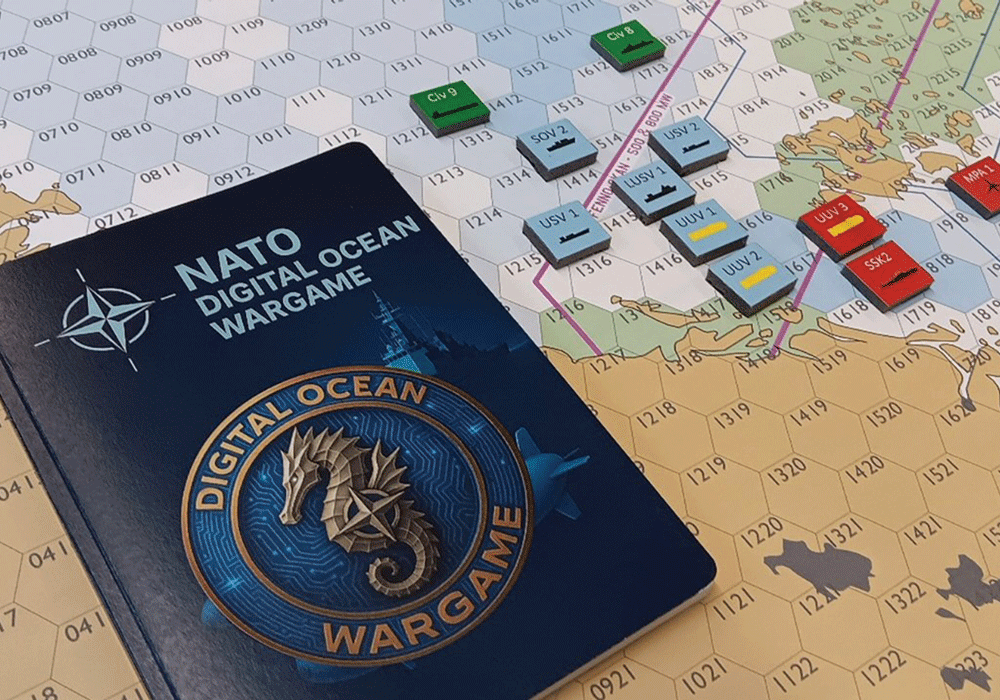
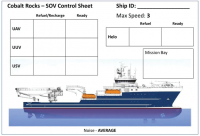
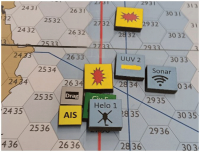
RINA’s Warship 2026: Submarines conference, on 24-25 June 2026, University of Bath. How a wargame series is being used to help combat hostile underwater activity.
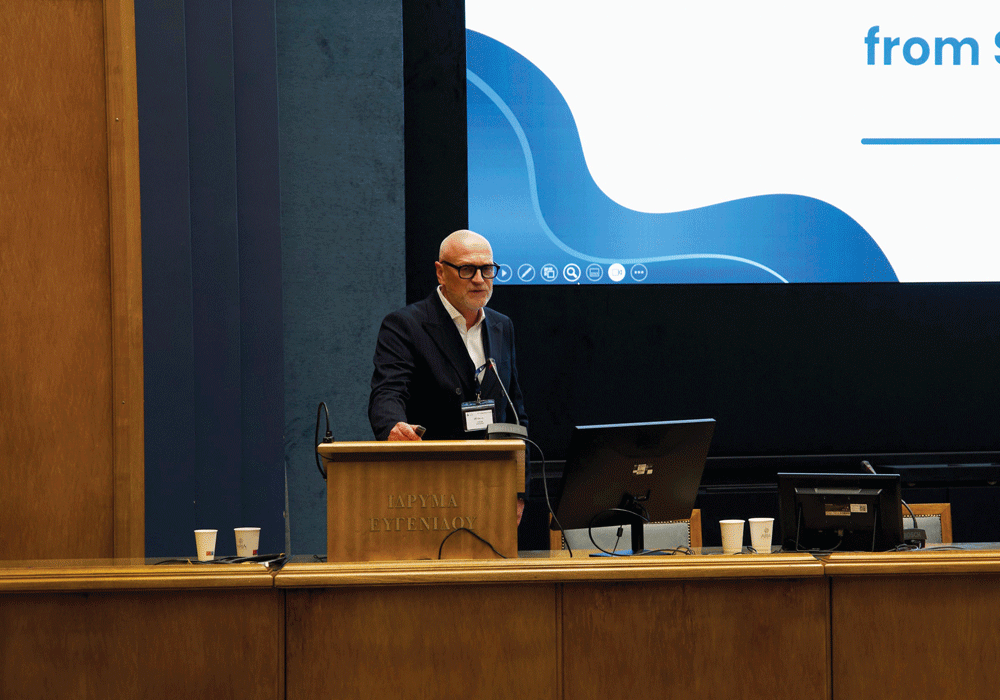
A summary of Ulf Hansen’s presentation at the 2026 RINA Ship Energy Efficiency Conference.
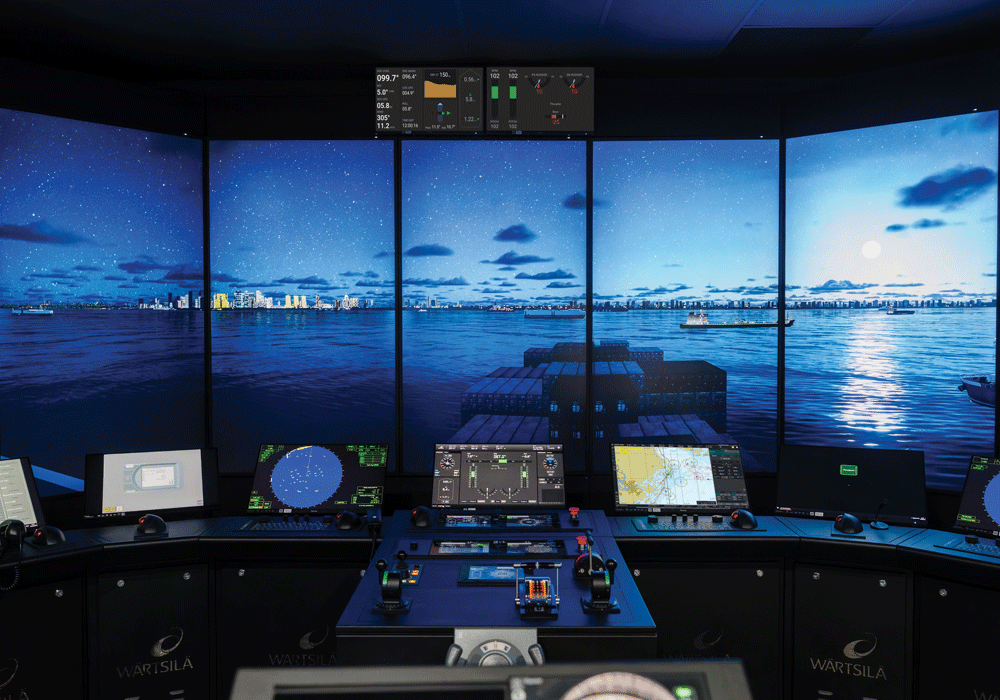
Wärtsilä, the Helsinki-based technology group, has released NTPRO 7, the latest iteration of its navigational training simulation platform.
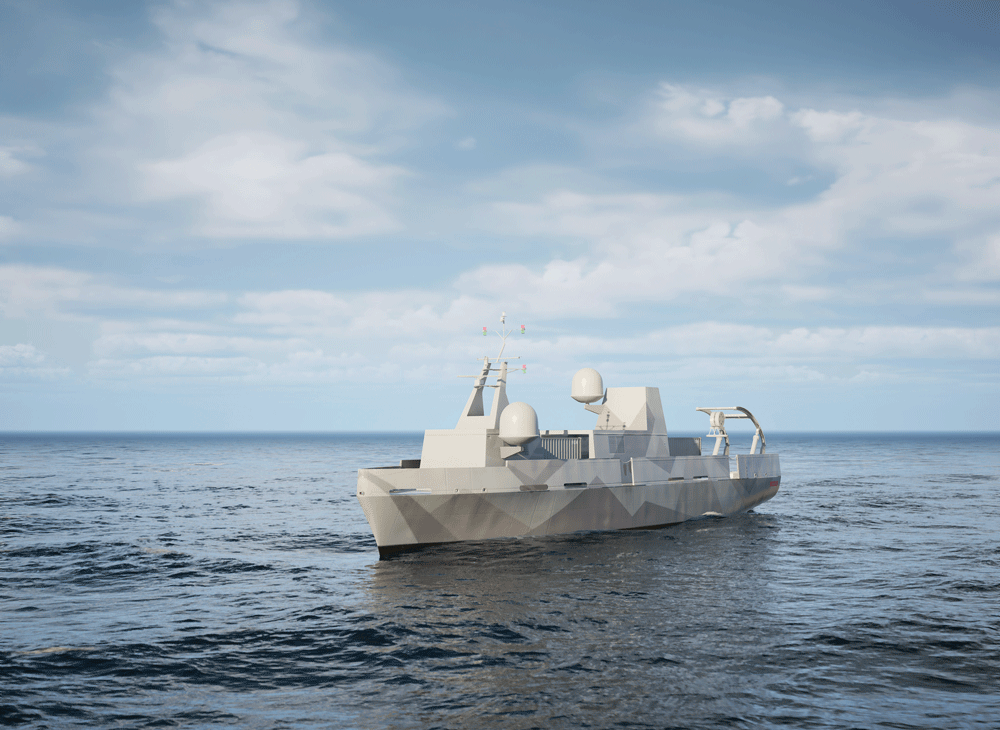
Chloe Yarrien and Jake Rigby take us behind the scenes of BMT’s MODUS family of modular uncrewed surface vessels.
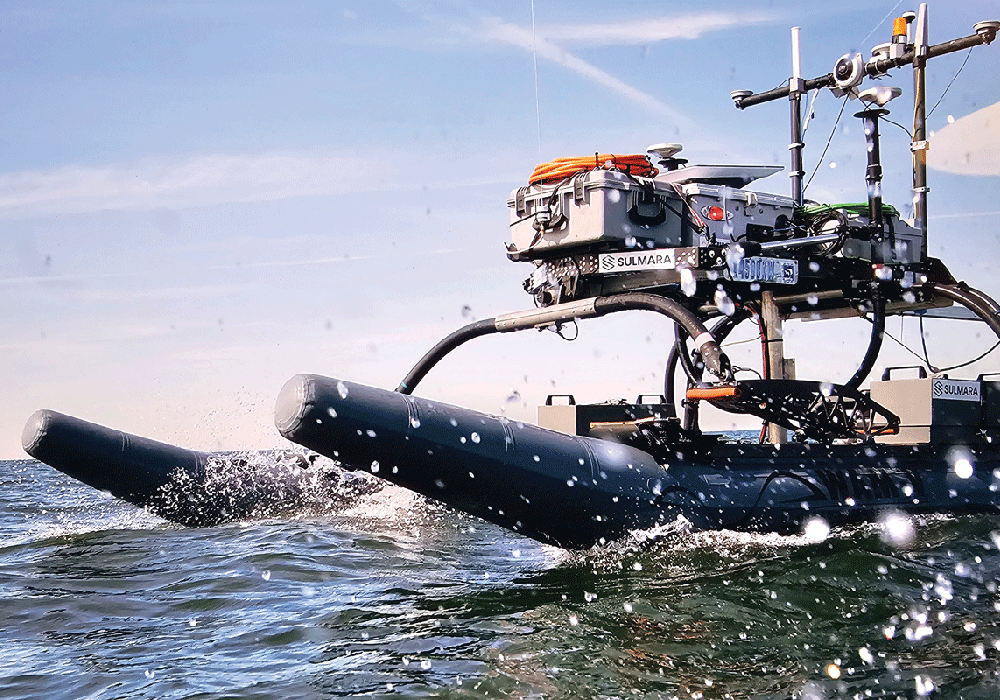
Autonomy and technology are reshaping offshore surveys in hard-to-reach places, says Anne-Marie Causer.
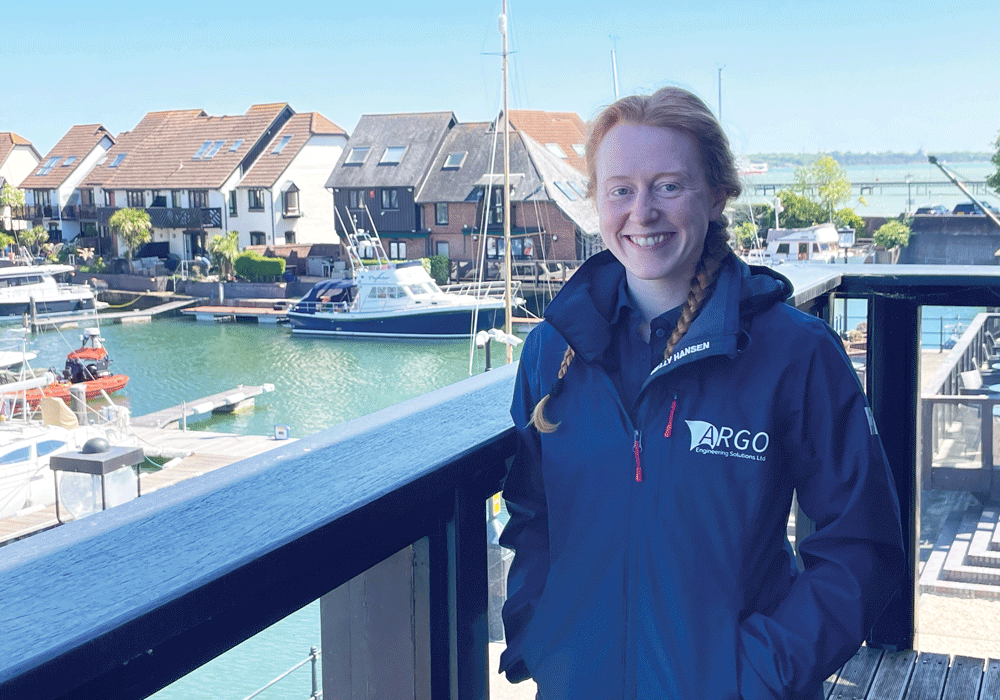
We hear from an engineering consultancy about its mentorship needs – and what it can offer in return.
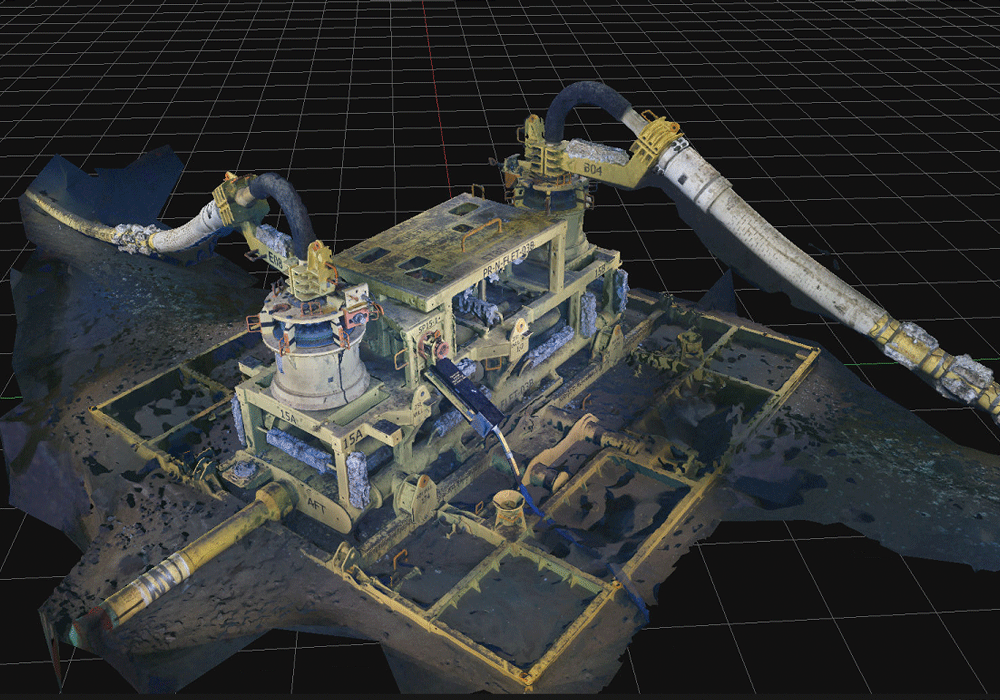
DeepOcean innovation set to reduce costs and time spent on subsea inspection programmes.
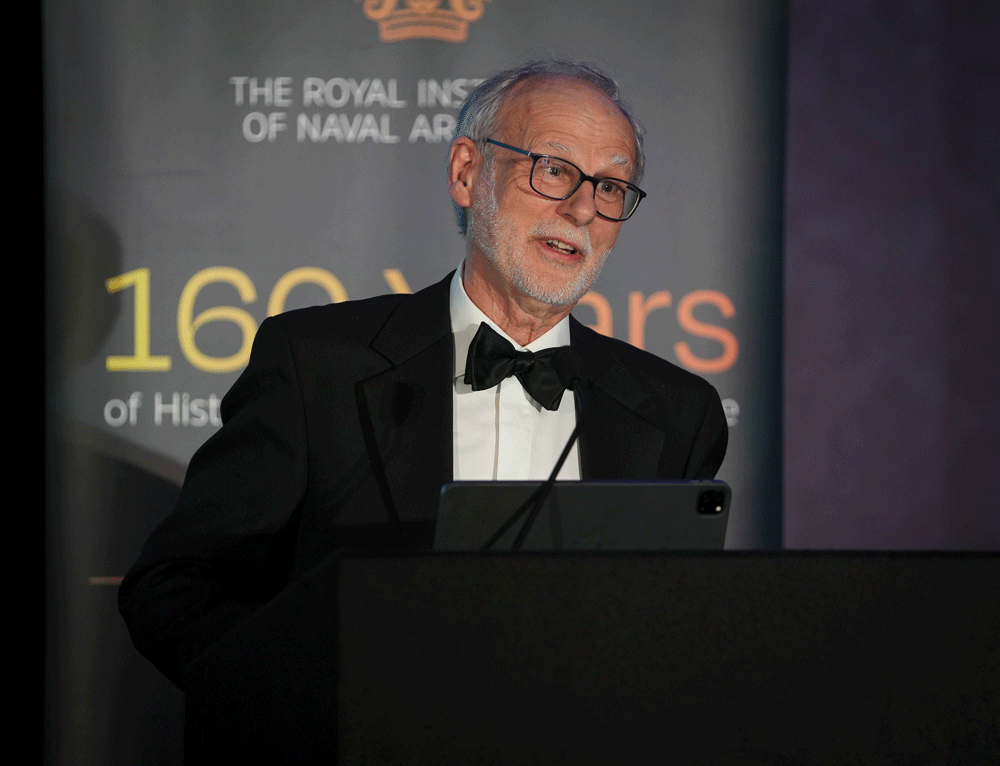
The distinguished naval architect on skills, talent and a life in design.
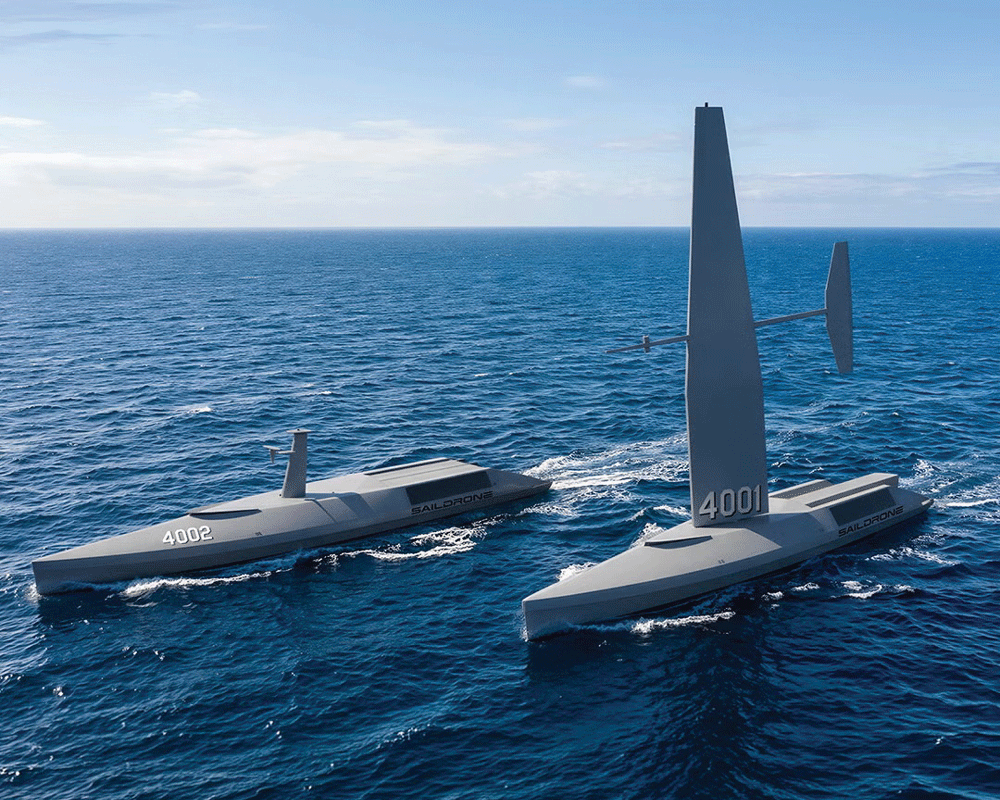
Shipbuilder branches out with collaboration on Spectre; Chartwell and Japanese shipbuilders sign wind deal; and historic tug to become a yacht. TNA Insights.
From flagship international conferences to specialist technical seminars, RINA events bring together experts, innovators, and professionals to share knowledge and shape the future of naval architecture.
Explore Upcoming Events
Lorem ipsum dolor sit amet, consectetur adipiscing elit, sed do eiusmod tempor incididunt ut labore et dolore magna aliqua.
CLICK HERE
Lorem ipsum dolor sit amet, consectetur adipiscing elit, sed do eiusmod tempor incididunt ut labore et dolore magna aliqua.
CLICK HERE







Lorem ipsum dolor sit amet, consectetur adipiscing elit, sed do eiusmod tempor incididunt ut labore et dolore magna aliqua. Ut enim ad minim veniam, quis nostrud exercitation ullamco laboris nisi ut aliquip ex ea commodo consequat. Duis aute irure dolor in reprehenderit in voluptate velit esse cillum dolore eu fugiat nulla pariatur. Excepteur sint occaecat cupidatat non proident, sunt in culpa qui officia deserunt mollit anim id est laborum.

Shipbuilding has always absorbed the technologies of its era, from iron hulls to diesel propulsion to computer-aided design. The current transition is no different in kind, but it is different in scale. Digitalisation and artificial intelligence (AI) are not simply new tools added to an existing process, they are reshaping the logic of how vessels are conceived, built and operated. For shipyards that move quickly, the competitive implications are substantial.
Machine learning algorithms can evaluate thousands of hull configurations, propulsion options and internal layouts in the time it would take a design team to assess a handful. Predictive analytics can flag structural risks and schedule delays before they materialise on the shop floor. The effect is not just faster work, but qualitatively better decisions, made earlier, when they are still cheap to act on.
The design imperative
Design typically accounts for 5 to 10% of a vessel’s total production cost, yet that investment determines roughly 85% of final construction expenditure and conditions nearly 90% of operational performance across the vessel’s lifetime. The early decisions made regarding hull form, structural approach, propulsion and energy systems cascade through every subsequent phase. Getting them right is not merely a design office concern, it is the single greatest lever available to improve project economics.
Fragmented or linear workflows are no longer adequate to manage this responsibility. The interdependence between hull, structure, mechanical systems, piping and electrical architecture means that changes in one domain propagate unpredictably through others. AI-assisted integrated design environments address this directly: optimising weight distribution, identifying interference risks between components, and running multiphysics simulations that analyse several interacting physical phenomena simultaneously. Engineers can explore a far larger solution space in the concept phase, which is where that exploration has the highest return.
The traditional spiral design model, iterating sequentially through concept, preliminary and detailed phases, struggles to accommodate this level of interdisciplinary integration. A model-based approach, closer to the V-model used in other advanced engineering disciplines, better reflects how modern design actually works: in parallel, with continuous validation against requirements rather than staged handoffs.
 |
|---|
Digital twins across the lifecycle
The digital twin has become a central concept in next-generation shipbuilding, although its value depends entirely on how it is implemented. A static geometric model is not a digital twin in any meaningful sense. The useful version is a live, data-enriched representation of the vessel that is updated throughout its lifecycle, first with design and simulation data, then with construction data, and finally with operational data from IoT sensors monitoring systems at sea.
This continuous feedback loop changes the economics of both construction and operation. Validating vessel behaviour under a wide range of conditions before the first steel plate is cut reduces costly late-stage design changes. Once in service, condition-based monitoring and predictive maintenance strategies, driven by real-time sensor data, can extend equipment lifespan and reduce unplanned downtime. Crucially, the operational data also feeds back into future design processes, improving the accuracy of the models used on the next vessel.
Underpinning all of this is what practitioners call the digital thread: a single, authoritative data environment that consolidates mechanical, electrical, piping and structural design into one system. Global teams work from the same model regardless of location or time zone, eliminating the version-control failures and conflicting drawings that have historically generated rework. The digital thread does not just accelerate the process; it changes its error profile, removing entire categories of mistake.
AI in the shipyard
The application of AI extends well beyond the design office. On the production floor, AI-driven planning systems optimise construction sequences, predict schedule risk and identify inefficiencies before they compound. Computer vision algorithms inspect welds and component alignment in real time, catching defects that human inspectors may miss under production-line conditions and that, if left undetected, become exponentially more expensive to rectify.
The integration of machine learning into computational fluid dynamics (CFD) simulations is particularly significant. CFD has long been a bottleneck in hull optimisation, computationally expensive and therefore limited in how many alternatives a design team can practically evaluate. Machine-learning-accelerated CFD dramatically shortens computation times, allowing iterative hull form optimisation across resistance, energy efficiency and fuel consumption without proportionally increasing engineering cost.
Augmented and virtual reality tools are changing workforce training and assembly guidance. Rather than relying on paper drawings or static digital files, technicians can work with spatially accurate overlays that guide complex assembly tasks, reducing errors and accelerating the learning curve for less experienced workers. As yards compete for skilled labour in a tight market, these tools have operational as well as quality implications.
Challenges that remain
None of this is straightforward to implement. Technological interoperability, getting legacy systems, supplier data and new platforms to communicate cleanly, remains a significant operational headache. Initial investment costs are substantial and the return on investment, while real, is distributed over years rather than visible in a single project. Cybersecurity risks increase as shipyard infrastructure becomes more connected. And workforce transformation requires sustained investment in training that many yards have historically under-resourced.
Regulatory compliance adds another layer of complexity. IMO emission reduction targets – 70 to 80% reduction in greenhouse gas emissions by 2040 and net zero by 2050 – create design requirements that did not exist a decade ago. Meeting those targets while managing cost and schedule pressure demands exactly the kind of multi-variable optimisation that AI tools are best suited to support. But it also requires regulatory frameworks to keep pace with the technologies being adopted, which is not always the case.
Product Lifecycle Management solutions have proven their value in managing the data complexity associated with these challenges. Yards that have centralised their data environments report improved resilience against supply chain disruptions, better customisation capability for client requirements, and more reliable planning processes. The pandemic-era supply chain failures accelerated adoption in a number of cases, demonstrating that digital integration is not just a competitive advantage but an operational necessity.
The direction of travel
The convergence of naval engineering and AI is not a future prospect – it is already visible in yards across Europe, Asia and the Americas. Digital twins are reducing construction time and cost. AI is cutting material waste and catching operational issues before delivery. Simulation tools are informing maintenance planning in military and commercial contexts alike. The technology is available; the differentiating variable is the organisational will and capability to deploy it effectively.
The next step in this evolution is the genuinely paperless vessel – not just a ship designed without drawings, but one operated and maintained through precise digital records, live system data and AI-supported decision-making throughout its service life. That is a more significant transformation than the industry has seen in generations, and the yards that position themselves for it now will have an advantage that compounds over time.
For naval architects, this shift redefines the scope of the discipline. The skills required to design a hull remain essential; the skills required to model its behaviour in a connected digital environment, and to interpret what that model tells you, are becoming equally so. The best engineering judgement has always been informed by the best available data. The change is that the data is now better, faster and more comprehensive than anything the industry has previously worked with.
This article appeared in Features, TNA Mar/Apr 2026
American shipbuilder Davie Defense has been awarded a contract by the United States Coast Guard to construct five Arctic Security Cutters (ASC), a new class of polar icebreaker intended to strengthen US presence in the High North. The award, announced in early 2026, forms part of a wider programme of up to 11 vessels authorised by Presidential Memorandum and represents one of the most significant US polar shipbuilding contracts in a generation.
The ASC is a substantial vessel: 99.9m in length, 21m in beam, displacing 9,000tonnes at normal operating draught of 7m. Ice Class PC3 rated, she is designed to maintain 3knots through 1.5m of ice. A diesel-electric propulsion system delivers 22MW of total installed power through two azimuth thrusters of 6.5MW each, supplemented by two 1.3MW bow thrusters, generating a bollard pull of 150tonnes.
Two independent engine rooms provide redundancy critical for operations in remote polar waters. Top speed is 16knots, with a range exceeding 6,500nm at 12knots in normal operating mode, extending beyond 12,000nm in high endurance configuration at deeper draught.
Endurance is up to 60 days, with accommodation for up to 124 crew and passengers. Mission payload capacity stands at 650m2 of covered and uncovered main deck space, capable of carrying up to 17 TEU, ground vehicles, unmanned systems and boats. The vessel also carries a helicopter platform and hangar sized for the MH-60 and UAVs.
The design draws on a proven platform with seven previous variants delivered from Helsinki Shipyard, accumulating a combined 85 years of winter operation in Arctic regions. One vessel from the existing fleet has transited the Northeast Passage unescorted in 8.5 days, a data point that speaks directly to the platform’s operational credibility in the conditions the Coast Guard requires.
The programme’s construction strategy is split across two countries. To meet the accelerated delivery schedule, the first two hulls will be built at Helsinki Shipyard in Finland, a sister facility within the UK-owned Inocea maritime group, targeting delivery of the inaugural vessel in 2028. The remaining three cutters will follow at Davie’s facilities in Galveston and Port Arthur, Texas, yards acquired from Gulf Copper & Manufacturing in 2025 and bringing over 75 years of Gulf Coast fabrication experience.
The rationale for opening the programme in Finland is that no active American yard has the icebreaker construction expertise needed to hit the schedule. The technology transfer dimension is therefore the most industrially significant aspect of the contract.
US shipbuilders will work alongside Helsinki’s specialists during the Finnish builds to develop the domestic competency needed for series production in Texas. It is an ambitious timeline, and whether Galveston and Port Arthur can absorb that knowledge base within the compressed window of the first two hulls will be the programme’s defining industrial challenge.
The strategic impetus is clear. Russia operates the world’s largest icebreaker fleet, including nuclear-powered vessels capable of year-round polar transit, while China has been steadily expanding its polar capabilities.
The United States has operated with a critically thin polar fleet for decades, and the Presidential Memorandum authorising the ASC programme reflects a belated but determined effort to address that deficit.
Davie Defense sits within Inocea, a privately held British marine industrial group with operations across the US, Canada and Finland. The Coast Guard’s decision to award to a group with operationally proven icebreaker heritage, rather than a domestic yard learning the discipline from scratch, reflects the urgency of the delivery timeline.
With Arctic competition intensifying and the Polar Security Cutter programme still unresolved, Washington needed a credible near-term answer. The ASC’s specifications and its platform’s track record suggest the design is capable of providing one. Whether the industrial strategy can match the vessel’s ambition will become clear as the first hull takes shape in Helsinki.
Kai Skvarla, CEO of Davie Defense, said: “We’re deeply honoured by this vote of confidence. We can’t wait to get started on delivering mission-ready cutters to our valued US Coast Guard partner. By anchoring construction in Texas, while drawing on Helsinki Shipyard’s proven icebreaker expertise, we can deliver the ASCs to meet the Coast Guard’s operational needs in the world’s harshest environments.”
This article appeared in In depth, TNA Mar/Apr 2026
| ARCTIC SECURITY CUTTER STATISTICS | |
|---|---|
| Length | 99.9m |
| Breadth | 21m |
| Draught | 6.5m-7.9m |
| Normal operation mode | 7m draught |
| High endurance/max cargo mode | 7.6m draught |
| Displacement | 9,000tonnes |
| Ice Class PC3 | 1.5m ice@3knots. Breaks ice 5ft thick @3knots ahead and astern |
| Speed | 16knots |
| Range | 6,500+nm @12knots, normal operational mode; 12,000+nm @12knots, high endurance mode |
| Endurance | up to 60days |
| Crew/PAX | max 124 |
| Machinery | Diesel-electric total installed power 22MW, two independant engine rooms |
| Propulsion | Azimuth thrusters (2x 6.5MW), bow thrusters (2x 1.3MW), bollard pull 150tonnes |
| Seakeeping | Roll reduction tanks for roll damping |
| Helicopter | Platform and hanger for MH-60 and UAVs |
| Mission payload capacity | 650m2 covered/uncovered main deck space; e.g. 17TEU, ground vehicles, UXVs, boats |
| Large deck cranes | Loading and unloading; launch and recovery |
| Enclosed reconfigurable mission space | e.g. for medical treatment, disaster relief, vehicle transport, special mission equipment |
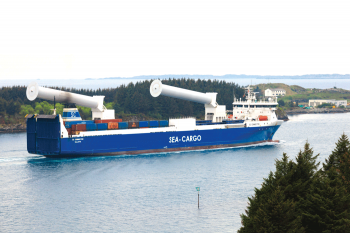
There is a temptation, amid the complexity of global shipping regulation and the slow grind of intergovernmental negotiation, to conclude that the maritime sector’s decarbonisation agenda has stalled. That temptation should be firmly resisted. The wind has not gone out of the sails of maritime decarbonisation, and those who work in wind propulsion are among the clearest proof of it.
That was the central message I brought to the Wind Propulsion Conference, hosted jointly by the International Windship Association and the Royal Institution of Naval Architects in February. Speaking to an audience of naval architects, operators and technology developers, people who have committed careers and capital to the practical deployment of wind-assisted propulsion, I wanted to make one point above all others: progress continues, and we must maintain our course.
The IMO’s World Maritime Day theme for 2026 and 2027, ‘From Policy to Practice: Powering Maritime Excellence’, captures precisely the challenge and the opportunity. It is not enough to have agreed ambitious targets. The real work lies in turning collective regulatory decisions into real-world results that deliver tangible benefits for the sector and for the planet. No single organisation can do that alone. It requires administrations, classification societies, naval architects, shipowners, operators and individual mariners all pulling in the same direction.
Wind propulsion sits squarely within that ‘policy to practice’ agenda. It is a mature, cost-effective solution to reducing greenhouse gas emissions from international shipping and, crucially, it is available today. Not in 10 years’ time. Not in five years. Now.
The regulatory framework that underpins this is already well established. For more than a decade, IMO has developed and strengthened a suite of energy efficiency standards – the Energy Efficiency Design Index, the Energy Efficiency Existing Ship Index, the Carbon Intensity Indicator, and the Ship Energy Efficiency Management Plan – that have delivered concrete results.
Taken together, these measures have reduced the carbon intensity of international shipping by more than 38%, compared with 2008 levels. Ships today emit roughly 38% less CO₂ for the same transport work than they did at the start of this century. That is a significant achievement, and one that is too often overlooked in debate dominated by what remains to be done.
Market data reinforces the direction of travel. According to recent figures from Clarksons Research, nearly half the global fleet, 47% of world tonnage, is now fitted with at least one energy-saving technology. The trend towards further uptake is clear and accelerating. Wind propulsion technologies are part of that picture, and the industry’s investment in them continues to grow.
I must be clear on one point: IMO is technology neutral. The Secretariat does not promote or discourage any particular solution. There is no silver bullet and no one-size-fits-all pathway. Multiple routes to decarbonisation will coexist, and that is as it should be. What the regulatory framework must do, and what it is actively being designed to do, is ensure that all fuels and technologies are treated fairly and consistently, based on their well-to-wake emissions.
This is where wind propulsion faces both an opportunity and a challenge. In January 2026, the IMO’s Sub-Committee on Ship Design and Construction developed a draft safety workplan for greenhouse gas-reducing technologies, explicitly including wind propulsion. That workplan will go to the Maritime Safety Committee for approval in May 2026. It marks an important step: the formal integration of wind technologies into IMO’s safety framework, providing the regulatory clarity that owners and operators need to invest with confidence.
 |
|---|
On the regulatory horizon, the picture is more complex. Discussions on the next set of measures under the IMO Net-Zero Framework were adjourned last October. This was not a retreat from ambition. The commitment among Member States and industry to global regulation remains strong. But it created additional time, and that time is being used. MEPC 84, scheduled for April 2026, will continue discussions on the way forward, including the greenhouse gas fuel intensity (GFI) reduction requirements that will form the core of the next regulatory package.
Within that work, the development of GFI Calculation Guidelines is giving due consideration to the inclusion and fair treatment of wind propulsion, a recognition that its contribution to fuel saving must be properly accounted for if owners are to have the certainty they need. Contributions from the International Windship Association have been genuinely valuable here, helping to shape how the GFI will function in practice. That kind of direct industry engagement with the regulatory process is exactly what is needed.
Yet there is a shadow over the progress. Despite the improvement in carbon intensity, total fuel consumption by ships has remained broadly stable in recent years. Absolute greenhouse gas emissions have not yet declined significantly. Efficiency gains are being absorbed by growth in trade and fleet size. This is why the next regulatory package matters so much, and why inaction is not an option.
For naval architects and marine engineers, the message is one of both validation and urgency. The technologies you design, specify and integrate are not peripheral to the decarbonisation agenda, they are central to it. Wind propulsion, in particular, offers something rare in the energy transition: a proven, scalable, fuel-free reduction in emissions that can be retrofitted to existing vessels and designed into new ones. The regulatory framework is catching up. The market is moving. The only question is pace.
There may be diplomatic storms to navigate and regulatory mechanisms to refine, but the direction is set. We must maintain our course. The wind is with us.
This article appeared in Features, TNA Mar/Apr 2026
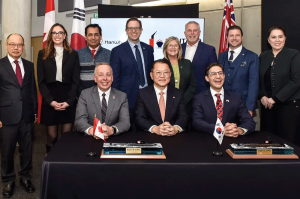
Hanwha Ocean is embedding its shipbuilding expertise directly into Canadian industry. The South Korean shipbuilder has signed a Memorandum of Understanding (MoU) with Ontario Shipyards and a trilateral Letter of Intent (LoI) with Ontario Shipyards and Mohawk College, establishing a technology transfer, industrial modernisation and workforce development framework in the Great Lakes region. The move is part of an effort to position itself for the Canadian Patrol Submarine Project (CPSP), one of the most consequential naval procurement decisions in Canadian history.
The CPSP aims to replace the Royal Canadian Navy’s ageing Victoria-class submarines with up to 12 modern vessels. Hanwha’s proposed platform is the KSS-III, a conventionally powered submarine designed for long-range operations and sustained presence at sea, including in Arctic environments, with a mature, production-ready design and lithium-ion propulsion.
The lithium-ion battery system offers significantly higher energy density than traditional lead-acid batteries. Combined with a fuel cell-based Air Independent Propulsion system, this advanced configuration enables the submarine to remain submerged for extended periods and sustain maximum underwater speed up to three times longer than submarines using lead-acid batteries. This system has enabled the KSS-III to set a world record for the longest continuous underwater operation by a conventional submarine. In addition, lithium-ion batteries provide longer life cycles and simplified maintenance, lowering both operational and sustainment costs.
Hanwha Ocean claims the programme would generate 200,000 job-years over 15 years and support approximately 15,000 jobs per year on average across a pan-Canadian industrial alliance of more than 100 companies.
 |
 |
|---|
The bilateral MoU commits Hanwha Ocean to structured technical and operational support across design and engineering, production planning, construction sequencing, quality management and smart-yard best practices. A near-term proof-of-concept is built into the agreement: Hanwha Ocean will support the design and construction of a training and recruitment vessel that Ontario Shipyards will begin building in 2026, providing a live demonstration of the partnership’s industrial intent rather than relying on declarations alone.
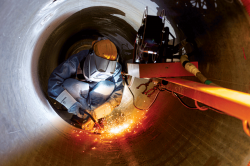
Workforce development will be addressed through the trilateral LOI, which establishes an embedded training hub at Ontario Shipyards’ Hamilton facility in partnership with Mohawk College. The college will lead programming across welding, electrical trades, marine mechanics, robotics and non-destructive evaluation. It is a curriculum mapped directly onto the skilled trades shortfall that has constrained Canadian shipbuilding for years.
Apprenticeship pathways will be integrated with production schedules, with applied research in automation and digital manufacturing on the agenda too. Hanwha Ocean will contribute technical advisory support and access to its global industrial networks to align training with international standards.
Both documents contain conditional language tying further Hanwha investment, including a dedicated training centre and expanded supply chain engagement, to the award of the CPSP contract.
 |
|---|
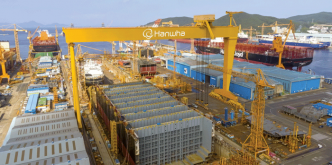
Hanwha has been active across Canada, with Quebec’s minister of international relations, Christopher Skeete, visiting the Geoje shipyard in February, and Canadian yard leaders separately touring the facility to discuss collaboration and MRO opportunities. Hanwha’s Geoje shipyard covers 5km2, employs more than 31,000 people and has delivered more than 1,400 vessels since 1973, including submarines and surface combatants for the Republic of Korea Navy.
Ontario Shipyards, the largest ship repair and construction company on the Great Lakes, now has facilities at Hamilton, Port Weller and Thunder Bay.
The combination of Hanwha’s production systems and Ontario’s existing infrastructure represents a credible industrial base, although execution of the knowledge transfer at the pace and depth the CPSP would require remains the programme’s defining test.
This article appeared in In depth, TNA Mar/Apr 2026
Lloyd’s Register (LR) has verified the sea trials performance assessment methodology used by GT Wings for its AirWing Jet Sail system. This provides an independent stamp of approval for the way the company measures fuel and emissions savings from its wind-assisted propulsion technology.
Announced at RINA’s Wind Propulsion Conference, the verification follows nearly 10 months of commercial operation of a 20m AirWing unit onboard Vectis Progress, a general cargo vessel operated by Carisbrooke Shipping. Installed in March 2025, the system has accumulated service experience across various routes and conditions, including North Atlantic winter passages, Great Lakes transits and Caribbean voyages.
Lloyd’s Register confirmed that GT Wings’ methodology aligns with recognised industry standards, including ISO 19030, and ITTC performance analysis practices, and that the approach used to isolate and quantify wind propulsion benefits is technically sound for in-service evaluation.
Andrew Hurford, senior specialist at Lloyd’s Register, said that independent verification of such methodologies is essential to building confidence in emerging maritime technologies.
As wind-assisted propulsion moves towards broader commercial adoption, the ability to demonstrate performance through independently verified, standardised methods is increasingly important for shipowners, charterers and project financiers weighing the business case for such systems. GT Wings said that data collection and analysis from Vectis Progress will continue as part of its ongoing validation programme.
Liam Campbell, chief commercial officer at GT Wings, said: “From the start, our vision has been to drive the transition through measurable, data‐driven performance. Lloyd’s Register’s verification confirms our alignment with international standards and validates that our performance predictions are grounded in real‐world evidence. It is an important step toward scaling wind‐assisted propulsion across global shipping and strengthening confidence in this technology as a viable pathway to reducing carbon emissions.”
This article appeared in News, TNA Mar/Apr 2026
The Grimaldi Group has taken delivery of Grande Michigan, the eighth ammonia-ready pure car and truck carrier (PCTC) in its fleet, from China Merchants Heavy Industries Jiangsu. Built to 220m in length with a beam of 38m, a gross tonnage of 93,145 and a service speed of 18knots, the vessel continues a fleet renewal programme that has established Grimaldi as one of the more technically progressive operators in the automotive shipping sector.
Across its 14 decks, Grande Michigan has a maximum capacity of 9,000 car equivalent units, with stowage arrangements capable of accommodating battery electric vehicles alongside those running on conventional fuels, a flexibility that has become a commercial requirement as the automotive sector’s transition to electrification continues at uneven pace across different markets.
The vessel is fitted with a gate rudder, a configuration first introduced to the PCTC sector on Grande Shanghai, the lead vessel of this series, delivered in July 2025, and now standard across the class. Developed originally by Kuribayashi Steamship in Japan and licensed globally by Wärtsilä, the arrangement positions two foil-shaped blades symmetrically either side of the propeller centreline. It functions simultaneously as a post-swirl energy recovery device, capturing rotational energy from the propeller slipstream that would otherwise be lost, and as a conventional steering system, with the claimed benefit of improved low-speed manoeuvrability at the automotive terminals at which the vessel will regularly call.
Grimaldi claims a 50% reduction in fuel consumption compared with earlier-generation car carriers, attributing the figure to a package of efficiency measures. These include an air lubrication system reducing frictional resistance at the hull-water interface, a silicone-based foul-release hull coating, and 2,500m2 of solar panels across the upper decks. Smart building management systems govern ventilation and air conditioning loads to reduce hotel power demand. The 50% figure is presented without a defined baseline vessel or operational condition and should be read as a comparative design estimate rather than a demonstrated in-service figure.
The main engine is electronically controlled and fitted with an exhaust gas cleaning system to limit sulphur oxide and particulate matter output. Selective catalytic reduction maintains nitrogen oxide emissions below IMO Tier III limits.
A lithium-ion battery energy storage system with a combined capacity of 5MWh supports onboard power management. The vessel is also fitted for cold ironing, enabling zero-emission port operations wherever shore power infrastructure is available, a capability of growing relevance as EU regulations extend onshore power supply obligations at European terminals.
Grande Michigan has received the Ammonia Ready notation from Italian classification society RINA, confirming that her structural arrangements, piping routing, ventilation provisions, and safety systems have been designed to facilitate future conversion to ammonia-fuelled propulsion without major structural intervention. The notation reflects the industry’s broader effort to preserve conversion optionality on newbuilds, given the current immaturity of ammonia bunkering infrastructure and the unresolved challenges surrounding the fuel’s toxicity in a shipboard environment.
Additional RINA notations include Green Plus, Green Star 3, Comfort Vibration, and Comfort Noise Port. The Comfort notations address habitability standards, a consideration of some weight on a vessel that will operate on a continuous deep-sea rotation.
Grande Michigan departed on her maiden voyage from Taicang, China, the commercial loading port proximate to the CMHI Jiangsu yard, carrying more than 7,000 cars and vans alongside more than 100 rolling units including heavy vehicles, MAFI trailers, and project cargo, bound for Mediterranean ports on Grimaldi’s Asia–Europe service.
The delivery extends a newbuild programme that has seen Grimaldi take eight ammonia-ready PCTCs in relatively quick succession. Whether the efficiency package’s cumulative gains can be validated under operational conditions across varied load factors and seasonal routing will be of material interest to competitors and the wider automotive logistics market.
This article appeared in News, TNA Mar/Apr 2026
Wärtsilä Gas Solutions has been awarded a contract to supply cargo handling and fuel gas supply systems for two new LNG bunkering vessels currently under construction at Zhejiang Xinle Shipbuilding in China.
The vessels, each with a capacity of 20,000m³, will be owned by a Hong Kong-based shipowner. The order was booked in Q4 2025 and reinforces Wärtsilä Gas Solutions’ position as a leading systems integrator for small-scale LNG applications.
The contract covers a comprehensive systems package including LNG cargo handling and fuel gas supply equipment, full system engineering and design, and integrated control and monitoring of all cargo handling operations. This level of systems integration is critical in bunkering vessel design, where operational reliability and safety margins are paramount.
“The use of LNG is key in enabling a green shipping future,” said Barry Yang, general manager of sales China at Wärtsilä Gas Solutions, adding that the systems offer a flexible and proven solution supporting operational efficiency for vessels bunkering LNG-fuelled ships.
The vessels will fill an increasingly important role in the marine energy transition. LNG continues to be adopted as a bridging fuel between conventional diesel and future zero-carbon alternatives, driving demand for purpose-built bunkering infrastructure.
Equipment delivery to the Zhejiang Xinle yard is scheduled to commence in Q4 2026, with both vessels expected to enter service during the latter half of 2027.
The number of LNG-fuelled ships in operation doubled between 2021 and 2024, with a record number of deliveries (169) in 2024, according to DNV, a Norway-based independent assurance and risk management provider. By the end of last year, 641 LNG-powered ships were in operation. According to the orderbook, this number is expected to double by the end of the decade.
While the bunkering infrastructure for some alternative fuels remains underdeveloped, DNV said LNG bunkering is maturing, adding that the significant gap between LNG bunkering supply and demand is expected to widen over the next five years based on the orderbook.
This article appeared in News, TNA Mar/Apr 2026
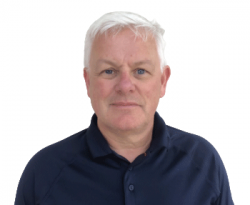
The UK’s Marine Accident Investigation Branch (MAIB) has appointed Rob Loder as its new chief inspector of marine accidents, succeeding Andrew Moll OBE, who retired earlier this month after 21 years at the organisation.
Loder’s career began at sea: after training in heavy engineering ashore, he joined the Merchant Navy, completed a rating to officer conversion course, and rose to chief engineer across a varied fleet, including oil tankers, cable ships, ferries and superyachts. He subsequently moved into fleet management, ship repair, ship build supervision and project management before a period of industry consultancy.
His experience spans design-adjacent disciplines such as ship-build supervision and project management alongside deep operational knowledge. Loder joined MAIB in 2020 as an inspector, progressing to principal inspector and then deputy chief inspector before his current appointment. He is a chartered engineer, marine engineer and Fellow of IMarEST.
 |
|---|
Headquartered in Southampton, MAIB was established in 1989 following a recommendation from the public inquiry into the Herald of Free Enterprise disaster in 1987, when a ro-ro passenger ferry capsized off Zeebrugge with the loss of 193 lives. It is authorised to investigate all maritime accidents in UK waters and accidents involving UK-registered ships worldwide.
In 2024, MAIB recorded 1,631 reports of accidents involving UK vessels worldwide or vessels within UK coastal waters, with 1,753 vessels involved.
Loder said: “Working alongside the outstanding MAIB team, I am committed to ensuring our work continues to drive meaningful improvements in safety across the maritime sector.”
This article appeared in News, TNA Mar/Apr 2026
Ocean transportation company Sallaum Lines has shifted toward ordering LNG newbuilds, following initial reliance on second-hand vessels for its PCTC fleet, as part of an ambitious goal to achieve net-zero operational emissions by 2050.
“The decision to order newbuilds was driven by technical and environmental performance objectives, not by cost alone,” Charbel Khoueiry, maritime sustainability manager, says. “Sallaum Lines required vessels that could fully comply with IMO Tier III, the IGF Code, EEDI Phase 3 and forthcoming CII targets, while integrating dual-fuel LNG propulsion, electric vehicle-ready cargo decks and advanced hydrodynamic features.
“These parameters would have been impossible to achieve through retrofit without extensive structural and machinery compromises. Newbuilds designed from the keel up provide optimised hull efficiency, lower emissions and long-term lifecycle compliance with current and anticipated regulations.”
Consequently, Sallaum Lines is adding six large, dual-fuel LNG PCTC newbuilds to its fleet. The first duo in the series – the 199.9m, Ocean Breeze and Ocean Explorer – were designed by Shanghai Merchant Ship Design & Research Institute (SDARI) and constructed by Fujian Mawei Shipyard, with Ocean Breeze delivered in Q3 2025 and Ocean Explorer scheduled for delivery in Q1 2026. A further four PCTCs, designed by Deltamarin are currently under construction at China Merchants Heavy Industries (CMHI) and scheduled for delivery throughout 2026-2027.
Ocean Breeze runs on LNG, MGO and VLSFO, and can operate in LNG-only, fuel oil-only or dual-fuel modes, depending on prevailing voyage or port conditions. Khoueiry explains: “We selected LNG because it offers a proven, commercially available and technically mature, low-emission pathway that complies with current environmental regulations. It eliminates SOx and PM, reduces NOx by up to 80% through exhaust gas recirculation [EGR] and lowers CO2 by approximately 20–25%.”
At a continuous sailing speed of 17knots, the vessel is estimated to achieve a range of approximately 12,600nm when operating on LNG, 3,000nm on MGO and 7,800nm on VLSFO. Taken together, the vessel’s total potential sailing range with full tank capacity is approximately 23,400nm.
The powertrain aboard Ocean Breeze incorporates a MAN B&W main engine, rated 12,614kW at 99rpm, and three auxiliary Wärtsilä 9L20DF engines, rated 1,613kW apiece, in addition to a 200kW emergency generator. “All machinery is installed in an aft engine room with segregated LNG and ventilation spaces, in accordance with the IGF Code and ABS requirements,” says Khoueiry.
The ship is also fitted with two Type C LNG storage tanks, each featuring the capacity for about 1,768m3 of LNG.
LNG is vaporised and supplied to the engines via a dual-pressure fuel gas supply arrangement, providing high-pressure gas at approximately 315bar to the main engine and low-pressure gas to the dual-fuel generator engines.
The PCTC is equipped with a single fixed-pitch propeller and a semi-balanced twisted rudder with bulb, developed by SDARI to enhance propulsive efficiency. The vessel is designed for a service speed of 18.5knots at design draught, allowing for a 15% sea margin.
The ship was classed by ABS, achieving full IGF, ENVIRO and operational notations. “Safety features include gas-tight LNG spaces, independent ventilation, double-walled gas piping, ESD systems, CO₂ fire protection and EV fire zones with continuous detection for the hydrogen/CNG vehicle areas,” says Khoueiry. This was accompanied by crew training in LNG handling, carried out in line with IMO/IGF Code competence standards.
As another green bonus, the ship has been treated with Chugoku Marine Paints’ SEAFLO NEO SLZ low-friction antifouling coating, developed to keep the hull continuously smooth, reducing hydrodynamic drag and fuel consumption and enabling higher vessel speeds.
After decades of building purpose-designed and built ships that sometimes failed to meet requirements and often experienced significant cost overruns, the US Navy is pioneering a new approach to shipbuilding with its Landing Ship Medium (LSM) programme, an approach it hopes will enable it to quickly bring large numbers of newbuilds into service on time and on budget.
US Navy secretary John Phelan said the new approach adopted for the LSM procurement would be based on a “non-developmental design” that will not require significant adaptation.
The design selected by the Naval Sea Systems Command (NAVSEA), Damen Shipyards Group’s LST100, has already been adopted by the Royal Australian Navy, for whom eight examples will be built in Australian yards, and will, said the Naval Sea Systems Command, “enable rapid fielding of this urgently needed capability… and shorten acquisition timelines”.
The LST100 was selected after a ‘side-by-side’ analysis of existing designs that had the potential to meet the LSM requirement. NAVSEA’s analysis of the designs was informed by technical data packages, augmented by hands-on ship visits. Up to 35 LSMs will now be built at US yards that will compete with one another for contracts to build the landing ships.
Speaking at the time that selection of the Damen design was announced, chief of naval operations Admiral Daryl Caudle said: “A year ago, the US Navy cancelled the LSM request for proposals, when the conceptual design produced bids that were simply unaffordable. We applied common sense, went back to basics, and reassessed the programme.
“We identified existing, proven designs that meet the concept of operations requirements, and then scrutinised them for producibility.”
Secretary Phelan said with the LSM decision the US Navy is “fundamentally reshaping how the Navy builds and fields its fleet”, making what he called an “operationally driven and fiscally disciplined choice”. He said with the LSM the US Navy has – for the first time – adopted what he described as a “build to print approach” that drives down cost, schedule and technical risks.
Commandant of the Marine Corps General Eric Smith said: “For the Marine Corps, the LST100 will provide an organic littoral capability in the Indo Pacific and around the world. It will provide us with a critical, inter-theatre manoeuvre asset that is able to embark and transport marines, weapons, supplies and equipment, without requiring access to a pier.”
The Secretary of the Navy described the LST100 as a 4,000tonne design, with a range of more than 3,400nm “that gives us the right balance of affordability, capability and speed”. General Smith said the LST 100’s cargo capacity, helicopter capacity and crane “make it an excellent choice for the Marine Corps’ requirement of no less than 35 medium landing ships to support naval expeditionary forces.”
Admiral Caudle said the US Navy “is incorporating a disciplined set of class standard equipment, so that the ships will be maintainable, repairable and able to meet operational availability targets”.
In July 2025, Damen received a technical data package award from NAVSEA for the LST100, and that design has now been selected as the basis for the LSM, all of which will be constructed at American yards.
The Dutch company describes the LST100 as 100.68m in length with a beam of 16m and a draught of 3.58m. Able to support a wide range of operations, with the ability to transport personnel, vehicles, equipment and cargo, the design has accommodation for 282 Marine Corps personnel.
The vessel can transit at speeds of up to 14knots, with an endurance speed of 10knots, and a range of up to 7,530nm. The LST100 is also a highly flexible unit, with a modular design that enables straightforward adaptation and upgrade without compromising the benefits of standardisation.
December 2025 saw Belgian shipowner Somtrans christen its latest delivery, the estuary-class bunker barge United LNG I, in a ceremony hosted at the Port of Antwerp. The family-run company plans to put the barge into service in February 2026, where it will be used to fulfil growing demand for LNG bunkering in various Belgian and Dutch seaports, a spokesperson for Somtrans confirms.
The 135m x 21.46m vessel has been designed for both inland waterways and coastal service up to the Port of Zeebrugge. The barge’s construction was an international affair: the hull was built in China and then transported to the Netherlands for outfitting. Here, RensenDriessen, a shipyard-independent, Dutch newbuild projects specialist, acted as the main contractor, with Heusden-based TeamCo Shipyard overseeing tank integration, engineering and final outfitting of the vessel.
Italian engineering firm Gas and Heat, which specialises in designing and building cryogenic tank systems and LNG-fuel supply systems for maritime applications, supplied the barge’s eight cylindrical, single-walled Type C LNG tanks. Each LNG tank features a capacity of 1,000m3 and has been engineered to store this alt-fuel at -165°C, and with a boil-off rate of 0.30% per day.
The tanks are pressure-rated 400kPa. According to Somtrans, the tanks will remain closed during operations, monitored by pressure and temperature sensors, and will only require direct internal checks during the barge’s five-year class inspections. The vessel’s eight cargo pumps are each rated 165m3 per hour. The barge’s LNG bunker arm measures 25m in length and has a capacity of 920m3 per hour.
Somtrans says that the completion of United LNG I ndicates how the model of hull construction in China, followed by final outfitting in Western Europe, is becoming increasingly common in European shortsea shipping.
Wim Driessen, MD of RensenDriessen, comments: “By combining efficient hull construction in China with local outfitting in Western Europe, we are now offering our hull-building expertise more widely to the shortsea shipping segment. These cylindrical LNG tanks take this project into new territory: integrating them at this scale is unique. It shows what is possible when a shipowner, contractor and yard work as one team.” TeamCo Shipyard MD Marcel Zweers adds: “This was not a standard build. The LNG systems, the tank integration, the bunkering equipment, all demanded precision.”
United LNG I features a moulded depth of 7.5m and a draught of approximately 4m, and is arranged to accommodate a crew of six. Onboard tank capacities include: 5,113m3 of ballast water; 30m3 of fresh water; and approximately 39.7m3 of fuel oil, split between one fore tank (1.7m3) and two aft tanks (19m3 each). This latter arrangement reflects the positioning of the engines, which include four MAN Rollo LNG models, each rated 525kW, at the fore of the vessel and two 800kW diesel generators and a single 117kW auxiliary diesel generator at its aft. The barge also carries two battery packs, each rated 200kWh.
Propulsion-wise, the barge incorporates two main azimuth thrusters, rated 1,305kW apiece and featuring propeller diameters of 1,900mm. These are complemented by a pair of 550kW bow thrusters.
Somtrans is now expecting delivery of a second sister barge, also under build at TeamCo Shipyard, aligned to plans to extend its bunkering capacity within the Amsterdam-Rotterdam-Antwerp (ARA) region. “This comes as LNG bunker demand in Northwest Europe continues to expand, driven by new dual-fuel tonnage in the container, tanker, bulk, ro-ro and cruise segments,” the Somtrans spokesperson explains. “The global fleet of LNG-fuelled vessels continues to grow by double digits each year, driven by owners seeking cleaner operations and reliable access to alternative fuels.”
TeamCo Shipyard’s Zweers says that outfitting of the forthcoming sister, United LNG II, will commence in March 2026.
Already under construction at Manor Marine, with a scheduled launch date of June 2026, the first Oceanus17 will “have a flavour of the military about it, but be very much a dual-role vessel,” Matthew Ratsey, founder and MD of ZeroUSV, says. “The feedback we’re getting from wind farm service operators is that they want to increasingly use remote-operated vehicles [ROVs], and the Oceanus17 can function as a ‘mothership’ to launch and recover ROVs, and as a ‘comms node’, tracking the ROVs’ positions when they are deployed – which has massive benefits in not losing a single ROV.”
Ratsey adds that ZeroUSV was recently approached by a company that manages the offshore facilities for several energy majors, with a view to using a fleet of USVs to deliver post and spares to these sites, as a cost-efficient alternative to expensive helicopter hire. This is a task the forthcoming Oceanus17 could easily handle given its aft deck payload capacity of 4tonnes, Ratsey points out.
Oceanus17 will comprise an all-aluminium, 16.97m x 3.17m monohull with the ability to maintain range for more than 50 days.
One of ZeroUSV’s goals was to “compress traditional defence acquisition timelines”, where the journey from design to prototype can roll on for years, Ratsey notes. So, for the Oceanus17, ZeroUSV chose to use a ‘spiral development process’, accelerating the design, engineering and build phase by basing the new model heavily on the Oceanus12 – essentially treating the existing USV as a ‘building block’ for the newer, bigger model.
Ratsey elaborates: “We’ve taken most of the core engineering we used for the Oceanus12 – what we know works and is reliable – and asked ourselves, what is the biggest vessel we can build with this engineering package? This includes the engines, the batteries, the battery chargers and the generators used in the Oceanus12 – we designed enough capacity into those components the first time around, we can reuse them in the Oceanus17.”
Another benefit of the spiral development process is that, by using the same components as the Oceanus12, end users can utilise the same spares packages with the newer model. USV familiarisation is another bonus. The biggest boon, though, from a USV manufacturer’s perspective, is perhaps the ability to speed up necessary certification. Ratsey explains: “The fact that we’re using 95% of the same equipment from the Oceanus12 on the Oceanus17 means that, when we come to enter the Maritime and Coastguard Agency [MCA] Workboat Code 3 process, all our current mitigations and submissions are transferrable – they just apply to a slightly larger version of the vessel.”
The Oceanus17’s payload bay will measure 9m x 2.8m, and will have the capacity to accommodate a 20’ container, with power and data connection points. The USV will also feature Starlink and Iridium connectivity and will incorporate an autonomous software package provided by ZeroUSV’s long-term partner Marine AI – rated to level 4 autonomy, but future-proofed for further upgrades. In addition to the boat’s primary sensors, customers will be able to select FLIR thermal IP cameras and W-band HD radar, among other options.
While Manor Marine puts the USV together, working with materials and components pre-issued by ZeroUSV, an independent contractor will oversee the boat’s electrical fit-out. If all goes to plan, the Oceanus17 will be launched in time for this year’s Seawork expo, to be hosted in Southampton, UK between 9-11 June. Then, in July, the boat will be certified by MECAL to meet the MCA Workboat Code 3, Annex II requirements for uncrewed vessels and unlimited operations.
Military and paramilitary vessels have long used stern-based launch and recovery systems for manned vessels, but how do you launch and recover a USV, and enable multiple USVs deployed in ‘swarms’ to operate truly independently of manned vessels?
These are some of the challenges Israel-based Sealartec and its founder Amitai Peleg set out to solve, as he tells The Naval Architect. Peleg and Sealartec business development director Dov Raz describe launch and recovery as the ‘missing piece’ in USV technology development, one that USV designers and builders – and manufacturers of recovery systems, such as stern ramps and davits – have failed to address.
Whilst working for a well-known company that designed and built high-end USVs, Peleg recognised that no-one was addressing launch and recovery. He began working on an autonomous solution, subsequently raising funds for an incubator programme. The launch and recovery concept he developed has now reached the point where Sealartec is collaborating with the US Navy, Israeli Navy and BAE Systems, Huntington Ingalls Industries, IAI and MARTAC among others, and its technology has been successfully tested in the US and elsewhere, most recently in June 2025 by the Naval Surface Warfare Center, using the Stiletto, a vessel that serves as a modular testbed for emerging technology.
“Without safe, reliable launch and recovery systems that can handle USVs in adverse conditions, use of USVs is going to be severely constrained,” says Peleg. Raz adds: “We knew there was a need for a system that would remove human operators from the process, that was fully autonomous. A conventional stern ramp used to launch and recover manned rigid-hull inflatable boats is heavily dependent on a human operator’s skill and is a risky, challenging process, but when used for USVs, their design limits quickly become a critical obstacle.”
Raz continues: “Dependence on direct hull-to-ramp contact exposes manned craft to relative motion effects, impact loads and control difficulties, especially in moderate to high sea states. When a large host vessel and a small craft interact in waves, their heave and pitch motions are out of phase. Fleets using conventional or extended stern ramps report increasing risk to boat and ship beyond sea state 3. At that point, the difference in vertical displacement between the mothership’s stern and the daughter craft’s bow often exceeds 2m, with relative pitch angles of over 10°. The result is an unpredictable recovery window and an increased likelihood of impact or loss of control.
“As vessel size increases, this phase mismatch worsens. Larger ship hulls have longer natural pitch periods, which means their stern moves differently than a smaller USV. In such cases, extending the ramp’s length or depth provides little improvement, and relative motion, not geometry, becomes the limiting factor.”
When recovering unmanned units, the consequences of these constraints become potentially serious, not least because of the impact forces from a USV on the hull of a mothership. Without any form of motion compensation, they say, a 10,000kg USV re-entering a launch platform at 5-10knots can generate vertical relative motion of over 2m/s, releasing enormous impact energy, sufficient to cause structural damage and damage sensors and electronics.
For the full story, check out the November/December 2025 issue of The Naval Architect
A UK-based collaboration between USV developer HydroSurv, naval architect and designer BMT and South Devon College is nearing completion of a project set up to assess the benefits of electric USV operations in ports and harbours.
The ‘ROC + DOCK’ initiative has involved shoreside pilots remotely controlling South Devon College’s unmanned training vessel USV Dart – a 1.58m-long HydroSurv REAV-16 model, deployed on the River Dart—from a remote operations centre (ROC) on college grounds. Additionally, the partners have been trialling a remotely monitored, solar panel-equipped docking station, developed to recharge the USV with pure renewable energy – and all without manual intervention.
Funded through the Innovate UK Marine & Maritime Launchpad, the project aims to enable “true force multiplication of resident USVs operating across geographically separated coastal sites” while demonstrating “an integrated, end-to-end workflow that could transform how short-range environmental monitoring, inspection and surveillance missions are planned and executed – all from a centralised facility”, HydroSurv says.
ROC + DOCK commenced in early September, when the prototype docking station was deployed on the river. This station, designed internally by HydroSurv, is fitted with an automated mooring latch and has been designed to enable fully hands-off recovery of the USV, and recharging of its lithium-ion batteries. HydroSurv tells The Naval Architect: “The docking station’s power system is capable of charging [our] latest [2.5m-long] REAV-25 USV at up to 50A, to enable rapid replenishment. However, in practice, the USV will be recharged over longer periods when the vessel remains in the docking station for a few days at a time.”
At present, the docking station is designed for single-vessel support. HydroSurv adds: “The docking station control software is accessible to the vessel operator, providing the latching and unlatching system, monitored through a proximity sensor system. Charging is enabled through a contact charging system.”
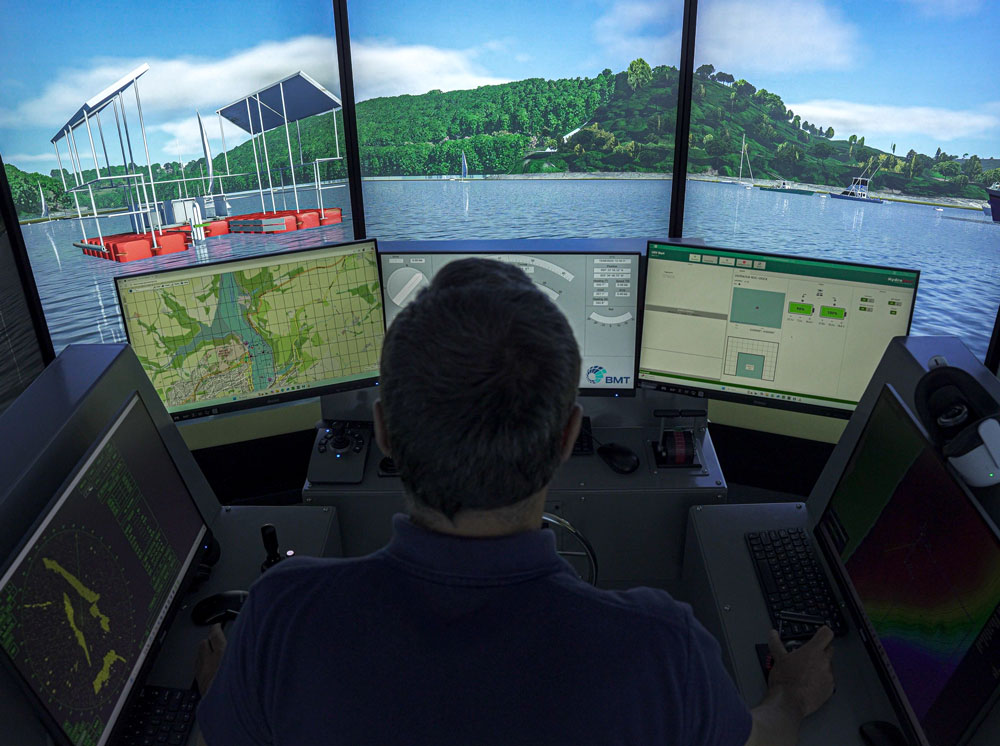
BMT’s Rembrandt simulator was integrated with HydroSurv’s vessel control software, enabling remote operator training and direct control of ‘USV Dart’
Back at the ROC, pilots remotely launched and navigated USV Dart by integrating HydroSurv’s vessel control software with BMT’s Rembrandt simulator – the latter tool more traditionally used for crewed vessel training. HydroSurv elaborates: “This capability – enabling operator training in a virtual environment that precisely replicates the vessel’s handling characteristics, before transitioning to live control – represents a significant advance in ROC design. It supports both the modernisation of maritime training syllabuses and the technical evolution of uncrewed operations facilities, with enhanced human factors and situational awareness at their core.
“Being a conventional vessel simulator, the spread is relational to the layout of a commercial vessel or workboat bridge, as opposed to more conventional screen layouts seen with remotely operated uncrewed vessel spreads.”
The River Dart trials have so far included water quality assessment missions involving pre-planned routes of up to 10km in line length from the docking station. These runs were based on standardised tasks from HydroSurv’s parallel ‘Smart Waters, Clean Ports’ project, launched last year, in which REAV-16 USVs transited rivers and estuaries around the ports of Dartmouth, Falmouth and Plymouth to assess local water pollution levels.
Summing up the USV Dart trials so far, HydroSurv states: “A two-person team can now execute multiple missions from a single facility, across dispersed coastal sites, without the need for local on-water support.” HydroSurv is now looking to further develop the integration between the USV and the Rembrandt simulator. This will likely include “enhancing the live view capabilities from an improved situational awareness spread, possibly with larger seagoing systems; and [evaluating] human factors for one-to-many USV supervision approaches”, the group says.
The docking station, meanwhile, will be honed to handle HydroSurv’s larger, seagoing USVs, “as part of an onward development roadmap”, HydroSurv adds. In November, as the project enters its final phase, the group aims to identify potential savings in terms of reduced crewing/support vessel costs and emissions through using the ROC, USV and docking station, compared with typical manned vessel set-ups.
Ulstein Verft has delivered Windea Clausius, the second in Bernhard Schulte Offshore’s new series of commissioning service operation vessels (CSOVs), writes Patrik Wheater. Windea Clausius and her sister Windea Curie, delivered in June, form part of an extensive newbuild programme that began in 2023. Hulls three and four are on schedule for delivery next year and will also enter service under the Windea Offshore joint venture, established to provide integrated logistics and operations support to wind farm developers in the North Sea and Baltic.
Built to Ulstein’s SX222 platform, unveiled in early 2021, the 2,200dwt Windea Clausius combines a methanol-ready hybrid diesel-electric propulsion plant with Ulstein’s hallmark TWIN X-STERN design, which allows the vessel to operate either bow- or stern-first. Ulstein says the novel hullform improves operability, lowers energy use and enhances comfort by reducing slamming and spray loads when holding position. The TWIN X-STERN – which evolved from Ulstein’s earlier X-STERN family introduced in 2015, and leverages on the success of its X-BOW design from 2004 – is awash with hydrodynamic refinements that include optimised propeller inflow to reduce underwater noise and vibration.
Speaking in 2021, Kolbjørn Moldskred, sales manager at Ulstein Design & Solutions, said: “It’s a completely different experience to be on board. It’s built to operate in strong currents and is less limited by weather conditions. TWIN X-STERN is in the same family as our other two revolutionary hulls, X-BOW and X-STERN, and provides similar benefits, just in a different set-up optimised for the offshore wind segment.”
With an overall length of 89.6m, a 19.2m beam and a draught of 5.9m, Windea Clausius’ hull was built at the Crist Shipyard before being towed to Ulstein Verft in Norway for the final phase, which included outfitting, paint work, electrical installation, equipment integration, commissioning and sea trial. The vessel is built for a service speed of about 10knots with propulsion provided by a Kongsberg Maritime package that integrates two main US 205 azimuth propellers fore and aft with a K-Power DC Hybrid solution, K-Chief EMS/IAS and K-Line control systems for smart energy management, fuel efficiency and optimal performance in dynamic positioning (DP) operations.
Electrical power to these and other consumers is through a hybrid battery-propulsion system, supplied by Everllence, which features a trio of methanol-ready MAN 175D-MEV (variable-speed) gensets, each rated 2.2MW and equipped with an integrated MAN closed-loop selective catalytic reduction (SCR) system to optimise emissions abatement. Indeed, Matthias Müller, Bernhard Schulte Offshore MD, said the engine design “is notable for its flexible use of various fuel grades, including biofuel, and its suitability for dual-fuel methanol retrofits”.
First-in-class Windea Curie represented the first reference for the engine which, when running on methanol, can cut CO2 emissions by up to 95%, NOx by up to 80%, and SOx and particulate matter completely. Complying with IMO Tier III NOₓ-emission standards, the hybrid arrangement is also claimed to deliver up to 10% fuel savings in typical North Sea service and reduce generator operating hours, cutting maintenance costs.
Øyvind Gjerde Kamsvåg, chief designer at Ulstein, said in 2021: “The key advantage of the hull is its ability to stay in position. The secret lies below the waterline. TWIN X-STERN has main propeller units at each end, which provide maximum manoeuvrability. The hull also provides major fuel savings; we have findings from the sister patent X-STERN, which show a reduction in power consumption of up to 60% when manoeuvring stern-first compared to flat transom stern.”
Equipped with a large, height-adjustable, centrally located walk-to-work gangway and elevator tower for personnel and cargo transfers, the vessel includes a 3D motion-compensated crane for offshore lifts of up to 5tonnes. Onboard logistics are optimised with spacious storage areas and stepless access to offshore installations.
While the hull’s symmetry and twin-ended propulsion allow the ship to weather-vane naturally, maintaining heading with minimal thrust and energy demand, the bridge layout follows Ulstein’s Insight Bridge concept, combining navigation, DP, crane and gangway operations in an ergonomic, 360° workspace that improves situational awareness during complex offshore manoeuvres.
Until now, aside from some short-sea/coastal shipping applications, wind-assisted propulsion systems (WAPS) have tended to be the domain of 100m+, oceangoing vessels, including tankers and large cargo ships. So, it’s something of a surprise to see WAPS technology being applied to a patrol boat, as is the case with the New Generation Maritime Affairs Patrol Vessel (PAMNG) project, spearheaded by French naval architecture and marine engineering firm MAURIC.
Officially announced in January 2025, the PAMNG’s first steel was cut in September at Socarenam’s shipyard in Boulogne-Sur-Mer, France. The concept is for a 53.7m-long boat with a steel hull and an aluminium superstructure, powered by a diesel-electric hybrid system and a deck-mounted Wisamo wingsail, manufactured and supplied by Michelin, and featuring a surface area of 170m2.
Delivery to the owner, the French Directorate General for Maritime Affairs, Fisheries and Aquaculture (DGAMPA), is earmarked for the second half of 2027, and the vessel will operate primarily in the Bay of Biscay, undertaking missions including maritime fisheries surveillance, pollution monitoring, enforcing compliance with environmental regulations, search and rescue operations, anti-trafficking activities and protection of French national interests. The Bay’s challenging winds and waves should make it an ideal proving ground for wind-assisted propulsion tech in real-world enforcement scenarios.
Combined with the diesel-electric powertrain, the wingsail will help the PAMNG to achieve a maximum speed of 17knots at 85% MCR – reduced to 10knots when the vessel operates on electric alone – and overall fuel savings in the region of 15%. The PAMNG will also feature an endurance of 3,600nm at 12knots, MAURIC says.
The Wisamo includes a telescopic and retractable carbon-fibre mast, which can be lowered when the vessel enters port or passes under bridges. The wingsail is made of a light but strong fabric like a conventional boat’s sail, and fills with air at low pressure when the mast extends. A small fan blows in air to keep the wing’s shape smooth and even, while built-in sensors enable the wing to autonomously adjust its angle to capture the right amount of wind, providing more speed, saving fuel and reducing crew workload during long patrols. The PAMNG will also incorporate solar panels for auxiliary power, as well as an active trim control system to minimise energy consumption.
For this project, MAURIC conducted a detailed arrangement study for the vessel, including an ‘optimisation loop’ – an iterative computational process, used to simulate wind, speed, fuel use and stability to inform the best positioning for the sails for optimal performance. MAURIC says: “This phase also enabled the finalisation of active and passive stabilisation systems development, through seakeeping calculations carried out to optimise the anti-roll tank with free surface effects and active fin stabilisers.” Using CFD simulations, MAURIC then designed the boat’s bulbous bow to refine the hull’s hydrodynamic performance. “These CFD studies have optimised resistance through the water and defined the vessel’s active trim control system underway, confirming a hybrid cruising speed of 10knots and maximum speed exceeding 18knots,” the company says. “This configuration ensures the energy efficiency sought for this vessel with reduced environmental footprint.” Advanced modelling also predicted reduced drag in moderate seas.
The PAMNG has been arranged for a crew of 16 and four special forces personnel, and has an autonomy of 12 days – sufficient, MAURIC says, to guarantee sea patrols for up to 200 days annually. In addition to its crew complement, the vessel will carry a pair of 6.5m-long, semi-rigid boats, capable of 35knot intercepts.
MAURIC’s previous forays into wind-assisted propulsion include the 136m x 24.2m, sail-powered ro-ro cargo vessel Neoliner Origin, which was launched by RMK Marine’s shipbuilding facility in Turkey earlier this year, and which made its first transatlantic voyage in October.
Recent incidents in which pipelines and subsea cables have been deliberately damaged have highlighted the need for European countries to protect offshore infrastructure, and for a new type of survey and surveillance vessel dedicated to monitoring the underwater environment in areas of sovereign interest.
A notable example of this kind of vessel is Proteus, which acts as a mothership for ROVs and a suite of specialist capabilities, but others are entering service. In the Netherlands, like the UK, the government plans to invest further in offshore wind farms and to acquire new-generation vessels to protect these assets, but, in the near-term, a solution is to be provided by a converted offshore vessel, following the result of a recent tender won by a team comprising ship designer and builder Damen Shipyards Group and marine geodata specialist Fugro.
Underwater surveys
Earlier in 2025, the Dutch Ministry of Defence contracted the Damen-Fugro team to enhance maritime surveillance and security – above and below water – in the country’s exclusive economic zone (EEZ). The solution proposed by the Dutch companies is based on the use of a Damen Fast Crew Supplier (FCS) 5009, a vessel acquired from the offshore market, which is being upgraded with a suite of surveillance technology and assets such as above- and below-water drones that will enable the Royal Netherlands Navy to monitor vessel activity in the North Sea and survey critical underwater infrastructure such as cables and pipelines.
Singapore-based shipbuilder Strategic Marine has signed a memorandum of understanding with US-based Eureka Naval Craft to collaborate on the construction of the first Aircat Bengal MC Modular Attack Surface Craft. The vessel has been designed to operate in low-manning mode, or as an uncrewed surface vessel (USV), if required. Versions of the Aircraft Bengal MC could also be developed for use in the offshore oil and gas industry.
The Aircat Bengal MC uses a surface effect ship (SES) hullform, originally developed by Norwegian ship designer ESNA. An SES design has a catamaran hullform borne by a combination of an air cushion between the side hulls and the buoyancy of the hulls.
The partnership will use Eureka’s modular naval version of the SES design to deliver a new class of non-ITAR, dual-use vessels designed for both defence and civilian applications. Non-ITAR vessels are not subject to the America’s International Traffic in Arms Regulations, which control the export and import of defence-related equipment.
This means that the Aircat Bengal MC can respond to evolving requirements, such as the US Navy’s Modular Attack Surface Craft programme, and can fulfil the US Navy’s and allied nations’ requirements for optionally manned combatants. Its non-ITAR status and modular, dual-use design also make it ideal for rapid deployment and operational integration with US and partner forces, and the vessel’s high-speed, shallow[1]draught and modular payload system are optimised for littoral environments, key to Indo-Pacific naval defence and maritime security.
The past few years have seen regulators warm to nuclear power’s potential, but a major challenge remains: persuading investors to fund nuclear-powered commercial ships.
This was the main theme of the roundtable Is Nuclear the Missing Piece in Maritime Decarbonisation?, hosted by classification society IRClass during London International Shipping Week in September. Gihan Ismail, director of shipping fund/asset manager and vessel operator Marine Capital, told delegates: “From a technical perspective, I’m sure we will get there, and it will probably not take decades. But the commercial viability of [nuclear] technology will take a lot longer. IMO has still to develop a comprehensive regulatory framework for nuclear ships, and this will take time.”
Part of the problem, Ismail emphasised, is that “shipping and nuclear are two areas where institutional investors are very reluctant to invest directly”. She continued: “As maritime insiders, we know the risks in our industry and how to manage them – but a financial investor who has no familiarity with our sector just sees, for example, Ever Given stuck in the Suez Canal. As a result, [investors] tend to ascribe a higher risk premium to shipping.
“Institutional investors are reluctant to invest in shipping because they don’t like the construction risk, or the ‘first of a kind’ technology risk, or the long lead times, because there’s then uncertainty over capital deployment and the risk return model. They are also unwilling to invest in nuclear, partly because nuclear energy development is complex and has pretty much always been tied to national security. The project lead time is very lengthy – typically 16 years from regulatory approval to construction – and it’s typically beset by significant cost overruns and delays.”
Ismail expanded: “[Investors] have an investment period in mind, which is not infinite, so the funds will often have a fund life of, say, seven to 12 years – and you can’t really invest in a project where you’re not getting to see any income or return come through until after your fund life. These things need to be overcome if we’re going to see investment in commercial nuclear vessels. Investors want to see that this works in a commercial setting; they won’t want to take any kind of operational risk where there is no commercial track record.”
Gihan Ismail, Marine Capital: “Investors must be convinced that nuclear energy actually is ‘green’… I think there’s been a great deal of ambiguity”
Anouskha Bachraz, director, transportation advisory at multinational banking and financial services company Société Générale, commented: “Banks are conservative – there’s always a little bit of apprehension when you’re transitioning to new fuels. Even when you’re trying to finance LNG or methanol, banks will raise questions like: ‘How will it work? How will you find the methanol? Where are the green corridors?’ Banking is probably going to be one of the last sectors to support nuclear being used on commercial vessels.”
Given the high costs of producing a commercial nuclear ship, adopting a leasing model for onboard small modular reactors (SMRs) could spread the upfront costs of nuclear technology over time, enabling smaller operators to adopt these reactors without massive capital investment. As Bachraz pointed out: “Right now, SMRs are expected to have a lifespan of 40-60 years, which is much longer than that of your average ship” – and their compact, modular nature means they could suit various vessel types, making it possible for one reactor to fuel a small yacht, a bulk carrier and a landing vessel in its lifespan, for example.
One concept with the potential to lure investors – and one that has become increasingly popular in recent years – is that of green shipping corridors. With more than 60 such corridors established worldwide, and more on the way, they seem to be a burgeoning trend. However, Ismail warned, relatively few of these corridors are operational. “These take a long time to set up because of all the additional stakeholders involved,” she said. “You’ve got the shipowners, the operators, the ports, the charterers, the banks and other financing entities…and they all have to come together and agree to bear the cost together. The very few [green corridors] that are operational are operational because there’s been some kind of government support that has underwritten some aspect of that which has enabled those parties to take those risks, bear that extra capex and have some kind of certainty that that capex is worth it.
“You’ve got to have charterers who are willing to enter into duration. It’s not as simple as two countries or two ports getting together to enable that.”
‘Is Nuclear the Missing Piece in Maritime Decarbonisation?’ was hosted by IRClass during London International Shipping Week
Inevitably, the discussion led to the public perception of nuclear energy, and how this alt-fuel’s pariah status may be scaring off investors. It’s easy to understand why nuclear power advocates become frustrated; nobody seems to be as concerned with, say, ammonia, which can cause blindness, severe burns, lung damage and explosions in an accident, and devastate aquatic ecosystems in the event of a spill. Then again, the public hasn’t been subjected to decades of books, movies, documentaries and songs about the horrors of ammonia.
Ismail said: “Nuclear is still regarded with a good deal of suspicion. Investors must be convinced that nuclear energy actually is ‘green’, and I think there’s been a great deal of ambiguity. For example, the EU has only included nuclear as a ‘transitional’ energy in its sustainable finance directive taxonomy in 2022, and the UK government doesn’t actually include nuclear in its green finance framework – although the Climate Bonds Initiative [CBI] accepts that nuclear does align with green principles – so you need to convince investors that they are actually investing in a green energy source.”
One driver of change might be the adoption of SMRs by ‘Big Tech’, Bachraz noted. “Amazon, Microsoft and Google all need higher levels of energy intensity to be able to power the data centres they need for AI,” she said. This could break the ice with some previously reluctant investors; Bachraz added that some banks are already showing interest in the feasibility of financing these data centre SMRs on an ongoing basis. “Once you have a framework for financing SMRs on land, you can develop a framework on the shipping side,” she said.
Which brought the panel to the point: can the shipping industry obtain the financing it needs to pull this off without government assistance? In Ismail’s opinion, it’s inescapable that government has “a very big role to play – not just in nuclear, but in the whole energy transition, because a lot of commercial hurdles are not going to be solved solely by the private sector or the commercial sector”. She continued: “We all know that the cost is huge, so government can’t fund it alone – but there are just certain risks the private sector will not take, or will be very unwilling to take. It’s not just the banks that are conservative – it’s also institutional equity investors.”
The threat posed to global maritime trade by rogue states and terrorists has not changed much over the past 10 years, but the tools they use have. Mines, missiles, IED-ladened skiffs and RIBs are being replaced by drones – and, in little over three years, the drone has evolved from a flying camera used to take ship pics into a mass-produced, inexpensive killing machine, writes Patrik Wheater.
The first time a drone was used to target shipping was in July 2021 when the tanker Mercer Street, managed by an Israeli-linked company, was struck off Oman by an unmanned aerial vehicle (UAV), killing two crew. A year later, Ukrainian forces were modifying jet skis into remote-controlled surface drones, packing them with explosives and steering them towards Russian naval targets. By late 2023, most of the attacks on ships in the Red Sea, especially round the Gulf of Aden, used drones.
Houthi rebels used drones alongside missiles in a string of attacks, including in the 2023 hijacking and seizure of the car carrier Galaxy Leader. In the same year, the product tanker Swan Atlantic was hit in the southern Red Sea, with a drone approaching from astern and damaging a freshwater tank. In April 2024 containership MSC Orion was targeted by a HESA Shahed 136 drone in the western Indian Ocean, and in July 2025 the bulker Magic Sea was damaged in a combined attack using drones and remote-controlled boats before being boarded and abandoned.
For Fredrik Preiholt, senior analyst at the Norwegian War Risk Club (DNK), these incidents indicate a shift in method rather than motive. “It is a new tool, not a new threat,” he says. “The actors who use drones against shipping have always targeted shipping. If they didn’t have drones they would have used something else. The danger is that drones are cheap, easy to access and increasingly reliable.” There are typically two types of drones: airborne UAVs and unmanned surface vehicles (USVs), which are essentially remote-controlled boats adapted from commercial jet skis or speedboats. UAVs are usually used for surveillance and intelligence gathering purposes, to assess target suitability for attack, but they can be developed, according to Preiholt, as “one-way kamikaze drones”.
At their crudest, commercial quadcopter drones have been adapted to drop grenades or mortar rounds. At their most sophisticated, Iranian-made Shahed drones, which cost between US$20,000-40,000 each, are now widely used by Russia in Ukraine and supplied to Houthis in Yemen. But crude line-of-sight USVs, such as speedboats packed with explosives, are also being used to target ships. These waterborne IEDs are the main weapon against merchant vessels navigating the Red Sea and Indian Ocean. “Houthi USVs are limited to line-of-sight control,” says Preiholt. “But the Ukrainian designs, with Starlink communication links and better payloads, are closer to cruise missiles.”
Although drone attacks are relatively new, agitators and terrorists can block important shipping lanes, disrupt global trade, cause terror and sink a US$100 million asset for as little as US$10,0000. By contrast, a guided missile can cost north of US$500,000. The drone has resulted in sea traffic around the Red Sea dropping by half since the Houthis 2023, according to DNK analysis.
“There is a psychological effect, but missiles are actually scarier because they come with no warning,” says Preiholt. “With drones, you at least see them coming, which gives you a chance to react. But the sight of a UAV circling overhead has a clear effect on crew morale.”
For DNK, which insures some 3,500 ships in the Norwegian fleet, the role is to provide intelligence and analysis rather than prescribe defences. “Good affiliation checks can help establish if the vessel is likely to be on any potential target list, and access to reliable intelligence is more important than expensive defensive technology,” Preiholt explains, going on to advocate employing private security companies.
UK-based autonomy software developer Marine AI has launched a project in the hope of granting uncrewed vessels the ability to “communicate naturally” with other ships, in the manner of a human operator. The project has received the backing of the Defence and Security Accelerator (DASA), a branch of the UK Ministry of Defence (MoD) created to fund the development of innovate tech solutions for the British Armed Forces.
Marine AI will now trial a large language model (LLM), designed for ship-to-ship dialogue, using a ZeroUSV Oceanus12 USV in Plymouth and Portsmouth waters. The USV will communicate with the Royal Navy’s testbed Patrick Blackett and recently launched extra-large underwater uncrewed vehicle (XLUUV) Excalibur (see The Naval Architect June 2025). LLMs are types of AI model designed to both understand and generate human language, which could make mixed-traffic operations at sea more viable.
Oliver Thompson, Marine AI technical director, comments: “Uncrewed platforms can only operate safely alongside conventional vessels if they can be understood. This project is about proving that an autonomous system can use natural language in a way that makes sense to mariners in real-world conditions.”
P&O Ferries has announced that its passenger cargo and ro-ro ferry Pride of Hull has become the first vessel in its fleet to run entirely on biofuel B30, a blend of 30% biodiesel and 70% conventional diesel. As a result of the fuel swap, the 215m x 32m vessel, which services a route linking Hull, UK and Rotterdam, will cut lifecycle greenhouse gas emissions by approximately 20% compared with traditionally fuelled ferries – and without impacting on service reliability.
A spokesperson for P&O Ferries comments: “Following consultation with engine manufacturer Wärtsilä and leading fuel suppliers, biofuel B30 was selected as the most practical transitional fuel – reducing emissions without the need for costly vessel conversions.” The spokesperson adds that alt-fuels such as methanol and ammonia were rejected because they would have required expensive and significant engine modifications or replacements.
Completed by Italian shipbuilder Fincantieri and put into service in 2001, Pride of Hull features 12 decks and the capacity to carry up to 1,360 passengers and 400 freight vehicles.
Stewart Hayes, P&O Ferries fleet director, comments: “This transition shows that meaningful emissions reductions are possible today – even on one of the largest ferries in Europe.” Hayes adds that the move is part of a wider scheme by DP World (which acquired P&O Ferries in 2019) “to cut emissions by 42% by 2030”.
The Port of Antwerp-Bruges is forging ahead to develop a shore power installation at the Zweedse Kaai cruise terminal in Zeebrugge, Belgium, which will enable this hub to provide green electricity to calling cruise ships. Scheduled to be up and running in early 2027, and funded to the tune of just under €4 million by the European Commission and the Flemish government, the addition of a new onshore power supply (OPS) and high-voltage substation at this location will slash quayside emissions to zero, while reducing smelly, unsightly smoke for the benefit of local residents, passengers and crew alike.
Upon entering the terminal, cruise vessels will be able to connect to the charger via a moveable loading arm, switch off their engines and fuel their time in port on green shoreside power. Plans for a second electric installation are now being discussed. The shore power installation forms part of a broader renovation of the Zweedse Kaai that includes a new terminal building with boarding bridges, a battery system and redevelopment of part of the quay into green space.
A statement from the Port of Antwerp-Bruges outlined: “At the moment, the Zweedse Kaai accounts for about 5% of the CO₂ emissions from all ships at the quays in Antwerp and Zeebrugge, because the cruise ships at the quay generate electricity using diesel generators. Shore power does away with those emissions locally.” The port aims to be completely climate-neutral by 2050, and port representatives hopefully added: “The project can also serve as a reference for other terminal operators.” The funding partners have forecast a payback period of approximately 20 years.
Under the Alternative Fuels Infrastructure Regulation (AFIR), certain EU ports must offer OPS to specific ships by 1 January 2030, though some have raised concerns that the pace of installations is flagging somewhat. A study conducted this year by DNV on behalf of green transport advocate T&E indicated that just four of Europe’s 30 biggest ports have installed or contracted at least half of the shoreside electricity infrastructure needed by 2030. The report also claimed that cruise ships at berth produce at least more than six times the emissions of container vessels, with some extreme gas-guzzling outliers emitting even more.
Kership, the joint venture between French shipbuilder Piriou and Naval Group, has commenced construction of the first of two new offshore patrol vessels (OPVs) for the armed forces of Montenegro. Construction of the OPV follows a 2024 intergovernmental agreement between the French Ministry of Defence and the Montenegrin Ministry of Defence relating to defence cooperation.
Following the agreement, which was confirmed at the 2024 Euronaval exhibition, Montenegro signed a contract for the acquisition of two OPV 60s from Kership, to be built at the Piriou facility in Concarneau. Acquisition of two modern OPVs will significantly enhance the country’s naval capability. The Montenegrin Navy – which was established in 2006, following the secession of Montenegro from the State Union of Serbia and Montenegro – has few vessels and only a little equipment inherited from the armed forces of the State Union, but the country has an extensive coastline.
Based on an existing design that Piriou built for the Senegalese Navy, the OPV 60 was originally designed to undertake surveillance in coastal waters and within the exclusive economic zone. The third and final example of the design was delivered to Senegal in April 2025.
The OPV 60 is a 60m patrol vessel that Kership has updated to enable the Montenegrin Navy to carry out missions including protecting infrastructure, border control, anti-piracy operations, search and rescue, pollution response and humanitarian aid. Addition of the vessels will reinforce Montenegro’s ability to patrol waters at the gateway to the Adriatic, better protect its national interests at the sea and enhance its ability to contribute to NATO’s collective efforts in the region. The new vessels will also enable the Montenegrin Navy to deploy special forces and above-water drones.
With a length overall of 62.95m and a beam of 9.5m, the OPV 60 has a draught of 2.7m. Constructed with a steel hull and aluminium superstructure, it will provide accommodation for 24 crew and up to 16 special forces personnel. The OPV will have a diesel-electric propulsion system with MAN engines, two fixed-pitch propellers, two rudders and a bow thruster. The OPV 60s will have a range of 9,700nm, a maximum speed of 21knots and a displacement of 550tonnes, and each will make use of an active stabilisation system.
Kership said the OPV 60s will also be equipped with a 7.5tonne-capacity crane, and will be capable of embarking two 20’ containers. Special forces personnel will be deployed using a pair of 6.8m rigid hull inflatable boats (RHIBs), which will be launched and recovered via a stern-mounted ramp. The newbuilds will be armed with a remotely operated 40mm gun and two remotely operated 12.7mm machine guns. They will also embark unmanned aerial vehicles (UAVs) and have diver/special forces facilities.
The design has also been modified to include a hull-mounted sonar and a nuclear, biological and chemical ‘cell’ to protect the crew in the event of an attack. Naval Group will supply a Polaris combat management system for the new OPVs.
Kership says the first vessel, Petar 1, will be delivered to the Montenegrin Navy in the first half of 2027, with the second, Petar II, to be delivered six months after the first.
On 22 August, the Canadian-flagged vessel M/V Tamarack, the first newly built cement carrier in two decades to enter service on the Great Lakes, called at the Port of Montreal, thus completing her maiden transatlantic voyage and proceeding to load her maiden cement cargo, writes Bruno Cianci.
Owned by Eureka Shipping, this 12,500dwt vessel had been delivered in July by Holland Shipyard in Hardinxveld-Giessendam in the Netherlands, during a ceremony attended by more than 150 invitees. Eureka Shipping – a joint venture between Canadian Steamship Lines (CSL) Group and Cyprus-based SMT Shipping – was established in 2008, with CSL Group joining as a shareholder a decade later. Eureka, headquartered in Limassol, Cyprus, owns and operates a fleet of cement carriers and barges ranging from 3,726dwt (M/V Envik) to 22,530dwt (M/V Winterset), with an average close to 7,000dwt per vessel.
Although designed on a compact platform, this 123m vessel was commissioned to replace two older ships with a more streamlined, high-performance design that retains the same cargo capacity while significantly reducing the enviromental footprint thanks to energy-saving handling systems.
The commissioning of Tamarack is likely to transform activities in the Great Lakes region. The vessel features four dedicated cement cargo holds with a total capacity of 10,856m³, all supported by high-efficiency loading and discharging systems. Tamarack is fitted with diesel-electric propulsion, featuring four generator sets, two 360° rudder propellers (which also perform as thrusters while docking) and a powerful bow thruster for optimal manoeuvrability. The vessel is also equipped to run on HVO, thereby reducing greenhouse emissions.
Furthermore, Tamarack is prepared for shore power connectivity, enabling zero-emission operations in ports. The environmental goal is further enhanced by the wide use of LED lighting, which consumes less electricity than traditional lighting systems, as well as heat recovery on the generator sets for the HVAC, plus other energy-saving technical measures.
When asked what Tamarack represents, Marco Hoogendoorn, director of all Holland Shipyards Group locations and product companies, replies: “This vessel demonstrates what collaboration can achieve. Together with Eureka and SMT, we’ve delivered a robust and efficient ship, tailored to her task. Tamarack is a sophisticated diesel-electric design with two L-drives: it has no main batteries and runs solely on generators. The diesel-electric propulsion system, powered by four Caterpillar generators always allows for the most optimal power setting, either in transit, when manoeuvring, berthed or during loading/unloading operations.”
Tamarack, which is handled by a crew of 15, has a range of 3,600nm and can spend up to 15 days at sea, and has a service speed of 10 knots.
For the full in-depth article, including all technical particulars and a general arrangement, don’t miss the September 2025 issue of The Naval Architect
Installing wind-assist propulsion (WAP) technology could help shipowners to reduce energy consumption and fuel costs – but getting the best out of WAP systems (WAPS) necessitates integrating them with the other onboard propulsive components, rather than installing and utilising these WAPS in relative isolation.
As Henrik Alpo Sjöblom, VP for business concepts at Kongsberg Maritime, puts it: “Shipowners can choose their preferred type of wind-assist technology: there are several available and they all have their own attributes. However, to date, these technologies, whether incorporated in a newbuild or retrofitted, are essentially an add-on technology.” He adds: “We believe they can be used in a much more effective way.”
To pursue that aim, June saw Kongsberg Maritime officially launch its K-Sail service, an offering intended to help shipowners select and integrate WAP technology more effectively. Sjöblom, who is the driving force behind K-Sail, tells The Naval Architect: “It’s taking the same approach as you would with a yacht; determining how you manage all systems on board when you factor in the additional thrust from the sails. You really need to analyse how the sails work to integrate them with the onboard systems, and to consider each specific vessel and specific route.
“Like with a sailboat, you wouldn’t use the same sail all the time; you’d have a main sail for certain legs, but also a jib for upwind sailing and a spinnaker for downwind sailing – so why not take the same approach for wind-assisted vessels?”
K-Sail can be broken down into five key areas, including: “understanding the vessel’s operational parameters and selecting the appropriate sail technology”, the company says; ensuring the steering system can accommodate the additional thrust generated by the sails; ensuring the propeller operates efficiently with the additional wind propulsion; and balancing the power generated by the sails with the ship’s energy requirements.
The fifth element concerns the use of AI and real-time data to optimise the ship’s route and speed, for maximum operational efficiency. The K-Sail system continuously collects and analyses data from multiple sources (including wind conditions, vessel speed, heading and sea state, as well as onboard propulsion, steering and power management systems), using sensors, to monitor sail-generated thrust and engine power output in real-time. This then enables dynamic adjustments to maintain optimal performance.
So, for example, the system could reduce engine load (and thus fuel consumption) when winds are favourable. Alternatively, when wind strength drops, or there is a heightened requirement for speed, K-Sail can seamlessly shift more power to the engines, providing actionable recommendations or automatically adjusting sail angles, engine RPM and propeller pitch to reach the most energy-efficient operational state. Based on the results of a K-Sail pilot project aboard a tanker owned by Sweden’s Terntank, K-Sail could reduce engine power by up to 9-15% in strong winds, cutting fuel use and emissions.
Expanding upon the importance of the pilot projects and forthcoming sea trials, Sjöblom says: “The problem with WAP, as with any renewable energy, is that it’s based on probabilities. Once you start operating, you get the real numbers regarding how this technology actually performs in winds.” As befits a system designed to be compatible with various WAPS (including Flettner rotors, suction sails, soft sails and rigid sails) and vessels ranging from small fishing boats to ocean-going bulk carriers, the K-Sail’s use of AI should help the system to learn how each WAPS-equipped vessel performs in different wind directions, considering factors such as the aerodynamics around the vessel – “which can be more challenging for, let’s say, a cargo vessel with block structures on its deck,” Sjöblom says.
Boatbuilder/designer Arksen and electric/autonomous propulsion specialist RAD Propulsion have partnered up to jointly develop a “revolutionary class of clean, intelligent and highly proficient marine craft”, the companies state.
The partnership has set itself three key development goals. The first is to realise a rugged inflatable boat featuring RAD Propulsion’s Power console – described as a “fully integrated, cable-free helm system tailored for eco-tourism and cruise operators and defence applications”.
The second goal is to develop a next-gen rigid-hulled inflatable boat (RHIB), optimised for RAD Propulsion’s latest electric drive systems. Thirdly, the partners aim to produce customised and mission-specific autonomous patrol boats and tactical craft, as well as pontoons for the US market.
The intention is to maintain “at least three active development projects at all times, enabling rapid response to market opportunities while keeping capital outlay low”, and to produce boats that can handle tasks ranging “from ocean tourism to tactical operations”, says Arksen founder Jasper Smith.
Dan Hook, CEO of RAD Propulsion, adds: “The partnership will push the boundaries on what’s possible for electric-powered vessels in remote and challenging environments, reducing the reliance on fossil fuels. Arksen’s design and market reach, combined with our propulsion and autonomy stack, makes for a powerful offering across the marine landscape.
“Both companies are also committed to ensuring that this collaboration has a lasting positive impact on the environment, aligning with the growing demand for green energy.”
In August, RAD Propulsion announced that it had partnered with Pangolin Photo Safaris, operator of the luxury trimaran ‘houseboat’ Pangolin Voyager. With the capacity to carry 10 guests on wildlife photography tours along Botswana’s Chobe River, the boat incorporates four RAD40 electric drives, rated 40kW apiece, along with two 61kWh batteries and a spread of solar panels. The drives are split two at the front, between the hulls, and two at the back, and the complete electric power package enables a speed of about 2.5knots.
Drydocks World to undertake LNG carrier conversions
Drydocks World has been awarded a contract by Amigo LNG, a joint venture between Texas-based Epcilon LNG and Singapore-based LNG Alliance, to convert two LNG carriers into floating storage units (FSUs). Additionally, the company will build two new floating LNG barges at its Dubai shipyard.
Once operational in the second half of 2028, the four-vessel facility will provide more than 4.2 million tonnes of liquefaction capacity annually for a project off the coast of Mexico. Drydocks World has completed more than 10 large-scale LNG and FSRU conversion projects to date.
Boiler retrofits lined up for Elcome
Dubai-headquartered Elcome International has signed an agreement with an as yet unnamed Middle East-based shipowner to retrofit boiler control systems to 10 crude oil tankers and product carriers. Each installation includes secure remote connectivity, enabling Elcome’s service team to provide real-time support, software updates and diagnostics during voyages.
Two vessels have already been retrofitted; one in Jebel Ali and one while the vessel was at sea. Each installation will take between five and seven days to complete, Elcome states.
Seatrium secures FLNG upgrade work
Singapore’s Seatrium shipyard has secured a contract from Golar Hilli Corporation to upgrade the FLNG Hilli Episeyo. Scheduled to enter the yard in Q3 2026, the project involves repair and life extension-related items, winterisation of the vessel and the installation of a new soft-yoke mooring system.
When completed, Hilli Episeyo will be redeployed in the Gulf of San Matias in the Rio Negro province offshore Argentina, liquifying gas from the Vaca Muerta Shale formation onshore in Neuquen province for 20 years. Hilli Episeyo, with a capacity capacity of 2.45 million tonnes a year, is set to recommence operations in 2027.
Tallin yard to undertake ferry retrofit
BLRT Repair Yards Tallinn has been selected to carry out a major retrofit onboard Aurora Botnia, Wasaline’s hybrid ferry, with work set to begin in autumn 2025. The project involves the installation of a 10.4 MWh lithium iron phosphate battery system, supplied by AYK Energy, an upgrade expected to reduce the vessel’s annual fossil energy use by approximately 10,000MWh and cut emissions by 23%.
Also heavily involved in the project is Wärtsilä, which will deliver the energy management system and upgrade the power drives and control systems.
Japan Engine Corporation (J-ENG) reports that it has finalised development of its 2-stroke, dual-fuel ammonia engine, the 7UEC50LSJA-HPSCR, which completed performance verification tests in August 2025.
The engine – under development since 2023, as part of a NEDO-funded project with partners NYK Line, Nihon Shipyard, Japan Marine United Corporation (JMU) and ClassNK – will be installed aboard an ammonia-fuelled medium gas carrier at JMU Ariake Shipyard in October 2025. This newbuild is expected to commence operations in 2026.
The new engine is a 50cm-bore, 7-cylinder model, with a high-pressure SCR system for exhaust aftertreatment. The August verification tests saw the engine put through its paces in both ammonia and HFO operation modes, with ClassNK handling certification related to environmental performance and safety.
J-ENG comments: “[We] previously conducted approximately 1,000 hours of test runs on a single-cylinder ammonia-fuel test engine at the Mitsubishi Heavy Industries Research & Development Center at Nagasaki between May 2023 and September 2024.” Insights gained from those test runs informed the manufacture of the first full-scale commercial version of the 7UEC50LSJA-HPSCR, which began ammonia fuel trials in April 2025. In the five months since, the engine has undergone 700 hours of tests, focusing on factors such as leak prevention and monitoring, for the safety of the crew. J-ENG adds that, at 100% engine load and 95% ammonia fuel content, the engine was observed to reduce greenhouse gas emissions by more than 90%.
Additionally, J-ENG says it is developing a 60cm-bore ammonia-fuelled engine, and plans to open a new engine-building factory in 2028.
The third ship in Royal Caribbean’s behemothic Icon class, Legend of the Seas, has undergone a float-out ceremony at the Meyer Turku shipyard in Finland, in advance of her Q2 2026 delivery.
The Icon class features a length of 365m, a breadth of nearly 50m and a gross tonnage exceeding 248,600, granting it the title of the world’s largest cruise ship series. Legend Of The Seas will follow in the wake of Icon Of The Seas, delivered to Royal Caribbean in November 2023, and Star Of The Seas, which was handed over in July this year and entered service in August. A fourth ship, as yet unnamed, is also under construction at Meyer Turku, with delivery scheduled for 2027, and options exist for a further two Icon-class newbuilds.
Legend Of The Seas was floated out on 29 August, accompanied by speeches by shipyard and Royal Caribbean representatives, a gun salute and a competition to open the water valves of the construction basin. Over the weekend following the ceremony, the ship was moved to the yard’s outfitting dock, where finishing work will continue for just under a year.
The Icon-class ships have dual-fuel capability, each being equipped with six multi-fuel Wärtsilä engines that can run on LNG as the primary fuel, but also on MDO as a back-up. In addition to LNG, the ships incorporate fuel cell technology, enabling them to convert chemical energy from the LNG into electricity with minimal emissions. Other ‘green’ design features include shore power connections and waste heat recovery systems.
Meyer Turku says: “In keeping with the hallmarks of the Icon class, a giant glass and steel dome, the AquaDome, has been lifted on the bow of the ship.” Like her sisters, Legend Of The Seas also features the ‘Pearl’: a large, sphere-shaped structure in the Royal Promenade, which serves as both a key part of the ship’s structure, supporting three decks, and an art installation, with more than 3,000 moving tiles that change colours and patterns to reflect the ocean’s movement. Meyer Turku adds: “The ship also offers passengers eight distinct neighbourhoods, numerous pools and a variety of restaurants and bars.”
Tokyo maritime companies Tokyo Kisen and Marindows have launched what they claim to be Japan’s first pure-battery-powered harbour tugboat development project. Tokyo Kisen offers maritime safety, tugboat, passenger ship and logistics services in Tokyo Bay and beyond, while Marindows was founded in 2021 by e5 Lab to push maritime environmental sustainability through electrification and autonomous operations.
The plans for the vessel, which is scheduled to service the ports of Yokohama and Kawasaki, were drawn up in accordance with the Carbon Neutral Port (CNP) policy, an initiative created by Japan’s Ministry of Land, Infrastructure, Transport and Tourism to achieve net-zero greenhouse gas emissions in domestic port operations by 2050.
The partners aim to commence construction of the tug in 2028 and to put it into commercial service by 2030. The vessel will feature two 1,500kW propulsion units and an onboard battery capacity of 6.66MWh, which should enable a maximum bollard pull (bp) of 53tonnes and a speed of approximately 14knots. The vessel has also been designed to work with a pair of 1,000kW-class shore-to-ship fast chargers, for minimum disruption to operations.
This set-up will improve on the hybrid-electric tugboat Taiga, which Tokyo Kisen put into service in January 2023, and which featured a 2,486kWh-capacity battery. “Building on 2.5 years of operating experience with electric-powered tugs, this project advances to the next stage—enabling truly zero-CO2 operations—by developing and constructing a pure battery-powered EV tugboat,” Tokyo Kisen comments.
The Royal Norwegian Navy has selected the Type 26 frigate offered by the UK for its next-generation frigate.
The new frigates will replace the Royal Norwegian Navy’s Fridtjof Nansen-class frigates, of which five were built but only four remain following the loss of one, Helge Ingstad, in 2018, after the vessel ran aground. Delivery of the British-built Type 26 frigates to Norway will start in 2030.
Norwegian defence minister Tore Sandvik said the Type 26 frigates will be primarily designed to undertake anti-submarine warfare and to detect, track down and engage submarines. He said the Norwegian and British vessels “will be as identical as possible, and have the same technical specification”, and that having nearly identical vessels “will enable us to operate even more efficiently together, reduce costs and make joint maintenance easier”. The minister noted that it also opens up the possibility for joint training of personnel, “and perhaps even using Norwegian and British crew interchangeably”.
The Norwegian frigates will be equipped with anti-submarine-capable helicopters, although a decision on the helicopter type has not yet been made. Sandvik said Norway also plans to consider rapid technological developments “and explore the possibilities for utilising unmanned platforms”. He said this is something that will also be examined with Norway’s British partners.
Selection of the Type 26 – which is being built for the UK Royal Navy and the Royal Australian and Canadian navies – is a major coup for the UK defence industry, which faced competition from the US and other European shipbuilders. The UK Government said, as a result of the deal, which will see BAE Systems build five Type 26 frigates for the Royal Norwegian Navy, billions of pounds will be pumped into the UK economy and 4,000 jobs will be secured, including 2,000 in Scotland. The deal is also Norway’s largest defence procurement contract and will see a combined fleet of 13 anti-submarine frigates based on the Type 26 design – eight British and five Norwegian – operate jointly in northern Europe. The programme is also expected to support 432 businesses, including 222 small and medium enterprises, across the UK, including 103 in Scotland, 47 in the northwest of England and 35 in the West Midlands.
Norwegian prime minister Jonas Støre said: “Norway and the UK are close allies, with common interests and strong bilateral ties. I am confident that the strategic partnership with the UK for purchasing, developing and operating frigates is the right decision. This partnership enables Norway to reach the strategic objectives our Parliament set out in the current Long-Term Plan on Defence.” Selecting the UK as partner for frigates was also recommended by Norway’s chief of defence.
Speaking on behalf of the Team UK industry partners, BAE Systems CEO Charles Woodburn said: “The Norwegian Government’s decision reflects its confidence in British industry’s ability to deliver a superior anti-submarine warfare platform, together with systems and equipment, that will support its future maritime security and reinforce its position within NATO.
“The Type 26 features sophisticated weapons, advanced sensors and cutting-edge communications, with a flexible design that enables future upgrades to counter emerging threats.”
Concordia Damen has delivered another vessel in its CDS Tanker 110 class to Dutch inland shipping operator VOF Generation. The newcomer, christened mts Generation, will be used to transport mineral oils on the Rhine River.
The CDS Tanker 110 is a stock Damen design, measuring 110m x 11.45m and featuring a depth of 4.9m and draughts of 1.2m (minimum) and 3.3m (fully loaded). The vessel class has a cargo capacity of 2,868tonnes – which, Concordia Damen claims, is some 200tonnes more than that offered by comparable ship types on the market. Eight onboard tanks permit a combined cargo volume of 3,040m3, and tankage is provided for 1,320m3 of ballast water and 16m3 of fresh water.
mts Generation has been fitted with a hybrid propulsion system, which includes a battery pack, supplied by EST-Floattech, and electrically driven Equadrives, manufactured by Verhaar Omega. Concordia Damen says: “This configuration ensures quieter, cleaner and more efficient operation, with peak loads being smartly managed by the battery capacity.” The vessel has a speed of 18km/hour, or just under 10knots.
Part of the DP World group, Drydocks World (DDW) in Dubai is one of the Middle East region’s biggest ship repair and conversion yards, and is also expanding rapidly in terms of its newbuilding, offshore construction and EPC activities.
The yard collects various safety-related data, which plays a vital role in evaluating the effectiveness of occupational health and safety (OH&S) programmes. Modelled in accordance with ISO 45001:2018, the DDW OH&S Management System incorporates a Plan-Do-Check-Act (PDCA) concept and consists of OH&S procedures and forms to aid the safe execution of all activities at DDW.
Every project begins with a comprehensive risk assessment. The HSE&S framework ensures risks are identified, assessed and mitigated through monthly safety audits, behavioural observations and detailed incident reviews. Routine tasks are guided by the pre-defined OH&S procedures. The company’s OH&S training matrix ensures that everyone receives targeted training based on their role, and that every worker, from pipe fitters to supervisors, receives targeted safety training delivered by experienced internal instructors.
This commitment also extends to environmental safety. Routine assessments are carried out for air quality, noise levels, wastewater discharge and sediment sampling. Automated hydro-blasting technologies and shore power systems further help reduce emissions and risk, especially in confined or enclosed areas.
Employees at DDW receive hands-on training designed to prepare them for high-risk roles. The company recently integrated cutting-edge augmented reality (AR) and virtual reality (VR) modules into its safety training programme, and these simulations allow workers to safely rehearse scenarios such as confined-space entry or equipment operation, significantly reducing their exposure to risk during real-life tasks. DDW has also conducted VR training sessions covering slip, trip and fall training and manual handling, among others.
Accelerating the pace of digitalisation within the yard has also had some positive benefits in a safety context, and this has included investing in various safety-related digital transformation initiatives. This includes the use of a Cargoes Rostering System (CRS) for workforce allocation, reducing fatigue and improving shift compliance, and robotic tools for blasting and pipe alignment, to minimise manual exposure to hazardous environments. With an asset management and mobile equipment tracking system now in place, through the implementation of CARGOES IoT+, DDW can take advantage of having an Internet of Things (IoT) platform, including improved safety.
In 2024, DDW rolled out its IFS Production & Operations ERP solution, automating workflows across repair, conversion, newbuild and EPC projects. Beyond efficiency gains, the system enhances safety by enabling real-time compliance monitoring, incident tracking, training management and analytics. Supervisors are also now equipped with personal tablets that streamline inspections, audits and safety checklists, reducing the potential for human error and ensuring protocols are followed consistently. The company further deploys predictive analytics to monitor equipment conditions and worker exposure, enabling timely interventions in maintenance and health.
Looking ahead, DDW is increasing investments in frontline engagement platforms, expanded training centres and infrastructure upgrades such as modernised lifting equipment reinforcing controls around high-risk tasks. Mass safety campaigns, joint regulator workshops and internal safety initiatives continue to drive awareness and dialogue across the organisation.
CAD/CAM solutions and digital twin technology, by their very nature, overlap – and this could yield excellent benefits for naval architects, shipbuilders and the owners and operators of new and existing vessels. CAD enables users to create detailed digital designs, and CAM allows them to automate production, making it easier to build complex ships (and offshore platforms) accurately. Digital twins serve as virtual representations of real-world objects, enabling users to monitor, test and tweak them in real time.
As Craig Tulk, product business analyst at CAD/CAM solutions developer SSI, puts it: “A CAD model, whether it contains 2D or 3D info, is a form of a digital twin.” This perspective highlights the foundational connection between CAD models and digital twins but also raises questions about how much detail—or “DNA”—a CAD model needs to qualify as a digital twin. “The question is, what parts of the DNA does it actually need to carry to suit its purpose?” Tulk tells The Naval Architect. “A production-based CAD model design may carry a whole lot of DNA but might not break it down into all of the fine details you might require for a maintenance-based digital twin.
“For example, it would give you details about what engine model/version fits into a particular space and what connects up to it, but it wouldn’t provide specific details about fuel injectors or turbo charger breakdown details in a way that would be specifically useful to anyone who wants to service those engine parts later in the vessel’s life. Yet, it can provide a faster path for them to get to that information through a linked digital thread from that engine model/version that was installed.
“It really depends on the purpose of what you’re using the digital twin for. At the detail design and production stage, it may not be considered worth the money to spend adding details about where every onboard sensor will be located. Similarly, the ship operator may want these sensor details for operational monitoring, but doesn’t need to know how the ships’ block units were assembled.”
Tulk highlights that “we’re seeing a metamorphosis in our industry”, in which clients are extending the traditional use of CAD/CAM as a ship design tool to also cover post-delivery monitoring and maintenance. “CAD/CAM is usually used for production design, which is where the costs are incurred – the cost of building a vessel is about 90% greater than the cost of designing it,” he says. “In turn, the cost of operating the vessel can well exceed the costs of designing and building it, so customers now want to manage and maintain that digital thread from the earliest design stages right through to the operation of the vessel.”
Additionally, using CAD/CAM data to create a digital twin of the vessel is proving beneficial for personnel training, especially in the naval and patrol vessel segments. “The digital twin shows all the compartments of the vessel and what they are purposed for: for example, where fire stations and life rafts are located on the ship,” Tulk says, “so trainers can use that 3D model as a virtual representation for training purposes alone.”
One recent trend is reusing early conceptual and preliminary design data, such as 3D hullforms, to streamline production of similar vessels. “Traditionally, each ship’s design started from scratch – conceptual, preliminary, contractual, then functional and production stages,” Tulk explains. “Now, designers can reuse digital assets from early stages, saving time and costs.” Another trend is hosting CAD/CAM models and digital twins on the cloud, which, Tulk notes, was “unthinkable a decade ago” due to technological limits. Cloud solutions enable real-time collaboration and data access, which in turn permit effective lifecycle management of the asset via the digital twin.
Tulk also highlights finite element analysis (FEA) and component traceability as emerging CAD/CAM and digital twin tech trends. FEA, now fully digital, allows designers to carry strength calculations from early conceptual and preliminary design phases—where hull shape and strength are defined—through to the final build, to help ensure the ship meets its initial performance and safety goals. Additionally, the digital thread can be used to help owners/operators to trace designed parts to their physical counterparts. So, should a plate fail to meet specifications, users can more easily trace it back to its source batch, identifying other potentially faulty components. “People can ask: ‘This piece of steel came from this bad batch of plates—but what else that’s on board came from it?”, says Tulk. “It’s a faster, easier way to verify that what was factored into the design is fit for purpose and is safe.”
For the full article, see the August 2025 issue of The Naval Architect
Metalock Brasil diversifies to perform cell guide repairs
Metalock Brasil has been expanding its operations through the deployment of riding teams to carry out complex repairs on the cell guides of container ships. These operations were performed while the vessels were in transit, at the request of a leading European shipowner.
Cell guides are vertical steel structures that extend from the ship’s holds to the deck, playing a critical role in keeping containers properly aligned and secure during transport. Damage or wear to these structures can significantly limit a vessel’s cargo capacity, posing both operational and logistical risks.
Given that container ships make very brief stops at ports, making traditional alongside maintenance difficult, Metalock Brasil has been executing these repairs while the vessels are at sea. The dedicated riding teams comprise welding and platework specialists who operate simultaneously in multiple holds, using scaffolding systems that often exceed the height of seven-story buildings.
In the first half of 2025 alone, Metalock says its teams carried out onboard cell guide repairs while vessels were trading between Santos and Rio Grande, Rio de Janeiro and Santos, and Santos and Santo Antônio in Chile.
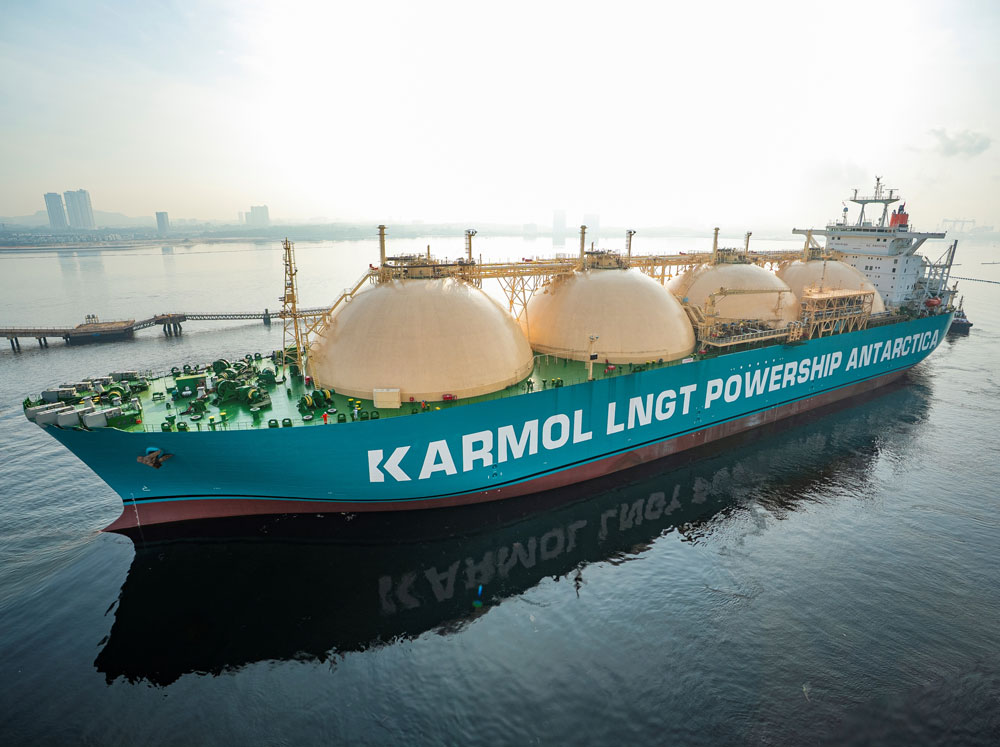
Seatrium secures FSRU conversion contract
Singapore-based Seatrium Limited has been awarded a floating storage regasification unit (FSRU) conversion contract by Karpowership’s Kinetics business division. Scheduled to commence in Q3 2025, the project involves the conversion of an LNG carrier into an FSRU named LNGT Turkiye. The scope of work includes the installation of a regasification module and a spread-mooring system, and integration of key supporting systems such as cargo-handling, offloading, utility, electrical and automation systems.
Currently, two more FSRU conversion projects for Kinetics are in progress at the Seatrium yard, with deliveries scheduled later this year and in Q1 2026.
Hafnia drydocks 13 vessels in six-month period
Tanker operator Hafnia has completed the drydocking of 13 of its vessels over the first half of 2025, undertaking various repairs, special surveys and upgrade works. The vessels concerned were Hafnia Amber, Hafnia Falcon, Hafnia Almandine, Hafnia Valentino, Hafnia Viridian, Hafnia Nordica, Hafnia Andesine, Hafnia Bering, Hafnia Aventurine, Hafnia Ametrine, Hafnia Aquamarine, Hafnia Amethyst, and Hafnia Aronaldo. The vessels underwent Special Renewal Surveys in collaboration with classification societies, including ABS, DNV and Lloyd’s Register. For tankers approaching their 15th year of service, CAP Hull and Machinery Surveys were also conducted.
All of the chemical tankers received a full or partial recoating of their cargo oil tanks with Advanced Polymer Coatings’ MarineLine systems, and were upgraded with new stainless steel common, nitrogen and tank washing lines, with a dehumidifier for tank ventilation and the installation of an extra fixed tank washing machine. The vessels also benefitted from the application of high-performance silicone-based hull coatings to help ensure compliance with IMO’s EEXI and CII measures, while other work included propeller enhancements, with graphene coatings, and the installation of energy saving Propeller Boss Cap Fin devices. Additionally, Alfa Laval BWTS units were installed and steam heating coil systems repairs carried out.
A further seven vessels are scheduled to undergo similar drydockings over the next few months. These include Hafnia Axinite, Hafnia Ammolite, Hafnia Azurite, Hafnia Violette, Hafnia Australia, Hafnia Africa and Hafnia Magellan.
Maritime cybersecurity has a definition problem: few of us try to define what maritime cybersecurity actually means, writes Dinos Kerigan-Kyrou AmRINA, co-founder of the RINA Cybersecurity Task Force. The term has become synonymous with computers and IT paraphernalia but, while IT is clearly a critical component of cybersecurity, what is not fully realised – including by many in the ‘cybersecurity industry’ – is that cybersecurity also includes the disciplines of law, criminology, business, politics and international relations, organisational behaviour, psychology and human interactions (aka human factors).
Cybersecurity can be defined as the security of cyberspace, the online environment in which everyone now lives and works. In the maritime environment, cybersecurity is part of everything we do – in port, on rivers and at sea, within the shipyards and within our supply chains. Cybersecurity also concerns our critical maritime infrastructure, including our underwater critical infrastructure, such as subsea communications and energy cables, offshore energy platforms and underwater sensors.
Nefarious actors – be they hostile states, terrorists, activist extremists or criminals – target the maritime environment in a combination of ways. Firstly, cyberspace is the facilitator for all nefarious maritime activity. Human trafficking, narcotics, wildlife and antiques smuggling facilitates the financing of organised crime and terrorist activity. Cyberspace also provides ‘gateways’ for nefarious actors to target maritime activity. One gateway is the targeting of connected devices – sometimes called the Internet of Things (IoT).
Vessels are increasingly equipped with IoT-enabled control systems connected to online networks. They include: power management systems; loading, stability and container monitoring systems; alarms and the bridge control consoles; ECDIS, AIS and navigation decision support (NAVDEC); voyage data recorders; computerised automatic steering; and the global maritime distress and safety system (GMDSS). Ports also increasingly comprise multiple examples of IoT, including: port security; access control and ID cards; CCTV; automated cargo-handling equipment; terminal operating centres; cranes; and integrated supply chain logistical systems. Moreover, port IoT devices are directly interacting with vessels’ IoT, including communications, the GPS, lock operations, maintenance and management, pollution and environmental control systems.
Extensive maritime IoT testing has found significant vulnerabilities, creating a situation where connected devices can be directly targeted. This includes device ‘spoofing’, where vessels’ positions can be faked. For example: the photo below, taken by the author at a European university maritime cybersecurity research lab, shows a buoy fitted with an inexpensive Raspberry Pi computer. This can easily create a fictitious ‘spoof’ vessel wherever the buoy is located. Moreover, the cybersecurity risks created by personal devices – laptops, tablet computers, smartwatches, virtual assistants, and smartphones, all of which have cameras and microphones – can be as great as those of the devices built into vessels.
So, what is being done? IMO has produced Guidelines on Maritime Cyber Risk Management (updated in 2025), which provides a framework for the maritime industry to progress cybersecurity. This IMO document is greatly expanded upon by the UK and the EU – both of whom are making cybersecurity requirements legally enforceable.
Legislation in the EU and, soon, the UK is transforming the cybersecurity responsibilities of directors and boards. The EU’s ‘NIS 2’ Directive, EU Cyber Resilience At, and soon the UK’s Cyber Security and Resilience Bill place cybersecurity responsibilities squarely on directors, including for the security of their supply chains (the EU legislation applies to any company with even just one EU / European Economic Area customer, regardless of its global location). In other words, failure of maritime board directors to address their cybersecurity and that of their supply chains in the EU (and soon the UK) is now a criminal offence.
The Royal Institution of Naval Architects (RINA) is playing an increasingly critical role in developing maritime cybersecurity, having established a Maritime Cybersecurity Task Force in the past year. The group aims to bring together RINA members with world-leading expertise, to share information and make cyberspace safer for everyone in the maritime environment. Crucially important is that RINA supports and endorses the Maritime Cyber Baseline certification established by IASME (a UK cybersecurity certification company that is also the delivery partner for the UK National Cyber Security Centre’s ‘Cyber Essentials’ certification).
For the full, in-depth article, don’t miss the August 2025 issue of The Naval Architect
Offshore wind turbines and battery-powered support vessels seem a perfect match, promising reduced fossil fuel use and a holistic solution for the wind power industry’s success. However, can batteries – whether in a hybrid diesel-electric set-up or installed as a standalone solution – provide enough power for an 80m+ service operation vessel (SOV) to compete with similarly sized, diesel-powered units?
That’s the challenge accepted by offshore services provider Bibby Marine, inspiring the development of its 89.6m electric commissioning SOV (eCSOV) concept. Incorporating dual-fuel engines and possibly the largest battery pack in this sector, the vessel is poised to overturn quite a few assumptions about what batteries can and cannot do in the field. With the ability to operate emissions-free for more than 24 hours in DP mode, and to recharge directly at windfarms in less than five hours, the eCSOV’s goal is to slash CO2 emissions while still effectively competing with traditional, conventionally fuelled SOVs.
Having completed the concept design in partnership with UK-based naval architects Longitude Engineering, Bibby Marine progressed to basic design and model testing with Spanish ship designer Seaplace. The keel for the eCSOV was laid by Spanish shipbuilder Astilleros Armon in July 2025, with delivery scheduled for mid-2027.
Gavin Forward, head of newbuild projects at BibbyMarine, tells The Naval Architect: “The eCSOV has been designed with maximum operational flexibility, capable of running on diesel, green methanol or battery power — and seamlessly switching between them without any loss of efficiency or operability. While electrification may not suit all maritime applications, it aligns exceptionally well with the operational profile of CSOVs, particularly in terms of predictable, daily power demand in-field.”
The vessel’s flexibility in fuel choice is crucial for now, given current gaps in shore-based charging infrastructure. “Once shore and offshore charging become standard, we could put the whole operational envelope under battery power,” says Forward. “Globally, most wind farms are located within 40nm of port and we have a range of over 130nm on battery power. We would never have to use any fuel – but, in reality, we just don’t have that shore power availability in the UK right now. So, the idea is to sail to the windfarm on traditional fuel or green methanol; then operate in-field on electric power, before sailing back to port on fuel; and then conducting all port operations on batteries with zero emissions.”
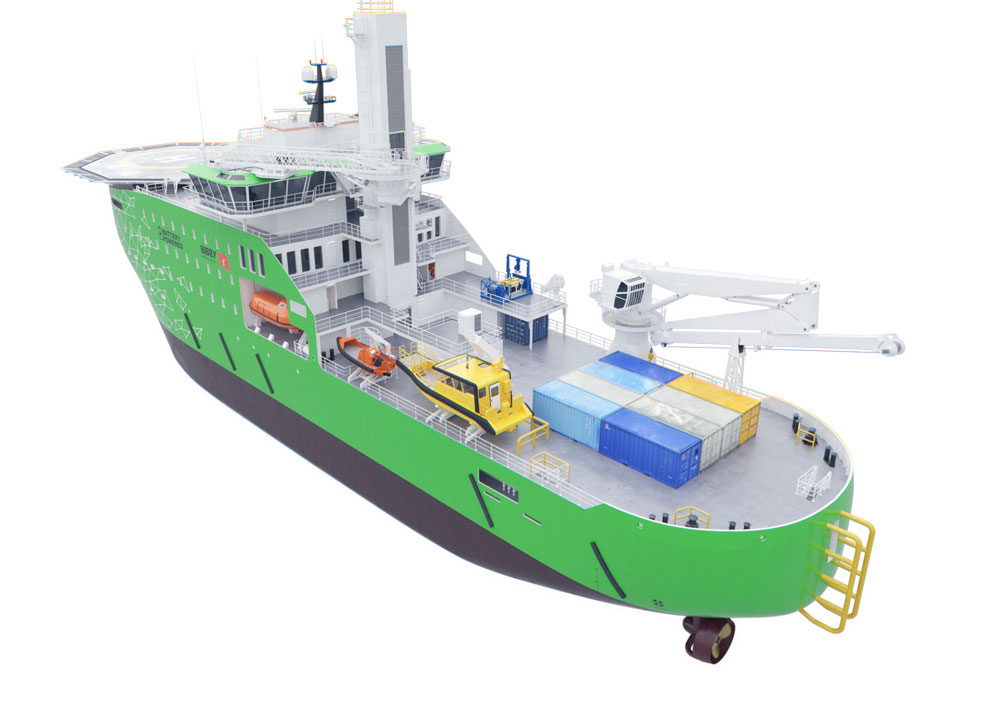
Key to the success of electrification of offshore wind operations is the ability to charge the vessel directly in-field. Several suppliers are working on solutions, with some prototypes and smaller CTV charging systems having been deployed by the likes of Stillstrom, MJR Power & Automation, Oasis and Seaonics, to name but a few.
Typically, the offshore charging system would be mounted on a turbine, a monopile, a substation or an on-site buoy. Forward reveals: “We’ve been trialling all solutions and approaches, so that we’re prepared for whatever becomes the industry standard. We think installing the charging system on the monopile is going to be the best technical option, but it depends on how developers want to set up their fields.” The eCSOV will remain in DP mode for charging, maintaining positioning on battery power and obtaining a full state of charge in less than five hours, with a once-per-day charging cycle.
The eCSOV is designed to primarily operate on battery power, with the engines only being used to charge the battery pack where offshore charging is not available, or during longer transits. The dual-fuel engines run at a fixed, optimised load and speed, and recharge the batteries when required, rather than directly powering the vessel or using the batteries to supplement engine power, which is a more typical approach in hybrid set-ups. Bibby Marine has calculated that the eCSOV’s 24.4MWh lithium iron phosphate battery pack can run for more than 24hours between charges in calm conditions; for more than 20 hours in a medium sea state; and for more than 15 hours in rough conditions.
For the full, in-depth story and technical particulars, check out the August 2025 issue of The Naval Architect
New Zealand-based electric ferry designer EV Maritime has announced the launch of its first pure-battery urban ferry, the EVM200. Developed with support from the New Zealand Government for operation by Auckland Transport, the 24m-long EVM200 will provide a passenger service between downtown Auckland and the suburb of Half Moon Bay, spanning 16km. The debutante is the first of two vessels in this class, each being capable of a service speed of up to 25knots and a range of up to 32km.
According to EV Maritime, diesel-powered ferries undertake approximately 6 million passenger journeys in Auckland annually, guzzling 13 million litres of fuel and emitting 34,000tonnes of CO2. The roll-out of the EVM200 models is intended to correct this pollution, while simultaneously “maintaining the reliability and convenience of water-based public transport”, says EV Maritime CEO Michael Eaglen. He adds: “Our technology-transfer business model also supports local shipbuilders in becoming electric vessel manufacturers – boosting regional capability and growing confidence in sustainable solutions.”
Each vessel accommodates up to 200 passengers on the enclosed main deck, while the upper deck offers additional seating for 30 people. EV Maritime adds: “Amenities include three restrooms – one of which is ADA-accessible – and a small onboard kiosk serving barista coffee, cold beer and wine.” Each ferry can also carry up to 20 bikes and scooters in an enclosed area with racks.
The ferry type’s naval architecture and design was led by EV Maritime, with Finland’s Danfoss providing the motors and power electronics and compatriot tech specialist HamiltonJet supplying the boat’s four LTX-model waterjets. For this project, EV Maritime also collaborated with the Auckland-based competitive sailing team Emirates Team New Zealand on the hull, developing a “low-drag, low-wash” hullform for efficient operation at cruising speeds, EV Maritime says. The hull has been built from carbon-fibre composite, with McMullen & Wing handling ship construction duties.
The debut EVM200 vessel also features the first maritime deployment of the CharIN Megawatt Charging System (MCS), a fast-charging solution that has previously been used to power electric trucks and buses. The system can reportedly deliver up to 3.75MW of power, significantly reducing charging times for large battery packs to 15-20 minutes in some cases.
EV Maritime comments: “The journey between downtown Auckland and Half Moon Bay takes approximately 35 minutes. While the ferry’s batteries hold enough energy for a full round trip, the vessel will typically recharge during a 10-minute turnaround at the terminal [at Half Moon Bay], using two MCS inlets rated 1.1MW each.” This shoreside power upgrade has also been overseen by Auckland Transport.
Looking beyond its borders, EV Maritime says it is expanding internationally and that more electric ferry launches are in the pipeline. For example, the company established a North American branch in 2024, and is currently working on a plug-in hybrid-electric vessel for Angel Island Tiburon Ferry, for operations in the San Francisco Bay Area. This project is being funded by the California Air Resources Board (CARB) to the tune of US$12 million, and the vessel, scheduled for launch in Q1 2027, will feature a length of approximately 20m. Additionally, the operator intends to retrofit two of its existing ferries with electric motors in early 2026.
EV Maritime is also working with Canadian boatbuilder AF Theriault to deliver up to five all-electric ferries to Halifax Regional Municipality, in a contract valued at just under US$190 million. These newbuilds, which will operate in Nova Scotia, are slated for completion between 2027-2028.
The Colombian Navy has embarked on an ambitious project to build a new class of frigates in Colombia, in so doing becoming only the third South American country, after Brazil and Mexico, to build ships of this type.
The frigate programme, which dates back to 2007, forms part of an ambitious programme agreed between the Colombian Navy and Cartagena-based COTECMAR for the construction, integration, testing and commissioning of: the first ‘Plataforma Estratégica de Superficie (PES)’/strategic surface platform frigate; an ‘oceanic patrol vessel’ that is currently under construction; and a logistic support vessel. The three ship types form part of the Colombian Navy’s 2042 Naval Development Plan that will upgrade its fleet and, it is hoped, create thousands of jobs in the country, strengthening Colombia’s defence industry and self-sufficiency.
Based on Damen’s SIGMA 10514 design, previously built for Indonesia and Mexico, the PES frigates will replace the Colombian Navy’s ageing Amirante Padilla-class frigates, and will be built in Colombia with technical support from the Dutch yard. Following completion of the initial contract with COTECMAR, Damen Naval in August 2024 signed a contract for the delivery of engineering, technical support and shipbuilding materials and equipment for the first frigate in what is expected to be class of five vessels. Construction of the first frigate at COTECMAR is due to get underway by the end of 2025, and delivery and commissioning is due to take place in late 2029 or early 2030.
Shortly after the construction contract was agreed, Damen Naval also agreed a contract with class society Lloyd’s Register (LR) for full plan approval for the PES. A number of contracts have recently been confirmed with leading suppliers for systems and equipment for the frigates. Damen Naval has agreed a contract with Nevesbu for the platform engineering for the PES frigates, and Swedish defence firm Saab will provide the combat management system (CMS) for the first of the new frigates, under which it will fit the PES with systems including Sea Giraffe 4A radars, 9LV combat management and fire control systems, a Ceros 200 radar and optronic tracking system, plus EOS 500 electro-optical fire-control directors.
In June 2025, Kongsberg Maritime signed a contract with Damen Naval to supply twin controllable-pitch propellers and shaftlines for the vessels. At about the same time, Alewijnse was awarded a contract for the design, engineering and testing of all onboard electrical systems, a deal that includes full cable routing across the vessel and the supply of key systems such as power management, propulsion, entertainment and navigation lighting. Alewijnse will provide the drives for the frigate’s propulsion system in partnership with Van Meer, a longstanding partner of Damen Shipyards. It will also supply the ship’s integrated platform management system, which will be developed and delivered in cooperation with Praxis Automation, and integrated bridge management system, which will be supplied in collaboration with Anschütz.
With a length overall of 107.5m and a beam of 14.02m, the frigates will enhance the Colombian Navy’s anti-submarine and anti-surface vessel capability and its ability to project power in the region. Displacing 2,808tonnes, the newbuilds will have a crew of around 100 and range of up to 8,200nm. They will have a maximum speed of 26knots and a combined diesel or electric (CODOE) propulsion system based on two 10MW diesel engines and electric motors, and one 200kW and four 940kW diesel generators.
Relatively few details have been confirmed about the frigates’ weapon systems, although they are expected to be fitted with a vertical launch system for air defence missiles, and with surface-to-surface missiles. BAE Systems will provide the Bofors 40 Mk4 main gun for the vessels, which will form part of their anti-air and anti-surface vessel capability.
The sleek, black trimaran set outside Seawork’s main gate this summer was riveting, and not just for its triple-hulled design: more unusual were the bright orange foils extending beneath. However, what’s important isn’t novelty and excitement: rather the reverse. The idea, underlines Chris O’Neill, technical director at Chartwell Marine, is to explore how foiling can be made more reliable, robust and, for ferry operations, a safer bet in all senses. Yet, there are still questions that need to be answered to determine the next steps for this collaboration between Chartwell, Newcastle Marine Services and Solent University.
The 9.4m-long Solent TriFoiler has been running sea trials for the last few months under the UK’s Clean Maritime Demonstration Competition (CMDC3). First of the proven ‘wins’ is that the TriFoiler is five times cheaper to run than an equivalent fossil fuel-powered monohull. Likewise, it could have several times the endurance of a similar, fully electric displacement vessel.
But how does it compare with other foiling designs? This prototype also demonstrates that, compared to a monohull or catamaran, a trimaran form lowers the power required to get up to foiling speed. “Normally, you’ve got your highest resistance just before take off because you’ve still got the hulls in the water,” explains Solent University’s senior design and engineering lecturer Giles Barkley. The TriFoiler does things differently. By lifting the two, shorter sponsons slightly before the main hull, it lowers ‘peak’ resistance and effectively spreads take-off loads. As a result, this approach can reduce installed power and therefore weight.
Further, Barkley explains, once you’re foiling, drag drops significantly anyway: “Take off might be at 10-12 knots – but you can go straight to about 18-19knots for roughly the same power.” Barkley adds that, when foiling, “it’s running on about the equivalent of three electric home showers: roughly 27kW”.
The TriFoiler’s total beam is 3.7m and the sponsons have a beam of around 0.4m each, while the main hull measures 1.1m at the waterline. As Barkley explains: “You want the displacement in narrow hulls for take-off and landing.” Likewise, the wetted surface has a high length-to-width ratio to minimise resistance.
While the prototype holds enough room for the driver, power and controls, a larger ferry version should be capable of carrying 35 or 40 passengers. Therefore, this prototype could eventually provide the basis for a 24m foiling ferry with a couple of hundred kilowatts of batteries onboard, capable of speeds of 26-28 knots in categorised waters – up to around 1.5m Hs. “The eventual design is aimed at being able to take on off-peak runs between Southampton and Cowes,” explains O’Neill, “but using a lot less energy than current fast ferries, which burn huge amounts of fuel even when empty. This boat has roughly 50kWh of batteries, but that takes it surprisingly far. If you scale up to a full-size ferry, it could probably do around two return journeys before you’d need a recharge.”
Top of the list of notable differences between this and other foiling designs is simplicity. There is a reason that foiling is often called ‘flying’: the physics are very similar to that of aircraft and so far, they equally rely on sophisticated articulation – even down to ‘ailerons’ on the foils’ trailing edge. But the forces are several hundred times greater since water is thicker: plus, it can come with unexpected lumps in the way of debris or biofouling.
In short, there’s potential for failure. O’Neill asks: “Do we believe that it’s realistic to demand operators carry out a complete set of preflight checks on all the foiling systems – as you would on an aircraft – before going up onto a foil at high speeds with a lot of passengers onboard?” Therefore, this alternative aims to keep it simple. The central twin-legged foil has two pod propellers of 20kW each, set at the crosspieces, but it’s a fixed design with no ailerons or other flaps to control lift.
For the full, in-depth article, don’t miss the August 2025 issue of The Naval Architect
PALFINGER MARINE will be launching its newest addition to the PFM crane series at the Aqua Nor in August. The heavy-duty foldable knuckle boom cranes are designed to meet the growing operational demands of the aquaculture industry.
At the Aqua Nor, PALFINGER will present the newest addition to its PFM series, the PFM 1500. With a maximum outreach of 26.7 meters and a lifting capacity of 3,350 kilograms at full extension, the PFM 1500 is the smaller sibling of the PFM 2100. The crane offers the same reliability and versatility in a more compact form. It also features the patented P-profile extension boom system. This allows a wide range of motion and outreach, while ensuring the strength and stiffness needed for demanding lifting tasks. The innovative design improves the crane’s performance by enhancing stability while keeping the weight minimal.
Modern design meets uncompromising strength
The PFM 2100 launched last year combines maximum outreach and lifting power while maintaining a low overall weight. With an outreach of over 29 meters, it gives service vessel crews and aquaculture professionals more flexibility and room for numerous applications. Even at full extension, the crane can lift up to 4,000 kilograms. The crane’s optimized structure takes up less space on deck, improves stability, and contributes to better fuel efficiency – important factors for operators at sea.
A series of heavy-duty cranes
Both cranes are part of PALFINGER MARINE’s well-established PFM crane series, which also includes the PFM 2500, PFM 3500, and PFM 4500 models. These powerful foldable knuckle boom cranes have proven themselves in field over many years and are known to be robust, reliable heavy-duty machines which can be extended to more than 30 meters. While the PFM 2100 is optimized for speed and outreach, the larger models deliver even more lifting power. With the new PFM 1500, PALFINGER is closing another gap within the series, offering the perfect supplement to its bigger siblings. That way, customized packages tailored to specific operational requirements can be offered. These packages typically combine two or more cranes in coordinated configurations that complement each other in outreach, power, and flexibility.
Product innovations at the Aqua Nor
The first serial unit of the PFM 2100 was delivered to Norway in the first quarter of 2025 and is already performing jobs in the service vessel segment on the FDA Niklas. The second PFM 2100 is installed on the FDA Emilie. At the Aqua Nor, PALFINGER MARINE will be sharing a booth with its long-standing local partner Bergen Hydraulic, where a scale model of a multi-purpose service vessel will be displayed – equipped with the new PFM 1500, PFM 2100 and PK 41002 M.
Visit our partner booth A-164 at the Aqua Nor from August 19 to 21 in Trondheim, Norway, and explore our latest lifting innovations.
PALFINGER MARINE, an integral part of the PALFINGER Group, is renowned as the leading supplier of sophisticated and reliable deck equipment as well as lifesaving appliances.
A collaboration between class society Lloyd’s Register (LR), nuclear battery manufacturer Deployable Energy and naval architect Seatransport aims to realise a 73m-long, hybrid-powered stern landing vessel (SLV) incorporating two modular micro reactors (MMRs), in what may prove a step forward for the use of nuclear energy at sea.
The SLV project was given renewed focus after LR and its partners conducted a hazard identification workshop to assess the risks related to the installation of MMR technology aboard ships. The workshop, which was hosted at Seatransport’s HQ in Australia, focused on risk management strategies, regulatory frameworks, safety systems and vessel design – and shared “key insights into the feasibility and requirements for operational readiness once the vessel meets nuclear licensing requirements”, LR says.
The proposed SLV would have the ability to supply power to Pacific islands hit by cyclones and resulting energy blackouts. Seatransport comments: “At 14knots, the MMR-powered vessel can cover the region quickly and provide power to stricken areas to aid rescue efforts.” The SLV would also carry 84 container units, which could be repurposed as medical stations, sleeping areas and toilets for 750 people.
Besides emergencies, the SLV’s MMRs would be used to provide energy to islands and remote areas, helping their residents to reduce their dependence on costly diesel imports. Seatransport says: “For remote areas visited regularly, a simple concrete ramp and berthing pile should be installed.” However, the company adds, “cyclone-proof mini-ports” should also be constructed to shield the SLV from rough weather conditions when it is positioned alongside, supplying power to the grid.
The partners claim the MMRs will enable the vessel to operate for eight to 10 years without the need to refuel. Dr Stuart Ballantyne, Seatransport chairman, adds: “I believe [nuclear propulsion] for commercial ships…is within reach and will be commonplace by 2030.”
Houston-based Deployable Energy, meanwhile, is developing its Unity nuclear battery, intended to generate 1MW of electrical power. Physically, the Unity-powered MMR has been designed to fit inside a standard 20’ shipping container, making it transportable by truck, ship or cargo aircraft. Described as a “plug-and-play system”, it has been developed for rapid set-up and deployment, reportedly taking no more than three days to install.
Bobby Gallagher, Deployable Energy CEO/CTO, comments: “Powered by our Unity nuclear battery, this next-generation vessel runs cheaper than conventionally fuelled ships, using safe, standard fuel with no exotic materials.” Looking beyond this project, Gallagher adds: “Our target is to have 100,000 nuclear batteries deployed by 2040, with a delivered cost of US$0.05 per kWh.”
LR will provide approval in principle (AiP) to the finalised design.
An industry team comprising Bollinger Shipyards, Rauma Shipyard, Seaspan Shipyards and Aker Arctic have formed a partnership to deliver the Arctic Security Cutter (ASC) for the US Coast Guard (USCG).
Bollinger says the partnership is “a deliberate effort to strengthen the US industrial base, expand America’s shipbuilding capacity and equip American workers with the skills to lead in a new era of strategic competition through the transfer of knowledge, technology and design expertise needed to build the next generation of icebreakers in the US”. Rauma Shipyards president Mika Nieminen says: “We are prepared to begin construction immediately, leveraging a mature design and deep experience in building technically complex vessels for operation in severe winter conditions.”
Bollinger is the largest privately owned shipbuilder in the US and is building the first heavy icebreaker in the US in 50 years. It has built nearly 200 vessels for the USCG. Rauma is known globally as an ice-class shipyard. Seaspan Shipyards is the Canadian subsidiary of US-based Washington Companies and is currently delivering the largest orderbook of ice-capable vessels in the world. Aker Arctic developed most of icebreaking designs currently in operation.
Bollinger says the MPI design meets USCG requirements, exceeds all ASC requirements and supports all 11 statutory missions assigned to the vessel. With the ability to break 1.2m of ice, the vessel has a range of 12,000nm and can operate for more than 60 days. The consortium says all other designs proposed for the ASC would require significant investment and corresponding ramp-up time, creating risk for schedule, cost and delivery delay.
The partnership leverages the trilateral ‘ICE Pact’ framework between the US, Canada and Finland to answer President Trump’s call to rapidly build a new US icebreaking fleet, with delivery of the first vessel within 36 months of award.
North Sea ferry Stena Foreteller recently returned to service on the Rotterdam-Immingham route following a major rebuild and renovation project, including an additional new cargo deck providing a 30% increase in capacity.
Stena RoRo undertook the work at CMI Jinling in Weihai, China, where the vessel was fitted with a fourth vehicle deck on top of the existing three, increasing freight capacity from 3,000 to 4,000 lane metres.
The vessel has also been equipped with a shore power connection system, which will reduce CO2 emissions while in port. Due to the additional deck, the wind exposed area has increased, placing greater demands on the vessel’s manoeuvrability and mooring. As a result, the bow thrusters have been upgraded for increased capacity, and additional mooring winches have been installed.
Furthermore, minor repairs and preventive maintenance have been carried out, and some onboard systems have been upgraded to newer versions. As part of the rebuild, Stena Line has also repainted the vessel.
Stena Forerunner, the sister ship of Stena Foreteller, will undergo the same rebuild starting at the end of summer.
The UK offshore wind industry must exploit robotics and autonomous systems to the hilt if it is to thrive, according to a report issued by the Offshore Renewable Energy (ORE) Catapult.
Titled Robotic & Autonomous Systems For Operations and Maintenance In UK Offshore Wind, the report, produced in partnership with Innovate UK’s Workforce Foresighting Hub and sponsored by RenewableUK, claims that robotics provide “an efficient alternative” to personnel working offshore, especially for tasks such as turbine blade inspections.
“There are currently 30,000 blades at UK offshore and onshore wind farms,” says ORE Catapult, pointing out the additional presence of “10 million bolts” that must be regularly checked for “loss of tension and integrity”. ORE Catapult adds: “There are 40,000 people currently working in the offshore wind industry. To meet the UK’s Clean Power 2030 targets, this workforce is forecast to increase to at least 74,000. A big uplift in the development of robotics and autonomous systems is required, alongside a workforce that has the skills to realise its full potential.”
Scott Young, RenewableUK’s head of skills, says: “The UK is set to ramp up offshore wind deployment significantly in the years ahead to meet the government’s targets of clean power by 2030 and net zero by 2050. We will be building new projects in deeper and more remote waters where using state-of-the-art robotics is the safest option, and therefore the most appropriate course of action.”
The report calls for expanded robotics content in existing college courses and greater opportunities for on-the-job training in this field. It also urges increased industry collaboration, recommending that turbine manufacturers and wind farm developers work more closely with robotics designers to optimise operations.
The report can be downloaded for free at the https://ore.catapult.org.uk/
Tristar Eco Voyager, a new type of bunker tanker built in Turkey by Akdeniz Shipyard, was recently been delivered to UAE-based Tristar Eships. The company will deploy the vessel out of Fujairah, where it will be well positioned to meet the lube oil needs of vessels at the nearby anchorage.
The new hybrid, battery-driven lube oil barge is commencing operations in the UAE in July. The 46.5m-long, 9.5m-beam and 3m-draught vessel will have a 730m3 bunker fuel capacity and an estimated service speed of 10knots. The Bureau Veritas (BV)-classed vessel is the first hybrid tanker to operate in the Middle East Gulf, and is expected to lower carbon emissions significantly compared to existing tonnage deployed by the company.
The vessel can run on MGO, biofuel or battery power. This not only adds to operational redundancy but also enhances sustainability through the reduction of carbon emissions. Tristar has installed a 1.4MW battery from Yinson EV on board, and in routine operations it is expected that this will last for six to eight hours before needing recharging, depending on weather conditions and the precise nature of the operation. The battery will take around eight hours to charge up to about 95% capacity, and this should permit the vessel to make two bunker deliveries a day on battery power alone.
The battery will be used for propulsion as well as for the hotel load on board the vessel, which has the capacity for 10 crew members. The vessel has been designed so that it can operate on battery alone, diesel fuel alone or a combination of both. A propulsion motor, supplied by Danfoss, has been installed to offer a high degree of redundancy, supported by two 300kW Volvo Penta gensets. Tristar has opted not to have a main engine on the vessel, with the propulsion motor using power from either the gensets or the battery to propel the tanker. Tristar has calculated that there will be a carbon emissions reduction of more than 50% compared to conventional vessels of this type. Moreover, if operated on B-100 biofuel, this could be increased to a 100% reduction in emissions.
While the core element of the design, in terms of sustainability, is the battery power provision, the vessel has been designed following CFD tests to ensure minimum drag and high levels of efficiency for its class. BV has added the notations ‘PM’ (power management) and ‘ZE’ (zero emissions) to the standard notations of a vessel of this type.
Heavy-lift vessel operator AAL Shipping (AAL) says it is preparing to take delivery of the sixth in a series of eight Super B-class “powerhouses”. The 179.9m x 30m, 32,000dwt methanol-ready vessel, christened AAL Dammam in a naming ceremony hosted at the Guangzhou facility of Chinese builder (and long-standing AAL collaborator) CSSC Huangpu Wenchong Shipbuilding, is designed to handle various multipurpose cargoes, including heavy-lift project components, breakbulk and dry bulk, on a single voyage.
AAL Dammam has a depth of 15.5m and draws 6.5m. The 41,500m3 vessel can accommodate more than 100,000 freight tonnes of breakbulk and heavy-lift cargo, and is fitted with three 350tonne-capacity heavy-lift cranes, which can be combined to handle a maximum of 700tonnes. AAL says: “Two large, box-shaped cargo holds are optimised for dry bulk, featuring adjustable pontoon triple decks and no centreline bulkhead.”
The seventh and eighth Super B units on order, AAL Newcastle and AAL Mumbai, are scheduled for delivery from CSSC Huangpu Wenchong Shipbuilding in 2026, though each will feature a higher maximum lift capability of 800tonnes.
Kyriacos Panayides, AAL CEO, comments: “Whilst the current geopolitical landscape makes short-term planning extremely difficult, the long-term forecast for the global industrial sector…is nevertheless strong. Global industry is experiencing record levels of capital input, with clean-energy investment alone expected to hit US$2.2 trillion in 2025, according to the International Energy Agency. And, whilst renewables continue to lead new project activity, we are not dependent on a simple ‘fossil-to-clean’ shift for cargo volumes, but rather a layered build-out across all industrial energy and resource sectors.
“Oil and gas project development is forecasted to grow to US$9.9 trillion by 2029, with LNG a bright spot featuring multiple export projects in the US, Qatar and Canada due online by 2026–2028. The mining sector too remains strong, with over 5,400 mining projects valued at US$406 billion scheduled to start construction by the end of 2025.”
Damen Shipyards Group is to construct an ASD Tug 2312 unit for Port Marlborough New Zealand (PMNZ), which will use the newbuild to provide towage services at Picton Harbour, where approximately 3,000 vessels call annually. The tug, to be named Kaiaua, will work alongside an existing ASD Tug 2111 type, Kaiana, which Damen delivered to PMNZ in 2024.
The ASD Tug 2312 type features a length overall of 22.8m, a breadth overall of 12.03m, a depth of 4.4m and a draught of 5.6m. This model also has a bollard pull capability of 70tonnes ahead and 65tonnes astern, and can achieve a speed of 12.4knots, utilising twin Caterpillar 3512C engines (rated a combined 3,804bkW) and Kongsberg Maritime US 205S FP azimuthing thrusters.
Part of Damen’s ‘Compact Tugs’ series, the class is arranged for 360° visibility from the wheelhouse and clutter-free decks. Kaiaua will also be equipped with a single winch for both fore and aft operations, installed in the deckhouse to protect it from the elements.
Damen has outfitted the vessel with its own selective catalytic reduction (SCR) system, the Marine NOx Reduction System, which, it says, can reduce NOx emissions by up to 80%, enabling compliance with IMO Tier III requirements. Damen adds: “Although the regulations do not yet apply in New Zealand, PMNZ has committed to providing a more sustainable operation.” PMNZ CEO Rhys Welbourn comments: “This customer-led investment strengthens our ability to respond quickly, assist effectively and support shipping partners making use of the deepest berth in New Zealand. The upgrade to IMO Tier III engines also reinforces our commitment to lowering emissions and operating responsibly.”
Tampa Fire Rescue, Florida has taken delivery of a monohull fireboat, designed and built by Metal Shark of Louisiana. The newbuild is the first of two sisters for Tampa Fire Rescue, with the second vessel due for delivery in 2026.
Both boats are of Metal Shark’s 38 Defiant NXT class, which features a length of 12.2m, a 3.66m beam and a hull, deck and superstructure built from corrosion-resistant, welded 5086 aluminium-magnesium alloy plates. Each boat is powered by triple Yamaha outboards, offering a combined output of just over 670kW, and incorporates Yamaha’s HelmMaster controls and joystick operability, for enhanced manoeuvrability in tight spots. The latter was deemed crucial as the boat will be navigating “all waters of Tampa Bay, from downtown Tampa to the barrier island of Egmont Key”, Metal Shark explains. The fireboat will also undertake search and rescue missions across this expanse.
Onboard features include the builder’s NXT emergency medical services (EMS) response cabin, which houses three shock-mitigating crew seats, supplied by SHOXS, plus an EMS bench, firefighting control stations and diver/responder gear storage space. The boat has also been equipped with a chemical, biological, radiological, nuclear and high-yield explosive (CBRNE) detection system, provided by Honeywell, and a cabin filtration and pressurisation package from HDT Global.
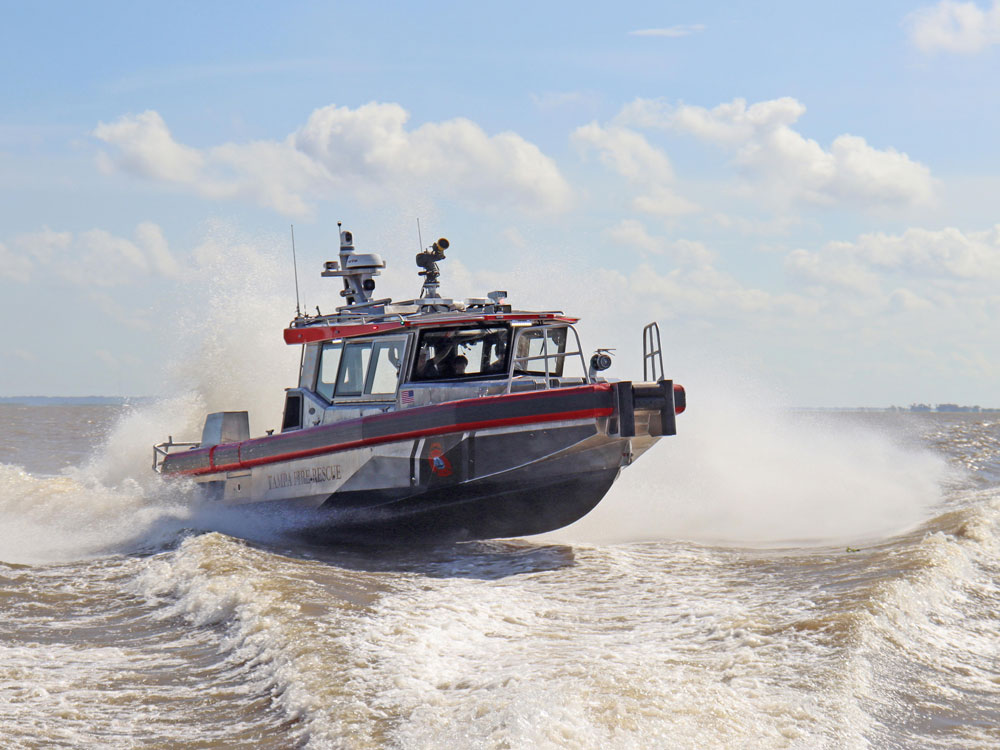
The boat also features: a urethane-covered, closed-cell foam collar; a dive/rescue ladder; full-height, hinged dive doors, port and starboard; a FLIR thermal imaging system; and storage space for self-contained breathing apparatus (SCBA) and dive tanks. Additionally, the boat has been created with non-skid walkways with low-level lighting, for night-time operations.
The boat utilises a Darley fire pump, drawing from a fully flooded sea chest, delivering 5,678litres per minute via piping and electronically controlled valves to a remote-operated monitor. Metal Shark says: “This configuration enables long-range throw for ship-to-ship and ship-to-shore operations.” The boat also features dual 2.5” handline discharges, a 5” Storz hydrant discharge (for supplying land-based apparatus) and a 150litre quick-fill foam injection system for aqueous film-forming foam (AFFF)-based fire suppression.
Metal Shark adds that it has delivered new fireboats to “over a dozen fire departments” across the US in the space of 18 months.

Lorem ipsum dolor sit amet, consectetur adipiscing elit, sed do eiusmod tempor incididunt ut labore et dolore magna aliqua. Ut enim ad minim veniam, quis nostrud exercitation ullamco laboris nisi ut aliquip ex ea commodo consequat. Duis aute irure dolor in reprehenderit in voluptate velit esse cillum dolore eu fugiat nulla pariatur. Excepteur sint occaecat cupidatat non proident, sunt in culpa qui officia deserunt mollit anim id est laborum.
Lorem ipsum dolor sit amet, consectetur adipiscing elit, sed do eiusmod tempor incididunt ut labore et dolore magna aliqua. Ut enim ad minim veniam, quis nostrud exercitation ullamco laboris nisi ut aliquip ex ea commodo consequat. Duis aute irure dolor in reprehenderit in voluptate velit esse cillum dolore eu fugiat nulla pariatur. Excepteur sint occaecat cupidatat non proident, sunt in culpa qui officia deserunt mollit anim id est laborum.
Lorem ipsum dolor sit amet, consectetur adipiscing elit, sed do eiusmod tempor incididunt ut labore et dolore magna aliqua. Ut enim ad minim veniam, quis nostrud exercitation ullamco laboris nisi ut aliquip ex ea commodo consequat. Duis aute irure dolor in reprehenderit in voluptate velit esse cillum dolore eu fugiat nulla pariatur. Excepteur sint occaecat cupidatat non proident, sunt in culpa qui officia deserunt mollit anim id est laborum.
Lorem ipsum dolor sit amet, consectetur adipiscing elit, sed do eiusmod tempor incididunt ut labore et dolore magna aliqua. Ut enim ad minim veniam, quis nostrud exercitation ullamco laboris nisi ut aliquip ex ea commodo consequat. Duis aute irure dolor in reprehenderit in voluptate velit esse cillum dolore eu fugiat nulla pariatur. Excepteur sint occaecat cupidatat non proident, sunt in culpa qui officia deserunt mollit anim id est laborum.
Lorem ipsum dolor sit amet, consectetur adipiscing elit, sed do eiusmod tempor incididunt ut labore et dolore magna aliqua. Ut enim ad minim veniam, quis nostrud exercitation ullamco laboris nisi ut aliquip ex ea commodo consequat. Duis aute irure dolor in reprehenderit in voluptate velit esse cillum dolore eu fugiat nulla pariatur. Excepteur sint occaecat cupidatat non proident, sunt in culpa qui officia deserunt mollit anim id est laborum.
Lorem ipsum dolor sit amet, consectetur adipiscing elit, sed do eiusmod tempor incididunt ut labore et dolore magna aliqua. Ut enim ad minim veniam, quis nostrud exercitation ullamco laboris nisi ut aliquip ex ea commodo consequat. Duis aute irure dolor in reprehenderit in voluptate velit esse cillum dolore eu fugiat nulla pariatur. Excepteur sint occaecat cupidatat non proident, sunt in culpa qui officia deserunt mollit anim id est laborum.
text one
Lorem ipsum dolor sit amet, consectetur adipiscing elit, sed do eiusmod tempor incididunt ut labore et dolore magna aliqua. Ut enim ad minim veniam, quis nostrud exercitation ullamco laboris nisi ut aliquip ex ea commodo consequat. Duis aute irure dolor in reprehenderit in voluptate velit esse cillum dolore eu fugiat nulla pariatur. Excepteur sint occaecat cupidatat non proident, sunt in culpa qui officia deserunt mollit anim id est laborum.
NATO established the Baltic Sentry mission in 2025 to address the vulnerability of critical undersea infrastructure in the Baltic Sea. The region contains a dense network of power interconnectors, fibre-optic cables, and seabed installations that have been repeatedly affected by ambiguous or hostile activity.
The accession of Finland and Sweden to NATO transformed the Baltic into an almost entirely Alliance-controlled maritime space, creating both the political impetus and operational requirement for a coordinated, persistent security posture.
Task Force X (TFX) provides the principal mechanism for integrating maritime uncrewed systems into Baltic Sentry. Its mandate is to deliver scalable USVs, UUVs, and UASs that can augment or substitute for traditional platforms, particularly in the demanding acoustic and environmental conditions of the Baltic. Crewed patrol vessels and maritime patrol aircraft cannot sustain the level of persistence required to monitor multiple infrastructure corridors; TFX assets, by contrast, offer endurance, sensing diversity, and the ability to saturate key areas. Early contributions such as small UAVs, medium UUVs, and basic USVs, provided incremental improvements, while later additions such as interceptor USVs, sail-powered USVs, and containerised towed arrays significantly expanded Blue’s ability to inspect vessels and monitor infrastructure.
 |
|
|---|
The NATO Digital Ocean programme provides the architectural framework for integrating these systems. It aims to create a “persistent, multidomain sensing and data fusion architecture” by combining seabed sensors, autonomous platforms, satellite ISR, and commercial data sources. A major focus is underwater communications, long recognised as a limiting factor in submerged operations. Prototype underwater mesh networks, acoustic modems, and hybrid optical acoustic links were explored during the wargame series, representing early steps towards a distributed, data-centric maritime surveillance model.
The wargames were conducted using UCL’s Cobalt Rocks ruleset, adapted to model physics-based detection, communications latency, bandwidth constraints and probabilistic classification. Three scenarios were constructed: a 2025 baseline, an initial TFX-enhanced posture, and a future Digital Ocean architecture incorporating an ASW glider barrier. A double blind adjudication model ensured realistic uncertainty, with Blue and Red operating from separate rooms and receiving only information their sensors could plausibly observe. Environmental conditions, endurance limits, and launch and recovery constraints were explicitly modelled, reinforcing operational realism.
Scenario 1 established the baseline. Blue possessed reasonable surface awareness but “almost no persistent subsurface sensing”, enabling Red to use a seabed operations vessel as a decoy while a grey zone merchant vessel severed a fibre-optic cable. The attack went undetected until after the fact, and attribution remained uncertain. The scenario highlighted the difficulty of distinguishing hostile intent from routine commercial activity in a congested maritime environment and showed the vulnerability of the current posture to deception and timing manipulation.
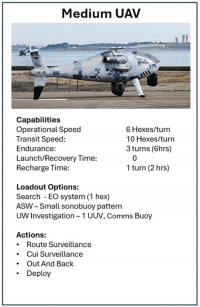 |
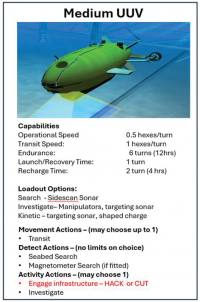 |
|---|
Scenario 2 introduced initial TFX enhancements. UAVs extended patrol vessel horizons, USVs increased surface domain presence, and medium UUVs provided limited subsurface coverage. Red abandoned at least one planned attack due to the perceived risk of inspection. However, underwater situational awareness remained intermittent, and a Red MUUV successfully exploited a gap in Blue’s patrol cycle. The absence of an underwater comms network meant that even successful detections would not have been reported in time to prevent an attack.
Scenario 3 tested a future architecture featuring a digital underwater mesh network, expanded TFX mass, and an ASW glider barrier. The mesh network enabled near real-time reporting and dynamic tasking of submerged assets. The glider barrier successfully detected a Red SSK, allowing Blue to mount a coordinated non-kinetic response. However, Red’s multivector attack, which combined MUUVs, an XLUUV decoy, and a grey zone merchant vessel, showed that even advanced architectures remain vulnerable to coverage gaps and information environment manipulation. The ‘Visby incident’, in which a merchant vessel severed all fibre-optic cables to the island, illustrated the interplay between physical, legal and informational domains.
Underwater situational awareness remained the dominant limitation across all scenarios, driven by the Baltic’s shallow depths, variable salinity and complex seabed topography. Platform mass and distribution significantly shaped adversary freedom of manoeuvre, but mass alone was insufficient without optimised tasking. Communications proved a critical enabler; the mesh network dramatically improved responsiveness but remained sensitive to node density and environmental conditions. Endurance constraints created predictable windows of vulnerability, repeatedly exploited by Red.
The wargame series demonstrates that future capability development must prioritise persistent seabed sensing, long endurance UUVs, resilient underwater communications, and integrated system of systems architectures. Incremental improvements to individual platforms will not deliver the situational awareness required to protect critical undersea infrastructure in the Baltic Sea.
|
The article above is an abridged version of a paper presented by Professor David Manley from University College London at RINA Warship 2026. |
Under water capabilityThe Warship 2026 conference brought together naval designers, engineers, defence professionals, academics and industry specialists to examine the technologies and strategies shaping future submarine capability.
The theme, accelerating underwater capability through collaboration, ran through a programme covering technology insertion, digitalisation and digital twins, autonomy and human-autonomy teaming, lean crewing, innovative power and propulsion systems, novel materials, survivability, stealth, and quantum technology.
Sessions were drawn from a range of organisations, including BMT, QinetiQ, Siemens Digital Industries Software, Expleo and MARIN, as well as universities such as Adelaide and University College London. The format combined keynote addresses, parallel technical streams, Q&A panels, and roundtable discussions, with a drinks reception and wargaming activity on the first evening. BMT was the event partner. |
|---|
This article appeared in Events, TNA May/June 2026.
Ulf Hansen, senior advisor maritime at Swedish company I-Tech AB, addressed the RINA Ship Energy Efficiency Conference in Athens in March 2026 with a data-driven challenge to the growing regulatory momentum towards biocide-free antifouling. His answer was unambiguous: yes, biocides remain essential, and prematurely restricting them risks making shipping’s environmental performance significantly worse, not better.
The scale of the problem
An estimated 200 million tonnes of greenhouse gas emissions annually are attributable to biofouling resistance, representing around 20% of total shipping emissions. A complete absence of effective antifouling protection could push that figure to 400 million tonnes. Even modest fouling carries severe consequences: coating roughness or light slime increases fuel consumption by up to 25%, heavy slime by 25-35%, and small barnacles or weed by 35-55%. By 2050, uncontrolled biofouling could be responsible for a 19% rise in total shipping CO₂ emissions. Hull fouling is also the single largest pathway for non-indigenous species entering European waters, accounting for 41% of the total. Approximately 95% of the global fleet relies on biocidal coatings, a proven, fleet-scale solution across more than 100,000 vessels worldwide.
In his presentation Hansen used drydock inspection data, compiled with Safinah Group, to challenge assumptions widely held in industry and regulatory circles.
 |
|---|
The first is that barnacle fouling primarily affects slow-steaming or low-activity vessels. The data show otherwise. Barnacle presence was recorded on 89.9% of product tanker hulls inspected, 88.4% of crude tankers, and 71.9% of containerships. Vessels reporting significant barnacle fouling across the global merchant fleet grew from 249 in 2020 to 685 in 2025, a near-tripling in five years. This data is based on 685 vessels’ in-dock data during physical inspection.
The key driver is trading pattern, not activity level: tankers and chemical carriers operating in warm, nutrient-rich waters with extended anchorage and frequent idle phases below 6knots are roughly twice as likely to suffer heavy fouling as high-activity vessels. As global sea temperatures rise, this pressure will intensify.
The second assumption is that barnacle fouling concentrates on vertical hull sides. Inspection data show the flat bottom is in fact more severely affected, with direct implications for hull cleaning strategies and coating specification.
The third is that fouling is primarily a consequence of coating failure. While polish-through correlates with increased barnacle levels, significant fouling is recorded even on hulls with no polish-through, confirming that operational exposure is an independent risk factor that coating selection alone cannot fully mitigate.
The available biocide toolbox is limited and shrinking, just when fouling pressures are increasing. Among targeted hard-fouling biocides, only two active ingredients are currently available: tralopyril and medetomidine. Hansen also notes that most commercially successful foul-release coatings still incorporate biocidal active ingredients.
A biocide ban, even phased, would leave self-polishing coating systems without their primary defence against barnacle settlement, while foul-release systems would become highly vulnerable in warm-water idle conditions. The result would be increased fouling, more aggressive hull cleaning, and a carbon paradox in which the regulatory measure intended to reduce environmental impact would increase fuel consumption, worsen CII ratings, raise EU ETS costs and elevate invasive species risk.
A call for collaboration
Hansen’s conclusion is that a biocide-free future is not yet realistic for most of the fleet. His call is for a more sophisticated response: regulators and industry should evaluate biocide policy jointly and holistically, considering emissions to both air and sea, rather than proceeding substance by substance. Rising sea temperatures and their effect on fouling pressure require proper investigation before further restrictions are imposed.
Looking beyond the binary framing of biocidal versus non-biocidal, he advocates collaborative innovation towards ultra-low-biocide formulations that minimise chemical load while maintaining efficacy across all vessel types and operational conditions. The goal is to ensure the path away from biocides does not inadvertently worsen the very environmental outcomes it seeks to improve.
This article appeared in Technical, TNA May-June 2026.
The Royal Navy, like many Western fleets, faces a structural problem that has been building for decades. Warship numbers have declined as unit costs have risen, creating a force structure built around a small number of highly capable but scarce platforms. Fewer hulls mean reduced presence, less resilience to losses and limited ability to surge in a crisis. Meanwhile, personnel recruitment and retention are under growing strain, and the shipbuilding capacity of potential adversaries dwarfs that of the West.
The UK’s 2025 Strategic Defence Review confronted this reality, setting out a vision for a ‘hybrid navy’ in which crewed platforms are complemented – and in some roles replaced – by uncrewed and autonomous systems operating at scale. First Sea Lord General Sir Gwyn Jenkins has since framed this transition as existential, warning that a force that waits for autonomous technology to fully mature before integrating it risks being outpaced by adversaries.
BMT believes the answer lies not in building more of the same, but in rethinking the vessel entirely. Project MODUS, presented at UDT 2026, sets out a family of modular uncrewed surface vessels conceived from first principles around autonomous operation. The work, led by maritime autonomous systems engineering lead Chloe Yarrien and head of innovation and research Jake Rigby, draws on more than five years of BMT research and development, including programmes into lean-crewed platforms and large uncrewed surface vessel concepts.
A family of platforms
MODUS is not a single vessel but a coherent design philosophy expressed across multiple hull sizes, from a 15m pentamaran to a 40m medium uncrewed surface vessel and a 75m large uncrewed surface vessel. Rather than pursuing a multi-role design that attempts to do everything at the cost of doing nothing well, MODUS embraces role-optimised platforms, tailored to specific operational needs.
Here we focus on three underwater warfare use cases: military data gathering, seabed warfare and anti-submarine warfare. Six core design principles run through every variant: autonomy, modularity, availability, buildability, adaptability and affordability. The first and last are perhaps the most consequential.
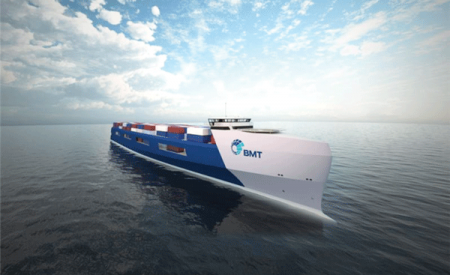 |
|---|
Autonomy is a primary design driver, not a retrofit. Every decision about hull form, internal arrangement, systems architecture and maintenance philosophy flows from the requirement to operate without crew. Affordability, meanwhile, is framed as a strategic imperative. Uncrewed vessels that simply replicate the cost of crewed ships will not solve the combat mass problem; they will compound it.
Designed around the mission
The three underwater vignettes drive specific and practical design choices. Long endurance, a common requirement across all three, shapes the hull form directly. Narrow-beam, low-resistance hull forms are matched to their intended operational profiles. With no crew onboard, internal volume freed from habitability can be reallocated to fuel, though weight rather than space becomes the limiting constraint. Critically, endurance for an autonomous vessel is defined largely by maintenance intervals, and MODUS targets operational periods of up to 60 days through simplified propulsion, appropriate redundancy, and equipment designed to be removed and serviced on the quayside rather than onboard.
Flexible multi-domain surveillance, relevant to the data-gathering and seabed warfare roles, is enabled through a dedicated sonar gondola integrated into the medium vessel. The gondola is optimised for sensor performance and doubles as a stabilising keel. Controlling self-noise is identified as fundamental to underwater performance, and low underwater radiated noise need not drive excessive cost if acoustic performance is addressed early in the design process, rather than managed as an expensive retrofit.
For the larger vessel, Navy Persistent Operational Deployment Systems (PODS) integration extends multi-domain flexibility further. True PODS integration is more than simply providing deck space for containers. It requires designed-in access, deployment envelopes, and mechanical, electrical and data interfaces so that mission systems become integral elements of the ship architecture. Offboard systems, including inspection ROVs deployed via a moonpool, towed arrays, survey UUVs, sonobuoys and gliders, extend the sensor field without increasing crew demand.
The large uncrewed surface vessel variant, intended for year-round North Atlantic operations in support of anti-submarine warfare, is around 75m following seakeeping analysis supported by historic towing tank data.
Steel is cheap and air is free, and the operational benefit of improved seakeeping in the North Atlantic far outweighs the marginal increase in material cost. BMT proposes a stepping-stone delivery model, beginning with medium vessel deployments in UK waters on lower-risk tasks, building operational confidence before scaling to larger vessels in more demanding theatres.
Commercial uses
The MODUS family has clear dual-use potential, with the modular autonomous design applicable to offshore survey, infrastructure inspection and logistics, offering a route to drive down unit cost through wider commercial adoption.
The fundamental argument of MODUS is straightforward: autonomous vessels must not be seen as direct replacements for crewed ships. They must deliver genuinely different capability, at lower through-life cost, and at the scale needed to restore meaningful combat mass to the fleet.
Author profiles
Chloe Yarrien, maritime autonomous systems engineering lead, BMT; Jake Rigby FRINA, head of innovation and research, BMT
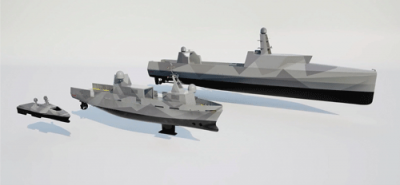 |
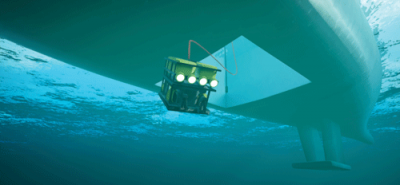 |
|---|---|
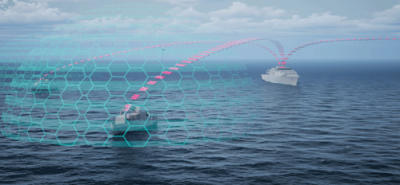 |
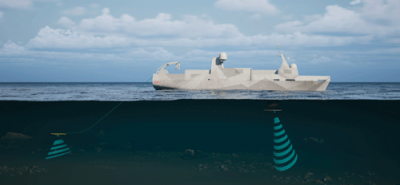 |
| From top, left to right: Visualisation of 15m, 40m and 75m MODUS vessels; The 40m design incorporates a moonpool; Multiple MODUS units operating in formation illustrate scalable fleet deployment; MODUS design principles embrace modularity (image: BMT) | |
This article appeared in Technical, TNA May/June 2026.
Capturing actionable seabed intelligence in environments that defeat conventional survey spreads is forcing a rethink of platform architecture and sensor integration. That was the challenge facing Seaforth Geosurveys while assessing the Arctic seabed for a planned subsea fibre-optic cable installation in Ungava Bay, Canada.
The Nunavik EAUFON-3 project was spearheaded by Sulmara, a global seabed intelligence company, which specialises in capturing and interpreting high-quality offshore subsea data.
Sulmara’s answer was its Discover package, a bespoke technology stack combining a high-resolution 3D synthetic aperture sonar (SAS) sub-bottom system with inertial navigation and positioning sensors.
This was mounted on a specialised remotely operated uncrewed surface vessel (USV) to acquire data, with in-house software used for processing, interpretation and delivery.
Sulmara Discover can be operated both locally and over-the-horizon from a Remote Operations Centre in Glasgow, UK.
For projects such as Nunavik EAUFON-3, platform selection is central. Sulmara chose Ocean Power Technologies’ wave adaptive modular vehicle, WAM-V 16, a USV with an articulated, wave-adaptive frame and shallow draught.
 |
|---|
“The WAM-V 16 USV was chosen for the integration mainly due to its motion compensating frame and versatility as a platform to meet host specifications for our technology,” says Kevin Rychert, principal acoustic scientist at Sulmara.
“Its independent wave compensating hulls allow it to adapt to sea states that would typically shut down smaller USVs’ surveys.”
He adds that the gimbled payload bay provides the stability critical for this type of work. “Other larger USVs don’t have this stability even with roll stabilisers,” he says.
WAM-V 16 is designed for small to medium-sized marine data projects and is a powerful survey tool, whether acting independently or complementing other vessels as a force multiplier.
Modularity and integration
Equally important is modularity. Unlike conventional hulls with fixed payload volumes, the WAM-V architecture allows rapid sensor integration without extensive redesign.
“The modularity of the WAM-V provides a great platform for developments and new technology integration as it is not constrained to small payload bays that are specifically designed to fit within a fabricated hull design,” says Rychert. “This allows us to add and integrate whatever sensors we need, quickly and easily without many architectural constraints.”
Key to the project was equipping the WAM-V 16 with the EdgeTech Buried Object Sonar System (eBOSS).
eBOSS can produce high-resolution, three-dimensional sub-bottom data across large tidal ranges and it can cope with cable routes littered with boulders above and below the seabed.
Full-volume sub-bottom data set at 5cm resolution is collected across a 120° swathe, enabling rapid coverage over large areas.
Rychert says that no other sonar system available can image the sub-seabed at this resolution, swathe width and depth in real time.
What differentiates the system is the coupling of sensing, navigation and processing. For naval architects, the integration elevates requirements around power management, data handling, onboard computer and communications bandwidth. In this sense, the USV becomes an active node within a distributed sensing network, rather than a passive survey platform.
The design integration is the culmination of years of work through R&D, sea trials and technology integration. “Discover combines the lightest and smallest 3D SAS SBI (eBOSS) on the market with the highest quality INS and GNSS sensors in a uniquely stable unmanned platform,” says Rychert.
The software doesn’t just record data; it integrates with the USV’s autonomous communication capabilities to provide real-time volumetric rendering.
 |
|---|
This allows operators to adjust path based on the quality of the incoming data, ensuring coverage and quality certainty without manual post-processing delays.
Rychert explains that the USV and Sulmara Discover pair so well that they have now been integrated on other variants of the WAM-V, most recently the larger 22ft version.
A changing methodology
The EAUFON-3 project is a benchmark for subsea surveys in general, Rychert says, and signals a methodological shift. Conventional ROV or ROTV surveys maintain a fixed altitude; a surface-mounted system must manage highly variable stand-off distances while maintaining data consistency.
But this survey was different. With water depths shifting dramatically from less than 1m to 20m, the project required continuous sensor adjustment and an entirely new approach to eBOSS data processing.
“As we move to surface-mounted systems, the challenge is interpreting datasets acquired at a dynamic range in a single pass without platform changes,” says Rychert.
A wider application
The WAM-V 16 USV and the Sulmara Discover package have a much wider application across the offshore technology and subsea sectors.
They can be used to survey any buried object such as pipelines and cables, unexploded ordinance, hazardous/lost debris and shipwrecks.
“The aim is to deliver the same insight that end clients need through faster automated, lower cost and higher quality technology and vehicle design methods,” says Rychert.
“Enabling a USV workforce with new emerging technologies can help achieve this in a safer, greener way.
“Discover has the potential to disrupt the subsea survey industry. Adding automation from AI and machine learning to this package further pushes the quality and efficiency we can deliver,” he says.
Projects such as Nunavik EAUFON-3 signal a structural shift in offshore vessel and technology design. Stability is being engineered for sensor performance as much as seakeeping; modularity is becoming essential and autonomy introduces new demands on control systems, redundancy and communications resilience.
Perhaps most significantly, though, the boundary between vessel and payload is dissolving.
Hull form, structural arrangement, power systems and communications architecture must now be conceived as part of an integrated design platform, optimised for data acquisition, processing and transmission, as much as for propulsion.
This article appeared in Subsea surveys, TNA May/June 2026.
Fincantieri has announced it will build Spectre, a new class of high-speed multi-mission unmanned surface vessel (USV) developed by Saildrone, through its US subsidiary Fincantieri Marine Group. The collaboration was announced at the Navy League’s Sea-Air-Space exhibition at National Harbor, Maryland.
At approximately 52m in length, with a displacement of around 250tonnes and a top speed of 30knots, Spectre is the largest, fastest and most capable Saildrone platform to date. Optimised for anti-submarine warfare operations, the vessel offers extreme endurance and an ultra-quiet acoustic signature, while remaining adaptable to alternative mission configurations, including higher-speed and low-observable operational profiles.
Construction will take place at Fincantieri’s shipyards in Wisconsin, applying the group’s established industrialised shipbuilding methods and serial production expertise in advanced aluminium vessels to a next-generation autonomous platform. The programme is designed to deliver production continuity and industrial robustness alongside technological performance, reflecting growing demand from naval forces for autonomous platforms capable of being deployed in numbers. Spectre is engineered to integrate a wide range of mission systems and payloads.
Chartwell Marine has signed a Memorandum of Understanding with the Cooperative Association of Japan Shipbuilders, which represents 59 Japanese shipyards, to support the development and local construction of crew transfer vessels and service operation vessels for Japan’s offshore wind industry.
The agreement, signed in Tokyo in March, builds on collaboration between the two organisations that began in 2023, including a Nippon Foundation-supported programme that introduced Chartwell’s crew transfer and service operation vessel designs to the Japanese market. The association will act as a bridge between domestic shipowners, operators and yards, and Chartwell, facilitating knowledge exchange to support vessels in meeting project requirements and local content rules.
Hiroyuki Nishida, managing director of the association, said: “By working together, we can help support the development of locally constructed vessels and contribute to the long-term growth of the industry.”
Andy Page, managing director of Chartwell Marine, said: “We look forward to continuing to work closely with the association and Japanese stakeholders as the offshore wind sector scales up.”
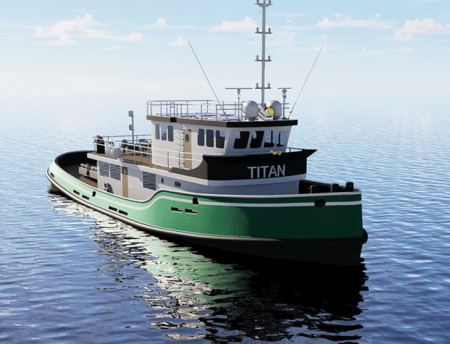 |
HISTORIC TUG TO BECOME LUXURY YACHT
AURELIA Design, based in Amsterdam, is restoring the 1956 Wijsmuller Titan tug as a long-range yacht, retaining the original hull form while replacing conventional propulsion with a fully emission-free system currently under development.
|
|---|
These articles appeared in Insights, TNA May/June 2026
Nominate a colleague, a mentee or a friend for one of our prestiguous Naval Architecture Awards. Chosen by our Committees, the winners will be announced at our Annual Dinner attended by more than 300 maritime professionals, industry leaders and academics. Taking place on 28th May, this will be an evening of celebration at the historic De Vere Grand Connaught Rooms in London.
Nominations deadline: on 31st December. Award categories include Innovation, Safety and Diversity.