40 under 40

Take 10 seconds to nominate a colleague, mentee or friend for our Forbes-style list. Must be under the age of 40 in 2026. Open to all maritime professions associated with naval architecture. See eligibility criteria. [hyperlinked].  


Nominate with LinkedIn profile 


JOIN TO ADVANCE

Renowned for the technical excellence of our events, publications and learning, we offer career pathways for naval architects and 16 associated professions [hyperlink to 16 professions].

join to influence

We cover everything from super yachts and green propulsion to warship resilience. Network 1-2-1 with top talent at our events or influence the maritime industry by joining one of our comittees.  

JOIN TO INNOVATE

We promote the interdisciplinary conversation at the heart of maritime innovation. Speak at our events, publish in our journals or simply join the discussion forums on our website.  

Not quite ready to join yet? 


?? HOW?? FILL IN EMAIL HERE AND SIGN UP WITH 1 CLICK 

DISCOVER

View All

>

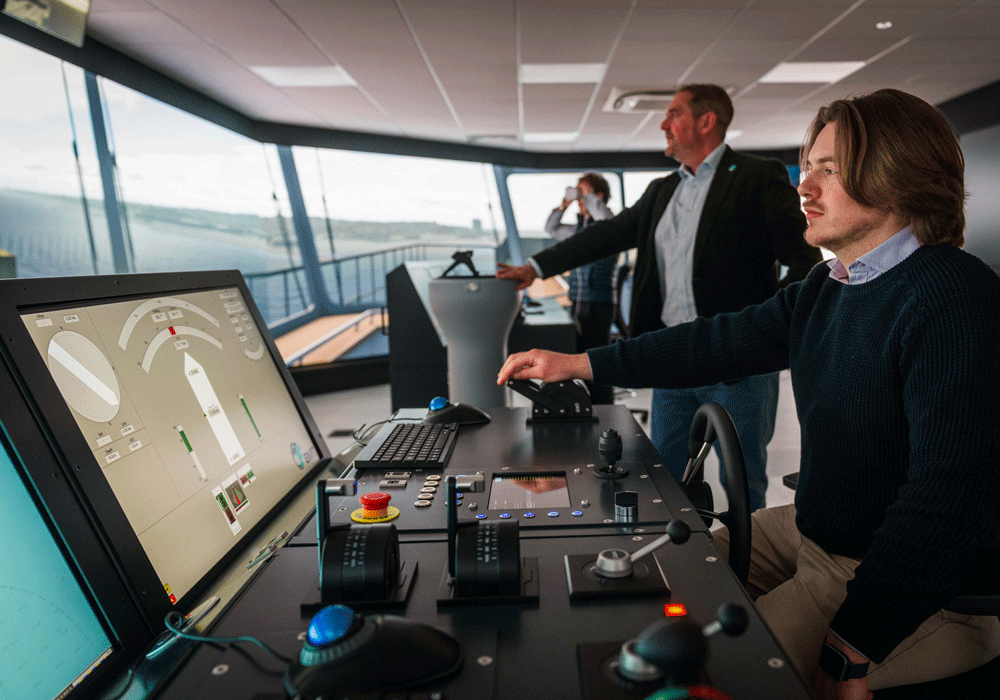
Immersive simulation accelerates warship design

BMT’s new Digital Innovation & Simulation Centre (DISC) aims to reshape how naval architects design, test and validate vessels. In this exclusive interview, discover how it uses immersive simulation to de-risk decision-making

Detail Link
>

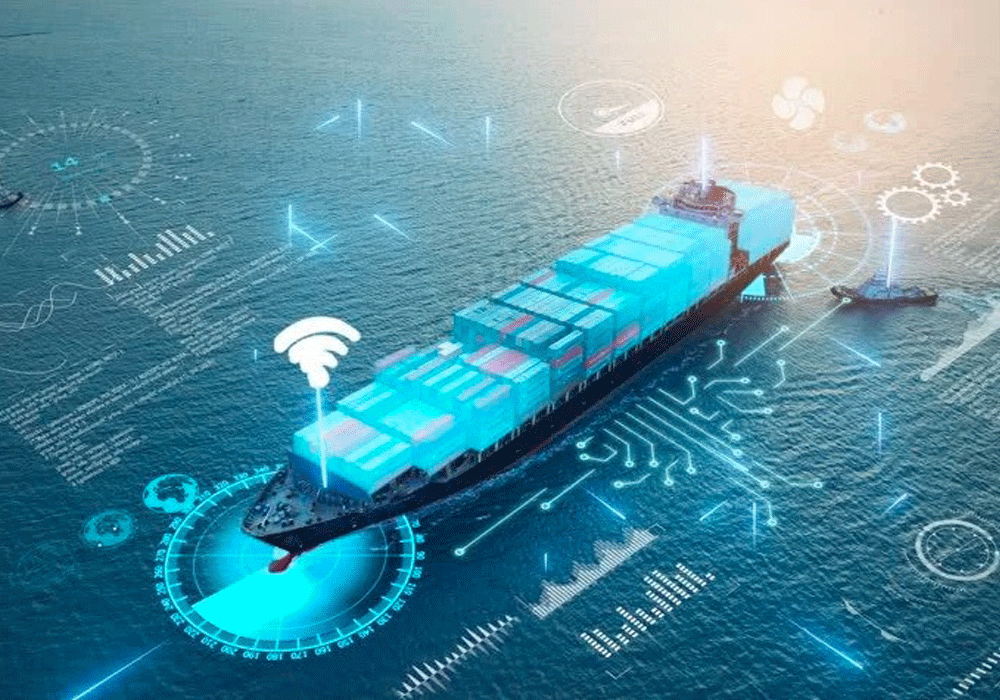
Building in better cyber resilience

Cyberattackers are streamlining tactics and adopting new technologies to expand their capabilities. Pole Star Defense talks to RINA exclusively on why embedding cyber resilience into warship design from the outset is critical

Detail Link
>

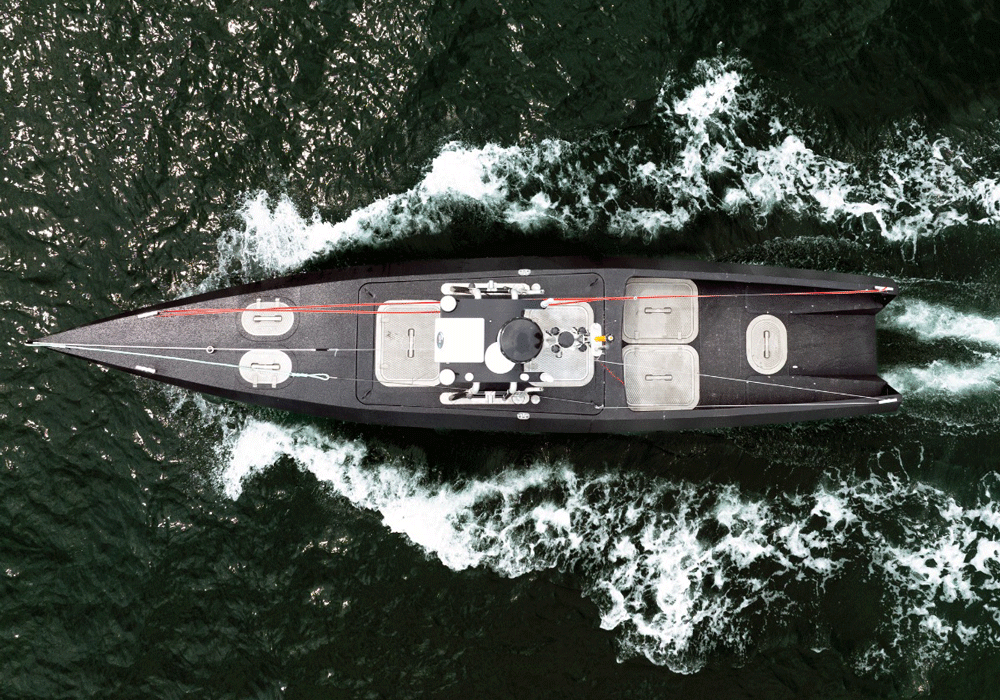
Autonomy as a capability multiplier

In light of growing maritime autonomy across the defence sector, RINA questions AI developer MarineAI on how autonomous systems can complement warship capability and streamline decision-making, rather than replace the process

Detail Link


???HOW??? what is the best slice to display TESTIMONIALS [LARGE photo + COLOURED BACKGROUND with LARGE quote imposed over it?]

  • Graduate Naval Architect [eg. Aidan Atkinson]

  • Prime Career [eg. Chris Nair]

  • Iconic Status and Giving back to Global Community [eg. Ian Buxton]

 
Global Events Connecting Maritime Leaders


Events


From flagship international conferences to specialist technical seminars, RINA events bring together experts, innovators, and professionals to share knowledge and shape the future of naval architecture.


Explore Upcoming Events

Events

Lorem ipsum dolor sit amet, consectetur adipiscing elit, sed do eiusmod tempor incididunt ut labore et dolore magna aliqua. Ut enim ad minim veniam, quis nostrud exercitation ullamco laboris nisi ut aliquip ex ea commodo consequat. Duis aute irure dolor in reprehenderit in voluptate velit esse cillum dolore eu fugiat nulla pariatur. Excepteur sint occaecat cupidatat non proident, sunt in culpa qui officia deserunt mollit anim id est laborum.

View All

CORPORATE PARTNERS

Immersive simulation accelerates warship design
Building in better cyber resilience
Autonomy as a capability multiplier

HEADING


Lorem ipsum dolor sit amet, consectetur adipiscing elit, sed do eiusmod tempor incididunt ut labore et dolore magna aliqua.


CLICK HERE

HEADING


Lorem ipsum dolor sit amet, consectetur adipiscing elit, sed do eiusmod tempor incididunt ut labore et dolore magna aliqua.


CLICK HERE

Lorem ipsum dolor sit amet, consectetur adipiscing elit, sed do eiusmod tempor incididunt ut labore et dolore magna aliqua. Ut enim ad minim veniam, quis nostrud exercitation ullamco laboris nisi ut aliquip ex ea commodo consequat. Duis aute irure dolor in reprehenderit in voluptate velit esse cillum dolore eu fugiat nulla pariatur. Excepteur sint occaecat cupidatat non proident, sunt in culpa qui officia deserunt mollit anim id est laborum.

BMT’s new state-of-the-art Digital Innovation & Simulation Centre (DISC) aims to accelerate immersive engineering, autonomous systems assurance and digital twin solutions for defence and commercial customers.

Underpinning the Full Mission Bridge is the DNV-accredited BMT REMBRANDT high‑fidelity hydrodynamic engine, which enables everything from tug and pilot training, through to litigation‑grade reconstruction.

DISC also hosts the Marine Autonomous Surface Ship Synthetic Environment Assurance System (MASS SEAS) synthetic environment and BMT ENGAGE, which allows users to create photorealistic digital twins and cyber and wargaming scenarios, as well as immersive VR/AR training programmes.

These capabilities directly support BMT’s autonomous vessel, de-risking provision and marine incident analysis services for defence and commercial customers.

High-fidelity simulation

“High-fidelity simulation environments allow the naval design spiral to be exercised in a more integrated and evidence-driven manner, particularly in the early design phases,” says Andrew Gray, head of emerging products and programmes at BMT.

He explains that immersive simulation and digital twin environments enable naval architects, operators and assurance specialists to interrogate ship behaviour, operability and system interactions before physical assets exist.

This supports earlier identification of design sensitivities relating to manoeuvrability, human–systems integration, autonomy behaviours and operational constraints.

“As a result, a greater proportion of design learning can be achieved virtually, reducing reliance on late-stage physical prototyping,” he says.

“Physical trials remain essential, but their emphasis increasingly shifts toward validation and confirmation rather than discovery. This approach supports more rapid convergence of the design spiral and reduces the risk of costly design change during integration and sea trials.”

Andrew Gray, head of emerging products and programmes at BMT (left) and Monty Long, regional future business director at BMT (right)

Warship Mar-26 BMT-3 Gray V2 Warship Mar-26 BMT-2 Long V2

Digital twin strategy

Integrated digital twin environments are increasingly capable of forming a central component of assurance strategies for complex naval programmes, provided they are appropriately governed and validated, says Monty Long, regional future business director, BMT.

These environments allow scenarios to be exercised repeatedly and consistently, generating traceable evidence that supports technical decision-making.

“Digital twins do not remove the requirement for physical testing; however, they allow assurance activity to be distributed across the programme lifecycle rather than concentrated at the end,” Long says.

“In this sense, they increasingly act as the primary mechanism for risk exploration and evidence generation, with physical trials providing confirmation against an already well understood design envelope.”

BMT’s work on SEAS/MASS SEAS shows how this plays out when autonomy moves from trials into fleet concepts. By running DNV‑grade synthetic trials against MASS and COLREGs requirements, autonomous system behaviour can be demonstrated across thousands of encounters that would be prohibitively risky or expensive to recreate at sea.

Sea trials can then be used to prove the most demanding edge cases and build human confidence in what the models already show.

Assurance driven simulation

Simulator-based autonomy assurance influences design requirements by forcing earlier consideration of system behaviour, control authority and human interaction across a wide range of operational conditions.

“For both crewed and uncrewed platforms, this approach encourages autonomy to be considered as an integral part of platform design rather than an add-on capability,” says Gray.

“Assurance-driven simulation therefore plays an important role in shaping hull form, systems integration and concepts of operation, supporting safer and more trusted deployment of autonomy at scale.”

BMT is already using these environments to explore mixed‑fleet concepts in which crewed ships, modular USVs and remote operations centres share situational awareness and control, testing how design choices around hull size, payload modularity, comms architecture and human–machine interfaces play out when vessels are operating at scale and under pressure.

This helps customers refine requirements for everything from bridge layout and ROC design to sensor fit and redundancy, ensuring future platforms are engineered from day one for trusted autonomy, lean crewing and rapid upgrade paths, rather than having those demands bolted on mid‑life at far higher cost.

Multi-stakeholder design

DISC also provides a shared digital environment in which designers, operators, regulators and assurance stakeholders can align assumptions and expectations earlier in the programme.

This reduces the likelihood of late-stage disagreement over design intent or evidential sufficiency.

BMT sees this most clearly in programmes where DISC is used as a neutral ’digital canvas’ to bring together Royal Navy sponsors, regulators such as NATG, industry partners and classification societies.

“That doesn’t change who holds ultimate design authority, but it does create a more commercial, programme‑savvy environment in which risk is shared more intelligently and the evidence is visible to all,” Long says.

Digital innovation hubs

The emergence of digital innovation hubs reflects a broader shift toward continuous design and assurance across the naval platform lifecycle.

Warships are increasingly required to evolve over extended service lives, incorporating new technologies, autonomy functions and mission requirements.

Facilities such as DISC provide the infrastructure to support persistent digital twins, ongoing simulation-based assurance and iterative engagement with stakeholders throughout the lifecycle.

“This supports a more adaptive approach to warship development, in which capability evolution is informed by continuous evidence rather than isolated programme milestones,” says Long.

For BMT, DISC is deliberately set up as more than a one-off facility – it is a template for how navies and industry can manage continuous evolution of complex fleets, including hybrid crewed–uncrewed constructs like MODUS.

“Digital hubs don’t replace discrete build programmes, but they do enable a more ‘evergreen’ warship model – where capability is refreshed, re-certified and re-commercialised through a persistent digital twin,” says Gray.

Alongside DISC, BMT’s work on modular payload programmes – including its partnership with Force Development Services (FDS) in support of the Royal Navy’s NavyPODS vision, underlines this shift from one-off builds to a continuously adaptable fleet.  

“By treating PODS-style payloads, uncrewed platforms and motherships as parts of a coherent system, we can use digital hubs to prototype new load-outs, rehearse mission switches and refine support models before they are rolled out across the fleet,” says Long.

That combination of modular hardware and persistent digital assurance is what ultimately enables a ‘continuous warship design’ mindset in practice – allowing navies to re-role ships and refresh capability at the speed of relevance, while maintaining control over risk, availability and through-life cost.

Not a day goes by without hearing about cyberattacks wreaking havoc for organisations and consumers around the world and the shipping and marine sectors are no exception.

Marinelink’s Security Operations Centre (SOC) report is quick to point out that for the second half of 2024, cybercriminals targeting the maritime sector have streamlined their tactics, enhanced their operational efficiency and worse, adopted emerging technologies to expand their attack capabilities.

Maritime intelligence company, Pole Star Global explains that Automatic Identification System (AIS) spoofing and GPS jamming are frequently used techniques that provide a false idea of ship locations while at sea and so it makes the case for using more effective persistent tracking methods.

But how should warship design and technology evolve to remain operational under GNSS denial, AIS spoofing, or degraded positioning environments?

“Today's warfighters train extensively in GNSS-denied environments and already navigate using layered methods: Inertial systems, celestial techniques and traditional seamanship, all feeding into combat management systems that fuse multiple PNT sources,” explains Alex Field, managing director, Pole Star Defense.

“But the evolution needed is threefold. First, broaden the PNT portfolio as emerging technologies like automated celestial navigation, magnetic anomaly navigation and eLoran reach maturity. Second, adopt open modular architectures so ships can integrate new PNT sources without redesign. Third, treat AIS as adversarial data and harden the recognised maritime picture through multi-sensor fusion with confidence scoring.”

Alex Field, managing director of Pole Star Defense

Warship Mar-26 Pole-Star-1 V2

Design implications

Field explains that there are design implications arising from adopting persistent, multi-source vessel tracking onboard naval platforms.

Persistent, multi-source vessel tracking creates tension across several design dimensions.

Every active sensor improves the track picture but increases the ship's electromagnetic signature. Emissions Control (EMCON) becomes a first-order design consideration, favouring passive sensors like Electronic Support Measures (ESM) and electro-optical/infrared (EO/IR) systems that maintain situational awareness without broadcasting the ship's position.

“Fusing continuous data from radar, ESM, EO/IR, AIS and off-board sources demands significant onboard compute and cooling that legacy platforms were not designed to provide,” he says.

“Software-defined, modular computing architectures need to be designed in from the outset on newbuilds.

He explains that the combat management system must automatically correlate tracks across sensors, assign confidence scores and flag anomalies, particularly when AIS contradicts radar or EO/IR observations. AI and machine learning are increasingly applied to this correlation problem.

Sharing the fused picture across a task group requires bandwidth that may itself be contested. Each platform must therefore maintain a credible local picture independently and reconcile when connectivity is restored.

“The overarching design shift is treating tracking as an information architecture problem rather than a sensor problem: Open data architectures that decouple sensors from processing, allowing new sources and algorithms to be integrated without hardware changes,” Field says.

Reshaping shipboard systems

Field says cyber resilience is reshaping shipboard system architecture from perimeter defence to assuming compromise.

Zero trust principles, continuous verification of every user, device and data flow, are being adopted across Navy networks.

Initial implementation focuses on shore infrastructure and unmanned platforms, with extension to manned warship combat networks still maturing.

The complexity of legacy systems, real-time operational demands and Denied, Disrupted, Intermittent and Limited (DDIL) connectivity make this a significant engineering challenge.

Software-defined warships expand the attack surface. Over-the-air combat system updates are operationally transformative but demand rigorous supply chain assurance as commercial hardware and third-party code replace bespoke, air-gapped systems.

“Network segmentation must isolate combat systems, navigation, propulsion and damage control so breaches cannot cascade laterally. Systems must degrade gracefully under cyberattack in known, predictable ways that crews can manage, mirroring how damage control doctrine handles kinetic battle damage,” Field says.

Architectural discipline

Cyber survivability is now a naval architectural discipline equivalent to damage stability or shock resistance.

The DOD's System Survivability Key Performance Parameter, one of four mandatory KPPs for all weapon systems, includes a Cyber Survivability Endorsement that places cyber threats in the same acquisition trade space as kinetic ones.

On the commercial side, IACS unified requirements E26 and E27, mandatory for new construction contracts from July 2024, codify cyber resilience as a classification requirement alongside structural and stability standards.

“But the harder question is whether practice matches policy. Damage stability and shock resistance benefit from decades of test data, mature modeling tools and deeply ingrained design culture,” says Field.

“Cyber survivability is newer, the threat evolves faster than ship design cycles and testing a ship's cyber resilience under realistic conditions is inherently more complex than a shock trial. The formal discipline exists. Building the same depth of rigor and instinct around it is still work underway.”

Future bridge systems

Field says that cyber threats will continue to reshape bridge design around one core problem into the future: The operator can no longer implicitly trust what the screens are showing.

“Traditional bridge integration assumes sensor data is reliable. A cyber-compromised bridge may display spoofed positions, false contacts, or manipulated propulsion data and the danger is that operators act on it without recognising the tampering, says Field.

This drives several design implications. Displays need data integrity indicators that flag when inputs are inconsistent or potentially compromised, making the trustworthiness of data visible to the operator, not just the data itself. Manual fallback must be genuinely operable, not theoretically available.

And the deeper Human-Machine Interface (HMI) challenge is cognitive: Designing ship bridge interfaces that help operators recognise when they're being deceived rather than simply presenting data faster and in higher resolution.

AI system developer, MarineAI has formed a close partnership with the uncrewed surface vessel designer and builder, ZeroUSV, reflecting a growing concentration of operational maritime autonomy capability across the defence sector.

Together, they have created a first-of-its-kind programme to create a distributed sensing network that supports underwater monitoring and secure communications for submersible fleet operations.

Funded by UK Defence Innovation (UKDI), the initiative will deploy autonomous vessel platforms and acoustic systems to maintain covert contact with underwater assets without relying on high-bandwidth or detectable links, enabling more resilient subsea mapping, intelligence and infrastructure monitoring.

Simplifying decision-making

Central to the MarineAI ethos is the view that the introduction of onboard decision-support systems should not make the bridge more complicated.

Modern warships already manage large volumes of information from navigation systems, sensors and mission equipment. Simply adding further displays or alert systems increases operator workload and does little to promote efficient or accurate decision making.

“The opportunity with autonomous systems is to simplify the decision-making pathway. Autonomy software can process large volumes of onboard data and distilling it into clear, actionable information,” says Oliver Thompson, director of engineering at MarineAI.

“This can then be presented to operators as recommendations, or, in specific trusted cases such as navigational routing, can be executed by the system itself.”

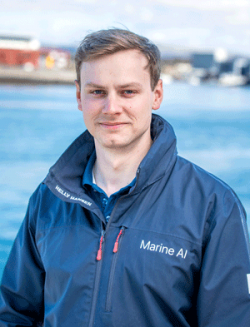
One of the key requirements of autonomous capability is decision transparency, he says.

 Oliver Thompson, director of engineering at MarineAI

Warship Mar-26 Marine-AI-2 V2

Operators must be able to understand how a recommendation has been reached and what informed a decision and that builds trust in the system.

For this reason, autonomous capability should be accessible to operators through existing bridge and command interfaces rather than appearing as a separate and isolated console on an additional screen.

Reliability, fidelity and availability

So, what platform design requirements can emerge from deploying autonomy systems in operational naval environments?

From a platform perspective, the requirements are broadly consistent with those for other critical naval systems. Reliability, fidelity and availability are fundamental, Thompson says.

Autonomous capability must remain functional during operations if it is to be trusted in theatre.

The overall system must also account for hardware faults and routine maintenance cycles. Redundancy and failover therefore need to be built into the onboard computing architecture in the same way they are for navigation, propulsion or combat systems.

Modern operational autonomy systems typically run on compact edge computing platforms or similar embedded processors. These are notably different from the hardware required to train models, which can require substantial computing resources. Once trained, however, the software that operates onboard a vessel is typically far less demanding.

Thompson says that a key platform consideration is therefore reliability, integration with existing ship systems and cyber resilience rather than large-scale computing infrastructure.

An autonomy system’s decision making is informed by the data it receives, whether from the vessel itself, other vessels in a fleet, or shoreside command centres. It is therefore essential that this data is reliable and of high quality.

Autonomous vessels rely on sensors such as high-quality cameras and other systems to provide situational awareness. This represents a shift from a traditional operator-driven awareness to awareness generated by autonomous system capabilities.

A capability multiplier

An interesting point for discussion is how autonomy will influence the make-up of future fleets, particularly the balance between crewed warships and uncrewed surface vessels.

Thompson says that autonomous vessels are best viewed as a capability multiplier, rather than a replacement for crewed warships.

They are particularly suited to missions that are dangerous, dull or dirty. These are tasks that either expose crews to unnecessary risk or involve long periods of repetitive activity.

Persistent surveillance, reconnaissance and operations in hazardous environments are typical examples.

“Using autonomous platforms in these roles allows crewed ships to focus on missions that require human judgement, command authority and coordination within the wider task group or fleet,” he says.

In addition, autonomous systems also make it possible to deploy a larger number of platforms across an operational area, increasing coverage and persistence. This effectively expands the number of assets available to commanders without increasing crew requirements.

This concept can already be seen in developments such as the Royal Navy’s “loyal wingman” approach, in which traditional crewed platforms are supported by autonomous or remotely operated systems.

“The likely outcome is therefore a mixed fleet structure in which crewed ships remain central, supported by autonomous vessels that extend operational reach and maritime presence,” says Thompson.

Autonomy challenges

One challenge with advanced autonomy is, as Thompson describes, the “genie problem”.

An operator may believe they have issued a precise instruction, yet the system may interpret that instruction in a way that technically fulfils the request while producing outcomes that were not anticipated.

“For this reason, autonomy should not be treated as something that can simply be deployed and left to operate independently without oversight. Its role is to analyse information and propose options, while authority to act remains within a human-supervised chain of control,” he says.

On an uncrewed vessel, decision making must remain observable and controllable, when necessary, much as it is on a crewed ship. Operators should retain the ability to monitor system behaviour, review recommendations and intervene if required.

In practice, the level of oversight varies depending on the type of decision involved. Navigation and collision avoidance are relatively bounded problems with established regulatory frameworks and can allow for some degree of autonomous action.

Mission management and operational tasking, however, involve more complex judgement and therefore require closer human supervision, often precluding autonomous systems from acting independently.

Ultimately, Thompson says, trust in autonomy within safety-critical naval environments will depend on transparency, human oversight and predictable system behaviour.

Designing systems that keep humans informed and within the decision chain will be central to the safe adoption of autonomy at sea.

Frequently Asked Questions

Lorem ipsum dolor sit amet, consectetur adipiscing elit, sed do eiusmod tempor incididunt ut labore et dolore magna aliqua. Ut enim ad minim veniam, quis nostrud exercitation ullamco laboris nisi ut aliquip ex ea commodo consequat.

Tab1

Lorem ipsum dolor sit amet, consectetur adipiscing elit, sed do eiusmod tempor incididunt ut labore et dolore magna aliqua. Ut enim ad minim veniam, quis nostrud exercitation ullamco laboris nisi ut aliquip ex ea commodo consequat. Duis aute irure dolor in reprehenderit in voluptate velit esse cillum dolore eu fugiat nulla pariatur. Excepteur sint occaecat cupidatat non proident, sunt in culpa qui officia deserunt mollit anim id est laborum.

Tab2

Lorem ipsum dolor sit amet, consectetur adipiscing elit, sed do eiusmod tempor incididunt ut labore et dolore magna aliqua. Ut enim ad minim veniam, quis nostrud exercitation ullamco laboris nisi ut aliquip ex ea commodo consequat. Duis aute irure dolor in reprehenderit in voluptate velit esse cillum dolore eu fugiat nulla pariatur. Excepteur sint occaecat cupidatat non proident, sunt in culpa qui officia deserunt mollit anim id est laborum.

Frequently Asked Questions

Lorem ipsum dolor sit amet, consectetur adipiscing elit, sed do eiusmod tempor incididunt ut labore et dolore magna aliqua. Ut enim ad minim veniam, quis nostrud exercitation ullamco laboris nisi ut aliquip ex ea commodo consequat.

Tab1

Lorem ipsum dolor sit amet, consectetur adipiscing elit, sed do eiusmod tempor incididunt ut labore et dolore magna aliqua. Ut enim ad minim veniam, quis nostrud exercitation ullamco laboris nisi ut aliquip ex ea commodo consequat. Duis aute irure dolor in reprehenderit in voluptate velit esse cillum dolore eu fugiat nulla pariatur. Excepteur sint occaecat cupidatat non proident, sunt in culpa qui officia deserunt mollit anim id est laborum.

Tab2

Lorem ipsum dolor sit amet, consectetur adipiscing elit, sed do eiusmod tempor incididunt ut labore et dolore magna aliqua. Ut enim ad minim veniam, quis nostrud exercitation ullamco laboris nisi ut aliquip ex ea commodo consequat. Duis aute irure dolor in reprehenderit in voluptate velit esse cillum dolore eu fugiat nulla pariatur. Excepteur sint occaecat cupidatat non proident, sunt in culpa qui officia deserunt mollit anim id est laborum.

Tab3

Lorem ipsum dolor sit amet, consectetur adipiscing elit, sed do eiusmod tempor incididunt ut labore et dolore magna aliqua. Ut enim ad minim veniam, quis nostrud exercitation ullamco laboris nisi ut aliquip ex ea commodo consequat. Duis aute irure dolor in reprehenderit in voluptate velit esse cillum dolore eu fugiat nulla pariatur. Excepteur sint occaecat cupidatat non proident, sunt in culpa qui officia deserunt mollit anim id est laborum.

Tab4

Lorem ipsum dolor sit amet, consectetur adipiscing elit, sed do eiusmod tempor incididunt ut labore et dolore magna aliqua. Ut enim ad minim veniam, quis nostrud exercitation ullamco laboris nisi ut aliquip ex ea commodo consequat. Duis aute irure dolor in reprehenderit in voluptate velit esse cillum dolore eu fugiat nulla pariatur. Excepteur sint occaecat cupidatat non proident, sunt in culpa qui officia deserunt mollit anim id est laborum.

text one

Lorem ipsum dolor sit amet, consectetur adipiscing elit, sed do eiusmod tempor incididunt ut labore et dolore magna aliqua. Ut enim ad minim veniam, quis nostrud exercitation ullamco laboris nisi ut aliquip ex ea commodo consequat. Duis aute irure dolor in reprehenderit in voluptate velit esse cillum dolore eu fugiat nulla pariatur. Excepteur sint occaecat cupidatat non proident, sunt in culpa qui officia deserunt mollit anim id est laborum.

Immersive simulation accelerates warship design

BMT’s new state-of-the-art Digital Innovation & Simulation Centre (DISC) aims to accelerate immersive engineering, autonomous systems assurance and digital twin solutions for defence and commercial customers.

Underpinning the Full Mission Bridge is the DNV-accredited BMT REMBRANDT high‑fidelity hydrodynamic engine, which enables everything from tug and pilot training, through to litigation‑grade reconstruction.

DISC also hosts the Marine Autonomous Surface Ship Synthetic Environment Assurance System (MASS SEAS) synthetic environment and BMT ENGAGE, which allows users to create photorealistic digital twins and cyber and wargaming scenarios, as well as immersive VR/AR training programmes.

These capabilities directly support BMT’s autonomous vessel, de-risking provision and marine incident analysis services for defence and commercial customers.

High-fidelity simulation

“High-fidelity simulation environments allow the naval design spiral to be exercised in a more integrated and evidence-driven manner, particularly in the early design phases,” says Andrew Gray, head of emerging products and programmes at BMT.

He explains that immersive simulation and digital twin environments enable naval architects, operators and assurance specialists to interrogate ship behaviour, operability and system interactions before physical assets exist.

This supports earlier identification of design sensitivities relating to manoeuvrability, human–systems integration, autonomy behaviours and operational constraints.

“As a result, a greater proportion of design learning can be achieved virtually, reducing reliance on late-stage physical prototyping,” he says.

“Physical trials remain essential, but their emphasis increasingly shifts toward validation and confirmation rather than discovery. This approach supports more rapid convergence of the design spiral and reduces the risk of costly design change during integration and sea trials.”

Andrew Gray, head of emerging products and programmes at BMT (left) and Monty Long, regional future business director at BMT (right)

Warship Mar-26 BMT-3 Gray V2 Warship Mar-26 BMT-2 Long V2

Digital twin strategy

Integrated digital twin environments are increasingly capable of forming a central component of assurance strategies for complex naval programmes, provided they are appropriately governed and validated, says Monty Long, regional future business director, BMT.

These environments allow scenarios to be exercised repeatedly and consistently, generating traceable evidence that supports technical decision-making.

“Digital twins do not remove the requirement for physical testing; however, they allow assurance activity to be distributed across the programme lifecycle rather than concentrated at the end,” Long says.

“In this sense, they increasingly act as the primary mechanism for risk exploration and evidence generation, with physical trials providing confirmation against an already well understood design envelope.”

BMT’s work on SEAS/MASS SEAS shows how this plays out when autonomy moves from trials into fleet concepts. By running DNV‑grade synthetic trials against MASS and COLREGs requirements, autonomous system behaviour can be demonstrated across thousands of encounters that would be prohibitively risky or expensive to recreate at sea.

Sea trials can then be used to prove the most demanding edge cases and build human confidence in what the models already show.

Assurance driven simulation

Simulator-based autonomy assurance influences design requirements by forcing earlier consideration of system behaviour, control authority and human interaction across a wide range of operational conditions.

“For both crewed and uncrewed platforms, this approach encourages autonomy to be considered as an integral part of platform design rather than an add-on capability,” says Gray.

“Assurance-driven simulation therefore plays an important role in shaping hull form, systems integration and concepts of operation, supporting safer and more trusted deployment of autonomy at scale.”

BMT is already using these environments to explore mixed‑fleet concepts in which crewed ships, modular USVs and remote operations centres share situational awareness and control, testing how design choices around hull size, payload modularity, comms architecture and human–machine interfaces play out when vessels are operating at scale and under pressure.

This helps customers refine requirements for everything from bridge layout and ROC design to sensor fit and redundancy, ensuring future platforms are engineered from day one for trusted autonomy, lean crewing and rapid upgrade paths, rather than having those demands bolted on mid‑life at far higher cost.

Multi-stakeholder design

DISC also provides a shared digital environment in which designers, operators, regulators and assurance stakeholders can align assumptions and expectations earlier in the programme.

This reduces the likelihood of late-stage disagreement over design intent or evidential sufficiency.

BMT sees this most clearly in programmes where DISC is used as a neutral ’digital canvas’ to bring together Royal Navy sponsors, regulators such as NATG, industry partners and classification societies.

“That doesn’t change who holds ultimate design authority, but it does create a more commercial, programme‑savvy environment in which risk is shared more intelligently and the evidence is visible to all,” Long says.

Digital innovation hubs

The emergence of digital innovation hubs reflects a broader shift toward continuous design and assurance across the naval platform lifecycle.

Warships are increasingly required to evolve over extended service lives, incorporating new technologies, autonomy functions and mission requirements.

Facilities such as DISC provide the infrastructure to support persistent digital twins, ongoing simulation-based assurance and iterative engagement with stakeholders throughout the lifecycle.

“This supports a more adaptive approach to warship development, in which capability evolution is informed by continuous evidence rather than isolated programme milestones,” says Long.

For BMT, DISC is deliberately set up as more than a one-off facility – it is a template for how navies and industry can manage continuous evolution of complex fleets, including hybrid crewed–uncrewed constructs like MODUS.

“Digital hubs don’t replace discrete build programmes, but they do enable a more ‘evergreen’ warship model – where capability is refreshed, re-certified and re-commercialised through a persistent digital twin,” says Gray.

Alongside DISC, BMT’s work on modular payload programmes – including its partnership with Force Development Services (FDS) in support of the Royal Navy’s NavyPODS vision, underlines this shift from one-off builds to a continuously adaptable fleet.  

“By treating PODS-style payloads, uncrewed platforms and motherships as parts of a coherent system, we can use digital hubs to prototype new load-outs, rehearse mission switches and refine support models before they are rolled out across the fleet,” says Long.

That combination of modular hardware and persistent digital assurance is what ultimately enables a ‘continuous warship design’ mindset in practice – allowing navies to re-role ships and refresh capability at the speed of relevance, while maintaining control over risk, availability and through-life cost.
Building in better cyber resilience

Not a day goes by without hearing about cyberattacks wreaking havoc for organisations and consumers around the world and the shipping and marine sectors are no exception.

Marinelink’s Security Operations Centre (SOC) report is quick to point out that for the second half of 2024, cybercriminals targeting the maritime sector have streamlined their tactics, enhanced their operational efficiency and worse, adopted emerging technologies to expand their attack capabilities.

Maritime intelligence company, Pole Star Global explains that Automatic Identification System (AIS) spoofing and GPS jamming are frequently used techniques that provide a false idea of ship locations while at sea and so it makes the case for using more effective persistent tracking methods.

But how should warship design and technology evolve to remain operational under GNSS denial, AIS spoofing, or degraded positioning environments?

“Today's warfighters train extensively in GNSS-denied environments and already navigate using layered methods: Inertial systems, celestial techniques and traditional seamanship, all feeding into combat management systems that fuse multiple PNT sources,” explains Alex Field, managing director, Pole Star Defense.

“But the evolution needed is threefold. First, broaden the PNT portfolio as emerging technologies like automated celestial navigation, magnetic anomaly navigation and eLoran reach maturity. Second, adopt open modular architectures so ships can integrate new PNT sources without redesign. Third, treat AIS as adversarial data and harden the recognised maritime picture through multi-sensor fusion with confidence scoring.”

Alex Field, managing director of Pole Star Defense

Warship Mar-26 Pole-Star-1 V2

Design implications

Field explains that there are design implications arising from adopting persistent, multi-source vessel tracking onboard naval platforms.

Persistent, multi-source vessel tracking creates tension across several design dimensions.

Every active sensor improves the track picture but increases the ship's electromagnetic signature. Emissions Control (EMCON) becomes a first-order design consideration, favouring passive sensors like Electronic Support Measures (ESM) and electro-optical/infrared (EO/IR) systems that maintain situational awareness without broadcasting the ship's position.

“Fusing continuous data from radar, ESM, EO/IR, AIS and off-board sources demands significant onboard compute and cooling that legacy platforms were not designed to provide,” he says.

“Software-defined, modular computing architectures need to be designed in from the outset on newbuilds.

He explains that the combat management system must automatically correlate tracks across sensors, assign confidence scores and flag anomalies, particularly when AIS contradicts radar or EO/IR observations. AI and machine learning are increasingly applied to this correlation problem.

Sharing the fused picture across a task group requires bandwidth that may itself be contested. Each platform must therefore maintain a credible local picture independently and reconcile when connectivity is restored.

“The overarching design shift is treating tracking as an information architecture problem rather than a sensor problem: Open data architectures that decouple sensors from processing, allowing new sources and algorithms to be integrated without hardware changes,” Field says.

Reshaping shipboard systems

Field says cyber resilience is reshaping shipboard system architecture from perimeter defence to assuming compromise.

Zero trust principles, continuous verification of every user, device and data flow, are being adopted across Navy networks.

Initial implementation focuses on shore infrastructure and unmanned platforms, with extension to manned warship combat networks still maturing.

The complexity of legacy systems, real-time operational demands and Denied, Disrupted, Intermittent and Limited (DDIL) connectivity make this a significant engineering challenge.

Software-defined warships expand the attack surface. Over-the-air combat system updates are operationally transformative but demand rigorous supply chain assurance as commercial hardware and third-party code replace bespoke, air-gapped systems.

“Network segmentation must isolate combat systems, navigation, propulsion and damage control so breaches cannot cascade laterally. Systems must degrade gracefully under cyberattack in known, predictable ways that crews can manage, mirroring how damage control doctrine handles kinetic battle damage,” Field says.

Architectural discipline

Cyber survivability is now a naval architectural discipline equivalent to damage stability or shock resistance.

The DOD's System Survivability Key Performance Parameter, one of four mandatory KPPs for all weapon systems, includes a Cyber Survivability Endorsement that places cyber threats in the same acquisition trade space as kinetic ones.

On the commercial side, IACS unified requirements E26 and E27, mandatory for new construction contracts from July 2024, codify cyber resilience as a classification requirement alongside structural and stability standards.

“But the harder question is whether practice matches policy. Damage stability and shock resistance benefit from decades of test data, mature modeling tools and deeply ingrained design culture,” says Field.

“Cyber survivability is newer, the threat evolves faster than ship design cycles and testing a ship's cyber resilience under realistic conditions is inherently more complex than a shock trial. The formal discipline exists. Building the same depth of rigor and instinct around it is still work underway.”

Future bridge systems

Field says that cyber threats will continue to reshape bridge design around one core problem into the future: The operator can no longer implicitly trust what the screens are showing.

“Traditional bridge integration assumes sensor data is reliable. A cyber-compromised bridge may display spoofed positions, false contacts, or manipulated propulsion data and the danger is that operators act on it without recognising the tampering, says Field.

This drives several design implications. Displays need data integrity indicators that flag when inputs are inconsistent or potentially compromised, making the trustworthiness of data visible to the operator, not just the data itself. Manual fallback must be genuinely operable, not theoretically available.

And the deeper Human-Machine Interface (HMI) challenge is cognitive: Designing ship bridge interfaces that help operators recognise when they're being deceived rather than simply presenting data faster and in higher resolution.

Autonomy as a capability multiplier

AI system developer, MarineAI has formed a close partnership with the uncrewed surface vessel designer and builder, ZeroUSV, reflecting a growing concentration of operational maritime autonomy capability across the defence sector.

Together, they have created a first-of-its-kind programme to create a distributed sensing network that supports underwater monitoring and secure communications for submersible fleet operations.

Funded by UK Defence Innovation (UKDI), the initiative will deploy autonomous vessel platforms and acoustic systems to maintain covert contact with underwater assets without relying on high-bandwidth or detectable links, enabling more resilient subsea mapping, intelligence and infrastructure monitoring.

Simplifying decision-making

Central to the MarineAI ethos is the view that the introduction of onboard decision-support systems should not make the bridge more complicated.

Modern warships already manage large volumes of information from navigation systems, sensors and mission equipment. Simply adding further displays or alert systems increases operator workload and does little to promote efficient or accurate decision making.

“The opportunity with autonomous systems is to simplify the decision-making pathway. Autonomy software can process large volumes of onboard data and distilling it into clear, actionable information,” says Oliver Thompson, director of engineering at MarineAI.

“This can then be presented to operators as recommendations, or, in specific trusted cases such as navigational routing, can be executed by the system itself.”

One of the key requirements of autonomous capability is decision transparency, he says.

 Oliver Thompson, director of engineering at MarineAI

Warship Mar-26 Marine-AI-2 V2

Operators must be able to understand how a recommendation has been reached and what informed a decision and that builds trust in the system.

For this reason, autonomous capability should be accessible to operators through existing bridge and command interfaces rather than appearing as a separate and isolated console on an additional screen.

Reliability, fidelity and availability

So, what platform design requirements can emerge from deploying autonomy systems in operational naval environments?

From a platform perspective, the requirements are broadly consistent with those for other critical naval systems. Reliability, fidelity and availability are fundamental, Thompson says.

Autonomous capability must remain functional during operations if it is to be trusted in theatre.

The overall system must also account for hardware faults and routine maintenance cycles. Redundancy and failover therefore need to be built into the onboard computing architecture in the same way they are for navigation, propulsion or combat systems.

Modern operational autonomy systems typically run on compact edge computing platforms or similar embedded processors. These are notably different from the hardware required to train models, which can require substantial computing resources. Once trained, however, the software that operates onboard a vessel is typically far less demanding.

Thompson says that a key platform consideration is therefore reliability, integration with existing ship systems and cyber resilience rather than large-scale computing infrastructure.

An autonomy system’s decision making is informed by the data it receives, whether from the vessel itself, other vessels in a fleet, or shoreside command centres. It is therefore essential that this data is reliable and of high quality.

Autonomous vessels rely on sensors such as high-quality cameras and other systems to provide situational awareness. This represents a shift from a traditional operator-driven awareness to awareness generated by autonomous system capabilities.

A capability multiplier

An interesting point for discussion is how autonomy will influence the make-up of future fleets, particularly the balance between crewed warships and uncrewed surface vessels.

Thompson says that autonomous vessels are best viewed as a capability multiplier, rather than a replacement for crewed warships.

They are particularly suited to missions that are dangerous, dull or dirty. These are tasks that either expose crews to unnecessary risk or involve long periods of repetitive activity.

Persistent surveillance, reconnaissance and operations in hazardous environments are typical examples.

“Using autonomous platforms in these roles allows crewed ships to focus on missions that require human judgement, command authority and coordination within the wider task group or fleet,” he says.

In addition, autonomous systems also make it possible to deploy a larger number of platforms across an operational area, increasing coverage and persistence. This effectively expands the number of assets available to commanders without increasing crew requirements.

This concept can already be seen in developments such as the Royal Navy’s “loyal wingman” approach, in which traditional crewed platforms are supported by autonomous or remotely operated systems.

“The likely outcome is therefore a mixed fleet structure in which crewed ships remain central, supported by autonomous vessels that extend operational reach and maritime presence,” says Thompson.

Autonomy challenges

One challenge with advanced autonomy is, as Thompson describes, the “genie problem”.

An operator may believe they have issued a precise instruction, yet the system may interpret that instruction in a way that technically fulfils the request while producing outcomes that were not anticipated.

“For this reason, autonomy should not be treated as something that can simply be deployed and left to operate independently without oversight. Its role is to analyse information and propose options, while authority to act remains within a human-supervised chain of control,” he says.

On an uncrewed vessel, decision making must remain observable and controllable, when necessary, much as it is on a crewed ship. Operators should retain the ability to monitor system behaviour, review recommendations and intervene if required.

In practice, the level of oversight varies depending on the type of decision involved. Navigation and collision avoidance are relatively bounded problems with established regulatory frameworks and can allow for some degree of autonomous action.

Mission management and operational tasking, however, involve more complex judgement and therefore require closer human supervision, often precluding autonomous systems from acting independently.

Ultimately, Thompson says, trust in autonomy within safety-critical naval environments will depend on transparency, human oversight and predictable system behaviour.

Designing systems that keep humans informed and within the decision chain will be central to the safe adoption of autonomy at sea.

Awards 2026


Nominate a colleague, a mentee or a friend for one of our prestiguous Naval Architecture Awards. Chosen by our Committees, the winners will be announced at our Annual Dinner attended by more than 300 maritime professionals, industry leaders and academics. Taking place on 28th May, this will be an evening of celebration at the historic De Vere Grand Connaught Rooms in London. 

Nominations deadline: on 31st December. Award categories include Innovation, Safety and Diversity.

Nominate Now