China: ship repair's hotspot
A surge in vessel building in the first 10 years of this century means that vessels are now approaching their third, fourth or fifth surveys, and they must meet evolving decarbonisation regulations to remain viable
Take 10 seconds to nominate a colleague, mentee or friend for our Forbes-style list. Must be under the age of 40 in 2026. Open to all maritime professions associated with naval architecture. See eligibility criteria. [hyperlinked].
Renowned for the technical excellence of our events, publications and learning, we offer career pathways for naval architects and 16 associated professions [hyperlink to 16 professions].
We cover everything from super yachts and green propulsion to warship resilience. Network 1-2-1 with top talent at our events or influence the maritime industry by joining one of our comittees.
We promote the interdisciplinary conversation at the heart of maritime innovation. Speak at our events, publish in our journals or simply join the discussion forums on our website.
?? HOW?? FILL IN EMAIL HERE AND SIGN UP WITH 1 CLICK

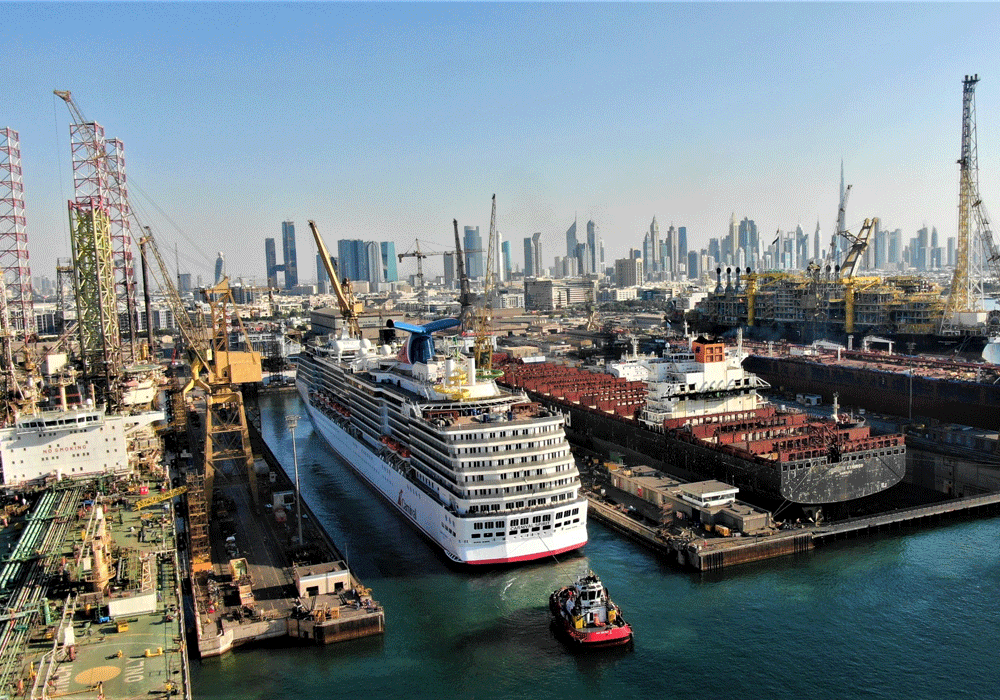
A surge in vessel building in the first 10 years of this century means that vessels are now approaching their third, fourth or fifth surveys, and they must meet evolving decarbonisation regulations to remain viable
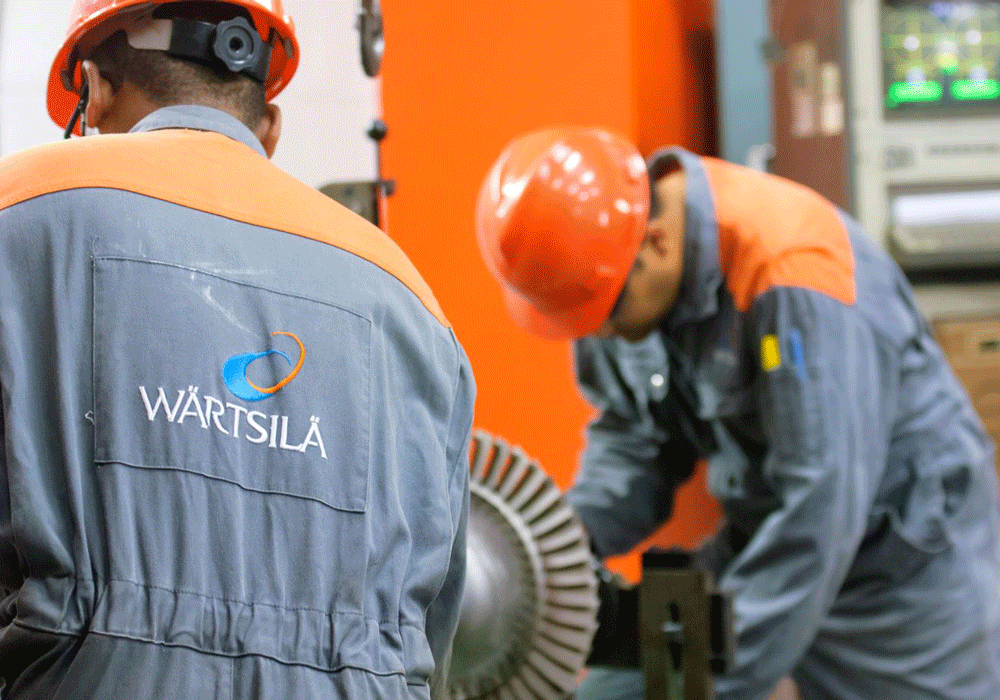
AI is emerging as a legitimate tool for predictive maintenance, analysing component wear and tear symptoms for improved maintenance downtime costs
The latest survey shows significant deficiencies in ballast water systems technology. Can land-based facilities help bridge gap between rules and reality?
From flagship international conferences to specialist technical seminars, RINA events bring together experts, innovators, and professionals to share knowledge and shape the future of naval architecture.
Explore Upcoming Events
Lorem ipsum dolor sit amet, consectetur adipiscing elit, sed do eiusmod tempor incididunt ut labore et dolore magna aliqua.
CLICK HERE
Lorem ipsum dolor sit amet, consectetur adipiscing elit, sed do eiusmod tempor incididunt ut labore et dolore magna aliqua.
CLICK HERE







Lorem ipsum dolor sit amet, consectetur adipiscing elit, sed do eiusmod tempor incididunt ut labore et dolore magna aliqua. Ut enim ad minim veniam, quis nostrud exercitation ullamco laboris nisi ut aliquip ex ea commodo consequat. Duis aute irure dolor in reprehenderit in voluptate velit esse cillum dolore eu fugiat nulla pariatur. Excepteur sint occaecat cupidatat non proident, sunt in culpa qui officia deserunt mollit anim id est laborum.

Global ship repair work spiked 7% in the first nine months of 2025 following a surge in aging ships along with installations of energy saving devices.
According to data released by Clarksons Research last year, following surges in vessel building in the first 10 years of this century, vessels are now approaching their third, fourth or fifth surveys and that, along with the race to install energy saving devices, has prompted the increase in demand for yard space.
China’s repair yards accounted for 17 of the top 20 busiest repair yards in the world with some 4,841 ships completing repairs, aggregating nearly US$5 billion, up 13.14% during up to and including the third quarter of last year.
Scrubber units fitted during 2019–2020 saw the last major upsurge of retrofit activity, however, decarbonisation is the new driver, with a rapid uptick in efficiency upgrade orders recorded following the postponement of the IMO’s Net Zero Framework (NZF) in October.
More than 540 ships completed efficiency upgrades in 2025, with many retrofitting carbon capture and storage systems and fuel conversions.
Hanwha’s Hyoung‑Seog Kim, argues that there are two types of retrofit projects, those driven by regulation and those that offer improved vessel performance.
Kim, head of the South Korean yard’s Marine Solution Business Division at Hanwha Power Systems and head of Commercial Ship Engineering and Technology at Hanwha Ocean, noted that the retrofit of ballast water treatment systems and scrubbers meet regulations on invasive species and SOx emissions respectively, and these are effectively cost driven.
This first type of retrofit is essentially a cost to the owner, with the main benefit being that the vessel owner or operator does not pay a penalty for non-compliance.
Retrofits that improve efficiency such as wind-assisted propulsion systems, air lubrication and any hydrodynamic device that reduces resistance and cuts fuel use and emissions will have a period where the capital cost of the system is repaid through reduced operating costs.
“I think verification of effectiveness is paramount. While the theoretical benefits are quite clear, the burden to prove real-world gains is on the technology providers,” said Kim, adding, “Until the firm contract is made, the primary hurdle is how we can provide the owner with confidence on the ROI.”
Container shipping is the leading shipping sector, as far as shipping’s decarbonisation is concerned, driven mainly by the demands of the sector’s customer base, which is largely consumer facing.
Chen Bing, president and CEO of independent ship owner Seaspan Corporation, believes that the decarbonisation process in shipping is not a revolution, but a gradual evolution.
“Facing further enhanced green decarbonisation targets and unclear green energy supply, we should focus more on feasible, affordable, and sustainable development,” added Chen.
Chen’s colleague at Seaspan Corporation, COO Torsten Holst Pedersen identified a third retrofitting sector, to add to Kim’s decarbonisation and regulation driven modernisation, that of safety systems.
Human error, according to many experts, is the major cause of maritime accidents, minimising the incidence of such incidents can save lives, the environment, and money by destressing watchkeeping.
For some years Seaspan has been actively retrofitting Orca AI technology to its ships as an aid to navigation, and Pedersen argues: “The system is specifically designed for use in challenging navigational conditions, such as low visibility and crowded waters, but the crew is encouraged to utilise it consistently for better situational awareness around the vessel.”
According to Pedersen, the Orca AI system uses thermal imaging too, so it can see in dense fog, in regions such as the East China Sea, “where you'll have vessels that are not necessarily on AIS or ‘forgot’ to switch on any lights because they're illegally fishing”.
In fog, said Pedersen, often you see fishing boat lights, and they look like they are on the horizon. “But when you see it with the thermal imaging, then you notice that there are loads of ships before you get to the light and you didn't notice them and you can't see which way they're going, but with Orca AI it gives you that information,” he explained.
Yarden Gross, CEO and founder of Orca AI, told The Naval Architect that the average installation time for Orca AI is six hours.
In addition, the system is easy to use, and Orca offers a crew training session lasting 15-20 minutes, followed by a five-minute computer-based training.
A legitimate use of AI has emerged in predictive maintenance, where the symptoms produced by a component are analysed over time to identify patterns of wear and degradation.
It is thought that using an AI trained on data from everyday smooth running, it will be possible to identify outliers and warning signs early, enabling parts to be replaced at precisely the right time.
The hope is that if a part is diagnosed early, a replacement can be sourced, a repair booked during an existing downtime interval, and that the worst-case scenario of a catastrophic failure – leading to huge costs and long downtime – can be avoided.
In October 2025, Opearl LNG Ship Management, based in Hong Kong, made an agreement with Wärtsilä to provide AI-enabled predictive maintenance on 14 LNG carriers, combining its Dynamic Maintenance Planning (DMP) and Expert Insight (EI) predictive maintenance platform. The system uses AI to hunt for anomalous readings which could indicate potential failures.
“We currently manage tight delivery schedules and require operations with minimal downtime and reduced maintenance interruptions,” said general manager Captain Nomura, OPearl LNG Ship Management. “This long-term agreement with Wärtsilä is intended to support these operational requirements and assist us in reliably meeting our delivery commitments to our customers.”
Shortly afterward, in January of this year, Wärtsilä signed another agreement, this time for 12 LNG Carriers with MOL Global Ship Management and incorporating both DMP and EI.
“Wärtsilä’s Lifecycle Agreement will optimise our vessel operations and maintenance, ensuring that we can maximise uptime and performance,” said Namit Mathur, director, MOL Global Ship Management. “In addition, this agreement will play a crucial role in supporting the sustainable operations of our fleet by helping us reduce emissions and operate more efficiently.”
Semi-submersible crane vessel Saipem 7000, in partnership with BIP, and ultra-deep-water drillship Saipem 12000, in collaboration with rig assurance company ADC, are now having essential systems monitored by AI predictive maintenance systems.
Rigged with networks of internet-of-things (IOT) sensors, the vessels are watched for early signs of wear or degradation in shipboard components.
As a drillship, maintenance downtime on Saipem 12000 is extremely costly. But in the low-tolerance context of deep-water drilling, the vessel incorporates various systems which could lead to severe negative consequences if there is a critical failure in an important component.
In 2010, some 11 workers were killed and 4.9m barrels of oil discharged into the Gulf of Mexico after the failure of a blowout-preventer (BOP) on ultra-deep-water semi-submersible drilling rig Deepwater Horizon. An internal BP audit months before the explosion revealed that 3,900 maintenance tasks were overdue, including on the BOP, and that deferred maintenance – of the sort Saipem 12000’s AI predictive maintenance system could help to avoid – was an endemic issue.
But the industry should take care that it does not over-rely on AI, and allow human inspection, maintenance and repair skills to atrophy. In recent studies of AI predictive maintenance by Lloyd’s Register, it was found that AIs have not only supposed degradation where none existed (a ‘false positive’); but have overlooked problems when they have occurred (‘false negative’).
As usual, the accuracy of models will improve over time when there is more training data present, but shipowners should not assume pinpoint accuracy from the outset. Particularly on such critical vessels as drillships, operators must resist the urge to neglect maintenance of a crucial wear part, on the say-so of an AI.
In the ninth year since enforcement of the Ballast Water Management Convention (BWMC) the latest Concentrated Inspection Campaign (CIC) on ballast water treatment systems makes depressing reading.
The CIC report followed a three-month survey, ending 30 November 2025, into the actual performance, operation and maintenance of installed ballast water treatment systems and was published in February this year.
Deficiencies found by the survey revealed that operational failures of BWTS were failures of the technology itself, in 46% of detainable deficiencies, while crew training deficiencies resulted in 21% problems and the vessel’s Ballast Water Management Plan was deficient in 15% of surveyed ships.
A year earlier, a Paris Memorandum of Understanding report on Port State Control recorded similar failures, including poor ballast water record keeping, inadequate crew training, system unfamiliarity, and invalid or missing certificates.
These failures have led to the development of land-based reception facilities (LBRF) that have been commissioned mainly in Europe, with the Denmark-based Bawat offering a simple solution for vessels arriving in port with untreated ballast.
Bawat’s mobile BWTS system, operated from a 40ft container, help ships that cannot carry on loading operations without first managing the ballast water in their tanks. Bawat’s system effectively pasteurises ballast water, heating and cooling it to render it clear of live invasive species.
LBRF technology is one way of dealing with failed BWTS, but Charlène Ceresola, BWT project manager and regulatory expert at BIO-UV Group, noted: “Once you focus specifically on deficiencies serious enough to result in a ship being detained, the majority are associated with the ballast water treatment system itself.”
Dubai’s Drydocks World shared this view, telling The Naval Architect: “Between 2021 and 2024, yard capacity was the dominant constraint.”
Today Port State Control has shifted its emphasis in Europe, the Gulf and Asia to demonstrable compliance with D-2 discharge standards, operational testing and sampling, calibration and maintenance documentation and crew familiarity with system procedures, taking on more importance said Drydocks World.
“This enforcement shift exposed a structural issue: systems compliant on paper may not perform optimally in varied salinity and sediment conditions if integration, commissioning or maintenance has been insufficient. The real test now is whether these installed systems consistently function,” added the yard.
Drydocks World worked on 12 BWTS in 2025, two of which ended this year, in total the yard has completed more than 300 retrofits of ballast systems on tankers, gas carriers and container ships, among other vessel types. According to the yard there has been a transition from installation to “performance-led engagement”.
The reasons behind that are precisely as the CIC report suggests, many systems are not operating as they should, while some manufacturers have discontinued production of their BWTS in a highly competitive market, leaving owners without spare parts.
“While the majority of vessels are operating effectively, the post-deadline environment is revealing a second wave of activity. In addition to new installations, yards are also supporting system recalibration and optimisations, repairs and modifications as well as the removal and complete replacement of underperforming systems,” explained Drydocks World.
The industry trend is to make repair yards a strategic partner, and that requires the yards to offer integrated design prefabrication planning to protect yard schedules, and, additionally, collaboration on upgrades, removals of legacy systems and what Drydocks World calls long-term performance economics.
“Technical integration capability, constructability foresight and lifecycle support are no longer differentiators at the margin, they are prerequisites for sustained compliance,” the yard claims, and it says they are well positioned to meet industry needs with a vast team of 400 engineers.
However, the yard concludes: “Ballast water management has moved beyond the question of whether systems are fitted. The decisive question now is whether they perform consistently, predictably and under scrutiny.”
Since the approval of the Ballast Water Management Convention by the IMO in 2004, the regulation has been fraught with industry concerns, with the US having more stringent regulations than the IMO. That made BWTS approvals far more complicated. Member state ratification was slow, taking 13 years, with final ratification and enforcement delayed until September 2017.
Since the Convention entered into the full enforcement phase, the industry has been confronted by a new and more complex reality, that has changed the way yards, particularly larger repair yard, approach BWTS repairs and replacements.
“In the enforcement era, engineering discipline is no longer procedural, it is commercial infrastructure, shaping both fleet reliability and the competitive position of yards equipped to deliver it,” said Drydocks World.

Lorem ipsum dolor sit amet, consectetur adipiscing elit, sed do eiusmod tempor incididunt ut labore et dolore magna aliqua. Ut enim ad minim veniam, quis nostrud exercitation ullamco laboris nisi ut aliquip ex ea commodo consequat. Duis aute irure dolor in reprehenderit in voluptate velit esse cillum dolore eu fugiat nulla pariatur. Excepteur sint occaecat cupidatat non proident, sunt in culpa qui officia deserunt mollit anim id est laborum.
Lorem ipsum dolor sit amet, consectetur adipiscing elit, sed do eiusmod tempor incididunt ut labore et dolore magna aliqua. Ut enim ad minim veniam, quis nostrud exercitation ullamco laboris nisi ut aliquip ex ea commodo consequat. Duis aute irure dolor in reprehenderit in voluptate velit esse cillum dolore eu fugiat nulla pariatur. Excepteur sint occaecat cupidatat non proident, sunt in culpa qui officia deserunt mollit anim id est laborum.
Lorem ipsum dolor sit amet, consectetur adipiscing elit, sed do eiusmod tempor incididunt ut labore et dolore magna aliqua. Ut enim ad minim veniam, quis nostrud exercitation ullamco laboris nisi ut aliquip ex ea commodo consequat. Duis aute irure dolor in reprehenderit in voluptate velit esse cillum dolore eu fugiat nulla pariatur. Excepteur sint occaecat cupidatat non proident, sunt in culpa qui officia deserunt mollit anim id est laborum.
Lorem ipsum dolor sit amet, consectetur adipiscing elit, sed do eiusmod tempor incididunt ut labore et dolore magna aliqua. Ut enim ad minim veniam, quis nostrud exercitation ullamco laboris nisi ut aliquip ex ea commodo consequat. Duis aute irure dolor in reprehenderit in voluptate velit esse cillum dolore eu fugiat nulla pariatur. Excepteur sint occaecat cupidatat non proident, sunt in culpa qui officia deserunt mollit anim id est laborum.
Lorem ipsum dolor sit amet, consectetur adipiscing elit, sed do eiusmod tempor incididunt ut labore et dolore magna aliqua. Ut enim ad minim veniam, quis nostrud exercitation ullamco laboris nisi ut aliquip ex ea commodo consequat. Duis aute irure dolor in reprehenderit in voluptate velit esse cillum dolore eu fugiat nulla pariatur. Excepteur sint occaecat cupidatat non proident, sunt in culpa qui officia deserunt mollit anim id est laborum.
Lorem ipsum dolor sit amet, consectetur adipiscing elit, sed do eiusmod tempor incididunt ut labore et dolore magna aliqua. Ut enim ad minim veniam, quis nostrud exercitation ullamco laboris nisi ut aliquip ex ea commodo consequat. Duis aute irure dolor in reprehenderit in voluptate velit esse cillum dolore eu fugiat nulla pariatur. Excepteur sint occaecat cupidatat non proident, sunt in culpa qui officia deserunt mollit anim id est laborum.
text one
Lorem ipsum dolor sit amet, consectetur adipiscing elit, sed do eiusmod tempor incididunt ut labore et dolore magna aliqua. Ut enim ad minim veniam, quis nostrud exercitation ullamco laboris nisi ut aliquip ex ea commodo consequat. Duis aute irure dolor in reprehenderit in voluptate velit esse cillum dolore eu fugiat nulla pariatur. Excepteur sint occaecat cupidatat non proident, sunt in culpa qui officia deserunt mollit anim id est laborum.
Nominate a colleague, a mentee or a friend for one of our prestiguous Naval Architecture Awards. Chosen by our Committees, the winners will be announced at our Annual Dinner attended by more than 300 maritime professionals, industry leaders and academics. Taking place on 28th May, this will be an evening of celebration at the historic De Vere Grand Connaught Rooms in London.
Nominations deadline: on 31st December. Award categories include Innovation, Safety and Diversity.