40 under 40

Take 10 seconds to nominate a colleague, mentee or friend for our Forbes-style list. Must be under the age of 40 in 2026. Open to all maritime professions associated with naval architecture. See eligibility criteria. [hyperlinked].  


Nominate with LinkedIn profile 


JOIN TO ADVANCE

Renowned for the technical excellence of our events, publications and learning, we offer career pathways for naval architects and 16 associated professions [hyperlink to 16 professions].

join to influence

We cover everything from super yachts and green propulsion to warship resilience. Network 1-2-1 with top talent at our events or influence the maritime industry by joining one of our comittees.  

JOIN TO INNOVATE

We promote the interdisciplinary conversation at the heart of maritime innovation. Speak at our events, publish in our journals or simply join the discussion forums on our website.  

Not quite ready to join yet? 


?? HOW?? FILL IN EMAIL HERE AND SIGN UP WITH 1 CLICK 

DISCOVER

View All

>

Wind power's struggles to get airborne

Full slots in a building boom for shipyards has seen concerns over unfamiliar wind power, added to vessel designs, with yards refusing to build to non-standard plans, rejecting orders. Two owners describe how they have managed to persuade yards otherwise

Detail Link
>

The acceleration of electrification

Advances in battery technology make it possible for short-sea ships and feeder vessels to electrify. That simultaneously offers the possibility to cut costs and emissions and improve vessel efficiency

Detail Link
>

LNG, a transitional fuel or GHG?

Savings of more than 50% on fleet-wide emissions can be achieved using cheap modifications on ships. Compared to the cost of building new LNG powered vessels, there is no contest. And the cuts to carbon emissions are twice as high

Detail Link


???HOW??? what is the best slice to display TESTIMONIALS [LARGE photo + COLOURED BACKGROUND with LARGE quote imposed over it?]

  • Graduate Naval Architect [eg. Aidan Atkinson]

  • Prime Career [eg. Chris Nair]

  • Iconic Status and Giving back to Global Community [eg. Ian Buxton]

 
Global Events Connecting Maritime Leaders


Events


From flagship international conferences to specialist technical seminars, RINA events bring together experts, innovators, and professionals to share knowledge and shape the future of naval architecture.


Explore Upcoming Events

Events

Lorem ipsum dolor sit amet, consectetur adipiscing elit, sed do eiusmod tempor incididunt ut labore et dolore magna aliqua. Ut enim ad minim veniam, quis nostrud exercitation ullamco laboris nisi ut aliquip ex ea commodo consequat. Duis aute irure dolor in reprehenderit in voluptate velit esse cillum dolore eu fugiat nulla pariatur. Excepteur sint occaecat cupidatat non proident, sunt in culpa qui officia deserunt mollit anim id est laborum.

View All

CORPORATE PARTNERS

Wind power's struggles to get airborne
The acceleration of electrification
LNG, a transitional fuel or GHG?

HEADING


Lorem ipsum dolor sit amet, consectetur adipiscing elit, sed do eiusmod tempor incididunt ut labore et dolore magna aliqua.


CLICK HERE

HEADING


Lorem ipsum dolor sit amet, consectetur adipiscing elit, sed do eiusmod tempor incididunt ut labore et dolore magna aliqua.


CLICK HERE

Lorem ipsum dolor sit amet, consectetur adipiscing elit, sed do eiusmod tempor incididunt ut labore et dolore magna aliqua. Ut enim ad minim veniam, quis nostrud exercitation ullamco laboris nisi ut aliquip ex ea commodo consequat. Duis aute irure dolor in reprehenderit in voluptate velit esse cillum dolore eu fugiat nulla pariatur. Excepteur sint occaecat cupidatat non proident, sunt in culpa qui officia deserunt mollit anim id est laborum.

Full shipyards do not like complications. As slots are filled into 2029, yards are becoming increasingly reluctant to build vessels that do not meet a standard design.

Vessel operators at RINA’s fifth Wind Propulsion Conference, held in London in February, told how they had worked to convince yards to add wind power to vessels, whether it was newbuildings or retrofits.

Wind installations on ships should be the most straight forward of retrofits, particularly on liquid or dry bulk ships which have open decks with cargo stored underneath.

Bulk ship operators typically operate at lower speeds and not always on the same routes, and are less inclined to shift to alternative fuels, which can be difficult to source, costly to buy, and will require extensive modernisation of ships or new vessels altogether.

One company, which operates a fleet of chemical tankers, has developed a methodology that will allow the company to meet net zero emissions up to 2040 with its existing 70 vessels of varying ages.

Erik Hjortland, vice-president of technology at Odfjell Ship Management, said the company had cut the emissions from its fleet simply by utilising existing technologies to improve efficiency without converting to low-carbon fuels.

By using simple and comparatively low-cost operational and technological changes to its fleet the Norwegian company’s fuel costs have been cut by an independently corroborated 53%.

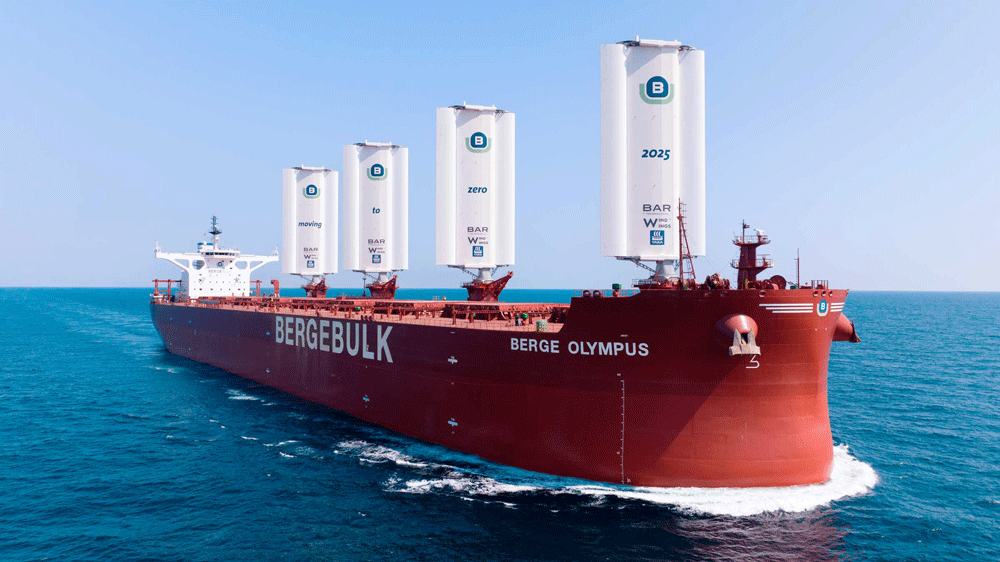
With more than a decade in the planning Odfjell’s fleet optimisation programme has culminated in the testing of Bound4Blue suction sails on its tanker Bow Olympus, but the company has said it intends to add wind propulsion to its fleet.

“We have done that [reduced emissions] without putting any stress on the renewable electricity infrastructure in the world, which we would have to do if we had gone through alternative fuels route,” explained Hjortland, who referenced last year’s Clarkson study that revealed some 63% of the world’s fleet has not installed any energy saving devices.

Jan Opedal, project manager at Odjfell Tankers, told the Wind Propulsion conference: “For medium-sized ship owners, it's much cheaper to retrofit sails on a five-year dry docking than try to get them on a new building contract.”

Asian yards, who build 80-90% of all new ships are not keen on fitting sail technology.

“If you want three vessels in a standard series, the price is just crazy because of the equipment price, plus they price in risk because they're afraid of delays,” he said. “It’s very costly if you're not controlling the design or have a really long series of vessels.”

Speaking on the same panel, Jesse Bryce, Union Maritime’s commercial performance manager said, initially the company found the cost of newbuildings with sail “quite high”.

“They were the first time the shipyards were installing wind, and there was a lot of uncertainty there, but with the manufacturers helping to explain that actually it's not a terrifying process, it's all quite predictable, quite routine,” that made each new project easier.

Union Maritime operates a fleet of 56 tankers, 11 bulkers and three offshore vessels, with a further 34 ships on order and has been adapting its fleet to wind power.

Bryce, told the conference the company had approached yards to build a series of seven vessels, taking a standard design and asking each yard how they could improve on it.

“It's been a mixed response,” said Bryce, “Some shipyards are very open to considering all sorts of things, and some we get what we're given, and that’s the end of it.”

According to Bryce, by building a series of seven ships it allows the operator to get all the steel work and installation completed and you can operate from day one with the fuel-saving sails.

Union Maritime used Blue Wasp Maritime consultancy which specialises in modelling the effects of wind propulsion on commercial ships, to develop the seven newbuildings, of 18,000dwt each, six have been delivered with another one to come.

These ships are fitted with Norsepower rotor sails, on what Bryce said were small vessels, and the Norsepower sails were compact, winning out in simulations, “The cost benefit worked out for us.”

The next batch of seven aframax newbuilds will be fitted with BAR Technologies WindWings, rigid sails.

“They are very large, very powerful devices, and we can fit a lot of power onto the LR2s,” said Bryce.

He added that things are always changing with technologies improving, new designs, materials and lower prices.

Regulators approving a global form of carbon pricing would also improve the savings, and payback time.

Though their engines are among the most efficient on the planet, ships waste 50-70% of their energy as heat, although waste heat recovery devices can save a small percentage of the energy loss.

Electrical systems, on the other hand, are far more efficient. Electric cars may have had their problems storing energy, but once they come to use it, 90% goes to the wheels; the same is true of heat pumps and electric stoves.

There may be scant prospect of building enough wind turbines and solar panels to replace all of the fossil fuels on Earth; but it will not be necessary to do so, because running all of the same processes on electrical energy would more than halve the energy required.

Shipping could be part of the solution. Along with their cargoes, COSCO Shipping’s Green Water 01 & 02, two riverine container vessels of 700TEU, load and offload containerised batteries to power their propulsion. Though each is fitted with a 50,000kWh battery pack, the 20ft containerised batteries, which contain 1,600kWh each, can be loaded to support longer voyages.

Meanwhile, Eitzen Electric has received a US$19 million grant from Norway’s Enova for the development of two similarly sized 850TEU feeder containerships, with some 100MWh of energy storage each, double that of Green Water 01 & 02. Preliminary renderings show a house-forward design similar to the COSCO vessels – but instead of river trade, the two vessels would operate on open sea, carrying cargoes between Norway, Sweden and Germany.

The project was granted funding from Enova, a research fund operated by the Norwegian Government, in June last year.

“The Eitzen Group sees great potential in the electrification of regional shipping,” said Fridtjof C. Eitzen, CEO of the Eitzen Group, at the time. “Battery prices have decreased by over 80% in the last decade and will continue to fall as demand increases worldwide. Like a train that cannot be stopped, the use of electric ships will force itself forward as the most cost-effective way to transport goods at sea over time."

Powering shortsea trade requires a lot less electricity than might be expected: recently, the Captain of Yara Birkeland told The Naval Architect that the vessel, with 6.7MWh of capacity, reliably has around a third of its energy left after a round-trip voyage between Herøya and Brevik.

In the five years since that vessel was delivered in 2021, batteries have improved by around 35% in energy-by-volume and energy-by-weight. At the higher end, at the Columbia University School of Engineering and Applied Science, researchers believe they have identified a new gel electrolyte, which could be a solution to the problem of dendrites holding back anode-free batteries. If it works, it could double the volumetric energy capacity of batteries.

But the business case could improve yet further if shipping implements a suggestion by researchers at the Mærsk Mc-Kinney Møller Centre for Zero Carbon Shipping, in a 2024 research paper. Instead of displacing cargoes, the size and weight of battery systems are used as an asset.

Located at the bottom of the vessel, heavier than cargoes, batteries could act as ballast. Unlike bunker fuel, the weight of batteries does not change as they discharge, meaning that there is no need to alter ballast to account for it. While there would still need to be some ballast water, therefore, it could lead to much less ballast being transported around in tanks.

The study expects a theoretical 1,100TEU battery-hybrid feeder vessel to be on par with a methanol-fuelled ship in terms of cost, with the increased capital costs of the former offsetting the operating costs of the latter.

“We could note that, for very heavy cargo and a stratified loading scenario (i.e., heavier containers at the bottom, lighter at the top), the amount of ballast water required is reduced and, at some point, the loss of cargo intake will approach the deadweight loss in the fully loaded condition,” the Centre determined.

A great deal of effort is going into reducing the size, weight and cost of batteries, which are already being containerised; meanwhile, large amounts of renewable electricity are being produced that is, in effect, unsellable. Perhaps it is not a huge stretch of the imagination that short sea vessels might someday carry around cargoes of electricity, rather than oil and gas.

Last October’s Extraordinary Session of the MEPC delayed the approval of the IMO’s Net Zero Framework largely on the basis that some member states regarded the regulation as too harsh on LNG.

Methane, a highly potent greenhouse gas, is the main component of LNG but its supporters point to a number of benefits, it cuts NOx by around 80%, SOx by 100%, burns cleaner than crude, cutting particulates and is readily available around the globe.

“LNG has come up in the discussions several times [at MEPC], and how it should be addressed in the framework,” admitted the secretary general of the IMO, Arsenio Dominguez in discussion with RINA.

Dominguez believes that the technology, investment and progress made with LNG as a transitional fuel should be acknowledged.

Peter Keller, Chairman of SEA-LNG, which promotes the use of gas, believes the “regulatory drama” at IMO exposes the complexity of decarbonisation which he says makes the need for a single global GHG framework greater than ever.

Most owners and operators in the industry would agree that a global patchwork of regulations would be costly and unworkable.

But Keller argues: “This framework must be goal-based and technology-neutral. It must allow some flexibility so companies can plan their fleet modernisation. We need a framework which is practical and realistic, incentivising solutions that are scalable and investable.”

LNG, however, is also meant to cut carbon emissions by around 20%, though that will depend on the type of engine installed. Broadly speaking low-pressure LNG units can produce more GHG than high-pressure engines and conventional diesel power.

Methane slip, where not all the gas is burnt in the cylinder and is then emitted into the atmosphere via the exhaust, is a challenge that is improving, according to many industry figures, including the secretary general of the IMO, Arsenio Dominguez.

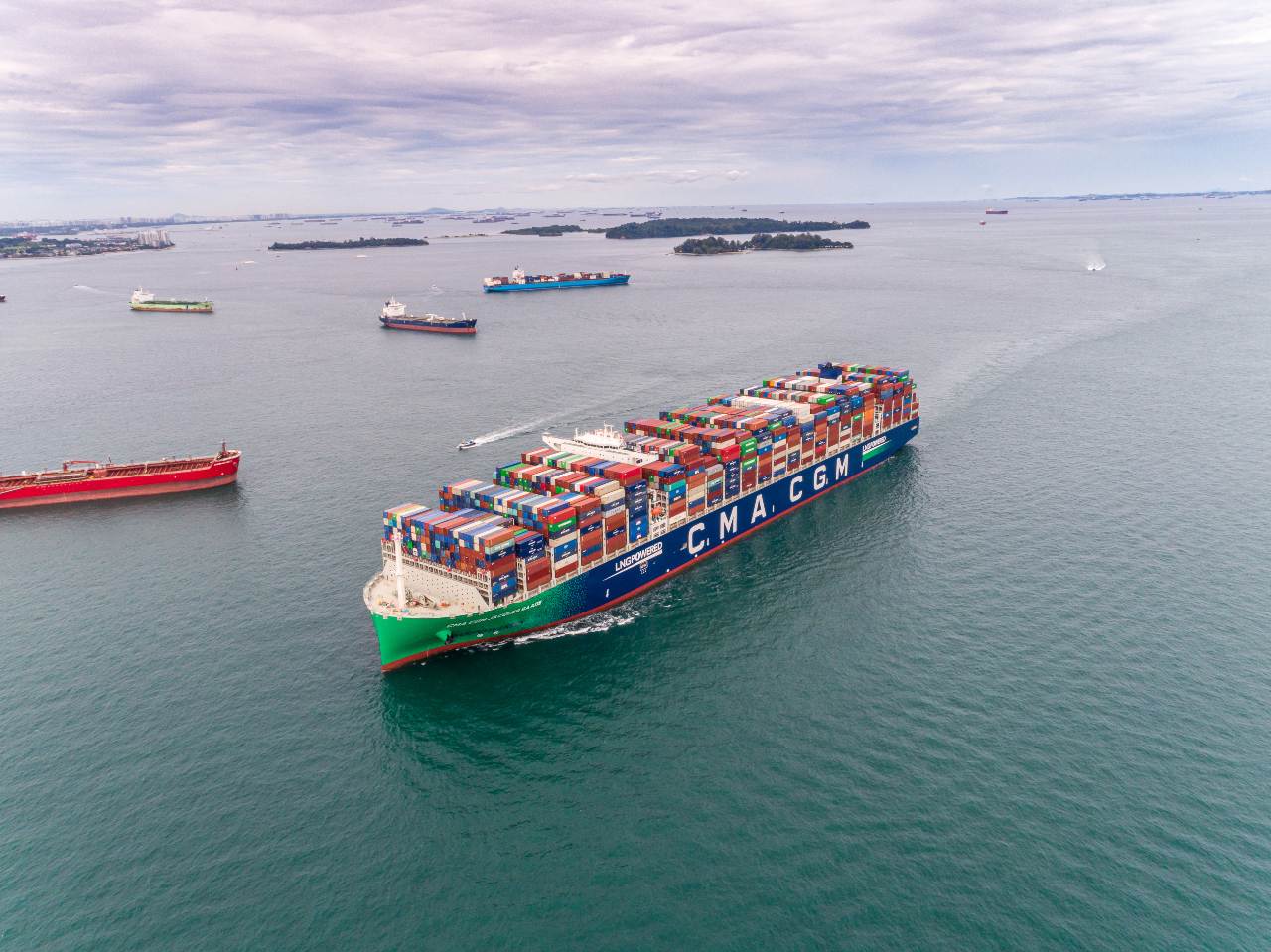
Complex technology, requiring heavy investment in bunkering ports, bunker barges, with owners paying a 10% premium for newbuildings, is more than complex, it is a costly transition. Effectively about an extra US$20 million on a large container ship.

High-cost transitions can be mitigated according to one Norwegian chemical tanker owner that operates a fleet of 70 units, of various ages. The company has undergone a fleet-wide GHG cutting programme that has taken more than a decade in total, but will ultimately see its fleet cut emissions by around 58%.

Erik Hjortland, vice-president of technology at Odfjell Ship Management, said the company had cut its emissions by simply utilising existing technologies to improve efficiency without resorting to low-carbon fuels.

The tanker company has installed energy saving devices such as Mewis Ducts, propeller boss caps shaft generators and weather routing technology. And last year installed four Bound4Blue suction sails, to test the technology on the Bow Olympus, a 48,500dwt tanker, cutting emissions further. The intention is to eventually fit suction sails to its entire fleet.

Odfjell has fitted 140 energy saving devices to its fleet, each with a return on investment of two years and under, “But most of them have an ROI of between four and six months”, according to Odfjell.

Moreover, the company has designed a digital system for noon reports, which collates information from across the fleet, and can spot inefficient operations that are shared with all the company’s crews. Coupled with weather routing the efficiency gains of the vessel designs are given an operational boost too.

In total the company spent US$40 million on efficiency, and because some of the more modern tonnage overperforms on GHG intensity measures, the less efficient vessels can be offset for emission charges such as FuelEU and the EU ETS, through a system of ‘pooling’.

Hjortland explained the company’s vision has allowed it to prolong the working life of its fleet well into the 2030s, pointing out, that the company achieved its targets without investing in expensive alternative fuels.

Citing a Clarkson study from last year, Hjortland said some 63% of the world’s fleet has not installed any energy saving devices.

“Imagine the potential, what we as a sector could have accomplished if everybody had made these changes,” he said.

He went on to say that many in the industry are talking about LNG, ammonia, methanol and hydrogen, “These are huge projects… multi-billion-dollar investments,” some of which will be needed in the future to reach net zero.

However, the business case for cutting a company’s fuel bill in half by efficiency measures is something that all companies can do today.

Frequently Asked Questions

Lorem ipsum dolor sit amet, consectetur adipiscing elit, sed do eiusmod tempor incididunt ut labore et dolore magna aliqua. Ut enim ad minim veniam, quis nostrud exercitation ullamco laboris nisi ut aliquip ex ea commodo consequat.

Tab1

Lorem ipsum dolor sit amet, consectetur adipiscing elit, sed do eiusmod tempor incididunt ut labore et dolore magna aliqua. Ut enim ad minim veniam, quis nostrud exercitation ullamco laboris nisi ut aliquip ex ea commodo consequat. Duis aute irure dolor in reprehenderit in voluptate velit esse cillum dolore eu fugiat nulla pariatur. Excepteur sint occaecat cupidatat non proident, sunt in culpa qui officia deserunt mollit anim id est laborum.

Tab2

Lorem ipsum dolor sit amet, consectetur adipiscing elit, sed do eiusmod tempor incididunt ut labore et dolore magna aliqua. Ut enim ad minim veniam, quis nostrud exercitation ullamco laboris nisi ut aliquip ex ea commodo consequat. Duis aute irure dolor in reprehenderit in voluptate velit esse cillum dolore eu fugiat nulla pariatur. Excepteur sint occaecat cupidatat non proident, sunt in culpa qui officia deserunt mollit anim id est laborum.

Frequently Asked Questions

Lorem ipsum dolor sit amet, consectetur adipiscing elit, sed do eiusmod tempor incididunt ut labore et dolore magna aliqua. Ut enim ad minim veniam, quis nostrud exercitation ullamco laboris nisi ut aliquip ex ea commodo consequat.

Tab1

Lorem ipsum dolor sit amet, consectetur adipiscing elit, sed do eiusmod tempor incididunt ut labore et dolore magna aliqua. Ut enim ad minim veniam, quis nostrud exercitation ullamco laboris nisi ut aliquip ex ea commodo consequat. Duis aute irure dolor in reprehenderit in voluptate velit esse cillum dolore eu fugiat nulla pariatur. Excepteur sint occaecat cupidatat non proident, sunt in culpa qui officia deserunt mollit anim id est laborum.

Tab2

Lorem ipsum dolor sit amet, consectetur adipiscing elit, sed do eiusmod tempor incididunt ut labore et dolore magna aliqua. Ut enim ad minim veniam, quis nostrud exercitation ullamco laboris nisi ut aliquip ex ea commodo consequat. Duis aute irure dolor in reprehenderit in voluptate velit esse cillum dolore eu fugiat nulla pariatur. Excepteur sint occaecat cupidatat non proident, sunt in culpa qui officia deserunt mollit anim id est laborum.

Tab3

Lorem ipsum dolor sit amet, consectetur adipiscing elit, sed do eiusmod tempor incididunt ut labore et dolore magna aliqua. Ut enim ad minim veniam, quis nostrud exercitation ullamco laboris nisi ut aliquip ex ea commodo consequat. Duis aute irure dolor in reprehenderit in voluptate velit esse cillum dolore eu fugiat nulla pariatur. Excepteur sint occaecat cupidatat non proident, sunt in culpa qui officia deserunt mollit anim id est laborum.

Tab4

Lorem ipsum dolor sit amet, consectetur adipiscing elit, sed do eiusmod tempor incididunt ut labore et dolore magna aliqua. Ut enim ad minim veniam, quis nostrud exercitation ullamco laboris nisi ut aliquip ex ea commodo consequat. Duis aute irure dolor in reprehenderit in voluptate velit esse cillum dolore eu fugiat nulla pariatur. Excepteur sint occaecat cupidatat non proident, sunt in culpa qui officia deserunt mollit anim id est laborum.

text one

Lorem ipsum dolor sit amet, consectetur adipiscing elit, sed do eiusmod tempor incididunt ut labore et dolore magna aliqua. Ut enim ad minim veniam, quis nostrud exercitation ullamco laboris nisi ut aliquip ex ea commodo consequat. Duis aute irure dolor in reprehenderit in voluptate velit esse cillum dolore eu fugiat nulla pariatur. Excepteur sint occaecat cupidatat non proident, sunt in culpa qui officia deserunt mollit anim id est laborum.

Wind power's struggles to get airborne

Full shipyards do not like complications. As slots are filled into 2029, yards are becoming increasingly reluctant to build vessels that do not meet a standard design.

Vessel operators at RINA’s fifth Wind Propulsion Conference, held in London in February, told how they had worked to convince yards to add wind power to vessels, whether it was newbuildings or retrofits.

Wind installations on ships should be the most straight forward of retrofits, particularly on liquid or dry bulk ships which have open decks with cargo stored underneath.

Bulk ship operators typically operate at lower speeds and not always on the same routes, and are less inclined to shift to alternative fuels, which can be difficult to source, costly to buy, and will require extensive modernisation of ships or new vessels altogether.

One company, which operates a fleet of chemical tankers, has developed a methodology that will allow the company to meet net zero emissions up to 2040 with its existing 70 vessels of varying ages.

Erik Hjortland, vice-president of technology at Odfjell Ship Management, said the company had cut the emissions from its fleet simply by utilising existing technologies to improve efficiency without converting to low-carbon fuels.

By using simple and comparatively low-cost operational and technological changes to its fleet the Norwegian company’s fuel costs have been cut by an independently corroborated 53%.

With more than a decade in the planning Odfjell’s fleet optimisation programme has culminated in the testing of Bound4Blue suction sails on its tanker Bow Olympus, but the company has said it intends to add wind propulsion to its fleet.

“We have done that [reduced emissions] without putting any stress on the renewable electricity infrastructure in the world, which we would have to do if we had gone through alternative fuels route,” explained Hjortland, who referenced last year’s Clarkson study that revealed some 63% of the world’s fleet has not installed any energy saving devices.

Jan Opedal, project manager at Odjfell Tankers, told the Wind Propulsion conference: “For medium-sized ship owners, it's much cheaper to retrofit sails on a five-year dry docking than try to get them on a new building contract.”

Asian yards, who build 80-90% of all new ships are not keen on fitting sail technology.

“If you want three vessels in a standard series, the price is just crazy because of the equipment price, plus they price in risk because they're afraid of delays,” he said. “It’s very costly if you're not controlling the design or have a really long series of vessels.”

Speaking on the same panel, Jesse Bryce, Union Maritime’s commercial performance manager said, initially the company found the cost of newbuildings with sail “quite high”.

“They were the first time the shipyards were installing wind, and there was a lot of uncertainty there, but with the manufacturers helping to explain that actually it's not a terrifying process, it's all quite predictable, quite routine,” that made each new project easier.

Union Maritime operates a fleet of 56 tankers, 11 bulkers and three offshore vessels, with a further 34 ships on order and has been adapting its fleet to wind power.

Bryce, told the conference the company had approached yards to build a series of seven vessels, taking a standard design and asking each yard how they could improve on it.

“It's been a mixed response,” said Bryce, “Some shipyards are very open to considering all sorts of things, and some we get what we're given, and that’s the end of it.”

According to Bryce, by building a series of seven ships it allows the operator to get all the steel work and installation completed and you can operate from day one with the fuel-saving sails.

Union Maritime used Blue Wasp Maritime consultancy which specialises in modelling the effects of wind propulsion on commercial ships, to develop the seven newbuildings, of 18,000dwt each, six have been delivered with another one to come.

These ships are fitted with Norsepower rotor sails, on what Bryce said were small vessels, and the Norsepower sails were compact, winning out in simulations, “The cost benefit worked out for us.”

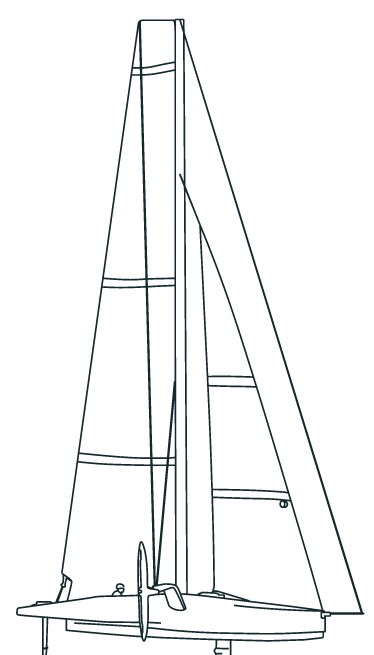
The next batch of seven aframax newbuilds will be fitted with BAR Technologies WindWings, rigid sails.

“They are very large, very powerful devices, and we can fit a lot of power onto the LR2s,” said Bryce.

He added that things are always changing with technologies improving, new designs, materials and lower prices.

Regulators approving a global form of carbon pricing would also improve the savings, and payback time.
The acceleration of electrification

Though their engines are among the most efficient on the planet, ships waste 50-70% of their energy as heat, although waste heat recovery devices can save a small percentage of the energy loss.

Electrical systems, on the other hand, are far more efficient. Electric cars may have had their problems storing energy, but once they come to use it, 90% goes to the wheels; the same is true of heat pumps and electric stoves.

There may be scant prospect of building enough wind turbines and solar panels to replace all of the fossil fuels on Earth; but it will not be necessary to do so, because running all of the same processes on electrical energy would more than halve the energy required.

Shipping could be part of the solution. Along with their cargoes, COSCO Shipping’s Green Water 01 & 02, two riverine container vessels of 700TEU, load and offload containerised batteries to power their propulsion. Though each is fitted with a 50,000kWh battery pack, the 20ft containerised batteries, which contain 1,600kWh each, can be loaded to support longer voyages.

Meanwhile, Eitzen Electric has received a US$19 million grant from Norway’s Enova for the development of two similarly sized 850TEU feeder containerships, with some 100MWh of energy storage each, double that of Green Water 01 & 02. Preliminary renderings show a house-forward design similar to the COSCO vessels – but instead of river trade, the two vessels would operate on open sea, carrying cargoes between Norway, Sweden and Germany.

The project was granted funding from Enova, a research fund operated by the Norwegian Government, in June last year.

“The Eitzen Group sees great potential in the electrification of regional shipping,” said Fridtjof C. Eitzen, CEO of the Eitzen Group, at the time. “Battery prices have decreased by over 80% in the last decade and will continue to fall as demand increases worldwide. Like a train that cannot be stopped, the use of electric ships will force itself forward as the most cost-effective way to transport goods at sea over time."

Powering shortsea trade requires a lot less electricity than might be expected: recently, the Captain of Yara Birkeland told The Naval Architect that the vessel, with 6.7MWh of capacity, reliably has around a third of its energy left after a round-trip voyage between Herøya and Brevik.

In the five years since that vessel was delivered in 2021, batteries have improved by around 35% in energy-by-volume and energy-by-weight. At the higher end, at the Columbia University School of Engineering and Applied Science, researchers believe they have identified a new gel electrolyte, which could be a solution to the problem of dendrites holding back anode-free batteries. If it works, it could double the volumetric energy capacity of batteries.

But the business case could improve yet further if shipping implements a suggestion by researchers at the Mærsk Mc-Kinney Møller Centre for Zero Carbon Shipping, in a 2024 research paper. Instead of displacing cargoes, the size and weight of battery systems are used as an asset.

Located at the bottom of the vessel, heavier than cargoes, batteries could act as ballast. Unlike bunker fuel, the weight of batteries does not change as they discharge, meaning that there is no need to alter ballast to account for it. While there would still need to be some ballast water, therefore, it could lead to much less ballast being transported around in tanks.

The study expects a theoretical 1,100TEU battery-hybrid feeder vessel to be on par with a methanol-fuelled ship in terms of cost, with the increased capital costs of the former offsetting the operating costs of the latter.

“We could note that, for very heavy cargo and a stratified loading scenario (i.e., heavier containers at the bottom, lighter at the top), the amount of ballast water required is reduced and, at some point, the loss of cargo intake will approach the deadweight loss in the fully loaded condition,” the Centre determined.

A great deal of effort is going into reducing the size, weight and cost of batteries, which are already being containerised; meanwhile, large amounts of renewable electricity are being produced that is, in effect, unsellable. Perhaps it is not a huge stretch of the imagination that short sea vessels might someday carry around cargoes of electricity, rather than oil and gas.

LNG, a transitional fuel or GHG?

Last October’s Extraordinary Session of the MEPC delayed the approval of the IMO’s Net Zero Framework largely on the basis that some member states regarded the regulation as too harsh on LNG.

Methane, a highly potent greenhouse gas, is the main component of LNG but its supporters point to a number of benefits, it cuts NOx by around 80%, SOx by 100%, burns cleaner than crude, cutting particulates and is readily available around the globe.

“LNG has come up in the discussions several times [at MEPC], and how it should be addressed in the framework,” admitted the secretary general of the IMO, Arsenio Dominguez in discussion with RINA.

Dominguez believes that the technology, investment and progress made with LNG as a transitional fuel should be acknowledged.

Peter Keller, Chairman of SEA-LNG, which promotes the use of gas, believes the “regulatory drama” at IMO exposes the complexity of decarbonisation which he says makes the need for a single global GHG framework greater than ever.

Most owners and operators in the industry would agree that a global patchwork of regulations would be costly and unworkable.

But Keller argues: “This framework must be goal-based and technology-neutral. It must allow some flexibility so companies can plan their fleet modernisation. We need a framework which is practical and realistic, incentivising solutions that are scalable and investable.”

LNG, however, is also meant to cut carbon emissions by around 20%, though that will depend on the type of engine installed. Broadly speaking low-pressure LNG units can produce more GHG than high-pressure engines and conventional diesel power.

Methane slip, where not all the gas is burnt in the cylinder and is then emitted into the atmosphere via the exhaust, is a challenge that is improving, according to many industry figures, including the secretary general of the IMO, Arsenio Dominguez.

Complex technology, requiring heavy investment in bunkering ports, bunker barges, with owners paying a 10% premium for newbuildings, is more than complex, it is a costly transition. Effectively about an extra US$20 million on a large container ship.

High-cost transitions can be mitigated according to one Norwegian chemical tanker owner that operates a fleet of 70 units, of various ages. The company has undergone a fleet-wide GHG cutting programme that has taken more than a decade in total, but will ultimately see its fleet cut emissions by around 58%.

Erik Hjortland, vice-president of technology at Odfjell Ship Management, said the company had cut its emissions by simply utilising existing technologies to improve efficiency without resorting to low-carbon fuels.

The tanker company has installed energy saving devices such as Mewis Ducts, propeller boss caps shaft generators and weather routing technology. And last year installed four Bound4Blue suction sails, to test the technology on the Bow Olympus, a 48,500dwt tanker, cutting emissions further. The intention is to eventually fit suction sails to its entire fleet.

Odfjell has fitted 140 energy saving devices to its fleet, each with a return on investment of two years and under, “But most of them have an ROI of between four and six months”, according to Odfjell.

Moreover, the company has designed a digital system for noon reports, which collates information from across the fleet, and can spot inefficient operations that are shared with all the company’s crews. Coupled with weather routing the efficiency gains of the vessel designs are given an operational boost too.

In total the company spent US$40 million on efficiency, and because some of the more modern tonnage overperforms on GHG intensity measures, the less efficient vessels can be offset for emission charges such as FuelEU and the EU ETS, through a system of ‘pooling’.

Hjortland explained the company’s vision has allowed it to prolong the working life of its fleet well into the 2030s, pointing out, that the company achieved its targets without investing in expensive alternative fuels.

Citing a Clarkson study from last year, Hjortland said some 63% of the world’s fleet has not installed any energy saving devices.

“Imagine the potential, what we as a sector could have accomplished if everybody had made these changes,” he said.

He went on to say that many in the industry are talking about LNG, ammonia, methanol and hydrogen, “These are huge projects… multi-billion-dollar investments,” some of which will be needed in the future to reach net zero.

However, the business case for cutting a company’s fuel bill in half by efficiency measures is something that all companies can do today.

Awards 2026


Nominate a colleague, a mentee or a friend for one of our prestiguous Naval Architecture Awards. Chosen by our Committees, the winners will be announced at our Annual Dinner attended by more than 300 maritime professionals, industry leaders and academics. Taking place on 28th May, this will be an evening of celebration at the historic De Vere Grand Connaught Rooms in London. 

Nominations deadline: on 31st December. Award categories include Innovation, Safety and Diversity.

Nominate Now