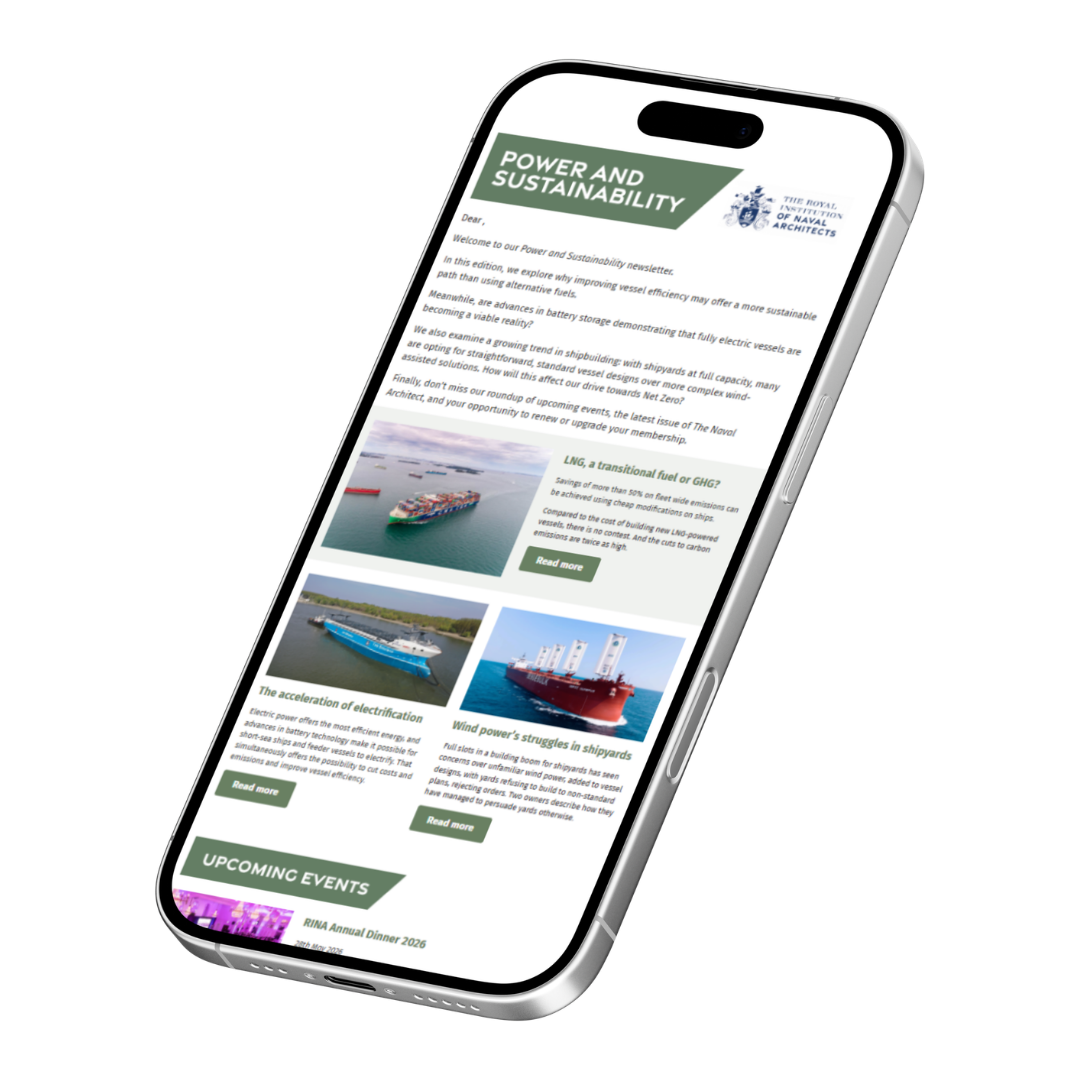
The Naval Architect provides in-depth information on all aspects of vessel design, construction and engineering. Practical applications of latest technology and case studies are accompanied by analysis and foresights. Published every two months, the magazine covers everything from superyachts and short-hop ferries to tankers and heavy-lift vessels; from battery pack installations and sail-assisted solutions to LNG tank retrofits; and from offshore safety to warship resilience.
INTERNATIONAL DEVELOPMENT AND VALIDATION OF A DISTRIBUTED SIMULATION FOR NAVAL SHIP REPLENISHMENT AT SEA
Transactions
How can allied navies accurately model one of maritime operations’ most demanding tasks? A multinational team built and validated a distributed HLA-based simulation capturing seaway conditions, ship interactions and payload transfer dynamics. Proven against experimental data, the platform delivers valuable insights for system integration, operational planning and future naval capability development.
STATIC CONTROL OF DRAG-REDUCING AIR CAVITIES WITH VARIABLE CAVITATOR SHAPE
Transactions
Air-cavity drag reduction is moving closer to practical deployment through research linking cavity performance to controllable hydrodynamic actuators and wedge-shaped cavitators. Using potential-flow modelling, new insights into optimal operating conditions reveal how flow speed and hull trim influence efficiency gains, supporting more energy-efficient ship designs.
THE RE-DESIGN OF A MARINE ENGINE ROOM SIMULATOR IN CONSIDERATION TO ERGONOMICS DESIGN PRINCIPLES
Transactions
How can simulator design influence engineering competence? By applying ergonomic principles to a full-mission engine room simulator, a redesigned mimic panel improved realism, usability and training effectiveness. The experience highlights how human-centred design can enhance operational learning environments and strengthen the quality of marine engineering education and professional preparedness.
Newsletters
Stay connected with the global maritime community through RINA’s newsletters.
Whether you are a member or not, you can receive updates from The Naval Architect, alongside selected RINA news, events and industry insights. Members also gain access to a wider portfolio of exclusive newsletters on key topics in the maritime industry.