

Offshore Technology
Offshore Technology explores the systems, engineering practices, innovations and challenges, driving offshore operations across energy and marine sectors. Topics you can expect include subsea engineering, floating production systems, offshore wind technologies, digital monitoring and control systems, and asset integrity management.
Delve into analysis, and insights on emerging technologies improving safety, efficiency, and performance in increasingly harsher offshore environments in the journey to cleaner sustainable energy sources.
EVERY FRIGATE A SQUADRON: STUDIES OF LARGE UNCREWED SURFACE VESSELS
Warship
Medium and Large Uncrewed Surface Vessels are emerging as versatile force multipliers for future naval operations. By adapting commercial vessel designs and applying mission-focused sizing methods, new concepts demonstrate how mixed crewed-uncrewed fleets could expand capability, accelerate deployment and deliver flexible, cost-effective support across a broad range of maritime tasks.
ON THE BENEFIT OF ADJUSTABLE STERN ENERGY SAVING DEVICES FOR FAST WARSHIPS
Warship
Stern energy-saving devices could significantly improve warship efficiency without compromising high-speed performance. Using high-fidelity computational fluid dynamics and virtual towing tank analysis, researchers compare fixed and adjustable stern-mounted technologies, identifying solutions that deliver the greatest energy savings across operational profiles while supporting future demands for sustainability and naval capability.
PROBABILISTIC SAFETY OF ESTUARY VESSELS BASED ON NONLINEAR ROLLING IN WIND AND WAVES
Transactions
Risk-based approaches to ship stability assessment are gaining momentum as regulators and designers seek more realistic methods of evaluating safety in challenging operating environments. Improved understanding of the combined effects of wind, waves, and nonlinear vessel motions is supporting the development of more robust stability criteria, helping to strengthen safety assessment frameworks for estuary vessels and beyond.
THE NEXT VERSION OF CII - WHAT MIGHT IT LOOK LIKE?
CII
The Carbon Intensity Indicator is entering a critical phase of review as industry experience reveals anomalies that may affect fairness, effectiveness and operational decision-making. With regulatory refinements under active consideration, emerging proposals could reshape how maritime emissions performance is measured, creating important implications for compliance, fleet efficiency and decarbonisation strategies.
THE GREENHOUSE GAS EMISSIONS OF WARSHIPS
Warship
Warships face a unique decarbonisation challenge that cannot be measured using commercial shipping models alone. By examining whole-life emissions across design, construction and operations, emerging research reveals new opportunities to reduce environmental impact, helping naval programmes balance sustainability goals with mission effectiveness, capability requirements and complex supply chains.
RECOVERABILITY OF ALTERNATIVE FUELS
Warship
Alternative fuels are set to transform maritime operations, but recoverability remains a critical challenge. Examining ammonia, methanol and hydrogen, this research evaluates fire, toxicity and damage-response risks arising from accidents or hostile action. The findings outline practical mitigation strategies to help future navies safely integrate low-carbon fuels while preserving resilience.
FUTURE BATTERY PROTECTION STRATEGIES FOR NAVAL VESSELS
Warship
Immersion cooling could offer a significant advancement in maritime energy storage safety, helping prevent thermal runaway from escalating across lithium-ion battery systems. Drawing on lessons from automotive and data centre applications, this research explores integration challenges, battery chemistry considerations and decentralised architectures, revealing new pathways to safer naval electrification.
INTEGRATING SHIELD AND SOAM FOR SYSTEMIC HUMAN FACTORS ANALYSIS IN MARITIME COLLISIONS: THE HELGE INGSTAD CASE
Warship
Human factors remain a leading contributor to maritime incidents, demanding more effective methods to understand complex failures. By combining SHIELD-HFACS, influence weighting and causal mapping through SOAM, a new framework exposes how organisational, supervisory and operational weaknesses interact, enabling deeper safety insights and supporting more targeted, evidence-based risk reduction strategies.
BEYOND CARBON INTENSITY: ENHANCING GHG REDUCTIONS THROUGH EFFECTIVE ENERGY EFFICIECNY METRIC AND REGULATORY ALIGNMENT
CII
The effectiveness of maritime emissions regulation is increasingly under scrutiny. Analysis of Carbon Intensity Indicator performance reveals opportunities for energy-based alternatives, including propulsion-focused efficiency metrics and clearer emissions accounting. The findings highlight potential regulatory overlap, offering strategic insights into how future frameworks could better accelerate greenhouse gas reductions ahead globally.
The X Factor
Ship & Boat International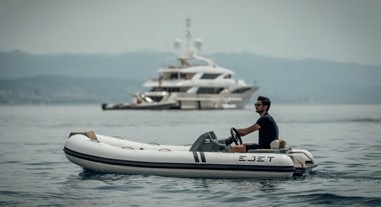
Years of extensive testing are paying off for Slovenia’s EJET, which is soon to expand its all-electric jet tender business with a larger, more powerful model
MARITIME AUTONOMY - A VISION OR REALITY
Warship
Autonomous maritime systems may reduce risk to personnel, but claims of improved safety require stronger evidence. By applying inherent safety, fault tolerance and layered protection principles within dynamic safety cases, evolving approaches are reshaping system design, governance and assurance while addressing complex legal, operational and stakeholder challenges in autonomy.
A GLOBAL VIEW OF THE IMPLICATIONS OF WAVE CLIMATE EXTREMES ON SUSTAINABLE SHIP DESIGN AND OPERABILITY: A REVIEW
Warship
Climate change is challenging long-held assumptions in vessel design and operability. Emerging evidence on extreme waves, cyclones and shifting ocean conditions highlights growing risks to stability, structural integrity and efficiency. By aligning future climate projections with design criteria, new recommendations aim to strengthen resilience, safety and operational performance.
Newsletters
Stay connected with the global maritime community through RINA’s newsletters.
Whether you are a member or not, you can receive updates from The Naval Architect, alongside selected RINA news, events and industry insights. Members also gain access to a wider portfolio of exclusive newsletters on key topics in the maritime industry.
- The Naval Architect (currently available to all members & non-members)
- Power & Sustainability (members-only)
- Ship Repair & Maintenance (members-only)
- Warship Technology (members-only)
- Ferries & Fast Craft (members-only)
- Offshore Technology (members-only)
