

Designed for Autonomy
The Royal Navy, like many Western fleets, faces a structural problem that has been building for decades. Warship numbers have declined as unit costs have risen, creating a force structure built around a small number of highly capable but scarce platforms. Fewer hulls mean reduced presence, less resilience to losses and limited ability to surge in a crisis. Meanwhile, personnel recruitment and retention are under growing strain, and the shipbuilding capacity of potential adversaries dwarfs that of the West.
The UK’s 2025 Strategic Defence Review confronted this reality, setting out a vision for a ‘hybrid navy’ in which crewed platforms are complemented – and in some roles replaced – by uncrewed and autonomous systems operating at scale. First Sea Lord General Sir Gwyn Jenkins has since framed this transition as existential, warning that a force that waits for autonomous technology to fully mature before integrating it risks being outpaced by adversaries.
BMT believes the answer lies not in building more of the same, but in rethinking the vessel entirely. Project MODUS, presented at UDT 2026, sets out a family of modular uncrewed surface vessels conceived from first principles around autonomous operation. The work, led by maritime autonomous systems engineering lead Chloe Yarrien and head of innovation and research Jake Rigby, draws on more than five years of BMT research and development, including programmes into lean-crewed platforms and large uncrewed surface vessel concepts.
A family of platforms
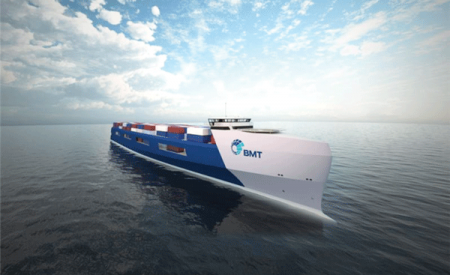
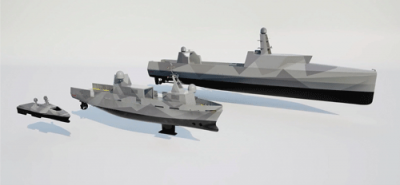
MODUS is not a single vessel but a coherent design philosophy expressed across multiple hull sizes, from a 15m pentamaran to a 40m medium uncrewed surface vessel and a 75m large uncrewed surface vessel. Rather than pursuing a multi-role design that attempts to do everything at the cost of doing nothing well, MODUS embraces role-optimised platforms, tailored to specific operational needs.
Here we focus on three underwater warfare use cases: military data gathering, seabed warfare and anti-submarine warfare. Six core design principles run through every variant: autonomy, modularity, availability, buildability, adaptability and affordability. The first and last are perhaps the most consequential.
 |
|---|
Autonomy is a primary design driver, not a retrofit. Every decision about hull form, internal arrangement, systems architecture and maintenance philosophy flows from the requirement to operate without crew. Affordability, meanwhile, is framed as a strategic imperative. Uncrewed vessels that simply replicate the cost of crewed ships will not solve the combat mass problem; they will compound it.
Designed around the mission
The three underwater vignettes drive specific and practical design choices. Long endurance, a common requirement across all three, shapes the hull form directly. Narrow-beam, low-resistance hull forms are matched to their intended operational profiles. With no crew onboard, internal volume freed from habitability can be reallocated to fuel, though weight rather than space becomes the limiting constraint. Critically, endurance for an autonomous vessel is defined largely by maintenance intervals, and MODUS targets operational periods of up to 60 days through simplified propulsion, appropriate redundancy, and equipment designed to be removed and serviced on the quayside rather than onboard.
Flexible multi-domain surveillance, relevant to the data-gathering and seabed warfare roles, is enabled through a dedicated sonar gondola integrated into the medium vessel. The gondola is optimised for sensor performance and doubles as a stabilising keel. Controlling self-noise is identified as fundamental to underwater performance, and low underwater radiated noise need not drive excessive cost if acoustic performance is addressed early in the design process, rather than managed as an expensive retrofit.
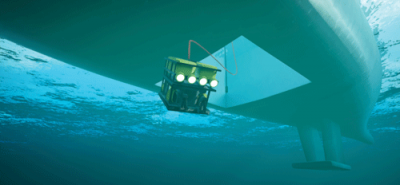
For the larger vessel, Navy Persistent Operational Deployment Systems (PODS) integration extends multi-domain flexibility further. True PODS integration is more than simply providing deck space for containers. It requires designed-in access, deployment envelopes, and mechanical, electrical and data interfaces so that mission systems become integral elements of the ship architecture. Offboard systems, including inspection ROVs deployed via a moonpool, towed arrays, survey UUVs, sonobuoys and gliders, extend the sensor field without increasing crew demand.
The large uncrewed surface vessel variant, intended for year-round North Atlantic operations in support of anti-submarine warfare, is around 75m following seakeeping analysis supported by historic towing tank data.
Steel is cheap and air is free, and the operational benefit of improved seakeeping in the North Atlantic far outweighs the marginal increase in material cost. BMT proposes a stepping-stone delivery model, beginning with medium vessel deployments in UK waters on lower-risk tasks, building operational confidence before scaling to larger vessels in more demanding theatres.
Commercial uses
The MODUS family has clear dual-use potential, with the modular autonomous design applicable to offshore survey, infrastructure inspection and logistics, offering a route to drive down unit cost through wider commercial adoption.
The fundamental argument of MODUS is straightforward: autonomous vessels must not be seen as direct replacements for crewed ships. They must deliver genuinely different capability, at lower through-life cost, and at the scale needed to restore meaningful combat mass to the fleet.
Author profiles
Chloe Yarrien, maritime autonomous systems engineering lead, BMT; Jake Rigby FRINA, head of innovation and research, BMT
 |
 |
|---|---|
 |
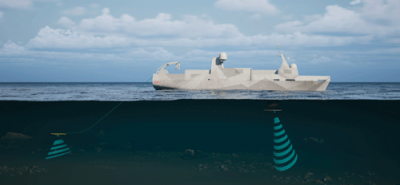 |
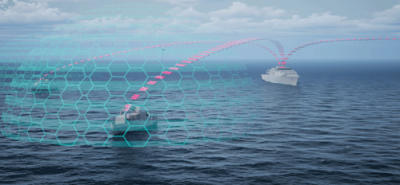
| From top, left to right: Visualisation of 15m, 40m and 75m MODUS vessels; The 40m design incorporates a moonpool; Multiple MODUS units operating in formation illustrate scalable fleet deployment; MODUS design principles embrace modularity (image: BMT) | |
This article appeared in Technical, TNA May/June 2026.
| Article Tags | |
| Article Tags | AutonomyUncrewedWarships |
| General | |
| Preview Text | The Royal Navy, like many Western fleets, faces a structural problem that has been building for decades. Warship numbers have declined as unit costs have risen, creating a force structure built around a small number of highly capable but scarce platforms. Fewer hulls mean reduced presence, less resilience to losses and limited ability to surge in a crisis. Meanwhile, personnel recruitment and retention are under growing strain, and the shipbuilding capacity of potential adversaries dwarfs that of the West.
The UK’s 2025 Strategic Defence Review confronted this reality, setting out a vision for a ‘hybrid navy’ in which crewed platforms are complemented – and in some roles replaced – by uncrewed and autonomous systems operating at scale. First Sea Lord General Sir Gwyn Jenkins has since framed this transition as existential, warning that |
| Naval Architect Edition | |
| Naval Architect Edition | 2026 |