

Why anchoring system layout deserves greater design attention
The anchoring and mooring equipment sector has developed a troubling tendency in recent years, according to Muir, a company based in Hobart, Australia. More and more equipment suppliers are adopting what the company describes as a “hands-off” approach to system integration and layout: hardware is specified, priced and delivered, but meaningful guidance on how it should be installed and arranged within the vessel is absent. For a naval architect or design engineer already managing competing pressures across a complex project, that gap in support can have real consequences, it says.
The firm says the issue is compounded by the direction contemporary vessel design is taking. Whether in the superyacht sector, commercial shipping or defence procurement, designers are under constant pressure to save space and reduce topside weight, while simultaneously minimising the exposure of crew and operators to mechanical hazards. These are entirely legitimate design objectives, but they are reshaping the environments into which anchoring systems must fit, often without adequate consideration of the implications for the systems themselves.
The shrinking foredeck
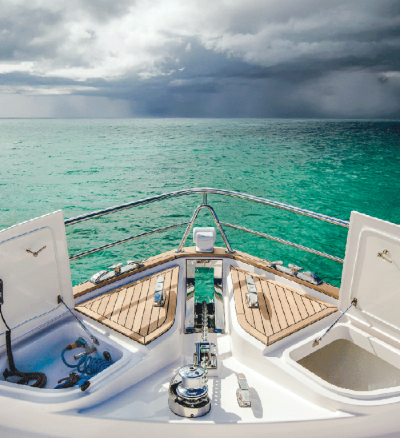
The superyacht sector offers perhaps the starkest illustration, says Max Buckley, general manager at Muir. The trend towards enclosed or semi-enclosed mooring decks, designed to present a cleaner aesthetic and reduce operator exposure to deck hazards, has dramatically reduced the working area available for anchoring equipment. Muir estimates that mooring island footprints on some modern yachts have contracted by as much as 50% compared with earlier generations of vessels of similar size.
What was once a relatively open deck area, the company says, where a windlass could be positioned with generous clearance and access for installation and maintenance, has become a tightly choreographed space in which every component must earn its place. Chain stoppers and rollers must now sit far closer to windlasses than was historically standard. Hawse pipes and spurling pipes, the conduits that guide chain from the deck to the chain locker below, must navigate far more aggressive angles to connect all the equipment within the constrained footprint. The tolerances that experienced riggers once relied upon have, in many cases, been engineered away.
Commercial and defence projects present a parallel set of challenges, says Muir, though driven by different forces. Safety regulations and risk assessment requirements are increasingly dictating where operators can stand in relation to moving chain and rotating equipment. Chain stopper handwheels and windlass brake controls must now be positioned at specified distances and angles from the equipment itself. These requirements are sensible in isolation, but when they are layered onto a layout that was designed without them in mind, the entire anchor island may need to be rearranged, with consequent knock-on effects for chain run angles, equipment heights and deck penetrations.
 |
|---|
The cost of poor layout
The consequences of inadequate attention to anchoring system layout are not merely theoretical. Muir’s field experience points to a recurring set of problems that emerge during commissioning, sea trials and early operation, issues that are invariably more expensive and disruptive to fix at that stage than they would have been to prevent on the drawing board.
⦁ Chain whip during deployment, caused by misalignment between hawse pipe geometry and the windlass gypsy, can create dangerous conditions on the foredeck and accelerate wear on both chain and equipment.
⦁ Excessive chain twist, which often arises from incorrect geometry in the chain path, can cause jams and require time-consuming manual intervention at sea.
⦁ Wear on chain and equipment is accelerated wherever hawse and spurling pipe angles have not been properly matched to chain stopper and roller positions, leading to premature replacement of expensive components.
⦁ Noise and vibration from misaligned equipment generate owner and captain complaints that ultimately reflect on the shipyard, not the equipment supplier.
⦁ New pinch points between handwheels and adjacent structure, created when equipment is reshuffled to meet safety siting requirements, can introduce new hazards even as they resolve existing ones.
⦁ Impact damage to vessel structures can occur where poorly arranged chain runs allow chain to strike hull or deck elements under load.
⦁ Access and serviceability are often severely compromised in reduced-footprint anchor islands, making routine maintenance difficult and driving up the cost of ownership over the vessel’s working life.
Many of these problems share a common root: they arise when each component in the anchoring system has been considered in isolation, without modelling the full chain path from locker to gypsy and confirming that geometry, clearances and alignments are consistent throughout.
Getting it right in the design phase
The good news, Muir emphasises, is that most of these issues are preventable, provided the right questions are asked at the right time. The anchoring system should not be the last item considered on a foredeck layout; it should be integrated into the design process from the outset, with its geometry informing decisions about deck penetrations, locker volumes and equipment siting in the same way that other critical systems are treated.
Key considerations that designers should work through with their anchoring system supplier include:
⦁ Chain alignment in both horizontal and vertical planes, including confirming that the chain run matches the pitch circle diameter of the windlass gypsy and that sufficient wrap is provided for reliable chain-to-gypsy engagement.
⦁ Angular compatibility between chain stopper positions and the angles of hawse and spurling pipes, ensuring smooth chain passage without stress concentrations.
⦁ Chain locker volume, which must be sufficient to accommodate the anticipated chain pile without causing windlass jams or inducing chain twist as the locker fills.
⦁ Lead-in angles on capstans, which must be controlled to prevent overwrapping of rope or wire.
⦁ Unsupported chain run lengths between components, which should not exceed manufacturer-specified maximums – and where they do, chain guides must be incorporated into the design.
⦁ Safe positioning of all handwheels and manual controls, away from chain firing lines and the arc of any moving components.
⦁ Correct alignment of chain strippers with chain paths, to prevent fouling during retrieval.
Putting experience to work earlier
To help bridge the gap between system supply and system integration, Muir has developed a comprehensive design guide for anchoring and mooring systems, aimed at naval architects and project engineers working through the early stages of vessel design. The guide addresses the full chain path in detail and provides reference data to assist with system sizing and space allocation.
The company also offers full three-dimensional drawing packages for its equipment, allowing designers to import accurate geometry into their models at an early stage, before deck penetrations are cut and structural commitments made that are difficult to reverse. The goal, Muir says, is to shift the conversation about anchoring systems from the commissioning dock back to the design office.
Six decades of watching vessels leave the shipyard and return with avoidable problems has given the Tasmanian manufacturer a clear conviction: the anchoring system that nobody thinks about until the foredeck is almost finished is the one most likely to cause trouble. In a discipline that prides itself on rigour and systems thinking, that is an oversight the industry can ill afford.
“Our core philosophy is on ‘inherently safe design’,” says Buckley. “While effective maintenance regimes can mitigate wear interface risks, failures in the actuation and retainer systems require a more fundamental engineering solution.”
BUILT ON THE FINISH LINE
 |
|---|
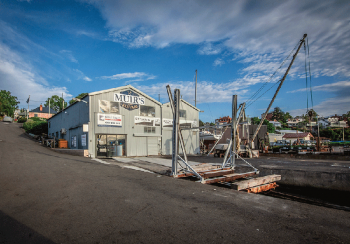
There are few manufacturers that can claim their founding location sits quite as close to the action as Muir. Established in 1968, the company’s original workshop was positioned on the finish line of the Sydney to Hobart Yacht Race in Hobart, Tasmania, close enough, the company says, that crews could watch the fleet arrive from the slipway next door. Tasmania’s rich maritime heritage provided a fitting cradle for what would become one of the world’s most experienced anchoring system specialists.
Over the past 60 years, Muir has designed and manufactured anchoring systems for a remarkably diverse range of vessels: from 5m aluminium plate runabouts built in backyards to 120m superyachts, and from commercial workboats to 80m offshore patrol vessels for defence clients. That breadth of experience, the company says, has given it an unusually clear view of where the industry is going wrong, and how relatively straightforward design decisions made early in a project can prevent significant problems down the line.
Andrew Buckley, Muir’s executive chairman, says: “One of the things that sets Muir apart is the fact we’ve been able to build a culture and team of people who are really proud of what they do. We are proud to say we build something in Tasmania, Australia, that is used on some of the top superyachts in the world.”
This article appeared in Features, TNA Mar/Apr 2026
| Article Tags | |
| Article Tags | Anchoring systems |
| General | |
| Article Preview Text | The anchoring and mooring equipment sector has developed a troubling tendency in recent years, according to Muir, a company based in Hobart, Australia. More and more equipment suppliers are adopting what the company describes as a “hands-off” approach to system integration and layout: hardware is specified, priced and delivered, but meaningful guidance on how it should be installed and arranged within the vessel is absent. For a naval architect or design engineer already managing competing pressures across a complex project, that gap in support can |
| Naval Architect Edition | |
| Naval Architect Edition | |