

What's next for WAPS?
Only a few years ago, wind-assisted propulsion systems (WAPS) were considered pioneering technology, but they have now matured into reliable and commercially viable solutions.
WAPS providers have been gathering extensive operational experience and, based on the lessons learned, are ready to deliver their second-generation products, focusing on improved performance, higher reliability and better system integration. System builders are also continuing to invest in upscaling their capacity to deliver, which will not only meet the current demand but predicts continuing growth.
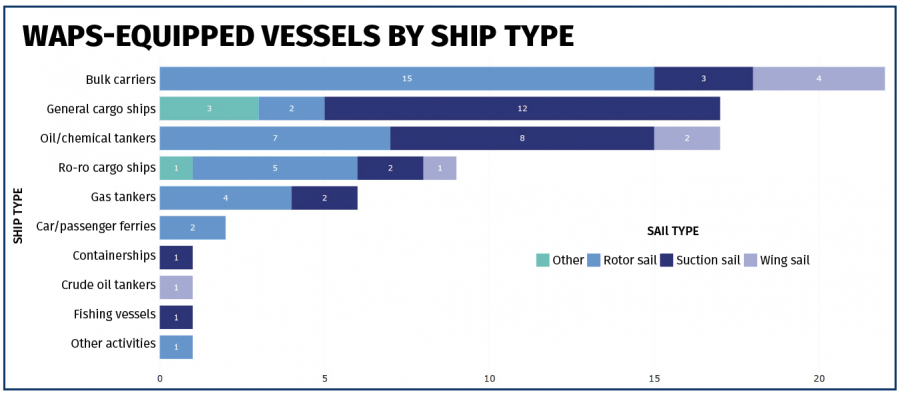
In 2026, we will almost certainly see 100 vessels equipped with WAPS globally, which will be a significant milestone and signal strong growth for the years ahead. Today, 77 ships have installed modern wind-assisted propulsion systems, with 62% of the vessels retrofitted. And while this is still only a small fraction of the global fleet, recent uptake has been rapid.
Setting standards
One key enabler of this development has been the evolution of technical standards. By reducing uncertainty in the viability of the technology, they have built up market acceptance. From the DNV side, we have released the first WAPS-ready notation, published a new white paper, and a new recommended practice to assess the performance of WAPS. We’ll be working with industry to make sure this reflects their needs – and we hope it will be a big step forward in building confidence in the systems, by providing a new, transparent methodology, backed up by verifiable data.
DNV’s rules and guidelines have supported providers, designers and shipowners by offering structured tools to confirm operational safety and to evaluate performance, both at the design stage and during operation.
Designing for WAPS
When assessing the feasibility of a specific WAPS installation, it is important to identify the design and operational challenges that must be addressed for the successful implementation of the system. The ship type and size, along with the main particulars, choice of technology, newbuild or retrofit will all affect the range of feasible solutions and dictate the technical considerations and constraints.
Additionally, the desired level of supplemental wind power for ship propulsion will determine the scale of the sail unit and the complexity of the machinery systems. Finally, the operational trade routes, including the prevailing winds, weather patterns and local regulations, also need to be taken into consideration.
| RELEVANT DESIGN CONSIDERATIONS | RELEVANT OPERATIONAL CONSIDERATIONS |
|---|---|
|
• Free air and deck space • Structural integration • Intact stability • Installation in hazardous zones • Added weight • Air draft • Obstruction of mooring configuration • Performance optimisation • Navigational: line of sight, navigation lights, radar sector |
• Robustness / reliability / operational safety • Interference with deck/cargo handling • Engine and propeller derating • Impaired manoeuvrability • Crew education • Port operations, pilots, towage, channels, locks • Interference with helicopter/evacuation procedures |
Safe and efficient integration
Installations will generally require class approval. For major retrofitting projects, a comprehensive risk assessment is generally advisable and, in many cases, will be required by class or the authorities.
WAPS change the loads acting on the vessel structure as well as the ship’s aerodynamics and manoeuvrability significantly.
Furthermore, they have an impact on port operations and may interfere with overhead structures such as bridges when operating in coastal areas. Ensuring the ship’s structural fitness for WAPS and the chosen system’s robustness, reliability and operational safety in harsh marine environments is critical, requiring thorough testing.
WAPS can interfere with the line of sight and the visibility of navigation lights, and affect the radar blind sector, all of which have implications for compliance with statutory requirements. In some cases, WAPS may result in noise and vibration, which can affect crew comfort and vessel integrity.
In operation, navigating a ship with active WAPS typically requires updates to on-board practices, safety protocols, maintenance routines and equipment. Control systems for the propulsion engine and WAPS should be integrated to allow the efficient coordination of both. Comprehensive crew training is essential to ensure safe and efficient WAPS and vessel operation.
Verifying fuel savings
Verifying the fuel-saving performance of wind-propulsion solutions at full-scale is essential for both shipowners and technology providers. Knowing the actual performance helps to predict fuel savings and cost, can be shared with charterers and cargo owners, and help to determine future investments.
A dedicated sea trial under controlled conditions can offer a cost-effective and fast way to verify performance immediately after installation. DNV recommended practice, DNV-RP-0686 ‘Performance of wind assisted propulsion systems’, aims to set a standard on how to measure, evaluate and verify the power saving of WAPS from long-term, in-service measurements by so-called on-off tests.
Pure wind future
In the past few years, vessel concepts designed to rely on wind as the main source of propulsion have been gaining momentum. A good example is the upcoming Oceanbird wing sail installation onboard the Wallenius Wilhelmsen vessel Tirranna. These tests are setting a platform for the first fully wind-powered vessel – hopefully a milestone we will see soon. And the potential here is for fuel savings and emissions reductions of more than 50%, although their application is likely limited, at least initially, to lighter vessels.
WAPS are rapidly becoming one of the default technologies shipowners consider when planning newbuilds – at least for certain vessel types and routes. Their modular nature allows shipowners to achieve immediate fuel and emissions savings while maintaining flexibility for the future.
 |
|---|
This article appeared in Features, TNA Mar/Apr 2026
| General | |
| Article Preview Text | Only a few years ago, wind-assisted propulsion systems (WAPS) were considered pioneering technology, but they have now matured into reliable and commercially viable solutions.
WAPS providers have been gathering extensive operational experience and, based on the lessons learned, are ready to deliver their second-generation products, focusing on improved performance, higher reliability and better system integration. System builders are also continuing to invest in upscaling their capacity to |
| Naval Architect Edition | |
| Naval Architect Edition | |
| Article Tags | |
| Article Tags | Wind propulsion |