The Naval Architect provides in-depth information on all aspects of vessel design, construction and engineering. Practical applications of latest technology and case studies are accompanied by analysis and foresights. Published every two months, the magazine covers everything from superyachts and short-hop ferries to tankers and heavy-lift vessels; from battery pack installations and sail-assisted solutions to LNG tank retrofits; and from offshore safety to warship resilience.
MASS - DESIGN FOR INSPECTION
Autonomous Ships
As autonomous vessels move toward larger platforms and international operations, traditional oversight models must evolve. Focusing on Port State Control, this analysis examines emerging inspection frameworks, guidance development and operational challenges spanning cybersecurity, remote operations and vessel access, highlighting the regulatory adaptations required to support safe, scalable maritime autonomy.
PERILS OF THE HUMAN OPERATOR IN MARITIME AUTONOMOUS SYSTEMS
Human Factors
As autonomous vessels become more capable, human factors remain critical to safety and operational success. Examining defence applications, this research explores autonomy levels, function allocation and human-machine relationships. Findings highlight the cultural, organisational and engineering changes needed to build trust, resilience and effective oversight in highly autonomous maritime systems ahead.
LEVERAGING THE IOT-EDGE-CLOUD CONTINUUM TO ENABLE THE SMART SHIPYARD AND THE SMART SHIP OF THE FUTURE
ICCAS
Fincantieri’s IPCEI-CIS portfolio is building the digital backbone for the smart shipyard and autonomous ship of the future. By orchestrating data across IoT, edge and cloud environments, the initiative tackles integration, automation and cybersecurity challenges, enabling Industry 4.0 capabilities, lifecycle optimisation and more intelligent maritime operations.
WIND PROPULSION FOR HURTIGRUTEN'S FUTURE ZERO EMISSION CRUISE VESSELS (PROJECT SEA ZERO)
Wind Propulsion
Wind propulsion is emerging as a key enabler of zero-emission coastal cruise operations. Through detailed assessment of sail configurations, weather data and vessel integration, researchers identify practical pathways to enhance energy efficiency, support battery-electric concepts and inform future ship design, while revealing critical operational trade-offs for successful maritime decarbonisation strategies.
Autonomous Ships 2025 Conference Proceedings
Autonomous Ships
CII 2025 Conference Proceedings
CII
Human Factors 2024 Conference Proceedings
Human Factors
ICCAS 2024 Conference Proceedings
ICCAS
Warship 2024 Conference Proceedings
Warship
Wind Propulsion 2024 Conference Proceedings
Wind Propulsion
THE PROFESSIONAL PROFILE OF THE REMOTE OPERATOR
Autonomous Ships
As remote operations become a cornerstone of maritime autonomy, demand for skilled operators is creating new workforce challenges. This research defines the emerging remote operator role, examining responsibilities, risks and emergency response requirements, while outlining the competencies needed to support safe, effective vessel control from increasingly sophisticated shore-based operations centres.
HOW UR E26 AND E27 COULD AND SHOULD APPLY TO DRONES AND AUTONOMOUS VESSELS?
Autonomous Ships
Maritime cybersecurity is moving from best practice to strategic necessity. By examining the drivers behind UR E26 and UR E27, this analysis highlights critical vulnerabilities, implementation challenges and regulatory gaps. The findings explore how interoperable frameworks, stronger collaboration and complementary standards can enhance resilience across increasingly connected fleets worldwide today.
Newsletters
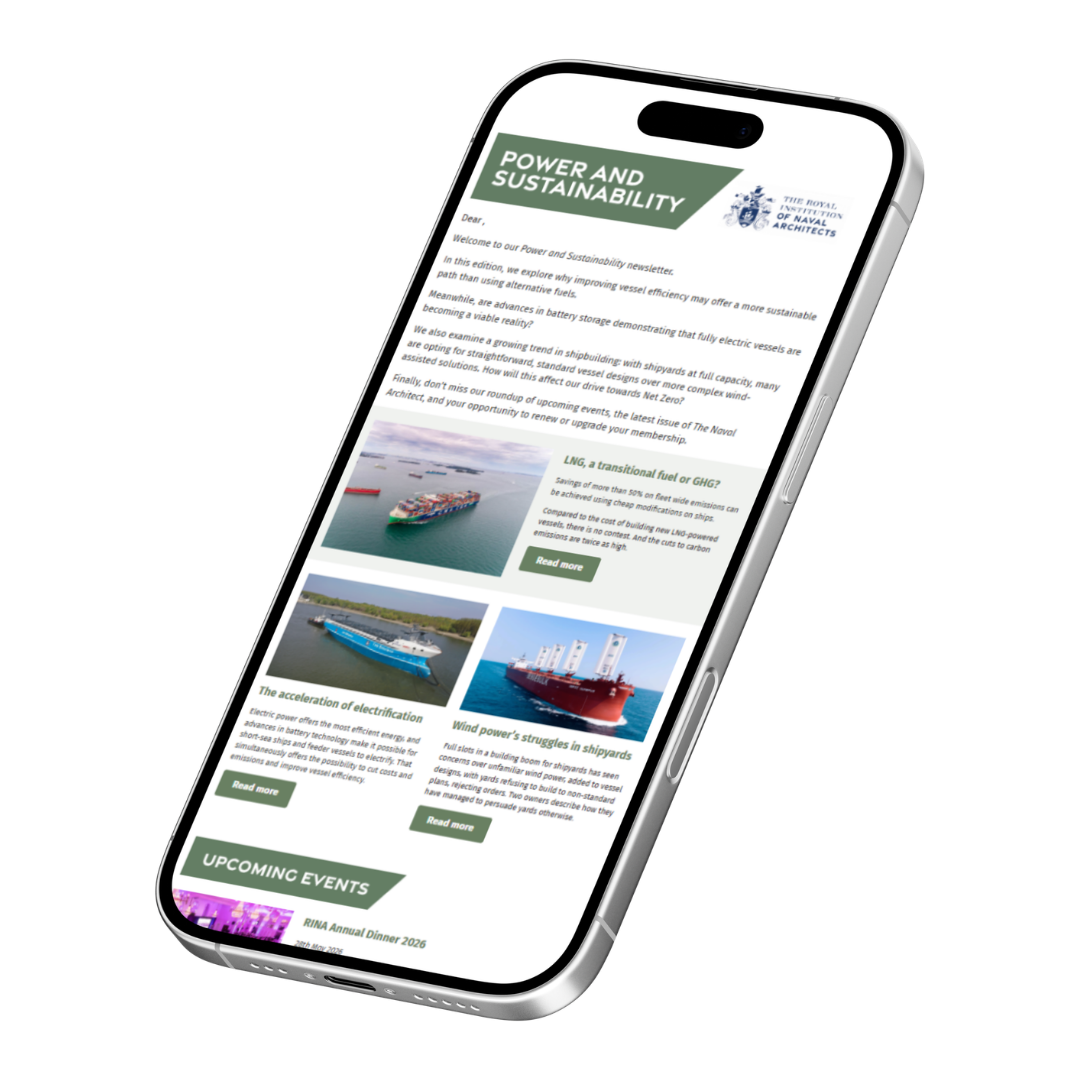
Stay connected with the global maritime community through RINA’s newsletters.
Whether you are a member or not, you can receive updates from The Naval Architect, alongside selected RINA news, events and industry insights. Members also gain access to a wider portfolio of exclusive newsletters on key topics in the maritime industry.