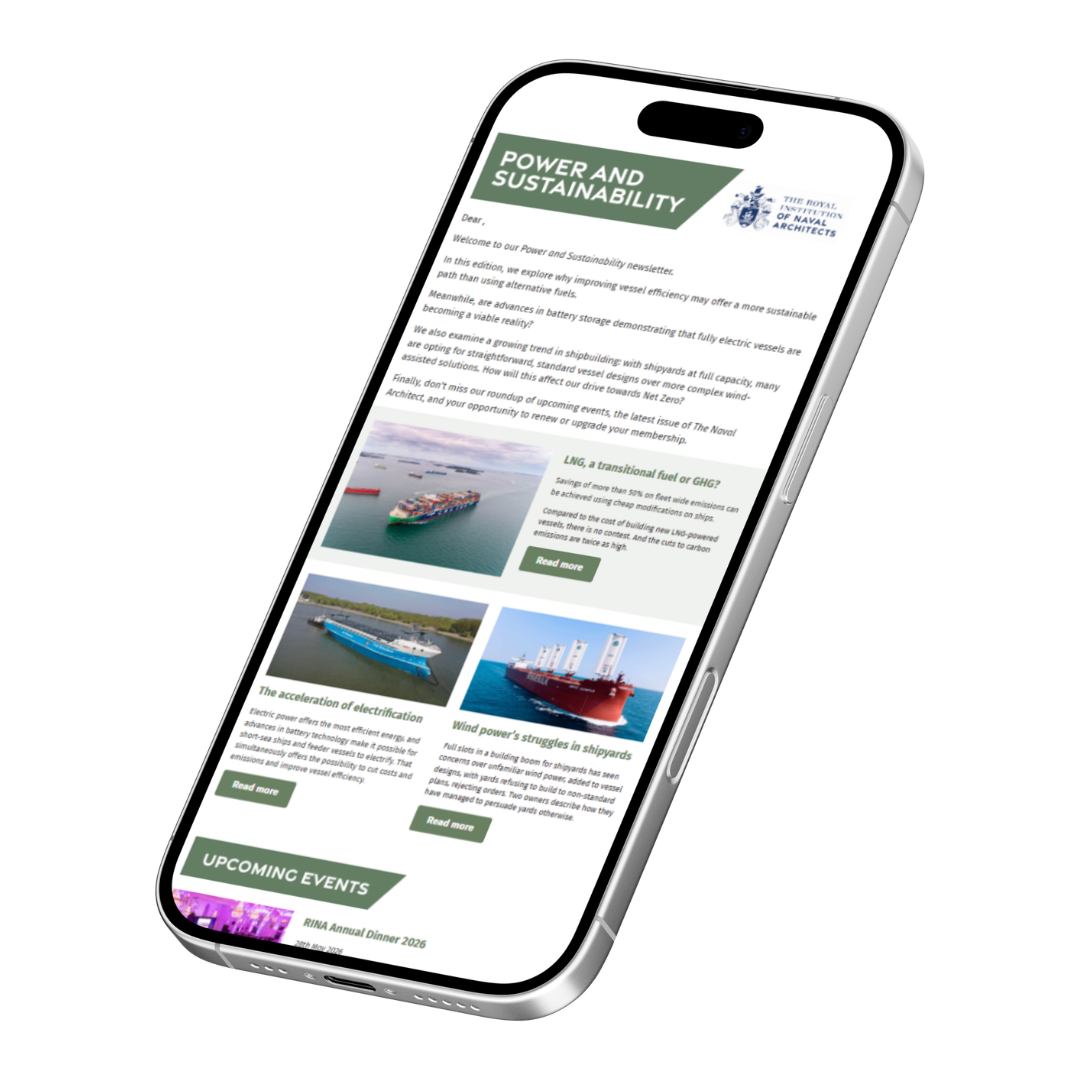
The Naval Architect provides in-depth information on all aspects of vessel design, construction and engineering. Practical applications of latest technology and case studies are accompanied by analysis and foresights. Published every two months, the magazine covers everything from superyachts and short-hop ferries to tankers and heavy-lift vessels; from battery pack installations and sail-assisted solutions to LNG tank retrofits; and from offshore safety to warship resilience.
NAVAL SHIP STABILITY GUIDELINES: DEVELOPING A SHARED VISION FOR NAVAL STABILITY ASSESSMENT
Transactions
Ensuring the stability and survivability of modern surface combatants remains a fundamental consideration in naval ship design, particularly as operational demands, vessel characteristics, and threat environments continue to evolve. Growing scrutiny of longstanding naval stability standards is encouraging a more risk-based understanding of capsize vulnerability, supporting the development of assessment methods better aligned with contemporary warship design and operation.
LIFE-CYCLE CO2 EMISSIONS OF BULK CARRIERS: A COMPARATIVE STUDY
Transactions
Balancing structural robustness, operational efficiency, and environmental performance is becoming an increasingly important consideration in modern ship design. Growing evidence that well-designed corrosion allowances can reduce lifecycle costs and extend vessel service life is strengthening the case for durability-based design approaches, while also challenging assumptions about the long-term environmental impact of heavier and more robust ship structures.
EVALUATION OF CAVITATION PERFORMANCE OF AN AXI-SYMMETRIC BODY WITH PUMPJET PROPULSOR
Transactions
Advances in underwater propulsion are driving continued interest in pumpjet technologies as designers seek to improve efficiency, minimise acoustic signatures, and enhance operational performance. Increasing use of combined numerical and experimental approaches is improving understanding of cavitation behaviour and propulsion characteristics, supporting the development of more effective pumpjet systems for next-generation underwater vehicles.
DESIGN OF COMPLETELY AUTOMATIC ODMCS
Transactions
Increasing regulatory scrutiny of marine pollution is driving the adoption of more advanced monitoring and control technologies for tanker operations. Greater integration of positioning, automation, and compliance systems is helping to reduce operational risk and human error, supporting more reliable adherence to environmental regulations while enhancing the effectiveness of onboard pollution-prevention measures.
Newsletters
Stay connected with the global maritime community through RINA’s newsletters.
Whether you are a member or not, you can receive updates from The Naval Architect, alongside selected RINA news, events and industry insights. Members also gain access to a wider portfolio of exclusive newsletters on key topics in the maritime industry.