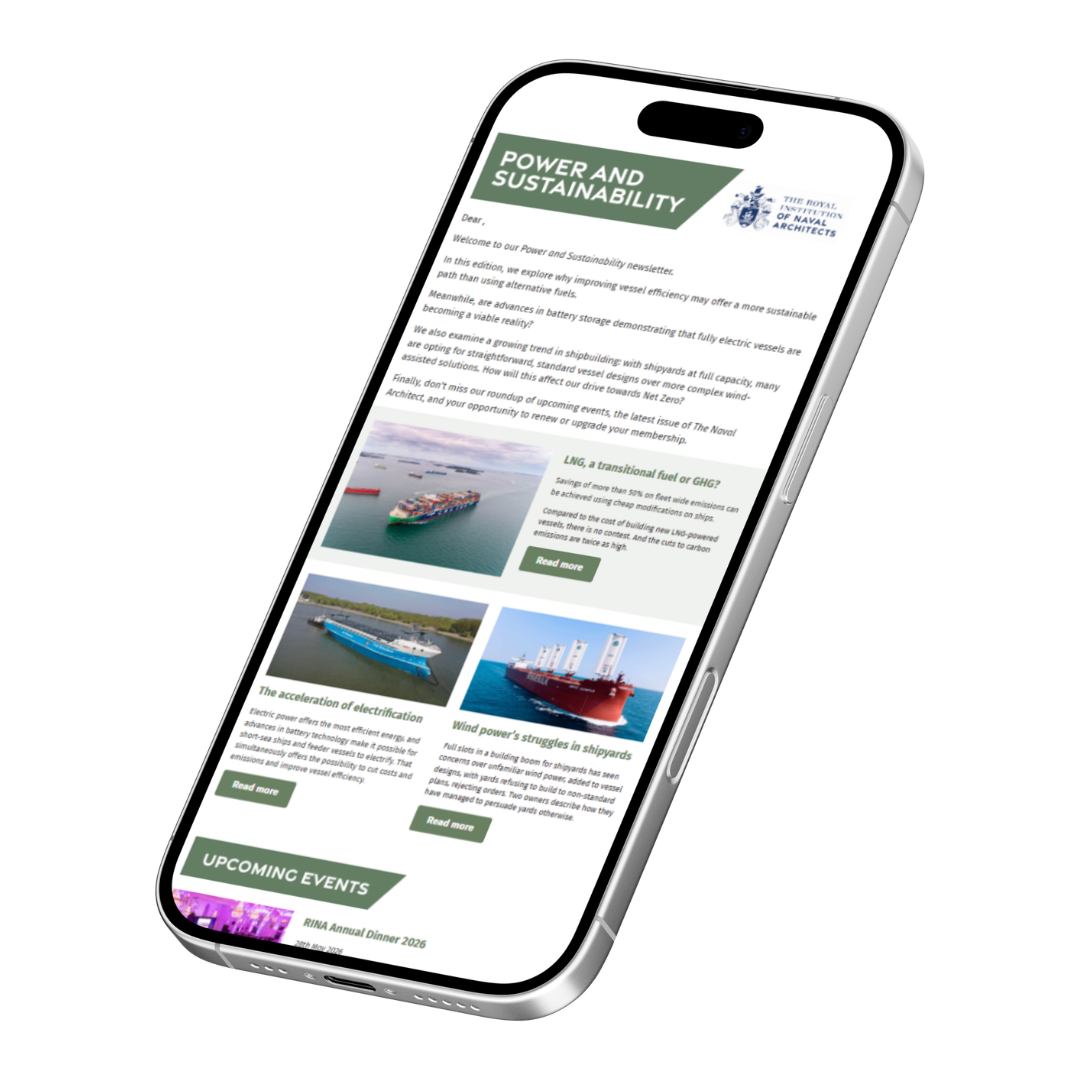
The Naval Architect provides in-depth information on all aspects of vessel design, construction and engineering. Practical applications of latest technology and case studies are accompanied by analysis and foresights. Published every two months, the magazine covers everything from superyachts and short-hop ferries to tankers and heavy-lift vessels; from battery pack installations and sail-assisted solutions to LNG tank retrofits; and from offshore safety to warship resilience.
A FAMILY OF OFFSHORE CONSTRUCTION VESSELS
Transactions
Offshore construction vessels play a vital role in supporting subsea field development, combining specialised capabilities such as pipelay, diving support, and subsea construction within highly versatile platforms. As offshore projects become more complex and move into deeper waters, designers are increasingly required to balance operational capability, vessel arrangement, hydrodynamic performance, and station-keeping requirements. Comparative studies of purpose-built offshore vessels provide valuable insight into how differing mission demands influence ship design, while supporting the development of more capable, efficient, and adaptable offshore construction fleets.
TOWARDS A CFD-BASED PREDICTION OF SHIP PERFORMANCE - PROGRESS IN PREDICTING FULL-SCALE RESISTANCE AND SCALE EFFECTS
Transactions
Advances in computational fluid dynamics are providing new insight into the long-standing challenge of predicting full-scale ship resistance, reducing reliance on traditional extrapolation methods derived from model testing. By improving understanding of viscous and wave-resistance scale effects, CFD analyses are helping to refine performance prediction techniques, supporting more accurate assessments of vessel efficiency and contributing to the development of more reliable and effective ship design methodologies.
DYNAMIC DRAUGHT OF CONTAINER SHIPS IN SHALLOW WATER
Transactions
Accurate prediction of a vessel’s dynamic draught and under-keel clearance in shallow water is becoming increasingly important as larger container ships operate within increasingly constrained waterways and ports. Full-scale measurements and validation studies are improving understanding of squat and manoeuvring effects, highlighting how vessel motions during turning can significantly influence under-keel clearance and supporting safer navigation and port operations.
WAVE INTERFERENCE IN DESIGN OF LARGE TRIMARAN SHIP
Transactions
The development of very large, high-speed trimaran vessels presents unique hydrodynamic challenges, particularly where hull interactions strongly influence resistance, wave patterns, and overall performance. Advances in computational and experimental design methods are improving understanding of multihull interference effects, supporting the optimisation of trimaran configurations for demanding applications while enhancing efficiency, operability, and the integration of specialised mission capabilities such as aircraft operations.
Newsletters
Stay connected with the global maritime community through RINA’s newsletters.
Whether you are a member or not, you can receive updates from The Naval Architect, alongside selected RINA news, events and industry insights. Members also gain access to a wider portfolio of exclusive newsletters on key topics in the maritime industry.