The Naval Architect provides in-depth information on all aspects of vessel design, construction and engineering. Practical applications of latest technology and case studies are accompanied by analysis and foresights. Published every two months, the magazine covers everything from superyachts and short-hop ferries to tankers and heavy-lift vessels; from battery pack installations and sail-assisted solutions to LNG tank retrofits; and from offshore safety to warship resilience.
MEASURED LOADING RESPONSE OF MODEL MOTION CONTROL STERN TABS
Transactions
Active trim tabs are a key element of ride control systems on high-speed catamarans, but their hydrodynamic behaviour is more complex than conventional assumptions suggest. Experimental testing reveals that stern-tab effectiveness depends not only on tab angle and speed but also on pressure interactions beneath the hull, offering important insights for improving vessel stability, efficiency, and motion-control performance.
FATIGUE ASSESSMENT OF CORRODED DECK LONGITUDINALS OF TANKERS
Transactions
Structural ageing and fatigue remain major challenges for oil tankers, where long-term crack growth can threaten reliability and safety. By combining fracture-mechanics modelling with corrosion progression analysis, engineers gain a clearer understanding of how degradation influences structural life, highlighting the importance of integrating fatigue and corrosion effects into maintenance planning, inspection strategies, and asset management.
FAULT TREE ANALYSIS (FTA) - FORMAL SAFETY ASSESSMENT (FSA) IN SHIP REPAIR INDUSTRY A MADE EASY APPROACH
Transactions
As shipyard operations become increasingly complex, understanding and managing safety risks requires approaches that go beyond traditional incident analysis. By combining fault-tree modelling with Formal Safety Assessment in a more structured framework, new methods are identifying hidden interactions and systemic causes of accidents, supporting more effective risk management, regulatory development, and workplace safety improvement.
PASSENGER RESPONSE TIME DATA-SETS FOR LARGE PASSENGER FERRIES AND CRUISE SHIPS DERIVED FROM SEA TRIALS
Transactions
Passenger safety analysis is becoming increasingly data-driven as evacuation modelling plays a larger role in vessel design and regulation. Drawing on the largest collection of full-scale passenger response data gathered at sea, new evidence suggests that evacuation behaviour varies significantly between ship types, challenging one-size-fits-all assumptions and supporting more realistic emergency preparedness standards.
Newsletters
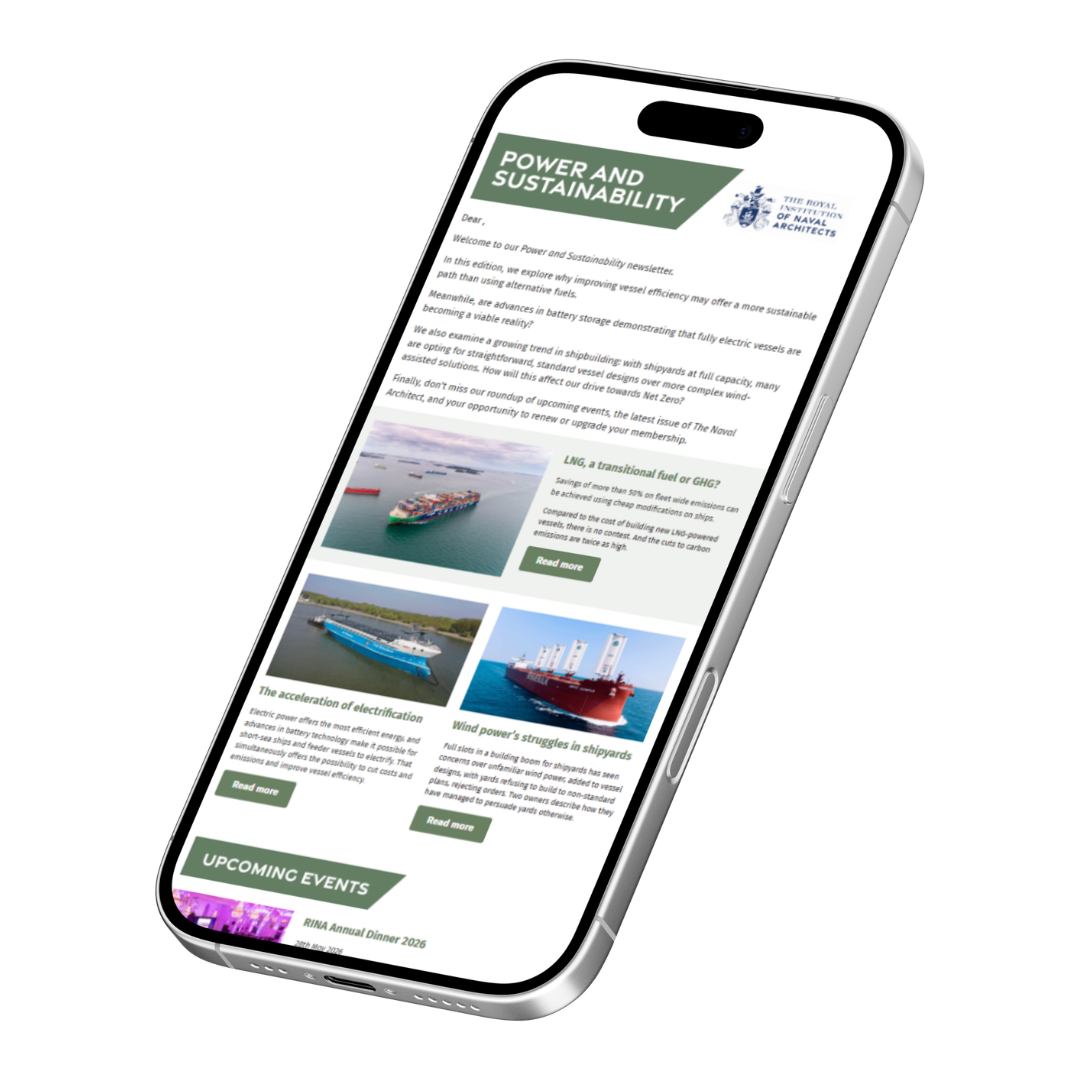
Stay connected with the global maritime community through RINA’s newsletters.
Whether you are a member or not, you can receive updates from The Naval Architect, alongside selected RINA news, events and industry insights. Members also gain access to a wider portfolio of exclusive newsletters on key topics in the maritime industry.