The Naval Architect provides in-depth information on all aspects of vessel design, construction and engineering. Practical applications of latest technology and case studies are accompanied by analysis and foresights. Published every two months, the magazine covers everything from superyachts and short-hop ferries to tankers and heavy-lift vessels; from battery pack installations and sail-assisted solutions to LNG tank retrofits; and from offshore safety to warship resilience.
SPECIAL CONSUMPTION TAX INCENTIVE ON MARINE BUNKERS AND CARGO SHIFTING TO SHORT SEA SHIPPING IN TURKISH CABOTAGE ROUTES
Transactions
As governments and industries seek practical pathways to lower carbon emissions, transport mode selection is gaining renewed strategic importance. Analysis of maritime fuel use and freight movement patterns highlights the environmental advantages of shipping, underscoring how modal shifts and fuel-efficiency improvements could play a significant role in broader decarbonisation efforts.
ANCHOR WINDLASSES: A DESIGN PROPOSAL TO STANDARDISE REGULATIONS
Transactions
As shipbuilders seek to balance customisation, compliance, and cost competitiveness, standardisation is emerging as a powerful lever for efficiency. Harmonising regulatory requirements and equipment design could reduce complexity, unlock economies of scale, and help manufacturers deliver more cost-effective solutions without compromising the operational needs of vessel owners.
APPLICATION OF FUZZY ANALYTIC HIERARCHY PROSES FOR ERROR DETECTION OF AUXILARY SYSTEMS OF SHIP MAIN DIESEL ENGINES
Transactions
Engine room reliability remains fundamental to safe and efficient vessel operations, where minor faults can quickly escalate into costly failures. Applying fuzzy decision-making techniques to fault diagnosis and maintenance planning helps prioritise critical systems, highlighting the growing role of data-driven decision support in improving operational resilience and engineering performance.
INVESTIGATION OF OIL TANKER ACCIDENTS BY USING GIS
Transactions
Oil tanker safety remains a critical concern at key global trade chokepoints, where navigational complexity and traffic density can amplify operational risk. By transforming historical accident records into geospatial intelligence, emerging analytical approaches are uncovering patterns in accident occurrence, offering fresh perspectives on risk concentration, route management, and maritime safety planning.
COMPARISON BETWEEN DIFFERENT SURVIVABILITY MEASURES ON A GENERIC FRIGATE
Transactions
Ship survivability is increasingly recognised as a design challenge that extends far beyond structural protection alone. Emerging approaches show that survivability outcomes depend heavily on how threats are defined and assessed, highlighting the importance of evaluating impacts across multiple ship functions and incorporating uncertainty into early-stage design decisions.
Newsletters
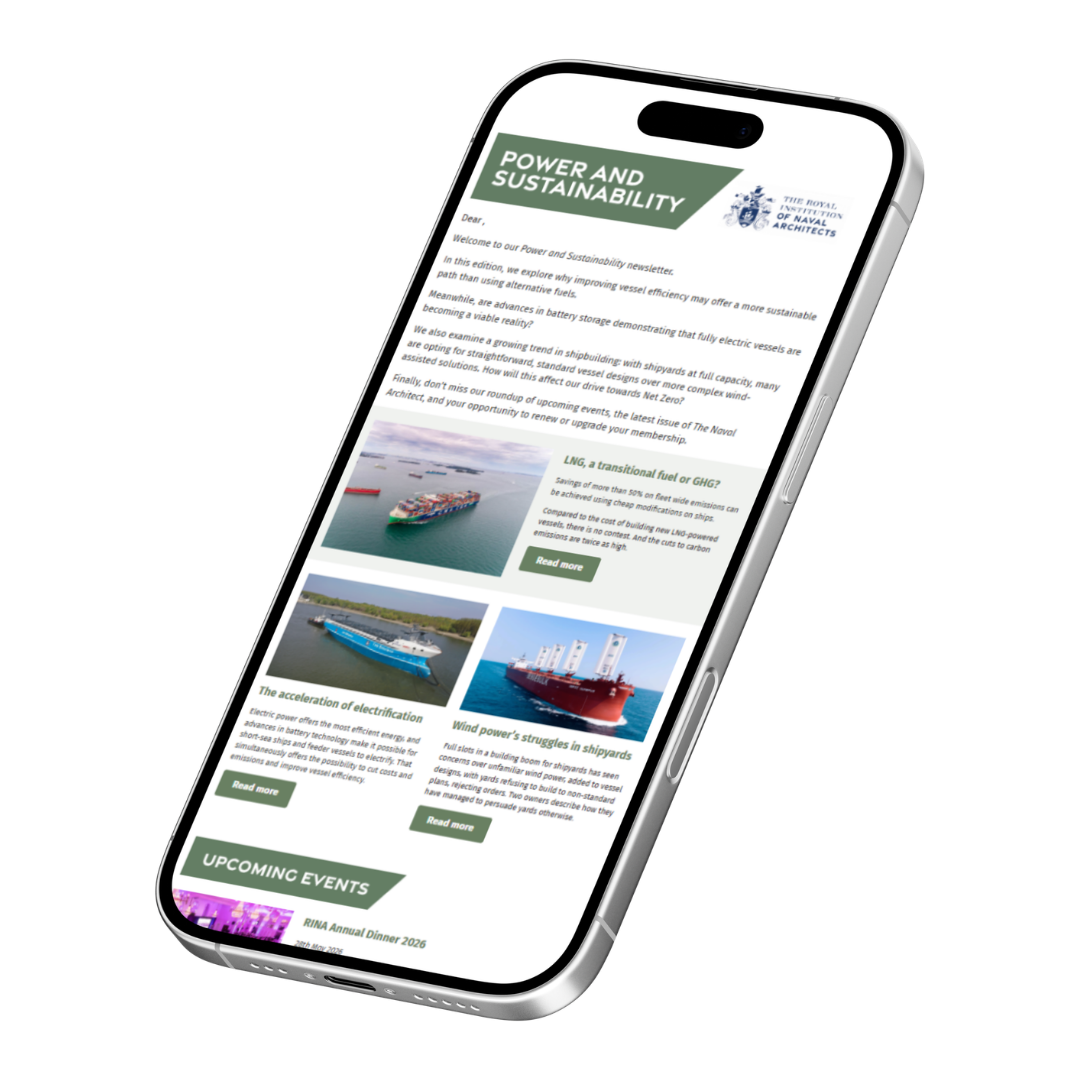
Stay connected with the global maritime community through RINA’s newsletters.
Whether you are a member or not, you can receive updates from The Naval Architect, alongside selected RINA news, events and industry insights. Members also gain access to a wider portfolio of exclusive newsletters on key topics in the maritime industry.