The Naval Architect provides in-depth information on all aspects of vessel design, construction and engineering. Practical applications of latest technology and case studies are accompanied by analysis and foresights.​ Published every two months, the magazine covers everything from superyachts and short-hop ferries to tankers and heavy-lift vessels; from battery pack installations and sail-assisted solutions to LNG tank retrofits; and from offshore safety to warship resilience. 

Read the digital editions

Shallow reckoning - Copy

The Naval Architect

By Amy McLellan

Edition Issue: July/August Publication Year: 2026 Publication Type: Magazine

The RNLI has saved almost 150,000 lives since it was founded in 1824 (image: RNLI).

Amy McLellan examines how the RNLI, now entering its third century, is reconfiguring its fleet and redesigning its inshore rescue capability to reflect changes in how we use the sea.

Detail Link: Shallow reckoning - Copy

The unmanned edge - Copy

The Naval Architect

By Martin Conway

Edition Issue: July/August Publication Year: 2026 Publication Type: Magazine

The future of maritime patrol missions lies in smart and scalable autonomous fleets, with naval architects key to driving their performance, explains Martin Conway.

Detail Link: The unmanned edge - Copy

Blackout in Cook Strait - Copy

The Naval Architect

By Iain MacIntyre

Edition Issue: July/August Publication Year: 2026 Publication Type: Magazine

Kaitaki in the Marlborough Sounds on a regular Cook Strait crossing (image: Kiwirail Limited)

A rubber expansion joint, years overdue for replacement, triggered a complete blackout on the Interislander ro-pax ferry Kaitaki off Wellington Harbour in January 2023. Iain MacIntyre reports on the investigation, the prosecution and the questions that remain.

Detail Link: Blackout in Cook Strait - Copy

Safety first for new fuels - Copy

By Amy McLellan

Publication Date: 2026-04-27

Thomas Beard helps shipowners comply with safety rules

The shift from heavy fuel oil to low-carbon alternatives promises deep emissions cuts but it also introduces a new generation of safety challenges. The challenge now is ensuring the industry meets its decarbonisation goals without compromising on safety. 

Detail Link: Safety first for new fuels - Copy

Hydrogen hits the big time with projects on the rise - Copy

The Naval Architect

By Patrik Wheater

Publication Date: 2026-04-27

Unlike its sister ship, Viking Sky, Viking Libra will run on hydrogen

Hydrogen is moving from pilot projects to mainstream maritime adoption, with landmark vessel orders and emerging bunkering hubs signalling growing industry confidence.

Detail Link: Hydrogen hits the big time with projects on the rise - Copy

Discussion: EXPERIMENTAL AND NUMERICAL MODAL ANALYSIS OF COMPOSITE LAMINATED SHELLS WITH CUT-OUT - Copy

Transactions

By A Mandal C Ray S Haldar

Publication Date: 2019-01-01 Edition Issue: Vol 161 A1.495 Publication Year: 2019 Publication Type: Paper

How do cutouts affect the performance of laminated composite shells in demanding marine and aerospace environments? Combining laboratory resin-infusion manufacturing, free-vibration testing and validated numerical simulation, researchers revealed key dynamic behaviour patterns. Advanced mass-matrix modelling with rotary inertia and modal assurance verification offers insights for more reliable, maintainable structural designs.

Detail Link: Discussion: EXPERIMENTAL AND NUMERICAL MODAL ANALYSIS OF COMPOSITE LAMINATED SHELLS WITH CUT-OUT - Copy

THE RE-DESIGN OF A MARINE ENGINE ROOM SIMULATOR IN CONSIDERATION TO ERGONOMICS DESIGN PRINCIPLES - Copy

Transactions

By G Kocak

Publication Date: 2019-01-01 Edition Issue: Vol 161 A1.517 Publication Year: 2019 Publication Type: Paper

How can simulator design influence engineering competence? By applying ergonomic principles to a full-mission engine room simulator, a redesigned mimic panel improved realism, usability and training effectiveness. The experience highlights how human-centred design can enhance operational learning environments and strengthen the quality of marine engineering education and professional preparedness.

Detail Link: THE RE-DESIGN OF A MARINE ENGINE ROOM SIMULATOR IN CONSIDERATION TO ERGONOMICS DESIGN PRINCIPLES - Copy

STATIC CONTROL OF DRAG-REDUCING AIR CAVITIES WITH VARIABLE CAVITATOR SHAPE - Copy

Transactions

By K I Matveev

Publication Date: 2019-01-01 Edition Issue: Vol 161 A1.516 Publication Year: 2019 Publication Type: Paper

Air-cavity drag reduction is moving closer to practical deployment through research linking cavity performance to controllable hydrodynamic actuators and wedge-shaped cavitators. Using potential-flow modelling, new insights into optimal operating conditions reveal how flow speed and hull trim influence efficiency gains, supporting more energy-efficient ship designs.

Detail Link: STATIC CONTROL OF DRAG-REDUCING AIR CAVITIES WITH VARIABLE CAVITATOR SHAPE - Copy

PROBABILISTIC SAFETY OF ESTUARY VESSELS BASED ON NONLINEAR ROLLING IN WIND AND WAVES - Copy

Transactions

By M Vantorre

Edition Issue: Vol 152 A2 Discussion Publication Year: 2010 Publication Type: Paper

Detail Link: PROBABILISTIC SAFETY OF ESTUARY VESSELS BASED ON NONLINEAR ROLLING IN WIND AND WAVES - Copy

THE UK NAVAL AUTHORITY GLIDEPATH TO CERTIFIED IMO DEGREE 4 AUTONOMY - Copy

Warship

By A D Bain

Edition Issue: The Future Fleet: Smart Technology, Sustainability and Autonomy - A Bain Publication Year: 2025 Publication Type: Conference Proceeding

Achieving IMO Degree 4 autonomy is reshaping naval certification, with adaptive, goal-based frameworks enabling progression from remotely operated to fully autonomous vessels. Collaboration across UK defence regulators aligns safety and legal principles while addressing emerging architectures, technology risks, and engineering challenges. Early lessons reveal opportunities for scalable certification pathways ahead.

Detail Link: THE UK NAVAL AUTHORITY GLIDEPATH TO CERTIFIED IMO DEGREE 4 AUTONOMY - Copy

Painting of Adelphi Terrace, London

Painting of unknown date of Adelphi Terrace, London - the first headquarters of The Royal Institution of Naval Architects

In the early days, the Institution settled in rooms at Adelphi Terrace, London – first at No. 7, then at No. 9 and finally at No. 5 (the former house of David Garrick). The proximity of Adelphi Terrace to the Royal Society of Arts where John Scott Russell had been Secretary, and where for many years meetings of the Institution were held, made the choice of the Institution’s first headquarters very convenient.

Detail Link: Painting of Adelphi Terrace, London

Photograph of Adam Street, London

1919-1938 Photograph of unknown date of Adam Street, London

With the reconstruction of Adelphi Terrace after the 1914-1918 war, the Institution moved to the south corner of Adam Street nearby.


Detail Link: Photograph of Adam Street, London

Newsletters


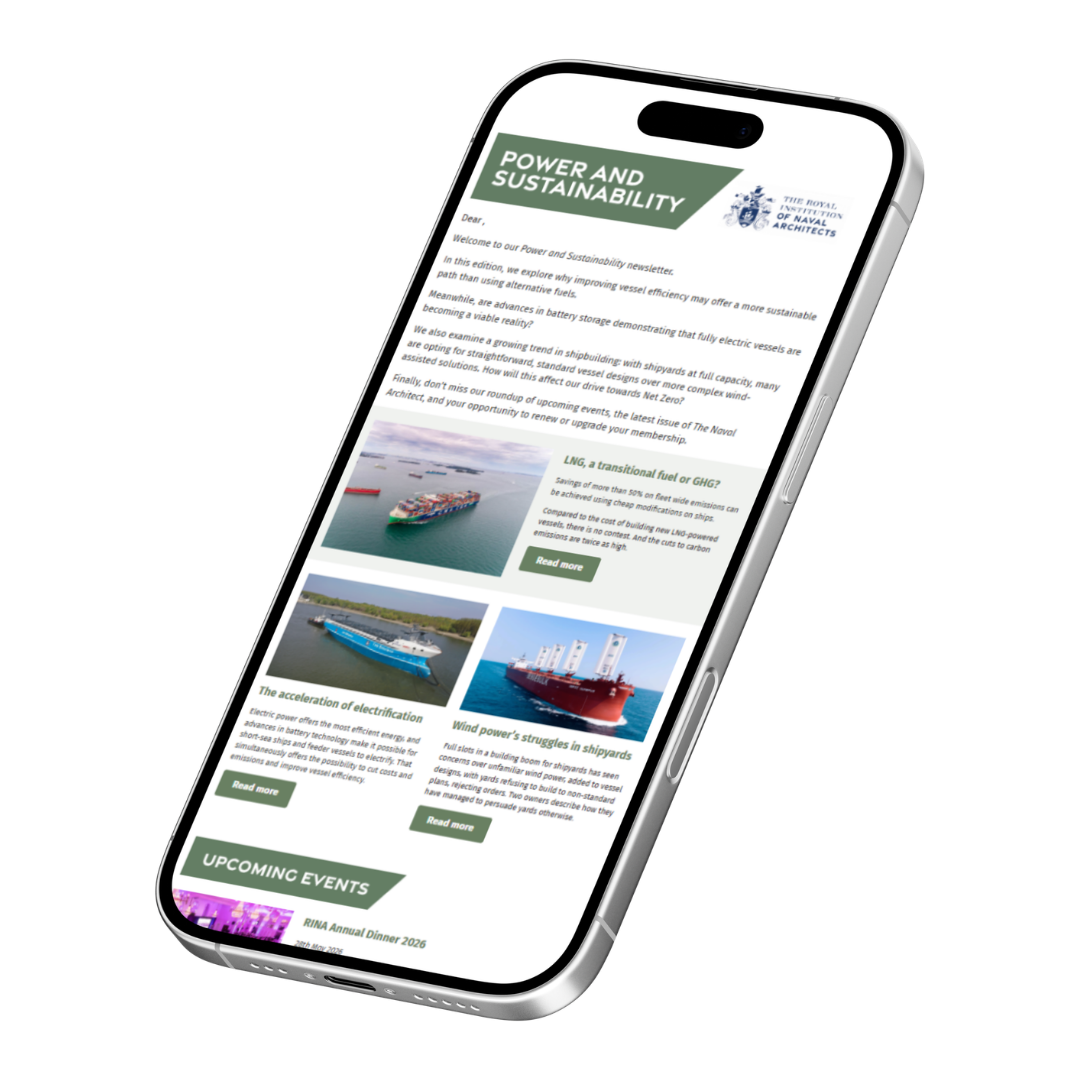
Stay connected with the global maritime community through RINA’s newsletters.

Whether you are a member or not, you can receive updates from The Naval Architect, alongside selected RINA news, events and industry insights. Members also gain access to a wider portfolio of exclusive newsletters on key topics in the maritime industry.
 

Sign Up For Newsletters

1 / 1
100%