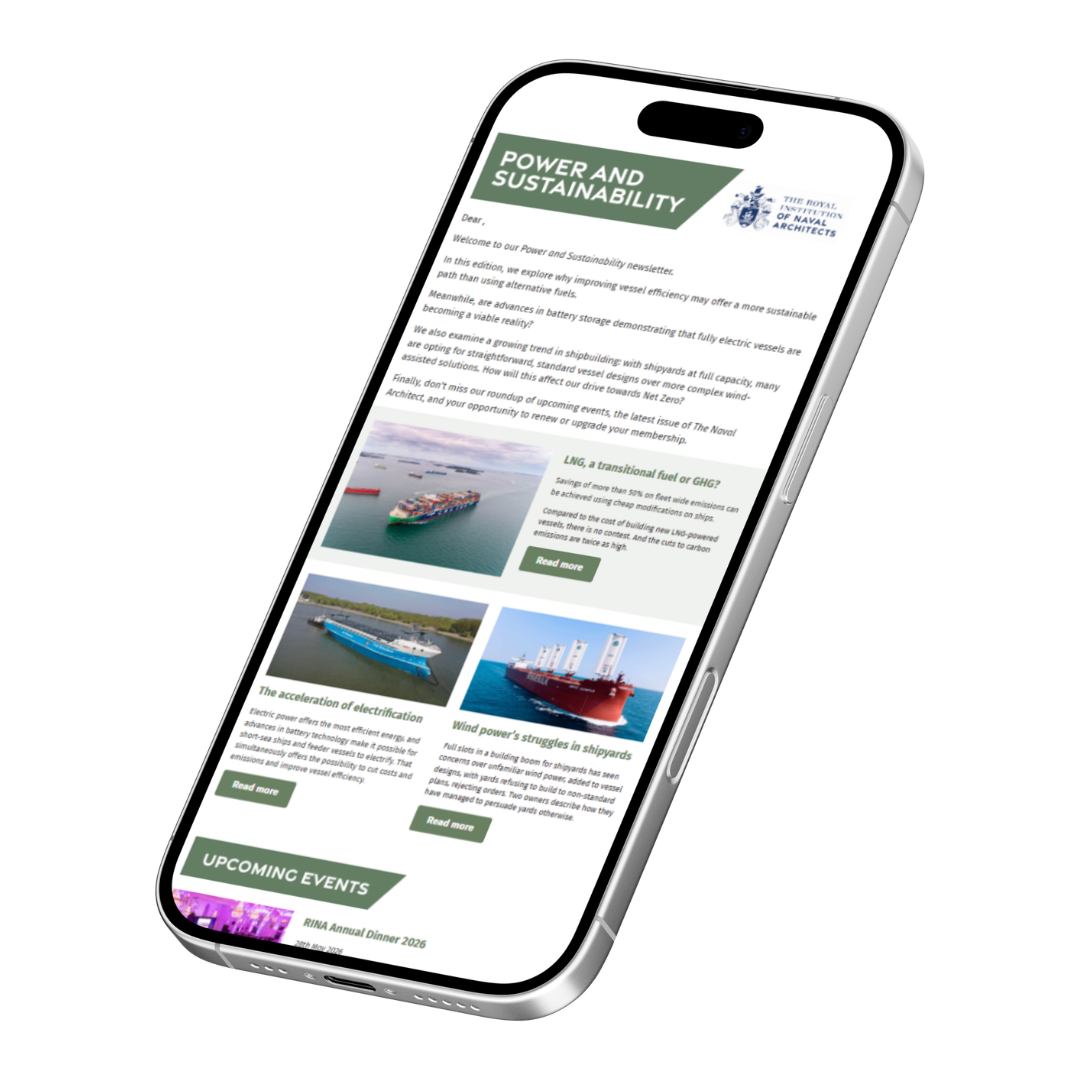
The Naval Architect provides in-depth information on all aspects of vessel design, construction and engineering. Practical applications of latest technology and case studies are accompanied by analysis and foresights. Published every two months, the magazine covers everything from superyachts and short-hop ferries to tankers and heavy-lift vessels; from battery pack installations and sail-assisted solutions to LNG tank retrofits; and from offshore safety to warship resilience.
APPLICATION OF 3D TECHNOLOGIES IN SHIPS OPERATION AND TRAINING OF THEIR CREWS
Marine Design
Three-dimensional data environments are reshaping digital ship operations by transforming complex information into intuitive visual decision-making tools. Integrating operational data, procedures, and training within a unified interface improves situational awareness, accelerates knowledge transfer, enhances crew collaboration, and supports safer, more efficient management of modern vessels across their operational lifecycle today.
SILENT VESSELS TECHNOLOGY AND THE REDUCTION OF UNDERWATER RADIATED NOISE AS A SIGNIFICANT ISSUE FOR THE FUTURE OF MARITIME ENGINEERING
Marine Design
Advanced noise and vibration management is helping ship designers reduce underwater radiated noise and its impact on marine ecosystems. Using validated simulation tools to assess propellers, machinery, and acoustic interactions, engineers can identify and mitigate noise sources early. The methodology improves environmental performance, regulatory readiness, onboard comfort, and vessel acoustic efficiency globally.
AR AS A TOOL FOR IMMERSIVE EXPERIENCES FOR FERRY AND CRUISE OPERATORS BETWEEN THE UK AND IRELAND, CREATING NEW COMMERCIAL OPPORTUNITIES FOR THE MARKETING, ADVERTISING, AND TOURISM SECTORS
Marine Design
Augmented reality is opening new opportunities for ferry and cruise passenger engagement. By combining immersive storytelling, location-aware content, and stakeholder-driven design, the proposed platform delivers tailored onboard experiences that enhance entertainment, tourism, and commercial value. The concept demonstrates how digital innovation can transform maritime travel into interactive journeys for all.
DIGITAL DESIGN IN THE SHIPBUILDING ENVIRONMENT AND THE CLASSIFICATION APPROVAL
Marine Design
Artificial intelligence and cloud-based digital workflows are reshaping ship design and classification approval processes. By integrating 3D CAD models, automated rule checking, big-data analytics, and direct collaboration with classification societies, the approach reduces validation complexity, accelerates approval cycles, improves design accuracy, and advances end-to-end digital transformation across global shipbuilding industries today.
DESIGN-DRIVEN INNOVATION: INNOVATIVE AND CULTURALLY SPECIFIC RETRO-FUTURISTIC DESIGN APPROACH TO INTERIOR DESIGN AND BESPOKE FURNITURE FOR A FLAMENCO VENUE WITHIN A 280M SUSTAINABLE LUXURY TRANSATLANTIC SUPERLINER CONCEPT "LA TRASATLÁNTICA"
Marine Design
Retro-futuristic interior design concepts are reimagining luxury maritime travel by blending cultural heritage, sustainable materials, and advanced manufacturing technologies. Inspired by historic transatlantic liners and Andalusian identity, the concept uses 3D-printed furnishings, bioplastics, and experiential design to create distinctive passenger environments supporting innovation, sustainability, and next-generation superliner travel experiences globally.
AIR SUPPORT VESSEL FOR WATER BASED SUSTAINABLE URBAN MOBILITY IN VENICE AND GRONINGEN IN 2050
Marine Design
Design Driven Innovation is reimagining high-speed urban maritime transport through hydrogen-powered air-supported vessels. Inspired by premium travel experiences, the concepts link sustainable mobility, tourism, and offshore-energy economies in Venice and the Wadden Sea. Flexible fleet deployment, low environmental impact, and passenger-centred design support future zero-emission regional connectivity and economic growth.
DESIGN-DRIVEN INNOVATION: SUSTAINABLE LUXURY RIVER CRUISE NETWORK FOR COLOMBIA TO SUPPORT THE ECONOMIC DEVELOPMENT OF RURAL COMMUNITIES
Marine Design
A sustainable luxury ecotourism network on Colombia’s Magdalena River could create shared economic and environmental value by combining river cruising, logistics, and community development. Through Design-Driven Innovation, the concept integrates luxury cruise vessels, freight capability, local transport services, and supporting infrastructure to strengthen rural livelihoods while promoting responsible tourism. By funding logistics and connectivity through ecotourism revenues, the proposal aims to support post-conflict regional development, environmental stewardship, and long-term economic resilience for communities throughout the river basin.
DEVELOPING COASTAL PATROL INTERCEPTION AND MEGA-CITY LITTORIAL SPUPPORT FOR WEST AFRICA USING THE MARINE DESIGN PROCESS AND PROMOTING GENDER EQUALITY
Marine Design
Integrated maritime security concepts are being developed to support the rapidly expanding Lagos region and the Gulf of Guinea. Combining manned, unmanned, and autonomous systems with a next-generation patrol vessel, the approach enhances surveillance, search and rescue, operational effectiveness, gender-inclusive crews, and regional maritime resilience overall.
APPLICATION OF SMART TECHNOLOGIES TO SHIP DESIGN
Smart Ship Technology
Fourth Industrial Revolution technologies are reshaping ship design, challenging established engineering practices while unlocking value across the vessel lifecycle. By evaluating practical applications and explicit use cases, new opportunities emerge for smarter decision-making, enhanced efficiency, and digital innovation. The findings reveal where disruptive technologies can deliver meaningful competitive advantage.
MACHINE LEARNING AND CLOUD COMPUTING FOR REMOTE MONITORING OF WAVE PIERCING CATAMARANS: A CASE STUDY USING MATLAB ON AMAZON WEB SERVICES
Smart Ship Technology
Advanced cloud-based analytics are transforming high-speed catamaran monitoring, delivering near real-time insight into wave loads, slamming events and passenger comfort. Combining AWS infrastructure, parallel computing and LSTM machine learning enables scalable hull monitoring as a service. The approach highlights new opportunities for predictive operations, safety and performance at sea today.
IMPLEMENTATION OF STRUCTURAL DIGITAL TWINS IN MARINE APPLICATIONS
Smart Ship Technology
Structural digital twins are advancing ship health assessment by combining operational, environmental and condition data with strength and fatigue modelling. Using AIS and weather data extends capability beyond sensor-equipped vessels, enabling virtual hull monitoring, smarter inspections and lifecycle planning. The framework offers scalable decision support for fleet performance, reliability and asset longevity.
INTELLIGENT TRANSPORT SYSTEMS IN SHIPPING - MAKING IT (AND KEEPING IT) SECURE
Smart Ship Technology
Smart Ship Technology is unlocking smarter, more connected maritime operations by integrating expanding IoT networks across the supply chain. A secure approach to linking intelligent vessels, transport systems and infrastructure promises improved efficiency, stronger environmental performance and better data-driven decision-making, while addressing the enduring challenge of reliable system integration.
Newsletters
Stay connected with the global maritime community through RINA’s newsletters.
Whether you are a member or not, you can receive updates from The Naval Architect, alongside selected RINA news, events and industry insights. Members also gain access to a wider portfolio of exclusive newsletters on key topics in the maritime industry.