

WARSHIP TECHNOLOGY
Warship Technology delivers in-depth analysis of advanced naval systems, platforms, and integration strategies shaping modern maritime defence capabilities.
Look out for topics such as combat management systems, radar and sensor integration, propulsion advancements, survivability and stealth technologies, and the growing role of autonomy and artificial intelligence in naval operations.
Gain insight into the technologies underpinning next-generation warships, along with the practicalities of design, integration, and lifecycle support within complex naval environments.
SLAM CHARACTERISTICS OF A HIGH-SPEED WAVE PIERCING CATAMARAN IN IRREGULAR WAVES
Transactions
As high-speed catamarans push the boundaries of maritime transport, understanding slamming loads remains critical to safety, comfort, and structural performance. Extensive model testing in realistic sea conditions is challenging traditional indicators of slam severity, revealing more nuanced relationships between vessel motions, wave interactions, and the forces experienced during impact.
CONCEPT DESIGN FOR A SUEZMAX TANKER POWERED BY A 70MW SMALL MODULAR REACTOR
Transactions
As shipping explores pathways to deep decarbonisation, nuclear propulsion is re-emerging as a potential long-term alternative to conventional fuels. Conceptual integration of a small modular reactor into a Suezmax tanker demonstrates technical feasibility, while highlighting the regulatory, safety, economic, and public acceptance challenges that will ultimately shape commercial adoption.
HAZARD IDENTIFICATION AND PROBABLISTIC SCENARIO SELECTION FOR SHIPSHIP COLLISION ACCIDENTS
Transactions
As maritime safety moves toward risk-based design, improving the realism of collision assessment is becoming increasingly important. By applying probabilistic analysis to decades of collision and near-miss data, new methodologies are helping designers identify more representative accident scenarios, supporting safer vessel concepts and more informed management of collision-related risks.
A RAPID METHOD FOR RELIABILITY ANALYSIS OF COMPOSITE TOPHAT STIFFENED STRUCTURES USING A FIRST PRINCIPLES METHOD AND DESIGN RULES
Transactions
As composite materials become more prevalent in marine structures, managing uncertainty is emerging as a critical aspect of design. Advances in reliability-based assessment are enabling faster evaluation of complex composite structures, revealing how different design approaches influence safety margins and performance, while supporting more informed decisions in the pursuit of lightweight, efficient engineering solutions.
THE UK NAVAL AUTHORITY GLIDEPATH TO CERTIFIED IMO DEGREE 4 AUTONOMY
Warship
Achieving IMO Degree 4 autonomy is reshaping naval certification, with adaptive, goal-based frameworks enabling progression from remotely operated to fully autonomous vessels. Collaboration across UK defence regulators aligns safety and legal principles while addressing emerging architectures, technology risks, and engineering challenges. Early lessons reveal opportunities for scalable certification pathways ahead.
A RISK AGGREGATION APPROACH TO SUPPORT RISK ASSESSMENT FOR FUTURE CREWED AND UNCREWED VESSELS
Warship
Risk aggregation is becoming essential for informed decision-making across crewed and uncrewed maritime operations. By formalising methods for independent and dependent risks, new approaches provide a clearer view of overall exposure while exposing critical limitations. The findings highlight why robust policy frameworks and contextual assessment remain vital for future autonomy.
FUNCTIONAL SAFETY APPROACH TO SUPPORT MARITIME AUTONOMY
Warship
Maritime autonomy promises efficiency, safety and strategic advantage, but assuring AI-driven, safety-critical operations remains a pressing challenge. A functional safety framework combines quantitative evidence, governance measures and lifecycle assurance to support autonomous systems. Using collision avoidance as an example, the approach reveals practical pathways for trusted deployment at scale today.
ADVANCED NUMERICAL SIMULATION OF HYDRO-ELASTIC VESSEL STRUCTURAL RESPONSE TO ASSIST SUSTAINABILITY ASSESSMENTS
Warship
Novel simulation techniques are advancing naval resilience by modelling extreme sea states and complex structural responses with unprecedented fidelity. By coupling Smoothed Particle Hydrodynamics with detailed Finite Element Analysis, engineers can better assess vessel survivability, validate designs against real-world conditions, and unlock faster, more efficient sustainment strategies.
Fishing For Energy
Ship & Boat International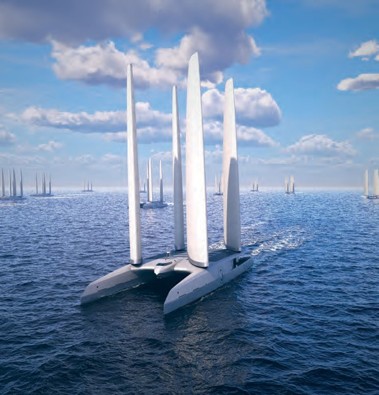
DRIFT Energy’s Most Valuable Yacht concept is designed to convert wind energy into green hydrogen while on the move, care of wind-assisted propulsion, a submerged turbine and a unique wind-hunting algorithm
HOW IMPORTANT IS IT THAT STAKEHOLDERS SHOULD BETTER UNDERSTAND NAVAL SHIP DESIGN?
Warship
Naval ship design remains widely misunderstood, creating risks for acquisition, capability development and long-term performance. Challenging entrenched concepts such as the platform-payload divide, this perspective highlights how stronger engagement between designers, operators and decision-makers is essential to navigate sustainability, AI integration and increasingly complex naval programmes.
SUPPORT TO CONCEPT ANALYSIS AND REQUIREMENT DEVELOPMENT THROUGH WARGAMING
Warship
Manual wargaming is emerging as a powerful tool for evaluating novel maritime concepts when time, data and funding are limited. By exploring system-of-systems interactions early, it helps shape requirements, assess autonomous applications, and inform future force design decisions, offering a practical bridge to more rigorous operational analysis and capability development.
LARGE UNCREWED SURFACE VESSELS - BALANCE OF SURVIVABILITY
Warship
Large Uncrewed Surface Vessels could transform naval operations, but mission success depends on a careful balance of survivability, resilience and risk. Combining vulnerability analysis, wargaming and engagement modelling, emerging approaches examine how platform-level protection and force-level design can enhance endurance, reduce losses and strengthen operational effectiveness in contested environments.
Newsletters
Stay connected with the global maritime community through RINA’s newsletters.
Whether you are a member or not, you can receive updates from The Naval Architect, alongside selected RINA news, events and industry insights. Members also gain access to a wider portfolio of exclusive newsletters on key topics in the maritime industry.
- The Naval Architect (currently available to all members & non-members)
- Power & Sustainability (members-only)
- Ship Repair & Maintenance (members-only)
- Warship Technology (members-only)
- Ferries & Fast Craft (members-only)
- Offshore Technology (members-only)
