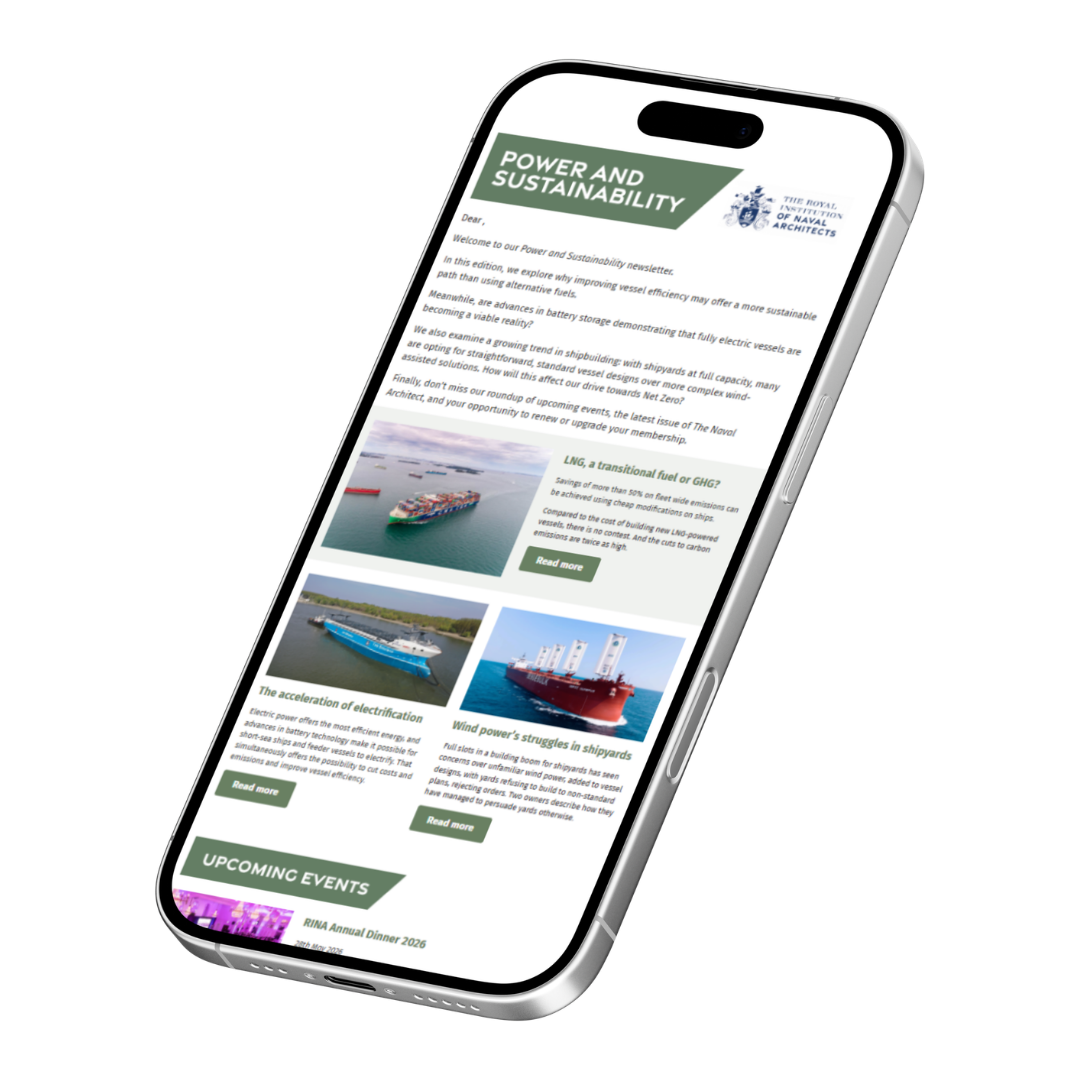
The Naval Architect provides in-depth information on all aspects of vessel design, construction and engineering. Practical applications of latest technology and case studies are accompanied by analysis and foresights. Published every two months, the magazine covers everything from superyachts and short-hop ferries to tankers and heavy-lift vessels; from battery pack installations and sail-assisted solutions to LNG tank retrofits; and from offshore safety to warship resilience.
LEVERAGING THE IOT-EDGE-CLOUD CONTINUUM TO ENABLE THE SMART SHIPYARD AND THE SMART SHIP OF THE FUTURE
ICCAS
Fincantieri’s IPCEI-CIS portfolio is building the digital backbone for the smart shipyard and autonomous ship of the future. By orchestrating data across IoT, edge and cloud environments, the initiative tackles integration, automation and cybersecurity challenges, enabling Industry 4.0 capabilities, lifecycle optimisation and more intelligent maritime operations.
WIND PROPULSION FOR HURTIGRUTEN'S FUTURE ZERO EMISSION CRUISE VESSELS (PROJECT SEA ZERO)
Wind Propulsion
Wind propulsion is emerging as a key enabler of zero-emission coastal cruise operations. Through detailed assessment of sail configurations, weather data and vessel integration, researchers identify practical pathways to enhance energy efficiency, support battery-electric concepts and inform future ship design, while revealing critical operational trade-offs for successful maritime decarbonisation strategies.
THE FATE OF TRADITIONAL MALTESE BOATS
Historic Ships
Traditional Maltese vessels are disappearing, placing maritime heritage and valuable seafaring knowledge at risk. Through stakeholder perspectives, this analysis uncovers the social, operational and economic pressures behind their decline, while proposing practical preservation strategies to safeguard skills, strengthen cultural identity and secure these iconic craft for future generations to value.
ANALYSIS OF CURRENT-VOLTAGE CHARACTERISTICS OF ELECTRICAL MARINE CYCLOIDAL PROPELLER
ISCOT
An electric marine cycloidal propeller could redefine vessel manoeuvrability and propulsion efficiency. By replacing shafts, gears and linkages with direct electromagnetic drive technology, the concept promises higher torque, faster response and lower maintenance. Analysis across key manoeuvring scenarios reveals how innovative propulsion architectures may unlock smarter, more agile ships ahead.
CONSTRUCTION OF FLOATING OFFSHORE WIND TURBINES
Offshore Wind Summit
Floating offshore wind growth is reshaping the role of shipyards, demanding new infrastructure, capabilities and construction strategies. This analysis evaluates facility requirements for turbine assembly, substructure fabrication and deployment logistics, revealing critical engineering constraints and investment priorities. The findings offer a roadmap for scaling future offshore wind programmes globally efficiently.
ADVANCES IN PERFORMANCE PREDICTION OF STEPPED HULLS
SURV
Stepped hulls continue to offer exceptional high-speed performance, yet their complex hydrodynamics have challenged designers for decades. Combining mathematical modelling, numerical simulation and experimental testing, new predictive tools provide deeper insight into step design and performance in waves, enabling faster, more reliable development of next-generation high-performance marine craft.
UILDING ON GREEN SHIPPING CORRIDORS: INTERNATIONAL BLOCS FOR ZERO-EMISSION SHIPPING
Scaling Decarbonisation Solutions
Green shipping corridors alone may not deliver maritime decarbonisation at the required scale. This research proposes regional alliances of ports that aggregate demand for renewable energy and zero-emission fuels, accelerate infrastructure investment, and reduce competitive risks. The findings outline a collaborative pathway for faster, more resilient industry-wide emissions reduction today.
ROUTE OPTIMISATION FOR ADVANCED WATERJET SELECTION
Waterjet
Vessel efficiency extends far beyond maximum speed. By combining detailed route analysis with tailored waterjet selection and design, engineers can optimise performance across an asset’s entire operating profile. The approach reveals new methods for balancing competing demands, unlocking fuel savings, operational efficiency and smarter propulsion decisions in practice today onwards.
AN INVESTIGATION ABOUT ADDED POWER IN HEAVY WEATHER FOR PASSENGER SHIPS WITH FOCUS ON WIND EFFECT
Full Scale Ship Performance
Real-world performance data is reshaping understanding of passenger ship efficiency in heavy weather. By analysing full-scale operational measurements, researchers quantify the combined impact of wind and waves through an added-power methodology. New insights into aerodynamic drag on large topside structures could improve voyage planning, energy efficiency and design decisions globally.
INSTALLATION INNOVATION FOR FLOATING OFFSHORE WIND
Maritime Innovation and Emerging Technologies
Floating offshore wind is moving from demonstration to deployment, creating new demands for naval architecture, marine operations and port infrastructure. This review examines construction, towing and installation challenges, alongside stability, certification and maintenance considerations. The insights highlight practical strategies to reduce project risk, costs and lifecycle uncertainty at scale globally.
REMOTE INSPECTION OF A FPSO UNIT CRUDE OIL TANK WHILST STILL PRODUCING
Full Scale Ship Performance
Remote drone-based inspection is transforming offshore asset assurance by enabling detailed survey work without confined-space entry. Lessons from a successful FPSO crude oil tank inspection highlight the importance of planning, stakeholder coordination, class-approved procedures and tank preparation, demonstrating how UAV technology can reduce risk, cost and inspection time significantly today.
IMPROVING ENVIRONMENTAL IMPACT AND REFINING FLEET RELIABILITY THROUGH THE USE A RELIABILITY CENTRED MAINTENANCE PROCESS TO IMPROVE MAINTENANCE OF THE VESSEL FLEET OF THE MALDIVES TRANSPORT AND CONTRACTING COMPANY PLC
Ship' Life Cycle
Reliability-Centred Maintenance is proving vital to maximising fleet availability and operational performance in challenging economic conditions. Using real-world experience from the Maldives’ essential ferry network, this work demonstrates how data-driven maintenance optimisation can reduce downtime, improve reliability and lower costs, offering valuable lessons for diverse maritime fleets worldwide at scale.
Newsletters
Stay connected with the global maritime community through RINA’s newsletters.
Whether you are a member or not, you can receive updates from The Naval Architect, alongside selected RINA news, events and industry insights. Members also gain access to a wider portfolio of exclusive newsletters on key topics in the maritime industry.