

The full article is available to our Members and registered users. If you are a Member, please sign in to continue reading. If you are not a Member, you can access 1 complimentary article this month by registering for a free account.
Become a Member to access the full range of RINA’s technical publications, articles and professional resources.
A five-class challenge for UK naval design
22nd Sep 2026
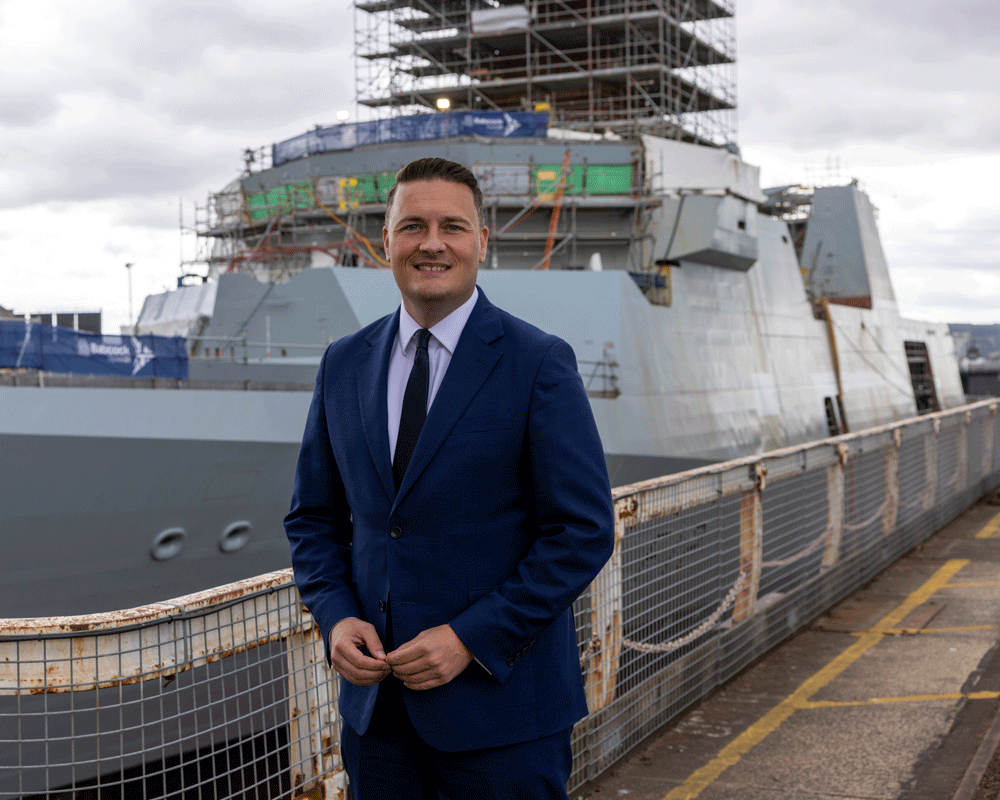
Secretary of State for Defence Wes Streeting at Babcock's Rosyth facility (image: Corporal Ryan Murray, UK MoD. Crown copyright 2026).
The Defence Investment Plan (DIP), published on 30 June, commits £298 billion over the next four years, including £15 billion of additional investment on top of last year's spending review, most of which is extra day-to-day spending on training and improving the availability of ships and aircraft. For the naval sector, the plan confirms a move to a hybrid fleet: at least six Common Combat Vessels (CCVs) will replace the current Type 45 destroyers, with delivery expected from the early 2030s, operating alongside eight Type 26 and five Type 31 frigates and a range of uncrewed surface and underwater platforms. The government says defence spending rises to 2.7% of GDP by 2029, and that it maintains its ambition to reach NATO's 3.5% target by 2035.
The centrepiece for surface ship design is a change of direction away from the planned Type 83 destroyer and towards the CCV concept. Described by the MoD as the Navy's first hybrid warship, the new class will coordinate uncrewed systems in the air, on the surface and under the sea. Rather than concentrating capability in a small number of large, expensive platforms, the CCV is conceived as a