

Naval architecture in the electric age
Chartwell Marine is known for its work in the offshore wind market, but it is also expanding its work in the fast passenger ferry market, applying lessons learned from offshore vessel design right across the board.
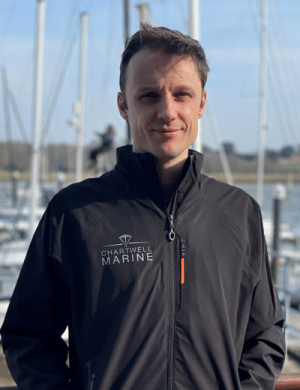
Christophe Rident, senior naval architect, who is leading Chartwell’s expansion into the ferry sector, says electrification currently represents the most practical near-term pathway for fast ferry decarbonisation.
Chartwell has invested heavily in developing a new low-wake ferry hullform specifically optimised for electric propulsion systems and lower operating speeds in response to how electrification has fundamentally changed the design process.
"Realistically vessel operators that will be able to afford electrification will be the short route operators, therefore invariably those vessels will be operating close to shore,” Rident says.
 |
|---|
"If you're able to reduce the wash even at high speed that becomes more profitable because it means more frequent and quicker trips.”
A holistic approach
Rident explains that the optimal weight distribution for a vessel that goes above 30knots is different to the optimal weight distribution for a vessel that's a bit slower.
"When your vessel speed decreases, your weight distribution has to shift forward slightly, which when you have big batteries actually works quite nicely,” he says.
“We put the batteries in a separate room relatively close to the centre of buoyancy. This means that you get less changes in trim across the vessel loading conditions than you do in a traditional ferry."
The largest challenge, he says, is that battery packs take up a lot of space.
“Our approach has been to try and put the batteries above deck where you're less limited by hull beam, which means that you can have a much narrower demi-hull beam than you would on a traditional fast ferry. That's really beneficial for vessels that operate in the 22 to 28knot range.
"But putting the batteries above deck is eating into real estate that would normally be taken up by passengers, so it’s a fine balance to achieve."
Consequently, Chartwell takes a holistic approach to vessel design where nothing is done in isolation.
“Naval architecture is a job of compromises,” he says.
"Where can we put the battery on the vessel? What are the maintenance envelope requirements? What's the ventilation and cooling requirements? All those things have to be taken into account very early on in the design."
Lessons learned
Much of Chartwell's design experience comes from offshore wind CTVs and its wider expertise in aluminium boat building.
Some of this best practice is, of course, transferrable to fast ferry design.
"Ultimately, they are still catamaran aluminium vessels,” Rident says.
"The same concepts of naval architecture apply – efficiency, lightweight, these concepts are applicable to any aluminium vessel.
"Where a CTV is transferring to turbines at high speed is very similar to what a high-speed ferry does. It goes between A to B at high speed.
"If the internal layout doesn’t work with the existing passenger boarding arrangements, the operator will see longer turnaround times, which adds stress to the schedule. That’s why, when adapting proven designs that have been tried and tested in demanding environments such as offshore wind, it’s also essential that the new ferry is tailored to the exact requirements of its end users.”
Future proofing
Future proofing is becoming as important as initial performance and Chartwell is designing its ferries so they remain adaptable to future propulsion technologies.
"Future proofing when it comes to future fuels is very different to future proofing for electrification and actually much easier,” Rident says.
"If you are going to convert your vessel from full diesel to full methanol, you probably need a new engine, new fuel pipes and a slightly different fuel tank, but you can still put them in the same place."
He says that the real challenge is with dual-fuel and hybrid approaches which are the right choice for many in the short to medium term.
"The challenge with dual fuel is obviously you have twice as much to fit in, it's a weight penalty, it's a space penalty."
This is where he argues that batteries offer future flexibility.
"For batteries, you can future proof them by creating a lot of space in the right places for weight distribution, make sure there are empty voids, insulate them and have the ventilation put in so that in the future you can just place some batteries in there.
"You can have a gearbox that's hybrid-ready, then you just need to add some switchboards and change the electric grid on board.”
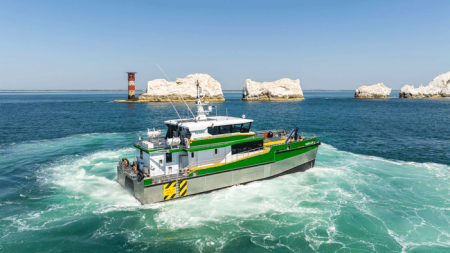
Chartwell is applying these design principles to the bespoke hybrid-propulsion ferry it has designed for Shetland's Fair Isle, which will provide the island community with an enhanced and essential transport link.
The company has three ferry projects currently underway, including the design of the new Shetland Fair Isle ferry which is due to hit the water in 2027.
 |
|---|
Looking ahead
Looking ahead, Rident says that electrification is where naval architects can make the greatest contribution to accelerating ferry decarbonisation beyond simply designing more efficient vessels.
"Electrification isn't this pipe dream anymore, it's very feasible, it's very possible. It's now financially viable in a lot of cases."
He points out that the naval architect remit is stretching from only designing the vessel to helping operators come up with a business case to electrify.
"Now it's very much, 'Okay, you go from A to B, but what do you do in between? How many times do you go from A to B in a day?' We ask many more questions about the operation of the vessel from the outset and then it’s about educating operators around what is possible."
Rident says that there's much more upfront working together with the operator now, which traditionally wasn’t done before.
"Additionally, naval architects are having to become much more clued up on electricity and electrical systems than before,” he says.
One of the biggest challenges Rident says is the disconnect between what the operators want and who is supplying those needs.
The vessel is just one aspect – the main conversation now revolves around what shoreside infrastructure is available.
“In that sense we as naval architects have become facilitators, helping operators with the discussions they're having with all stakeholders including civil engineers and grid suppliers,” Rident concludes.
| General | |
| Preview Text | Chartwell Marine is known for its work in the offshore wind market, but it is also expanding its work in the fast passenger ferry market, applying lessons learned from offshore vessel design right across the board. Christophe Rident, senior naval architect, who is leading Chartwell’s expansion into the ferry sector, says electrification currently represents the most practical near-term pathway for fast ferry decarbonisation. Chartwell has invested heavily in developing a new low-wake ferry hullform specifically optimised for electric propulsion systems and lower operating speeds in response to how electrification has fundamentally changed the design process. "Realistically vessel operators that will be able to |
| Article Tags | |
| Article Tags | DecarbonisationHigh-speedCrew transfer vesselsBatteriesFerries |
| Naval Architect Edition | |
| Naval Architect Edition | |