

Offshore Technology
Offshore Technology explores the systems, engineering practices, innovations and challenges, driving offshore operations across energy and marine sectors. Topics you can expect include subsea engineering, floating production systems, offshore wind technologies, digital monitoring and control systems, and asset integrity management.
Delve into analysis, and insights on emerging technologies improving safety, efficiency, and performance in increasingly harsher offshore environments in the journey to cleaner sustainable energy sources.
FULL-SCALE MOTIONS OF A LARGE HIGH-SPEED CATAMARAN: THE INFLUENCE OF WAVE ENVIRONMENT, SPEED AND RIDE CONTROL SYSTEM
Transactions
Understanding the behaviour of high-speed vessels in severe sea conditions remains critical as operators seek to balance performance, passenger comfort, and safety. Full-scale trials of a large wave-piercing catamaran demonstrated the significant influence of vessel speed, heading, and ride-control systems on motion responses, while also providing valuable validation data for numerical seakeeping prediction methods used in vessel design and performance assessment.
FLNG orders and challenges rising
Offshore Technology (Newsletter)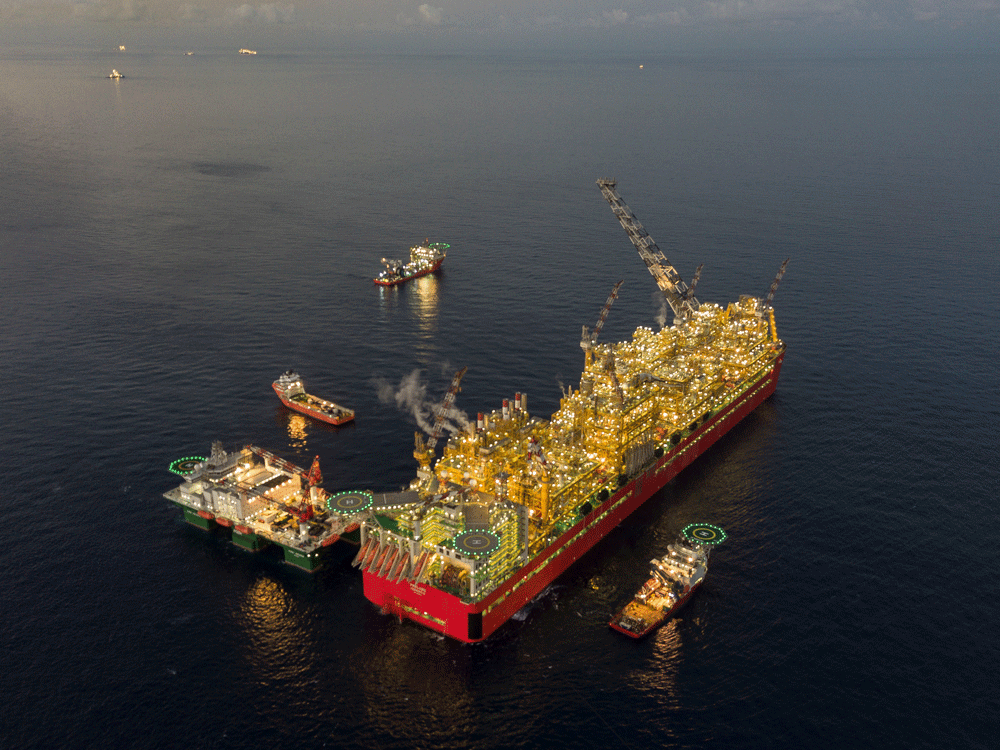
FLNG Prelude is the world's largest floating facility located offshore Australia (image: Shutterstock)
The number of floating LNG projects are increasing fast. Today’s liquefaction capacity is forecast to more than treble from 16 million to 55 million tonnes by 2040.
A REVIEW OF MOORING SYSTEM SOLUTIONS FOR FSRUs.
Alternative Fuels
Selecting the right mooring system is critical to the performance and economics of floating storage and regasification units. Evaluating jetty nearshore and offshore solutions researchers identified key trade-offs and developed a practical decision framework supporting owners operators and port authorities in optimising project-specific designs reducing risk improving flexibility and resilience.
A PERFORMANCE AND EMISSION INVESTIGATION OF A MARINE DIESEL FUELLED WITH B20, B50 AND B100 MICROALGAE (SCHIZOCHYTRIUM SP.) OIL WITHOUT CHEMICAL ADDITIVE
Alternative Fuels
Microalgae oil is emerging as a promising low-carbon marine fuel. Engine testing of pure and blended Schizochytrium fuel demonstrated significant reductions in NOx and carbon monoxide emissions despite efficiency and fuel-consumption trade-offs at higher loads. The findings highlight renewable biofuels’ potential to support cleaner shipping and emissions compliance efforts globally.
FUTURE FUELS FOR COMMERCIAL SHIPPING
Alternative Fuels
Meeting IMO emissions goals requires more than efficiency technologies. This analysis examines speed reductions, wind propulsion, alternative fuels, waste-derived energy sources, and renewable fuel availability. It highlights supply-chain constraints, transitional pathways, and the growing role of shipping as a major future liquid-fuel consumer, shaping decarbonisation strategies worldwide over coming decades.
ICCAS 2022 Conference Proceedings
ICCAS
This is the Whole Conference Proceedings for: International Conference on Computer Applications in Shipbuilding, 13th - 15th September 2022, Yokohama, Japan
Scaling Decarbonisation Solutions 2022 Conference Proceedings
Scaling Decarbonisation Solutions
This is the Whole Conference Proceedings for: Reducing Emissions by 2030, 29th November - 1st December 2022, Rotterdam, The Netherlands
Warship 2022 Conference Proceedings
Warship
This is the Whole Conference Proceedings for: Designing Warships for the Future, 8th - 9th June 2022, M Shed, Bristol, United Kingdom
Waterjet 2022 Conference Proceedings
Waterjet
This is the Full Conference Proceedings for: International Workshop on Water-Jet Propulsion, 30th June - 1st July 2022, Online
Full Scale Ship Performance 2021 Conference Proceedings
Full Scale Ship Performance
This is the Whole Conference Proceedings for: Full Scale Ship Performance, 10th - 11th February 2021, Online
ICSOT 2021 Conference Proceedings
This is the Whole Conference Proceedings for: 7th International Conference on Ship and Offshore Technology, Enhancing The Sustainable Use of Ocean-based Resources Through Innovation on Maritime Technology, 19th - 20th November 2021, Surabaya, Indonesia
Maritime Innovation and Emerging Technologies 2021 Conference Proceedings
Maritime Innovation and Emerging Technologies
This is the Whole Conference Proceedings for: Maritime Innovation and Emerging Technologies, 17th - 18th March 2021, Online
Newsletters
Stay connected with the global maritime community through RINA’s newsletters.
Whether you are a member or not, you can receive updates from The Naval Architect, alongside selected RINA news, events and industry insights. Members also gain access to a wider portfolio of exclusive newsletters on key topics in the maritime industry.
- The Naval Architect (currently available to all members & non-members)
- Power & Sustainability (members-only)
- Ship Repair & Maintenance (members-only)
- Warship Technology (members-only)
- Ferries & Fast Craft (members-only)
- Offshore Technology (members-only)
