

Mentoring - Charting a course: from slide rules to cybersecurity
Two naval architects, more than four decades apart in their careers, sat down for The Naval Architect to discuss innovation, safety, mentoring and the future of the profession. Dr Tom Allan, former chairman of the IMO Maritime Safety Committee, and Dr Martina Reche-Vilanova, technical manager at North Windships, found they had much in common.
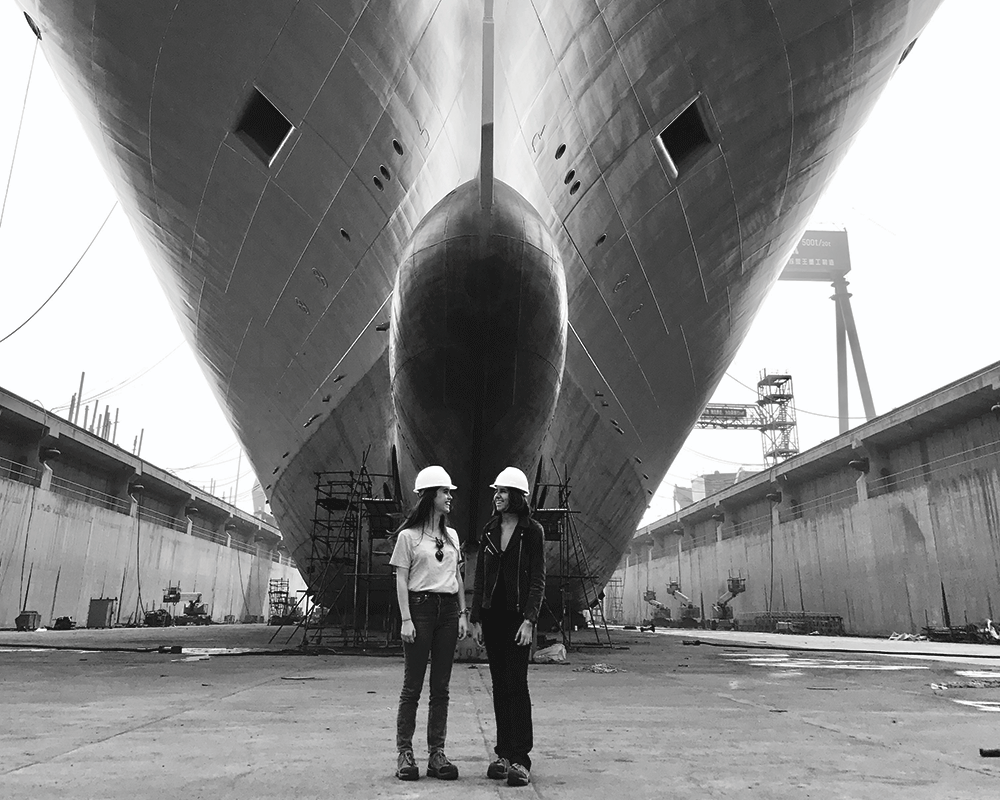
Martina (left) at CSC Jinling Shipyard, standing under the ro-ro ship Ephesus Seaways in 2018.
ON INNOVATION
Tom: When I was starting out, we did all of our calculations by hand, and at university we weren’t allowed to use a slide rule in exams. For me, the biggest innovation was computers. On ships like the QE2 and the Canberra, we could only run one damage calculation, choosing the worst-case pair of compartments and testing that. Our criterion was that if the ship settled with more than 6in of freeboard, she was safe, and we weren’t even looking at waves, only still water. When those two ships went to the South Atlantic in the early 1980s, we were able to use the Royal Navy’s computer in Bath and ran 10 damage conditions. Fast forward to 2010 and the Oasis of the Seas, and we managed 9,600 damage scenarios. That gradual progress was probably our biggest innovation.
Martina: For me, innovation isn’t the computer, it’s AI, and how it can be applied to our industry. Innovation is anything that helps us solve the net-zero challenge, from optimising ships to port call optimisation, and plugging that together with green technologies so that the worldwide fleet can reach its targets. I don’t think a single technology solves this – it will be a mix.
SAFETY VERSUS THE ENVIRONMENT
Tom: What concerns me is that over the past 15 to 20 years, we may have taken our eye off the ball on safety design, in preference to the environment and net zero. I worry we aren’t taking advantage of the progress in technology to revisit ship safety. I’ve been to conferences where the emphasis is on fuel savings, without acknowledging that some of these alternative fuels are more toxic and more dangerous to handle.
Martina: I agree. Safety is key. Sometimes at decarbonisation conferences, no one talks about it. Ammonia, for example, is extremely toxic, so what happens to the crew if there’s a leak? A shipowner’s first question is usually about savings and payback period – they assume the system is already safe. So we need to make sure everything we install is properly tested, and that the crew is on board with the technology, otherwise it won’t be used correctly. That means communication between crews, developers, shipowners, operators and regulators.
AUTOMATION AND CYBERSECURITY
Tom: I have no problem with automated ships operating domestically within a controlled environment. What I struggle with is international operation. Take a ship flying a Panamanian flag, sailing between Australia and Japan, with a casualty off the Philippines, and being operated by somebody in South Africa. Who’s responsible, and who provides the international regulation to control that? Norway has set up a tripartite port system for small containerships operating within one country, and that works because it’s controlled by that country’s engineers. International legislation, and countries wanting control over ships in their own waters, could be a stumbling block.
Martina: I agree. There’s a huge range of levels of automation, from minor automation up to a fully autonomous vessel. In the short term I’d expect more low-level automation on existing ships, rather than a fully automated ocean-crossing containership. To make something autonomous you need a lot of data to train it, plus navigation rules and regulatory questions, and SOLAS requires a person onboard in certain circumstances. A big point for me is cybersecurity: what happens if a vessel is hacked?
Tom: Cybersecurity is a great point. If there’s no one aboard to disconnect a ship, somebody else can take control and sail it off somewhere else. Most ships can be tracked now, but that won’t help if it’s sailed into a country you don’t want it going near. You’d see digital piracy in place of the old kind. When I chaired the Maritime Safety Committee, I went to the Strait of Malacca where it was remarkably simple for pirates to board a ship, take it and offload the cargo before anyone could act. Cybersecurity would let them do the same thing without ever boarding.
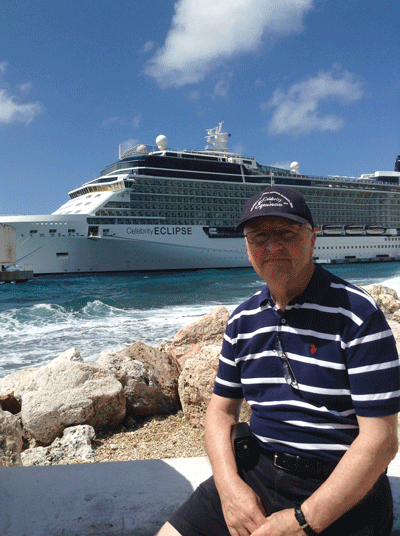
Tom: "We may have taken our eye off the ball on safety design"
ON MENTORING
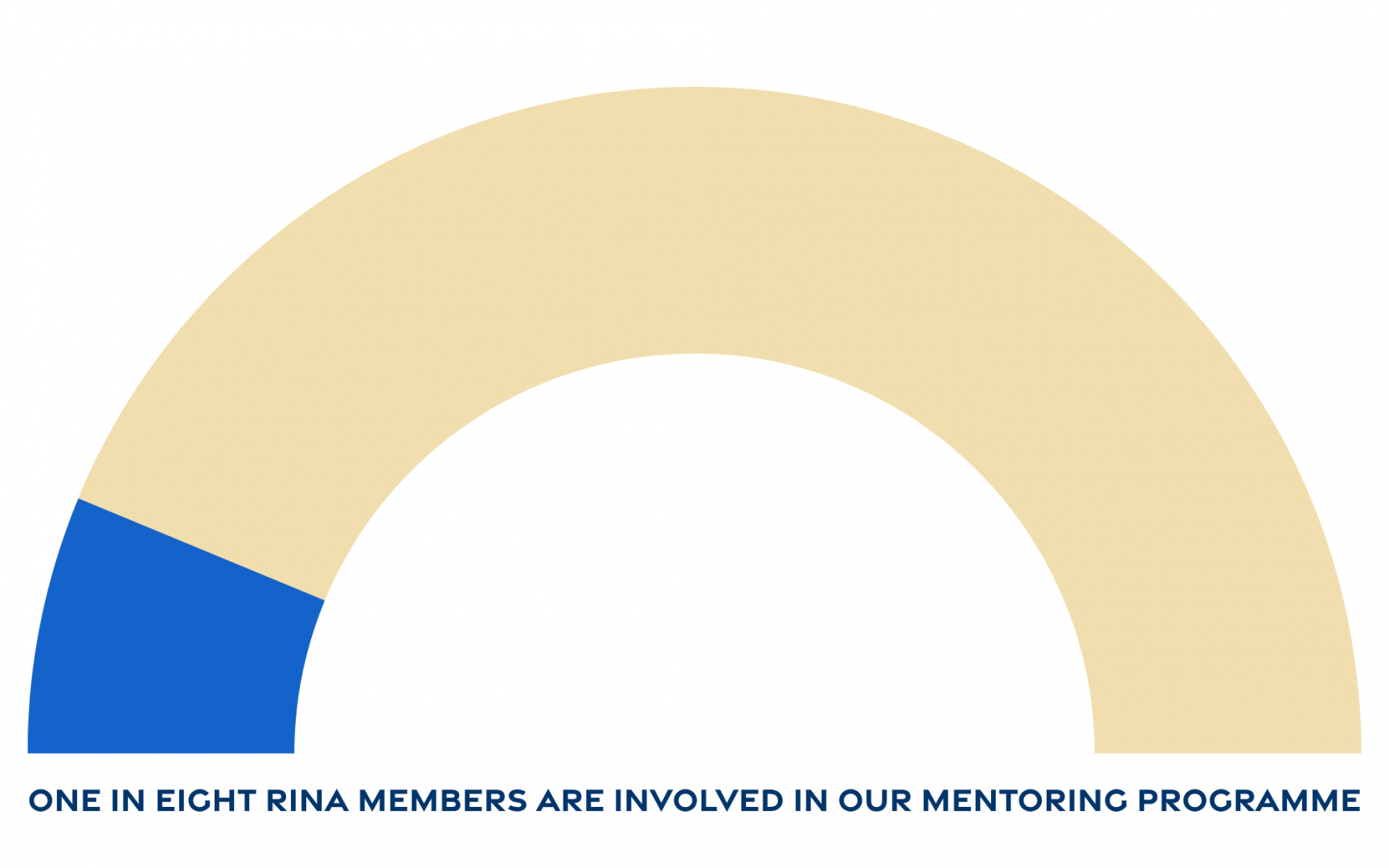
Martina: For me, mentorship brings the experience you’re missing. You learn the theory and the physics at university, but a conversation like this one with Tom is invaluable – what worked, what went wrong, what was learned. It’s an honest account of someone’s experience, which helps you make your own judgement, and you can’t learn that from a textbook. I mentor girls through a Danish NGO called High Five Girls, introducing them to naval architecture through activities such as building paper ships and testing how much weight they can carry before they sink.
Tom: I get a great deal out of mentoring because I get to speak to people dealing with issues I never dreamt of. A mentor gives a mentee a wider source of knowledge. Someone who has been around the industry gives you access to their whole network. I’ve had mentees ask what a classification society is, and I once spoke to students who didn’t know that shipping legislation comes from IMO rather than their own country! Universities educate students, but a mentor widens that knowledge and makes the introductions. I’d always say, don’t do something because someone else tells you to, but if you enjoy it, that’s what you should do.
THE ROLE OF RINA
Martina: RINA has played a big part in my own path. I got the RINA student membership, and the first RINA conference I attended was its first wind propulsion conference. I was already a sailor, so I was amazed by the technology, a topic I hadn’t come across at university. That conference led to my master’s thesis at DNV and to entering the industry at the start of my career. On reaching younger engineers, I’d say social media, Instagram and TikTok in particular, is now a requirement. My generation is probably the last that reads a newspaper or watches television as well as using social media.
Tom: As a young naval architect, the RINA transactions were my bible – I couldn’t have survived without the material it gave me access to. RINA used to have a spring meeting and an autumn meeting, with presentations and discussions, and I found them invaluable, because as I came across issues in ship design and construction, they’d often already been addressed in these documents. What we seem to have lost is that single core of knowledge, now spread across many separate conferences. I’m pleased to hear about the benefits of free student membership – it removes a real barrier for young people getting involved.
LOOKING TO THE FUTURE
Martina: Net zero is a big challenge for this generation of naval architects. It needs cooperation between all stakeholders in the maritime industry – regulators, port operators, port authorities, operators, shippers, shipowners, everyone needs to be involved – and RINA is well placed to build those connections.
Tom: I agree, but I’d add that we still have separate institutions – RINA, IMarEST, the Nautical Institute, etc – all concerned with different aspects of the same ship. I think it’s time to start a discussion about greater cooperation between them and, eventually, a single maritime institution bringing shipping and the environment together under one roof.
This article appeared in Members, TNA July/August 2026. Find out more about RINA Mentoring Programme.
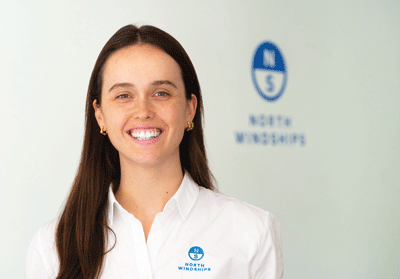
Dr Martina Reche-Vilanova is technical manager at North Windships. Her PhD, with North Technology Group, DTU and Harvard, produced the first computer program of its kind for optimising sail number, type and placement on merchant ships, recognised at COP26.
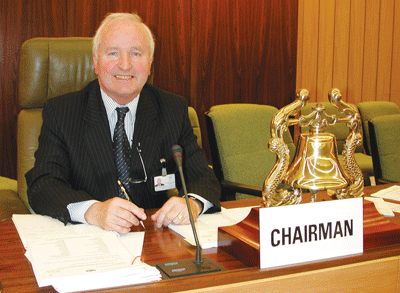
Dr Tom Allan FRINA is an international maritime consultant with a career spanning six decades. He was a director of the Maritime and Coastguard Agency and chaired IMO’s Maritime Safety Committee from 1999 to 2005, work recognised with the IMO International Maritime Prize.
Stay connected to the ideas shaping maritime
From wind propulsion and decarbonisation to AI, safety and the future of ship design, RINA brings together the people working on some of the maritime industry's biggest technical challenges.
RINA membership connects you with technical insight and publications, specialist conferences and events, mentoring and professional development, and a global community spanning industry, academia and regulation.
Whether you're developing new technology, applying it at sea or building your career in the sector, RINA gives you more ways to learn, connect and contribute.
Get In Touch