

The full article is available to our Members and registered users. If you are a Member, please sign in to continue reading. If you are not a Member, you can access 1 complimentary article this month by registering for a free account.
Become a Member to access the full range of RINA’s technical publications, articles and professional resources.
Flexible FLNG's star is rising
29th Sep 2026
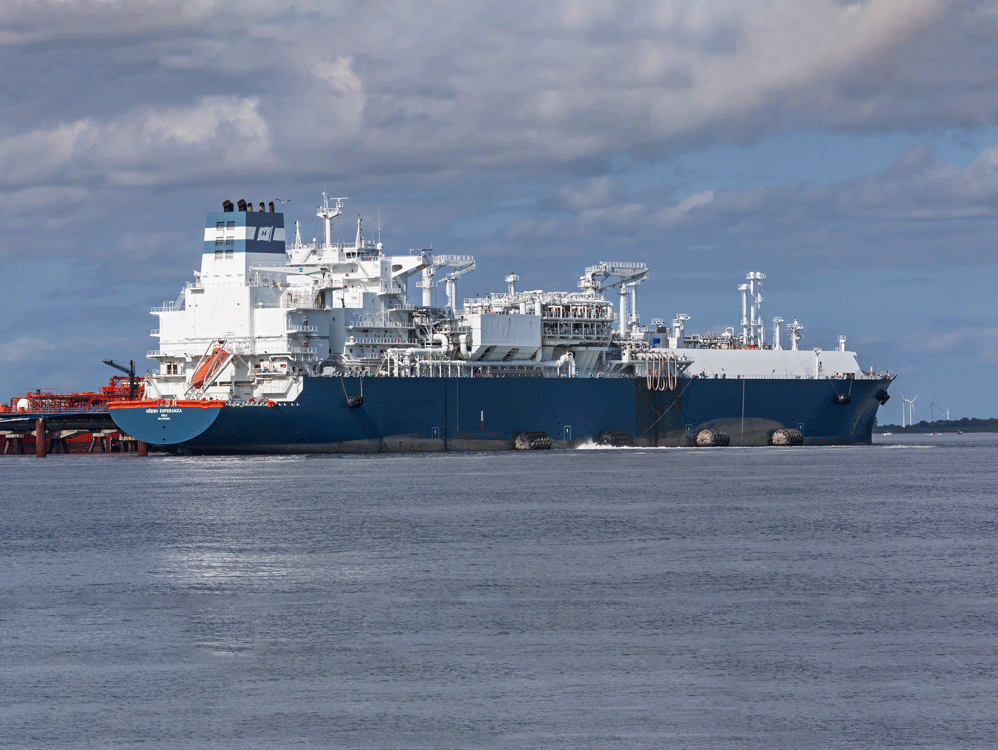
Höegh Esperanza FLNG unit at Wilhelmshaven (image: Shutterstock)
Converting LNG tankers into floating storage and liquefaction plants, or FLNG units offers security to critical infrastructure at pace, with the flexibility to alter policy course rapidly.
As with all vessels, the market drives demand. For Golar LNG, the Bermuda-based FLNG company, its innovative, speculative conversion of a Moss-type LNG tanker into a floating storage and liquefaction unit was a risk that looks to be paying off.
The Golar Hilli began operations in 2018 and has completed its first eight-year contract, just as Golar has announced an order of its fourth FLNG unit, which will be built at Yantai CIMC Raffles.
Golar CEO Karl Fredrik Staubo commented on the company’s second Mk II FLNG, which has a liquefaction capacity of 3.5mtpa: “We believe this FLNG order combines the world’s earliest available FLNG delivery [and] is well positioned to provide clients with