




Lorem Ipsum.

Lorem ipsum dolor sit amet, consectetur adipiscing elit, sed do eiusmod tempor incididunt ut labore et dolore magna aliqua. Ut enim ad minim veniam, quis nostrud exercitation ullamco laboris nisi ut aliquip ex ea commodo consequat.

Button
Home : Bin : Test Layout Two

Lorem Ipsum.

Lorem ipsum dolor sit amet, consectetur adipiscing elit, sed do eiusmod tempor incididunt ut labore et dolore magna aliqua. Ut enim ad minim veniam, quis nostrud exercitation ullamco laboris nisi ut aliquip ex ea commodo consequat.

Lorem Ipsum.

Lorem ipsum dolor sit amet, consectetur adipiscing elit, sed do eiusmod tempor incididunt ut labore et dolore magna aliqua. Ut enim ad minim veniam, quis nostrud exercitation ullamco laboris nisi ut aliquip ex ea commodo consequat.

Lorem Ipsum.

Lorem ipsum dolor sit amet, consectetur adipiscing elit, sed do eiusmod tempor incididunt ut labore et dolore magna aliqua. Ut enim ad minim veniam, quis nostrud exercitation ullamco laboris nisi ut aliquip ex ea commodo consequat.

Lorem Ipsum.

Lorem ipsum dolor sit amet, consectetur adipiscing elit, sed do eiusmod tempor incididunt ut labore et dolore magna aliqua. Ut enim ad minim veniam, quis nostrud exercitation ullamco laboris nisi ut aliquip ex ea commodo consequat.

Lorem Ipsum.

Lorem ipsum dolor sit amet, consectetur adipiscing elit, sed do eiusmod tempor incididunt ut labore et dolore magna aliqua. 

Lorem Ipsum.

Lorem ipsum dolor sit amet, consectetur adipiscing elit, sed do eiusmod tempor incididunt ut labore et dolore magna aliqua.

Lorem Ipsum.

Lorem ipsum dolor sit amet, consectetur adipiscing elit, sed do eiusmod tempor incididunt ut labore et dolore magna aliqua. 

Lorem Ipsum

Lorem ipsum dolor sit amet, consectetur adipiscing elit, sed do eiusmod tempor incididunt ut labore et dolore magna aliqua. 

Lorem Ipsum.

Lorem ipsum dolor sit amet, consectetur adipiscing elit, sed do eiusmod tempor incididunt ut labore et dolore magna aliqua. Ut enim ad minim veniam, quis nostrud exercitation ullamco laboris nisi ut aliquip ex ea commodo consequat. Duis aute irure dolor in reprehenderit in voluptate velit esse cillum dolore eu fugiat nulla pariatur. Excepteur sint occaecat cupidatat non proident, sunt in culpa qui officia deserunt mollit anim id est laborum.

Button

First & Last Name

Lorem ipsum dolor sit amet, consectetur adipiscing elit, sed do eiusmod tempor incididunt ut labore et dolore magna aliqua. Ut enim ad minim veniam, quis nostrud exercitation ullamco laboris nisi ut aliquip ex ea commodo consequat. Duis aute irure dolor in reprehenderit in voluptate velit esse cillum dolore eu fugiat nulla pariatur. Excepteur sint occaecat cupidatat non proident, sunt in culpa qui officia deserunt mollit anim id est laborum.

>

Construction and Repair

The task of the ship and boat builder and offshore constructor is to convert drawings and detailed specifications into real structures. A Naval Architect specialising in construction usually holds a management post, taking responsibility for the management of the whole yard or for sections of it such as planning, production or the complex operation of fitting out. There is a continuous striving to make savings with existing techniques and equipment through the adoption of new processes and practices and by better training for the work force. The Naval Architect must also organise the supply of materials and components, inspection and testing as well as the vital resources of manpower.

Repair work has much in common with construction. Naval Architects in this field become professional managers who, like the builders, need to master modern management and associated techniques. Emergency repair work often offers opportunities for ingenuity and on-the-spot improvisation, and in the offshore engineering world in particular repair frequently involves underwater technology.

Employers of Naval Architects in construction and repair include both large and small shipbuilders and repairers, and those involved in the maintenance and repair of naval ships and submarines. A large proportion of senior technical managers and executives in the UK maritime industry are those who have been educated and trained as Naval Architects.

Detail Link
>

Design

Naval Architects are by necessity creative people. They must have an understanding of the many facets of ship design - function, appearance and especially important at sea, safety. They must be team leaders, able to integrate the inputs of many others to achieve a balanced and coherent whole. Apart from the architectural aspects of ship form and layout, they must be able to use complex mathematical and physical models to ensure that the design is satisfactory technically and that it meets the safety rules and standards laid down by Classification Societies and Government Agencies.

A ship, boat or offshore structure must be stable, seaworthy and have adequate strength in all weathers as well as the hydrodynamic (and, for sailing craft, aerodynamic) performance to give economic propulsion and safe and comfortable motion in all sea states. The design process demands the extensive employment of computer based information and communication systems.

Employers of Naval Architects involved in design work include ship and boat builders, offshore constructors, design consultants, and for the ships and submarines of the Royal Navy, the Ministry of Defence. Major equipment manufacturers also employ teams of engineers, including Naval Architects, on the design of such products as propulsion systems, auxiliary systems, subsea production systems and control systems.

Detail Link
>

Education

The accreditation of a course by the RINA or another engineering professional institution ensures that its qualities are such that those who satisfy its requirements meet the educational standards of membership and registration. All accredited courses must contain certain features and essential components, but individual courses will differ in structure and content. The prospectuses of universities and colleges should be consulted in the initial selection of a course.

While the majority of Student Members will follow educational courses accredited by the RINA, students of other engineering disciplines who intend to work in the maritime industries are also eligible for membership. They should ensure that their studies will lead to an educational qualification which entitles them to become members of the RINA and register with the EC.

At school or college a broad range of subjects should be studied at GCSE level, covering both the arts and sciences, including the essential subjects Mathematics, Physics and English. These studies should lead to qualifications satisfying the entry requirements for either an accredited masters degree (MEng) course if proposing to become a Chartered Engineer, or a degree (BEng) course if intending to become an Incorporated Engineer. However, honours degree BEng graduates may also qualify for registration as a Chartered Engineer after completing additional academic studies, which may be achieved by a formal course at university or college, by distance learning such as through the Open University, by work based learning assessed during employment, or by a combination of these. Similarly, a diploma graduate may follow a similar route to qualify for registration as an Incorporated Engineer.

Applicants for entry to degree courses are normally expected to offer three GCE 'A' levels, or five Scottish 'Highers', with good grades in Mathematics and Physics. Acceptance on a particular course may be dependent on an interview as well as the grades achieved.

Bridges between educational routes exist, and students with suitable diploma qualifications may enter or transfer to BEng courses. Similarly, students may transfer from BEng to MEng courses.

All degree courses accredited by the RINA involve the study of engineering, materials, design theories and methods, mathematics and numerical methods, management, manufacturing systems and methods as well as naval architecture. At least 50% of each course marine orientated and contains a major project and engineering applications.

For those who are unable to attend a degree course, the RINA's educational requirements will be satisfied by passing the EC's examinations or an approved study profile for an Open University degree.

Candidates for membership of the RINA offering degrees accredited by other professional engineering institutions may be required to gain additional training/experience to compensate for any deficiencies in the above studies. Specialisation is a normal feature of a degree course and the options available may have a considerable influence on the choice of course.

A number of organisations including the RINA offer scholarships which provide additional financial support during an educational course.

Detail Link
>

Training

Although a number of companies have training schemes accredited by the RINA, the majority of trainees will need to work to individual programmes also approved by the RINA. In the latter case, the RINA can assist trainees in developing their individual training programmes.

When the company or individual training programme has been agreed, a senior engineer will be appointed to act as a mentor.

The Institution's training requirements call for a structured, broad and integrated programme, which should encompass the full range of practices applicable to the maritime industry.

There are three parts to the Naval Architect's training:

Design

The trainee Naval Architect is required to gain an insight into the design process as well as communication and information systems by being involved in typical design issues such as requirements, functions, analyses, materials, production processes, quality, reliability, appearance and costs, hazard identification and risk assessment techniques.

Engineering Practice

Projects and departmental attachments are used to cover important applications to engineering and technology involving the wide range of materials and components employed in the marine industry, processes such as material forming, removal, joining and fabrication and their control, and assembly, installation and commissioning.

Management Services

The object of this part of training is to give the Naval Architect an awareness of important management practices such as production planning and control, quality control and assurance, interpersonal skills and personnel management, and commercial, marketing, legal and financial implications.

Some companies may not be able to provide all of the above required training themselves and may wish to attach their trainees to other organisations for certain parts of the planned training. Such attachments may also be used to cover vital elements more efficiently or to provide a broader appreciation of the wide range of expertise required by the Naval Architect.

When writing to potential sponsors or employers or responding to offers of training or sponsorship, it is important to enquire whether the company scheme meets, or the company is prepared to assist in meeting, the requirements of the RINA.

Detail Link
>

Experience

After the completion of education and training there follows a period in which the prospective Naval Architects gain responsible experience in posts which require them to develop and prove fully their technical competence, and to demonstrate a satisfactory range of functions and characteristics such as the exercise of independent technical judgement requiring both practical experience and the application of engineering principles.

A minimum of two years of responsible experience is required and on completion an application should be made to the RINA for transfer to the class of Member or Associate Member, which authorises the use of the letters MRINA or AMRINA after a member's name. Successful candidates for transfer to Member or Associate Member will be offered registration with the EC which authorises them to also use the style or title of Chartered Engineer or Incorporated Engineer and the designatory letters CEng or IEng. To apply for EUR ING registration in the UK you must be a member of a professional engineering institution and registered as a Chartered Engineer with the Engineering Council. From January 2023 EUR ING applications will be made directly by candidates via an online application tool on the Engineering Council’s website. For more information on this process, please click here.

Detail Link
>

Professional Development

As a Chartered Engineer or Incorporated Engineer gains experience, the choice of career widens and after a few years opportunities may occur in many of the areas mentioned earlier. Later a Naval Architect may move from technical to general management to secure senior positions and ultimately directorships. While often regarded as being strictly vocational, engineering can also be an ideal base for a wide variety of careers outside the maritime industry.

Naval Architects must be prepared to keep abreast of developments in modern technology, to adapt to rapidly changing circumstances and to take advantage of new career opportunities as they arise. Continuing professional development (CPD) is therefore essential and can be achieved through courses and conferences which are organised by the RINA and other engineering professional institutions or organisations on new technologies, management systems, communication, business and many other topics. Naval Architects may also keep up-to-date by reading technical journals and papers published by professional institutions.

Detail Link
>

The USV launch and recovery 'missing link'

Sealartec's radical ALR-S technology can convert a conventional ship's stern ramp to a fully autonomous recovery system for unmanned surface vessels

Detail Link
>

'ROC + Dock' project darts towards the wrap-up phase

The UK-based ROC + DOCK project has brought together remote-controlled operations, a dual-function simulator and a ‘hands-off’ docking station, to encourage force multiplication of uncrewed vessels in ports and harbours

Detail Link
>

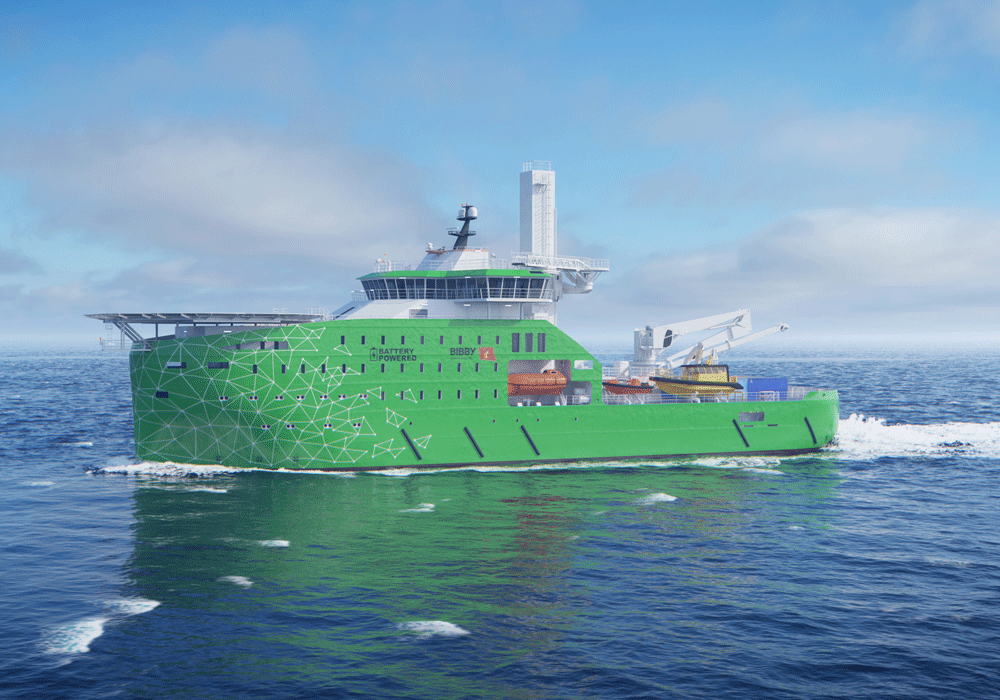
Hybrid CSOV 'Windea Clausius' joins Bernhard Schulte Offshore fleet

The latest addition to Bernhard Schulte Offshore’s CSOV fleet, Windea Clausius, combines a methanol-ready hybrid propulsion plant with Ulstein’s Twin X-STERN design for energy efficiency and ease of operations

Detail Link
>

Who will lead RINA into its next chapter?

Detail Link
>

Wind power for patrol boats? Ask the New Generation

We've seen wingsails applied to bulkers and tankers - but aboard a smaller patrol boat? The latest design from MAURIC, set for launch in 2027, could open up an entirely new market for wind-assisted propulsion systems

Detail Link
>

STEP 1: Understand the grades

Detail Link