The underwater arms race
The global undersea arms race is transforming not just navies but the engineering profession behind them. Workforce, digital capability and nuclear stewardship are now as strategically important as the platforms themselves.
Take 10 seconds to nominate a colleague, mentee or friend for our Forbes-style list. Must be under the age of 40 in 2026. Open to all maritime professions associated with naval architecture. See eligibility criteria. [hyperlinked].
Renowned for the technical excellence of our events, publications and learning, we offer career pathways for naval architects and 16 associated professions [hyperlink to 16 professions].
We cover everything from super yachts and green propulsion to warship resilience. Network 1-2-1 with top talent at our events or influence the maritime industry by joining one of our comittees.
We promote the interdisciplinary conversation at the heart of maritime innovation. Speak at our events, publish in our journals or simply join the discussion forums on our website.
?? HOW?? FILL IN EMAIL HERE AND SIGN UP WITH 1 CLICK
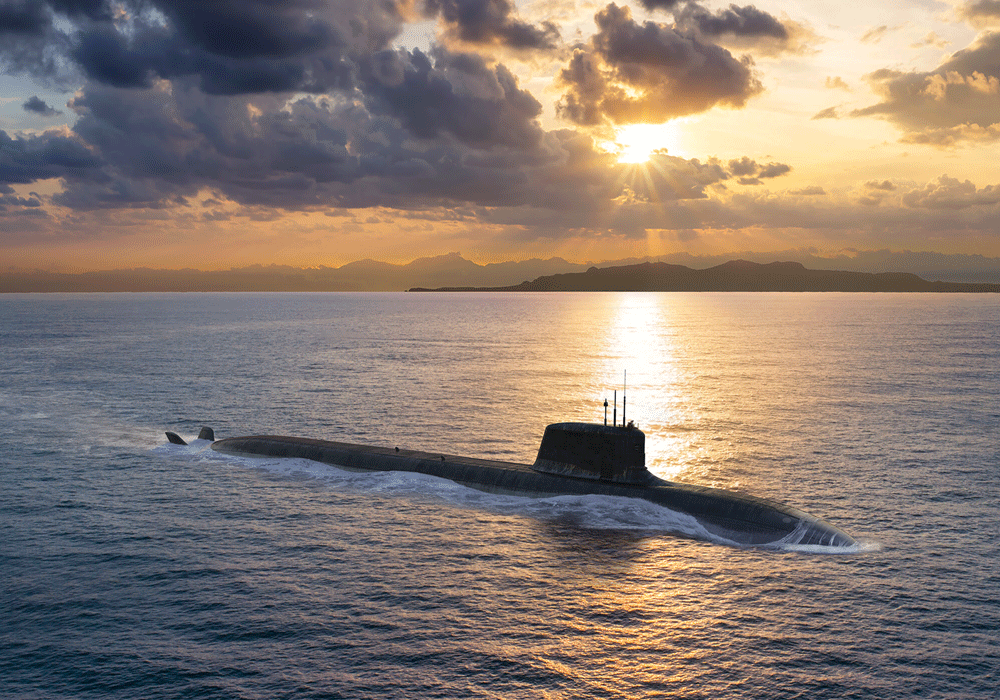
The global undersea arms race is transforming not just navies but the engineering profession behind them. Workforce, digital capability and nuclear stewardship are now as strategically important as the platforms themselves.
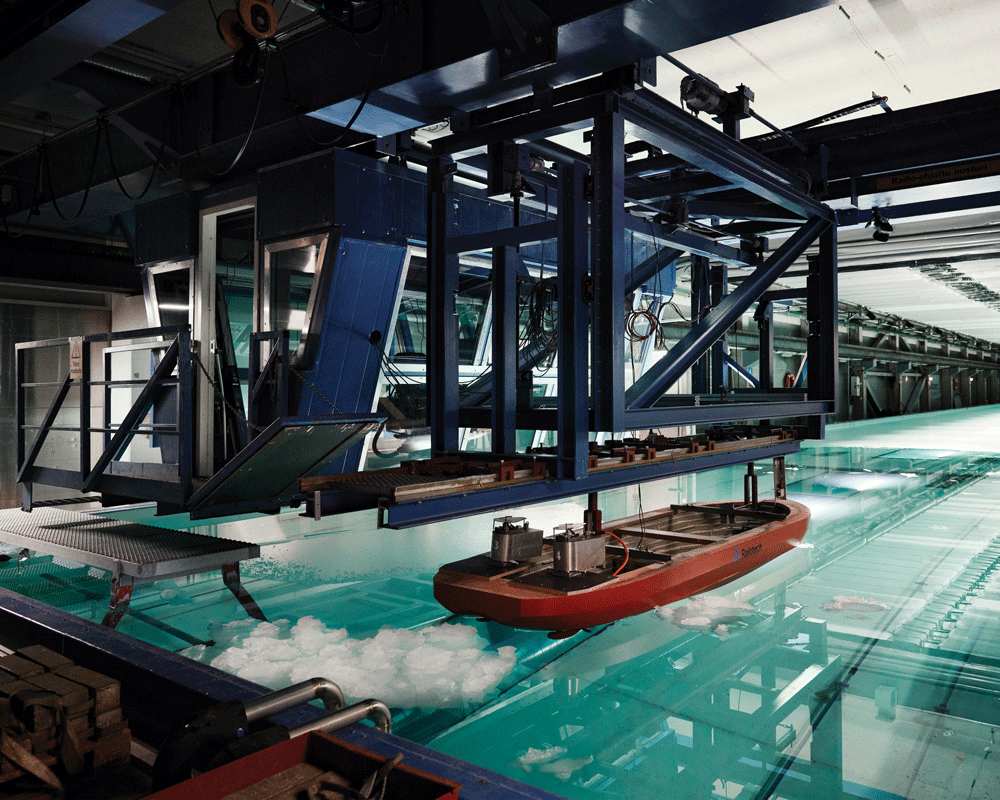
As the climate warms, there’s growing interest in transiting once unnavigable seas. Amy McLellan explores ways to support increased shipping in ice-affected waters.
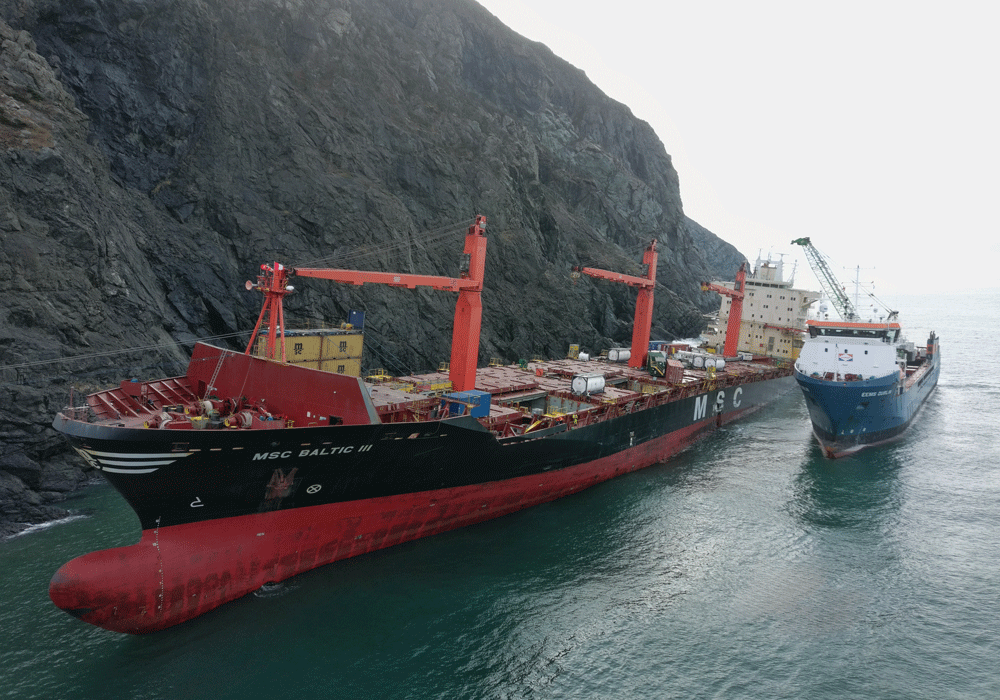
More than a year after the containership Baltic III grounded on the remote Newfoundland coast during a severe storm, a wreck removal plan is finally in place, but the complex and challenging operation still has years to run, and important questions remain.

Welcome to the latest issue of The Naval Architect. I am honoured to have been elected President of RINA, and I would like to thank members for the confidence and trust you have placed in me.
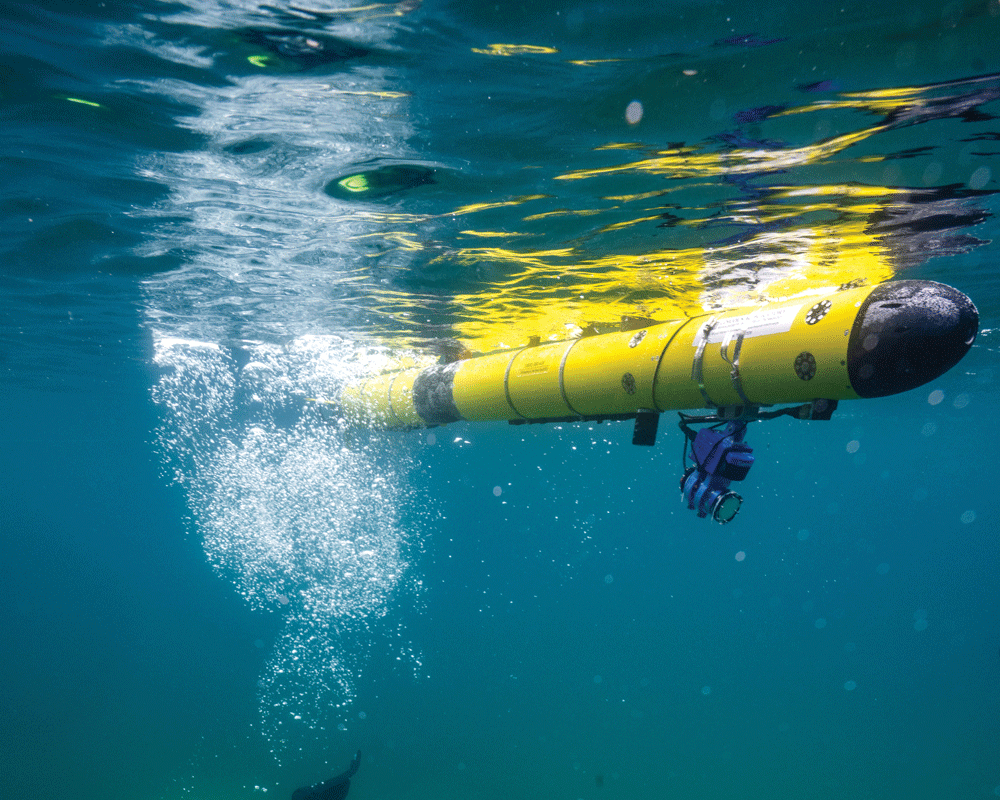
Researchers address capability gaps in underwater navigation and perception.
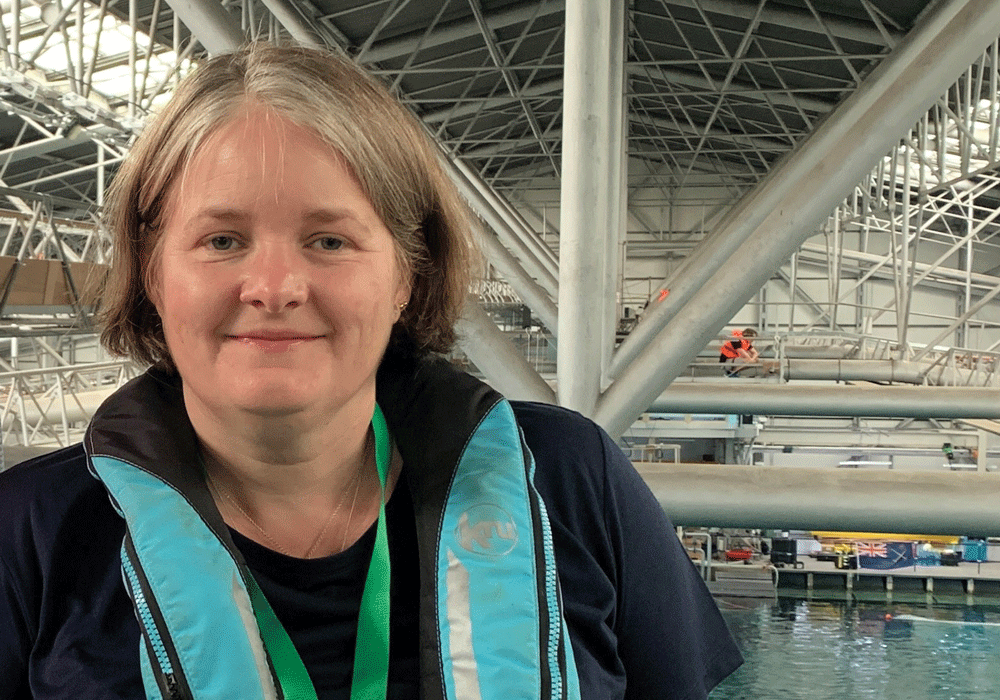
Catriona Savage on the pace of change in her time as RINA president.
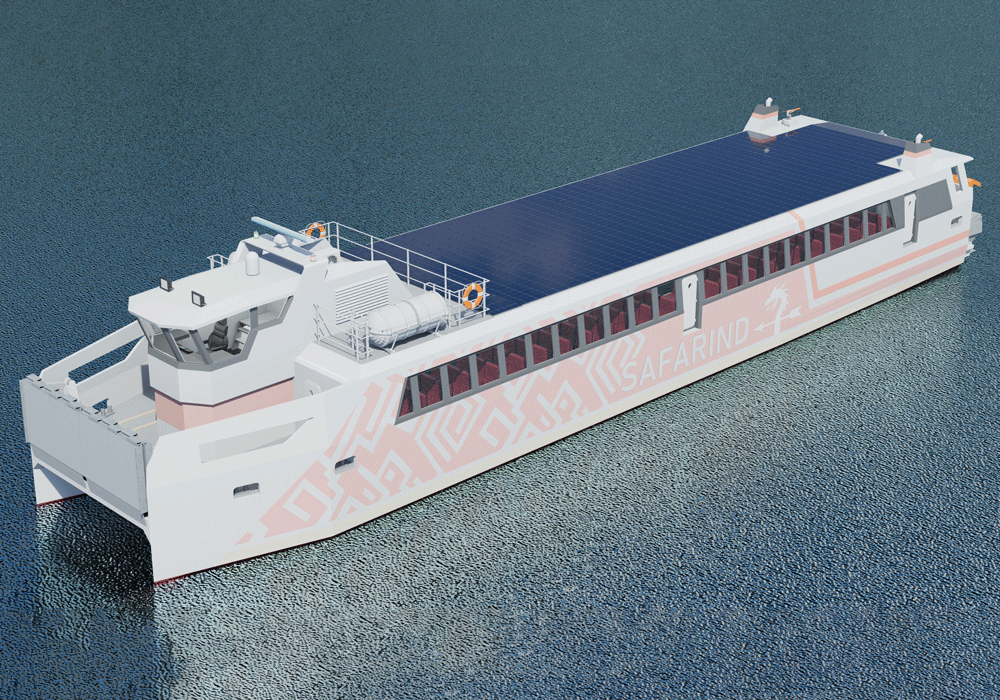
Team Nagapasa’s flat-bottomed catamaran ferry won the WFSA’s Maritime Student Design Competition, meeting the constraints of a shallow, hazard-prone river route with a design built for affordability and local construction.
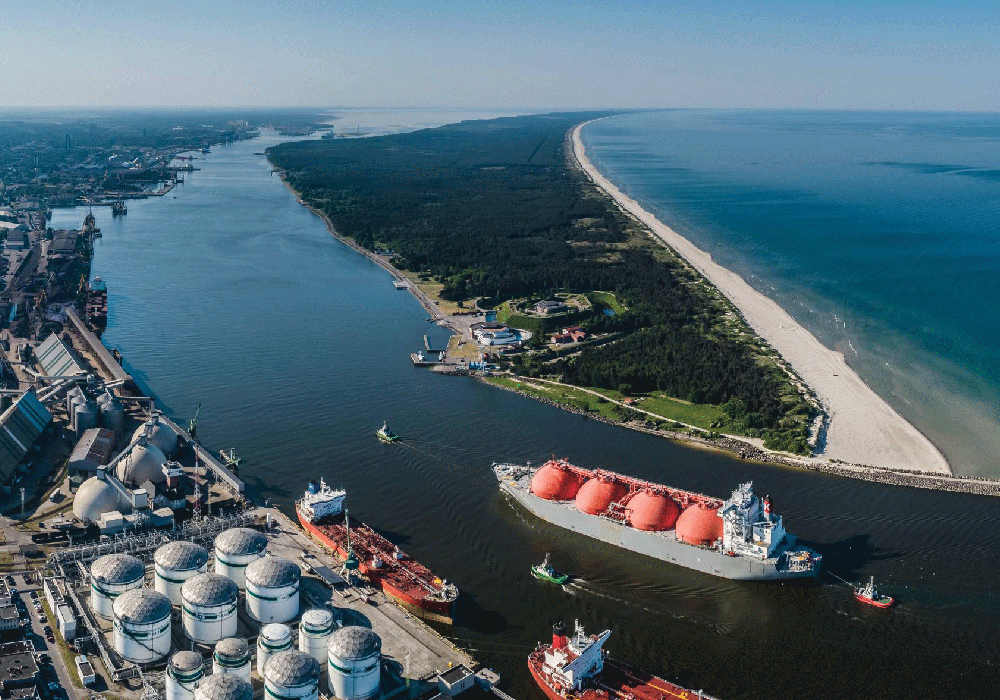
Aker wins contract for CO2 terminal in Lithuania; and First battery-methanol-powered tug set to sail.
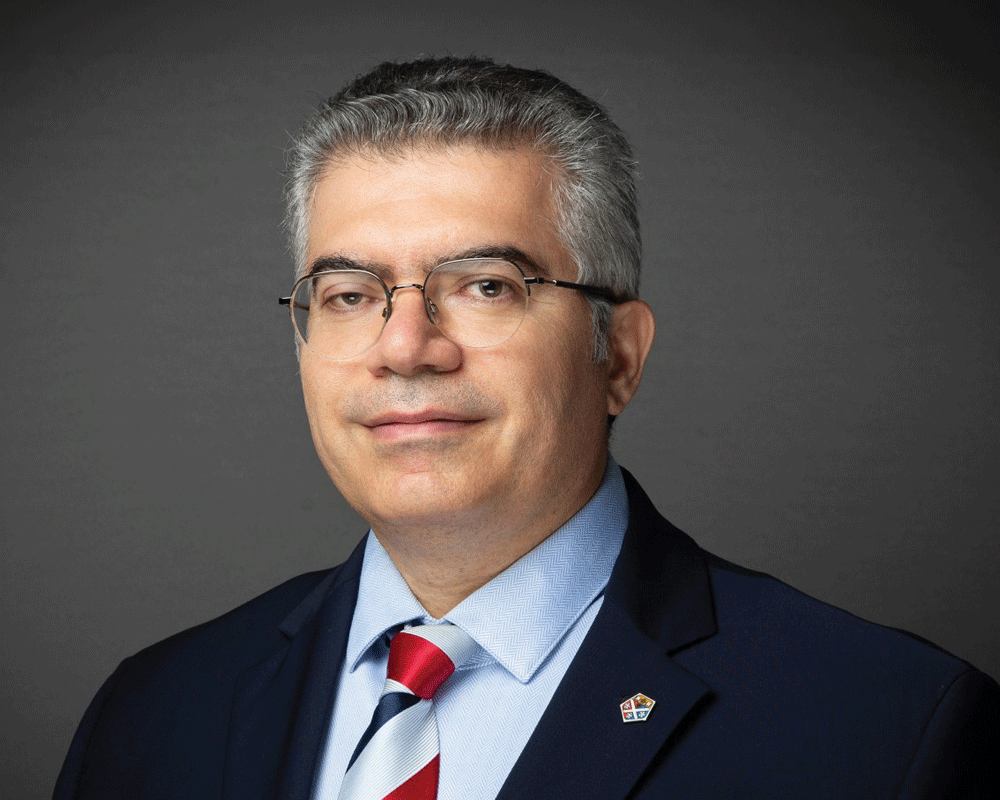
Evangelos Boulougouris on using artificial intelligence in ship design.
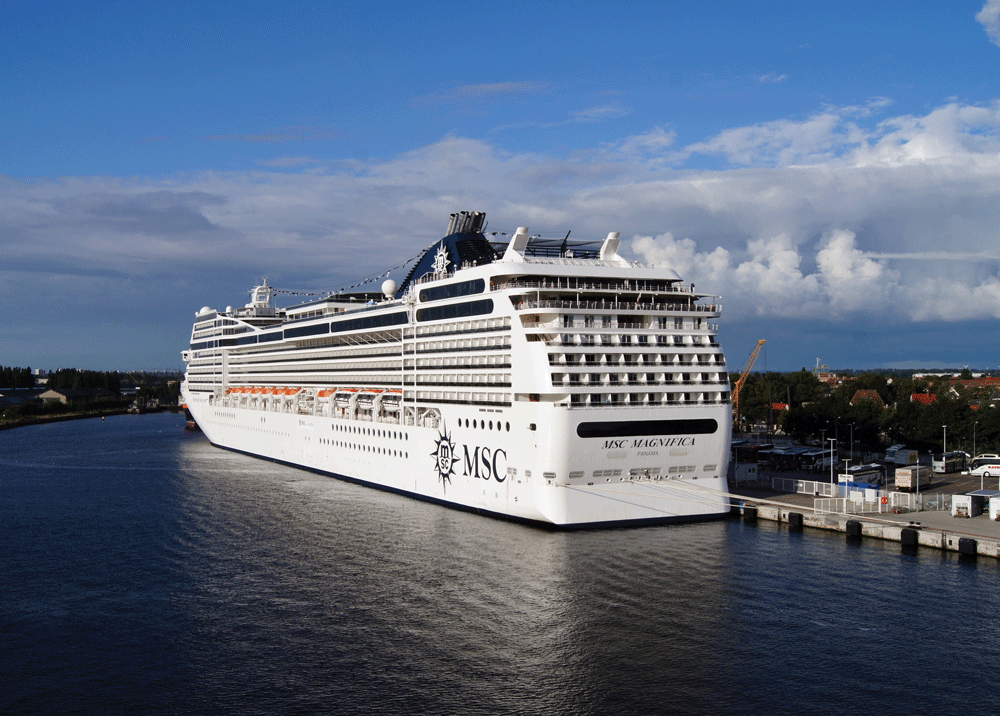
A report from Lloyd’s Register, Fuel for Thought: LNG for Cruise, says liquefied natural gas is established as the dominant alternative fuel in the sector by a considerable margin, evidenced by the fact that 30 LNG-fuelled cruiseships of 20,000GT and above are in service and a further 29 are on order. What does that mean for naval architects?
From flagship international conferences to specialist technical seminars, RINA events bring together experts, innovators, and professionals to share knowledge and shape the future of naval architecture.
Explore Upcoming Events
Lorem ipsum dolor sit amet, consectetur adipiscing elit, sed do eiusmod tempor incididunt ut labore et dolore magna aliqua.
CLICK HERE
Lorem ipsum dolor sit amet, consectetur adipiscing elit, sed do eiusmod tempor incididunt ut labore et dolore magna aliqua.
CLICK HERE







Lorem ipsum dolor sit amet, consectetur adipiscing elit, sed do eiusmod tempor incididunt ut labore et dolore magna aliqua. Ut enim ad minim veniam, quis nostrud exercitation ullamco laboris nisi ut aliquip ex ea commodo consequat. Duis aute irure dolor in reprehenderit in voluptate velit esse cillum dolore eu fugiat nulla pariatur. Excepteur sint occaecat cupidatat non proident, sunt in culpa qui officia deserunt mollit anim id est laborum.

The return of great-power rivalry, wars in Ukraine and the Middle East, rising tensions in the South China Sea and growing concern over seabed infrastructure have pushed undersea capability back to the centre of military planning. But this is not simply a contest of fleet numbers. The underwater arms race today is a structural transformation of the global maritime system, reshaping deterrence, intelligence gathering, seabed infrastructure protection and the balance of power across the Atlantic, the Indo-Pacific and the Arctic. As First Sea Lord General Sir Gwyn Jenkins told delegates at the Combined Naval Event in Farnborough in May 2026: “We are at a fork in the road, and the decisions we take now will have seismic and lasting consequences.”
After decades of relative underinvestment, major powers and emerging maritime nations are recapitalising underwater capability at a pace not seen since the Cold War. This renewal spans not only submarines but anti-submarine warfare systems, autonomous underwater vehicles, support fleets, seabed surveillance networks and the protection of critical underwater infrastructure. The geopolitical landscape is simultaneously reshaping procurement strategy, with intergovernmental collaboration, export partnerships and industrial allegiances all playing a pivotal role alongside raw capability.
A global competition
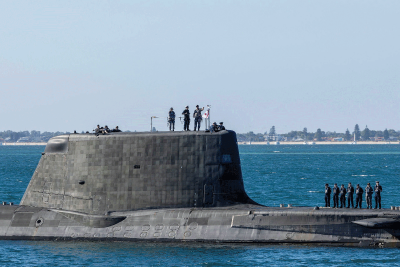
The scale of that competition is most visible in the contest between the United States and China. Despite long-standing plans to deliver two Virginia-class submarines per year, US output has struggled to exceed around 1.1 to 1.2 boats annually, constrained by workforce shortages, supply chain fragility and industrial bottlenecks. The Navy’s 30-year shipbuilding plan acknowledges a persistent gap between planned and achievable output, with workforce availability now the single largest constraint on recapitalisation. The US is simultaneously managing the Virginia-class attack submarine programme, the Columbia-class ballistic missile submarine programme and development work on the future SSN(X), placing extraordinary concurrent demands on a constrained industrial base.
 |
|---|
China, by contrast, is demonstrating the strategic advantages of scale, having launched 10 nuclear-powered submarines between 2021 and 2025, surpassing the US in both hull numbers and total launched displacement. Major expansion at Bohai Shipbuilding’s Huludao yard has enabled simultaneous production of the Type 093B and Type 094 classes, underpinned by vertically integrated supply chains, state-backed financing and a significantly larger skilled workforce. The strategic concern for Western planners is increasingly centred on industrial tempo, production resilience and fleet mass, rather than individual platform performance.
The contest extends well beyond two powers. Russia continues to prioritise its Borei and Yasen-M programmes despite sanctions and industrial constraints, with Arctic and North Atlantic operations the strategic focus.
France sustains two parallel nuclear programmes, the Suffren-class SSNs and the Le Triomphant-class SSBNs, while maintaining a strong export position through the Scorpene design. Germany and Sweden remain among the most technically influential conventional submarine designers, with ThyssenKrupp Marine Systems driving advances in air-independent propulsion (AIP) and low-signature construction through the Type 212CD, and Saab Kockums developing the A26 Blekinge class, which secured its first export customer in Poland in 2025.
India’s indigenous nuclear submarine programme has reached a significant milestone with the commissioning of INS Aridhaman in April 2026 and the fourth Arihant-class boat now in sea trials. South Korea has emerged as one of the most competitive builders in the world, with the KSS-III programme demonstrating a high degree of indigenous capability and Korean yards now in the final running for Canada’s US$40 billion submarine replacement programme.
For much of the post-Cold War period, Western navies prioritised small numbers of increasingly sophisticated platforms. That assumption is now being challenged by the realities of persistent maritime competition, Indo-Pacific scale, Atlantic and Arctic commitments, infrastructure protection requirements and sustained readiness demands. Capability alone is insufficient without industrial resilience, sustainment capacity and workforce depth.
 |
|---|
The AUKUS framework
As capability shifts from standalone platforms toward interoperability and integrated, distributed systems, more countries are taking a collaborative approach to construction and operation. The most significant example is AUKUS, the trilateral security partnership between Australia, the United Kingdom and the United States, designed to support Australia in acquiring its first conventionally armed, nuclear-powered submarine fleet amid growing tensions in the Asia-Pacific region.
Australia’s SSN-AUKUS boats will be based on the UK’s next-generation SSN Astute-class successor but incorporate technologies from all three nations, built in both the UK and Australia, with work scheduled to start by 2030. The first submarine is expected to enter service towards the end of the 2030s in the UK and the early 2040s in Australia, with both nations operating the class on a rotational basis under Submarine Rotational Force – West at HMAS Stirling near Perth.
The first significant US contract under AUKUS was awarded in late 2025, with Electric Boat securing US$196 million for engineering, technical and design-transfer work, marking a shift from political commitment to funded industrial delivery. In May, Babcock International announced a partnership with US defence prime HII to manufacture complex submarine components at its Rosyth facility in Scotland, relieving pressure on the US naval supply chain while reinforcing industrial integration under the framework.
Australian industry is now being drawn into the supply chain at scale. PMB Defence will partner with BAE Systems to integrate its advanced nickel zinc battery system into the SSN-AUKUS design and supply battery technology for other Royal Navy submarines. Nuclear propulsion will be delivered by Rolls-Royce, with the PWR3 reactor, designed for the UK’s Dreadnought class, expected to be adapted for SSN-AUKUS. Rolls-Royce has also signed a Memorandum of Understanding with the State of Victoria to develop Australia’s defence industry skills, supply chain and innovation ecosystem.
Astute and dreadnought
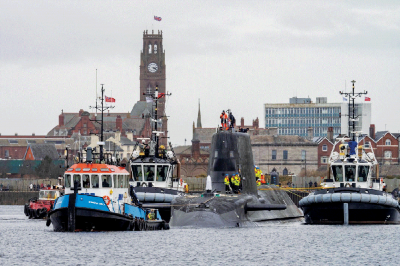
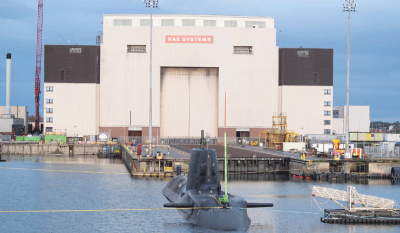
AUKUS has breathed new life into Britain’s naval shipbuilding. BAE Systems is running the Astute and Dreadnought programmes simultaneously at Barrow-in-Furness, where the workforce has grown to more than 16,000 people, compared to fewer than 10,000 a decade ago.
 |
|---|
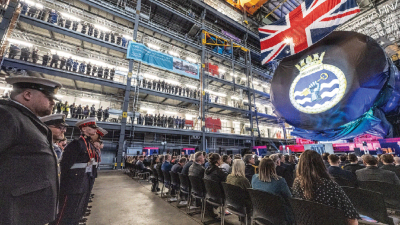
The Astute class, a seven-boat fleet of 97m-long, 7,400-tonne displacement hunter-killers, is nearing completion. HMS Agamemnon, the sixth boat, completed a successful first dive in October 2025. To measure the centre of gravity during the trim and basin dive, 16tonnes of lead weights are brought onboard and moved side-to-side, measured using pendulums hung between decks, a method used by naval architects since the 1700s.
HMS Achilles, the final boat, is scheduled for commissioning in 2028. All boats are the first Royal Navy submarines designed entirely in 3D CAD and the first without optical periscopes, using high-specification video technology instead. Each carries Tomahawk Land Attack Cruise Missiles and Spearfish heavyweight torpedoes, powered by a Rolls-Royce PWR2 nuclear reactor with a 90-day dive endurance.
All four 153.6m-long, 17,200-tonne displacement Dreadnoughts, the new generation of SSBNs designed to replace the Vanguard class in the early 2030s, are at various stages of construction. First steel was cut on the fourth and final boat, King George VI, in September last year. Each is built in 16 units grouped into three mega-units to optimise the build timeframe, with a designed service life of 35 to 40 years, some 50% longer than the Vanguard class. Each boat is equipped to launch 12 Trident II D5 ballistic missiles and Spearfish torpedoes, powered by the PWR3 with reactor cores designed to operate for 20 years without refuelling and with 30% fewer parts than the PWR2. In January 2025, Rolls-Royce was awarded a £9 billion MoD contract covering research, design, manufacture and support of all nuclear reactors in Royal Navy submarines.
Nuclear stewardship and the balance of fleets
Nuclear stewardship is itself becoming a defining strategic capability, requiring reactor expertise, regulatory oversight, nuclear-certified supply chains, specialised dockyard infrastructure, waste handling, emergency preparedness and highly trained engineering workforces sustained over multiple generations. The UK, France, the United States, India, China and Russia all face similar long-term challenges in sustaining this at scale, and the burden is one reason why conventionally powered submarines remain strategically important.
 |
|---|
Advances in AIP, battery technology and quieting have made modern diesel-electric submarines exceptionally capable in littoral and regional operations. They are generally faster to build and allow greater fleet mass for nations seeking credible deterrence without the burden of a full nuclear enterprise. The continued export success of the Scorpene design and the growing competitiveness of South Korean and Japanese programmes partly reflects this calculus. Many nations are converging on mixed fleets that combine nuclear reach, conventional mass and autonomous persistence.
The evolving battlespace
The underwater battlespace now extends well beyond traditional submarine operations into hybrid warfare, persistent surveillance, cyber-enabled disruption and the protection of seabed infrastructure. The Nord Stream incident and subsequent European seabed security reviews have accelerated investment in distributed sensing, autonomous patrol systems and infrastructure monitoring. NATO’s establishment of a Critical Undersea Infrastructure Coordination Cell underlines the vulnerability of underwater cables, pipelines and distributed sensor networks, and governments across Europe and the Indo-Pacific are responding with dedicated investment in seabed domain awareness.
The rise of autonomous underwater systems is accelerating innovation while creating new engineering and assurance challenges, particularly where defence and commercial activity converge. Modern underwater platforms are becoming software-defined, digitally integrated systems that must remain adaptable across decades of technological change while operating in increasingly contested electromagnetic, cyber and acoustic environments. The disciplinary breadth required now spans naval architecture, software engineering, autonomy, nuclear engineering, systems engineering, hydrodynamics, acoustics, cyber security, advanced manufacturing, digital twin development and human factors.
 |
|---|
Workforce shortages are among the most acute strategic challenges facing the sector. Competition is intense globally for engineers, nuclear specialists, software developers and advanced manufacturing expertise. The Rolls-Royce and Siemens collaboration on the Dreadnought programme, sharing best practice across the digital landscape to enhance engineering, manufacturing, R&D, training and reactor operation, is one model for how industry is responding.
Global transformation
The real story of the underwater arms race is not a procurement narrative. It is a global transformation of the undersea domain, driven by industrial strategy, hybrid threats, workforce evolution, nuclear stewardship and the convergence of nuclear, conventional and autonomous capability. These are the forces that will shape the future of naval architecture and the wider maritime profession for decades to come.
|
AUKUS STRENGTHENED WITH HMS ANSON SMP
A key milestone in the AUKUS collaboration was reached in February this year when HMS Anson docked at Western Australia’s HMAS Stirling for scheduled maintenance, representing the first time Australia had carried out work on a UK nuclear-powered submarine. Australian personnel worked alongside partners from the UK and the US on maintenance and familiarisation activities, building on experience gained from work on US Virginia-class submarines USS Vermont in 2025 and USS Hawaii in 2024. Participation in the UK Submarine Maintenance Period, ahead of the establishment of SRF-West at HMAS Stirling from 2027, will further build Australia’s familiarity with UK-designed submarines as the country prepares to begin construction of SSN-AUKUS in Adelaide by the end of the decade. |
|---|
This article appeared in Submarines, TNA May/June 2026.
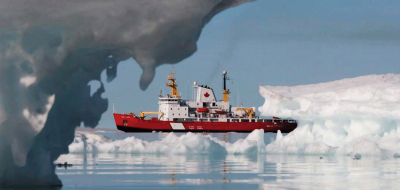
The Arctic is warming roughly four times faster than the global average, making shipping lanes that were theoretical a decade ago commercially viable sooner than even optimistic projections suggested.
Geopolitics is also driving increased interest in these waters. The Northern Sea Route not only offers transit times some 30 to 40% shorter between the Far East and Europe than traditional Red Sea routes, it also avoids conflict zones, piracy hotspots and strategic bottlenecks. In a volatile world, nations are taking their Arctic territories more seriously, particularly given their resource potential. The Arctic holds vast reserves of oil, gas and critical minerals, but the vessels and infrastructure to support extraction don’t yet exist at the required scale.
“The Arctic in particular feels like it’s moved almost overnight from a specialist niche to one of the most contested and commercially significant maritime regions on the planet,” says Lee Grace, business development manager, North America, at maritime engineering consultancy BMT.
 |
|---|
The range of vessels on the order books tells a story. On the commercial side, bulk carriers and containerships are exploring trans-Arctic routes as summer ice-free windows arrive earlier than predicted. Research ships are in demand as governments fund deeper understanding of these environments. And icebreakers, the heavy-duty workhorses that make everything else possible, are suddenly high on procurement agendas.
“Most western nations look at their fleets and see a significant capability gap,” says Grace. “Arctic patrol vessels for coastguard and sovereignty missions are another major driver, and increasingly we’re seeing something genuinely new: serious interest in purpose-designed autonomous vessels for persistent polar monitoring.”
Arto Uuskallio, head of sales and marketing at Railotech, the Finnish icebreaking specialist, says that although there are currently four different Polar Class 2 vessels under construction, most customers are looking for vessels with carefully tailored ice capability. By this he means designs that combine “adequate ice performance with good open-water efficiency and seakeeping properties, rather than designs optimised only for extreme year-round Arctic conditions”.
He says: “A record number of diverse ice-capable vessel projects are under development, with several more in the pipeline,” adding that the strongest demand is in government and coastguard ships, and research, cargo and logistics vessels.
New ice risks
Ice-class ships aren’t new, but the design challenges are becoming more complex. “The environment is changing faster than the design codes that govern how we build for it,” says Grace.
 |
|---|
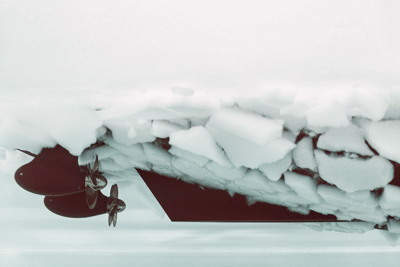
Traditionally, ice-class design meant designing for a relatively predictable adversary: thick pack ice. The answer was largely about strength: heavier frames, reinforced plating at the waterline and bow forms built to break through. But climate change has made that adversary far less consistent.
“The older, thicker multi-year ice is reducing, but what’s replacing it isn’t simply open water – it’s a more dynamic mix of younger first-year ice, refreezing floes, shifting leads and unpredictable ice edges,” Grace says. “Paradoxically, a partially ice-covered Arctic can be more dangerous than a heavily iced one, because the behaviour is so much less predictable.”
Designers also need to take a long view. The Arctic in 2050 could look very different from today. This is where digital twin technology comes into its own, to test hull form and propulsion choices against future climate scenarios before committing to a physical design.
Understanding the ice type matters, with the spectrum running from thin, newly formed nilas ice through first-year ice, typically up to 1.5m thick after one winter’s growth, to old, multi-year ice that has survived at least one summer melt.
“Designing a vessel for breaking 50cm ice is fundamentally different from designing for 250cm level ice,” says Uuskallio. “These differences affect hull strength, propulsion power, material selection, equipment makers, machinery design, winterisation and even basic layout choices.”
There is also an important structural trade-off: the more ice-capable a vessel needs to be, the heavier its structure must become – reducing the internal volume available for cargo, mission systems and crew spaces.
Ice conditions are highly variable. A vessel may encounter level ice, ridges, brash ice and pressure zones within the same voyage, each imposing different loads on the hull, propulsion and steering systems. “This variability makes it essential to clearly define the ice conditions and operational assumptions at the very beginning of the design process,” says Uuskallio.
A hull optimised for breaking solid pack ice performs very differently from one optimised for open-water efficiency and seakeeping. Shorter ice seasons mean vessels now spend more time in open water and getting that balance right across a much wider range of conditions is the central design challenge.
Increased ice strength and power improve safety and reliability in ice, but they also add weight, resistance, fuel consumption and emissions in open-water operation. Achieving a well-balanced design that meets the most demanding requirements without overdesigning for less critical ones is the core challenge.
In Atlantic Canada, this hull-form tension is particularly acute on the east coast, where ships frequently transit to the high Arctic through summer and autumn, then return to the North Atlantic, one of the harshest open-ocean wave environments in the world.
“A hull optimised for icebreaking tends to roll heavily in open seas,” says Grace. “Conventional stabilisers and bilge keels can’t be fitted due to ice damage risk.”
Double-acting ships, as pioneered by Railotech, designed to break ice astern, freeing the bow for a more conventional form and better seakeeping, haven’t yet been tried in Canada. It’s a concept that “deserves serious consideration”, notes Grace.
Forging innovation
The challenges of ice-infested waters are fertile ground for innovative design features. These include the ice knife – a structural bow feature that splits and directs broken ice under the vessel. It features in Canada’s new heavy icebreaker under construction at Seaspan. Heeling tanks allow a vessel to rock itself free when trapped in ice while air bubble systems thrust compressed air through ports at the bow to reduce friction, complementing bow lubrication systems. And oblique icebreaking – achieved through an asymmetrical hull form – allows a vessel to open a channel wider than its own beam, useful for following traffic.
“Advanced hull forms and propulsion concepts, such as double-acting operation, allow ships to achieve good open-water efficiency and to handle demanding ice conditions when required,” says Uuskallio. “Improved numerical methods, particularly nonlinear finite element analysis, combined with extensive full-scale measurement data are enabling more accurate assessment of ice loads. This makes it possible to optimise structures so they are lighter and safer, without simply increasing ice class as a conservative solution.”
Real-time data is key. Fed into digital twin models it can create a continuous picture of hull condition and predict maintenance needs before they become failures. “When the nearest drydock is thousands of miles away, that capability is operationally essential,” says Grace, who also highlights the importance of increased satellite coverage and communications equipment in these remote waters.
 |
 |
|---|
Bear necessities
If something goes wrong in the polar regions, the search and rescue response time is measured in days, not hours. Designers need to ensure there are fully enclosed, thermally insulated lifeboats that can sustain survivors for extended periods in extreme cold, and medical facilities that can manage serious trauma without rapid evacuation.
And while not usually the subject of naval architecture, “the vessel’s freeboard needs to be high enough to prevent polar bears from boarding,” says Grace.
Onboard one of the world’s most advanced polar research ships.
RRS Sir David Attenborough, operated by the British Antarctic Survey, began service in 2021 and feedback from the scientists onboard has been very positive, says Kongsberg Maritime designer Erik Leenders.
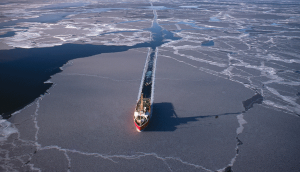
He points out polar research vessels pose specific challenges for naval architects, as these ships combine multiple functions. Sir David Attenborough, for example, is a cargo ship loaded with 20ft containers, a product tanker carrying diesel and aviation fuel, a ‘passenger’ ship for 60 scientists and a research ship with bespoke laboratories, moonpool and ROVs – not to mention being a Polar Ice Class 5 (Hull PC4) icebreaker, which can operate year-round in medium, first-year ice, breaking through ice 1m thick at a speed of 3knots (5.6km/h).
 |
|---|
The £200 million ship is deployed to the Arctic during the northern summer and to the Antarctic during the austral summer. “It travels from the northern hemisphere to the tropics to 40, 50, 60°,” explains Leenders. “Icebreaker hulls do not tend to be very good seakeeping hulls so we did a lot of tests in the ice tank and seakeeping tank to check the hull design. We’ve had very good feedback from the crew about its handling and, of course, it is rated to a very high comfort class (LR: CAC1), with a lot of focus on space, noise and vibration, because the crews spend a really long time onboard.”
The ship has a helipad and hangar for two helicopters, cranes and an enhanced ability to deploy subs and other ocean-survey and sampling equipment.
This article appeared in Designing for Extremes, TNA May/June 2026.
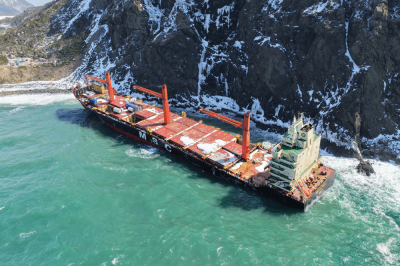
On 15 February 2025 the containership Baltic III ran aground off the west coast of Newfoundland during a severe storm. The vessel encountered mechanical difficulties and lost power, becoming ‘dead in the water’, and was driven into Cedar Cove, a remote and rocky location near Lark Harbour.
All 20 seafarers onboard were safely evacuated by a Cormorant search and rescue helicopter but the vessel was left against a 1,000ft cliff, in a very remote location, facing extreme weather and ice conditions. Over the following year the vessel suffered severe damage, with a large hole in its port side, and has been in danger of breaking up amidships.
The first phase
It was clear from the outset that salvage was going to be a difficult and complex operation. The shipowner, MSC, and its insurers appointed T&T Marine Salvage to lead the first phase of operations. During this period of work around 1,700m3 of fuel oil was removed from Baltic III, with around 20tonnes of residual fuel and contaminated water still onboard. Additionally, 409 of the 472 containers onboard were taken off the ship, including some containing dangerous goods, leaving 63 remaining.
 |
|---|
The salvage team needed to construct a road to the site to get some equipment alongside and a cableway was erected with a basket underneath to transport the salvage crew back and forth.
Thankfully, no bunker oil was released during the incident and any tar balls were collected as they were encountered. Nonetheless, the presence of the vessel poses a serious potential environmental hazard and the delay in removing the vessel has attracted some local concern and criticism.
However, as Bruce English, senior response officer, Canadian Coast Guard, who has been supervising the Canadian government’s response to the operation, observes: “We did not want a rush job, but the right job.”
Dive surveys confirmed that the structural condition of the vessel made a simple refloat impossible. The structural deterioration of the vessel has continued, presenting significant engineering challenges.
According to English, “While the vessel is currently stable, it is in poor condition. There is significant damage to the hull, including a crack in the port side and buckling on the starboard side. There is also a worsening crack on the deck of the vessel.
“Operations are expected to continue for some time. Speed is not the primary goal. Our focus remains on ensuring the safety of Canadians and responders while minimising impact to the environment.”
In early May this year the Coast Guard confirmed that the operation was now moving into the wreck removal phase, following the award of a contract by MSC to experienced Florida-based salvors Resolve Marine for the completion of the remaining salvage work and the removal of the wreck from Cedar Cove.
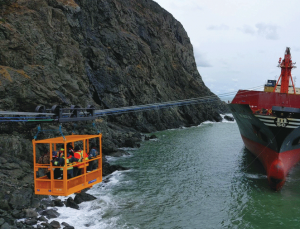 |
|---|
The Coast Guard’s role in the process is to review the proposed wreck removal plan to ensure that it is “reasonable and appropriate” to protect public safety and the marine environment. English points out that Canada follows the ‘polluter pays’ principle where vessel owners are responsible for the cost of addressing any pollution or hazards posed by their vessel and this includes any costs relating to cleanup.
Breaking up is hard to do
Resolve Marine will now embark on initial preparatory work, following a full onboard assessment and environmental investigation. It will weld rigging points to the vessel and separate the hull at the mid-section point where the break is occurring. It will then remove the remaining containers, using a crane barge that will be deployed on site.
Resolve Marine proposes to use chain pullers to pull the bow section to a nearby beach. This will be followed by scrapping work, involving cutting the topside in dry conditions, as well as removal of the residual fuel and tank cleaning. The bow section will be pulled forward to the beach in stages.
All topside steel that can be reached in the initial stage will be cut and removed. The section will then be pulled forward again and the process repeated, until completion. The steel will be cut into 10tonne segments, which will then be transported to a local facility, Newco Metal & Auto Recycling, for recycling.
In parallel, preparations for the stern removal will be carried out, with the goal of clearing it from the rocks. Resolve Marine plans to cut forward of the engine room and then remove the accommodation block. The middle section, weighing around 2,000tonnes, will be pulled to the beach for cutting, removal and recycling, while the 3,000tonne stern section will be rotated clear from the rocks and removed to shore. This may involve cutting the stern section into two, depending on the conditions encountered during the work.
Better access
The expectation is that having built an access road to the beach, Resolve Marine will be able to start moving the rest of the cargo ashore this summer. It then aims to pull the bow to shore using the chain pullers, and to remove the remaining fuel oil.
The timeline for the potential completion of all scrapping operations is some time in 2027, with Resolve Marine committing to undertake as much work as possible before the end of 2026.
Alternatives to the chain-puller-based solution, including the removal of the vessel by sea, were considered. However, they were ultimately rejected because of the weather conditions and marine challenges at this location.
Why the delays?
While there is great relief that after more than a year there is at last a plan for the wreck’s removal, some are questioning whether the process could have been quicker. There are also concerns about what seems to be a lack of urgency and transparency in investigating the cause of the accident, thereby allowing lessons to be learned and remedial actions taken.
John Dalziel MRINA is a naval architect and an adjunct professor in industrial engineering, with more than half a century of marine industry experience, most of it in eastern Canada, including Newfoundland. He has raised a number of issues with the Canadian Transportation Safety Board (TSB) regarding this incident.
In particular, he says: “I am somewhat perplexed as to why the TSB has decided not to investigate this incident, whereas it has investigated other foreign flag ship incidents in Canadian waters, including two previous MSC vessels. We don’t know the timeline from vessel blackout till its grounding nor whether TSB or Transport Canada are aware of the cause of the blackout.”
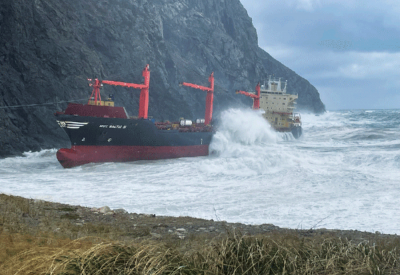 |
|---|
He points out that from visual images the ship’s anchors do not appear to have been deployed, which raises questions over how the crew responded to the emergency.
Professor Dalziel also questions whether Baltic III could have been floated off the beach at an earlier stage, prior to breaking up.
“As the stern of the ship remained in deep water, perhaps a couple of powerful salvage tugs or offshore supply vessels could have been used to tow it off the beach, floating on its tank tops if bottom damage was encountered. I would certainly welcome the TSB, or other federal agency, investigating the handling of the salvage efforts, considering that the ship has now been on the beach for more than 14 months, including over a Newfoundland winter.”
A weather eye
At this stage the TSB appears to be taking a watching brief. A spokesman says: “In line with the Casualty Investigation Code, the flag state of the ship has a duty to conduct an investigation into any very serious marine casualty occurring to any of its ships. Therefore, Liberia, as the flag State of Baltic III, is leading the investigation into the grounding and TSB is representing Canada as a substantially interested state.”
The case of the grounding of Baltic III, and its subsequent salvage, certainly raises a number of interesting and important technical and safety-related issues. While the immediate priority has to be its removal, in what will clearly be a challenging operation, hopefully in time the full circumstances of the incident, and the decisions surrounding its salvage, will be aired in a thorough and transparent manner.
This article appeared in Salvage operations, TNA May/June 2026.
Welcome to the latest issue of The Naval Architect. I am honoured to have been elected President of RINA, and I would like to thank members for the confidence and trust you have placed in me. I also want to acknowledge my predecessor, Cat Savage, our first female president, whose leadership and professionalism have helped strengthen RINA and position it strongly for the future.
My maritime story began in Durban Harbour in South Africa. As a child, I spent time on the water surrounded by commercial shipping and naval vessels. I still remember the scale of those ships and the fascination I felt watching them move through the harbour. That experience left a lasting impression and shaped the direction of my career. By the time university approached, I knew I wanted to become a naval architect.
Since then, I have been fortunate to work across government, defence, consultancy, industry and the third sector. My career has included naval engineering, safety assurance, capability delivery, maritime acquisition and complex programme leadership, most recently in major submarine capability programmes. I have seen first-hand the extraordinary quality of our maritime workforce and the increasing pressures on it.
Today’s maritime sector faces profound change. Technological disruption, digitalisation, sustainability pressures, geopolitical instability and workforce shortages are reshaping our profession and the demands placed on it. Competition for talent is global, specialist expertise is becoming harder to replace, and the pace of technological change is accelerating faster than many traditional professional models were designed to support.
These challenges reinforce why professional institutions matter.
RINA’s purpose remains as relevant today as it was in 1860: to advance the science and art of naval architecture and maritime engineering. But our role today extends beyond preserving standards alone. We must also help build a modern, internationally connected professional community capable of supporting innovation, professional confidence, technical excellence and long-term resilience across the maritime sector.
As president, my role is not operational delivery. The governance responsibilities are clear. My responsibility is to represent the voice of the membership, contribute strategic insight and support RINA’s long-term direction. The presidency also carries an important ambassadorial responsibility, and I look forward to engaging actively with our divisions, branches and members around the world.
My priorities over the next two years focus on three areas. First, supporting the Institution’s long-term sustainability and strengthening alignment behind our mission, leadership and global network.
Second, strengthening services, visibility and career support across the membership, particularly for younger professionals, early careers and associated disciplines. That means listening carefully to members, supporting stronger engagement and ensuring RINA continues to provide meaningful value throughout careers.
Third, continuing to build a culture of professionalism, inclusivity, high standards and international outlook. Strong professional institutions are built on trusted communities that welcome talent, encourage debate, share knowledge and support one another across disciplines and career stages.
Above all, I want to work collaboratively with members, partners and the wider maritime community to ensure the Institution continues to deliver relevance, confidence and impact for the future.
This article appeared in President’s View, TNA May/June 2026
Researchers at MIT Lincoln Laboratory in the US are developing hardware and algorithms to improve collaboration between human divers and autonomous underwater vehicles (AUVs), with potential applications ranging from subsea cable inspection to countermine operations. The project, carried out by the lab’s Advanced Undersea Systems and Technology Group, seeks to combine the respective strengths of humans and robots in demanding underwater environments.
As principal investigator Madeline Miller notes, divers and AUVs generally do not team up at all underwater. Manipulation tasks requiring human dexterity, such as repairing infrastructure or deactivating a mine, fall entirely to the diver, while robotic systems offer advantages in processing power, endurance and high-speed mobility that remain largely unexploited in such missions.
The research addresses two fundamental capability gaps: underwater navigation and perception. Divers operating in low-visibility or deep conditions may have little more than a compass and fin-kick counts to guide them. For AUVs to assist meaningfully, they must perceive their environment reliably, yet optical sensors fail in dark or turbid water, and sonar imagery lacks colour and fine detail. The dynamic ocean environment can also confuse AI classification, as when a tyre overgrown with mussels no longer resembles a tyre, or a fragmented wreck no longer looks like an aircraft.
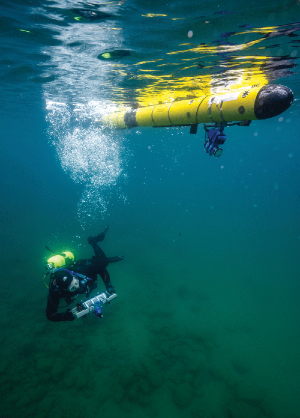 |
|---|
The team built on navigation algorithms originally developed by MIT’s Marine Robotics Group, led by Professor John Leonard, integrating them into a mission-relevant AUV and progressing to trials with actual divers in open-ocean conditions. On the perception side, an AI classifier processes both optical and sonar data mid-mission, flagging low-confidence objects to the diver for human input via an underwater acoustic modem. A central engineering challenge is compressing information sufficiently to be useful within the severe bandwidth and latency constraints of underwater acoustic communications, while keeping hardware within the size, weight and power envelope of commercial off-the-shelf components.
After field trials in coastal New England waters and with human divers at Michigan Technological University’s Great Lakes Research Center, the team is seeking external sponsorship to transition the technology to military or commercial partners.
MIT’s Miller highlights the vulnerability of subsea telecommunications and power cable infrastructure as a key driver, noting that maintaining advantage in the undersea domain will require combining AI capability with human judgement.
This article appeared in Insights, TNA May/June 2026
When I took on the RINA presidency in 2022, I set out three broad ambitions: to widen the pipeline of people coming into naval architecture and marine engineering, to sharpen RINA’s thought leadership, and to make the institution more relevant, more modern and more visible. Four years on, with two terms complete, I can say with confidence that progress has been made, while being equally clear that there is more still to do.
The word “relevance” has been something of a touchstone throughout my presidency. Professional institutions, like any organisation, can fall out of step with the communities they serve. My encouragement to anyone who perhaps drifted away from RINA, or who holds a picture of what we were, rather than what we are, is simply this: come and take another look. We have changed, and we may now offer what you need.
Some of that change is operational. We have steadily moved towards web-enabled systems, better digital communications, and an increasingly capable and diverse board. The transformation is far from complete, but the direction of travel is clear, and our new CEO, Paul Jobson, who joined about a year ago through a rigorous external recruitment process, is driving that transformation with real purpose. The board’s role in his appointment was deliberate: we recognised that we could support outward-facing engagement and member communications ourselves, but that we needed a leader with deep operational experience to run the Institution effectively. I am confident that we made the right call.
I am also proud of the Developing Careers Committee, which we established during my presidency. Led by younger council members, including founding members Chris McNair and Chris Baker, the committee covers everything from STEM outreach to early career mentoring and support. It has been impressively active, and it reflects my conviction that broadening the language around engineering, for teachers, parents and young people alike, is essential.
Skills such as spatial reasoning and creative problem-solving are the lifeblood of our profession, yet they are rarely celebrated in the school curriculum. If we can reach young people earlier and help them recognise themselves as potential engineers, we will build a stronger and more diverse community.
Looking back at the industry over the same four years, the pace of change is striking. Digital systems, AI, autonomy, and advanced visualisation techniques that would have seemed ambitious or niche in 2022 are increasingly routine. The speed of that transition is the defining characteristic, not simply the scale of it.
On sustainability, the picture is more complex. The geopolitical context has shifted, and some of the optimism around future fuels and energy efficiency has been tested and challenged. However, I do not expect momentum on that front to stall and what encourages me is the intensity of innovation, with smarter energy management systems, digital optimisation, efficient hull forms and a broader spectrum of energy-saving devices coming to market. The maritime industry needs to focus on the long investment horizon that turns today’s R&D into tomorrow’s reality.
On a personal note, I am the first woman to serve as RINA president, and had always hoped to be the first of many. This is already proving to be the case with Annabelle Ransome-Williams set to take over. She brings tremendous experience, enthusiasm and passion for naval architecture and for the Institution. I have no doubt she will continue to drive forward the initiatives we have started, and then some.
Author profile
Catriona Savage, outgoing RINA president and global technical director at BMT.
This article appeared in Opinion, TNA May-June 2026.
Designing a passenger ferry for the River Niger means confronting a particular set of constraints: variable water depth as shallow as 0.89m, shifting channels, water hyacinth overgrowth, subsurface wrecks and piracy on the Lokoja–Onitsha route.
The winning entry in the Worldwide Ferry Safety Association’s (WFSA) 13th Annual International Student Design Competition For Safe Affordable Ferries addressed all of them, and did so with a hull form and construction method chosen specifically to be buildable by a Nigerian shipyard.
First prize went to Nagapasa, a 10-member team from Universitas Indonesia led by Felicia Rachel Taruli Siregar, who also oversaw the ferry’s structural arrangement. Their design, MV Safarind, is a 36m flat-bottomed steel catamaran with a service speed of 27knots, capable of carrying 200 passengers and their cargo on each leg of the 200km route in approximately four hours.
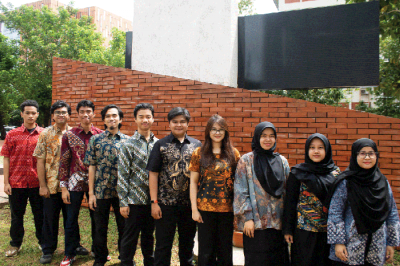 |
|---|
The competition asks university teams to develop safe, affordable ferry concepts for inland and coastal routes in developing countries, where ageing vessels, overcrowding and poorly designed hulls frequently cause accidents and loss of life. Nigeria has provided the backdrop for the third year running, attracting 18 submissions in the 2025-2026 competition.
Flat-plate construction
The catamaran configuration was chosen to deliver high transverse stability and a larger passenger deck area within the shallow-draught constraint, with better tolerance to passenger overloading than many conventional inland vessel forms. The decision to use an all-flat-plate steel hull was driven by the capability of the shipyard likely to build it.
Nagapasa designed MV Safarind specifically for construction at the Nigerian Naval Shipyard in Port Harcourt, and flat-plate construction avoids compound curvature and complex plate rolling, reducing fabrication cost and allowing the vessel to be built using conventional steel-working equipment. It also supports easier structural repair, a relevant factor on a route where grounding and debris impacts are a routine operational hazard.
Buildability is a requirement of the WFSA competition, which aims to ensure that every entry has a realistic chance of being constructed. In Nagapasa’s case it shaped not just the fabrication method but the entire design process.
“We defined a target investment envelope based on expected passenger fares, route demand and typical inland ferry-operating economics, and used that as a boundary condition throughout,” Siregar says. “Major design parameters, vessel size, passenger capacity, propulsion power, structural configuration and onboard systems were continuously evaluated, not only for technical performance but also for constructability, maintainability and lifecycle operating cost.”
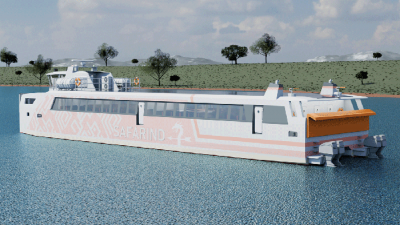 |
|---|
Flat-plate hulls are not the most hydrodynamically efficient geometry, and the team used CFD-based hull refinement to recover some of that deficit within the constraints of buildability. Optimising the bow entry and bottom geometry reduced total resistance by 6.8%, compared with the baseline configuration.
Power options
The team selected four petrol-fuelled Yamaha F450 XTO outboard engines, each rated 450hp (336kW), as the primary propulsion system. The decision was grounded in hydrodynamic resistance analysis, but the outboard configuration also eliminates underwater appendages vulnerable to damage from submerged objects and vegetation, reduces machinery complexity, simplifies inspection and maintenance, and improves redundancy through independent units. A diesel-electric system capable of the same performance, Siregar notes, would have added complexity and capital costs.
The energy balance at 27knots with four large outboards is demanding, and the hybrid element of the design addresses auxiliary and hotel loads rather than propulsion. MV Safarind would carry a battery pack rated just under 737kWh, supplemented by roof-mounted solar panels contributing 11% of auxiliary electricity demand, with generators providing backup during periods of high load. Recharge time is estimated at four hours. The hybrid system is expected to reduce fuel consumption by 58,000litres per year, equivalent to an annual CO₂ reduction of 138.6tonnes, based on the vessel’s load analysis and operational profile.
Intact and probabilistic damage stability analyses were performed using Maxsurf Stability in accordance with the IMO High-Speed Craft Code and MSC.216(82) requirements. Manoeuvrability was assessed using a turning diameter model appropriate for narrow inland waterways, and evacuation analysis followed IMO MSC.1/Circ.1238 guidelines. Structural sizing was developed against Bureau Veritas scantling rules, supported by a 3D structural model.
“Beyond hydrodynamic efficiency, we evaluated the vessel’s safety and operational performance using established naval architecture methods,” Siregar says.
|
TECHNICAL PARTICULARS |
|
|---|---|
| Length overall | 35.85m |
| Length between perpendiculars | 34.5m |
| Breadth overall | 8m |
| Breadth, demi-hull | 2.4m |
| Demi-hull, centreline spacing | 2.8m |
| Depth | 2.5m |
| Design draught | 0.8m |
| Air draught | 5.31 |
| Displacement | 81.33tonnes |
| Lightweight | 58.28tonnes |
| Deadweight | 23.05dwt |
| Service speed | 27knots |
| Crew | 7 |
| Passengers | 200 |
Safety and security
Navigation on the Lokoja–Onitsha route requires continuous depth awareness. The team specified echo sounders and forward-looking sonar for hazard detection alongside GPS, radar, AIS, weather-monitoring software and CCTV-based situational awareness – a layered approach to a route affected by sediment movement, floating vegetation and changing channel conditions.
Piracy is a persistent threat on the route. MV Safarind would carry a security alert system for discreet distress signalling, high-pressure water cannons on both sides of the upper deck, and an enclosed passenger layout with anti-climb barriers at the stern. SOLAS-compliant life-saving appliances and clearly marked escape routes complete the safety arrangement.
Following its win, Nagapasa was invited to present MV Safarind at the WFSA’s Ferry Safety and Technology Conference in New York in May.
Figures from the Maritime Organisation for West and Central Africa show that 8,000 ferry-related fatalities were recorded in the region in 2015-2025, with Nigeria heavily affected. This prompted the country to take action.
For instance, the Lagos State Waterways Authority, which oversees nearly 730 licensed ferries, has cracked down on operators who flaunt passenger overcrowding checks, fail to carry lifejackets and embark on night-time journeys, directly enforcing the rules with jet ski patrols. Meanwhile, the US$464 million, partly EU-supported Omi Eko project will introduce 78 modern electric ferries, upgrade terminals and add new floating jetties to further improve safety. This appetite for change has made Lagos a focal point for both the WFSA and industry association Interferry.
This article appeared in Ferry safety, TNA May/June 2026.
Aker Solutions has been awarded a front-end engineering and design contract by KN Energies for a CO₂ transshipment terminal in Klaipėda, Lithuania, forming part of the first cross-border carbon capture, transport and storage (CCS) network in the Baltic region.
The planned terminal, recognised as a project of common interest by the European Commission and co-funded under the EU’s Connecting Europe Facility, is designed to receive CO₂ from industrial sources across Lithuania, Latvia and the wider Baltic region. With a planned capacity of approximately 2.8 million tonnes of CO₂ per year, the facility will provide temporary storage before the CO₂ is transported by ship to long-term geological storage sites beneath the North Sea seabed.
Under the FEED contract, Aker Solutions will refine the technical design specification of the planned infrastructure, building on earlier phase evaluations, and assess potential expansion routes. The FEED phase is scheduled for completion in the third quarter of 2026, involving more than 100 Aker Solutions employees in Norway, India and the UK. A final investment decision is planned for 2027, with a targeted commercial operational date of 2030.
Aker Solutions has been designing and delivering CO₂ infrastructure since the 1990s, with experience spanning the full CCS value chain from carbon capture integration through to transport, terminal infrastructure and permanent storage. The Klaipėda project adds to a portfolio that includes the Northern Lights, Brevik and Oslo CCS programmes.
KN Energies is an energy terminal operator managing liquid energy and liquefied natural gas flows across the Baltic Sea region.
The “most powerful electric escort tug in the world” has completed sea trials, marking what battery maker AYK Energy describes as a significant milestone in the electric workboat sector.
Svitzer Balder, built by Uzmar Shipyard in Türkiye, is the first battery-methanol harbour tug ever built and is capable of operating in near-open ocean as well as harbour conditions. The vessel is now set for delivery to the Port of Gothenburg, Sweden, where it will carry out more than 90% of its towing and docking operations on zero-emission battery-electric power, with dual-fuel methanol engines for back-up and range extension.
AYK supplied the vessel with an ABS-certified AriesA 6MWh battery system, built at its plant in Zhuhai, China. The system uses lithium-iron-phosphate (LFP) cell technology rather than the nickel, manganese, cobalt chemistry, a choice AYK says delivers competitive energy density and power at lower cost and with improved safety. AYK was the first manufacturer to secure a type-approved marine battery using LFP technology.
Svitzer Balder is the fifth Svitzer tug to use AYK battery systems, reflecting growing demand across the maritime sector.
These articles appeared in Insights, TNA May/June 2026
A global race is under way to turn artificial intelligence into an economic and strategic advantage. With the US scaling frontier-model capability at speed, China pushing scale and deployment, and the European Union trying to pair regulation with a late but sizeable infrastructure push, the UK is debating not just AI strategy, but where the compute, energy and investment conditions will come from and who will control them.
For engineering sectors such as naval architecture, this matters because access to compute and trustworthy models will increasingly shape who can innovate quickly, simulate more, and de-risk decisions earlier. In this context, early-stage ship design can be seen as a case in point, with the real prize being not AI-generated geometry per se, but verifiable AI embedded in professional workflows.
Numerous studies have shown that early design stage choices have a significant effect on cost, carbon footprint and operability. Yet, they are made under uncertainty and time pressure. Nowadays, decarbonisation with new fuels and tighter coupling between hydrodynamics, structures and operations requires better exploration of the design space and proper multi-objective optimisation as early as possible. AI can help through generative models that propose plausible hull candidates and surrogate models that screen performance quickly. However, the outputs should remain traceable, repeatable and easy to interrogate within existing CAD/CAE workflows.
This can significantly accelerate iteration and widen the breadth of exploration. Diffusion models and other generators can sample learned design spaces while multimodal representations can improve geometric robustness and interpretability. In parallel, physics-informed learning is reducing data hunger in some settings. However, verification is still needed. The barriers are data availability, reproducibility, clear limits of applicability, and integration into review processes, including class-facing evidence and documentation.
This will have direct implications for education and professional identity. Tomorrow’s naval architect will be expected to interrogate training data, recognise when a model is extrapolating beyond its competence or hallucinating, and translate AI-generated options into evidence that survives design review. In other words, “good judgement” will increasingly include knowing when not to trust automation, and how to fall back to first principles and high-fidelity tools.
NAOME academics and researchers are developing a range of maritime AI models for design, operation and safety. Geometry representation is a decisive factor for trustworthy generative hullform design. Our recent framework, developed with support from MarRI-UK, learns a shared latent encoding of hull geometry from complementary modalities familiar to naval architects, using surface point clouds, waterlines and buttocks. It couples them with conditional latent diffusion to generate novel, geometrically coherent hulls consistent with high-level design parameters. The benefit is practical controllability and robustness, as the generated candidates are easier to interpret, check and refine than outputs produced from a single representation.
Looking ahead, there is a clear trend to move from AI as a plug-in to AI-native design toolchains, linking requirements, generated geometry, fast screening, high-fidelity analysis and the design review dossier. Verification should be built in, including automatic geometry and constraint checks, uncertainty signals and clear limits of use that accompany each candidate. The next step is performance-aware generation, where diffusion models and surrogates could enable estimation of resistance, seakeeping, emissions-related outcomes and other performance metrics, with targeted CFD/FEM for confirmation. These will only scale if policy, class practice and education keep up with how tools are validated and taught.
Author profile
Evangelos Boulougouris, head of the Department of Naval Architecture, Ocean and Marine Engineering (NAOME), University of Strathclyde, Glasgow, UK
This article appeared in Opinion, TNA May-June 2026
The most fundamental design constraint the report addresses is one naval architects have grappled with since the first LNG-fuelled cruise vessels entered service: volumetric penalty. LNG requires three to four times the storage volume of marine diesel oil for equivalent energy content, with storage temperatures held at approximately -162°C in atmospheric tanks.
The implications for hull form, internal arrangement, stability and cargo or passenger capacity are substantial. The fuel gas supply system, designed to handle cryogenic, low-flashpoint fuel and manage boil-off gas, represents a further layer of complexity that must be resolved at concept stage rather than retrofitted.
Propulsion system selection carries consequences that extend well beyond the engine room. The report highlights that methane slip – unburned methane escaping during combustion – varies significantly by engine type and load condition, and that this variation directly affects a vessel’s GHG intensity calculations under both FuelEU Maritime and the IMO Net-Zero Framework.
Otto-cycle dual-fuel medium-speed engines, the most widely deployed type in the cruise sector, have achieved methane slip below 1g/kWh through exhaust gas recirculation and spark ignition developments. Wärtsilä’s 31DF NextDF technology is cited as demonstrating a marked improvement in slip rates across the load range compared with its predecessor.
Stats
If 80% of biomethane available for transport is directed to shipping, it could cover up to 3.1% of shipping’s total energy demand by 2030 and 12.6% by 2050; at a 20% blending ratio those figures rise to 15.7% and 62.9% respectively.
Clarkson Research projects the LNG-fuelled merchant fleet (excluding gas carriers) will reach approximately 24% of the total fleet by 2050.
Methane has a Global Warming Potential of 28 times CO₂ over 100 years, and 84 times CO₂ over 20 years – the shorter timeframe being the more operationally urgent metric.
Fossil LNG well-to-tank emissions are listed under FuelEU Maritime at 18.5g CO₂eq/MJ, more than a third higher than conventional oil fuels.
LNG bunkering volumes hit a record 4.7 million cubic metres globally in 2023, up 62% on 2022; ship-to-ship deliveries doubled to 2.9 million cubic metres.
The global LNG bunker vessel fleet comprised 54 vessels with a total capacity of 8.6 million tonnes per year as of 2024, with a further 35 vessels needed by 2030.
Under the IMO Net-Zero Framework, VLSFO attracts Tier 1 and Tier 2 Remedial Unit costs from the outset of the regime in 2028, whereas diesel-cycle slow-speed LNG dual-fuel vessels only begin incurring FuelEU Maritime penalties after 2039. |
|---|
Despite the demonstrated performance of the latest engine technologies, the report notes that current methane slip figures achieved by engines already in service have yet to be incorporated into either the FuelEU Maritime or IMO lifecycle analysis frameworks, a regulatory lag that Lloyd’s Register argues must be addressed if operators investing in cleaner technology are not to be penalised.
Nevertheless, the report is clear that the industry needs to push towards slip rates below 0.5g/kWh, and that regulatory frameworks have not yet caught up with current engine performance, a situation Lloyd’s Register is beginning to address through a new descriptive note and ShipRight procedure for recognising methane reduction measures, to be offered from 2026.
The low-load problem deserves particular attention from designers of cruise vessels. Port approach, manoeuvring and berthing operations are precisely the conditions under which four-stroke dual-fuel engines exhibit disproportionately high methane slip. The report argues that hybrid propulsion architectures, incorporating shaft generators, batteries and fuel cells, offer a technically credible solution, enabling stored energy to substitute for engine output during low-load phases.
For naval architects, this means the integration of energy storage and power management systems into the propulsion concept from the earliest design stage, with attendant implications for space allocation, structural arrangements and electrical system design.
Safe Return to Port (SRtP) requirements add a further dimension. On long repositioning voyages to drydock, vessels may exceed their SRtP radius, necessitating that at least one LNG train remains fully operational throughout the passage. This constrains the maintenance and survey activities that can be undertaken en route and reinforces the case for designed-in redundancy across all critical LNG system components.
The drydocking challenge addressed in the report reflects a broader truth about LNG-fuelled cruise vessels: they demand a fundamentally different approach to maintenance planning. Narrow out-of-service windows, residual cryogenic heel in tanks, pressurised gas circuits and the complexity of dual-fuel trains with full redundancy mean that many inspections and system tests cannot wait for the drydock. They must be conducted in service, with passengers aboard, requiring meticulous isolation arrangements, venting plans and access provisions that ought to be codified at the design stage.
Looking further ahead, the report makes a compelling case for LNG as the optimal fuel for onboard carbon capture. Lloyd’s Register estimates a 30-35% reduction in capture cost compared with conventional fuel, attributable to lower CO₂ output, cleaner combustion and compatibility with pre-combustion technologies that crack methane to produce hydrogen.
Post-combustion systems, which capture CO₂ from flue gas without requiring engine redesign, are identified as the most shipowner-friendly route, though they demand significant space and structural integration that again points to early design consideration.
Fuel for Thought: LNG for Cruise makes clear that LNG is neither a finished solution nor a dead end. For naval architects, it defines a technically demanding but navigable pathway, one that will reward those who engage with its design implications from the outset.
This article appeared in Technical, TNA May/June 2026.
There’s a phrase I now hear more often when discussing future submarines – we’ll just add autonomy. It sounds harmless, logical even, but it makes a misleading assumption shaping how we think about next-generation submarine design. Autonomy isn’t something we can simply add and, if we treat it that way, we risk getting it wrong.
Autonomy is already moving beyond isolated subsystems into core control and combat functions, filtering data, generating predictions and influencing decisions. As outlined in my ongoing work (to be presented at the RINA Warship Conference in Bath in June), this fundamentally changes the role of the operator and introduces Human–Autonomy Teaming (HAT) as a primary design driver. It also raises trust and reliability, not as abstract qualities, but as design requirements that must be engineered from the outset.
For decades, submarine design has followed a stable model: the platform senses, the crew interprets and the crew decides. Systems support that process, but they don’t challenge it. With HAT, autonomy becomes part of decision-making – control is no longer purely human and, critically, it’s not binary. This introduces a new layer of complexity that must be addressed through system architecture and platform design progressing in harmony.
Take the control room as an example. There’s a tendency to equate digitalisation with more screens and more data. But submariners don’t need more information, they need clarity. Trust in autonomous systems comes from transparency of intent, consistency of behaviour and clearly communicated confidence and limitations. If autonomy cannot do this under pressure, it is not adding capability, it is adding risk!
In my view, current approaches need refinement. We often design systems and then ask operators to adapt. In a constrained, high-tempo and unforgiving environment, that is not viable. Human factors must be treated as a core design input, ensuring interaction between the operator and the system drives performance, rather than undermining it.
Authority management is another area requiring care. In a HAT-enabled system, the question of who is in control becomes fluid. That fluidity must be engineered, not assumed, with clear boundaries, predictable transitions and unambiguous override mechanisms forming part of a reliable and trusted system architecture.
HAT cannot be treated as a software or integration problem alone; it is a naval architectural issue. It affects control spaces, system structures, function allocation and the relationship between vessel, crew and the wider operational network. To deliver this effectively, platform design, system architecture and human considerations need to evolve together. Increasing technical capability does not automatically translate into operational effectiveness.
Submariners already operate at the limits of human performance. Introducing autonomy without properly integrating it into the human system risks increasing cognitive load, reducing situational awareness and complicating error recovery at critical moments. Reliability, in this context, is not just about system uptime, but about predictable, understandable behaviour in demanding conditions.
Autonomy is widely expected to play a role in future submarine design. The key consideration will be how thoughtfully and effectively it is integrated, particularly in a way that fosters trust between human and machine. If we treat autonomy as something that can be added late, we risk building submarines that are technically advanced but operationally brittle. If we recognise HAT as a core design consideration, and ensure architecture, platform and human factors develop concurrently, there is an opportunity to deliver submarines that are more resilient, more usable and ultimately safer.
That’s the distinction that matters, because in a submarine, complexity doesn’t fail gracefully.
Author profile
James Gladman MRINA, chief engineer, naval architecture and platform design, Expleo UK.
This article appeared in Opinion, TNA May-June 2026.
NATO established the Baltic Sentry mission in 2025 to address the vulnerability of critical undersea infrastructure in the Baltic Sea. The region contains a dense network of power interconnectors, fibre-optic cables, and seabed installations that have been repeatedly affected by ambiguous or hostile activity.
The accession of Finland and Sweden to NATO transformed the Baltic into an almost entirely Alliance-controlled maritime space, creating both the political impetus and operational requirement for a coordinated, persistent security posture.
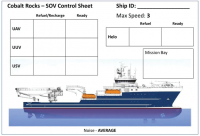
Task Force X (TFX) provides the principal mechanism for integrating maritime uncrewed systems into Baltic Sentry. Its mandate is to deliver scalable USVs, UUVs, and UASs that can augment or substitute for traditional platforms, particularly in the demanding acoustic and environmental conditions of the Baltic. Crewed patrol vessels and maritime patrol aircraft cannot sustain the level of persistence required to monitor multiple infrastructure corridors; TFX assets, by contrast, offer endurance, sensing diversity, and the ability to saturate key areas. Early contributions such as small UAVs, medium UUVs, and basic USVs, provided incremental improvements, while later additions such as interceptor USVs, sail-powered USVs, and containerised towed arrays significantly expanded Blue’s ability to inspect vessels and monitor infrastructure.
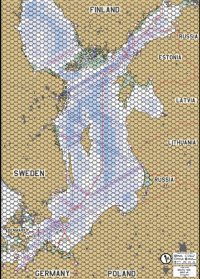 |
|
|---|
The NATO Digital Ocean programme provides the architectural framework for integrating these systems. It aims to create a “persistent, multidomain sensing and data fusion architecture” by combining seabed sensors, autonomous platforms, satellite ISR, and commercial data sources. A major focus is underwater communications, long recognised as a limiting factor in submerged operations. Prototype underwater mesh networks, acoustic modems, and hybrid optical acoustic links were explored during the wargame series, representing early steps towards a distributed, data-centric maritime surveillance model.
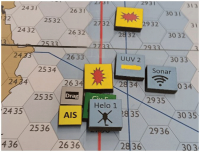
The wargames were conducted using UCL’s Cobalt Rocks ruleset, adapted to model physics-based detection, communications latency, bandwidth constraints and probabilistic classification. Three scenarios were constructed: a 2025 baseline, an initial TFX-enhanced posture, and a future Digital Ocean architecture incorporating an ASW glider barrier. A double blind adjudication model ensured realistic uncertainty, with Blue and Red operating from separate rooms and receiving only information their sensors could plausibly observe. Environmental conditions, endurance limits, and launch and recovery constraints were explicitly modelled, reinforcing operational realism.
Scenario 1 established the baseline. Blue possessed reasonable surface awareness but “almost no persistent subsurface sensing”, enabling Red to use a seabed operations vessel as a decoy while a grey zone merchant vessel severed a fibre-optic cable. The attack went undetected until after the fact, and attribution remained uncertain. The scenario highlighted the difficulty of distinguishing hostile intent from routine commercial activity in a congested maritime environment and showed the vulnerability of the current posture to deception and timing manipulation.
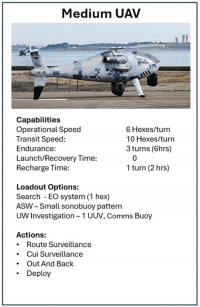 |
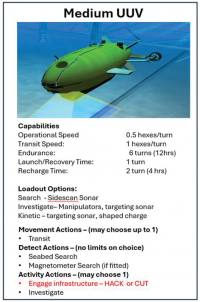 |
|---|
Scenario 2 introduced initial TFX enhancements. UAVs extended patrol vessel horizons, USVs increased surface domain presence, and medium UUVs provided limited subsurface coverage. Red abandoned at least one planned attack due to the perceived risk of inspection. However, underwater situational awareness remained intermittent, and a Red MUUV successfully exploited a gap in Blue’s patrol cycle. The absence of an underwater comms network meant that even successful detections would not have been reported in time to prevent an attack.
Scenario 3 tested a future architecture featuring a digital underwater mesh network, expanded TFX mass, and an ASW glider barrier. The mesh network enabled near real-time reporting and dynamic tasking of submerged assets. The glider barrier successfully detected a Red SSK, allowing Blue to mount a coordinated non-kinetic response. However, Red’s multivector attack, which combined MUUVs, an XLUUV decoy, and a grey zone merchant vessel, showed that even advanced architectures remain vulnerable to coverage gaps and information environment manipulation. The ‘Visby incident’, in which a merchant vessel severed all fibre-optic cables to the island, illustrated the interplay between physical, legal and informational domains.
Underwater situational awareness remained the dominant limitation across all scenarios, driven by the Baltic’s shallow depths, variable salinity and complex seabed topography. Platform mass and distribution significantly shaped adversary freedom of manoeuvre, but mass alone was insufficient without optimised tasking. Communications proved a critical enabler; the mesh network dramatically improved responsiveness but remained sensitive to node density and environmental conditions. Endurance constraints created predictable windows of vulnerability, repeatedly exploited by Red.
The wargame series demonstrates that future capability development must prioritise persistent seabed sensing, long endurance UUVs, resilient underwater communications, and integrated system of systems architectures. Incremental improvements to individual platforms will not deliver the situational awareness required to protect critical undersea infrastructure in the Baltic Sea.
|
The article above is an abridged version of a paper presented by Professor David Manley from University College London at RINA Warship 2026. |
Under water capabilityThe Warship 2026 conference brought together naval designers, engineers, defence professionals, academics and industry specialists to examine the technologies and strategies shaping future submarine capability.
The theme, accelerating underwater capability through collaboration, ran through a programme covering technology insertion, digitalisation and digital twins, autonomy and human-autonomy teaming, lean crewing, innovative power and propulsion systems, novel materials, survivability, stealth, and quantum technology.
Sessions were drawn from a range of organisations, including BMT, QinetiQ, Siemens Digital Industries Software, Expleo and MARIN, as well as universities such as Adelaide and University College London. The format combined keynote addresses, parallel technical streams, Q&A panels, and roundtable discussions, with a drinks reception and wargaming activity on the first evening. BMT was the event partner. |
|---|
This article appeared in Events, TNA May/June 2026.
Ulf Hansen, senior advisor maritime at Swedish company I-Tech AB, addressed the RINA Ship Energy Efficiency Conference in Athens in March 2026 with a data-driven challenge to the growing regulatory momentum towards biocide-free antifouling. His answer was unambiguous: yes, biocides remain essential, and prematurely restricting them risks making shipping’s environmental performance significantly worse, not better.
The scale of the problem
An estimated 200 million tonnes of greenhouse gas emissions annually are attributable to biofouling resistance, representing around 20% of total shipping emissions. A complete absence of effective antifouling protection could push that figure to 400 million tonnes. Even modest fouling carries severe consequences: coating roughness or light slime increases fuel consumption by up to 25%, heavy slime by 25-35%, and small barnacles or weed by 35-55%. By 2050, uncontrolled biofouling could be responsible for a 19% rise in total shipping CO₂ emissions. Hull fouling is also the single largest pathway for non-indigenous species entering European waters, accounting for 41% of the total. Approximately 95% of the global fleet relies on biocidal coatings, a proven, fleet-scale solution across more than 100,000 vessels worldwide.
In his presentation Hansen used drydock inspection data, compiled with Safinah Group, to challenge assumptions widely held in industry and regulatory circles.
 |
|---|
The first is that barnacle fouling primarily affects slow-steaming or low-activity vessels. The data show otherwise. Barnacle presence was recorded on 89.9% of product tanker hulls inspected, 88.4% of crude tankers, and 71.9% of containerships. Vessels reporting significant barnacle fouling across the global merchant fleet grew from 249 in 2020 to 685 in 2025, a near-tripling in five years. This data is based on 685 vessels’ in-dock data during physical inspection.
The key driver is trading pattern, not activity level: tankers and chemical carriers operating in warm, nutrient-rich waters with extended anchorage and frequent idle phases below 6knots are roughly twice as likely to suffer heavy fouling as high-activity vessels. As global sea temperatures rise, this pressure will intensify.
The second assumption is that barnacle fouling concentrates on vertical hull sides. Inspection data show the flat bottom is in fact more severely affected, with direct implications for hull cleaning strategies and coating specification.
The third is that fouling is primarily a consequence of coating failure. While polish-through correlates with increased barnacle levels, significant fouling is recorded even on hulls with no polish-through, confirming that operational exposure is an independent risk factor that coating selection alone cannot fully mitigate.
The available biocide toolbox is limited and shrinking, just when fouling pressures are increasing. Among targeted hard-fouling biocides, only two active ingredients are currently available: tralopyril and medetomidine. Hansen also notes that most commercially successful foul-release coatings still incorporate biocidal active ingredients.
A biocide ban, even phased, would leave self-polishing coating systems without their primary defence against barnacle settlement, while foul-release systems would become highly vulnerable in warm-water idle conditions. The result would be increased fouling, more aggressive hull cleaning, and a carbon paradox in which the regulatory measure intended to reduce environmental impact would increase fuel consumption, worsen CII ratings, raise EU ETS costs and elevate invasive species risk.
A call for collaboration
Hansen’s conclusion is that a biocide-free future is not yet realistic for most of the fleet. His call is for a more sophisticated response: regulators and industry should evaluate biocide policy jointly and holistically, considering emissions to both air and sea, rather than proceeding substance by substance. Rising sea temperatures and their effect on fouling pressure require proper investigation before further restrictions are imposed.
Looking beyond the binary framing of biocidal versus non-biocidal, he advocates collaborative innovation towards ultra-low-biocide formulations that minimise chemical load while maintaining efficacy across all vessel types and operational conditions. The goal is to ensure the path away from biocides does not inadvertently worsen the very environmental outcomes it seeks to improve.
This article appeared in Technical, TNA May-June 2026.
Wärtsilä, the Helsinki-based technology group, has released NTPRO 7, the latest iteration of its navigational training simulation platform, designed to address the growing complexity of modern bridge operations and the accelerating pace of digital navigation standards.
The platform received a Statement of Compliance from DNV ahead of its commercial launch, which was scheduled for May 2026, following two years of piloting and validation.
Central to the new release is the RealSea visualisation engine, built on Unreal Engine 5 and paired with an advanced sound system to deliver a physically accurate, high-fidelity training environment. New-generation conning and overhead displays mirror contemporary shipboard systems, and the platform incorporates S-100-ready digital navigation training through Wärtsilä’s Navi-Sailor ECDIS.
NTPRO 7 introduces a Virtual Watchkeeper with AI-powered voice command recognition, alongside vessel models and training scenarios supporting wind-assisted propulsion systems.
Johan Ekvall, director of simulation and training at Wärtsilä Marine, said the platform had been developed to help training institutions respond to evolving regulatory expectations and vessel technologies. “NTPRO 7 is designed to help training institutions and academies prepare crews for changes by providing a future-ready simulation environment that mirrors modern bridge operations and supports long-term competence development,” he said.
The system is offered in scalable configurations, from full-mission bridge simulators to classroom-based setups, enabling institutions to tailor deployments to their infrastructure and instructional requirements.
This article appeared in Insights, TNA May/June 2026
The Royal Navy, like many Western fleets, faces a structural problem that has been building for decades. Warship numbers have declined as unit costs have risen, creating a force structure built around a small number of highly capable but scarce platforms. Fewer hulls mean reduced presence, less resilience to losses and limited ability to surge in a crisis. Meanwhile, personnel recruitment and retention are under growing strain, and the shipbuilding capacity of potential adversaries dwarfs that of the West.
The UK’s 2025 Strategic Defence Review confronted this reality, setting out a vision for a ‘hybrid navy’ in which crewed platforms are complemented – and in some roles replaced – by uncrewed and autonomous systems operating at scale. First Sea Lord General Sir Gwyn Jenkins has since framed this transition as existential, warning that a force that waits for autonomous technology to fully mature before integrating it risks being outpaced by adversaries.
BMT believes the answer lies not in building more of the same, but in rethinking the vessel entirely. Project MODUS, presented at UDT 2026, sets out a family of modular uncrewed surface vessels conceived from first principles around autonomous operation. The work, led by maritime autonomous systems engineering lead Chloe Yarrien and head of innovation and research Jake Rigby, draws on more than five years of BMT research and development, including programmes into lean-crewed platforms and large uncrewed surface vessel concepts.
A family of platforms
MODUS is not a single vessel but a coherent design philosophy expressed across multiple hull sizes, from a 15m pentamaran to a 40m medium uncrewed surface vessel and a 75m large uncrewed surface vessel. Rather than pursuing a multi-role design that attempts to do everything at the cost of doing nothing well, MODUS embraces role-optimised platforms, tailored to specific operational needs.
Here we focus on three underwater warfare use cases: military data gathering, seabed warfare and anti-submarine warfare. Six core design principles run through every variant: autonomy, modularity, availability, buildability, adaptability and affordability. The first and last are perhaps the most consequential.
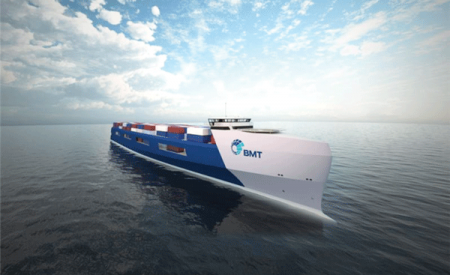 |
|---|
Autonomy is a primary design driver, not a retrofit. Every decision about hull form, internal arrangement, systems architecture and maintenance philosophy flows from the requirement to operate without crew. Affordability, meanwhile, is framed as a strategic imperative. Uncrewed vessels that simply replicate the cost of crewed ships will not solve the combat mass problem; they will compound it.
Designed around the mission
The three underwater vignettes drive specific and practical design choices. Long endurance, a common requirement across all three, shapes the hull form directly. Narrow-beam, low-resistance hull forms are matched to their intended operational profiles. With no crew onboard, internal volume freed from habitability can be reallocated to fuel, though weight rather than space becomes the limiting constraint. Critically, endurance for an autonomous vessel is defined largely by maintenance intervals, and MODUS targets operational periods of up to 60 days through simplified propulsion, appropriate redundancy, and equipment designed to be removed and serviced on the quayside rather than onboard.
Flexible multi-domain surveillance, relevant to the data-gathering and seabed warfare roles, is enabled through a dedicated sonar gondola integrated into the medium vessel. The gondola is optimised for sensor performance and doubles as a stabilising keel. Controlling self-noise is identified as fundamental to underwater performance, and low underwater radiated noise need not drive excessive cost if acoustic performance is addressed early in the design process, rather than managed as an expensive retrofit.
For the larger vessel, Navy Persistent Operational Deployment Systems (PODS) integration extends multi-domain flexibility further. True PODS integration is more than simply providing deck space for containers. It requires designed-in access, deployment envelopes, and mechanical, electrical and data interfaces so that mission systems become integral elements of the ship architecture. Offboard systems, including inspection ROVs deployed via a moonpool, towed arrays, survey UUVs, sonobuoys and gliders, extend the sensor field without increasing crew demand.
The large uncrewed surface vessel variant, intended for year-round North Atlantic operations in support of anti-submarine warfare, is around 75m following seakeeping analysis supported by historic towing tank data.
Steel is cheap and air is free, and the operational benefit of improved seakeeping in the North Atlantic far outweighs the marginal increase in material cost. BMT proposes a stepping-stone delivery model, beginning with medium vessel deployments in UK waters on lower-risk tasks, building operational confidence before scaling to larger vessels in more demanding theatres.
Commercial uses
The MODUS family has clear dual-use potential, with the modular autonomous design applicable to offshore survey, infrastructure inspection and logistics, offering a route to drive down unit cost through wider commercial adoption.
The fundamental argument of MODUS is straightforward: autonomous vessels must not be seen as direct replacements for crewed ships. They must deliver genuinely different capability, at lower through-life cost, and at the scale needed to restore meaningful combat mass to the fleet.
Author profiles
Chloe Yarrien, maritime autonomous systems engineering lead, BMT; Jake Rigby FRINA, head of innovation and research, BMT
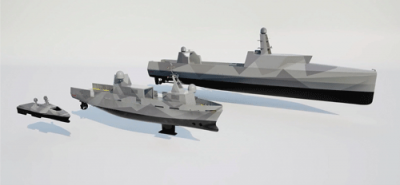 |
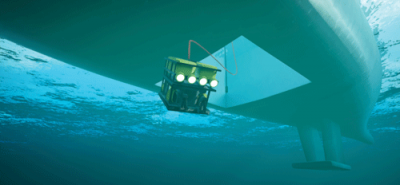 |
|---|---|
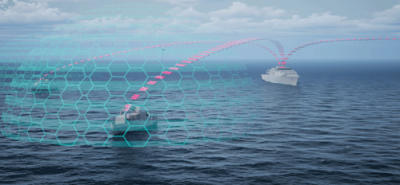 |
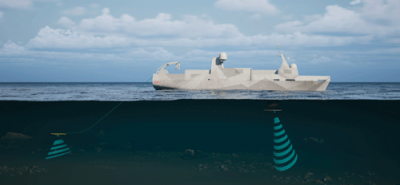 |
| From top, left to right: Visualisation of 15m, 40m and 75m MODUS vessels; The 40m design incorporates a moonpool; Multiple MODUS units operating in formation illustrate scalable fleet deployment; MODUS design principles embrace modularity (image: BMT) | |
This article appeared in Technical, TNA May/June 2026.
Capturing actionable seabed intelligence in environments that defeat conventional survey spreads is forcing a rethink of platform architecture and sensor integration. That was the challenge facing Seaforth Geosurveys while assessing the Arctic seabed for a planned subsea fibre-optic cable installation in Ungava Bay, Canada.
The Nunavik EAUFON-3 project was spearheaded by Sulmara, a global seabed intelligence company, which specialises in capturing and interpreting high-quality offshore subsea data.
Sulmara’s answer was its Discover package, a bespoke technology stack combining a high-resolution 3D synthetic aperture sonar (SAS) sub-bottom system with inertial navigation and positioning sensors.
This was mounted on a specialised remotely operated uncrewed surface vessel (USV) to acquire data, with in-house software used for processing, interpretation and delivery.
Sulmara Discover can be operated both locally and over-the-horizon from a Remote Operations Centre in Glasgow, UK.
For projects such as Nunavik EAUFON-3, platform selection is central. Sulmara chose Ocean Power Technologies’ wave adaptive modular vehicle, WAM-V 16, a USV with an articulated, wave-adaptive frame and shallow draught.
 |
|---|
“The WAM-V 16 USV was chosen for the integration mainly due to its motion compensating frame and versatility as a platform to meet host specifications for our technology,” says Kevin Rychert, principal acoustic scientist at Sulmara.
“Its independent wave compensating hulls allow it to adapt to sea states that would typically shut down smaller USVs’ surveys.”
He adds that the gimbled payload bay provides the stability critical for this type of work. “Other larger USVs don’t have this stability even with roll stabilisers,” he says.
WAM-V 16 is designed for small to medium-sized marine data projects and is a powerful survey tool, whether acting independently or complementing other vessels as a force multiplier.
Modularity and integration
Equally important is modularity. Unlike conventional hulls with fixed payload volumes, the WAM-V architecture allows rapid sensor integration without extensive redesign.
“The modularity of the WAM-V provides a great platform for developments and new technology integration as it is not constrained to small payload bays that are specifically designed to fit within a fabricated hull design,” says Rychert. “This allows us to add and integrate whatever sensors we need, quickly and easily without many architectural constraints.”
Key to the project was equipping the WAM-V 16 with the EdgeTech Buried Object Sonar System (eBOSS).
eBOSS can produce high-resolution, three-dimensional sub-bottom data across large tidal ranges and it can cope with cable routes littered with boulders above and below the seabed.
Full-volume sub-bottom data set at 5cm resolution is collected across a 120° swathe, enabling rapid coverage over large areas.
Rychert says that no other sonar system available can image the sub-seabed at this resolution, swathe width and depth in real time.
What differentiates the system is the coupling of sensing, navigation and processing. For naval architects, the integration elevates requirements around power management, data handling, onboard computer and communications bandwidth. In this sense, the USV becomes an active node within a distributed sensing network, rather than a passive survey platform.
The design integration is the culmination of years of work through R&D, sea trials and technology integration. “Discover combines the lightest and smallest 3D SAS SBI (eBOSS) on the market with the highest quality INS and GNSS sensors in a uniquely stable unmanned platform,” says Rychert.
The software doesn’t just record data; it integrates with the USV’s autonomous communication capabilities to provide real-time volumetric rendering.
 |
|---|
This allows operators to adjust path based on the quality of the incoming data, ensuring coverage and quality certainty without manual post-processing delays.
Rychert explains that the USV and Sulmara Discover pair so well that they have now been integrated on other variants of the WAM-V, most recently the larger 22ft version.
A changing methodology
The EAUFON-3 project is a benchmark for subsea surveys in general, Rychert says, and signals a methodological shift. Conventional ROV or ROTV surveys maintain a fixed altitude; a surface-mounted system must manage highly variable stand-off distances while maintaining data consistency.
But this survey was different. With water depths shifting dramatically from less than 1m to 20m, the project required continuous sensor adjustment and an entirely new approach to eBOSS data processing.
“As we move to surface-mounted systems, the challenge is interpreting datasets acquired at a dynamic range in a single pass without platform changes,” says Rychert.
A wider application
The WAM-V 16 USV and the Sulmara Discover package have a much wider application across the offshore technology and subsea sectors.
They can be used to survey any buried object such as pipelines and cables, unexploded ordinance, hazardous/lost debris and shipwrecks.
“The aim is to deliver the same insight that end clients need through faster automated, lower cost and higher quality technology and vehicle design methods,” says Rychert.
“Enabling a USV workforce with new emerging technologies can help achieve this in a safer, greener way.
“Discover has the potential to disrupt the subsea survey industry. Adding automation from AI and machine learning to this package further pushes the quality and efficiency we can deliver,” he says.
Projects such as Nunavik EAUFON-3 signal a structural shift in offshore vessel and technology design. Stability is being engineered for sensor performance as much as seakeeping; modularity is becoming essential and autonomy introduces new demands on control systems, redundancy and communications resilience.
Perhaps most significantly, though, the boundary between vessel and payload is dissolving.
Hull form, structural arrangement, power systems and communications architecture must now be conceived as part of an integrated design platform, optimised for data acquisition, processing and transmission, as much as for propulsion.
This article appeared in Subsea surveys, TNA May/June 2026.
The company
Argo Engineering Solutions, founded in 2016 by Simon Walley and based at Hythe Marina, Southampton, is a 12-strong team specialising in lightweight structures across composites, aluminium and high-strength steels. The company’s work spans five pillars of expertise: advanced structures, prototyping, high-speed light craft, windships, and hovercraft and air cushion vehicles.
The engineer
Emma Shepherd is one of Argo’s five engineering consultants, and her career illustrates how the company develops its people. Having completed an MEng (Hons) in Marine Technology with Small Craft Technology at Newcastle University in 2020, she had already spent two summers with Argo as an intern before joining as a design engineer, progressing to engineering consultant in September 2024.
Her technical experience encompasses naval architecture and hydrodynamics on concept projects, preliminary design of RIBs to various rule sets, structural assessment against ISO standards, stability assessments, lifting calculations, weight-critical studies and hoverbarge stability feasibility work. She has developed proficiency in finite element analysis using Strand7 and is practised in hand calculations for hull structures across monohull and catamaran configurations.
Her portfolio reflects the kind of multidisciplinary, hands-on engineering career that professional chartership is designed to recognise.
She says: “I am looking for an experienced RINA member who has worked on a range of projects and understands the chartership process – someone who could help me review my application and offer guidance and feedback on what I have prepared so far.”
What is needed
Shepherd is now preparing her chartership application, and it is here that a gap has emerged, not in her experience, but in the support available to her.
Argo has not previously navigated the RINA chartership process, and there are open questions around how to collate experience and present it in the format RINA requires. What is needed is someone who understands the process from the inside: how evidence should be structured, what level of detail is expected and how a candidate’s career narrative should be framed to meet the Institution’s standards.
What Argo can offer
Mentoring is already part of the fabric of how Argo operates. The four most senior staff, with between 15 and 30 years of experience each, provide active technical guidance to junior engineers. With six years post-graduation experience herself, Shepherd is well placed to support the four recently graduated engineers who have joined the company in the past three years.
Argo also offers work experience and internships to undergraduates, providing experience that contributes directly to logbook objectives. Once Shepherd achieves chartership, she will be glad to act as an external mentor to candidates at other organisations.
A mentor who knows the RINA process and can help Shepherd present an already strong engineering career in the right way would benefit not just one engineer, but an entire company’s approach to professional development for years to come.
Get in touch: info@argo-engineering.co.uk
This article appeared in Members, TNA May/June 2026.
DeepOcean has demonstrated a methodology for combining subsea inspection and full 3D scanning into a single remotely supported ROV campaign, completing both scopes simultaneously across 69 subsea structures at Woodside Energy’s Sangomar deepwater field off the coast of Senegal.
Routine subsea inspection and structural 3D scanning are traditionally conducted as sequential, discrete operations, each requiring dedicated offshore mobilisation. By integrating them into a single campaign, DeepOcean completed the combined work in slightly more than half the vessel time that two separate operations would have demanded, while doubling the data output delivered to the operator.
The technical capability underpinning the campaign draws on a proprietary ecosystem that DeepOcean has developed over the past decade. The operational package encompasses inspection engineers and ROV pilots working with ROVs equipped with specialist scanning hardware, integrated with data processing software capable of exploiting computer-aided drawings, ROV footage and sonar returns. A proprietary 3D imaging software pipeline converts the combined data into full 3D models, with digital twin outputs generated for ongoing asset management.
Key to the methodology is photogrammetry, the extraction of precise spatial measurements and 3D information from 2D photographic data. The discipline combines optics, geometry, computer vision and imaging science to convert ROV footage and survey data into accurate 3D reconstructions of subsea infrastructure. Applied at Sangomar, this enabled the capture of high-resolution structural data that supports detailed planning for future inspection and maintenance activities across the field.
“By applying 3D reconstructions in our operations, we improve our capacity to detect structural anomalies like cracks or deformities and understand their proximity to critical components,” said DeepOcean CEO Øyvind Mikaelsen. “This enables timely maintenance and prevents failures.”
The Sangomar Phase 1 Development lies around 100km south of Dakar in water depths characteristic of deepwater operations. Production commenced in June 2024, making this baseline survey campaign a timely exercise in establishing the structural reference data from which future inspection findings will be benchmarked. The 69 structures surveyed included 17 subsea trees.
DeepOcean was already engaged at Sangomar under a broader subsea inspection, maintenance and repair contract.
The Sangomar campaign will be watched closely by operators seeking to reduce vessel day counts without compromising the quality or scope of subsea inspection programmes, a pressure that is only increasing as deepwater portfolios expand and cost discipline intensifies across the sector.
This article appeared in Insights, TNA May/June 2026
David Andrews is professor of engineering design at University College London. His MoD career encompassed nuclear submarine design, the Invincible class aircraft carriers and early concept work on HMS Albion, HMS Bulwark and HMS Ocean. In 2020, RINA awarded him the William Froude Medal, its highest individual honour.
Why a career in naval architecture?
I have wanted to design ships since before I was eight when I was driving a pilot cutter in the summer of 1955 in the Bay of Port Philip, off Melbourne.
How has the industry changed since you started – for better and worse?
The ‘them and us’ between the management and the blue collar workforce used to be appalling, but the industry is now a cooperative endeavour where skills are respected, even if the City and government fail to recognise its worth.
What’s the most underrated skill in naval architecture?
Modern naval architects are highly capable users of computer-based technologies but lack the sense of life at sea for our end users. I was, as a naval constructor, educated in part alongside the Royal Navy and went to sea with them before designing ships and submarines. That time took in frigates, including full work-up and service off Iceland during the 1971 Cod War, a mine hunter, submarines, and a helicopter carrier.
Who in the industry do you most admire, and why?
Young women naval architects, whose excellent personal management qualities are sorely needed.
Which vessel do you wish you’d worked on, and why?
The 1950s Dreadnought submarine project with its lead designer, Louis Rydill. He was my professor at UCL and later my PhD supervisor and he had a profound understanding of ship design.
What’s the best advice you have ever received and who gave it?
Louis Rydill had a phrase in judging the professionalism of colleagues in the wider profession and the measure of working with them. He said: “His heart is in the right place.” And it was the correct basis for good collaborative working, which is the essence of designing complex vessels.
If you could collaborate with a naval architect from history, who would it be?
I am torn between three. First, Louis Rydill. Second, Sir Rowland Baker, whose career from the start of the Second World War to directing both the Dreadnought and Polaris submarine projects showed that technical design skill needs to be matched by management of a project’s acquisition strategy. Third, Sir Stanley Goodall, director of naval construction from 1936 to 1944.
|
LEARNING POINTS
Do your best But don’t succeed at the cost to your integrity.
“His heart is in the right place” Louis Rydill’s phrase is a good basis for collaborative working.
Design your ship inside out As examined in David Andrews’ article, The Sophistication of ESD of Complex Vessels. |
|---|
What’s the biggest mistake you’ve made in your career, and what did it teach you?
Having witnessed, under protest, the mendacity of the senior administrators and the indifference of the uniform navy to the fate of the Royal Corps of Naval Constructors (RCNC), I finished my government service saddened by the state of the once proud Royal Navy and its ships.
The RCNC has a distinguished history stretching back centuries, and to see its standing deliberately diminished was deeply dispiriting. It taught me that our national decline was significantly due to engineers being denied the status that they need to exploit the talent that has been emasculated since the time of Brunel.
What advice would you give your 25-year-old self?
Do your best, but don’t succeed at the cost to your integrity.
If you had a naval architect motto, what would it be?
I wrote a paper 100 Things (or so) A Ship Designer Needs to Know that is full of mottos.
This article appeared in Members, TNA May/June 2026.
Fincantieri has announced it will build Spectre, a new class of high-speed multi-mission unmanned surface vessel (USV) developed by Saildrone, through its US subsidiary Fincantieri Marine Group. The collaboration was announced at the Navy League’s Sea-Air-Space exhibition at National Harbor, Maryland.
At approximately 52m in length, with a displacement of around 250tonnes and a top speed of 30knots, Spectre is the largest, fastest and most capable Saildrone platform to date. Optimised for anti-submarine warfare operations, the vessel offers extreme endurance and an ultra-quiet acoustic signature, while remaining adaptable to alternative mission configurations, including higher-speed and low-observable operational profiles.
Construction will take place at Fincantieri’s shipyards in Wisconsin, applying the group’s established industrialised shipbuilding methods and serial production expertise in advanced aluminium vessels to a next-generation autonomous platform. The programme is designed to deliver production continuity and industrial robustness alongside technological performance, reflecting growing demand from naval forces for autonomous platforms capable of being deployed in numbers. Spectre is engineered to integrate a wide range of mission systems and payloads.
Chartwell Marine has signed a Memorandum of Understanding with the Cooperative Association of Japan Shipbuilders, which represents 59 Japanese shipyards, to support the development and local construction of crew transfer vessels and service operation vessels for Japan’s offshore wind industry.
The agreement, signed in Tokyo in March, builds on collaboration between the two organisations that began in 2023, including a Nippon Foundation-supported programme that introduced Chartwell’s crew transfer and service operation vessel designs to the Japanese market. The association will act as a bridge between domestic shipowners, operators and yards, and Chartwell, facilitating knowledge exchange to support vessels in meeting project requirements and local content rules.
Hiroyuki Nishida, managing director of the association, said: “By working together, we can help support the development of locally constructed vessels and contribute to the long-term growth of the industry.”
Andy Page, managing director of Chartwell Marine, said: “We look forward to continuing to work closely with the association and Japanese stakeholders as the offshore wind sector scales up.”
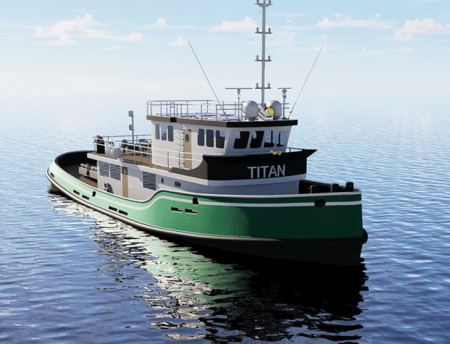 |
HISTORIC TUG TO BECOME LUXURY YACHT
AURELIA Design, based in Amsterdam, is restoring the 1956 Wijsmuller Titan tug as a long-range yacht, retaining the original hull form while replacing conventional propulsion with a fully emission-free system currently under development.
|
|---|
These articles appeared in Insights, TNA May/June 2026
The development of extra-large autonomous underwater vehicles (XLAUVs) represents one of the most significant advances in undersea systems engineering in recent years, and Anduril’s Dive-XL is among the most capable examples of the type yet demonstrated.
Where conventional AUVs are typically optimised for short to medium-range survey and reconnaissance missions, the Dive-XL is designed to travel in excess of 1,000nm and to dive to depths beyond 200m, with a maximum demonstrated range of 2,000nm. During a 2024 demonstration, it completed a 100-hour continuous voyage, described by Anduril as the longest single mission recorded for a vehicle of its class. Across Anduril’s broader fleet of AUVs, accumulated operational experience now exceeds 42,355km and 6,752 hours of mission time, a dataset that underpins confidence in the platform’s long-duration reliability.
The engineering approach centres on modularity. The Dive-XL is built around an open system architecture designed to accommodate a range of mission payloads without requiring fundamental redesign of the platform. Current payload options include Anduril’s Seabed Sentry sensing system, an AI-powered technology for persistent undersea surveillance, and Copperhead, a torpedo-inspired underwater attack drone.
The modular architecture also supports future payload integration as mission requirements evolve, a design philosophy increasingly common in naval unmanned systems where the pace of operational development outstrips traditional procurement cycles.
Historically, launch and recovery has been one of the more challenging engineering problems for large AUVs. The Dive-XL addresses this with a two-point lift interface that allows deployment from a variety of host platforms, including surface ships and piers, without requiring dedicated handling infrastructure. This flexibility is operationally significant, as it means the vehicle is not tied to a specific class of host ship and can be integrated into existing fleet assets.
The vehicle is designed to operate independently or in coordination with crewed and other uncrewed systems, supporting the manned-unmanned teaming concepts now central to naval doctrine in the US, Australia and the UK. Mission roles include seabed survey, intelligence gathering, surveillance and reconnaissance, and strike support, as well as potential commercial applications in offshore energy infrastructure inspection and survey.
Anduril manufactures Dive-XL vehicles at a facility in Sydney, Australia, established in connection with the Ghost Shark programme for the Royal Australian Navy, and operates a purpose-built facility in the US at Quonset Point, Rhode Island, designed to produce dozens of Dive-XLs and hundreds of the smaller Dive-LD platform annually. The existence of dedicated, high-volume production capacity distinguishes the Dive-XL programme from many AUV developments that remain at prototype stage.
This article appeared in Technical, TNA May/June 2026.
RINA’s inaugural Ship Energy Efficiency Conference brought together shipowners, operators and industry partners to share real-world case studies and measurable outcomes from vessel efficiency projects.
Below are summaries of two presentations.
Metis: building trust in fleet performance analytics
As the maritime industry increasingly relies on data-driven decision-making, the quality and transparency of that data are critical.
The Metis platform ingests high-frequency telemetry data, integrating noon reports, ERP data, weather feeds and AIS positioning into a cloud-based analytics environment. Its Scoring concept consolidates KPIs across four domains – Emissions, Operations, Performance and Machinery – into a single normalised Vessel Score.
Underpinning the platform is the Metis Confidence Framework, developed in response to the ‘Garbage In, Garbage Out’ problem, which takes on added significance when poor data produces erroneous analytics that generate misleading AI-driven insights. The framework operates across three layers: infrastructure-level connectivity monitoring with self-healing capabilities; data conditioning using machine learning to detect sensor anomalies and quantify signal quality through a Data Health metric; and a transparency layer delivering analytics with explicit confidence ratings, including error and bias figures.
 |
|---|
ICS: Energy efficiency and underwater noise
Most energy efficiency measures being adopted to meet IMO greenhouse gas (GHG) regulations will also reduce underwater radiated noise (URN), according to research presented by Chris Waddington, technical director of the International Chamber of Shipping (ICS) and chair of its URN working group.
Shipping is the principal anthropogenic source of underwater noise, and ship-generated acoustic spectra closely overlap the frequency ranges used by fish and marine mammals for communication, hunting and reproduction.
Waddington noted that a 3dB per decade increase in background ocean noise levels represents a doubling of sound energy per decade.
A VARD study examining more than 100 energy efficiency measures found that around two thirds produced a concurrent URN reduction. A subsequent NAVISON study, sponsored by the European Maritime Safety Agency, forecast a 30% reduction in URN energy density across European waters as a direct consequence of IMO GHG compliance.
A case study involving Tallink Group’s ro-pax vessel Baltic Queen illustrated the synergy in practice. Following a speed reduction to meet GHG requirements, replacement propeller blades optimised for the new operating condition were fitted at a cost of €13,640, delivering a low-frequency URN reduction of up to 15dB and average fuel savings of approximately 17%.
Waddington identified three efficiency measures that conflict with URN reduction: propeller blade area ratio optimisation, slow running of controllable pitch propellers, and ultrasonic antifouling systems. Careful management of these areas should allow other efficiency measures to drive down ambient URN in aggregate.
This article appeared in Events, TNA May/June 2026.
HII has been awarded a contract by the US Defense Innovation Unit to deliver a submarine Torpedo Tube Launch and Recovery (TTLR) system capable of autonomously deploying and recovering its REMUS 620 unmanned underwater vehicle from US Navy submarines, without diver assistance.
The REMUS 620 is the second-generation medium-class vehicle in the REMUS family, sharing the same physical envelope as its predecessor, the REMUS 600, and compatible with existing launch, recovery, handling and logistics solutions.
In baseline configuration, with a single battery module, the vehicle measures 3.1m and displaces 222kg, with a depth rating of 600m. Fitted with three battery modules, its maximum endurance is 110 hours and its range is 275nm at a sprint speed of 8knots. With synthetic aperture sonar installed, endurance reduces to 78 hours and range to 200nm.
The vehicle’s communications architecture supports data offload via removable hard drive, Wi-Fi and Iridium satellite link, with additional options including line-of-sight RF, high-data-rate transmission, acoustic modems, optical modems and plug-in Ethernet.
Autonomy is managed through HII’s Odyssey suite, which supports collaborative multi-vehicle mission planning across both unmanned surface vessels and uncrewed underwater vehicles.
This article appeared in Insights, TNA May/June 2026
Rob Hayes MRINA is based in Auckland, where he runs a consultancy, Maritime Systems Engineers. Rob studied MEng Ship Science at Southampton, graduating in 2014, and his career has taken him from the UK, to Australia, and now to New Zealand. He reflects on the importance of continuing professional development (CPD).
Writing and presenting
CPD is incredibly important, both for personal development and for the general advancement of the industry and profession. We are a small, niche industry, and CPD makes up a vast proportion of how you can widen your experience and knowledge.
While I have approached a diverse range of CPD throughout my career, my go-to method is to write papers and present at conferences. My first opportunity to present was in 2015 at a small conference (Hybrid Marine Power & Propulsion), on optimising vessel design for hybrid propulsion. I refined the topic over the next two to three years and presented at two further conferences, including the International Maritime Conference, Sydney, in 2017.
As my research interests and project exposure shifted, I have been able to present on different topics at an array of conferences. My advice: you don’t need to target large or international events. Presenting at your local RINA branch can be just as rewarding, and a fantastic opportunity to get in front of a crowd without too much pressure.
 |
|---|
 |
Why invest the time?
Pursuing CPD can be a challenge, especially if you are in a remote area. However, conferences have a reasonable lead-in time, allowing you to plan around the event.
There are several benefits. Researching and writing papers teaches you a lot, often in a subject area outside your usual course of work. Depending on your employer, there may be funding and opportunities to travel overseas to present. Finally, writing a paper and attending a conference can rack up a significant proportion of your required CPD hours for the year.
It is tempting to focus on CPD only when you are seeking professional registration (e.g. chartership) or maintaining it (e.g. RPEQ in Queensland, Australia), but CPD is much more than an obligation. It is how you help shape the industry, and every person reading this article has the potential to participate in CPD activities that put them at the leading edge of the profession. For those at the start of their career, CPD is also a great way to learn and develop your knowledge, skills and experience.
What I get out of it
Conferences are a fantastic way to meet like-minded people, and to enlighten people from different backgrounds. Presenting on a topic still in its infancy is rewarding. You feel like you are contributing to the advancement of the industry and profession, generating discussion, and spurring others to think about topics they have not considered before.
What’s next?
With the recent rise of artificial intelligence across all sectors, I am currently working on a paper exploring its adoption into the profession: Pattern Recognition at Scale: Why Naval Architecture’s AI Moment Hasn’t Arrived Yet. The paper argues that small maritime industries with an ageing workforce, such as New Zealand, could act as a testbed for early adoption of AI tools to offset impending workforce shortages. I will be presenting it at my local RINA branch (Auckland, New Zealand) on 1 October 2026, and considering where else to take it from there.
Contact Rob Hayes via maritimesystems.co.nz
This article appeared in Members, TNA May/June 2026.
L3Harris Technologies has received a contract from the US Defense Innovation Unit to deliver its Torpedo Tube Launch and Recovery (TTLR) system, which deploys and retrieves autonomous underwater vehicles (AUVs) through existing submarine torpedo tubes without the submarine needing to surface or expose personnel to risk.
The system deploys and retrieves the company’s Iver4 900 AUV and has been validated by US and allied navies for intelligence, surveillance, reconnaissance, mine detection and seabed warfare missions. The TTLR launcher and multiple Iver4 900 AUVs will be built at L3Harris’s Fall River, Massachusetts facility. Neither contract price nor duration has been disclosed.
The engineering significance of the TTLR lies in its use of existing submarine infrastructure. The modular system is compatible with both attack and ballistic submarine classes and multiplies force capacity from existing hulls without requiring new construction. It also delivers the first US Navy submarine and aviation-approved AUV lithium-ion battery technology, enabling longer-duration missions with hot-swap capability for continuous operations. NiMH cells provide a range of 40nm over 20 hours, while lithium-ion packs extend that to 80nm over 40 hours.
The Iver4 900 itself is a compact vehicle around 2.5m long, with a titanium and carbon-fibre pressure housing rated to 300m depth and a weight of under 104kg, dimensions that allow it to be handled through a standard torpedo tube. It carries modular payload bays typically equipped with dual-frequency side-scan and bathymetric sonars, with navigation provided by an inertial and DVL suite, surface Wi-Fi and Iridium communications, and an acoustic modem for subsurface use.
The TTLR’s interoperability across multiple submarine classes and allied platforms advances the US Navy’s manned-unmanned teaming vision and supports AUKUS Pillar 2 collaboration between the US, UK and Australia.
The UK operates the related Iver4 580 for unmanned minehunting and survey operations, underlining the system’s relevance to allied navies including the Royal Navy.
| STATS: IVER4 900 is a compact autonomous underwater vehicle around 2.5m long, with a titanium and carbon-fibre pressure housing rated to 300m depth and a weight of under 104kg. |
|---|
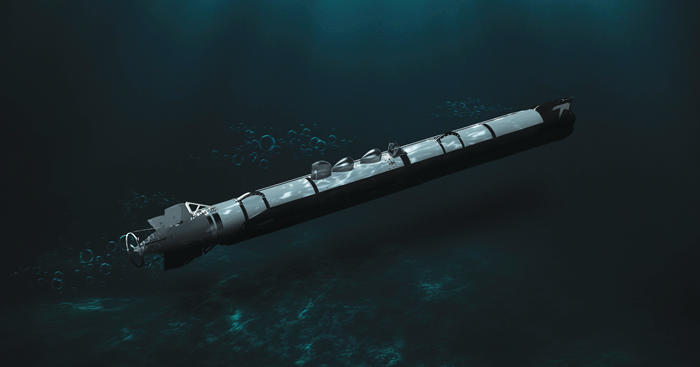 |
This article appeared in Technical, TNA May/June 2026.
The Rolls-Royce MT30 marine gas turbine has been selected to power Australia’s new fleet of general-purpose frigates, following the Royal Australian Navy’s decision to adopt an upgraded variant of Japan’s Mogami class, designated the New FFM or 06FFM, as its replacement general-purpose frigate platform.
The propulsion arrangement in the Mogami class is a combined diesel and gas (CODAG) configuration comprising a single MT30 gas turbine and two MAN 12V28/33D STC diesel engines, driving twin shafts equipped with controllable-pitch propellers, to achieve a maximum speed exceeding 30knots. The Mogami class marks the first installation of a CODAG system on any Japan Maritime Self-Defense Force ship. Australia has confirmed the MT30 will continue in that role for its fleet. The first of the frigates is scheduled for delivery to Australia in 2029 and operational service in 2030, with the initial three vessels to be built in Japan by Mitsubishi Heavy Industries before production transitions to Australia.
The MT30 is derived from the Rolls-Royce Trent 800 aero engine, retaining approximately 80% parts commonality with it. The current power rating is 36MW, with a maximum output of 40MW available, and the unit is flat-rated to 38°C ambient. Thermal efficiency is quoted at 40%, with operating efficiency maintained at loads down to 25MW.
The core design is based on a twin-spool arrangement, with a high-pressure ratio gas generator and a four-stage free power turbine. The intermediate pressure compressor has eight stages of variable geometry and the high-pressure compressor contains a further six stages. Designed with 50 to 60% fewer parts than other aero-derivatives, it carries type approval from both ABS and Lloyd’s Register.
The core gas turbine change unit, which would be exchanged at major maintenance intervals, weighs 6,500kg including its power turbine. The total weight of the complete gas turbine module, including its enclosure and ancillaries, is approximately 30,000kg. The Compact Package has a footprint of 8.6m x 2.7m. The engine can be configured for mechanical, electrical or hybrid drive. The MT30 is already selected to power Australia’s Hunter-class frigates.
The engine is designed, assembled and tested at Rolls-Royce’s Bristol facility and is in service with several navies globally, including the UK Royal Navy’s Queen Elizabeth-class aircraft carriers, the US Navy’s Zumwalt-class destroyers (where the MT30 operates as a generator prime mover within an integrated electric propulsion system rather than a direct mechanical drive), and the Republic of Korea Navy’s Daegu and Chungnam-class frigates, the latter employing a combined diesel-electric or gas arrangement with two MT30s per vessel combined with diesel-electric motors.
In addition to the MT30, the upgraded Mogami-class frigates will be equipped with mtu Series 4000 diesel generator sets from Rolls-Royce Power Systems, supplied through licensed partner Daihatsu InfinEarth, providing onboard power generation across ship systems. The Series 4000 covers a power range from 1,125 to 3,250kWe and has accumulated more than 250 million operating hours across its service life.
The selection reinforces Rolls-Royce’s position as a propulsion supplier across Australia’s naval modernisation programme, which also includes the AUKUS nuclear-powered submarine commitment, for which Rolls-Royce Submarines is set to provide reactors.
This article appeared in Technical, TNA May/June 2026.
Sukant Kumar, a senior naval architect at Lloyd’s Register (LR), has won the RINA Contribution to STEM Award for 2026, in recognition of his outstanding commitment to engaging young people with maritime and engineering careers.
Kumar’s work at Lloyd’s Register centres on ship safety, regulations and emergency response. He contributes to global regulatory development through the IMO and IACS, supporting technical papers, regulatory amendments, interpretations and implementing them within LR. He also advises shipowners and operators on compliance and technical decision-making, and supports the LR Ship Emergency Response Service, applying stability and longitudinal strength analysis to assist vessels during time-critical incidents. Together, this work helps ensure that ships operating worldwide remain safe, compliant and resilient.
That professional credibility is central to what makes his school visits effective. When Kumar stands in front of a class and describes what a naval architect actually does, he is speaking from direct experience of a technical, consequential and modern profession.
Kumar has been a volunteer with Inspiring the Future since 2022. The platform connects professionals with schools and colleges across the UK, and asks participants to give just one hour a year. He has given more than 23, attending 10 school engagements and reaching more than 1,700 young people. Inspiring the Future has recognised him as one of its most outstanding volunteers.
The scale of impact is reflected in the feedback from a London International Shipping Week event attended by 120 Year 10 students. Following the session, 94% said they had encountered a maritime job they had not previously heard of, 96% reported new knowledge of maritime careers, and 92% felt more confident that those careers were accessible regardless of gender or background.
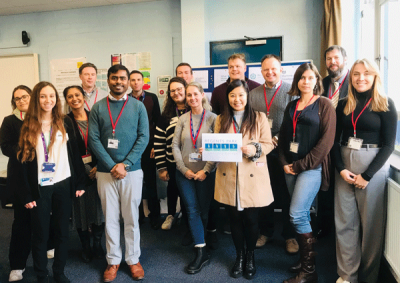 |
|---|
His motivation is personal. Growing up, Kumar lacked exposure to engineering role models, and that absence shaped his awareness of what was possible. He is guided by the principle that you cannot be what you do not see, and his outreach is a direct response to that experience. He says: “Talent is everywhere, but awareness is not, and even small moments of exposure can change the direction of a life.”
That commitment to honest engagement is evident in a session he delivered to primary school children on the Titanic. When a pupil asked why only women and children had been saved first, Kumar responded with care, explaining that in maritime, the priority is to protect those who cannot protect themselves. It is the kind of moment that illustrates why his engagements leave a mark.
Beyond school visits, Kumar serves as a governor at a local primary school and has supported a youth leadership programme affiliated with a Toastmasters club, helping college students develop the confidence and public-speaking skills that underpin careers in engineering and beyond.
The RINA nominations committee described the impact of his outreach as immense and impressive, noting that Kumar embodies the spirit of the award and surpasses its requirements.
“I plan to continue visiting schools,” he says, “and to spend more time mentoring young naval architects as they begin their careers.”
The RINA Awards
Sukant Kumar is the first in a series of award winners that The Naval Architect will be profiling this year. The RINA Awards recognise outstanding contributions and achievements across the naval architecture and maritime engineering community, spanning technical excellence, education, research and professional development.
This article appeared in Members, TNA May/June 2026.
Swedish marine battery supplier Echandia has launched the next generation of its Ultra battery energy storage system, designed for high-power, high-cycle vessel operations.
The Echandia Ultra is an air-cooled system built on lithium titanate oxide (LTO) chemistry, certified for maritime operations and carrying type approvals from DNV and Bureau Veritas. LTO chemistry delivers extremely long cycle life, high charge and discharge rates, and exceptional thermal stability. Unlike standard lithium-ion batteries, which use graphite components that can overheat under heavy use, LTO systems are more thermally stable, with significantly reduced risk of thermal runaway, a considerable safety advantage in a marine environment.
The system supports charging and discharging at up to 12°C, according to Echandia, enabling vessels to recharge during short port stays or load cycles without compromising battery life or safety. The Copenhagen ferry operation illustrates what this means in practice: seven commuter vessels operate up to 17 hours a day, charging in just six minutes and repeating the cycle up to 17 times daily, year-round. Those systems have retained more than 98% of their original capacity after six years of operation.
The Ultra is rated to more than 30,000 charge cycles with minimal ageing, and the company guarantees a system lifetime of 15 to 20 years. A key engineering advantage of LTO chemistry is that conventional battery systems must typically operate within a narrow state of charge band of around 80% to avoid degradation, requiring oversizing from the outset. The Ultra allows use of 90% of installed capacity, between 5% and 95% state of charge, meaning the system does not need to be oversized to compensate for early capacity loss. Echandia claims the result is a system up to 50% lighter and significantly smaller than alternatives, though the company notes this comparison is most meaningful at system level rather than cell level.
Simple and scalable
The modular architecture supports simple installation and future scalability, and the air-cooled design reduces system complexity and lifetime cost compared with liquid-cooled alternatives. The system is suited to ferries, ro-pax, ro-ro, navy, workboats, offshore, cruise and merchant vessels, supporting full electric and hybrid propulsion, spinning reserve, peak shaving, load levelling and UPS functions.
“The entire battery system is designed around operational reliability and high uptime,” says Felix Backgård, technical sales team manager at Echandia. “This principle guides every hardware design choice, from the cell level to the larger system components. It also guides our software architecture. The system is designed to isolate potential faults to the smallest possible part of the battery system. For example, if an issue occurs at cell level, only the affected string is disconnected, rather than larger sections of the system. This helps keep the vessel operational and reduces the risk of unnecessary downtime.”
Backgård adds: “Battery systems are becoming … one of the most critical components onboard. [They have] a direct impact on the vessel’s efficiency, reliability and long-term operational performance.”
Recent contracts illustrate the technology’s range. Echandia has been selected to replace the original battery system aboard E/F Ellen, the world’s first long-range electric ferry, supplying a 3.2MWh LTO system to replace the previous 4.3MWh NMC installation. The company has also been contracted to supply a 4.4MWh system for India’s first fully electric tug.
This article appeared in Technical, TNA May/June 2026.
The Joint branch of RINA and IMarEST in Singapore delivers a rich programme of technical events at one of the world’s great maritime hubs.
Decarbonisation was the dominant theme in 2025. In March, a webinar with the Society of Naval Architects and Marine Engineers Singapore (SNAMES) and the Singapore Shipping Association examined biofuels as a near-term emissions reduction pathway.
Rajesh Madhavan of Alfa Laval drew on 16 years of maritime sector experience to address practical decarbonisation strategies, while colleague Franciska Kjellström discussed fuel treatment solutions and contributions to the ISO 8217:2024 marine fuel specification.
The fuel transition conversation continued with a technical evening on ammonia in May, sponsored by Lloyd’s Register and WinGD. Liam Blackmore of Lloyd’s Register and Lars Hansen of WinGD presented on the latest developments in ammonia-powered engine systems, addressing the fuel’s potential to deliver safe, sustainable decarbonisation and the technical and infrastructural challenges that remain.
The regulatory dimension sharpened in September with a webinar by Saunak Rai, head of FueLNG, examining LNG bunkering against the backdrop of IMO MEPC 83’s newly approved mid-term greenhouse gas (GHG) measures. The package, comprising a binding fuel-GHG standard and a global pricing mechanism, both due in 2027, tightens well-to-wake requirements and raises the compliance bar for all fuels.
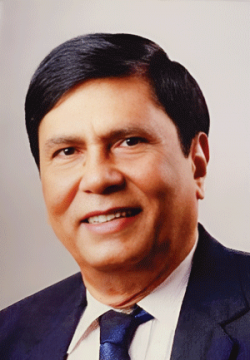 |
|---|
| Dr Sridev Mookerjea FIMarEST, FRINA is chair and group managing director of Blossom Group. Contact him at chair.sing@branches.imarest.org or sm@blossomgroup.com.sg |
Professional development has also been an important strand of the branch’s work. At a members’ night at NUSS Suntec City Guild House, Professor John Chudley, rector of MLA College and chair of the Engineering Council UK, outlined the full range of academic and experiential routes to Engineering Council registration.
He highlighted how vocational education, flexible CPD frameworks, and step-on/step-off career progression can support marine professionals at every stage. He also addressed the Engineering Council’s ongoing Registration Review, including future professional titles and the long-term integrity of the engineering register.
Youth engagement has been a priority too. The branch attended the Singapore Maritime Foundation’s Maritime Youth Forum, presented to naval architecture and marine engineering students at the Singapore Institute of Technology’s induction briefing, and sponsored the Nanyang Technological University Maritime Business Society’s 21st Anniversary Dinner. Branch chair Dr Mookerjea gave the welcome address.
The youth engagement programme culminated in December with the signing of a Memorandum of Understanding with YoungShip Singapore, formalising a partnership designed to increase the flow of young professionals into the maritime sector.
In February, the branch hosted a SNAMES Tech Talk, with LNG Alliance’s Dr Wie Min Gho covering the fatigue and fracture of marine structures.
A branch webinar in May 2026 featured Christopher Koek, from the Jason Marine Group, whose presentation focused on the Hatran SINS-FOG-C001, a new-generation IMO-certified fibre-optic gyroscope designed to be robust, maintenance-free and easy to install.
With the Joint Branch’s 25th anniversary in November 2026, and future technical sessions already planned on topics including carbon capture, digitalisation and cybersecurity, the committee is well placed to build on a landmark year.
Vice-chair: Michael Watt FIMarEST
Honorary secretary: Rasim Asgarov FRINA, FIMarEST
Assistant honorary secretary: Dr Mimi Gao MRINA
Treasurer: Roxanne Lek MIMarEST
Assistant treasurer: Chong Wan Seong
Social chair: Ivan Stoytchev MRINA
Business development chair: Srinivas Indana FIMarEST
Technical chair: Nischey Chopra FIMarEST
Social media chair: Dr Evan Cheok AMIMarEST
Youth chairs: Sarah Long SIMarEST, and Muhammad Marzooq SIMarEST
Co-opted member: Mizan Al Kabir
STATS
The joint branch of RINA and IMarEST has more than 1,700 active members and is one of the most significant professional maritime organisations in the region.
This article appeared in Members, TNA May/June 2026.
The RINA Cumbria Branch delivered a varied programme of talks and events in 2025 and into 2026, held mainly at Barrow Town Hall, Barrow-in-Furness, with one event at the Coniston Institute. Speakers covered a wide range of topics, from history to the future of decarbonisation, to the Titanic, to the engineering behind world speed records.
In September 2025, James Royston, head of projects at the Isle of Man Steam Packet Company, gave a talk on the specification and acquisition of Manxman, its latest ferry serving the Heysham to Douglas route with some quite stringent infrastructure and environmental constraints and Return to Port requirements.
Martin Thody, a chartered ergonomics and human factors specialist, fellow and president of the Chartered Institute of Ergonomics and Human Factors, and senior engineering consultant for Human Systems Integration at BAE Systems Submarines, gave a talk on 1 October 2025 titled ‘The Evolution of Human Factors in the Maritime Industry: From the Age of Sail to the Modern Day’, exploring people-centred design and operational performance across the maritime sector.
The following month, the branch presented an evening of talks centred on Coniston Records Week, held at the Coniston Institute on 4 November 2025. Organisers and participants described the engineering behind their vessels and their pursuit of world speed records on Coniston Water, with attendees encouraged to watch the racing during the day ahead of the evening session.
The new year opened on 7 January 2026 with Steve Bee, group commercial director of Veritas Petroleum Services, and a chemist by background. His insightful talk addressed maritime decarbonisation, outlining the company’s testing and advisory work across a fleet of almost 13,000 vessels, with a focus on protecting vessels, crew and the environment while improving operational efficiency.
On 28 January 2026, John Hudson CBE, FREng, FRINA, past managing director of Barrow shipyard, delivered ‘Surviving Perestroika: The Impact of the End of the Cold War on Barrow’s Shipyard’, charting the yard’s response to the post-Cold War defence landscape, its industrial rationalisation, and its eventual refocusing on the UK submarine programme.
In ‘Barrow and the Great Liners’ on 10 March 2026, Dr Stephen Payne OBE, FRINA examined the shipyard’s historic role in the construction of great ocean liners. Payne had previously delivered a talk to the branch on his work as the chief designer of Queen Mary 2.
Forthcoming events include talks by Dr Stephen Payne on Titanic Revisited, Alan Phizacklea on 50 years at Barrow shipyard and Jerry Turner on the stability of large sailing yachts. The branch also has a networking evening planned at Windermere Motor Boat Racing Club and a visit to Barrow Lifeboat Station.
Chair: David Hooper MRINA
Vice-chair: Adam Cowley MRINA
Secretary: Crayston Renner MRINA
Treasurer: Simon Newby AMRINA
Honorary member: Jason Dobb MRINA
Members: Nick Heather FRINA; Aaron Willis AMRINA; and Sheldon Keizner AMRINA
The RINA Cumbria Branch works closely with the Barrow and District Association of Engineers (BDAE) and Professional Engineers South Cumbria (PESC) to contribute about one talk per month to a series of weekly talks from September to April. Aside from talks and events, the branch also provides Professional Review Interview interviewers for RINA members looking to progress their professional status within the Institution.
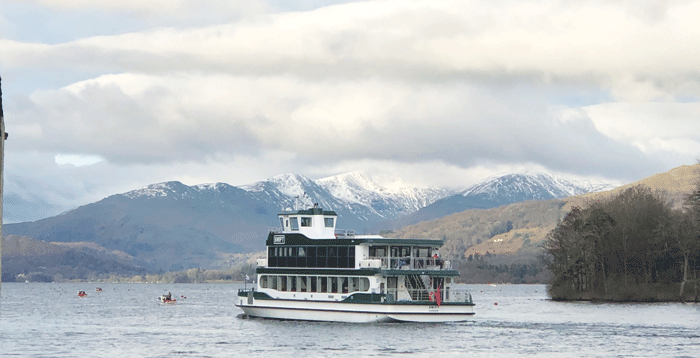 |
|---|
This article appeared in Members, TNA May/June 2026.
When class surveyor Panagiotis Katsinellos began a routine document trawl on a chemical tanker detained in Heraklion, Crete, the situation turned into a full-scale emergency – and an excellent display of teamwork.
Katsinellos, a surveyor for a leading classification society and a fellow at both RINA and IMarEST, had been dispatched to the vessel, which for the purposes of this story we will call the MV Crete, after port state control (PSC) had detained the vessel, requiring the crew to update critical documentation.
Shortly after his arrival onboard MV Crete, a fire in the engine room set off alarms, and changed the whole nature of the visit, according to Katsinellos, with the requirements suddenly very different for both the crew and the maritime surveyor as they moved quickly to deal with the blaze.
“A high-pressure flexible pipe on the air compressor suffered a mechanical failure, resulting in a high-pressure oil leak. The atomised oil ignited upon contact with a hot surface, creating an immediate fire hazard,” says Katsinellos.
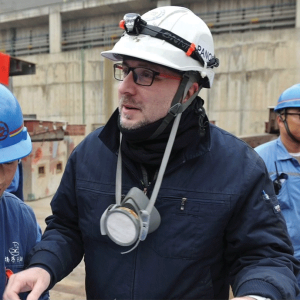 |
|---|
Emergency measures
A visit that started out as preparing, reviewing and approving critical documentation and a comprehensive evidence package was now a full-blown emergency. The fire presented an acute risk to the vessel as the air compressor was situated directly adjacent to a fuel tank.
“The primary threat was the rapid conduction of heat to the fuel storage,” says Katsinellos, “which could have led to a secondary, uncontained explosion and a total loss of the machinery space.”
However, the crew, including the senior officers, reacted with speed and discipline. They used portable fire extinguishers to cool the fire-affected area. “Their decisive action contained the fire before boundary cooling became impossible,” says Katsinellos.
The master had immediately contacted PSC and the Hellenic Coast Guard making sure that they were fully briefed and that firefighting tugs remained on standby.
Katsinellos, meanwhile, provided a clear line of communication between the crew and PSC, thereby helping to speed up the crew and shoreside reaction times.
Katsinellos supplied detailed technical information to PSC and the coastguard so that, should they need to intervene, they would have a comprehensive view of the layout of the vessel’s critical engine room.
Following the successful conclusion of the emergency, the surveyor was able to provide a damage survey, verifying that the vessel’s safety systems were operational, and allowing PSC to remain confident in the safety and security of the vessel.
This incident highlights that while high-pressure pipe failures are a known technical risk, the outcome is dictated by the seafarers’ reaction. The combination of a rapid crew response, transparent communication by the master, and the technical seniority of the class surveyor turned a potential disaster into a managed incident, says Katsinellos.
An opportunity to learn
Serendipity played a part in this event with the emergency offering Katsinellos a live lesson on the paper gap; the difference between perfect certification and a physical response.
He says: “Being onboard during a fire provided me with a rare front-row seat to the gap between theoretical safety and real-world chaos. From a surveyor’s perspective, this experience transformed a understanding of shipboard safety from a compliance check into a survival reality.”
Stress testing fire drills
In Katsinellos’ view the industry can learn from such experiences. He adds that it is critical for fire drills to move beyond “muscle memory” and that they should be stress tested.
“A crew’s response is rarely perfect; it is messy,” he notes, and that means that industry training must focus on the human element, “training crews to communicate clearly under the deafening noise of alarms and the disorientation of smoke”.
Moreover, in an emergency, PSC’s role is transformed from regulatory enforcement to risk management, while class plays a key role in establishing the necessary reaction to an emergency, given that it has in-depth technical knowledge of the ship. That requires class and PSC to work together effectively, and for that there must be pre-established trust.
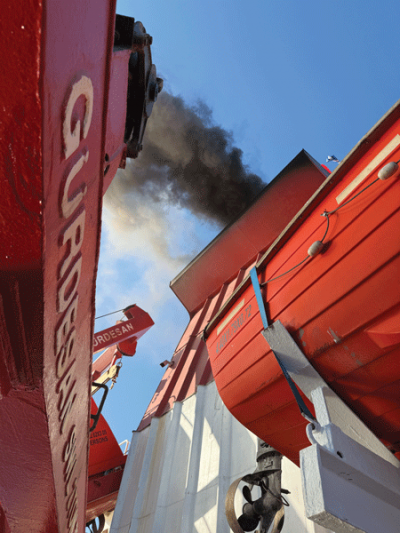 |
|---|
“The industry should encourage more joint walkthroughs to build rapport before a crisis hits. Someone in a technical liaison role is critical to bridge the gap between shoreside tactics and maritime reality,” the surveyor says.
Each incident is a chance for the industry to analyse and learn, and this, comparatively minor, incident offers some rich rewards, particularly where the subject of collaboration is concerned, and the value of experienced, knowledgeable crew.
Invaluable experience
The presence of an experienced surveyor provided PSC with the technical layouts of the ship, including fire zones, fuel tank locations and structural boundaries. This helped PSC and the firefighting tug decide where to focus their work should cooling efforts to prevent structural failure become necessary.
In fact, in this case the crew’s rapid response meant that boundary cooling was unnecessary.
That response was aided by Katsinellos as the ‘catalytic link’. “I translated technical class requirements into actionable status updates for the commander, ensuring the authorities knew exactly which safety systems were compromised in real time.”
The instant collaboration was so effective that commander Stavros Papaderakis wrote to Katsinellos regarding the MV Crete incident: “On behalf of the main PSC inspection office of Heraklion, Crete, I would like to extend our sincere gratitude for your exceptional support and professionalism.”
A pivotal role
Notably, the commander emphasised the importance of the ‘catalytic’ link to the success of the operation.
“Your personal skills and unwavering commitment to monitoring the case played a pivotal role in achieving an accurate and effective resolution,” he said.
“Your presence during the onboard fire incident was truly catalytic. By standing in a hazardous environment and acting as a liaison between the authorities and the ship’s parties, you demonstrated remarkable courage and composure under pressure. Your actions ensured clear communication and coordination at a critical moment.”
This article appeared in Emergency response, TNA May/June 2026.
Why did you choose a career as a naval architect?
A local family friend introduced me to the concept of a naval architect at the same time as I was becoming obsessed with sailing. Dinghy racing with my father, I grew to admire the classic yachts where we sailed at Aldeburgh. When I became the ‘Saturday boy’ at the local boatyard, the owner, Peter Wilson, asked me what I wanted to do when I left school. He was rather surprised when I said I wanted to be a naval architect. From then on he encouraged me to learn as much as I could about boatbuilding and design, lending me books and quizzing me about them.
How did you go about getting an education?
Solent University’s Yacht Design and Production course is the stuff of legends, providing the building blocks for most renowned yacht designers and naval architects of recent decades. It lived up to its reputation, and after three years of pure indulgence in my chosen subject, I was raring to go.
What happened after university?
My first job at G.L. Watson was hugely formative, working with designs I had previously read about and participating in some important yacht restoration projects. I was thrilled to meet and work with some of the greats. It was only the diversity of life outside classic yachts and a desire to learn from a broader church that tempted me away.
After a year in the Netherlands working on the design of very large yachts, I had a thorough education in design office discipline. The subsequent restoration of a 1937 Camper & Nicholson Motor Yacht at Pendennis Shipyard had proved another triumph for the G.L. Watson team but at the end of a three-year project, Cornwall proved hard to leave.
What happened next?
Starting my own office had always been in the back of my head and it was apparent that the south west offered a wealth of diverse opportunities for someone with my accumulated skill set and experience.
I set up my office in 2016 and embarked on seven years of fascinating projects, travel and experiences, and serving the commercial, leisure and research sectors. I was able to take on a junior naval architect and share the knowledge and opportunity that had come my way.
What other roles have you taken on?
Conversations with two separate MCA surveyors led me to a job as an MCA surveyor; a demanding role that comes with no shortage of responsibility, pressures and demands focused on maritime and environmental safety.
Still based in the south west of England, I benefited from some of the best maritime training available, counting a diverse group of hugely competent naval architects, engineers and mariners as my colleagues.
Working with the local fishing fleet was a highlight, becoming familiar with vessel owners and operators who had as close a tie to their vessels as any, each with their own particular challenges and priorities to understand and work with.
The MCA taught me how to be a civil servant and how, no matter the size and complexity of the vessel, from a 400m container ship to a 6m open fishing boat, they are equally deserving of clear and concise professional engagement. The Agency is excellent at matching skill sets to tasks and my knowledge of stability and structures was put to good use.
What now?
I am off to the Caribbean to run a thriving boatyard in English Harbour, Antigua. I hope my skills and experience will contribute to the yard going from strength to strength in supporting the local industry and visiting trade. My existing toolkit of skills will no doubt come in handy but I am looking forward to learning the needs and challenges of my new workplace.
What’s your advice for others?
To anyone thinking of running their own office, go for it! It’s tough, but hugely rewarding. It allows you to go for the work that really interests you and to learn and grow into specialisms that will enthuse you for years.
I have been a RINA member since day one at university when former CEO Trevor Blakeley visited and handed out the forms. Now as a longstanding full member who only recently got their act together to become chartered, I can confidently say that naval architecture has been everything I wanted in a career and more. I am proud to say ‘I am a naval architect’, and, while you never know what the next project will bring, one thing is for certain, you never stop learning.
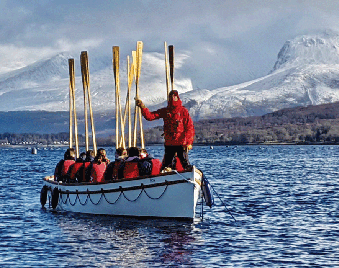 |
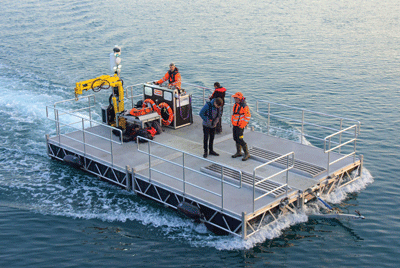 |
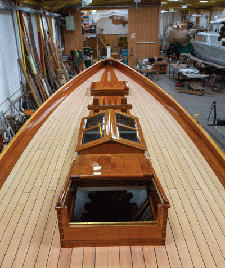 |
|---|
This article appeared in Members, TNA May/June 2026.
The Richard B Couch Model Basin at the University of Michigan College of Engineering, following completion of extensive renovations to the 750,000gallon, 360ft-long towing tank facility. The reopening ceremony marked the occasion with a “mixing of the waters”, in which water contributed by 41 hydrodynamics laboratories across 20 countries was poured into the basin, a gesture reflecting the global community the facility has long served.
The basin is the largest towing tank at a US university. Over its 120-year history it has been central to some of the most consequential advances in naval architecture, among them the development of the bulbous bow, the hull form optimisation that reduces wave-making resistance and is now fitted to most large commercial vessels, which combined carry approximately 90% of world trade by volume.
This article appeared in The Big Picture, TNA May/June 2026
When I was 16, a team from Fleet Maintenance & Repair Organisation, later BAE Systems, came to my school to talk to us about apprenticeships, specifically warships. There’s something mesmerising about vast grey ships fitted with missiles and guns, so I took the application pack home.
Little did I know that that single decision would set me on a 30-year career supporting the ships of the Royal Navy.
In 1997, I began my apprenticeship as a plater/fabricator in Portsmouth. It gave me the opportunity to continue my education while learning a skilled trade on the job. Over the next three years, I worked on a wide range of platforms including CVS, Type 22/23 frigates and Type 42 destroyers, and was able to experience other parts of the business, including procurement, planning and design. It was there that something clicked: I realised I wanted to understand why things were designed the way they were, not just how to build them.
There were, of course, parts of the apprenticeship that I did not enjoy, but understanding what doesn’t motivate you is as important as discovering what does. The exposure to a large organisation and its many functions was a huge benefit, and by the time I’d completed my apprenticeship, my career path had started to take shape, and I became a design engineer.
Nevertheless, there was always a part of me that regretted not taking an academic route, but that regret became motivation. Fortunately for me, BAE Systems supports further and higher education and is filled with managers and leaders committed to nurturing and developing talent. This allowed me to build on the foundations laid during my apprenticeship while expanding my knowledge through academic study.
My journey into naval architecture began with a last-minute request to support an inclining experiment in Scotland. That week proved transformative. I found a discipline I was genuinely passionate about, and it opened the door to the career I have today. A year later, I transferred into the naval architecture team and, in parallel, began studying for a master’s degree through the MTEC programme, designed for those in employment and run by the University of Newcastle. I went on to achieve Chartered Engineer status through RINA a few years later.
Today, as a chief engineer at BAE Systems, I look around and see colleagues who have arrived here via many different routes. That variety of experience brings diversity of thought, which ultimately benefits the Royal Navy, and our wider customer base, and creates a rewarding place to work.
STEM Ambassador programme
RINA is calling on members to support its STEM Ambassador programme, connecting experienced engineers with schools and colleges to raise awareness of naval architecture among young people. Despite offering careers at the forefront of technology and sustainability, the discipline remains poorly understood by students, while the maritime industry faces a well-documented shortage of skilled engineers.
The programme is flexible, with a minimum commitment of one activity per year. Ambassadors deliver talks, workshops and mentoring, while also developing their own professional skills. Registration is straightforward via the STEM Learning platform.
This article appeared in Members, TNA May/June 2026.
ClassNK has issued an Approval in Principle (AiP) for a liquefied CO₂ carrier equipped with the Wind Challenger hard sail wind propulsion system, jointly developed by Mitsui O.S.K. Lines and Samsung Heavy Industries. The certificate was presented at a handover ceremony held at Sea Japan 2026.
The AiP confirms the feasibility of the vessel’s conceptual design against applicable rules and safety requirements. ClassNK carried out its review against its Rules and Guidance for the Survey and Construction of Steel Ships and its Guidelines for Wind-Assisted Propulsion Systems for Ships (Edition 2.2).
The vessel presents a notably complex design challenge, combining three distinct technical elements – a forward accommodation arrangement, liquefied CO₂ cargo systems and multiple Wind Challenger units – each of which carries its own risk profile. ClassNK participated in a HAZID risk assessment before issuing the AiP.
This article appeared in Insights, TNA May/June 2026
It is now some 25 years since the conclusion of the Second Formal Inquiry into the loss of MV Derbyshire. The vessel disappeared in September 1980 while on passage from Canada to Japan, carrying over 100,000 tonnes of iron ore. She was lost some hundreds of miles south of Japan in waters 2½ miles deep. At 169,000dwt she remains the largest British merchant vessel ever lost at sea. All 42 crew and two wives aboard perished. The Japanese Maritime Safety Agency reported two oil slicks some 20nm apart in a region where Typhoon Orchid had occurred, but there was no sign of the vessel itself.
Government apathy
What followed was the most disgraceful episode in UK shipping history. Despite the Derbyshire being British-built, British-crewed, UK-classified and UK-owned, there was no significant government response to her loss. Fourteen secretaries of state for transport came and went without ordering any on-site investigation. It was left entirely to the dependants of the 42 crew to pursue the matter, forming the Derbyshire Family Association under the able chairmanship of Paul Lambert. Captain David Ramwell’s efforts in cajoling and convening politicians in Westminster should not be forgotten, either.
The first formal inquiry was inconclusive; the wreck had not been located, though it correctly speculated that the vessel had probably been overcome by the sea. Marine surveyor Peter Ridyard, who had lost a son in the disaster, established prior to the inquiry that the five sister ships had cracking in their deck structures close to the forward faces of the superstructure, at the junction with frame 65.
The hypothesis developed that when these large bulk carriers encountered very large waves in severe sea conditions, the resulting peak stresses sought out local weaknesses in the structure, causing the deck to tear locally at frame 65. The stern would sink at the point of fracture while the nine forward holds floated free until they too foundered. The two oil slicks appeared consistent with this scenario, though this interpretation was later revised.
The critical moment came on 22 July 1993 at a meeting of the International Transport Workers’ Federation attended by NUMAST, the National Union of Seamen and the Derbyshire Family Association. Shaun Kent, a lateral thinker who had studied the seabed conditions at the loss site and who had previously recovered a car-sized section of Derbyshire’s sister ship Kowloon Bridge, including fractures adjacent to the superstructure, proposed a £2m search of the seabed. The proposal was rejected, but a £25,000 investigatory contract was agreed as an alternative.
From this modest sum, David Mearns of Oceaneering was awarded £7,250 to visit Japan and consult the Japanese Maritime Agency. He returned with a finding that proved decisive: one of the two reported oil upwellings had been based on a false helicopter sighting, the aircraft not having had the range to reach the location. This destroyed the two-part fracture hypothesis but, crucially, concentrated the search on a single, much smaller area of seabed. The wreck was found within a week.
Conclusive evidence
A subsequent £2.25m government-funded expedition produced a photographic montage of more than 600 pieces of wreckage across 37,000 images. The evidence showed that the Derbyshire had partially flooded and descended like a submarine, the external pressure at depth causing a massive implosion that accounted for the scale of the destruction. The ensuing investigations led ultimately to a change in IMO rules, mandating stronger hatch cover loading standards for bulk carriers in heavy seas.
Between 1950 and 2000, more than 100 bulk carriers sank and some 1,500 seamen drowned. These losses reflected a catastrophic and prolonged failure of the shipping industry and its regulators. The Derbyshire Family Association, through 20 years of persistence against considerable institutional resistance, changed that. They deserve their place in maritime history for finding the Derbyshire and improving bulk carrier safety. I’m proud to have played my part.
This article appeared in Members, TNA May/June 2026.
Orca AI has signed a Memorandum of Understanding with Samsung Heavy Industries (SHI) to jointly develop and deploy autonomous vessel technologies across both newbuild and retrofit markets.
The phased collaboration will combine SHI’s autonomous solutions with Orca AI’s AI-powered maritime operations system, covering AI-assisted navigation, berthing and speed optimisation.
As part of the agreement, Orca AI will integrate SHI’s SVISION berthing assistance system and autonomous speed control solution into its suite, which currently covers more than 1,200 vessels.
SHI will in turn embed Orca AI’s technology as standard on newbuild vessels equipped with its Samsung Autonomous Ship system. Joint research and development activity will focus on real-time decision support, adaptive navigation and continuous performance optimisation, drawing on large-scale operational data from both companies.
Orca AI’s fully automated SeaPod watchkeeper unit uses computer vision, with both day and thermal cameras, to provide bridge teams with 360° situational awareness, detecting, tracking and prioritising navigational risks in real time.
Yarden Gross, CEO and co-founder of Orca AI, said the partnership created “a practical path to scaling autonomous capabilities, from newbuild vessels to existing fleets”.
SHI executive vice president Hyun Joe Kim, head of SHI’s Autonomous Ship Research Institute, said autonomous navigation is “a key competitive factor for the future of the shipbuilding industry”.
This article appeared in Insights, TNA May/June 2026
The threat landscape facing modern naval forces has changed rapidly. Cheap, mass-produced uncrewed aerial systems, available in vast numbers and increasingly capable of coordinated attack, have exposed the limitations of conventional air defence. Intercepting a drone costing a few hundred pounds with a missile costing tens of thousands is not a sustainable equation. DragonFire is the UK’s answer to that problem.
Developed through an industry partnership led by MBDA with Leonardo UK and QinetiQ, DragonFire is a Laser Directed Energy Weapon system designed as an integral effector within a layered air defence architecture. The system has entered production and is on track to equip the Royal Navy in 2027, with first installations planned aboard Type 45 destroyers. That timeline reflects both the urgency of the threat and the maturity of the technology.
The system is housed in a modular 20ft ISO container, drawing on the host platform’s own power and cooling rather than requiring independent provision. This makes DragonFire straightforward to integrate on to, and remove from, different platforms.
At its core, DragonFire uses coherent beam-combining technology to focus high-energy laser light on to a target with exceptional precision. The system is nominally rated at 50kW and has been designed to be scalable. Its beam director uses three apertures to search, identify and engage. The first acts like a pair of binoculars, scanning a wide area for threats. A second mid-range aperture examines a located target in greater detail. The third, telescope-like aperture provides ultra-precision targeting, narrowing on to the threat and confirming engagement. The beam is produced by compressing raw electrical power into a laser source, then focusing and stabilising it through advanced hardware and algorithms before directing it precisely on to the target, where the intense light cuts through the structure.
A critical design principle is that raw power output is not the primary measure of efficacy in a laser weapon. What matters is how much of the available power can be concentrated on to the most vulnerable point of a target. DragonFire has been specifically engineered to maximise that focused delivery, ensuring rapid intercept rather than simply generating the highest possible beam energy.
Steering the beam with the required accuracy is technically demanding. Fast-moving mirrors direct the laser, with high-speed cameras and sophisticated image-processing algorithms operating at thousands of frames per second providing continuous feedback. Even tiny mirror adjustments translate into large beam movements at range, and as a target heats and begins to give off smoke and particles, its optical signature changes, compounding the tracking challenge.
Atmospheric turbulence is a further obstacle. DragonFire addresses this by increasing power output to compensate for adverse conditions, and applying real-time wavefront correction, measuring the return signal from the target and calculating adjustments to counteract beam distortion before it reaches the aim point.
The trials programme has been methodical. Initial firings against static targets at the Dstl Porton Down range were demonstrated publicly in October 2022. Low-power tracking trials at the MoD Hebrides Range followed in July 2023, with a high-power shot destroying a moving aerial target in October 2023. A further aerial engagement was conducted in January 2024. The consistency of results prompted the UK government to accelerate the programme and commit a further £316 million, bringing total investment to £416 million.
This article appeared in Technical, TNA May/June 2026.
Safety is not theoretical in maritime operations. The high seas remain an unforgiving environment where systems are routinely pushed to their limits. Heavy fuel oil is well understood, with decades of operational experience behind its safety protocols – yet incidents still occur.
Of the alternative fuels, LNG has matured into a proven marine fuel and one that is firmly back in favour after the IMO paused elements of its Net Zero Framework in October 2025. The regulatory hesitancy was quickly reflected in orderbooks, with LNG re-emerging as a favoured and well-understood bridge towards a lower-carbon future.
The other alternative fuels, however, introduce unfamiliar hazards. Hydrogen’s extremely low ignition energy, ammonia’s acute toxicity and methanol’s combination of flammability and toxicity all demand new layers of engineering scrutiny.
For Dr Thomas Beard, clean shipping service lead and principal marine engineer at BMT, the challenge is both technical and urgent. His doctorate in hydrogen safety, completed years before the current fuel debate intensified, has become newly relevant as shipowners seek to find ways to stay profitable, compliant and safe against a backdrop of regulatory uncertainty.
Designing for an uncertain fuel future
With no single alternative poised to displace heavy fuel oil in the near term, and limited fuel availability weighing on shipowner decisions, designers are increasingly adopting flexible, future-proofed layouts.
“In a design perspective, it’ll be like a space grab,” Beard says. “You allocate space for certain equipment and piping that can be retrofitted once the fuels become more available. Then we don’t have the weight penalty of piping we don’t need.”
 |
|---|
Space pressures are already acute because all leading alternative fuels have lower volumetric energy density than diesel:
• Methanol: ~15MJ/litre
• LNG (methane): ~13MJ/litre
• Ammonia: ~11.5MJ/litre
• Hydrogen: roughly 3-8MJ/litre depending on storage method.
Lower energy density means larger tanks, which in turn affects vessel layout, cargo capacity and stability calculations.
Storage conditions further complicate matters. Methanol is liquid at ambient conditions and can be stored similarly to diesel. LNG requires cryogenic storage at approximately –162°C, hydrogen at around –253°C or at considerable pressure, and ammonia at roughly –35°C under refrigerated conditions. Each demands dedicated tank systems and safety envelopes.
Reclaiming space through smart design
Some of the lost volume can be clawed back through careful naval architecture. Beard notes that cofferdam (air gap) distances for certain fuels can be reduced from traditional 600mm to around 30mm in specific configurations and with suitable technology.
Methanol offers particular flexibility. Because it is water-soluble, tanks do not always require double-hull separation from the ship’s side shell below the waterline.
“It means we can leverage bits of the design to start maximising the space for the additional storage requirements,” Beard explains.
All of these fuels fall under the IMO’s International Code of Safety for Ship Using Gases or Other Low-flashpoint Fuels (IGF Code). That brings extensive mandatory safeguards and existing knowhow to bear for new problems.
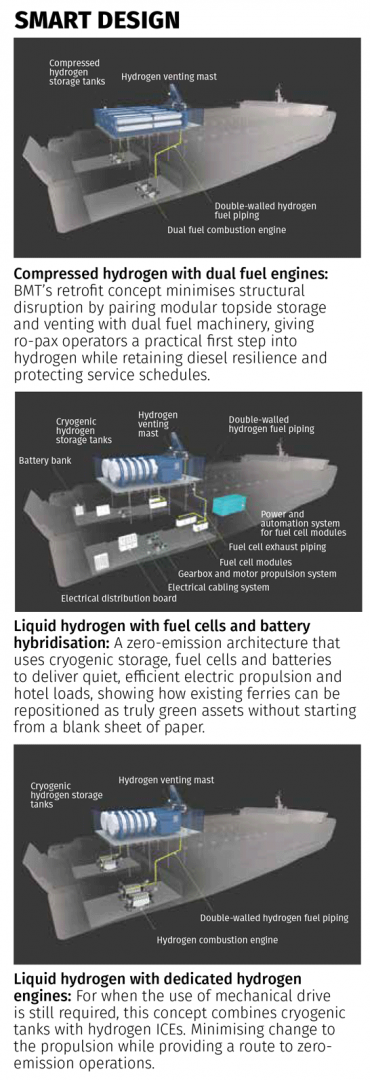
Layers of protection
Modern low-flashpoint fuel systems rely on multiple defensive layers, including:
• Double-walled piping
• Nitrogen inerting systems
• Gas detection and alarm networks
• Airlocks and hazardous zoning
• Dedicated mechanical ventilation
• Redundant power supplies.
Redundancy is particularly critical. Safety and firefighting systems must remain operational even during major failures.
“The fuels are either highly toxic, highly flammable, or a mixture,” Beard says. “You have to design accordingly.”
Ammonia: the toxic threat
Ammonia’s primary hazard is toxicity rather than flammability. It is highly hydrophilic, which means it aggressively attacks moist tissue such as eyes, nose and throat. Exposure risks are severe. Concentrations above 0.25% can be fatal within 30 minutes and, unlike with exposure to some other chemicals, there is no cure.
Under normal operating conditions, the risks are manageable. But maritime operations rarely remain normal.
“At sea, normal conditions can quickly flip into a dark and stormy night scenario,” Beard warns. “That’s where redundancy becomes vital.”
Engineers must ensure sufficient backup power to allow crew in hazmat suits to isolate leaks, purge systems with nitrogen and restore safe conditions.
These realities may limit ammonia’s suitability for passenger vessels.
“It might be feasible on a crew transfer vessel where everyone is trained and buckled into their seats,” Beard says. “On a ferry or cruiseship, passengers are untrained and mobile, and that’s a very big challenge.”
Methanol: the double hazard
Methanol presents both flammability and toxicity risks. It can harm through ingestion, skin absorption or inhalation.
Treatment exists – most commonly fomepizole – but Beard notes an unusual secondary remedy: high-strength ethanol, such as vodka or whisky, which competes metabolically with methanol in the body.
Firefighting presents another complication. Methanol flames can be nearly invisible in daylight, requiring alcohol-resistant foam systems and enhanced detection procedures.
Hydrogen: ultra-flammable but with inbuilt safety features
Hydrogen’s minimum ignition energy is about 0.02MJ – low enough that static electricity from clothing can ignite it. Although this is at ~38% concentration, at 10% concentration the ignition energy is similar to methane (LNG). Yet the fuel also has intrinsic safety advantages.
“What I do like about hydrogen is that it has its own inbuilt safety mechanisms,” Beard says. “It’s the most buoyant and diffusive gas on Earth. It wants to rise and spread out.”
Open-deck storage can, therefore, be advantageous. Below-deck storage, however, introduces major ventilation and explosion-proofing requirements.
Blast-proof ducting, hazardous-zone equipment ratings and dense sensor networks become essential. Detection systems typically trigger at around 50% of the lower flammability limit – well before ignition is possible.
LNG: A familiar contender
Compared with the newer fuels, LNG benefits from a more mature safety framework. Engineers are “quietly confident” in handling it and it now has a proven track record as a marine fuel, even if its well-to-wake emissions are less compelling than some of the potential cleaner alternatives.
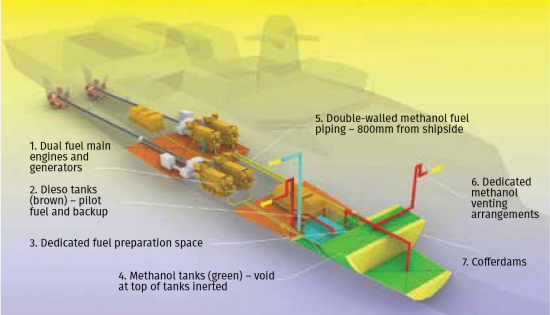 |
|
|---|---|
|
BMT Venator dual fuel frigate (methanol & F-76) BMT shows how warships can transition to low-carbon methanol without trading combat resilience, using dedicated fuel prep spaces, double-walled pipework, optimised cofferdams and segregated venting to stack multiple layers of protection around a flexible machinery arrangement. Allows cleaner operations in peace time but offers full operational capability in times of conflict. |
|
The human factor
While engineering controls are advancing rapidly, Beard believes crew competence may be the industry’s greatest challenge.
“These fuels are so different that there’s a strong argument for specialism,” he says.
Yet excessive specialisation could restrict seafarer mobility between vessel types – something crews and operators alike are keen to avoid. The uncertainty over which fuels will dominate further complicates planning. Training investment must be balanced against an unclear long-term fuel mix.
A whole-system challenge
Decarbonisation isn’t just about ships. Beard emphasises that vessel design cannot be separated from shoreside infrastructure.
“It’s no good just designing a ship,” he says. “You also need to work out how to fuel it, wherever it goes. It’s a whole ecosystem. Nobody wants stranded assets.”
It’s clear that decarbonisation will test maritime engineering in ways not seen for generations, and safety will remain the ultimate measure of success.
This article appeared in Features, TNA Mar/Apr 2026
While there are more commercially appealing alternative marine fuels available, hydrogen (H2), a highly flammable and odourless gas that in its super-cooled liquid form will propel man’s return to the moon, is possibly the ‘greenest’ to have made significant maritime inroads over the past 12 months.
Landmark vessel announcements, a regulatory breakthrough at the 11th session of the IMO Sub-Committee on Carriage of Cargoes and Containers in London last September, and the first serious infrastructure commitments have combined to give hydrogen the credibility it lacked just two years ago.
Indeed, there are now more than 20 hydrogen ships in operation, with twice that under construction, representing a number of ship-type ‘firsts’. As far as hydrogen is concerned, 2026 is seeing a real surge in ship design and construction.
The clearest sign that the industry is taking H2 more seriously was in April 2025, when Fincantieri and Viking announced the building of a pair of 54,300gt hydrogen-fuelled cruiseships – the world’s first designed with hydrogen to be stored onboard. Viking Libra, set to join the Viking fleet later this year, features a hybrid 6MW propulsion system based around Isotta Fraschini Motori’s proton exchange membrane (PEM) fuel cell technology. The decision to store the fuel onboard as cryogenic liquid hydrogen (LH2) in a bespoke container loaded on to the vessel during port calls is a pragmatic workaround to the absence of any fixed LH2 bunkering infrastructure to speak of.
The shortage of H2 bunkering ports is the main impediment to larger deep-sea vessels getting off the drawing board. But things are changing fast.
In May last year, for instance, the Port of Rotterdam and Oslo-based EDGE Navigation signed a Letter of Intent to develop a large-scale hydrogen network across Europe’s largest port complex. The Norwegian maritime technology company is developing a series of commercial LH2-powered cargo ships, as well as an LH2 tanker that can be used for ship-to-ship bunkering. Rotterdam aims to prepare the port for the arrival of these ships from 2028.
 |
|---|
Come 2050, it is widely anticipated that global demand for hydrogen will hit 60 million tonnes, fuelling 19% of the world fleet. To this end, Kawasaki Heavy Industries (KHI) and Japan Suiso Energy (JSE) announced at the beginning of this year plans to build a 40,000m3 liquefied hydrogen carrier, the world’s largest, under the New Energy and Industrial Technology Development Organization (NEDO) Green Innovation Fund Project. JSE plans to use the new LHC to demonstrate the ship-to-base loading/unloading under ocean-going conditions by 2023.
The vessel, slated for a building slot at KHI’s Sakaide Works, will join KHI’s 2021-built 1,250m3 capacity Suiso Frontier in taking LH2 cargoes at the Hy touch Kobe LH2 demonstration terminal.
Interestingly, the new vessel’s cargo tanks will use a high-performance insulation system designed to reduce the generation of boil-off gas (BOG) caused by natural heat ingress from the outside, enabling the much larger volume of cryogenic liquid hydrogen to be transported. A heat exchanger will also be installed to allow the BOG to be used for propulsive power. Together with the vessel’s hull form and draught, combined with the low density of liquefied hydrogen, the vessel will have a higher propulsion efficiency for less power, resulting in zero emissions. KHI believes the new vessel will provide the foundation for the future hydrogen supply chain.
Other large commercial ship hydrogen newbuild developments include a pair of 85m bulk carriers for Norwegian shipowner GMI Rederi. Each of these 4,000dwt bulkers will adopt seven PowerCell Marine System 225 units to deliver 3MW of zero-emissions power. When launched in early 2027, the vessels could be the world’s first hydrogen-powered bulk carriers.
Meanwhile, Samskip’s SeaShuttle project represents one of the most ambitious leaps in the maritime industry’s hydrogen surge. Two 135m container ships, currently under construction at Cochin Shipyard in India, are being designed to establish a “green corridor” between Rotterdam and Oslo.
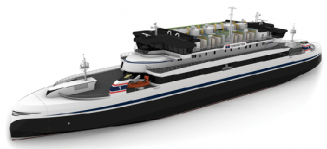 |
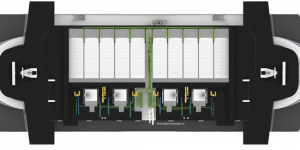 |
|---|---|
Each vessel is equipped with a massive 3.2MW hydrogen fuel cell system, a significant scale-up from earlier pilot projects, with liquid hydrogen supplied by Norwegian Hydrogen’s Rjukan plant. These ships have a hatch coverless design, which speeds up port operations, and “autonomous-ready” technology, aiming for remote-controlled efficiency. The first of these vessels is expected to be delivered late in 2026, with full commercial operations beginning in Q2 2027.
While these are some of the larger H2 AMF projects under development, existing smaller-scale projects are providing more immediate operational evidence for the fuel’s wider maritime potential.
One example is the operational data from the 75-passenger hydrogen-fuelled ferry Sea Change, which entered service in San Francisco Bay in July 2024. A study, published in 2025 in the International Journal of Hydrogen Energy, found that its 360kW PEM fuel cells and 246kg of hydrogen (stored at 250 bar) delivered stable and reliable power under real-world duty cycles, achieving an average electrical efficiency of approximately 45-46%.
However, the paper also noted that delivered hydrogen costs averaged approximately US$30/kg during operations, roughly 10 times the cost of diesel, although this increase represents only a 20% hike in total annual operating costs given hydrogen’s higher efficiency. You get more combustion bang for your buck.
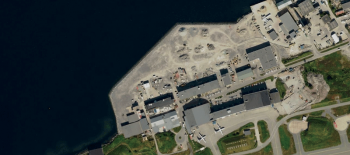 |
|---|
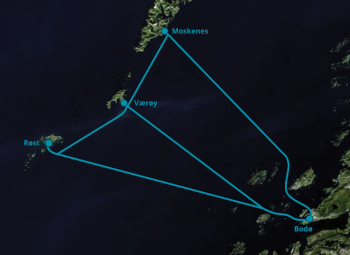 |
Norway’s 3,400gt, 82m-long Hydra, the world’s first LH2-powered car and passenger ferry (in service since 2023), is also providing the shipping world with evidence that liquid hydrogen will play an important role in the green maritime transition. Although not as informative as the Sea Change study, 2024 reports from Ballard Power Systems – the fuel cell manufacturer – noted that Hydra has made more than 20,000 crossings, establishing efficient bunkering turnarounds.
However, Hydra has since been eclipsed in scale by Torghatten Nord’s two new 117m hydrogen ferries, Røst and Moskenes, ordered for the Bodø–Lofoten route. These LR-classed double-enders, scheduled for delivery from Myklebust Verft later this year, bring hydrogen fuel cell technology firmly into the size range of conventional long-distance ro-pax tonnage, reducing annual CO₂ emissions on the Vestfjord route by some 26,500tonnes.
Hydrogen for the route will be supplied by GreenH, which is building a bunkering facility at Langstranda, near Bodø, with an eventual output of up to 10tonnes of hydrogen per day. The facility, the first of its kind in Northern Europe, will be the first functioning value chain for hydrogen as a maritime fuel in Norway. And once the first phase is complete later this year, compressed green hydrogen will be delivered directly from the production plant to the vessels via a dedicated pipeline, eliminating the high costs and logistical complexities of road transport. The system utilises a “cascade bunkering” method involving pressure transfer, achieving a minimum transfer speed of 1,700kg/h, allowing full daily refuelling in about three hours.
Australian shipbuilder Incat Crowther and Switch Maritime in the US have announced a project to design and build a hydrogen-fuelled fast ferry for New York City.
The Big Apple’s first ever hydrogen-fuelled ferry, the 28.5m vessel has capacity to ferry 150 passengers at cruising speeds of 25knots. Featuring four H2 tanks capable of storing 720kg of compressed hydrogen, the vessel’s 16 98kW fuel cells will provide power to four Danfoss EM-PMI540-T3000 electric motors, which will in turn drive the catamaran’s twin propellers and other consumers.
Incat Crowther and Switch previously partnered on the design, delivery and regulatory approval for Sea Change – the world’s first zero-emissions hydrogen fuel cell-powered electric passenger ferry. Incat Crowther’s technical manager, Dan Mace, said the design showcases a feasible solution for mass transit operators looking to begin the fleet decarbonisation process, while maintaining existing operational profiles.
“The vessel’s ability to drop in to existing fleets is a real positive step to reduce emissions and ensures the vessel can be deployed quickly without the need for constructing additional shoreside infrastructure,” he said.
The project team plans to launch a ZEF-150 demonstration vessel at the Brooklyn Navy Yard.
These articles appeared in In depth, TNA Mar/Apr 2026
The anchoring and mooring equipment sector has developed a troubling tendency in recent years, according to Muir, a company based in Hobart, Australia. More and more equipment suppliers are adopting what the company describes as a “hands-off” approach to system integration and layout: hardware is specified, priced and delivered, but meaningful guidance on how it should be installed and arranged within the vessel is absent. For a naval architect or design engineer already managing competing pressures across a complex project, that gap in support can have real consequences, it says.
The firm says the issue is compounded by the direction contemporary vessel design is taking. Whether in the superyacht sector, commercial shipping or defence procurement, designers are under constant pressure to save space and reduce topside weight, while simultaneously minimising the exposure of crew and operators to mechanical hazards. These are entirely legitimate design objectives, but they are reshaping the environments into which anchoring systems must fit, often without adequate consideration of the implications for the systems themselves.
The shrinking foredeck
The superyacht sector offers perhaps the starkest illustration, says Max Buckley, general manager at Muir. The trend towards enclosed or semi-enclosed mooring decks, designed to present a cleaner aesthetic and reduce operator exposure to deck hazards, has dramatically reduced the working area available for anchoring equipment. Muir estimates that mooring island footprints on some modern yachts have contracted by as much as 50% compared with earlier generations of vessels of similar size.
What was once a relatively open deck area, the company says, where a windlass could be positioned with generous clearance and access for installation and maintenance, has become a tightly choreographed space in which every component must earn its place. Chain stoppers and rollers must now sit far closer to windlasses than was historically standard. Hawse pipes and spurling pipes, the conduits that guide chain from the deck to the chain locker below, must navigate far more aggressive angles to connect all the equipment within the constrained footprint. The tolerances that experienced riggers once relied upon have, in many cases, been engineered away.
Commercial and defence projects present a parallel set of challenges, says Muir, though driven by different forces. Safety regulations and risk assessment requirements are increasingly dictating where operators can stand in relation to moving chain and rotating equipment. Chain stopper handwheels and windlass brake controls must now be positioned at specified distances and angles from the equipment itself. These requirements are sensible in isolation, but when they are layered onto a layout that was designed without them in mind, the entire anchor island may need to be rearranged, with consequent knock-on effects for chain run angles, equipment heights and deck penetrations.
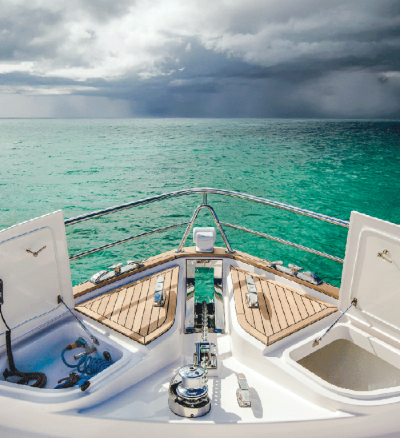 |
|---|
The cost of poor layout
The consequences of inadequate attention to anchoring system layout are not merely theoretical. Muir’s field experience points to a recurring set of problems that emerge during commissioning, sea trials and early operation, issues that are invariably more expensive and disruptive to fix at that stage than they would have been to prevent on the drawing board.
⦁ Chain whip during deployment, caused by misalignment between hawse pipe geometry and the windlass gypsy, can create dangerous conditions on the foredeck and accelerate wear on both chain and equipment.
⦁ Excessive chain twist, which often arises from incorrect geometry in the chain path, can cause jams and require time-consuming manual intervention at sea.
⦁ Wear on chain and equipment is accelerated wherever hawse and spurling pipe angles have not been properly matched to chain stopper and roller positions, leading to premature replacement of expensive components.
⦁ Noise and vibration from misaligned equipment generate owner and captain complaints that ultimately reflect on the shipyard, not the equipment supplier.
⦁ New pinch points between handwheels and adjacent structure, created when equipment is reshuffled to meet safety siting requirements, can introduce new hazards even as they resolve existing ones.
⦁ Impact damage to vessel structures can occur where poorly arranged chain runs allow chain to strike hull or deck elements under load.
⦁ Access and serviceability are often severely compromised in reduced-footprint anchor islands, making routine maintenance difficult and driving up the cost of ownership over the vessel’s working life.
Many of these problems share a common root: they arise when each component in the anchoring system has been considered in isolation, without modelling the full chain path from locker to gypsy and confirming that geometry, clearances and alignments are consistent throughout.
Getting it right in the design phase
The good news, Muir emphasises, is that most of these issues are preventable, provided the right questions are asked at the right time. The anchoring system should not be the last item considered on a foredeck layout; it should be integrated into the design process from the outset, with its geometry informing decisions about deck penetrations, locker volumes and equipment siting in the same way that other critical systems are treated.
Key considerations that designers should work through with their anchoring system supplier include:
⦁ Chain alignment in both horizontal and vertical planes, including confirming that the chain run matches the pitch circle diameter of the windlass gypsy and that sufficient wrap is provided for reliable chain-to-gypsy engagement.
⦁ Angular compatibility between chain stopper positions and the angles of hawse and spurling pipes, ensuring smooth chain passage without stress concentrations.
⦁ Chain locker volume, which must be sufficient to accommodate the anticipated chain pile without causing windlass jams or inducing chain twist as the locker fills.
⦁ Lead-in angles on capstans, which must be controlled to prevent overwrapping of rope or wire.
⦁ Unsupported chain run lengths between components, which should not exceed manufacturer-specified maximums – and where they do, chain guides must be incorporated into the design.
⦁ Safe positioning of all handwheels and manual controls, away from chain firing lines and the arc of any moving components.
⦁ Correct alignment of chain strippers with chain paths, to prevent fouling during retrieval.
Putting experience to work earlier
To help bridge the gap between system supply and system integration, Muir has developed a comprehensive design guide for anchoring and mooring systems, aimed at naval architects and project engineers working through the early stages of vessel design. The guide addresses the full chain path in detail and provides reference data to assist with system sizing and space allocation.
The company also offers full three-dimensional drawing packages for its equipment, allowing designers to import accurate geometry into their models at an early stage, before deck penetrations are cut and structural commitments made that are difficult to reverse. The goal, Muir says, is to shift the conversation about anchoring systems from the commissioning dock back to the design office.
Six decades of watching vessels leave the shipyard and return with avoidable problems has given the Tasmanian manufacturer a clear conviction: the anchoring system that nobody thinks about until the foredeck is almost finished is the one most likely to cause trouble. In a discipline that prides itself on rigour and systems thinking, that is an oversight the industry can ill afford.
“Our core philosophy is on ‘inherently safe design’,” says Buckley. “While effective maintenance regimes can mitigate wear interface risks, failures in the actuation and retainer systems require a more fundamental engineering solution.”
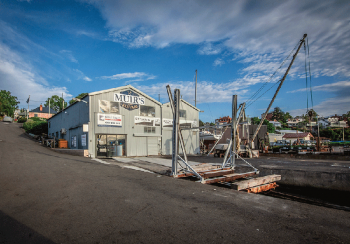 |
|---|
There are few manufacturers that can claim their founding location sits quite as close to the action as Muir. Established in 1968, the company’s original workshop was positioned on the finish line of the Sydney to Hobart Yacht Race in Hobart, Tasmania, close enough, the company says, that crews could watch the fleet arrive from the slipway next door. Tasmania’s rich maritime heritage provided a fitting cradle for what would become one of the world’s most experienced anchoring system specialists.
Over the past 60 years, Muir has designed and manufactured anchoring systems for a remarkably diverse range of vessels: from 5m aluminium plate runabouts built in backyards to 120m superyachts, and from commercial workboats to 80m offshore patrol vessels for defence clients. That breadth of experience, the company says, has given it an unusually clear view of where the industry is going wrong, and how relatively straightforward design decisions made early in a project can prevent significant problems down the line.
Andrew Buckley, Muir’s executive chairman, says: “One of the things that sets Muir apart is the fact we’ve been able to build a culture and team of people who are really proud of what they do. We are proud to say we build something in Tasmania, Australia, that is used on some of the top superyachts in the world.”
This article appeared in Features, TNA Mar/Apr 2026
Only a few years ago, wind-assisted propulsion systems (WAPS) were considered pioneering technology, but they have now matured into reliable and commercially viable solutions.
WAPS providers have been gathering extensive operational experience and, based on the lessons learned, are ready to deliver their second-generation products, focusing on improved performance, higher reliability and better system integration. System builders are also continuing to invest in upscaling their capacity to deliver, which will not only meet the current demand but predicts continuing growth.
In 2026, we will almost certainly see 100 vessels equipped with WAPS globally, which will be a significant milestone and signal strong growth for the years ahead. Today, 77 ships have installed modern wind-assisted propulsion systems, with 62% of the vessels retrofitted. And while this is still only a small fraction of the global fleet, recent uptake has been rapid.
Setting standards
One key enabler of this development has been the evolution of technical standards. By reducing uncertainty in the viability of the technology, they have built up market acceptance. From the DNV side, we have released the first WAPS-ready notation, published a new white paper, and a new recommended practice to assess the performance of WAPS. We’ll be working with industry to make sure this reflects their needs – and we hope it will be a big step forward in building confidence in the systems, by providing a new, transparent methodology, backed up by verifiable data.
DNV’s rules and guidelines have supported providers, designers and shipowners by offering structured tools to confirm operational safety and to evaluate performance, both at the design stage and during operation.
Designing for WAPS
When assessing the feasibility of a specific WAPS installation, it is important to identify the design and operational challenges that must be addressed for the successful implementation of the system. The ship type and size, along with the main particulars, choice of technology, newbuild or retrofit will all affect the range of feasible solutions and dictate the technical considerations and constraints.
Additionally, the desired level of supplemental wind power for ship propulsion will determine the scale of the sail unit and the complexity of the machinery systems. Finally, the operational trade routes, including the prevailing winds, weather patterns and local regulations, also need to be taken into consideration.
| RELEVANT DESIGN CONSIDERATIONS | RELEVANT OPERATIONAL CONSIDERATIONS |
|---|---|
|
• Free air and deck space • Structural integration • Intact stability • Installation in hazardous zones • Added weight • Air draft • Obstruction of mooring configuration • Performance optimisation • Navigational: line of sight, navigation lights, radar sector |
• Robustness / reliability / operational safety • Interference with deck/cargo handling • Engine and propeller derating • Impaired manoeuvrability • Crew education • Port operations, pilots, towage, channels, locks • Interference with helicopter/evacuation procedures |
Safe and efficient integration
Installations will generally require class approval. For major retrofitting projects, a comprehensive risk assessment is generally advisable and, in many cases, will be required by class or the authorities.
WAPS change the loads acting on the vessel structure as well as the ship’s aerodynamics and manoeuvrability significantly.
Furthermore, they have an impact on port operations and may interfere with overhead structures such as bridges when operating in coastal areas. Ensuring the ship’s structural fitness for WAPS and the chosen system’s robustness, reliability and operational safety in harsh marine environments is critical, requiring thorough testing.
WAPS can interfere with the line of sight and the visibility of navigation lights, and affect the radar blind sector, all of which have implications for compliance with statutory requirements. In some cases, WAPS may result in noise and vibration, which can affect crew comfort and vessel integrity.
In operation, navigating a ship with active WAPS typically requires updates to on-board practices, safety protocols, maintenance routines and equipment. Control systems for the propulsion engine and WAPS should be integrated to allow the efficient coordination of both. Comprehensive crew training is essential to ensure safe and efficient WAPS and vessel operation.
Verifying fuel savings
Verifying the fuel-saving performance of wind-propulsion solutions at full-scale is essential for both shipowners and technology providers. Knowing the actual performance helps to predict fuel savings and cost, can be shared with charterers and cargo owners, and help to determine future investments.
A dedicated sea trial under controlled conditions can offer a cost-effective and fast way to verify performance immediately after installation. DNV recommended practice, DNV-RP-0686 ‘Performance of wind assisted propulsion systems’, aims to set a standard on how to measure, evaluate and verify the power saving of WAPS from long-term, in-service measurements by so-called on-off tests.
Pure wind future
In the past few years, vessel concepts designed to rely on wind as the main source of propulsion have been gaining momentum. A good example is the upcoming Oceanbird wing sail installation onboard the Wallenius Wilhelmsen vessel Tirranna. These tests are setting a platform for the first fully wind-powered vessel – hopefully a milestone we will see soon. And the potential here is for fuel savings and emissions reductions of more than 50%, although their application is likely limited, at least initially, to lighter vessels.
WAPS are rapidly becoming one of the default technologies shipowners consider when planning newbuilds – at least for certain vessel types and routes. Their modular nature allows shipowners to achieve immediate fuel and emissions savings while maintaining flexibility for the future.
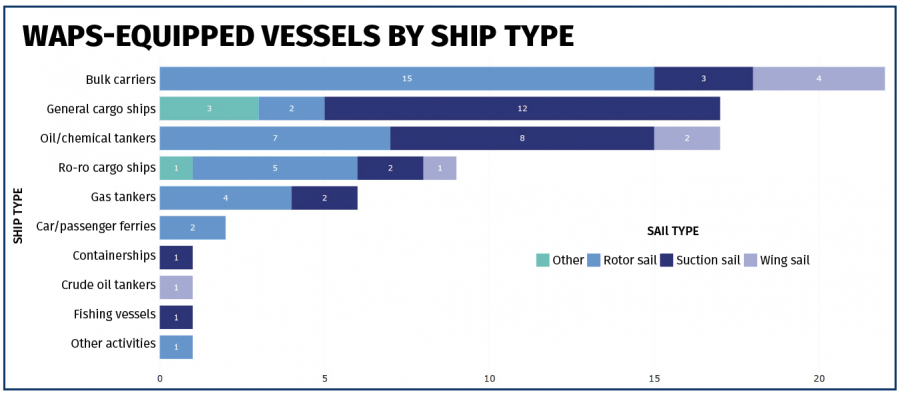 |
|---|
This article appeared in Features, TNA Mar/Apr 2026
I’m just the latest in a long line of custodians of RINA, building on what generations before us created, with a clear responsibility to ensure the Institution is stronger for our current members and those who follow.
At 166 years old, RINA is the longest-standing maritime engineering and naval architecture institution in the world. My ambition is to return RINA to its unique position as the global Learned Society, safeguarding the rightful place of the naval architects and maritime engineers at the very heart of critical global conversations on marine technology, innovation and development. We are also widening participation and inclusion across all associated professions to advance innovation. We recognise that the challenges facing our sector require collaboration across disciplines such as design, operations, regulation, finance and technology.
With members in more than 140 countries, RINA has extraordinary global reach and expertise. Our task now is to connect that expertise more effectively through the technical excellence of our conferences, publications and other structured collaboration. The following is just some of what we are doing.
Our digital library is being rebuilt, making the entire 166-year archive of journals, articles, conference proceedings, magazines, papers and other materials accessible for free to all members. Later this year, we will introduce an AI-powered search function.
We have introduced a ‘Find a Member’ capability, enabling members and employers to identify expertise, verify credentials and connect directly for collaboration, projects and professional engagement. It’s coming very shortly for our corporate partners too.
We have added new newsletters to our portfolio, which members can subscribe to in MyRINA.
In April, we are launching an innovative mentoring scheme, with every mentor and mentee individually matched. More than 10% of RINA members have indicated that they want to be involved, which demonstrates the depth of commitment within our membership. If you have put your name forward, you will be hearing from us very soon. If you haven’t done so yet, and would like to, this is available in your MyRINA area.
We are establishing structured digital forums for branches and committees, enabling international discussion without barriers of time or geography. Follow us on LinkedIn for forum announcements and updates over the coming weeks.
New technical working groups will address the defining issues of our industry, with findings made available to members via our digital library.
And every event, wherever it takes place in the world, will be recorded and made available to all members to watch in their own time. We are here to advance innovation, promote collaboration and make all the knowledge generated within RINA accessible to the entire membership.
These initiatives are being delivered by a strengthened executive team focused on operational excellence and effective communication.
RINA’s strength is its members. I encourage every member to engage actively with our resources, forums and events. Follow us on LinkedIn to join the conversation. Sign up to our newsletters to stay informed. Get involved in a working group. Be active in our forums. Come forward to mentor or be mentored. Attend an event. And if you know someone who belongs in this community, bring them in. A stronger, more connected Institution depends on the participation of its members.
This edition of The Naval Architect is looking at alternative fuels and vital decarbonisation work taking place. We have included content from our sold-out Wind Propulsion Conference 2026. If you are interested in more detail, proceedings and recordings are available in your MyRINA area. This magazine also features a professional profile of Edwin Pang, RINA trustee and chair of our IMO Committee.
We will continue to evolve The Naval Architect to anticipate the technical needs of our members and feature top talent. The next issue will benefit from a redesign and the introduction of a Technical Panel to support the editorial team. Please get in touch via publications@rina.org.uk to share your news and insights. I hope you find this edition informative and thought-provoking.
This article appeared in Message from the CEO, TNA Mar/Apr 2026
Three energy companies and Associated British Ports have joined forces to establish the UK’s first commercially ready biomethanol storage and bunkering service for shipping. It marks a significant step in the sector’s transition to low-carbon fuels and signals growing industry confidence in alternative marine fuels as a practical, near-term solution.
Exolum, Methanex Corporation and Ørsted announced the initiative at the Port of Immingham, the UK’s largest port by cargo volume and a key hub for energy and bulk materials. Exolum will provide storage and fuelling infrastructure, Methanex will supply the biomethanol and Ørsted will be the first customer, bunkering vessels that support its North Sea offshore wind farm maintenance operations.
These offshore support vessels are well suited to early adoption: their frequent port calls and predictable operating patterns make bunkering availability the critical constraint rather than tank range. The arrangement represents a fully integrated supply chain delivered through commercial partnership rather than public subsidy.
The launch comes amid ongoing uncertainty at the IMO, which recently deferred its vote on implementing its Net Zero Framework, a package of measures – including a global fuel standard and carbon pricing mechanism – designed to put shipping on a trajectory to net zero by 2050. The deferral had prompted concern that decarbonisation momentum could stall without a clear international framework, though the partners said it had not diminished their own commitment to action.
The collaboration demonstrates how existing energy infrastructure can be repurposed for emerging alternative fuels, reducing the capital cost and complexity of transition for ports and ship operators alike. Domestic shipping accounts for 4.7% of the UK’s transport-related CO₂ emissions, more than buses, trains and domestic aviation combined, while international shipping contributes roughly 3% of global greenhouse gas emissions, a share expected to grow as other sectors decarbonise more rapidly.
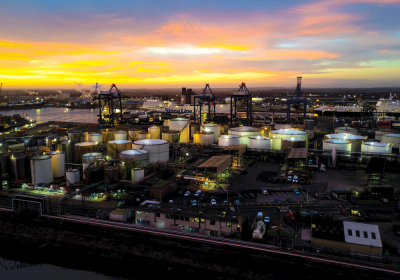 |
|---|
The ISCC-certified biomethanol is produced at Methanex’s Gulf Coast facilities from waste-derived feedstocks and reduces lifecycle greenhouse gas emissions by up to 80%, compared with conventional marine fuels. Biomethanol is liquid at ambient temperature and pressure, and is chemically identical to fossil methanol, meaning methanol-capable vessels require no modification to use it.
The fuel’s growing commercial availability has tangible design implications. Biomethanol’s lower energy density, compared with heavy fuel oil means larger tank volumes are needed for equivalent range, with direct consequences for hull form, internal arrangement, stability, and the trade-off against cargo capacity. An orderbook of methanol-ready newbuilds, spanning container ships, offshore support vessels and ferries, reflects increasing owner confidence.
Vessels involved on these projects must also comply with the IMO’s IGF Code, which governs tank location, double-wall piping, ventilation, gas detection and emergency shutdown systems. Retrofit work presents additional complexity, requiring structural modifications, upgraded fuel handling systems and reassessment of stability and freeboard, an area of growing demand as bunkering infrastructure such as Immingham’s comes online.
The UK’s Department for Transport has published a roadmap targeting a 30% reduction in shipping emissions by 2030, 80% by 2040, and zero emissions by 2050, with biomethanol increasingly regarded as one of the more viable near-term pathways, particularly where hydrogen and ammonia remain constrained by infrastructure and technology readiness.
Steven Clapperton, head of marine (Humber) at Associated British Ports, says: “This initiative marks a significant moment for the Port of Immingham and the wider maritime sector. By enabling biomethanol bunkering, we are taking practical steps toward decarbonising one of the hardest-to-abate industries.”
Stuart McCall, vice president, low-carbon global market development, at Methanex, says: “As the world’s largest producer and supplier of methanol, Methanex is committed to developing and supporting innovative solutions that accelerate the transition to low-carbon shipping.”
This article appeared in In depth, TNA Mar/Apr 2026
A cut in fuel costs of 53%, achieved without switching to a single alternative fuel. That is the headline finding from Odfjell Ship Management, the Norwegian chemical tanker operator, and it may be the most compelling argument yet that efficiency, not ammonia, methanol or hydrogen, is the maritime industry’s most practical path to decarbonisation.
The drive to decarbonise shipping has split the industry along sectoral lines. Container shipping lines, closer to consumers, are being pushed by customers seeking to reduce scope 3 emissions. Liquid and dry bulk operators, typically running at lower speeds and on less fixed routes, are less inclined to shift to alternative fuels that are difficult to source, costly to buy and require new vessels. These three sectors together, tankers, dry bulk and container, account for more than 80% of maritime emissions, so their choices matter.
Against that backdrop, Odfjell has taken a different route. The company operates a fleet of 70 chemical tankers of varying ages and has developed a methodology it believes will allow it to meet net-zero targets through to 2040, using the ships it already has. Erik Hjortland, VP of technology at Odfjell Ship Management, says the company began planning its operational efficiency programme in 2007 and started upgrading its fleet in 2014, benchmarking against a 2008 baseline. The fuel cost reduction of 53% has been independently corroborated.
“We have done that without putting any stress on the renewable electricity infrastructure in the world, which we would have had to do if we had gone through the alternative fuels route,” says Hjortland. He points to a Clarkson study showing that 63% of the world’s fleet has still not installed any energy saving devices. “Imagine the potential, what we as a sector could have accomplished if everybody had made these changes.”
Wind in their sails
The tools Odfjell has deployed are neither exotic nor experimental. Energy saving devices, including Mewis Ducts, propeller boss caps, shaft generators and weather routing technology, have been fitted across the fleet. Last year, four bound4blue rigid suction sails were installed on the Bow Olympus, a 48,500dwt tanker. The results were sufficiently positive that Odfjell intends to fit suction sails across its entire fleet eventually.
“Our first voyage with sails showed positive results,” says Hjortland. “We expect that with these sails we will not need biofuel until 2031, and very little biofuel after that up to 2034.”
Underpinning all of this is a data system that Odfjell built in 2014, an automated tool that processes noon reports from captains and crew, flagging energy inefficiencies in real time. “We get approximately 100 alarms every day in that system, and we have a separate team who deal with those alarms, interact with the crew and work to reduce consumption,” says Hjortland. A business intelligence layer then benchmarks each vessel against the rest of the fleet, identifying best practice and spreading it across the operation. “I cannot stress enough how important this is,” he adds.
The investment case is equally straightforward. Odfjell has committed US$40 million across 140 energy saving devices, with most delivering a return on investment of between four and six months.
A numbers game
The economics of why this beats alternative fuels, at least for now, are stark. Odfjell’s analysis shows that a kilowatt-hour of renewable energy suffers significant losses through the alternative fuel production chain – 30% lost producing hydrogen, a further 30% converting it to ammonia or methanol, and up to 60% of what remains lost at the propeller. Wind power via rigid sails, by contrast, loses just 10% between sail and propeller.
Hjortland does not dismiss alternative fuels. Ammonia, methanol and hydrogen will ultimately be needed to reach net zero, but they represent, in his words, “huge projects somewhere down the line, multi-billion-dollar investments”. The business case for halving your fuel bill through efficiency measures, by contrast, is available to any operator today.
With 63% of the global fleet yet to fit a single energy saving device, the gap between what is possible and what is being done has rarely looked wider.
This article appeared in In depth, TNA Mar/Apr 2026
China is moving with unusual institutional weight to position itself at the centre of the global maritime energy transition. A blueprint backed by 10 central government ministries has set Shanghai on course to become a leading green bunkering hub by 2030. It is targeting one million cubic metres of bonded LNG capacity and one million tonnes of methanol and biofuel bunkering, a ‘double-million’ ambition that signals Beijing views this not as a commercial experiment but as strategic infrastructure.
The scale of state coordination is interesting. It is rare for 10 central agencies to jointly back a single city’s initiative, and the involvement of the National Development and Reform Commission alongside the Ministry of Transport suggests that this is being treated as industrial policy in the same register as semiconductors or electric vehicles.
Shanghai already leads Singapore in green methanol bunkering and recorded a 54% increase in bonded LNG bunkering volumes in 2025, but trails the city-state in overall LNG supply, a gap this plan is specifically designed to close.
Infrastructure investment will concentrate on Yangshan Port, Hengsha Island, the Yangtze River estuary and the Shanghai Chemical Industry Park, covering the full supply chain from production and storage through to bunkering vessels and onshore power equipment.
Operationally, Shanghai already offers a 50% discount on berthing fees for vessels using alternative fuels, piloting night-time bunkering at Yangshan, and promoting simultaneous cargo and bunkering operations to reduce turnaround times, the kind of practical competitive measures that erode Singapore’s incumbency advantage gradually rather than dramatically.
The trading ambition is equally significant. Shanghai intends to establish a green fuel spot market, introduce futures trading and financial derivatives, and develop internationally recognised price indices for green marine fuels. If successful, that would shift pricing power over the emerging alternative fuels market eastward in a way that has implications well beyond port competition.
It is against this backdrop that a new agreement has been signed to develop a green shipping corridor between French HAROPA PORT Seine Axis and Ningbo Zhoushan, China, the world’s largest port by cargo tonnage. With MSC, CMA CGM, Terminal Investment Limited and Bureau Veritas among the signatories, the corridor commits carriers on one of the world’s highest-volume container routes to developing alternative fuel supply chains spanning LNG, bio-LNG, green ammonia and green hydrogen. China accounts for 30% of HAROPA PORT’s container throughput, making this a route with the frequency and commercial density to actually stress-test infrastructure at scale.
The green corridor is a credible mechanism to address the chronic chicken-and-egg problem that has stalled maritime decarbonisation – shipowners unwilling to order alternative-fuel vessels without bunkering certainty, port operators unwilling to invest without confirmed demand.
Formalising mutual commitment across the supply chain simultaneously is more likely to break that impasse than waiting for either side to move first.
Ammonia and hydrogen feature in the corridor’s ambitions but remain pilot territory rather than near-term operational commitments. LNG and methanol will carry the early years. But taken together, Shanghai’s state-backed hub plan and this first intercontinental green corridor represent the most coherent and commercially grounded push yet to move maritime decarbonisation from aspiration to infrastructure.
These infrastructure commitments carry instant design consequences. Every fuel on the approved list demands fundamentally different tank arrangements, containment materials and safety zone configurations.
The corridor also sharpens the case for genuine multi-fuel capability rather than dual-fuel compromises. If LNG and methanol infrastructure consolidates on this route within the decade, designers will face pressure to specify vessels capable of both without significant payload or stability penalties, a tougher engineering problem than it sounds.
This article appeared in News, TNA Mar/Apr 2026
Edwin Pang describes himself as a ‘regulatory repairman’ on his LinkedIn page. Perhaps not surprising for someone who chairs RINA’s IMO Committee, and has been the Institution’s representative to the IMO since 2018. Like all those who serve on RINA’s committees, Edwin is a volunteer. His day job is running a niche consultancy business, Arcsilea, which he founded in 2018 and which focuses on greenhouse gas (GHG) reductions, decarbonisation, alternative fuels and energy efficiency, with a particular specialism in regulatory impact analysis.
“I came to RINA somewhat late in my career, having spent the first decade or so in a rather peripatetic existence,” says Edwin. “But I’d always been involved in regulatory policy development, so it was a natural progression. It has been a real honour and a privilege to have been elected by my peers to serve as chair, and to be the Institution’s representative to the IMO.”
After university, Edwin held naval architect roles with Three Quays Marine Services, Knud E. Hansen and Herbert Engineering Europe. Much of this early work concentrated on passenger ship design, covering ferries and cruise ships, with a focus on safety issues, especially stability. In time that experience widened to cover a broader range of vessel types, and other segments such as ballast water and offshore wind.
|
FOUNDER |
Arcsilea |
|---|---|
|
CHAIR |
RINA IMO Committee |
|
|
EMPLOYMENT AND EDUCATION |
|
2018-present |
Founder at Arcsilea Ltd |
|
2016-2018 |
Herbert Engineering Europe (UK) |
|
2012 |
UCL APMP |
|
2005-2015 |
Senior naval architect at Knud E. Hansen, Copenhagen and London |
|
2000-2005 |
Project naval architect at Three Quays Marine Services, London |
|
1997-2000 |
University of Strathclyde, B.Eng 1st Class Honours, Naval Architecture and Offshore Engineering |
One of the highlights of Edwin’s early career was as on-site project coordinator on a nine-month lengthening project for a 220m-long ro-ro passenger ship at Lloyd Werft Bremerhaven. “The floating calculations for the fore and aft sections of the vessel lengthening project were especially significant,” he says. “Effectively, this was a detailed estimate of weights and centres of gravity, with a limited amount of documentation, after the ship had been cut in two, which showed we needed to weld a barge to the aft part of the ship, to enable it to have a reasonable trim to minimise draught.”
Edwin also singles out his important work with the Lloyd’s Register Foundation-funded FerrySafe team, looking at improving domestic passenger ship safety in developing countries. The team tried to understand what the Philippines had done to improve its overall safety record so that these measures could be replicated elsewhere.
“Regulations can be somewhat theoretical,” he says, “especially if the issue is complex, and you need real-world maritime industry feedback to make them usable. That is what I have ended up doing – taking practical examples of what happens in reality and then assessing how to develop regulations properly based on that experience.”
In the past eight years, Edwin has undertaken a series of projects in energy efficiency and GHG reduction. This has included an analysis of the Energy Efficiency Design Index (EEDI) for new and existing ro-ro cargo and passenger ships for Interferry, leading to a revision of EEDI reference lines for both ship types at MEPC 72. He also helped develop and finalise Energy Efficiency Existing Ship Index and carbon intensity indicator regulations at IMO, working for the European Commission as well as industry, carrying out impact assessments on ships based on analysis of fuel consumption data and acting as joint coordinator of the IMO Correspondence group developing those measures.
As chair of the RINA IMO Committee, Edwin is responsible for the Institution’s submissions to the organisation, determining positions to take on key issues, discussing regulatory developments with member states and other NGOs, and much more.
“RINA plays a key, and perhaps unique, role at the IMO as one of the few organisations whose membership comes from right across the maritime industry value chain,” he says. “In many ways, RINA is in an ideal position to be the ‘honest broker’, presenting technical advice in a balanced way. Other parties appreciate our input, which is not constrained by political or commercial considerations. We are not a lobby group, and don’t stand to gain one way or another. We are there simply to represent what we think is right or technically justified.”
Over the past decade, Edwin says RINA has achieved a lot with IMO. “There is a fair amount of regulatory drafting that has our fingerprints on it, as we have made the case for sensible regulatory changes. Also, we have been adept at finding technical compromises to get different parties onboard and regulatory initiatives over the line.”
Currently the RINA IMO Technical Committee is involved in a number of areas, with a heavy focus on work relating to the revision of SOLAS Chapter III, which governs life-saving appliances, biofouling, the safety of new fuels and energy efficiency, among others. Edwin says: “Over the past few years we have submitted 10-20 papers a year to IMO. This is quite exceptional for any organisation, let alone one run by volunteers.”
RINA’s contribution to the IMO was recognised by the IMO secretary-general, Arsenio Dominguez, at the 2024 Annual Dinner. In his speech, he said that he had asked his team to summarise RINA’s work, and they sent him pages and pages of information, which he flipped through on stage. He reiterated to his team that he just wanted a summary, to which the reply was: “That is the summary!”
 |
|---|
In the alternative fuels space, RINA, heavily supported by the Maersk Mc-Kinney Møller Center for Zero Carbon Shipping, is helping to develop a global maritime fuel certification system through the IMO to provide assurance on the GHG credentials of alternative fuels supplied as bunker fuels. Edwin says: “We took on the responsibility for coordinating the drafting of a certification framework even though it isn’t core naval architectural competence, simply because it needed to be done. When we first flagged it, there were very few who recognised the importance of such a framework and were willing to engage.”
Draft guidelines will be presented to the IMO’s MEPC Committee in April, now with widespread input from many member states and NGOs, and hopefully will enable certification schemes to be audited and recognised by IMO in due course. “This broadly sums up the approach that RINA has taken at the IMO – identifying needs and proposing solutions,” Edwin says.
The emergence of alternative fuels as part of the industry’s drive to net zero is a significant challenge. “The technical and safety issues are solvable,” says Edwin, “but there is such a rush to embrace new fuels and associated technology that perhaps the rules and regulations as well as crew training have some way to catch up. The pressure to achieve rapid change is in itself a risk.”
Some of the key things that Edwin says he has learned in his career include the importance of connecting practice with theory, the necessity of compromise in design and the need to see the wider picture. “Naval architects often think of safety in terms of design and hardware, but the role of the human element is equally, if not more, important. Issues such as crew training are certainly something we need to remember when we are regulating in an era of new fuels.”
Looking back on his 25 years of experience in ship design, what advice would he give to anyone starting out in naval architecture? He says: “There are so many aspects to naval architecture, so be curious and gain experience in as many of them as you can. Just because you have specialised in something for 10 years doesn’t mean you might not do something else later. It is important to get a range of experiences and to achieve a balance between generalist and specialist.”
This article appeared in Professional Profile, TNA Mar/Apr 2026
Researchers at MIT have demonstrated that small wedge-shaped vortex generators fitted to a ship’s hull can reduce drag by up to 7.5%, offering a practical and potentially low-cost route to cutting fuel consumption and emissions.
The findings were presented at the Society of Naval Architects and Marine Engineers’ Maritime Convention in Norfolk, Virginia. The research team, drawn from MIT Sea Grant, the Department of Mechanical Engineering, and the Center for Bits and Atoms, used a combination of computational fluid dynamics, AI-assisted optimisation and physical scale model testing to identify the most effective vortex generator geometry.
The process began with extensive parametric analysis through computational fluid dynamics to establish design trends, before multiple hull variants were produced through rapid prototyping and tested experimentally to validate the computational results.
Three configurations were evaluated: a bare hull tail, a tail fitted with delta-wing vortex generators, and a tail fitted with wedge vortex generators. The wedge design emerged as the strongest performer, achieving attached flow along the hull with a lower skin friction coefficient than the delta variant.
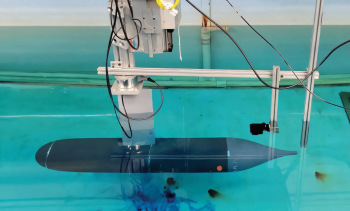 |
|---|
By delaying turbulent flow separation, the devices help water travel more smoothly along the hull, significantly reducing the size of the vessel’s wake. The resulting uniformity of flow also allows the propeller and rudder to operate more efficiently, compounding the overall performance benefit.
Lead researcher Michael Triantafyllou, professor of mechanical engineering and director of MIT Sea Grant, noted it was the first time a fuel reduction from vortex generators had been demonstrated experimentally on a ship hull. While vortex generators have been used for decades in aircraft wing design to maintain lift and delay stalling, their application to commercial shipping had not previously been validated at this level.
The team estimated that retrofitting the devices to a 300m Newcastlemax bulk carrier operating at 14.5knots on a trans-Pacific route would yield fuel savings of approximately US$750,000 per year, alongside a meaningful reduction in emissions. The modular nature of the wedge generators means they could be applied across a broad range of hull forms, including tankers and bulk carriers, and are compatible with existing drag-reduction technologies such as pre-swirl stators, which they could complement or, in some cases, replace.
The practical appeal of the technology lies in its retrofit potential. Rather than requiring newbuild designs, the vortex generators could be integrated into existing vessels, offering shipowners a relatively straightforward path to improved efficiency at a time when the IMO’s target of reducing carbon intensity by at least 40% against 2008 levels by 2030 is placing the industry under growing pressure to act.
The research was supported by the CBA Consortium in collaboration with Oldendorff Carriers, which operates around 700 bulk carriers worldwide, with further work backed by the MIT Maritime Consortium, established in 2025 to drive interdisciplinary research into the modernisation of the commercial fleet.
This article appeared in Features, TNA Mar/Apr 2026
|
|
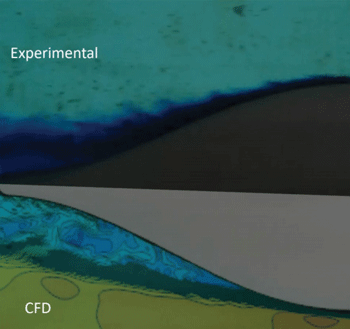 |
|
|---|---|---|
For most commercial vessels, frictional resistance accounts for between 50 and 92% of total hydrodynamic resistance, a figure that has defined naval architecture for generations. Hull-form refinement, low-friction coatings and reduction of wetted surface area have all pushed that figure down, but each successive gain is harder won. As designs approach established practical limits, the engineering community is looking elsewhere.
The regulatory context sharpens the urgency. The Energy Efficiency Existing Ship Index and the Energy Efficiency Design Index are demanding measurable, demonstrable gains. Even a 5-10% reduction in skin friction translates directly into reduced propulsion power demand, lower specific fuel oil consumption and improved headroom against compliance thresholds, figures that fleet operators and designers are watching closely.
Active flow control, techniques that modify boundary-layer behaviour dynamically rather than passively, represents one of the most technically promising avenues remaining. It is in this space that a new approach, based on a well-known but underexploited fluid dynamics phenomenon, is attracting attention.
 |
|---|
The Coandă effect in water
The Coandă effect describes the tendency of a fluid jet to adhere to an adjacent curved or flat surface. The mechanism is well understood in aerodynamics: entrainment of surrounding fluid by the jet creates a localised pressure drop between jet and surface, bending the jet toward the surface and sustaining its attachment. What is less commonly exploited is that the effect operates in liquid flows as well as gaseous ones.
The system described here, protected under US Patent 12,280,854 B2 (2024), directs high-velocity water jets along the hull surface at shallow incidence angles, with jet momentum sufficient to dominate the local near-wall flow field. Under these conditions, the jet adheres to the hull surface and travels with it, the precondition for everything that follows.
The low-pressure region is generated dynamically by the jet, not imposed by hull geometry. That distinction is fundamental.
From surface attachment to vacuum air sheet
As the surface-attached jet travels along the hull, entrainment continuously reduces static pressure in the near-wall region, forming a sustained low-pressure line. This low-pressure region is not a consequence of hull form – it is generated dynamically by the jet–surface interaction, and it persists as long as the jet operates. The distinction matters: it means the air entrainment mechanism is active and controllable, not a fixed function of hull geometry.
Before crossing the waterline, the free jet naturally entrains atmospheric air through its shear layer. As the jet penetrates the free surface and travels down the hull, it carries this entrained air with it, forming a submerged vacuum air sheet, a continuous, surface-attached layer of air between hull plating and the surrounding water. Computational fluid dynamics (CFD) analysis using volume-fraction contours confirms that this sheet achieves near-complete air coverage (volume fraction approaching 1.0) over substantial hull areas.
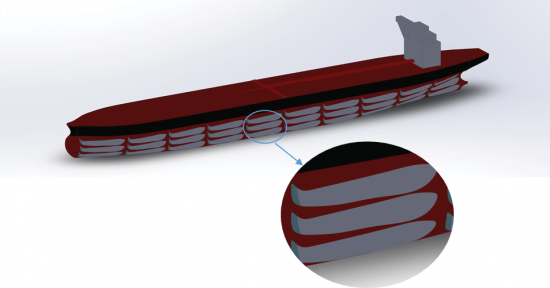 |
|---|
Where the system departs significantly from conventional air lubrication systems is in the character of the air layer itself. Pressurised bubble injection produces buoyancy-dominated bubbles that migrate vertically and disperse away from the hull surface, requiring continuous replenishment and exhibiting inherently inconsistent coverage. The vacuum air sheet produced by jet-induced entrainment is flow-controlled rather than buoyancy-dominated. Because the entrained air moves with the hull-mounted jet, and therefore at vessel speed, it remains attached to the hull surface, resisting the rapid vertical migration that compromises conventional systems.
Pressure mechanics and operational stability
Pressure distribution measurements across the air sheet, perpendicular to the hull, reveal a distinct negative pressure peak near the hull surface, recovering toward ambient conditions further out. This sub-atmospheric core is the entrainment-driven vacuum that holds the sheet in place. On the outer boundary of the air sheet, the vessel’s passage through the water creates a relative flow that acts as a pressure barrier, further resisting disruption of the layer.
Longitudinally, the air sheet exhibits a pressure gradient: lower at the forward end, recovering towards the stern. Importantly, the sheet conforms to hull form contours irrespective of local curvature, which has direct implications for applicability across vessel types. Nozzles can be positioned along bow, midship, bottom, and stern sections; pump configurations can be selectively activated; and jet incidence angles and operating pressures are adjustable to optimise the balance between power input and air-layer behaviour.
Retrofit potential and practical implications
The system’s surface-following character, combined with its independence from hull-integrated air plenums or distribution networks, makes it technically suitable for retrofit. The nozzle assemblies attach to existing hull structure; no cavity machining or major structural modification is required. This is a meaningful practical advantage over cavity-based air lubrication systems, which typically require dry-dock integration during newbuild or major conversion.
Where the air sheet achieves full coverage, the system offers zero skin friction in that region, and the hull is effectively isolated from the surrounding water. The question of net energy benefit, however, requires careful analysis: pump power demand must be offset against propulsive power savings, and this balance is expected to be vessel-type and speed-dependent. Also, when the entire wetted area of a vessel is covered with vacuum air sheets, a feasible objective, then vessel speed can be increased dramatically. The Coandă effect fluid jet system can be fitted to any size vessel.
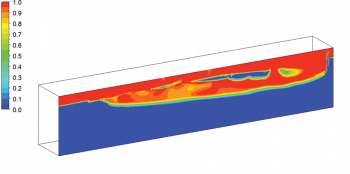 |
|---|
|
Figure 3: CFD analysis for the generated air sheet represented by contours of volume fractions, 0 being water and 1 being 100% air |
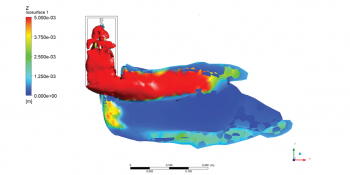 |
| Figure 4: Single jet fixed below waterline contours of volume fraction (left) and isosurface of 0.5 volume fraction (right) |
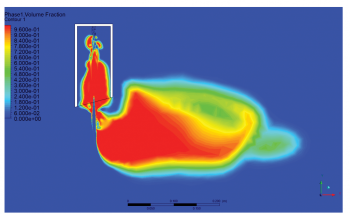 |
| Figure 5: Pressure distribution across the air sheet (perpendicular to the hull) showing the negative pressure region |
Open questions and the road ahead
We are transparent about what remains to be characterised. Scaling behaviour from model to full-scale needs to be established systematically. Interaction of the air sheet with surface roughness and biofouling, which alter near-wall turbulence structure, requires dedicated study. Long-term operational stability under varying sea states, trim, and loading conditions represents another gap in the current dataset. However, since the air sheet adheres to the hull, then we believe this system will perform best-in-class when it comes to vessel motions.
The most technically intriguing near-term development is the investigation of pulsed Coandă jets as an alternative to continuous operation. Evidence from related flow-control research suggests that pulsed jets preserve momentum more efficiently and reduce average power consumption, while potentially improving air transport across the air–water interface. Future CFD work is being planned in this area.
As a concept, Coandă-based jet-induced air entrainment occupies a distinct position in the friction-reduction landscape: neither a passive surface treatment nor a conventional pressurised air system, but a form of active multiphase boundary-layer manipulation with its own physical principles. Whether it can deliver net energy gains at operational scale, and at what cost per vessel type, will determine its place in the toolkit available to naval architects navigating an increasingly demanding regulatory environment.
Note:
Khaled M Karmous is the named inventor of US Patent 12,280,854 B2, System and Method for Reducing Drag on the Hull of a Vessel, 2024.
Khaled M Karmous is a mechanical engineer, who graduated from North Carolina State University. He has more than 30 years' experience in oil and gas drilling operations and engineering, and now focuses on developing and advancing practical engineering inventions.
With thanks for the help of Mohamed Hussain, PhD, PE, who specialises in marine hydrodynamics, multiphase CFD, and innovative energy-saving concepts, with a focus on reducing hull drag and improving energy efficiency solutions for the shipping industry.
This article appeared in Features, TNA Mar/Apr 2026
*This is an extended version of the RINA Event article by the same name, first published online 27 Feb 2026.
“Wind propulsion technologies are the only solution that actually pay for themselves,” said Gavin Allwright, secretary general of the International Windship Association (IWSA), during his keynote speech at Wind Propulsion 2026. The statement captured the commercial logic increasingly underpinning wind propulsion technologies.
Held on 17–18 February at Convene 133 Houndsditch in London, the conference opened to a sold-out audience, a clear sign of the growing centrality of wind propulsion within maritime decarbonisation strategy.
Hosted by RINA in association with the IWSA, the event continues to serve as an important early-year marker in the decarbonisation calendar, setting context ahead of further debate at gatherings such as RINA’s Ship Energy Efficiency Conference in Athens.
Gold sponsorship came from DNV, with silver sponsors including Lloyd’s Register and Vaisala, underscoring the degree to which wind propulsion is now embedded within mainstream classification, verification and risk management frameworks. Bronze sponsorship was provide by Mitsui O.S.K. Lines.
Still optimistic
An underlying theme on the first day of the conference was the industry’s response to the recent impasse at the latest IMO MEPC meeting. Conference attendees remain optimistic that it would not prevent wind-propulsion technology from developing apace, despite a hoped-for consensus on mid-term greenhouse gas measures not being reached in 2025.
 |
|---|
In one of the conference’s opening speeches, Aakash Dua, regional business development director at DNV, framed the broader challenge that new fuels and technologies are introducing uncertainty into the system, but that also provides new opportunities to evolve. Decarbonisation, he argued, is not a “chicken and egg” dilemma but a full-system transformation requiring early dialogue rather than competition between sectors. The pathway must be “safe, scalable and irreversible”.
That framing set the stage for the keynote from David Osborn, director, Marine Environment Division, IMO, whose remarks carried particular weight given the recent regulatory turbulence (see ‘The wind is with us’, page 38 TNA Mar/Apr 2026, for more).
In the technical streams, presentations examined verification methodologies, digital twins and performance modelling, all essential for translating projected savings into bankable outcomes. The integration of wind systems into hull design, manoeuvring standards and structural assessments featured prominently. Post-presentation panel discussions agreed that as installations scale, wind devices must be treated as part of vessel architecture rather than appendages.
The Policy and Regulation roundtable that followed also revealed a more candid assessment of the current moment. Chaired by Stefano Scarpa, director of maritime decarbonisation, ABL Group, the discussion began with what he described as the “big shock” of the most recent MEPC meeting. Regulations had not been approved; consensus had fractured. Yet, he argued, work on practical implementation must continue regardless.
Decarbonisation is a matter of “when, not if,” argued David Connolly, head of operations, UMAS, who also suggested the outcome of the previous MEPC meeting was less surprising than some perceived. Connolly stated that while the regulatory trajectory may be uneven, directionally it remains clear.
 |
 |
|---|
John Taukave, policy advisor, Micronesian Center for Sustainable Transport, provided a stark reminder of the stakes: “Every delay is an existential delay for the communities of the Pacific.” He made it clear that for small island developing states, wind propulsion is not merely a commercial efficiency tool but part of a broader zero-carbon transition framework, and one that also reconnects with long maritime traditions of wind-powered navigation.
The concept of a just and equitable transition surfaced repeatedly. How does wind propulsion contribute not only to emissions reduction but also to inclusive decarbonisation pathways? The Marshall Islands’ historic and cultural relationship with wind-powered vessels was cited as a powerful symbolic and practical reference point.
Connolly argued that a “fundamental reset” may be necessary: newbuilds should be prepared for wind in the same way they are increasingly designed to accommodate alternative fuels. Wind should not remain an afterthought retrofit, but a design consideration from the outset.
Parallel presentation streams throughout the first day demonstrated that scaling wind propulsion requires more than aerodynamic efficiency.
The letter of the law
Elsewhere, legal and contractual risk was scrutinised. Professor Orestis Schinas, specialist in ship finance, HHX.blue, chaired a roundtable on how construction contracts, charterparty arrangements and insurance frameworks must evolve.
Dr Pia Rebelo, legal analyst at Stephenson & Harwood, noted that contractual obligations will require reshuffling as wind propulsion becomes embedded in design and regulatory compliance. New areas of risk, performance guarantees, downtime exposure, repair and logistics must be allocated clearly.
The complexity of maritime contractual relationships, voyage charters, time charters, sale contracts and bills of lading remain “incredibly antagonistic” in places. Introducing new propulsion technologies adds further friction.
François Luigi, client director, Filhet Allard, observed that insurers do not fear risk; they fear uncertainty. The challenge lies in limited repair infrastructure, sparse spare parts networks and geographically dispersed manufacturing. Data, therefore, becomes central to risk assessment and premium stability.
 |
|---|
Wind takes off
Gavin Allwright’s keynote on the morning of the second day placed wind propulsion within a pragmatic commercial frame. Ninety-three large vessels are now operating with wind systems, representing around 5 million dwt, with a further 120 installations in the pipeline, the majority expected in 2026. The sector, he suggested, is “rapidly approaching an inflection point,” where operational data, production capacity and commercial familiarity begin reinforcing one another.
Framing wind not as a novelty but as continuity, he observed, “we are coming back to an energy source that has been there forever – we’re just doing it better.” At the same time, he was clear that integration matters: “If we take energy efficiency, voyage optimisation and wind together, cumulatively, we’re getting close” to longer-term decarbonisation targets.
“If the shipping industry doesn’t see a way to make money, these will fail,” he cautioned. But, wind propulsion’s distinguishing feature is its ability to deliver measurable savings now, he stated, layered alongside CII compliance, FuelEU Maritime incentives and EU ETS exposure.
The Shipowners’ Debate, overseen by Dimitris Monioudis, Technical Committee chair, INTERCARGO, reinforced that this is no longer theoretical.
“It’s quite complex to really put the two lines under the answer of how much you’re saving,” observed Jan Opedal, project manager, Odjfell Tankers, who described a decarbonisation journey rooted in fuel efficiency long before regulatory compulsion intensified. With incremental measures largely exhausted, suction sails were introduced as a next step. Yet quantifying savings precisely was noted as still being complex.
Union Maritime’s commercial performance manager, Jesse Bryce, described a portfolio approach across vessel classes, embedding flexibility into newbuild foundations. “If things look good, the price looks good, the performance looks good, and we can get it on the ship, why not?,” he stated.
 |
|---|
Sights set on safety
Concluding the conference, the roundtable on safety and hazards reinforced that scaling must not outpace safeguards.
The panellists explained that crew require understanding of wind dynamics; and simulator training and updated company procedures must align with regulatory development. Again, focus was placed on the IMO, which faces a deadline to produce a dedicated safety code for wind-assisted propulsion, and has acknowledged gaps in expertise. Collaboration between class, insurers and owners was also emphasised as essential.
Redundancy, including retention of conventional propulsion systems, was framed as reasonable and necessary. Commercial realities, cargo considerations and operational risk must be balanced carefully.
Wind Propulsion 2026 demonstrated the scale and industrial growth of the segment within the maritime sector, technically, commercially and institutionally. While regulatory uncertainty remains, deployment across the global fleet continues.
The narrative has shifted from “if” to “how”.
As Osborn cautioned, maintaining course matters. But as Allwright argued, commercial logic must underpin ambition.
This article appeared in Conference News, TNA Mar/Apr 2026.

Lorem ipsum dolor sit amet, consectetur adipiscing elit, sed do eiusmod tempor incididunt ut labore et dolore magna aliqua. Ut enim ad minim veniam, quis nostrud exercitation ullamco laboris nisi ut aliquip ex ea commodo consequat. Duis aute irure dolor in reprehenderit in voluptate velit esse cillum dolore eu fugiat nulla pariatur. Excepteur sint occaecat cupidatat non proident, sunt in culpa qui officia deserunt mollit anim id est laborum.
Lorem ipsum dolor sit amet, consectetur adipiscing elit, sed do eiusmod tempor incididunt ut labore et dolore magna aliqua. Ut enim ad minim veniam, quis nostrud exercitation ullamco laboris nisi ut aliquip ex ea commodo consequat. Duis aute irure dolor in reprehenderit in voluptate velit esse cillum dolore eu fugiat nulla pariatur. Excepteur sint occaecat cupidatat non proident, sunt in culpa qui officia deserunt mollit anim id est laborum.
Lorem ipsum dolor sit amet, consectetur adipiscing elit, sed do eiusmod tempor incididunt ut labore et dolore magna aliqua. Ut enim ad minim veniam, quis nostrud exercitation ullamco laboris nisi ut aliquip ex ea commodo consequat. Duis aute irure dolor in reprehenderit in voluptate velit esse cillum dolore eu fugiat nulla pariatur. Excepteur sint occaecat cupidatat non proident, sunt in culpa qui officia deserunt mollit anim id est laborum.
Lorem ipsum dolor sit amet, consectetur adipiscing elit, sed do eiusmod tempor incididunt ut labore et dolore magna aliqua. Ut enim ad minim veniam, quis nostrud exercitation ullamco laboris nisi ut aliquip ex ea commodo consequat. Duis aute irure dolor in reprehenderit in voluptate velit esse cillum dolore eu fugiat nulla pariatur. Excepteur sint occaecat cupidatat non proident, sunt in culpa qui officia deserunt mollit anim id est laborum.
Lorem ipsum dolor sit amet, consectetur adipiscing elit, sed do eiusmod tempor incididunt ut labore et dolore magna aliqua. Ut enim ad minim veniam, quis nostrud exercitation ullamco laboris nisi ut aliquip ex ea commodo consequat. Duis aute irure dolor in reprehenderit in voluptate velit esse cillum dolore eu fugiat nulla pariatur. Excepteur sint occaecat cupidatat non proident, sunt in culpa qui officia deserunt mollit anim id est laborum.
Lorem ipsum dolor sit amet, consectetur adipiscing elit, sed do eiusmod tempor incididunt ut labore et dolore magna aliqua. Ut enim ad minim veniam, quis nostrud exercitation ullamco laboris nisi ut aliquip ex ea commodo consequat. Duis aute irure dolor in reprehenderit in voluptate velit esse cillum dolore eu fugiat nulla pariatur. Excepteur sint occaecat cupidatat non proident, sunt in culpa qui officia deserunt mollit anim id est laborum.
text one
Lorem ipsum dolor sit amet, consectetur adipiscing elit, sed do eiusmod tempor incididunt ut labore et dolore magna aliqua. Ut enim ad minim veniam, quis nostrud exercitation ullamco laboris nisi ut aliquip ex ea commodo consequat. Duis aute irure dolor in reprehenderit in voluptate velit esse cillum dolore eu fugiat nulla pariatur. Excepteur sint occaecat cupidatat non proident, sunt in culpa qui officia deserunt mollit anim id est laborum.
The return of great-power rivalry, wars in Ukraine and the Middle East, rising tensions in the South China Sea and growing concern over seabed infrastructure have pushed undersea capability back to the centre of military planning. But this is not simply a contest of fleet numbers. The underwater arms race today is a structural transformation of the global maritime system, reshaping deterrence, intelligence gathering, seabed infrastructure protection and the balance of power across the Atlantic, the Indo-Pacific and the Arctic. As First Sea Lord General Sir Gwyn Jenkins told delegates at the Combined Naval Event in Farnborough in May 2026: “We are at a fork in the road, and the decisions we take now will have seismic and lasting consequences.”
After decades of relative underinvestment, major powers and emerging maritime nations are recapitalising underwater capability at a pace not seen since the Cold War. This renewal spans not only submarines but anti-submarine warfare systems, autonomous underwater vehicles, support fleets, seabed surveillance networks and the protection of critical underwater infrastructure. The geopolitical landscape is simultaneously reshaping procurement strategy, with intergovernmental collaboration, export partnerships and industrial allegiances all playing a pivotal role alongside raw capability.
A global competition
The scale of that competition is most visible in the contest between the United States and China. Despite long-standing plans to deliver two Virginia-class submarines per year, US output has struggled to exceed around 1.1 to 1.2 boats annually, constrained by workforce shortages, supply chain fragility and industrial bottlenecks. The Navy’s 30-year shipbuilding plan acknowledges a persistent gap between planned and achievable output, with workforce availability now the single largest constraint on recapitalisation. The US is simultaneously managing the Virginia-class attack submarine programme, the Columbia-class ballistic missile submarine programme and development work on the future SSN(X), placing extraordinary concurrent demands on a constrained industrial base.
|
|---|
China, by contrast, is demonstrating the strategic advantages of scale, having launched 10 nuclear-powered submarines between 2021 and 2025, surpassing the US in both hull numbers and total launched displacement. Major expansion at Bohai Shipbuilding’s Huludao yard has enabled simultaneous production of the Type 093B and Type 094 classes, underpinned by vertically integrated supply chains, state-backed financing and a significantly larger skilled workforce. The strategic concern for Western planners is increasingly centred on industrial tempo, production resilience and fleet mass, rather than individual platform performance.
The contest extends well beyond two powers. Russia continues to prioritise its Borei and Yasen-M programmes despite sanctions and industrial constraints, with Arctic and North Atlantic operations the strategic focus.
France sustains two parallel nuclear programmes, the Suffren-class SSNs and the Le Triomphant-class SSBNs, while maintaining a strong export position through the Scorpene design. Germany and Sweden remain among the most technically influential conventional submarine designers, with ThyssenKrupp Marine Systems driving advances in air-independent propulsion (AIP) and low-signature construction through the Type 212CD, and Saab Kockums developing the A26 Blekinge class, which secured its first export customer in Poland in 2025.
India’s indigenous nuclear submarine programme has reached a significant milestone with the commissioning of INS Aridhaman in April 2026 and the fourth Arihant-class boat now in sea trials. South Korea has emerged as one of the most competitive builders in the world, with the KSS-III programme demonstrating a high degree of indigenous capability and Korean yards now in the final running for Canada’s US$40 billion submarine replacement programme.
For much of the post-Cold War period, Western navies prioritised small numbers of increasingly sophisticated platforms. That assumption is now being challenged by the realities of persistent maritime competition, Indo-Pacific scale, Atlantic and Arctic commitments, infrastructure protection requirements and sustained readiness demands. Capability alone is insufficient without industrial resilience, sustainment capacity and workforce depth.
|
|---|
The AUKUS framework
As capability shifts from standalone platforms toward interoperability and integrated, distributed systems, more countries are taking a collaborative approach to construction and operation. The most significant example is AUKUS, the trilateral security partnership between Australia, the United Kingdom and the United States, designed to support Australia in acquiring its first conventionally armed, nuclear-powered submarine fleet amid growing tensions in the Asia-Pacific region.
Australia’s SSN-AUKUS boats will be based on the UK’s next-generation SSN Astute-class successor but incorporate technologies from all three nations, built in both the UK and Australia, with work scheduled to start by 2030. The first submarine is expected to enter service towards the end of the 2030s in the UK and the early 2040s in Australia, with both nations operating the class on a rotational basis under Submarine Rotational Force – West at HMAS Stirling near Perth.
The first significant US contract under AUKUS was awarded in late 2025, with Electric Boat securing US$196 million for engineering, technical and design-transfer work, marking a shift from political commitment to funded industrial delivery. In May, Babcock International announced a partnership with US defence prime HII to manufacture complex submarine components at its Rosyth facility in Scotland, relieving pressure on the US naval supply chain while reinforcing industrial integration under the framework.
Australian industry is now being drawn into the supply chain at scale. PMB Defence will partner with BAE Systems to integrate its advanced nickel zinc battery system into the SSN-AUKUS design and supply battery technology for other Royal Navy submarines. Nuclear propulsion will be delivered by Rolls-Royce, with the PWR3 reactor, designed for the UK’s Dreadnought class, expected to be adapted for SSN-AUKUS. Rolls-Royce has also signed a Memorandum of Understanding with the State of Victoria to develop Australia’s defence industry skills, supply chain and innovation ecosystem.
Astute and dreadnought
AUKUS has breathed new life into Britain’s naval shipbuilding. BAE Systems is running the Astute and Dreadnought programmes simultaneously at Barrow-in-Furness, where the workforce has grown to more than 16,000 people, compared to fewer than 10,000 a decade ago.
|
|---|
The Astute class, a seven-boat fleet of 97m-long, 7,400-tonne displacement hunter-killers, is nearing completion. HMS Agamemnon, the sixth boat, completed a successful first dive in October 2025. To measure the centre of gravity during the trim and basin dive, 16tonnes of lead weights are brought onboard and moved side-to-side, measured using pendulums hung between decks, a method used by naval architects since the 1700s.
HMS Achilles, the final boat, is scheduled for commissioning in 2028. All boats are the first Royal Navy submarines designed entirely in 3D CAD and the first without optical periscopes, using high-specification video technology instead. Each carries Tomahawk Land Attack Cruise Missiles and Spearfish heavyweight torpedoes, powered by a Rolls-Royce PWR2 nuclear reactor with a 90-day dive endurance.
All four 153.6m-long, 17,200-tonne displacement Dreadnoughts, the new generation of SSBNs designed to replace the Vanguard class in the early 2030s, are at various stages of construction. First steel was cut on the fourth and final boat, King George VI, in September last year. Each is built in 16 units grouped into three mega-units to optimise the build timeframe, with a designed service life of 35 to 40 years, some 50% longer than the Vanguard class. Each boat is equipped to launch 12 Trident II D5 ballistic missiles and Spearfish torpedoes, powered by the PWR3 with reactor cores designed to operate for 20 years without refuelling and with 30% fewer parts than the PWR2. In January 2025, Rolls-Royce was awarded a £9 billion MoD contract covering research, design, manufacture and support of all nuclear reactors in Royal Navy submarines.
Nuclear stewardship and the balance of fleets
Nuclear stewardship is itself becoming a defining strategic capability, requiring reactor expertise, regulatory oversight, nuclear-certified supply chains, specialised dockyard infrastructure, waste handling, emergency preparedness and highly trained engineering workforces sustained over multiple generations. The UK, France, the United States, India, China and Russia all face similar long-term challenges in sustaining this at scale, and the burden is one reason why conventionally powered submarines remain strategically important.
|
|---|
Advances in AIP, battery technology and quieting have made modern diesel-electric submarines exceptionally capable in littoral and regional operations. They are generally faster to build and allow greater fleet mass for nations seeking credible deterrence without the burden of a full nuclear enterprise. The continued export success of the Scorpene design and the growing competitiveness of South Korean and Japanese programmes partly reflects this calculus. Many nations are converging on mixed fleets that combine nuclear reach, conventional mass and autonomous persistence.
The evolving battlespace
The underwater battlespace now extends well beyond traditional submarine operations into hybrid warfare, persistent surveillance, cyber-enabled disruption and the protection of seabed infrastructure. The Nord Stream incident and subsequent European seabed security reviews have accelerated investment in distributed sensing, autonomous patrol systems and infrastructure monitoring. NATO’s establishment of a Critical Undersea Infrastructure Coordination Cell underlines the vulnerability of underwater cables, pipelines and distributed sensor networks, and governments across Europe and the Indo-Pacific are responding with dedicated investment in seabed domain awareness.
The rise of autonomous underwater systems is accelerating innovation while creating new engineering and assurance challenges, particularly where defence and commercial activity converge. Modern underwater platforms are becoming software-defined, digitally integrated systems that must remain adaptable across decades of technological change while operating in increasingly contested electromagnetic, cyber and acoustic environments. The disciplinary breadth required now spans naval architecture, software engineering, autonomy, nuclear engineering, systems engineering, hydrodynamics, acoustics, cyber security, advanced manufacturing, digital twin development and human factors.
|
|---|
Workforce shortages are among the most acute strategic challenges facing the sector. Competition is intense globally for engineers, nuclear specialists, software developers and advanced manufacturing expertise. The Rolls-Royce and Siemens collaboration on the Dreadnought programme, sharing best practice across the digital landscape to enhance engineering, manufacturing, R&D, training and reactor operation, is one model for how industry is responding.
Global transformation
The real story of the underwater arms race is not a procurement narrative. It is a global transformation of the undersea domain, driven by industrial strategy, hybrid threats, workforce evolution, nuclear stewardship and the convergence of nuclear, conventional and autonomous capability. These are the forces that will shape the future of naval architecture and the wider maritime profession for decades to come.
|
AUKUS STRENGTHENED WITH HMS ANSON SMP
A key milestone in the AUKUS collaboration was reached in February this year when HMS Anson docked at Western Australia’s HMAS Stirling for scheduled maintenance, representing the first time Australia had carried out work on a UK nuclear-powered submarine. Australian personnel worked alongside partners from the UK and the US on maintenance and familiarisation activities, building on experience gained from work on US Virginia-class submarines USS Vermont in 2025 and USS Hawaii in 2024. Participation in the UK Submarine Maintenance Period, ahead of the establishment of SRF-West at HMAS Stirling from 2027, will further build Australia’s familiarity with UK-designed submarines as the country prepares to begin construction of SSN-AUKUS in Adelaide by the end of the decade. |
|---|
This article appeared in Submarines, TNA May/June 2026.
The Arctic is warming roughly four times faster than the global average, making shipping lanes that were theoretical a decade ago commercially viable sooner than even optimistic projections suggested.
Geopolitics is also driving increased interest in these waters. The Northern Sea Route not only offers transit times some 30 to 40% shorter between the Far East and Europe than traditional Red Sea routes, it also avoids conflict zones, piracy hotspots and strategic bottlenecks. In a volatile world, nations are taking their Arctic territories more seriously, particularly given their resource potential. The Arctic holds vast reserves of oil, gas and critical minerals, but the vessels and infrastructure to support extraction don’t yet exist at the required scale.
“The Arctic in particular feels like it’s moved almost overnight from a specialist niche to one of the most contested and commercially significant maritime regions on the planet,” says Lee Grace, business development manager, North America, at maritime engineering consultancy BMT.
|
|---|
The range of vessels on the order books tells a story. On the commercial side, bulk carriers and containerships are exploring trans-Arctic routes as summer ice-free windows arrive earlier than predicted. Research ships are in demand as governments fund deeper understanding of these environments. And icebreakers, the heavy-duty workhorses that make everything else possible, are suddenly high on procurement agendas.
“Most western nations look at their fleets and see a significant capability gap,” says Grace. “Arctic patrol vessels for coastguard and sovereignty missions are another major driver, and increasingly we’re seeing something genuinely new: serious interest in purpose-designed autonomous vessels for persistent polar monitoring.”
Arto Uuskallio, head of sales and marketing at Railotech, the Finnish icebreaking specialist, says that although there are currently four different Polar Class 2 vessels under construction, most customers are looking for vessels with carefully tailored ice capability. By this he means designs that combine “adequate ice performance with good open-water efficiency and seakeeping properties, rather than designs optimised only for extreme year-round Arctic conditions”.
He says: “A record number of diverse ice-capable vessel projects are under development, with several more in the pipeline,” adding that the strongest demand is in government and coastguard ships, and research, cargo and logistics vessels.
New ice risks
Ice-class ships aren’t new, but the design challenges are becoming more complex. “The environment is changing faster than the design codes that govern how we build for it,” says Grace.
|
|---|
Traditionally, ice-class design meant designing for a relatively predictable adversary: thick pack ice. The answer was largely about strength: heavier frames, reinforced plating at the waterline and bow forms built to break through. But climate change has made that adversary far less consistent.
“The older, thicker multi-year ice is reducing, but what’s replacing it isn’t simply open water – it’s a more dynamic mix of younger first-year ice, refreezing floes, shifting leads and unpredictable ice edges,” Grace says. “Paradoxically, a partially ice-covered Arctic can be more dangerous than a heavily iced one, because the behaviour is so much less predictable.”
Designers also need to take a long view. The Arctic in 2050 could look very different from today. This is where digital twin technology comes into its own, to test hull form and propulsion choices against future climate scenarios before committing to a physical design.
Understanding the ice type matters, with the spectrum running from thin, newly formed nilas ice through first-year ice, typically up to 1.5m thick after one winter’s growth, to old, multi-year ice that has survived at least one summer melt.
“Designing a vessel for breaking 50cm ice is fundamentally different from designing for 250cm level ice,” says Uuskallio. “These differences affect hull strength, propulsion power, material selection, equipment makers, machinery design, winterisation and even basic layout choices.”
There is also an important structural trade-off: the more ice-capable a vessel needs to be, the heavier its structure must become – reducing the internal volume available for cargo, mission systems and crew spaces.
Ice conditions are highly variable. A vessel may encounter level ice, ridges, brash ice and pressure zones within the same voyage, each imposing different loads on the hull, propulsion and steering systems. “This variability makes it essential to clearly define the ice conditions and operational assumptions at the very beginning of the design process,” says Uuskallio.
A hull optimised for breaking solid pack ice performs very differently from one optimised for open-water efficiency and seakeeping. Shorter ice seasons mean vessels now spend more time in open water and getting that balance right across a much wider range of conditions is the central design challenge.
Increased ice strength and power improve safety and reliability in ice, but they also add weight, resistance, fuel consumption and emissions in open-water operation. Achieving a well-balanced design that meets the most demanding requirements without overdesigning for less critical ones is the core challenge.
In Atlantic Canada, this hull-form tension is particularly acute on the east coast, where ships frequently transit to the high Arctic through summer and autumn, then return to the North Atlantic, one of the harshest open-ocean wave environments in the world.
“A hull optimised for icebreaking tends to roll heavily in open seas,” says Grace. “Conventional stabilisers and bilge keels can’t be fitted due to ice damage risk.”
Double-acting ships, as pioneered by Railotech, designed to break ice astern, freeing the bow for a more conventional form and better seakeeping, haven’t yet been tried in Canada. It’s a concept that “deserves serious consideration”, notes Grace.
Forging innovation
The challenges of ice-infested waters are fertile ground for innovative design features. These include the ice knife – a structural bow feature that splits and directs broken ice under the vessel. It features in Canada’s new heavy icebreaker under construction at Seaspan. Heeling tanks allow a vessel to rock itself free when trapped in ice while air bubble systems thrust compressed air through ports at the bow to reduce friction, complementing bow lubrication systems. And oblique icebreaking – achieved through an asymmetrical hull form – allows a vessel to open a channel wider than its own beam, useful for following traffic.
“Advanced hull forms and propulsion concepts, such as double-acting operation, allow ships to achieve good open-water efficiency and to handle demanding ice conditions when required,” says Uuskallio. “Improved numerical methods, particularly nonlinear finite element analysis, combined with extensive full-scale measurement data are enabling more accurate assessment of ice loads. This makes it possible to optimise structures so they are lighter and safer, without simply increasing ice class as a conservative solution.”
Real-time data is key. Fed into digital twin models it can create a continuous picture of hull condition and predict maintenance needs before they become failures. “When the nearest drydock is thousands of miles away, that capability is operationally essential,” says Grace, who also highlights the importance of increased satellite coverage and communications equipment in these remote waters.
|
|
|---|
Bear necessities
If something goes wrong in the polar regions, the search and rescue response time is measured in days, not hours. Designers need to ensure there are fully enclosed, thermally insulated lifeboats that can sustain survivors for extended periods in extreme cold, and medical facilities that can manage serious trauma without rapid evacuation.
And while not usually the subject of naval architecture, “the vessel’s freeboard needs to be high enough to prevent polar bears from boarding,” says Grace.
Onboard one of the world’s most advanced polar research ships.
RRS Sir David Attenborough, operated by the British Antarctic Survey, began service in 2021 and feedback from the scientists onboard has been very positive, says Kongsberg Maritime designer Erik Leenders.
He points out polar research vessels pose specific challenges for naval architects, as these ships combine multiple functions. Sir David Attenborough, for example, is a cargo ship loaded with 20ft containers, a product tanker carrying diesel and aviation fuel, a ‘passenger’ ship for 60 scientists and a research ship with bespoke laboratories, moonpool and ROVs – not to mention being a Polar Ice Class 5 (Hull PC4) icebreaker, which can operate year-round in medium, first-year ice, breaking through ice 1m thick at a speed of 3knots (5.6km/h).
|
|---|
The £200 million ship is deployed to the Arctic during the northern summer and to the Antarctic during the austral summer. “It travels from the northern hemisphere to the tropics to 40, 50, 60°,” explains Leenders. “Icebreaker hulls do not tend to be very good seakeeping hulls so we did a lot of tests in the ice tank and seakeeping tank to check the hull design. We’ve had very good feedback from the crew about its handling and, of course, it is rated to a very high comfort class (LR: CAC1), with a lot of focus on space, noise and vibration, because the crews spend a really long time onboard.”
The ship has a helipad and hangar for two helicopters, cranes and an enhanced ability to deploy subs and other ocean-survey and sampling equipment.
This article appeared in Designing for Extremes, TNA May/June 2026.
On 15 February 2025 the containership Baltic III ran aground off the west coast of Newfoundland during a severe storm. The vessel encountered mechanical difficulties and lost power, becoming ‘dead in the water’, and was driven into Cedar Cove, a remote and rocky location near Lark Harbour.
All 20 seafarers onboard were safely evacuated by a Cormorant search and rescue helicopter but the vessel was left against a 1,000ft cliff, in a very remote location, facing extreme weather and ice conditions. Over the following year the vessel suffered severe damage, with a large hole in its port side, and has been in danger of breaking up amidships.
The first phase
It was clear from the outset that salvage was going to be a difficult and complex operation. The shipowner, MSC, and its insurers appointed T&T Marine Salvage to lead the first phase of operations. During this period of work around 1,700m3 of fuel oil was removed from Baltic III, with around 20tonnes of residual fuel and contaminated water still onboard. Additionally, 409 of the 472 containers onboard were taken off the ship, including some containing dangerous goods, leaving 63 remaining.
|
|---|
The salvage team needed to construct a road to the site to get some equipment alongside and a cableway was erected with a basket underneath to transport the salvage crew back and forth.
Thankfully, no bunker oil was released during the incident and any tar balls were collected as they were encountered. Nonetheless, the presence of the vessel poses a serious potential environmental hazard and the delay in removing the vessel has attracted some local concern and criticism.
However, as Bruce English, senior response officer, Canadian Coast Guard, who has been supervising the Canadian government’s response to the operation, observes: “We did not want a rush job, but the right job.”
Dive surveys confirmed that the structural condition of the vessel made a simple refloat impossible. The structural deterioration of the vessel has continued, presenting significant engineering challenges.
According to English, “While the vessel is currently stable, it is in poor condition. There is significant damage to the hull, including a crack in the port side and buckling on the starboard side. There is also a worsening crack on the deck of the vessel.
“Operations are expected to continue for some time. Speed is not the primary goal. Our focus remains on ensuring the safety of Canadians and responders while minimising impact to the environment.”
In early May this year the Coast Guard confirmed that the operation was now moving into the wreck removal phase, following the award of a contract by MSC to experienced Florida-based salvors Resolve Marine for the completion of the remaining salvage work and the removal of the wreck from Cedar Cove.
|
|---|
The Coast Guard’s role in the process is to review the proposed wreck removal plan to ensure that it is “reasonable and appropriate” to protect public safety and the marine environment. English points out that Canada follows the ‘polluter pays’ principle where vessel owners are responsible for the cost of addressing any pollution or hazards posed by their vessel and this includes any costs relating to cleanup.
Breaking up is hard to do
Resolve Marine will now embark on initial preparatory work, following a full onboard assessment and environmental investigation. It will weld rigging points to the vessel and separate the hull at the mid-section point where the break is occurring. It will then remove the remaining containers, using a crane barge that will be deployed on site.
Resolve Marine proposes to use chain pullers to pull the bow section to a nearby beach. This will be followed by scrapping work, involving cutting the topside in dry conditions, as well as removal of the residual fuel and tank cleaning. The bow section will be pulled forward to the beach in stages.
All topside steel that can be reached in the initial stage will be cut and removed. The section will then be pulled forward again and the process repeated, until completion. The steel will be cut into 10tonne segments, which will then be transported to a local facility, Newco Metal & Auto Recycling, for recycling.
In parallel, preparations for the stern removal will be carried out, with the goal of clearing it from the rocks. Resolve Marine plans to cut forward of the engine room and then remove the accommodation block. The middle section, weighing around 2,000tonnes, will be pulled to the beach for cutting, removal and recycling, while the 3,000tonne stern section will be rotated clear from the rocks and removed to shore. This may involve cutting the stern section into two, depending on the conditions encountered during the work.
Better access
The expectation is that having built an access road to the beach, Resolve Marine will be able to start moving the rest of the cargo ashore this summer. It then aims to pull the bow to shore using the chain pullers, and to remove the remaining fuel oil.
The timeline for the potential completion of all scrapping operations is some time in 2027, with Resolve Marine committing to undertake as much work as possible before the end of 2026.
Alternatives to the chain-puller-based solution, including the removal of the vessel by sea, were considered. However, they were ultimately rejected because of the weather conditions and marine challenges at this location.
Why the delays?
While there is great relief that after more than a year there is at last a plan for the wreck’s removal, some are questioning whether the process could have been quicker. There are also concerns about what seems to be a lack of urgency and transparency in investigating the cause of the accident, thereby allowing lessons to be learned and remedial actions taken.
John Dalziel MRINA is a naval architect and an adjunct professor in industrial engineering, with more than half a century of marine industry experience, most of it in eastern Canada, including Newfoundland. He has raised a number of issues with the Canadian Transportation Safety Board (TSB) regarding this incident.
In particular, he says: “I am somewhat perplexed as to why the TSB has decided not to investigate this incident, whereas it has investigated other foreign flag ship incidents in Canadian waters, including two previous MSC vessels. We don’t know the timeline from vessel blackout till its grounding nor whether TSB or Transport Canada are aware of the cause of the blackout.”
|
|---|
He points out that from visual images the ship’s anchors do not appear to have been deployed, which raises questions over how the crew responded to the emergency.
Professor Dalziel also questions whether Baltic III could have been floated off the beach at an earlier stage, prior to breaking up.
“As the stern of the ship remained in deep water, perhaps a couple of powerful salvage tugs or offshore supply vessels could have been used to tow it off the beach, floating on its tank tops if bottom damage was encountered. I would certainly welcome the TSB, or other federal agency, investigating the handling of the salvage efforts, considering that the ship has now been on the beach for more than 14 months, including over a Newfoundland winter.”
A weather eye
At this stage the TSB appears to be taking a watching brief. A spokesman says: “In line with the Casualty Investigation Code, the flag state of the ship has a duty to conduct an investigation into any very serious marine casualty occurring to any of its ships. Therefore, Liberia, as the flag State of Baltic III, is leading the investigation into the grounding and TSB is representing Canada as a substantially interested state.”
The case of the grounding of Baltic III, and its subsequent salvage, certainly raises a number of interesting and important technical and safety-related issues. While the immediate priority has to be its removal, in what will clearly be a challenging operation, hopefully in time the full circumstances of the incident, and the decisions surrounding its salvage, will be aired in a thorough and transparent manner.
This article appeared in Salvage operations, TNA May/June 2026.
Researchers at MIT Lincoln Laboratory in the US are developing hardware and algorithms to improve collaboration between human divers and autonomous underwater vehicles (AUVs), with potential applications ranging from subsea cable inspection to countermine operations. The project, carried out by the lab’s Advanced Undersea Systems and Technology Group, seeks to combine the respective strengths of humans and robots in demanding underwater environments.
As principal investigator Madeline Miller notes, divers and AUVs generally do not team up at all underwater. Manipulation tasks requiring human dexterity, such as repairing infrastructure or deactivating a mine, fall entirely to the diver, while robotic systems offer advantages in processing power, endurance and high-speed mobility that remain largely unexploited in such missions.
The research addresses two fundamental capability gaps: underwater navigation and perception. Divers operating in low-visibility or deep conditions may have little more than a compass and fin-kick counts to guide them. For AUVs to assist meaningfully, they must perceive their environment reliably, yet optical sensors fail in dark or turbid water, and sonar imagery lacks colour and fine detail. The dynamic ocean environment can also confuse AI classification, as when a tyre overgrown with mussels no longer resembles a tyre, or a fragmented wreck no longer looks like an aircraft.
|
|---|
The team built on navigation algorithms originally developed by MIT’s Marine Robotics Group, led by Professor John Leonard, integrating them into a mission-relevant AUV and progressing to trials with actual divers in open-ocean conditions. On the perception side, an AI classifier processes both optical and sonar data mid-mission, flagging low-confidence objects to the diver for human input via an underwater acoustic modem. A central engineering challenge is compressing information sufficiently to be useful within the severe bandwidth and latency constraints of underwater acoustic communications, while keeping hardware within the size, weight and power envelope of commercial off-the-shelf components.
After field trials in coastal New England waters and with human divers at Michigan Technological University’s Great Lakes Research Center, the team is seeking external sponsorship to transition the technology to military or commercial partners.
MIT’s Miller highlights the vulnerability of subsea telecommunications and power cable infrastructure as a key driver, noting that maintaining advantage in the undersea domain will require combining AI capability with human judgement.
This article appeared in Insights, TNA May/June 2026
Designing a passenger ferry for the River Niger means confronting a particular set of constraints: variable water depth as shallow as 0.89m, shifting channels, water hyacinth overgrowth, subsurface wrecks and piracy on the Lokoja–Onitsha route.
The winning entry in the Worldwide Ferry Safety Association’s (WFSA) 13th Annual International Student Design Competition For Safe Affordable Ferries addressed all of them, and did so with a hull form and construction method chosen specifically to be buildable by a Nigerian shipyard.
First prize went to Nagapasa, a 10-member team from Universitas Indonesia led by Felicia Rachel Taruli Siregar, who also oversaw the ferry’s structural arrangement. Their design, MV Safarind, is a 36m flat-bottomed steel catamaran with a service speed of 27knots, capable of carrying 200 passengers and their cargo on each leg of the 200km route in approximately four hours.
|
|---|
The competition asks university teams to develop safe, affordable ferry concepts for inland and coastal routes in developing countries, where ageing vessels, overcrowding and poorly designed hulls frequently cause accidents and loss of life. Nigeria has provided the backdrop for the third year running, attracting 18 submissions in the 2025-2026 competition.
Flat-plate construction
The catamaran configuration was chosen to deliver high transverse stability and a larger passenger deck area within the shallow-draught constraint, with better tolerance to passenger overloading than many conventional inland vessel forms. The decision to use an all-flat-plate steel hull was driven by the capability of the shipyard likely to build it.
Nagapasa designed MV Safarind specifically for construction at the Nigerian Naval Shipyard in Port Harcourt, and flat-plate construction avoids compound curvature and complex plate rolling, reducing fabrication cost and allowing the vessel to be built using conventional steel-working equipment. It also supports easier structural repair, a relevant factor on a route where grounding and debris impacts are a routine operational hazard.
Buildability is a requirement of the WFSA competition, which aims to ensure that every entry has a realistic chance of being constructed. In Nagapasa’s case it shaped not just the fabrication method but the entire design process.
“We defined a target investment envelope based on expected passenger fares, route demand and typical inland ferry-operating economics, and used that as a boundary condition throughout,” Siregar says. “Major design parameters, vessel size, passenger capacity, propulsion power, structural configuration and onboard systems were continuously evaluated, not only for technical performance but also for constructability, maintainability and lifecycle operating cost.”
|
|---|
Flat-plate hulls are not the most hydrodynamically efficient geometry, and the team used CFD-based hull refinement to recover some of that deficit within the constraints of buildability. Optimising the bow entry and bottom geometry reduced total resistance by 6.8%, compared with the baseline configuration.
Power options
The team selected four petrol-fuelled Yamaha F450 XTO outboard engines, each rated 450hp (336kW), as the primary propulsion system. The decision was grounded in hydrodynamic resistance analysis, but the outboard configuration also eliminates underwater appendages vulnerable to damage from submerged objects and vegetation, reduces machinery complexity, simplifies inspection and maintenance, and improves redundancy through independent units. A diesel-electric system capable of the same performance, Siregar notes, would have added complexity and capital costs.
The energy balance at 27knots with four large outboards is demanding, and the hybrid element of the design addresses auxiliary and hotel loads rather than propulsion. MV Safarind would carry a battery pack rated just under 737kWh, supplemented by roof-mounted solar panels contributing 11% of auxiliary electricity demand, with generators providing backup during periods of high load. Recharge time is estimated at four hours. The hybrid system is expected to reduce fuel consumption by 58,000litres per year, equivalent to an annual CO₂ reduction of 138.6tonnes, based on the vessel’s load analysis and operational profile.
Intact and probabilistic damage stability analyses were performed using Maxsurf Stability in accordance with the IMO High-Speed Craft Code and MSC.216(82) requirements. Manoeuvrability was assessed using a turning diameter model appropriate for narrow inland waterways, and evacuation analysis followed IMO MSC.1/Circ.1238 guidelines. Structural sizing was developed against Bureau Veritas scantling rules, supported by a 3D structural model.
“Beyond hydrodynamic efficiency, we evaluated the vessel’s safety and operational performance using established naval architecture methods,” Siregar says.
|
TECHNICAL PARTICULARS |
|
|---|---|
| Length overall | 35.85m |
| Length between perpendiculars | 34.5m |
| Breadth overall | 8m |
| Breadth, demi-hull | 2.4m |
| Demi-hull, centreline spacing | 2.8m |
| Depth | 2.5m |
| Design draught | 0.8m |
| Air draught | 5.31 |
| Displacement | 81.33tonnes |
| Lightweight | 58.28tonnes |
| Deadweight | 23.05dwt |
| Service speed | 27knots |
| Crew | 7 |
| Passengers | 200 |
Safety and security
Navigation on the Lokoja–Onitsha route requires continuous depth awareness. The team specified echo sounders and forward-looking sonar for hazard detection alongside GPS, radar, AIS, weather-monitoring software and CCTV-based situational awareness – a layered approach to a route affected by sediment movement, floating vegetation and changing channel conditions.
Piracy is a persistent threat on the route. MV Safarind would carry a security alert system for discreet distress signalling, high-pressure water cannons on both sides of the upper deck, and an enclosed passenger layout with anti-climb barriers at the stern. SOLAS-compliant life-saving appliances and clearly marked escape routes complete the safety arrangement.
Following its win, Nagapasa was invited to present MV Safarind at the WFSA’s Ferry Safety and Technology Conference in New York in May.
Figures from the Maritime Organisation for West and Central Africa show that 8,000 ferry-related fatalities were recorded in the region in 2015-2025, with Nigeria heavily affected. This prompted the country to take action.
For instance, the Lagos State Waterways Authority, which oversees nearly 730 licensed ferries, has cracked down on operators who flaunt passenger overcrowding checks, fail to carry lifejackets and embark on night-time journeys, directly enforcing the rules with jet ski patrols. Meanwhile, the US$464 million, partly EU-supported Omi Eko project will introduce 78 modern electric ferries, upgrade terminals and add new floating jetties to further improve safety. This appetite for change has made Lagos a focal point for both the WFSA and industry association Interferry.
This article appeared in Ferry safety, TNA May/June 2026.
Nominate a colleague, a mentee or a friend for one of our prestiguous Naval Architecture Awards. Chosen by our Committees, the winners will be announced at our Annual Dinner attended by more than 300 maritime professionals, industry leaders and academics. Taking place on 28th May, this will be an evening of celebration at the historic De Vere Grand Connaught Rooms in London.
Nominations deadline: on 31st December. Award categories include Innovation, Safety and Diversity.