

How it's changed
Why did you choose a career as a naval architect?
A local family friend introduced me to the concept of a naval architect at the same time as I was becoming obsessed with sailing. Dinghy racing with my father, I grew to admire the classic yachts where we sailed at Aldeburgh. When I became the ‘Saturday boy’ at the local boatyard, the owner, Peter Wilson, asked me what I wanted to do when I left school. He was rather surprised when I said I wanted to be a naval architect. From then on he encouraged me to learn as much as I could about boatbuilding and design, lending me books and quizzing me about them.
How did you go about getting an education?
Solent University’s Yacht Design and Production course is the stuff of legends, providing the building blocks for most renowned yacht designers and naval architects of recent decades. It lived up to its reputation, and after three years of pure indulgence in my chosen subject, I was raring to go.
What happened after university?
My first job at G.L. Watson was hugely formative, working with designs I had previously read about and participating in some important yacht restoration projects. I was thrilled to meet and work with some of the greats. It was only the diversity of life outside classic yachts and a desire to learn from a broader church that tempted me away.
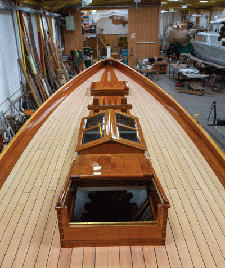
After a year in the Netherlands working on the design of very large yachts, I had a thorough education in design office discipline. The subsequent restoration of a 1937 Camper & Nicholson Motor Yacht at Pendennis Shipyard had proved another triumph for the G.L. Watson team but at the end of a three-year project, Cornwall proved hard to leave.
What happened next?
Starting my own office had always been in the back of my head and it was apparent that the south west offered a wealth of diverse opportunities for someone with my accumulated skill set and experience.
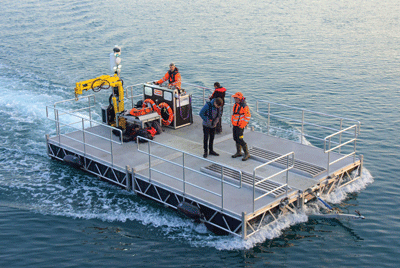
I set up my office in 2016 and embarked on seven years of fascinating projects, travel and experiences, and serving the commercial, leisure and research sectors. I was able to take on a junior naval architect and share the knowledge and opportunity that had come my way.
What other roles have you taken on?
Conversations with two separate MCA surveyors led me to a job as an MCA surveyor; a demanding role that comes with no shortage of responsibility, pressures and demands focused on maritime and environmental safety.
Still based in the south west of England, I benefited from some of the best maritime training available, counting a diverse group of hugely competent naval architects, engineers and mariners as my colleagues.
Working with the local fishing fleet was a highlight, becoming familiar with vessel owners and operators who had as close a tie to their vessels as any, each with their own particular challenges and priorities to understand and work with.
The MCA taught me how to be a civil servant and how, no matter the size and complexity of the vessel, from a 400m container ship to a 6m open fishing boat, they are equally deserving of clear and concise professional engagement. The Agency is excellent at matching skill sets to tasks and my knowledge of stability and structures was put to good use.
What now?
I am off to the Caribbean to run a thriving boatyard in English Harbour, Antigua. I hope my skills and experience will contribute to the yard going from strength to strength in supporting the local industry and visiting trade. My existing toolkit of skills will no doubt come in handy but I am looking forward to learning the needs and challenges of my new workplace.
What’s your advice for others?
To anyone thinking of running their own office, go for it! It’s tough, but hugely rewarding. It allows you to go for the work that really interests you and to learn and grow into specialisms that will enthuse you for years.
I have been a RINA member since day one at university when former CEO Trevor Blakeley visited and handed out the forms. Now as a longstanding full member who only recently got their act together to become chartered, I can confidently say that naval architecture has been everything I wanted in a career and more. I am proud to say ‘I am a naval architect’, and, while you never know what the next project will bring, one thing is for certain, you never stop learning.
 |
 |
 |
|---|
This article appeared in Members, TNA May/June 2026.
| Article Tags | |
| Article Tags | |
| Naval Architect Edition | |
| Naval Architect Edition | 2026 |
| General | |
| Preview Text | Why did you choose a career as a naval architect? A local family friend introduced me to the concept of a naval architect at the same time as I was becoming obsessed with sailing. Dinghy racing with my father, I grew to admire the classic yachts where we sailed at Aldeburgh. When I became the ‘Saturday boy’ at the local boatyard, the owner, Peter Wilson, asked me what I wanted to do when I left school. He was rather surprised when I said I wanted to be a naval architect. From then on he encouraged me to learn as much as I could about boatbuilding and design, lending me books and quizzing me about them.
How did you go about getting an education? Solent University’s Yacht Design and Production course is the stuff of legends, providing the building blocks for most renowned yacht designers and naval architects of recent decades. It lived up to its reputation, and after three years of |