

Catalytic link averts crisis
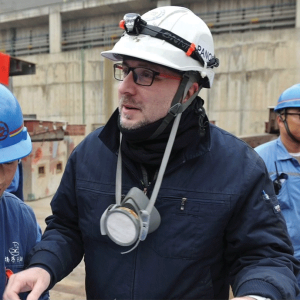
When class surveyor Panagiotis Katsinellos began a routine document trawl on a chemical tanker detained in Heraklion, Crete, the situation turned into a full-scale emergency – and an excellent display of teamwork.
Katsinellos, a surveyor for a leading classification society and a fellow at both RINA and IMarEST, had been dispatched to the vessel, which for the purposes of this story we will call the MV Crete, after port state control (PSC) had detained the vessel, requiring the crew to update critical documentation.
Shortly after his arrival onboard MV Crete, a fire in the engine room set off alarms, and changed the whole nature of the visit, according to Katsinellos, with the requirements suddenly very different for both the crew and the maritime surveyor as they moved quickly to deal with the blaze.
“A high-pressure flexible pipe on the air compressor suffered a mechanical failure, resulting in a high-pressure oil leak. The atomised oil ignited upon contact with a hot surface, creating an immediate fire hazard,” says Katsinellos.
 |
|---|
Emergency measures
A visit that started out as preparing, reviewing and approving critical documentation and a comprehensive evidence package was now a full-blown emergency. The fire presented an acute risk to the vessel as the air compressor was situated directly adjacent to a fuel tank.
“The primary threat was the rapid conduction of heat to the fuel storage,” says Katsinellos, “which could have led to a secondary, uncontained explosion and a total loss of the machinery space.”
However, the crew, including the senior officers, reacted with speed and discipline. They used portable fire extinguishers to cool the fire-affected area. “Their decisive action contained the fire before boundary cooling became impossible,” says Katsinellos.
The master had immediately contacted PSC and the Hellenic Coast Guard making sure that they were fully briefed and that firefighting tugs remained on standby.
Katsinellos, meanwhile, provided a clear line of communication between the crew and PSC, thereby helping to speed up the crew and shoreside reaction times.
Katsinellos supplied detailed technical information to PSC and the coastguard so that, should they need to intervene, they would have a comprehensive view of the layout of the vessel’s critical engine room.
Following the successful conclusion of the emergency, the surveyor was able to provide a damage survey, verifying that the vessel’s safety systems were operational, and allowing PSC to remain confident in the safety and security of the vessel.
This incident highlights that while high-pressure pipe failures are a known technical risk, the outcome is dictated by the seafarers’ reaction. The combination of a rapid crew response, transparent communication by the master, and the technical seniority of the class surveyor turned a potential disaster into a managed incident, says Katsinellos.
An opportunity to learn
Serendipity played a part in this event with the emergency offering Katsinellos a live lesson on the paper gap; the difference between perfect certification and a physical response.
He says: “Being onboard during a fire provided me with a rare front-row seat to the gap between theoretical safety and real-world chaos. From a surveyor’s perspective, this experience transformed a understanding of shipboard safety from a compliance check into a survival reality.”
Stress testing fire drills
In Katsinellos’ view the industry can learn from such experiences. He adds that it is critical for fire drills to move beyond “muscle memory” and that they should be stress tested.
“A crew’s response is rarely perfect; it is messy,” he notes, and that means that industry training must focus on the human element, “training crews to communicate clearly under the deafening noise of alarms and the disorientation of smoke”.
Moreover, in an emergency, PSC’s role is transformed from regulatory enforcement to risk management, while class plays a key role in establishing the necessary reaction to an emergency, given that it has in-depth technical knowledge of the ship. That requires class and PSC to work together effectively, and for that there must be pre-established trust.
 |
|---|
“The industry should encourage more joint walkthroughs to build rapport before a crisis hits. Someone in a technical liaison role is critical to bridge the gap between shoreside tactics and maritime reality,” the surveyor says.
Each incident is a chance for the industry to analyse and learn, and this, comparatively minor, incident offers some rich rewards, particularly where the subject of collaboration is concerned, and the value of experienced, knowledgeable crew.
Invaluable experience
The presence of an experienced surveyor provided PSC with the technical layouts of the ship, including fire zones, fuel tank locations and structural boundaries. This helped PSC and the firefighting tug decide where to focus their work should cooling efforts to prevent structural failure become necessary.
In fact, in this case the crew’s rapid response meant that boundary cooling was unnecessary.
That response was aided by Katsinellos as the ‘catalytic link’. “I translated technical class requirements into actionable status updates for the commander, ensuring the authorities knew exactly which safety systems were compromised in real time.”
The instant collaboration was so effective that commander Stavros Papaderakis wrote to Katsinellos regarding the MV Crete incident: “On behalf of the main PSC inspection office of Heraklion, Crete, I would like to extend our sincere gratitude for your exceptional support and professionalism.”
A pivotal role
Notably, the commander emphasised the importance of the ‘catalytic’ link to the success of the operation.
“Your personal skills and unwavering commitment to monitoring the case played a pivotal role in achieving an accurate and effective resolution,” he said.
“Your presence during the onboard fire incident was truly catalytic. By standing in a hazardous environment and acting as a liaison between the authorities and the ship’s parties, you demonstrated remarkable courage and composure under pressure. Your actions ensured clear communication and coordination at a critical moment.”
This article appeared in Emergency response, TNA May/June 2026.
| Article Tags | |
| Article Tags | Safety |
| General | |
| Preview Text | When class surveyor Panagiotis Katsinellos began a routine document trawl on a chemical tanker detained in Heraklion, Crete, the situation turned into a full-scale emergency – and an excellent display of teamwork.
Katsinellos, a surveyor for a leading classification society and a fellow at both RINA and IMarEST, had been dispatched to the vessel, which for the purposes of this story we will call the MV Crete, after port state control (PSC) had detained the vessel, requiring the crew to update critical documentation.
Shortly after his arrival onboard MV Crete, a fire in the engine room set off alarms, and changed the whole nature of the visit, |
| Naval Architect Edition | |
| Naval Architect Edition | 2026 |