

The wind is with us
There is a temptation, amid the complexity of global shipping regulation and the slow grind of intergovernmental negotiation, to conclude that the maritime sector’s decarbonisation agenda has stalled. That temptation should be firmly resisted. The wind has not gone out of the sails of maritime decarbonisation, and those who work in wind propulsion are among the clearest proof of it.
That was the central message I brought to the Wind Propulsion Conference, hosted jointly by the International Windship Association and the Royal Institution of Naval Architects in February. Speaking to an audience of naval architects, operators and technology developers, people who have committed careers and capital to the practical deployment of wind-assisted propulsion, I wanted to make one point above all others: progress continues, and we must maintain our course.
The IMO’s World Maritime Day theme for 2026 and 2027, ‘From Policy to Practice: Powering Maritime Excellence’, captures precisely the challenge and the opportunity. It is not enough to have agreed ambitious targets. The real work lies in turning collective regulatory decisions into real-world results that deliver tangible benefits for the sector and for the planet. No single organisation can do that alone. It requires administrations, classification societies, naval architects, shipowners, operators and individual mariners all pulling in the same direction.
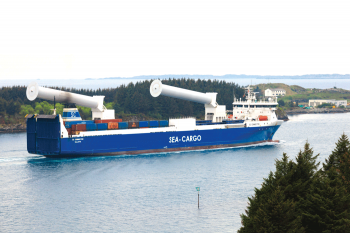
Wind propulsion sits squarely within that ‘policy to practice’ agenda. It is a mature, cost-effective solution to reducing greenhouse gas emissions from international shipping and, crucially, it is available today. Not in 10 years’ time. Not in five years. Now.
The regulatory framework that underpins this is already well established. For more than a decade, IMO has developed and strengthened a suite of energy efficiency standards – the Energy Efficiency Design Index, the Energy Efficiency Existing Ship Index, the Carbon Intensity Indicator, and the Ship Energy Efficiency Management Plan – that have delivered concrete results.
Taken together, these measures have reduced the carbon intensity of international shipping by more than 38%, compared with 2008 levels. Ships today emit roughly 38% less CO₂ for the same transport work than they did at the start of this century. That is a significant achievement, and one that is too often overlooked in debate dominated by what remains to be done.
Market data reinforces the direction of travel. According to recent figures from Clarksons Research, nearly half the global fleet, 47% of world tonnage, is now fitted with at least one energy-saving technology. The trend towards further uptake is clear and accelerating. Wind propulsion technologies are part of that picture, and the industry’s investment in them continues to grow.
I must be clear on one point: IMO is technology neutral. The Secretariat does not promote or discourage any particular solution. There is no silver bullet and no one-size-fits-all pathway. Multiple routes to decarbonisation will coexist, and that is as it should be. What the regulatory framework must do, and what it is actively being designed to do, is ensure that all fuels and technologies are treated fairly and consistently, based on their well-to-wake emissions.
This is where wind propulsion faces both an opportunity and a challenge. In January 2026, the IMO’s Sub-Committee on Ship Design and Construction developed a draft safety workplan for greenhouse gas-reducing technologies, explicitly including wind propulsion. That workplan will go to the Maritime Safety Committee for approval in May 2026. It marks an important step: the formal integration of wind technologies into IMO’s safety framework, providing the regulatory clarity that owners and operators need to invest with confidence.
 |
|---|
On the regulatory horizon, the picture is more complex. Discussions on the next set of measures under the IMO Net-Zero Framework were adjourned last October. This was not a retreat from ambition. The commitment among Member States and industry to global regulation remains strong. But it created additional time, and that time is being used. MEPC 84, scheduled for April 2026, will continue discussions on the way forward, including the greenhouse gas fuel intensity (GFI) reduction requirements that will form the core of the next regulatory package.
Within that work, the development of GFI Calculation Guidelines is giving due consideration to the inclusion and fair treatment of wind propulsion, a recognition that its contribution to fuel saving must be properly accounted for if owners are to have the certainty they need. Contributions from the International Windship Association have been genuinely valuable here, helping to shape how the GFI will function in practice. That kind of direct industry engagement with the regulatory process is exactly what is needed.
Yet there is a shadow over the progress. Despite the improvement in carbon intensity, total fuel consumption by ships has remained broadly stable in recent years. Absolute greenhouse gas emissions have not yet declined significantly. Efficiency gains are being absorbed by growth in trade and fleet size. This is why the next regulatory package matters so much, and why inaction is not an option.
For naval architects and marine engineers, the message is one of both validation and urgency. The technologies you design, specify and integrate are not peripheral to the decarbonisation agenda, they are central to it. Wind propulsion, in particular, offers something rare in the energy transition: a proven, scalable, fuel-free reduction in emissions that can be retrofitted to existing vessels and designed into new ones. The regulatory framework is catching up. The market is moving. The only question is pace.
There may be diplomatic storms to navigate and regulatory mechanisms to refine, but the direction is set. We must maintain our course. The wind is with us.
This article appeared in Features, TNA Mar/Apr 2026
| Naval Architect Edition | |
| Naval Architect Edition | |
| General | |
| Article Preview Text | There is a temptation, amid the complexity of global shipping regulation and the slow grind of intergovernmental negotiation, to conclude that the maritime sector’s decarbonisation agenda has stalled. That temptation should be firmly resisted. The wind has not gone out of the sails of maritime decarbonisation, and those who work in wind propulsion are among the clearest proof of it.
That was the central message I brought to the Wind Propulsion Conference, hosted jointly by the International Windship Association and the Royal Institution of Naval Architects in February. Speaking to an audience of |
| Article Tags | |
| Article Tags | Wind propulsion |