

News Article
Sallaum Lines moves in on net-zero with newbuild PCTC Ocean Breeze
A series of six LNG-enabled pure car and truck carriers are set to play a crucial role in Sallaum Lines’ efforts to decarbonise its transportation operations
29th Jan 2026
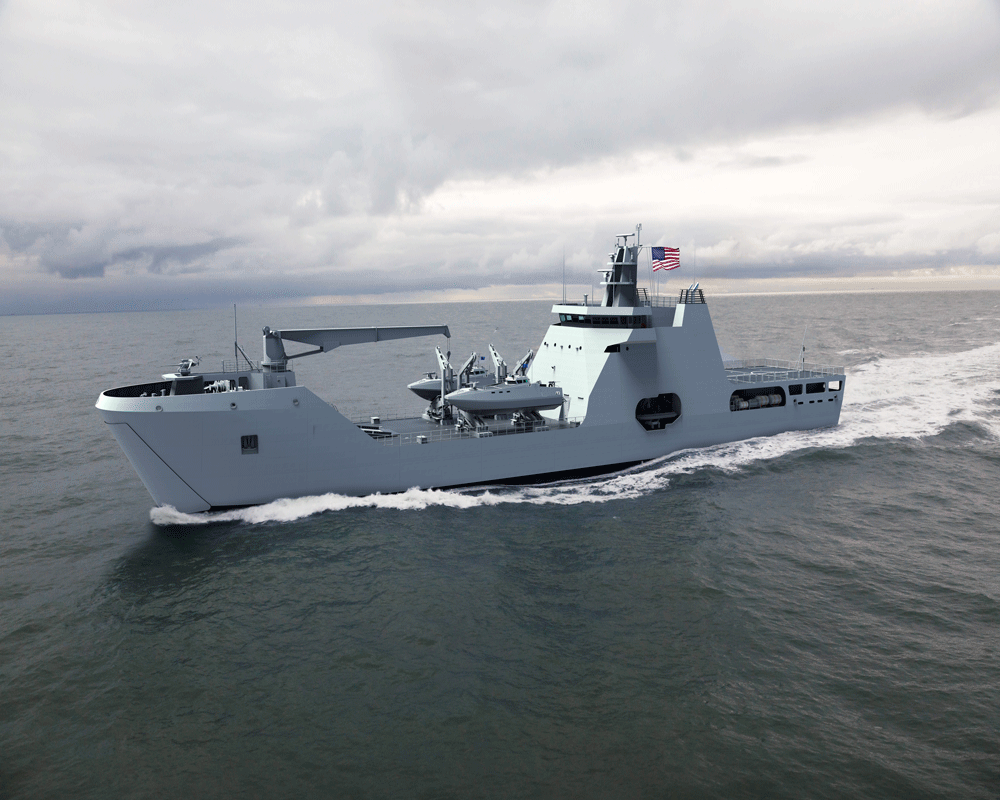
In addition to the LSM programme, Damen's LST100 has been selected by the Australian Defence Force (source: Damen)
After decades of building purpose-designed and built ships that sometimes failed to meet requirements and often experienced significant cost overruns, the US Navy is pioneering a new approach to shipbuilding with its Landing Ship Medium (LSM) programme, an approach it hopes will enable it to quickly bring large numbers of newbuilds into service on time and on budget.
US Navy secretary John Phelan said the new approach adopted for the LSM procurement would be based on a “non-developmental design” that will not require significant adaptation.
The design selected by the Naval Sea Systems Command (NAVSEA), Damen Shipyards Group’s LST100, has already been adopted by the Royal Australian Navy, for whom eight examples will be built in Australian yards, and will, said the Naval Sea Systems Command, “enable rapid fielding of this urgently needed capability… and shorten acquisition timelines”.
The LST100 was selected after a ‘side-by-side’ analysis of existing designs that had the potential to meet the LSM requirement. NAVSEA’s analysis of the designs was informed by technical data packages, augmented by hands-on ship visits. Up to 35 LSMs will now be built at US yards that will compete with one another for contracts to build the landing ships.
Speaking at the time that selection of the Damen design was announced, chief of naval operations Admiral Daryl Caudle said: “A year ago, the US Navy cancelled the LSM request for proposals, when the conceptual design produced bids that were simply unaffordable. We applied common sense, went back to basics, and reassessed the programme.
“We identified existing, proven designs that meet the concept of operations requirements, and then scrutinised them for producibility.”
Secretary Phelan said with the LSM decision the US Navy is “fundamentally reshaping how the Navy builds and fields its fleet”, making what he called an “operationally driven and fiscally disciplined choice”. He said with the LSM the US Navy has – for the first time – adopted what he described as a “build to print approach” that drives down cost, schedule and technical risks.
Commandant of the Marine Corps General Eric Smith said: “For the Marine Corps, the LST100 will provide an organic littoral capability in the Indo Pacific and around the world. It will provide us with a critical, inter-theatre manoeuvre asset that is able to embark and transport marines, weapons, supplies and equipment, without requiring access to a pier.”
The Secretary of the Navy described the LST100 as a 4,000tonne design, with a range of more than 3,400nm “that gives us the right balance of affordability, capability and speed”. General Smith said the LST 100’s cargo capacity, helicopter capacity and crane “make it an excellent choice for the Marine Corps’ requirement of no less than 35 medium landing ships to support naval expeditionary forces.”
Admiral Caudle said the US Navy “is incorporating a disciplined set of class standard equipment, so that the ships will be maintainable, repairable and able to meet operational availability targets”.
In July 2025, Damen received a technical data package award from NAVSEA for the LST100, and that design has now been selected as the basis for the LSM, all of which will be constructed at American yards.
The Dutch company describes the LST100 as 100.68m in length with a beam of 16m and a draught of 3.58m. Able to support a wide range of operations, with the ability to transport personnel, vehicles, equipment and cargo, the design has accommodation for 282 Marine Corps personnel.
The vessel can transit at speeds of up to 14knots, with an endurance speed of 10knots, and a range of up to 7,530nm. The LST100 is also a highly flexible unit, with a modular design that enables straightforward adaptation and upgrade without compromising the benefits of standardisation.
News Article
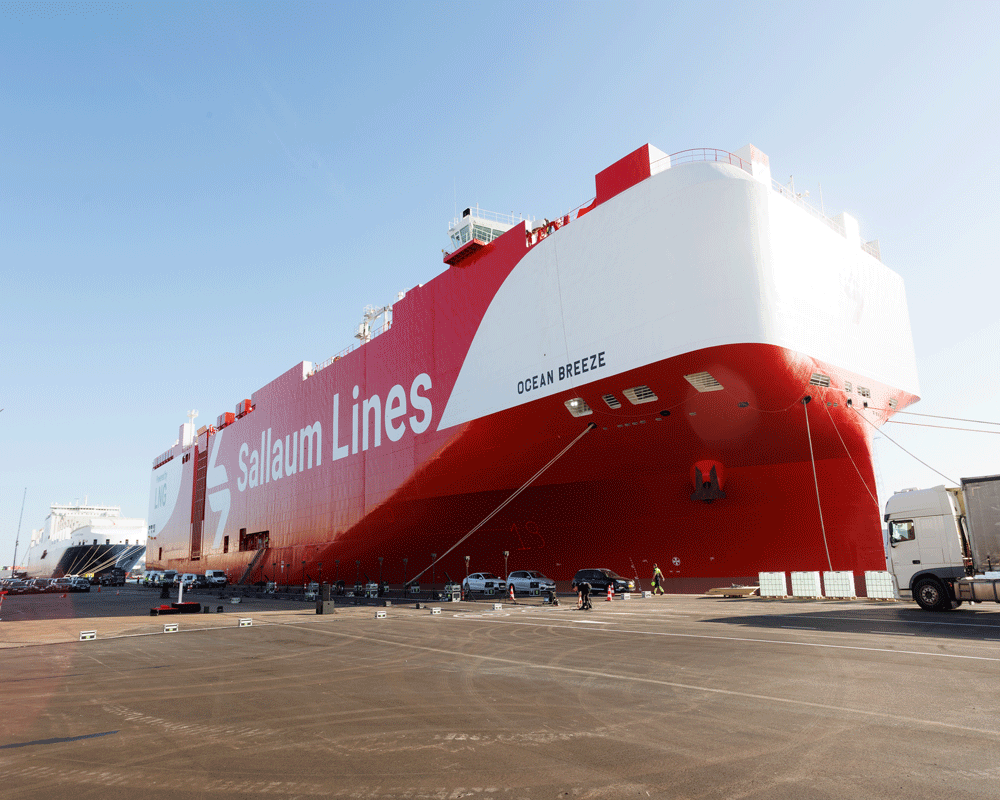
A series of six LNG-enabled pure car and truck carriers are set to play a crucial role in Sallaum Lines’ efforts to decarbonise its transportation operations
News Article
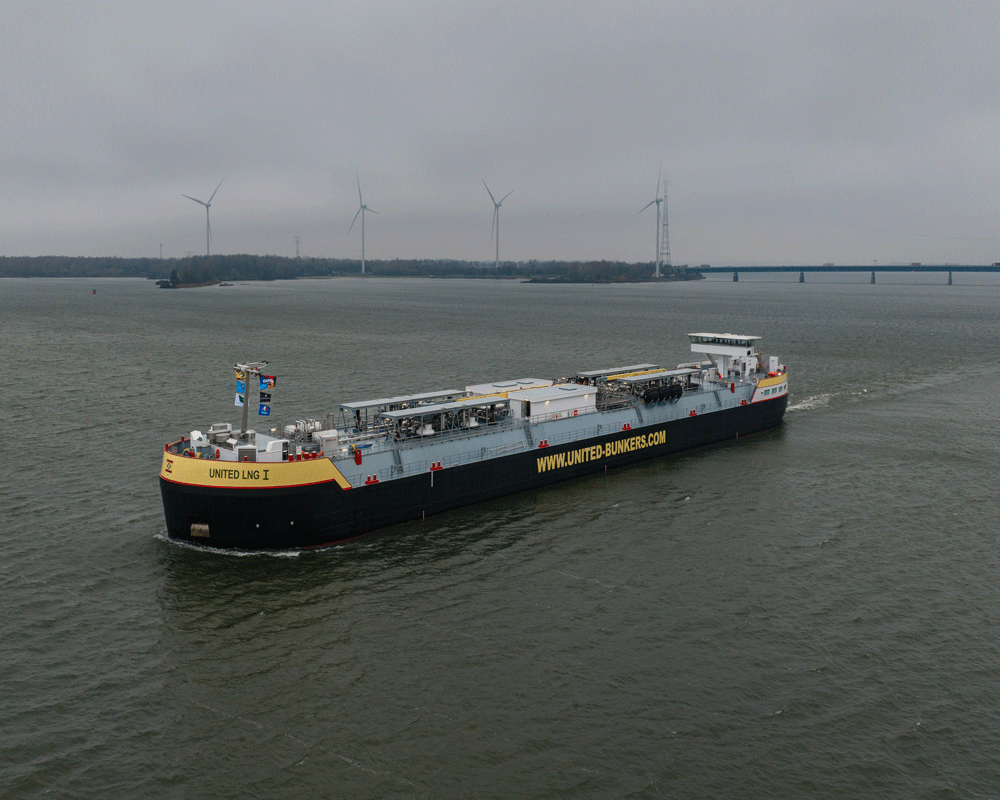
Outfitted in the Netherlands, with a hull built in China, Somtrans’ new bunker barge, United LNG I, will help the company to extend its LNG bunkering capacity across various Belgian and Dutch seaports
News Article
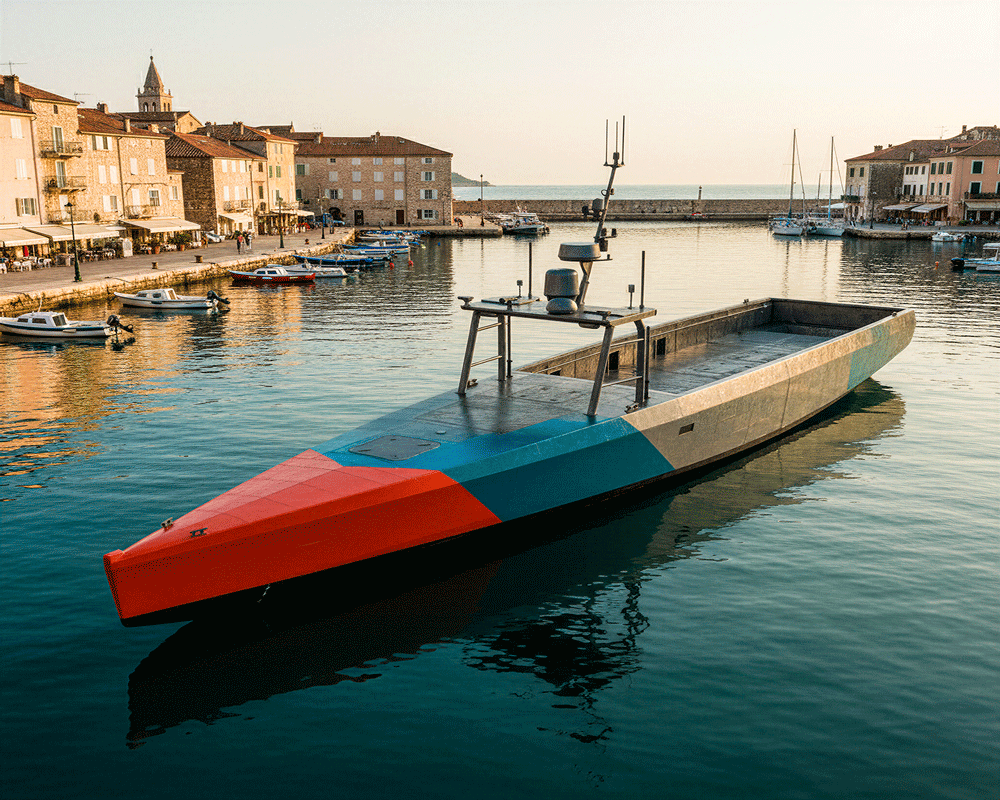
The forthcoming Oceanus17 USV from UK-based ZeroUSV will incorporate most of the components and design features that characterised its earlier, smaller, Oceanus12 model, speeding up the design, engineering and build phases
