We advance your career through shared expertise and innovation. You influence the art and science of naval architecture. Join naval architects, maritime engineers and associated professionals in 140 countries.
Join RINA
Take 10 seconds to nominate a colleague, mentee or friend for our Forbes-style list. Must be under the age of 40 in 2026. Open to all maritime professions associated with naval architecture. See eligibility criteria. [hyperlinked].
"Ours is the generation facing challenges like decarbonization and autonomy. We don't have the solutions yet, but one thing is clear - collaboration will be key. At RINA, our mission is to advance top talent and create liquid networks between all maritime professions [hyperlink to 16 professions graphics] so interdisciplinary innovation can flourish."
Catriona Savage FREng, RINA President and BMT Programme Director
Join RINA
Renowned for the technical excellence of our events, publications and learning, we offer career pathways for naval architects and 16 associated professions [hyperlink to 16 professions].
We cover everything from super yachts and green propulsion to warship resilience. Network 1-2-1 with top talent at our events or influence the maritime industry by joining one of our comittees.
We promote the interdisciplinary conversation at the heart of maritime innovation. Speak at our events, publish in our journals or simply join the discussion forums on our website.
?? HOW?? FILL IN EMAIL HERE AND SIGN UP WITH 1 CLICK
From flagship international conferences to specialist technical seminars, RINA events bring together experts, innovators, and professionals to share knowledge and shape the future of naval architecture.
Explore Upcoming Events
Lorem ipsum dolor sit amet, consectetur adipiscing elit, sed do eiusmod tempor incididunt ut labore et dolore magna aliqua. Ut enim ad minim veniam, quis nostrud exercitation ullamco laboris nisi ut aliquip ex ea commodo consequat. Duis aute irure dolor in reprehenderit in voluptate velit esse cillum dolore eu fugiat nulla pariatur. Excepteur sint occaecat cupidatat non proident, sunt in culpa qui officia deserunt mollit anim id est laborum.
Lorem ipsum dolor sit amet, consectetur adipiscing elit, sed do eiusmod tempor incididunt ut labore et dolore magna aliqua.
CLICK HERE
Lorem ipsum dolor sit amet, consectetur adipiscing elit, sed do eiusmod tempor incididunt ut labore et dolore magna aliqua.
CLICK HERE


Lorem ipsum dolor sit amet, consectetur adipiscing elit, sed do eiusmod tempor incididunt ut labore et dolore magna aliqua. Ut enim ad minim veniam, quis nostrud exercitation ullamco laboris nisi ut aliquip ex ea commodo consequat. Duis aute irure dolor in reprehenderit in voluptate velit esse cillum dolore eu fugiat nulla pariatur. Excepteur sint occaecat cupidatat non proident, sunt in culpa qui officia deserunt mollit anim id est laborum.
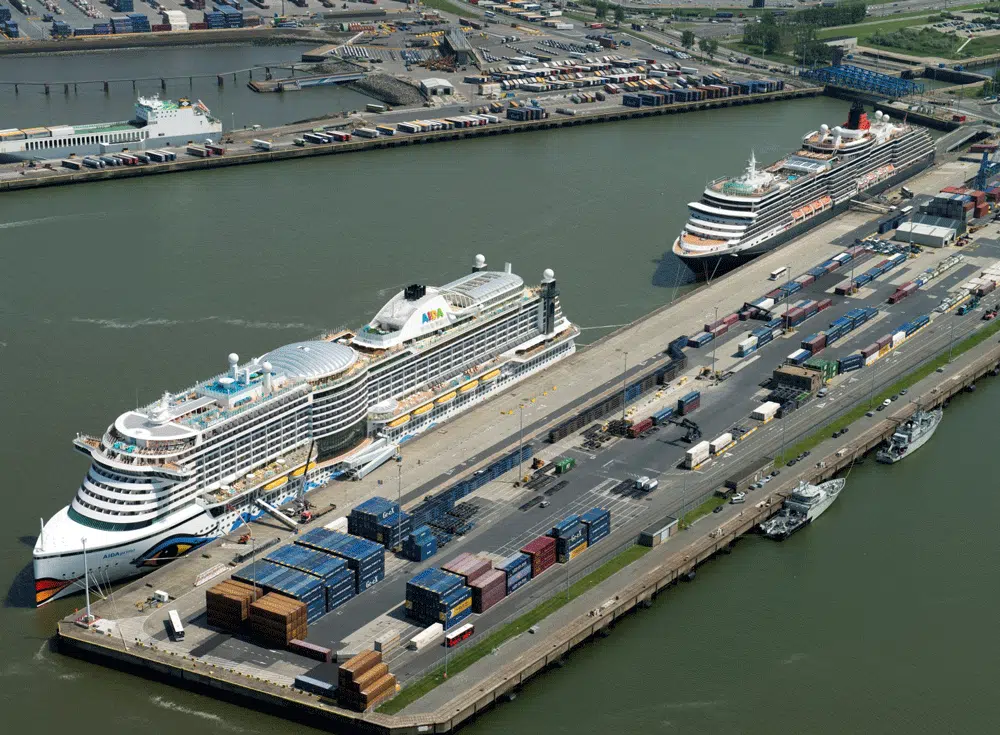
Italy’s Fincantieri, one of Europe’s premier cruise shipbuilders, has achieved considerable success of late in this sector. Recently, its Monfalcone shipyard delivered the 160,000gt Mein Schiff Relax, the first of two environmentally friendly InTUItion-class cruise ships with dual-fuel (LNG and MGO) capability that Fincantieri is building for this shipowner. The sister ship will set sail in mid-2026.
The new design features: catalytic converters meeting Euro 6 emissions standards; a generative turbine, using the residual heat from the diesel generators; and an electrical shore-power connection. The vessel is also equipped with an innovative waste treatment system capable of transforming organic materials into recyclable components through a thermal process.
Fincantieri also confirms that a letter of intent signed with Norwegian Cruise Line (NCL) last year has been converted into a firm order for four new cruise ships, each approximately 226,000gt. These vessels, the largest ever built for NCL, will also be constructed at Fincantieri’s Monfalcone yard, with deliveries scheduled for 2030, 2032, 2034 and 2036. This order strengthens the long-standing partnership between Fincantieri and NCL, with Norwegian Aqua, the first unit in the Prima Plus class, set for delivery in the next few months. Additionally, three other vessels are currently in various stages of design and construction.
Alongside its thriving cruise newbuilding activities, Fincantieri has been busy in recent months with several significant vessel refit and upgrade projects. In September 2024, the company completed an important drydock project, including the overhaul of the davits and thruster, and the refurbishment of the laundry, on the Princess Cruises Island Princess. Then, from October to November, Fincantieri undertook a complex engine room overhaul aboard Caribbean Princess in Palermo. Additionally, it carried out mechanical work on the propulsion system, and significant engine maintenance for Costa Deliziosa in its Trieste yard. Then, towards the end of 2024, Fincantieri completed essential maintenance, and five-year class checks, for Virgin Voyages’ Scarlet Lady in Palermo.
Many of these cruise refit and repair projects have had a clear environmental focus. A notable example involved the installation of the advanced wastewater system for Silversea Cruises’ Silver Whisper in Trieste. Furthermore, on many projects, Fincantieri applied silicone paint to reduce friction, save fuel and make the vessels’ cruises more energy-efficient. Fincantieri also has a contract to implement high-voltage shore connection (HVSC) systems on four cruise ships to enable them to shut down their engines during port stays, and is carrying out engineering studies to assess the viability of retrofitting existing cruise vessels to run on methanol or HVO.
Now, Fincantieri seems set to enjoy another busy year for its cruise refit activities. In March and April 2025, it plans back-to-back drydockings of Majestic Princess and Emerald Princess, including five-year class special surveys, hull blasting and silicone painting, thruster and stabiliser overhauls, scrubber work, steel repairs and the installation of new air lubrication and membrane bioreactor systems. The work will also include Americans with Disabilities Act (ADA)-associated upgrades for cabins and public spaces. All of these work packages will be undertaken at Fincantieri’s Palermo shipyard.
In Q3 2025, MSC Lirica and Viking Sea will visit Fincantieri yards for special class survey renewals and planned maintenance activities, while, in November, Silver Muse will undergo a series of conversions and modifications, together with scheduled maintenance works, in Palermo.
Fincantieri is currently investing to enhance its logistics capabilities for cruise projects in Trieste and Palermo, with the aim of improving warehousing, materials handling, maintenance scheduling and transportation for both inbound and outbound logistics. These investments are expected to lead to greater operational efficiency, minimise waste and ensure timely deliveries for clients and suppliers. Additionally, the company is strengthening its Miami subsidiary, Fincantieri Services USA, to provide cruise operators with quick responses to their specific requirements, including ship inspections and onboard assistance for repair and refurbishment activities in North America.
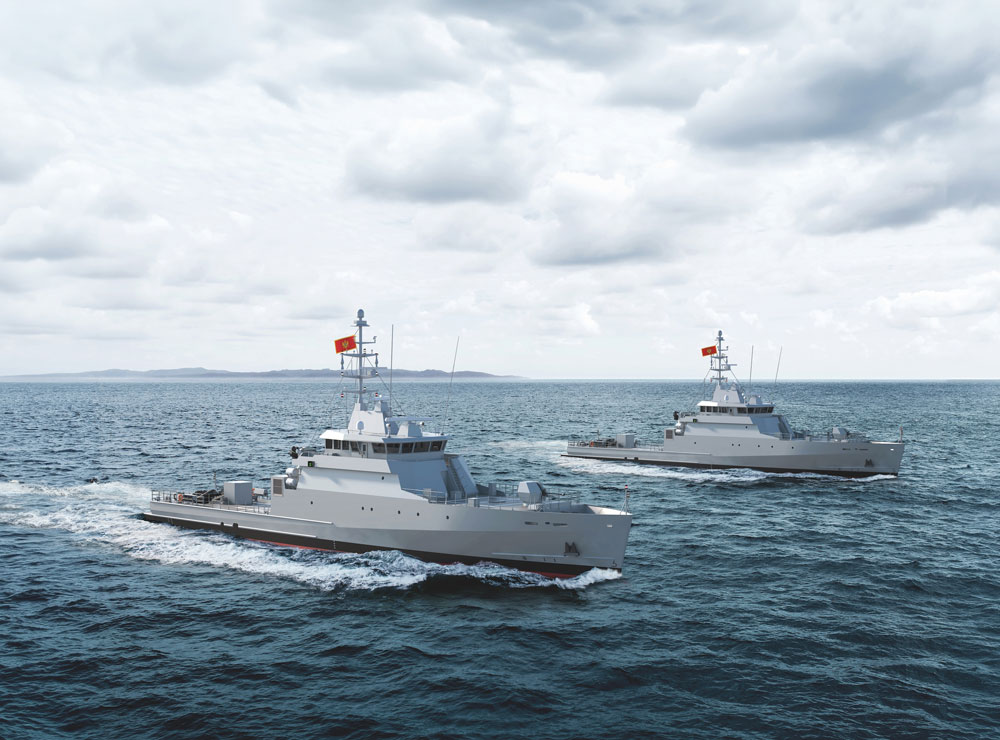
Damen Shipyards Group has unveiled a new range of naval support vessels. The Logistics Support Ship (LSS) design consists of two vessel types, the LSS 9000 and LSS 11000, which are 127m and 140m in length respectively.
“The vessels will be equipped with NATO-standard replenishment-at-sea technology, and will have roll-on/roll-off capability and substantial cargo transportation capacity,” says Damen. They are designed to facilitate the efficient transfer and transport of fuel, munitions, provisions, personnel and other essential supplies, enabling fleets to remain operational during extended deployments.
Damen adds: “With a modular design, the LSS can be easily and rapidly configured and upgraded for special operational requirements, such as disaster relief, humanitarian assistance and training exercises.
“A key feature of the LSS is the ability to operate in diverse maritime environments, from the open ocean to littoral waters. This versatility arises from an advanced design and engineering process and the combination of both military and commercial technology, a combination that helps to reduce OPEX and CAPEX.”
In addition to operational efficiency, and in line with the ambitions of many navies, the LSS design has a focus on sustainability, with the vessels fitted with propulsions systems that will reduce fuel consumption and emissions.
Damen commercial manager for defence and security Piet van Rooij says: “We have developed the LSS based on discussions with our naval clients around the world. As such, we are confident they represent an appropriate response to the operational challenges they are facing, now and in the future. The LSS offers enhanced capabilities, efficiency and sustainability at a very competitive price.”
A report jointly issued by tech firm CORE POWER, marine insurer NorthStandard and class society Lloyd’s Register (LR) paints an optimistic picture for the safe development and installation of small nuclear reactors aboard commercial ships and floating nuclear power plants (FNPPs) in the UK – provided the government gets behind the effort.
The paper, entitled Advanced Maritime Nuclear: A Unique Opportunity for the UK, argues that the Department for Transport must incorporate nuclear-fuelled vessels and FNPPs into an updated version of its Clean Maritime Plan, to meet IMO greenhouse gas (GHG) emissions reduction targets and to benefit from a £2.5 trillion economic opportunity, potentially revitalising the UK shipbuilding segment.
Over the past five years, attitudes toward using nuclear energy as ship’s fuel have shifted significantly. Since the 1950s, nuclear reactors have powered multiple warships and submarines. However, the concept of installing small reactors aboard commercial vessels, such as ferries, cruise ships, OSVs or superyachts, was generally discounted, largely because of nuclear power’s ‘bad’ reputation.
However, rising energy costs, plus growing doubts about the accessibility of alternative fuels such as hydrogen, HVO, methanol and ammonia, have sparked new interest in nuclear energy for ships. A small but growing band of shipping professionals now view the deployment of small modular reactors aboard commercial vessels as one of the most likely means of meeting IMO’s plan to realise net-zero greenhouse gas emissions from international shipping by 2050.
Additionally, at COP 28, hosted in Dubai in 2023, the UK pledged to triple nuclear energy generation with the launch of its Civil Nuclear Roadmap to 2050 – a publication that included nuclear-fuelled ships on the agenda. In December 2022, the UK’s Merchant Shipping (Nuclear Ships) Regulations came into effect, accompanied by Marine Guidance Note on nuclear ships MGN 679 (M), which addresses areas such as safety assessments, design and construction, radiation safety and reactor installation suitability.
In the foreword to the recent joint paper, British hereditary peer and shipbroker Lord Mountevans writes: “The UK has the skills, expertise and history of innovation to lead the development of nuclear-powered shipping. By leveraging our decades of experience with small reactors for the Royal Navy, we can decarbonise maritime transport, create jobs and strengthen Britain’s position as a clean energy world power. This is a unique opportunity for the UK.”
The paper also proposes that nuclear-powered ships could feed energy back into land-based grids, providing electricity to homes and ports, as well as to areas affected by power blackouts. “FNPPs could also be used to alleviate the issues surrounding shore power and expensive connections to the UK national grid,” the authors state.
Outstanding insurance and regulatory gaps must also be addressed, though, the paper notes. Paul Jennings, MD of NorthStandard, comments: “The ability to commercially insure nuclear-propelled ships will be vital to the success of bringing nuclear to maritime. It is important that governments understand the need for a civil marine nuclear liability convention within the framework of IMO and work towards creating an appropriate liability regime.”
Jennings is echoed by Andy McKeran, LR’s chief commercial officer, who says: “Global regulatory alignment is crucial. Existing frameworks must be updated to reflect modern reactor designs and operational needs. The UK has the expertise to lead these efforts at IMO and with the International Atomic Energy Agency [IAEA], setting the foundation for safe, insurable and scalable nuclear-powered shipping.”
Meanwhile, CORE POWER CEO Mikal Bøe remarks: “Maritime nuclear is the catalyst that can reverse the trajectory of the British shipping sector, creating unique competition to Chinese shipbuilding and ocean transport.” He warns: “Over time, the cost of inaction will far outweigh the cost of being the champion in this rapidly emerging market.”
The March issue of The Naval Architect features an interview with pro-nuclear advocate Dr Jonathan Stephens, manager, core design at BWX Technologies, assessing the current and future viability of small reactor installations aboard various vessel types and FNPPs
The UK shipbuilding sector needs to address significant skills shortages in AI, robotics and automation if it is to thrive in the long term, a report from National Manufacturing Institute Scotland (NMIS) claims.
The report outlines the need to further adopt these three emerging technologies to enhance operations such as welding, joining and inspections in confined or hazardous spaces.
“The roles of some welders will evolve to combine traditional skills with expertise in new technologies and materials, as advanced technologies such as robotics and additive manufacturing are integrated into operations,” NMIS writes.
Greg Cranstoun, industry and skills engagement lead at NMIS, comments: “Scotland has a deep-rooted history of shipbuilding, particularly on the Clyde, but the challenges of a skills shortage apply to the whole of the UK.”
NMIS notes that, in 2022, shipbuilding contributed £3.1 billion to the UK economy, supporting more than 44,600 jobs. That year also marked the introduction of the National Shipbuilding Strategy, which has called for a 50% reduction in the UK sector’s skills shortage by 2030.
“We need to ensure we have the right people with the right skills lined up to meet demand,” says Cranstoun. “Technology is only going to become more prevalent as the adoption of AI and robotics increases in all sectors, and there are significant gains that could come from using advanced equipment to improve both health and safety and productivity in shipyards.
“Manufacturers need to think ahead to the types of roles this will create, and how to equip the current workforce and future employees with the skills to take this forward.”
As for how to get there, the report calls for a “collaborative approach between industry and training providers, to design programmes that prepare workers for these hybrid roles”. This approach would include the updating (and tailoring) of existing training courses for relevance, and the development of new training courses. Stakeholders should also drive new educational standards and targeted curricula while implementing short courses and continuous professional development (CPD) programmes to plug current knowledge and skills gaps.
The report also recommends the creation of new job descriptions, including (but not limited to): quality control inspector in shipbuilding; robotics integration engineer; welding engineer; industrial equipment maintenance technician; and robotics systems design and implementation engineer, for example. These newly defined roles should help manufacturers to evaluate gaps between existing roles and future requirements, the report opines.
NMIS, which is operated by the University of Strathclyde, collaborated with Innovate UK’s Workforce Foresighting Hub to produce the report, drawing on the latter’s advanced AI tools and workshop and survey findings to capture and analyse the data. NMIS adds that these collated insights could also be adopted and acted on by other sectors, including offshore wind and oil and gas.
Meanwhile, Mantas Lukauskas, self-styled ‘AI evangelist’ at neoxis.ai, says that the current “AI gold rush era” has accelerated developments in AI and machine learning to the extent that some companies may struggle to keep up with the pace of change.
“The more models appear, the harder it becomes to keep track of them all, let alone experiment and deploy them effectively,” Lukauskas says. “However, the multi-model ambitions quickly become technically and logistically complex.” He warns that the AI landscape “will only get more crowded” in the run-up to 2030.
Lukaskaus recommends weighing up considerations such as complexity, security and compliance, performance variance and cost before committing to new AI or machine-learning tech. The best solution may be to rely on a centralised platform that can speak to multiple providers via a single interface, he continues, adding: “The real competitive advantage is to stay nimble.”
Ulstein Design & Solutions has been contracted to provide the design for a heavy-lift ship for Japanese contractor Penta-Ocean Construction (POC). The vessel will specialise in offshore wind foundation installation work within the country’s waters, and will comprise a customised version of Ulstein’s HX118 design, which features a length of 215m, a 56m beam and a maximum draught of between 7.5-10m.
The customised design includes a tub-mounted, revolving, 5,000tonne-capacity Huisman main crane, permitting heavy-duty monopile installations. The crane comes with a main hoist and a universal quick connector, and has been designed with a compact tail swing, to optimise available deck space. Huisman will also supply the ship’s monopile-handling system, which features a motion-compensated pile gripper.
Ulstein has also incorporated its U-STERN concept into the vessel’s design. The U-STERN enables longitudinal storage of large components, such as monopiles, meaning these components can be stored along the length of the ship rather than across it, thereby maximising space and preventing overhanging.
When it’s time to install these components, the U-STERN enables them to be upended (lifted vertically) directly along the ship’s centreline. The U-STERN design also allows the ship to face directly into the waves during the installation process, reducing the impact of wave motion on the ship, to make the installation process smoother and safer – as well as to reduce fuel consumption by minimising the ship’s need to compensate for wave-induced movements.
Ulstein comments: “Combining the U-STERN with transverse and longitudinal skidding systems, offshore lifts for monopiles are eliminated as the main crane is only used to support the upending and lowering of the foundation.”
Both Ulstein and POC have been tweaking the ship’s basic design since summer 2024, including a round of extensive model tests. The heavy-lifter will be built by Singapore’s Seatrium Group, with completion scheduled for May 2028 and operations set to commence in the autumn of that year, Ulstein tells The Naval Architect.
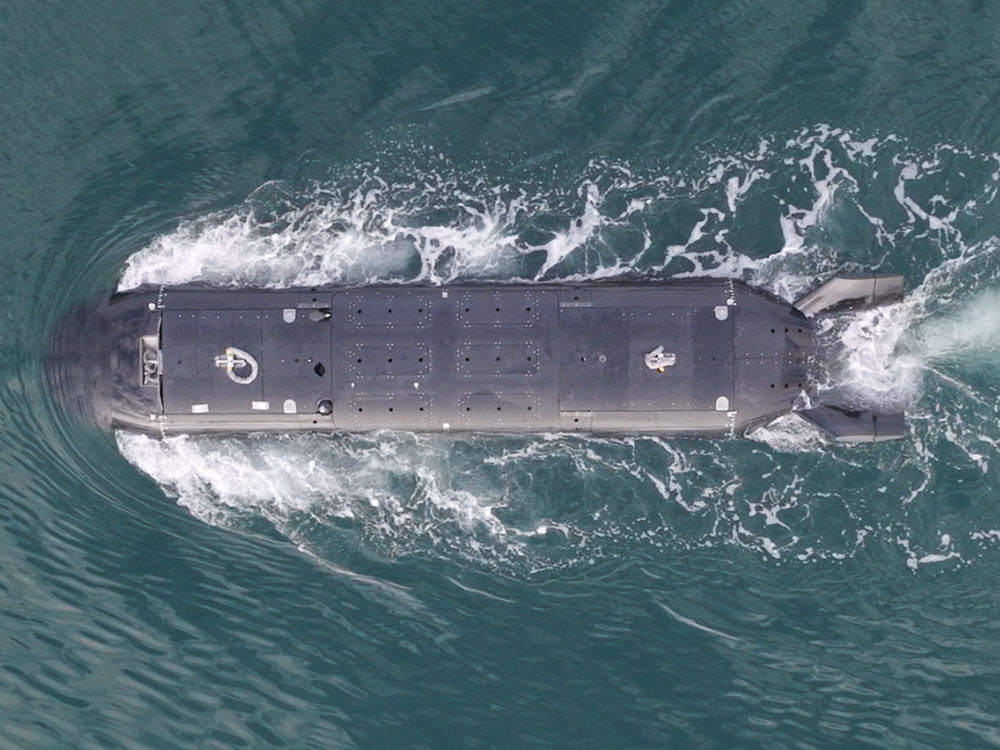
The Bundestag and the Federal Government have agreed to exercise an option to procure four more Type 212CD submarines for the German Navy. The contract for the new submarines, which are being acquired by the German Navy and Royal Norwegian Navy under a joint programme, is one of the largest secured by thyssenkrupp Marine Systems.
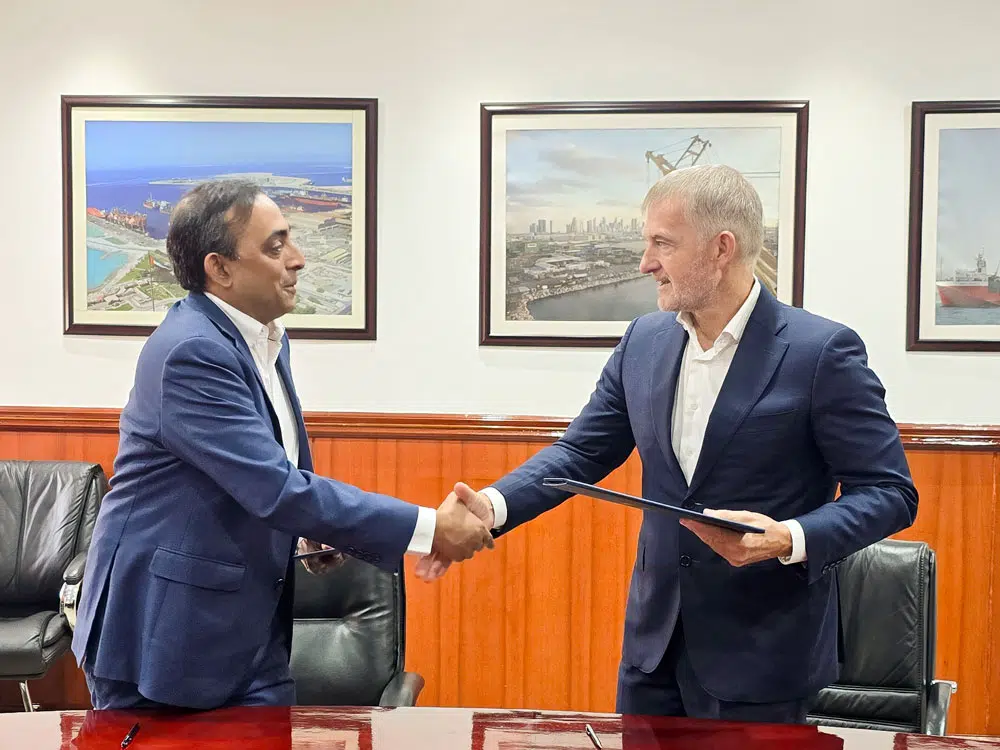
The deal was initialled by the president of the Bundeswehr Procurement Agency, Annette Lehnigk-Emden, and thyssenkrupp Marine Systems CEO Oliver Burkhard in late December 2024. Germany will now build six Type 212CDs. Norway has also recently signalled its intention to increase the number of submarines it builds under the joint programme from four to six.
Speaking as that deal was confirmed, Burkhard said: “A turning point in history is finally arriving in the maritime sector. We are delighted at the trust that the German government has once again placed in us with the additional order. We are making a decisive contribution to Germany’s response to changing times and strengthening our defence capabilities with this strategically important project between Germany and Norway.”
The Type 212CD submarines will be significantly more capable than the German Navy’s existing Type 212A boats, with enhanced situational awareness, superior networking with allied units and a reduced signature.
In advance of the construction of the submarines, thyssenkrupp Marine Systems has invested more than €250 million at the company’s yard in Kiel, including a new shipbuilding hall. The group has also acquired additional shipyard capacity at the former MV Werften site in Wismar, to be able to build submarines and surface vessels there at the same time.
“Our order books are well-filled and we are strongly positioned nationally and internationally,” said Burkhard, noting that now that the number of Type 212CD submarines on order has been increased, other countries could join the project in the near future. “Our strong position has now become even stronger,” he concluded.
A team-up between boatbuilder/USV manufacturer Tuco Marine and maritime survey tech company EIVA aims to establish an all-in-one autonomous package for subsea asset inspections, matching a Tuco-built ProZero 8m Naval Intelligence USV to EIVA’s ViperFish remotely operated towed vehicle (ROTV).
In practice, the USV would sail to an area of interest, towing and remotely launching the ViperFish. The ViperFish would be equipped with sensors and survey software, and would undertake high-resolution seabed imaging, with area coverage rates of 1.6km2/hr, while using magnetic signals to monitor subsea assets, such as power cables.
Jonas Pedersen, MD of Tuco Marine, comments: “By combining…our ProZero with EIVA’s ROTV, it’s possible to monitor the conditions of critical subsea infrastructure much more thoroughly and frequently than with conventional set-ups.”
Launched in 2023, the ViperFish measures 3,200mm x 1,300mm x 620mm and is rated for depths descending to 200m. The ROTV is designed for surveys at 2-10knots, and has a reported target positioning accuracy of 1m. EIVA suggests that, when integrated with an USV, the ViperFish can also be used for mine countermeasures, rapid environmental assessment, surveillance and salvage missions.
The commissioning this week of three frontline naval vessels by the Indian Navy marks a “significant milestone in India’s shipbuilding and design capabilities”, according to analytics firm GlobalData.
January 15 saw the entries of INS Surat (163m), the fourth and final unit of the Visakhapatnam class of stealth guided-missile destroyers; INS Nilgiri (149m), the lead ship of the Nilgiri class of stealth guided-missile frigates; and INS Vagsheer (67.5m), the sixth of six Kalvari-class diesel-electric submarines. The vessels were constructed by Mazagon Dock Shipbuilders Limited (MDL), Mumbai.
Rithik Rao, aerospace and defence analyst at GlobalData, writes: “Armed with advanced weaponry such as BrahMos and Barak 8 missiles, both INS Surat and INS Nilgiri provide the Indian Navy with enhanced anti-surface and anti-air warfare capabilities, excelling in both offensive and defensive roles.
“INS Vagsheer excels in a range of operations, including anti-surface and anti-submarine warfare, intelligence gathering and area surveillance. Together, these domestically built platforms demonstrate India’s growing competence in developing cutting-edge naval technologies, thereby strengthening its maritime security and reinforcing its strategic autonomy in defence production.”
Rao adds that India has felt the need to step up its naval defence capabilities due to “the increasing maritime presence” of the Chinese People’s Liberation Army Navy (PLA Navy) in the Indian Ocean Region. “[India] is trying to catch up with its Chinese counterparts in terms of quantity and technology advancements,” Rao says. GlobalData has forecast that India will spend just over US$35 billion on various domestically built naval vessels and subs in the run-up to 2029.
“Shipbuilders such as MDL stand to benefit significantly, leveraging the expertise gained from constructing complex naval platforms,” says Rao. “Such advancements will lay a strong foundation for future collaborations between major domestic defence contractors and many small and medium suppliers in upcoming next-generation submarine and naval vessel construction programmes, ensuring the Indian Navy remains well-equipped to meet evolving challenges in the upcoming decades.”
Speaking at the commissioning ceremony, Indian prime minister Narender Modi commented: “I am happy that our Navy has expanded the ‘Make In India’ campaign to a great extent. In the last 10 years, 33 ships and seven submarines have been inducted into the Indian Navy. Out of these 40 naval vessels, 39 have been built in Indian shipyards.
“Along with increasing the strength of the Indian armed forces, ‘Make In India’ is also opening new doors of economic progress. The shipbuilding ecosystem is an example. Experts also say that the more investment is made in shipbuilding, the more positive impact it has on the economy.”
The International Association of Classification Societies (IACS) has published a new recommendation, titled Rec. 182, to provide a “comprehensive framework” to support the adoption of onshore power supply (OPS) systems.
Rec. 182 was drawn up to provide “detailed guidance for ship designers, builders, operators and owners on integrating OPS systems into both newbuilds and retrofits, while addressing the technical and operational challenges associated with its implementation”, IACS states. The recommendation is intended to complement IMO’s MSC.1/Circ.1675 – Interim Guidelines on the Safe Operation of OPS Service in Port for Ships Engaged on International Voyages, IACS adds.
Subsequently, Rec. 182 outlines aspects such as: ship requirements for OPS; ship-to-shore connection protocols, with an emphasis on safe connection and disconnection; and testing procedures, for both the first connection and periodic check-ups. IACS states: “At the first call at a shore supply point, ships should undergo mandatory tests, including visual inspections, insulation resistance measurements, functional tests of protection devices and integration tests, to ensure proper operation between ship and shore installations.
“If the time between repeated port calls does not exceed 12 months and no modifications have been made, only limited verification tests are required. However, if the interval exceeds 12 months, comprehensive testing as outlined in the document should be conducted.”
Rec. 182 also covers operational safety measures, including the use of suitable PPE, plus ensuring “effective communication” between shipboard crew and shoreside personnel during connection/disconnection procedures. Documentation of OPS operation procedures – which would include circuit diagrams, compatibility assessments and emergency shutdown protocols – is also underscored in the recommendation, as is a pre-connection safety checklist.
IACS says: “The shift towards decarbonisation has placed a spotlight on reducing emissions from seagoing vessels while at ports, where vessels often rely on auxiliary engines that contribute to greenhouse gas [GHG] emissions. OPS, commonly referred to as ‘cold ironing’ or shore-to-ship power, has emerged as a promising solution, allowing vessels to connect to a land-based electrical grid while at berth, enabling their onboard generators to be switched off.” Cold ironing has been credited with significantly cuttting NOx and SOx emissions, plus particulate matter (PM) levels, in port areas, enabling the future development of sustainable ports.
Rec. 182 can be accessed at the IACS website.
Damen Shiprepair Oranjewerf is strengthening its commitment to green ship repair, maintenance, conversion and refit projects with a recent shore power installation. The yard had already installed a shore power unit which was suited to many of its projects. However, with this latest installation, developed by Elma Systems, the availability of clean onshore power, converted to 60Hz, has been widened to cover all types of vessel that call at the yard.
Commercial manager Jeen van der Werf explains: “Previously, we were able to provide shore power at 50Hz. However, we get a lot of offshore, navy and fishing vessels come to the yard for work, and many of these vessels operate on 60Hz.” As a result, he says, the yard often had to hire in a diesel-powered generator; something the company was keen to avoid.
Damen Shiprepair Oranjewerf began discussions with Elma Systems to address this issue. Together, the two companies set about the development of a solution that was more in tune with the yard’s needs, and Elma came up with a rotary convertor, which converts the shore power to the desired 60Hz rating.
The shore power system, which is installed on the yard’s floating dock, can support up to 250kVA. Should more power be required, there is an option to add a battery or secondary power source. The Elma-designed rotary converter is therefore also equipped with a load sharing system.
With this new shore power system now fully operational, Damen Shiprepair Oranjewerf expects to significantly reduce its carbon emissions. As an additional benefit, the wider use of shore power means that the yard no longer has to hire in costly diesel generators, and is, therefore, able to offer its clients a more competitively priced project.
Lorem ipsum dolor sit amet, consectetur adipiscing elit, sed do eiusmod tempor incididunt ut labore et dolore magna aliqua. Ut enim ad minim veniam, quis nostrud exercitation ullamco laboris nisi ut aliquip ex ea commodo consequat.
Lorem ipsum dolor sit amet, consectetur adipiscing elit, sed do eiusmod tempor incididunt ut labore et dolore magna aliqua. Ut enim ad minim veniam, quis nostrud exercitation ullamco laboris nisi ut aliquip ex ea commodo consequat. Duis aute irure dolor in reprehenderit in voluptate velit esse cillum dolore eu fugiat nulla pariatur. Excepteur sint occaecat cupidatat non proident, sunt in culpa qui officia deserunt mollit anim id est laborum.
Lorem ipsum dolor sit amet, consectetur adipiscing elit, sed do eiusmod tempor incididunt ut labore et dolore magna aliqua. Ut enim ad minim veniam, quis nostrud exercitation ullamco laboris nisi ut aliquip ex ea commodo consequat.
Lorem ipsum dolor sit amet, consectetur adipiscing elit, sed do eiusmod tempor incididunt ut labore et dolore magna aliqua. Ut enim ad minim veniam, quis nostrud exercitation ullamco laboris nisi ut aliquip ex ea commodo consequat. Duis aute irure dolor in reprehenderit in voluptate velit esse cillum dolore eu fugiat nulla pariatur. Excepteur sint occaecat cupidatat non proident, sunt in culpa qui officia deserunt mollit anim id est laborum.
text one
Lorem ipsum dolor sit amet, consectetur adipiscing elit, sed do eiusmod tempor incididunt ut labore et dolore magna aliqua. Ut enim ad minim veniam, quis nostrud exercitation ullamco laboris nisi ut aliquip ex ea commodo consequat. Duis aute irure dolor in reprehenderit in voluptate velit esse cillum dolore eu fugiat nulla pariatur. Excepteur sint occaecat cupidatat non proident, sunt in culpa qui officia deserunt mollit anim id est laborum.
Shipyards form green alliance
Four leading shipyards have co-founded the Global Green Shipyard Alliance (GGSA), an international coalition committed to accelerating the maritime industry’s sustainability transition. The alliance aims to fast-track clean technology adoption, improve environmental performance and set unified ESG standards across their global operations.
Dubai’s Drydocks World is one of the four founding members of the GGSA, alongside Astilleros Shipyard Group, Spain; BREDO Dry Docks, Germany; and IMC Shipyard Services Group, which has facilities in Singapore, China and Thailand. By creating a platform for knowledge sharing, joint development and scalable innovation, the GGSA says it seeks to deliver a range of practical solutions, from hybrid propulsion and energy-efficient retrofits to digital optimisation and emissions compliance.
Imran Inamdar, Drydocks World COO, comments: “Through the GGSA, we have an opportunity to work alongside our peers to drive measurable improvements across shipbuilding and retrofitting practices. This collaboration enables us to raise performance standards, improve operational outcomes and bring practical solutions to market faster.”
Seatrium secures FSRU conversion contract
The Singapore shipyard group Seatrium has confirmed a significant contract award from Höegh Evi for the conversion of the LNG carrier Höegh Gandria into a floating storage regasification unit (FSRU). The work scope includes the installation of a regasification skid and integration of critical supporting systems such as cargo handling, utilities, offloading, electrical and automation systems. Engineering work started in May this year, with the 18-month project culminating in the FSRU’s deployment to the LNG terminal at Port of Sumed, Egypt, under charter by Egyptian Natural Gas Holding Company (EGAS).
In recent months Seatrium has also completed six cruise ship retrofits: Norwegian Spirit from Norwegian Cruise Line; Queen Elizabeth from Carnival UK Maritime; Star Voyager from Star Cruises; Le Laperouse and Paul Gauguin from Ponant Explorations Group; and Regatta from Oceania Cruises. In addition to routine docking and maintenance, Seatrium carried out energy efficiency improvements and enhancements to the underwater propulsion systems.
Colombo Dockyard completes first-ever cable layer repair project
Colombo Dockyard recently completed drydocking repairs for Ile De Brehat, a 139.7m long cable lay vessel owned by Alcatel Marine Networks. The project was initiated by Louis Dreyfus Armateurs (LDA), the vessel’s technical managers.
While this is a first in terms of repairs for the Sri Lankan yard, Colombo Dockyard already has a proven track record in cable layer construction, having delivered two such vessels within the past five years to customers in Japan and France. Beyond routine drydock maintenance, Ile De Brehat underwent cable-laying equipment repairs, the replacement of cable strong points, A-frame and crane cylinder overhauls and the installation of the Nereus active heave compensation (AHC) and offshore burial lay systems (OBLS). Additionally, the shipyard carried out propulsion machinery overhauls and accommodation refurbishments.
As a developer of cruise missiles and recon systems, and with the US government as a key customer, it’s fair to say that Virginia-based Leidos has cut its teeth on defence solutions. However, the company’s latest unmanned unwater vehicle (UUV), the Sea Dart, is designed to support both naval and commercial customers, undertaking tasks ranging from mine countermeasures and battlespace preparation to undersea asset inspections (including around oil rigs and wind farms) and environmental sensing. The concept is for a modular, payload-agnostic bot, obviating the need to deploy separate UUVs for different applications.
The UUV is available in two configurations. The 1.63m-long Sea Dart-6, named for its full diameter of 6” (152mm), weighs 29.4kg, can descend to 600m and exceeds 12knots, with an endurance of 11-19 hours. The Sea Dart-9, meanwhile, weighs 54.3kg and features a length of 1.57m, a diameter of 9” (229mm) and a speed of 8knots. This model appears to be the pick for lengthier, higher-payload missions in less remote waters, given its 19-hour+ endurance and depth rating of 300m.
The Sea Darts are powered by lithium-ion batteries – rated 1.1kWh for the Sea Dart-6, 2.2kWh for the Sea Dart-9 – and each variant incorporates a direct-drive DC brushless motor with a three-bladed propeller, plus four control fins for pitch and yaw. A modular hull section measuring 26.5” (673mm) can be added, should end users require a larger battery spread for an endurance boost. The vehicles come with dual-band 2.4/5 GHz WiFi.
Dave Lewis, Leidos senior VP of sea systems, adds that the Sea Dart is compatible with the US Navy’s unmanned maritime autonomy architecture (UMAA) – a standardised, modular and scalable software framework designed to support both UUVs and USVs. Leidos’ portfolio includes medium-sized USVs such as the Sea Castle force multiplier and the 40knot-capable Sea Archer, a UUV designed for intelligence, surveillance and reconnaissance (ISR) work in high-risk waters.
Leidos is particularly keen to stress the Sea Dart’s relative affordability: with a base cost of approximately US$150,000, both variants of the vehicle will cost “up to 80-90% less than other small UUVs with similar performance”, the company claims. This cost efficiency is partly credited to the use of commercial off-the-shelf components to reduce production costs and speed up manufacturing times, and partly to the Sea Dart’s open architecture model, which allows it to integrate with various software systems and payloads without the need for proprietary or specialised hardware. The UUV also uses common tech elements across its two (and future) variants to reduce lifecycle costs and maintenance expenses.
As a result, Leidos envisages a strategy of high-volume production, stating that it aims to initially produce 180-200 Sea Dart units yearly. This should tie in with the US Department of Defense’s ongoing Replicator initiative, which is focused on the rapid scaling of unmanned systems, including sea drones and minimal-crew/zero-crew vessels, using commercial technologies. Although not explicitly confirmed by Leidos, the Sea Dart’s low cost and UMAA compatibility suggest it could support swarm tactics for operations such as minefield mapping, for example.
Now, a 12.75” (324mm)-diameter version of the vehicle is “under consideration”, Leidos reveals.
Having saved more than 6,400 lives in its 130+ year history, the Norwegian Sea Rescue Society (Redningsselskapet) is a cornerstone of maritime safety in Norway. Like many rescue agencies, though, the Society often must negotiate treacherous sea conditions at high speeds, raising the risk of severe slamming – a threat to volunteer first responders, onboard casualties and the boats alike – and this is especially the case off Norway’s rugged coastline.
Earlier this year, Redningsselskapet decided to make Hefring Marine’s Intelligent Marine Assistance System (IMAS) a staple of its operations, building on a relationship that goes back to 2020, “when the IMAS was still in its infancy” Hefring Marine’s head of sales, Michael Given, tells The Naval Architect. This long-standing partnership has also enabled Redningsselskapet to provide feedback to Hefring Marine, enabling the company to tweak the IMAS in response to end-user recommendations.
At the time of writing, eight Redningsselskapet vessels were reported to be using the IMAS, though the Society intends to roll the system out across its entire 50+ vessel fleet between now and 2026.
The IMAS was developed to undertake multiple human-machine interface (HMI)-related roles, such as helping crew to avoid excessive slamming and to keep tabs on their vessels’ energy consumption. In the case of the Redningsselskapet contract, the emphasis was on crew safety and rescue boat integrity.
The system’s key features include its ‘safety speed’ predictive AI model. Given explains: “The model captures various types of real-time information – such as the engine data, weather info or any other useful data from the onboard sensors – and then compares that to historical data and decides the safest speed for the vessel, based on the sea conditions it is currently in. This is to avoid high G-force impacts and potential damage to the vessel and people on board.”
This is important, Given adds, because there is no ‘one size fits all’ approach to determining a safe speed. “Some of the Redningsselskapet boats include ambulance vessels with critically ill patients on board, who really don’t want to experience slamming,” he says. “For these boats, users can set a G-force tolerance limit on the IMAS to minimise impacts at a specific location on board, such as a patient’s bed, using an additional sensor.
“But, on fast response vessels, crew need to set that limit a bit higher – to, say, 3-4Gs – because those vessels have a different operational profile: they’re going hell-for-leather and can accept a bit more punishment than ambulance boats. They just need to make sure the vessel isn’t damaged and to keep the crew safe.”
The IMAS console displays two speeds: the vessel’s current speed over ground and the ‘safety speed’ required to keep the boat and crew safe, which is calculated from the abovementioned data. “The safety speed fluctuates in real time,” Given says, “so, if you enter a rough-water area, that speed will come down. If your speed over ground exceeds the safe speed, the whole dial goes red and warns the operator that you need to slow down now or you’re likely to have an impact over your threshold.”
The alert is sent to the bridge but can also be relayed back to shore, via the cloud. “Red-alert impacts are recorded, so you can look back and see which conditions led to those impacts,” Given adds. “That’s something that can help with insurance concerns – but also can help naval architects and boatbuilders to redesign existing boats, for enhanced safety.”
As an example, Given recalls an incident off the coast of Iceland, where a search and rescue (SAR) boat was hit on the bow by a freak wave rolling out of harbour. The impact, which was measured at 7.8Gs, broke the boat’s engine mounts and cracked some of its welds.
“The IMAS was paramount in understanding what happened in that incident,” Given says. Using this info, which included a 3D model highlighting the velocity with which the wave hit the boat, the boatbuilder and naval architect were able to analyse the ‘weak points’ of the current design – in this case, the intersection between the cabin, the stringers and the beam – and to make modifications to refine the design to be more robust.
While avoiding heavy slamming is obviously a big issue, the IMAS can also help operators to reduce their energy consumption and emissions, care of the system’s ‘eco speed’ functionality.
Like the safety speed option, the system’s eco speed mode gathers real-time info on the most fuel-efficient speed to pursue in the boat’s current environment. As Given explains, Hefring Marine’s client base for the IMAS includes everything from “large fishing trawlers to small, fast RIBs” – and so, again, determining an eco-friendly speed depends on each individual vessel type and its operational environment.
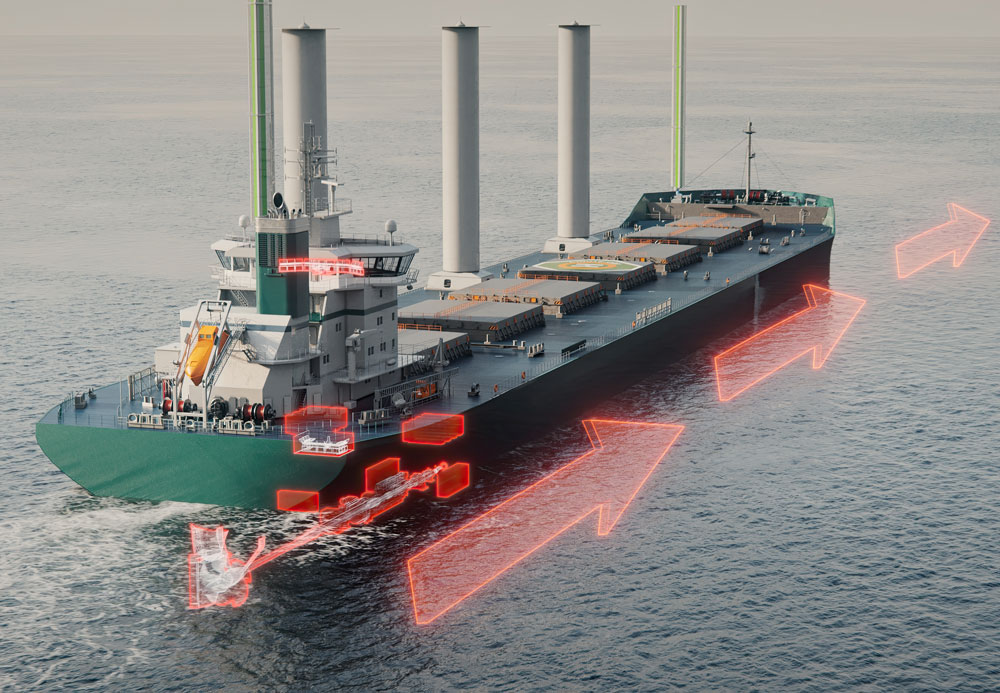
Neoline’s dream is taking shape, writes Bruno Cianci. Following the January launch of Neoliner Origin, which took place at the RMK Marine facility in Tuzla, Istanbul, this 136m, sailing and diesel-electric ro-ro cargo vessel will enter service connecting the Atlantic coast of France with the port of Baltimore, making intermediate calls in St. Pierre & Miquelon and Halifax (Nova Scotia). Like the ship in question, this transatlantic route is a first of its kind, offering new destinations and involving a vast spectrum of rolling and non-standard freights, including refrigerated containers and oversized parcels.
The cargo carrier will have a commercial speed of 11knots and a monthly frequency. The distance between St. Nazaire and Baltimore will require 13 days of travel westbound and 15 days eastbound. Thanks to an extra 3knot speed margin to which the operator can resort in the event of delay, Neoline will ensure regularity and punctuality in departures and arrivals, thus meeting clients’ needs and deadlines.
Conceived in 2011, Neoline was born out of the determination of an informal group of nine professionals, led by ro-ro ship captain Michel Péry, all determined to create and optimise new propulsion methods and achieve a substantial drop in CO2 emissions. The team shared a conviction that sails are the only solution: immediately available and powerful enough to propel heavy cargo vessels. As well as exploiting the wind as its primary driving propulsion, though, the vessel is supported by auxiliary diesel-electric power, enabling the vessel to maintain its sailing schedule.
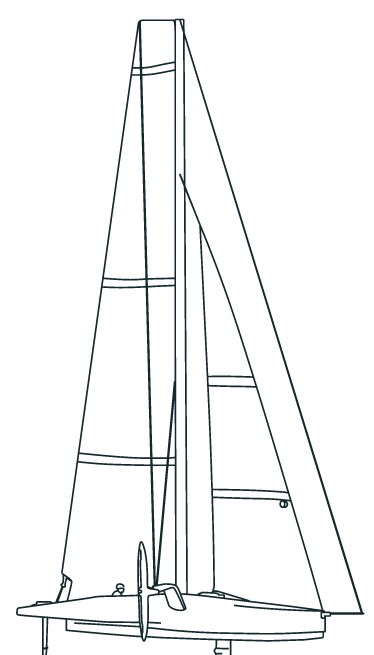
The ship is fitted with twin carbon-mast SolidSail rigs, designed by Chantiers de l’Atlantique, that can be folded down to clear bridges and to access most ports. Each mast can hoist one 1,050m2 SolidSail and one 450m2 jib (by Onesails), totalling 3,000m2 of canvas. Below surface, the ship features deep retractable anti-drift fins, designed by Fouré Lagadec, that prove efficient and particularly useful while sailing upwind.
Equipped with a 12m-wide loading ramp, Neoliner Origin can handle a wide range of parcel sizes and packaging in three loading areas (a 2,100m2 main garage, a 500m2 twin deck and a 950m2 lower garage), all weatherproofed. Its transport capacities are optimised to load both light freight (cars, pallets, etc) and oversized parcels, up to 9.8m high and 200tonnes in weight, without the need for lifting.
Neoliner Origin has two types of propulsion system: sails and a mechanical propeller. The latter comprises a controllable-pitch propeller connected to a PTI/PTO gearbox clutched to a diesel medium-speed, 3,200kW ABC engine and to a 900kW electric motor. This allows the powertrain to work efficiently in every possible configuration, and to integrate batteries in the future. Thus, there are three sail modes: exclusively sails; mechanical propulsion (mainly for manoeuvring); and hybrid.
Neoliner Origin aims to reduce its fossil fuel consumption by more than 80% compared to a same-sized conventional ship operating at 15knots. But there is more to the story, as Neoline technical manager Guilhem Péan explains: “Apart from fuel savings, our ship is much more silent than conventional motorised vessels, and therefore its impact on marine mammals and the environment is drastically lower. And of course, the less the engines and equipment are used, the less maintenance and spare parts or consumables are required. Besides, when the sails are in use, the vessel’s roll motion is dampened, and comfort thus improved.”
Neoline CEO Jean Zanuttini adds: “We are actively working on plans for other versions of Neoliner Origin. Our goal is to scale the concept and increase the capacity for cargo while progressing toward zero-emission shipping.”
From a US$3.5 billion push to become the world’s fully AI-native city by 2027, to this year’s roll-out of a fleet of self-driving robotaxis, tech vibes are strong in Abu Dhabi. Add recent reports of blockchain adoption, quantum research and a large-scale solar energy capture project, and the capital city of the UAE appears to be buzzing with innovation.
This tech-drive includes the launch this year of the UAE’s first dedicated remote operations centre (ROC) for USV testing, hiring and maintenance. Named ‘The Quarterdeck’ and scheduled to commence operations from Q3 2025, the ROC will be located at Addax Tower, a 60-storey commercial skyscraper located on Al Reem Island.
The Quarterdeck is the brainchild of long-term partners Nexus Remote Solutions and Janus Marine and Defense, and its chief aim is to enable start-ups and scale-ups to test-drive both commercial and defence-related USVs and UUVs. Jack Dougherty, owner of Janus Marine and Defense, tells The Naval Architect: “There just aren’t that many public ROCs out there. Currently, the UAE has three ROCs spanning the commercial and defence markets, yet all three are privately owned and closed to external contractors. The Quarterdeck is the first ROC in the UAE that will allow smaller-sized companies to get their hands on the same technology and facilities found in private ROCs, and to utilise a larger USV to its fullest capacity and take it offshore, including the use of satcomms, without having to invest in their own ROCs.”
John Woroniuk, Nexus founder, adds: “We’re open to small-to-medium-sized companies and surveyors who want to innovate USVs: mainly in the oil and gas industry but also the naval sector. The Quarterdeck is like an R & D centre where you can hire high-tech equipment and undertake vessel trials – and we can offer to operate manned or unmanned vessels for you. This enables companies to manage USV operations across the Gulf and beyond.”
What’s more, while attitudes toward USV development tend to vary from state to state in the US, and from country to country across Europe, Dougherty notes that the UAE offers “excellent conditions” for uncrewed vessel operations – most notably, an absence of red tape, while avoiding a literalistic interpretation of the SOLAS requirements. “The UAE government is especially receptive to technology that has the potential to boost health and safety,” Dougherty adds.
Last year saw the launch of the Nexus Janus (NJ) Portal, a hub developed by Janus, Nexus and Current Scientific Corporation to manage and integrate various USV sensors and payloads (including anything from cameras and side scan sonars to machine guns). The NJ Portal was first showcased at 2024 Autonomous Ship Expo and Conference in Amsterdam, where it was used to operate a pan-tilt-zoom electro-optical/infrared (PTZ EO/IR) camera based in Vancouver, plus a 12m USV in Abu Dhabi, simultaneously and in real time from a single laptop at the show. The NJ Portal’s reported benefits include the ability to compress and truncate high-speed data for seamless transfers between the USV and shore-based (or mothership-based) analysts.
The NJ Portal technology will be incorporated into The Quarterdeck. Dougherty explains that the facility will offer three soundproofed pods, each staffed by a trained USV pilot and two sensor operators. The Quarterdeck will also feature a larger conference room, for company presentations and live trials. The sensor operators will look after whatever payload gear needs to be demonstrated, whether that’s gripper tools, weaponry, a long-range acoustic device (LRAD) or a smaller ROV.
Dougherty says that users can either hire Unique’s USVs or run the tests on their own units, adding: “Another reason we established The Quarterdeck was that it seemed a missed opportunity for those companies shipping in their USVs for UAE shows like IMEX. They brought their USVs into the country at great cost but were then unable to test them or demonstrate them to clients – so we thought, you might as well keep them out here for a few months.” Similarly, he highlights: “Nobody in the UAE wants to fly all the way to Glasgow just to see how their USVs and their payloads perform in the North Sea.”
One ongoing issue with ROCs is the absence of international standards for pilots operating USVs remotely from another country. Regarding rules and regulations, Doughtery comments: “Obviously, if a ship is flagged in Panama and being run out of the North Sea, but the ROC is based in the GCC, that creates regulatory issues – but, to be transparent, nobody knows how to get over these yet. It took IMO four years to come up with its ‘four degrees of autonomy’ for maritime autonomous surface ships [MASS] labels, so, for now, I think we’ll have much more luck dealing with the local statutory and regulatory agencies.”
The global shipping fleet must adopt low- and zero-emission fuels to meet the climate goals set by IMO, writes Tore Stensvold. The goal is a 20% reduction in total GHG emissions by 2030, and a 70% reduction by 2040, both relative to 2008 levels, with the end goal of achieving net-zero emissions by 2050.
Ammonia and hydrogen are seen as two likely and possible fuel options. However, the properties of ammonia and hydrogen fuels introduce safety risks related to toxicity and flammability.
In March, DNV issued the whitepaper Safe introduction of alternative fuels – focus on ammonia and hydrogen as ship fuels. Linda Hammer, principal engineer at DNV Maritime, and one of the authors of the whitepaper, tells The Naval Architect that the paper was issued to support and assist shipowners who want to use the fuels before the IMO regulations are in place.
“IMO is working on developing regulations, but it is a long process,” says Hammer. “IMO has issued interim rules for ammonia and will proceed with interim rules for hydrogen. It will take many years before they are mandatory.” She explains that it is still possible to get ships approved with alternative fuels, but the process is more burdensome and time-consuming. One must use the risk-based approval process known as the alternative design approval (ADA) process and the regulatory framework for alternative fuels through the International Code of Safety for Ships Using Gases or Other Low-Flashpoint Fuels (IGF Code).
Hammer says that the exact requirements for the approval process may vary from case to case, depending on the flag administration’s acceptance of available interim guidelines and classification rules as their approval basis, and on factors relating to the design and its maturity.
DNV has aimed to develop ammonia and hydrogen classification rules with prescriptive requirements as far as possible, acknowledging that this will ensure increased predictability for owners, designers, and shipyards. “DNV issued class rules for ammonia in 2021 and for hydrogen in 2024,” Hammer continues. “If the flag administration agrees, those rules can be applied. It is very important that those who are building early contact the flag state to clarify the approval processes and scope – and whether they can use the classification rules.”
So far, only a couple of tugboats and one deep-sea vessel, Fortescue’s Green Pioneer, have been converted and use ammonia as the primary fuel in a dual-fuel engine. “Fortescue used the ADA process,” says Hammer. “We are also working with Eidesvik on the conversion of the [94.9m] platform supply vessel Viking Energy to ammonia operation, using our class rules for onboard installations and equipment.”
Of the global fleet of around 60,000 ships over 1,000gt, 20% account for about 80% of emissions, according to DNV’s Maritime Forecast 2024. This means the most significant impact will come from measures applied to the 12,000 largest ships. Currently, 98.8% of these ships use combustion engines that burn some form of heavy oil or marine distillates.
“It is extremely important that shipyards and suppliers are involved in the design phase,” says Hammer. “Technical safety barriers and safety margins must be incorporated into the plans as soon as the first drawings are available.” Equally important is that the crew knows how to handle the fuels, is aware of the risks and understands the system well to maintain and operate it. DNV recently issued a competence standard for those operating ships that will use ammonia as fuel.
“It’s not enough to build the ships and equipment safely if the crew doesn’t know how to handle and operate it and what to do in a given situation,” says Hammer. “We have extensive knowledge of ammonia-handling because it is shipped as a commodity on large gas carriers. Ammonia is also used as a refrigerant in refrigerated ships and fishing vessels.”
Visitors to Amsterdam will now be able to enjoy fine dining on the water free of smoke and noise, as the relaunched floating restaurant Henry Schmitz resumes operations, following an internal overhaul and conversion to electric power.
The 16.7m x 3.7m saloon boat, originally built in the early 1900s and now operated by Amsterdam Jewel Cruises, has been equipped with an electric motor and battery for zero-emissions dinner cruises on the city’s canals. The boat’s March relaunch appeared to be well-timed: 1 April saw the introduction of new emissions rules for Amsterdam’s inner-city waterways, effectively banning diesel or petrol boats within its canal network – although some exemptions exist for commercial boats with older permits.
Prior to its powertrain overhaul, Henry Schmitz had been powered by a marinised version of an old IVECO Alfo truck diesel engine. The refit, carried out at Shipyard Wed. Brouwer in Zaandam, saw this diesel replaced by an Deep Blue 50i electric motor and a Deep Blue Battery 40, both supplied by e-propulsion specialist Torqeedo. The shipyard removed the diesel and tank, while Torqeedo partner Kenco handled the electric installation and wiring.
Torqeedo tells The Naval Architect that shipwright Martijn Scheerman particularly deserves credit for artfully removing the boat’s wooden superstructure to enable the powertrain swap-out, thus “maintaining the grandeur of the original details”.
With its current engine and battery combo, Henry Schmitz’s weight is now estimated at 28tonnes. The boat can offer dinner cruises for up to 20 guests, accompanied by a captain/skipper and one to two hosts. “There’s a fairly big, copper bar right in the middle, and all tables carry two to three couverts [the plates, cutlery and bread laid out for guests] max, to keep it cosy and intimate,” Torqeedo says. Amsterdam Jewel Cruises adds that the boat will only lay out eight tables max, to achieve the same intimate effect.
The Deep Blue Battery 40 is rated approximately 40kWh and supplies the power required for both the e-motor and the boat’s galley. The battery type was developed to withstand harsh marine environments, with an IP67 waterproof rating and a rugged design, reflecting Torqeedo’s range of maritime applications, including installations aboard powerboats, workboats, water taxis and small yachts.
In terms of performance, “typically, canal cruises through Amsterdam take a leisurely pace – about 5knots or so”, Torqeedo says. “The canals are narrow and congested, and there are lots of things to see. On a typical trip, the guests will come aboard for a welcoming drink at 17:00 and then cruise around until 22:30-23:00 for dinner with a view.” Henry Schmitz usually sails daily, with passenger bookings taken a month or so in advance.
Torqeedo adds that a typical day’s sailing uses no more than 20% of the battery’s charge. The boat is docked overnight for charging. On rare occasions, when the boat ventures farther – such as crossing the busy River IJ to pick up a private party, for example – it will run at full speed, reaching a hull speed of 10knots for about an hour. “Even so, by the end of the day, the boat usually retains 55% of its charge,” Torqeedo says.
Meanwhile, Amsterdam looks set to build on its drive to reduce noise and CO2 emissions: the city has pledged to install a total of 2,500 charging points for electric boats by 2030, meaning that the likes of Henry Schmitz will have easier access to electric power than ever before, regardless of their itineraries.
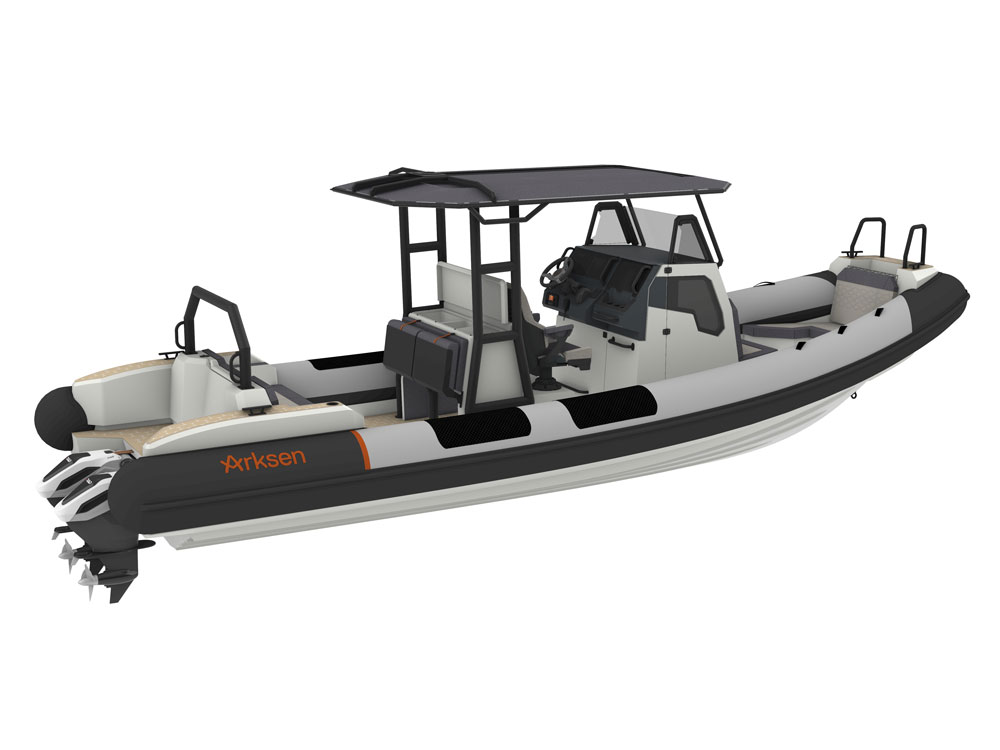
UK high-speed boat and RIB-builder Marine Specialised Technology (MST) Group reports that it has secured a £6 million funding package from domestic bank NatWest. Ben Kerfoot, group managing director, tells The Naval Architect: “The funding will be used to finance the build stage of projects that are increasingly larger and more complex, to satisfy the growing needs of the global maritime defence and security markets.”
The arrangement with the bank appears to have been highly cordial. Kerfoot adds: “Working in a specialist industry as we do, NatWest really took the time to understand our business, and we look forward to having this enhanced financial capability to scale our operations and meet rapidly accelerating demand. This is a milestone moment for us.”
Founded in 2002, and currently employing 135 staff at its 35,000m2 waterside facility in Bromborough, Merseyside, MST Group specialises in producing small boats for military clients. In addition to building the boats, the company offers bespoke training for vessel operation, technical support and boat maintenance/repair services, as well as handling spare parts and boat upgrades.
MST Group’s boat lines include the SEABOAT class, the first of which was delivered to the German Coast Guard in 2003. Since then, the company has gone on to secure contracts with the Netherlands’ Defence Materiel Organization (now COMMIT) and the UK Ministry of Defence, among others, and recently delivered the first in its FIC-1700 range of 17m fast interceptors to a Mediterranean client.
The FIC-1700 is powered by four 600hp (447kW) Mercury Verado engines, and was designed specifically for visit, board, search and seizure (VBSS) tasks, being capable of a top speed in excess of 55knots, a 650nm range and “what we suspect will be a class-beating 0-50knot acceleration”, Kerfoot reveals. He adds: “The second unit is undergoing factory testing and will then join its sister boat already in active service.”
In a statement issued earlier this week, MST Group said: “[Our] services and operations also tie in with metro mayor Steve Rotherham’s stated aim to grow the economy through three key clusters within the Liverpool Combined Authority region, one of which is ‘advanced manufacturing’.”
The Finnish Transport Infrastructure Agency has selected Aker Arctic to design a next-generation Baltic icebreaker as part of the Winter Navigation Motorways of the Sea III (WINMOS III) project, co-financed by the EU. In addition to initial design, technical evaluation and concept comparisons, the contract includes model tests and the development of a final concept design package.
The working title for the new icebreaker design – ‘B+’– reflects its classification between the largest A-class and mid-tier B-class icebreakers in terms of vessel size and capability and an icebreaker capable of being deployed in the Bothnian Bay at the beginning of the icebreaking season when icebreaker assistance is required primarily by smaller commercial vessels. Later in the season, the new icebreaker could be relocated south to the Bothnian Sea or the Gulf of Finland, as required.
The initial design phase will include the evaluation of alternative fuels and machinery configurations. In addition, Aker Arctic will investigate the use of electrical energy storage systems to balance out fluctuating loads on the icebreaker’s propulsion system based on likely operational profiles required of a Baltic Sea assistance icebreaker.
The first phase will also include the comparison of three alternative vessel concepts in terms of performance and costs, including acquisition, in-service and maintenance costs over the lifetime of the vessel. The performance of at least two concepts will be evaluated with model tests. The final concept design package will be completed in early 2026.
Aker Arctic CEO Mika Hovilainen says the design will highlight the need for a vessel with the ability to “operate in more dynamic and fragmented ice fields”, as well as demonstrating good seakeeping characteristics and low fuel consumption in open water transit.
The Offshore Renewable Energy (ORE) Catapult reports that it has selected nine UK companies for its 2025 Launch Academy technology acceleration programme, created to provide “wraparound support” to innovative companies working in the offshore wind segment. The nine-month programme is also being supported by EDF Renewables UK and Ireland, bp and ScottishPower Renewables.
The annual Launch Academy was initially rolled out in 2020, and has since supported 57 companies in raising a combined £26.7 million in private investment and £8.4 million in grant funding. Assistance is provided through various modules, focusing on areas such as legal, marketing, export, accountancy, intellectual property (IP), investor readiness, technology assessment and business case reviews – support “worth up to £60,000 per company”, ORE Catapult says. When the programme draws to a close, each company will have the opportunity to pitch to ORE Catapult’s network of private investors and industry members.
Following the company selection announcement, which was hosted in Blyth, Northumberland on 30 April, Teresa Enriquez, offshore innovation manager at ScottishPower Renewables, commented: “Continuing to grow and develop our domestic supply chain to support the offshore wind industry is a must for our sector. Innovative SMEs – like the latest Launch Academy cohort – are right at the heart of that.
“The Launch Academy is a win-win programme, providing companies with tailored support to help them thrive in this sector – especially those transitioning from other industries – while developing innovative solutions that address the real-life challenges being faced by developers like us on a daily basis. It’s great to be part of such a positive programme.”
The nine companies include: Cornwall-based engineering firm Reflex Marine, developer of the JAVELIN anchoring system for floating offshore wind installations; Heavy Lift Projects, Edinburgh, which provides marine and quayside heavy-lift equipment; Zero USV, Plymouth, developer of the Oceanus12 autonomous surface vessel class; and London-based engineering consultancy Bora Engineering, which has developed an optimised storage solution for shipboard mooring line reels.
The other five companies include: METOL Ltd, Loughborough, which offers a thermoplastic polymeric oligomer compound for the manufacture of recyclable composite structures (such as wind turbine blades); Glaswegian project solutions provider Interocean; Edinburgh-based data platform and software developer Vekta Group; project scenario planning and analysis specialist Unasys; and Murcott Energy, Worcester, developer of the Murb – a portable vertical-axis floating turbine, designed to serve as a quick-to-deploy, temporary offshore power source.