

AMRINA
Students, Graduates, Apprentices, Associated Professionals
Young Professionals Council, Student Rep, STEM Rep, Papers, Articles.
At the heart of the global maritime industry are the Naval Architects and Maritime Engineers who imagine, design and sustain the world’s ships, yachts, and offshore structures. They combine creativity with precision — shaping hulls that cut through oceans efficiently, crafting structures that endure the sea’s forces, and engineering the systems that bring these vessels to life.
Yet the modern maritime world extends far beyond design and engineering. Associated Professionals — specialists in sustainability, digital innovation, regulation, project management, operations and finance — are essential partners in transforming how the industry moves people, goods and energy across the globe.
Together, these professionals embody excellence in innovation, safety, and environmental responsibility. They are united by a shared ambition: to advance the art and science of maritime technology for a more sustainable future.
Through the Royal Institution of Naval Architects (RINA), members join a global community of professionals — from early-career engineers to senior leaders — recognised for their expertise, professionalism and contribution to the maritime world. Whether designing the next generation of ships or driving strategic transformation across the sector, RINA membership connects you to excellence, heritage and opportunity.
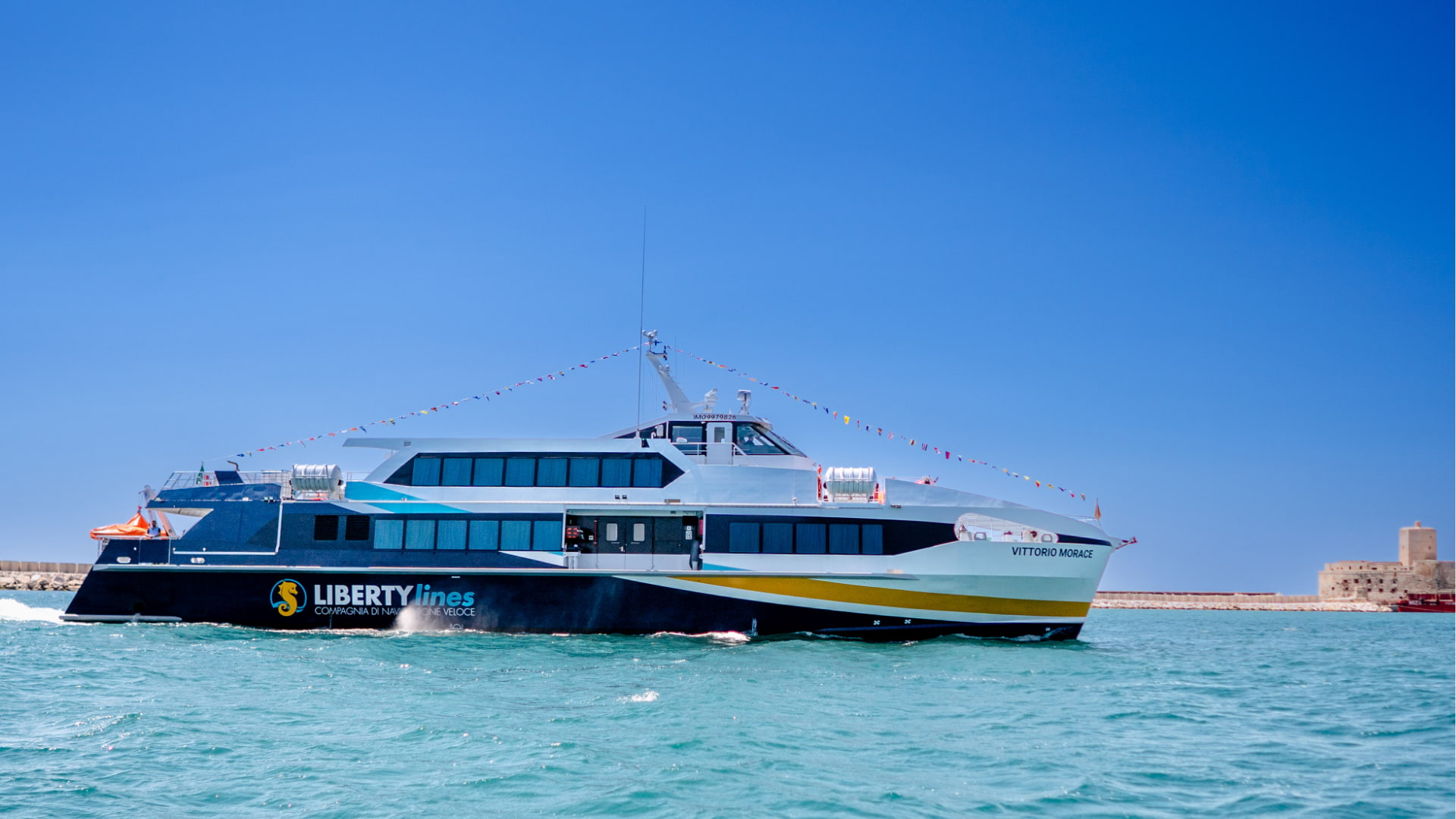
A Naval Architect is a professional maritime engineer who is responsible for the design, construction and repair of ships, boats, other marine vessels and offshore structures, both civil and military.
Achieving an academic qualification is only the beginning of a member's professional career. The achievement and maintenance of professional competence, especially where it cannot be acquired solely by formal study, necessitates life long professional development. Professional development is the acquisition, maintenance, improvement and broadening of knowledge, understanding and skills, and the development of personal qualities necessary to carry out their professional duties throughout a member's working life.


As a Maritime Engineer, your expertise in propulsion systems, power generation, and energy efficiency makes you pivotal to the heart of maritime innovation.
RINA membership offers direct access to cutting-edge ship research, helping you refine designs to improve fuel efficiency, emissions performance, and sustainable energy use. Members share practical experience, from integrating hybrid propulsion systems to alternative fuels — ensuring ships of the future are cleaner, safer, and more efficient.
As an academic or researcher, you are advancing the future of maritime innovation.
RINA membership connects you with global experts across all disciplines, providing access to peer-reviewed journals, conferences, and research networks. Members develop new simulation techniques, design optimisation tools, and performance modeling that drives safer, more efficient marine design worldwide.
Your design intersections with ships — and RINA members bring decades of insight into how vessels behave in port environments.
From dredging to quay wall design, breakwaters, and coastal protection, the collaboration between civil and marine engineers helps ensure safety, sustainability, and resilience in coastal and offshore environments.
Modern ships run floating microgrids, and RINA members’ deep knowledge of automation and control systems provides essential expertise.
Whether working with sensors, networks, power systems, or automation technologies, RINA’s interdisciplinary approach connects engineers across disciplines to ensure seamless onboard functionality.
RINA is a hub for professionals modeling complex marine environments.
Members apply mathematical and computer-based models to analyze ship motion, wave energy, and hydrodynamic performance — giving engineers a critical toolset for marine innovation. RINA’s technical community fosters peer-reviewed research and interdisciplinary development for the next generation of marine systems.
Designing for marine interiors and ergonomics requires unique considerations for safety, motion, and space efficiency.
RINA connects you with naval architects and engineers who ensure your designs are both functional and compliant with maritime standards. Members apply safety and design research that improves crew comfort, workspace layout, and user-centered design at sea.
Understanding the design, construction, and operational realities of ships gives technical experts a strong advantage.
RINA’s interdisciplinary experts provide technical consultation during litigation or arbitration — offering clarity, or compliance with international regulations.
As a surveyor, a technical expert is essential to inspect ships throughout their service life — from hull and machinery to safety, fire systems, and environmental compliance.
RINA members bring strong engineering backgrounds to classification, inspection, and certification of ships and marine systems — staying aligned with evolving safety standards.
As a maritime insurer, your understanding of technical design and operations helps you assess, underwrite, and mitigate risk.
RINA membership gives you direct access to the engineering insight necessary to evaluate new ship designs, materials, and operating conditions — ensuring the continued safety and insurability of maritime assets.
Ship handling, turnaround times, and berth design all benefit from RINA members’ deep understanding of ship systems and port engineering.
Maritime operations managers oversee all aspects of fleet management, including crew logistics, vessel tracking, and operational efficiency — ensuring effective alignment with the changing maritime fleet.
Whether you’re designing propulsion systems, HVAC, or machinery, RINA connects you with maritime engineers who understand complex shipboard integration.
Members collaborate across sectors to develop and refine power generation, energy efficiency, and sustainable systems that improve vessel mechanical systems and vessel performance.
As part of any complex combat understanding, RINA provides members with engineering insight that extends to defense and security applications.
From shipbuilding and weapons integration to logistics and repair, RINA connects defense professionals with the latest in maritime engineering, procurement, refit, planning, and service support.
As a nuclear engineer, your expertise in safety-critical systems, thermal efficiency, and advanced energy technologies is increasingly relevant to the maritime sector. From emerging nuclear propulsion for commercial and defence vessels to small modular reactors for offshore energy, your knowledge is shaping the next frontier of marine innovation.
By joining the Royal Institution of Naval Architects, you become part of a global community exploring these transformative technologies. Membership connects you with naval architects, marine engineers, regulators, and researchers developing the standards, designs, and policies that will define safe, sustainable nuclear applications at sea — positioning you at the heart of the industry’s future energy revolution.
In floating production systems, control and mooring design are vital — and RINA helps engineers understand and solve challenging fields.
RINA members give you a technical foundation in hydrodynamics, fatigue analysis, materials, and risk-based engineering — helping ensure systems are safe, sustainable, and collaborative effectively across disciplines.
Effective regulation demands real-world experience and thorough analysis.
RINA members bring their specialist expertise to governments and agencies, helping shape international regulations and policy. Many future-oriented initiatives also benefit from RINA’s foresight and knowledge of emerging industry realities.
RINA helps members provide structural engineering expertise in shipbuilding and offshore structures.
From concept design to structural integrity assessments, RINA members contribute to safety-critical design validation, damage analysis, and fatigue management. Members gain insight into materials, welding, joints, and finite element analysis — applying rigorous standards and innovation that push work beyond traditional engineering.
From exploration to inspection, subsea understanding demands precision and adaptability.
RINA members bring expertise in hydrodynamics, structural analysis, materials, and system design. Their knowledge supports positioning, modular construction, and robotic technologies — ensuring safer, more effective, engineered systems.
Text for career map
Working in Naval Architecture, Maritime Engineering covers many different roles from research to operations. Use our interactive tool below to explore just some of the many career opportunities that lie ahead of you.
Students, Graduates, Apprentices, Associated Professionals
Young Professionals Council, Student Rep, STEM Rep, Papers, Articles.