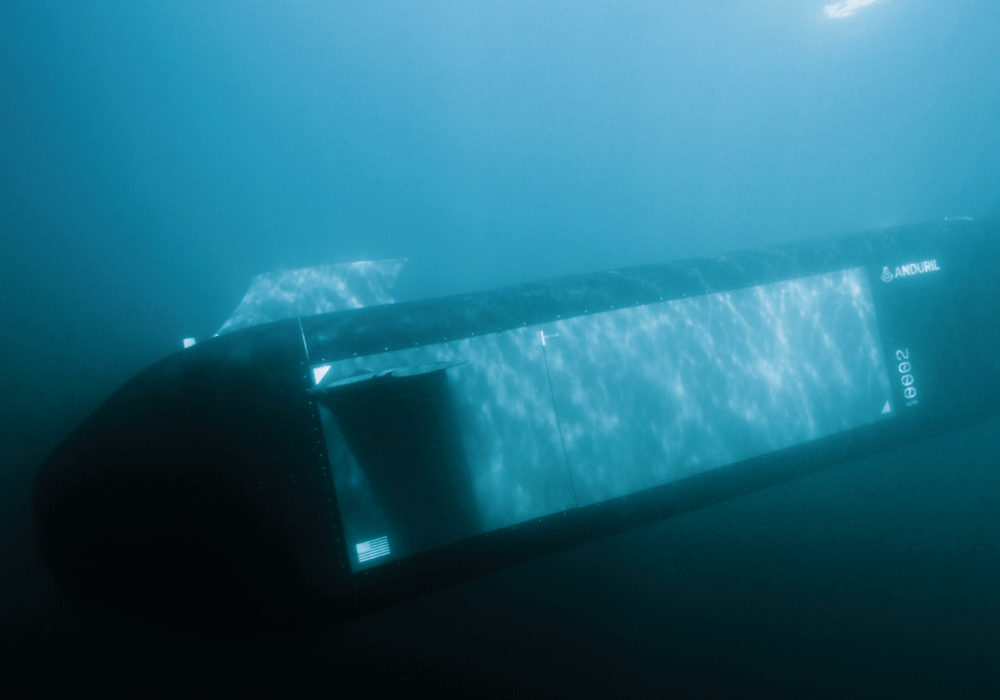
The extra-large AUV
Anduril’s Dive-XL extends AUV travel range and depth.
Take 10 seconds to nominate a colleague, mentee or friend for our Forbes-style list. Must be under the age of 40 in 2026. Open to all maritime professions associated with naval architecture. See eligibility criteria. [hyperlinked].
Renowned for the technical excellence of our events, publications and learning, we offer career pathways for naval architects and 16 associated professions [hyperlink to 16 professions].
We cover everything from super yachts and green propulsion to warship resilience. Network 1-2-1 with top talent at our events or influence the maritime industry by joining one of our comittees.
We promote the interdisciplinary conversation at the heart of maritime innovation. Speak at our events, publish in our journals or simply join the discussion forums on our website.
?? HOW?? FILL IN EMAIL HERE AND SIGN UP WITH 1 CLICK
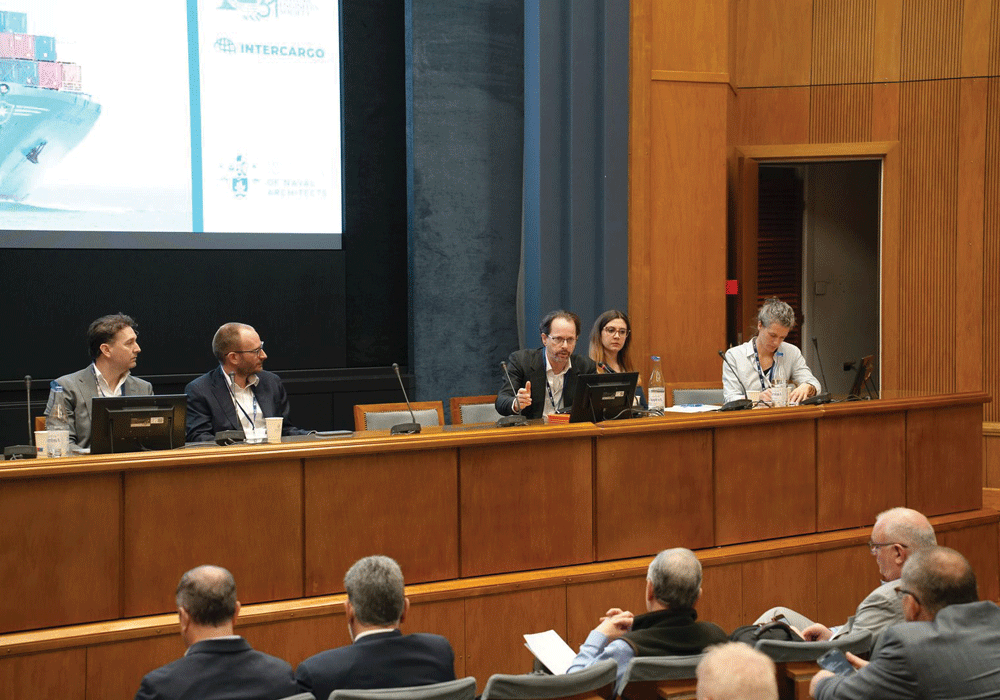
Highlights from two presentations at RINA’s inaugural Ship Energy Efficiency Conference, held in Athens on 17–18 March 2026.
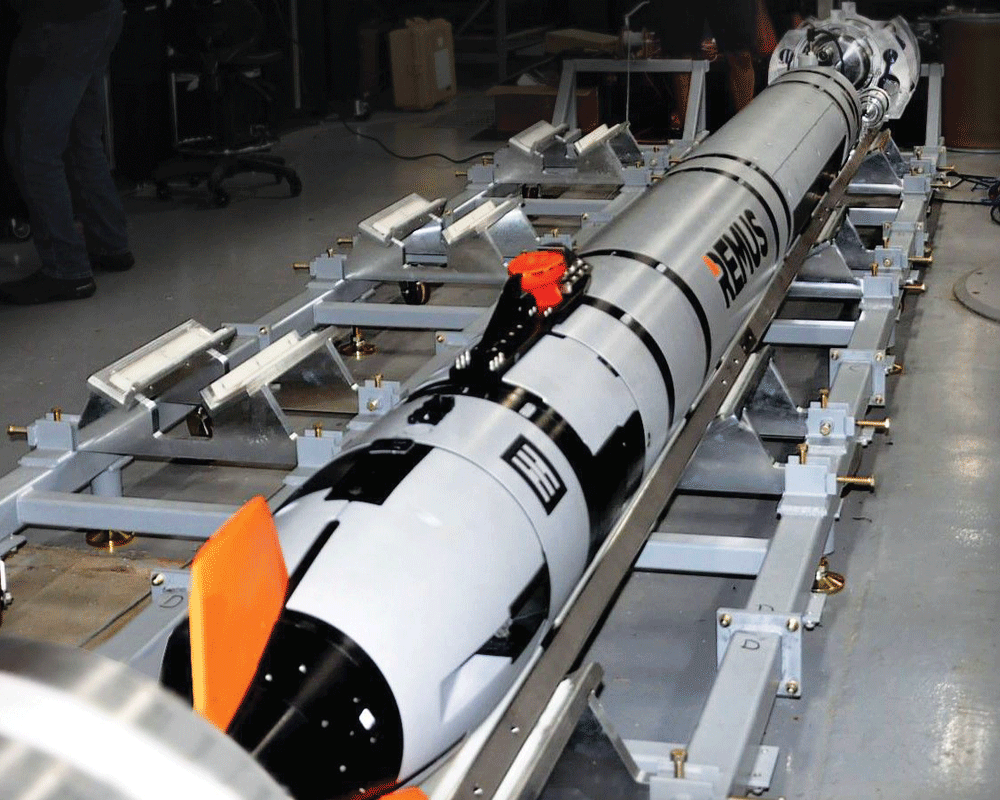
HII has been awarded a contract by the US Defense Innovation Unit to deliver a submarine Torpedo Tube Launch and Recovery (TTLR).

Rob Hayes on writing papers and presenting at conferences as part of his CPD.
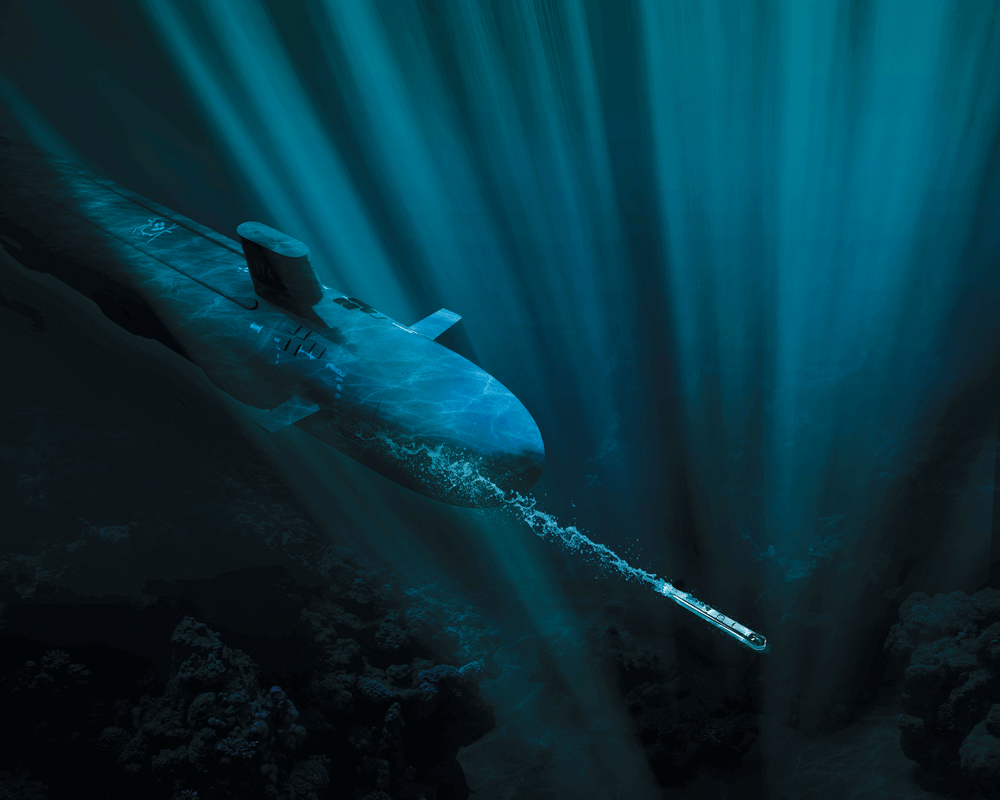
L3Harris to roll out TTLR and Iver4 900 for US government.
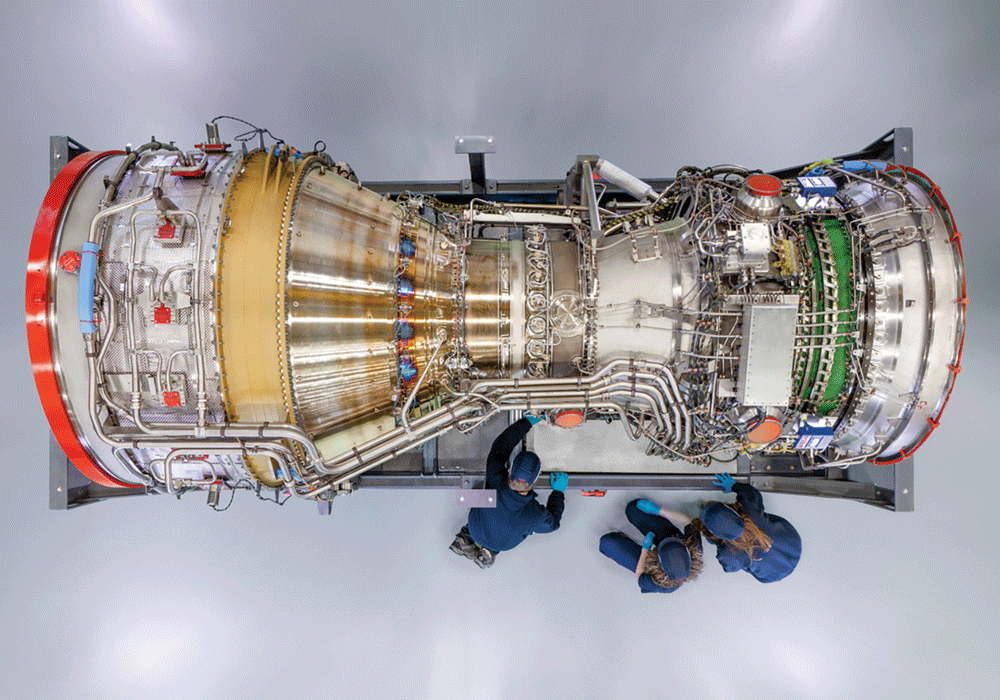
Marine gas turbine key to naval modernisation scheme.
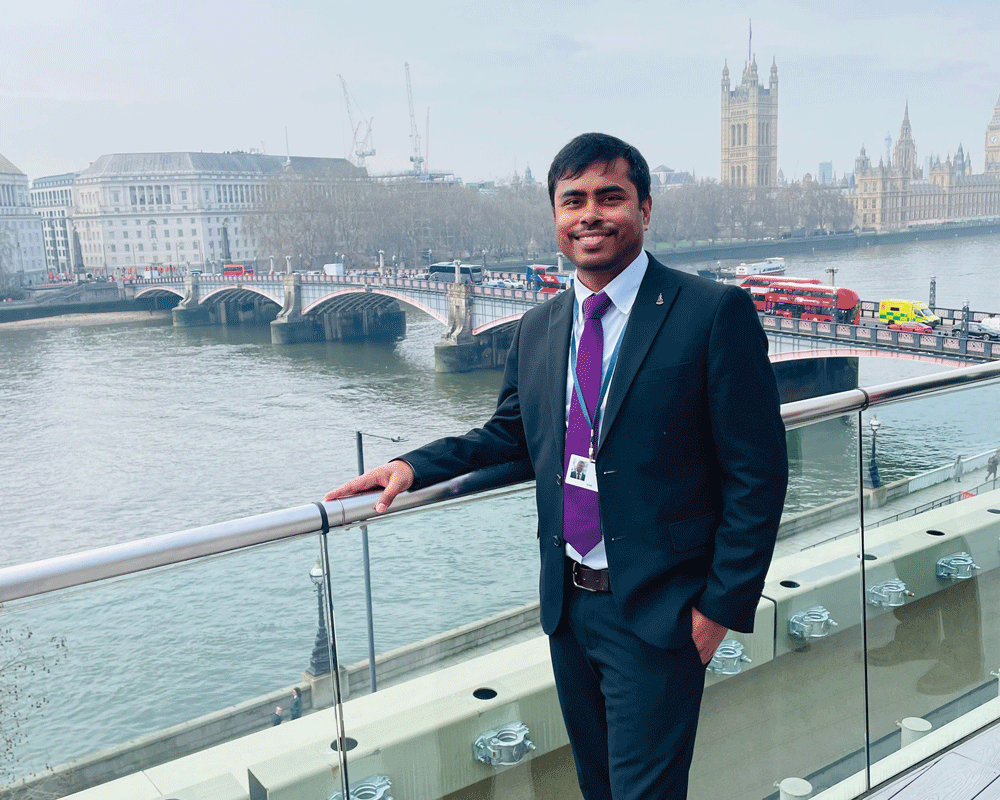
Recognition for his outstanding work in inspiring young people to pursue a career in engineering.
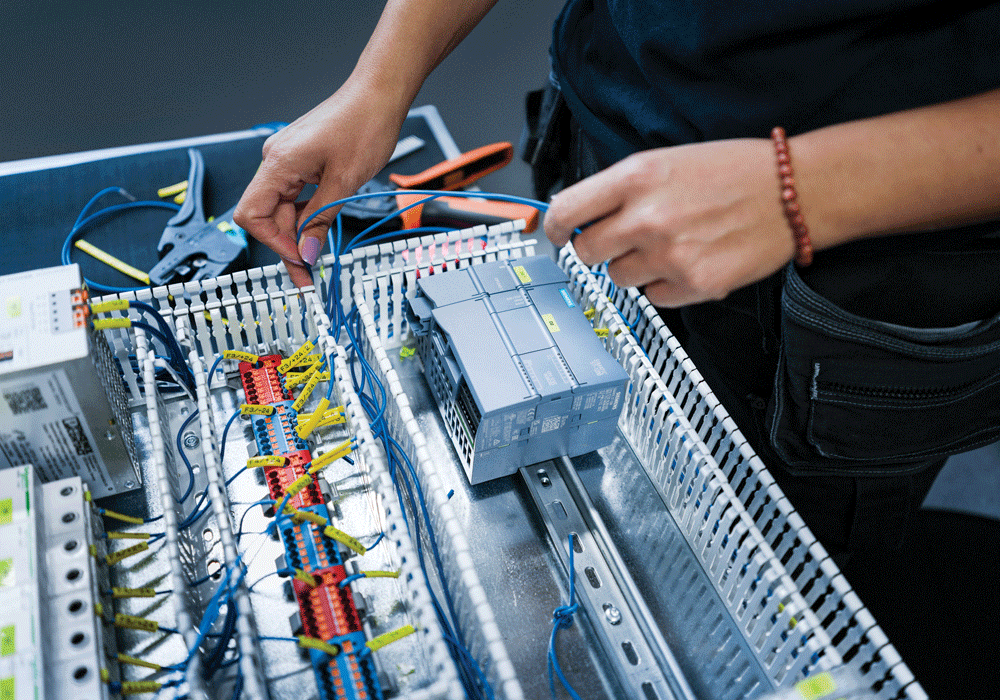
Echandia Ultra: small, light and rated to 30,000-plus charge cycles.
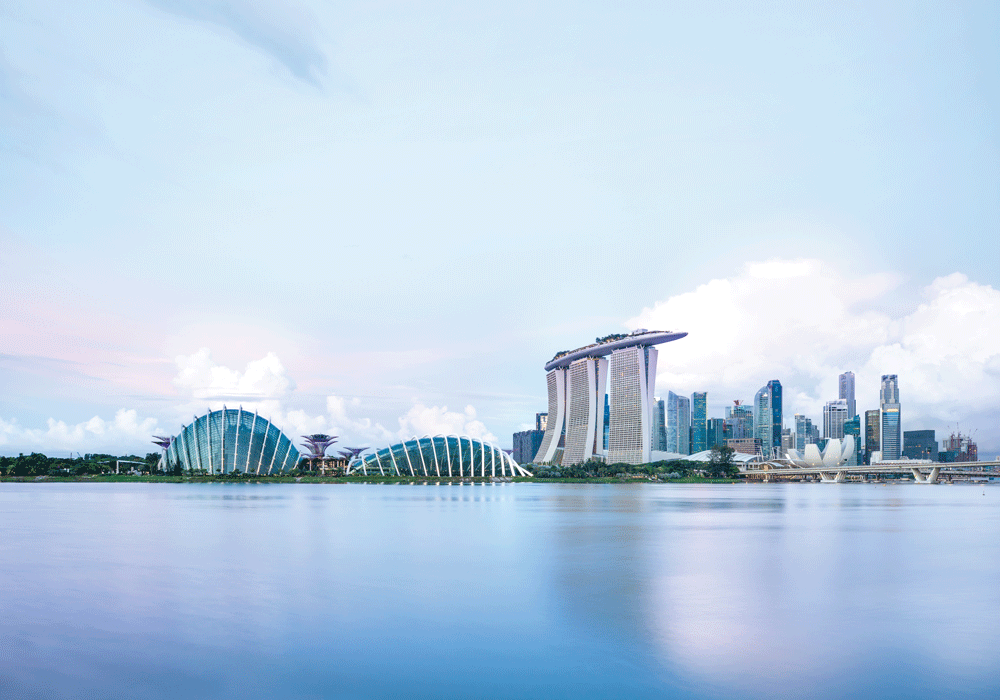
Events in Singapore cover fuel, professional development and youth engagement.
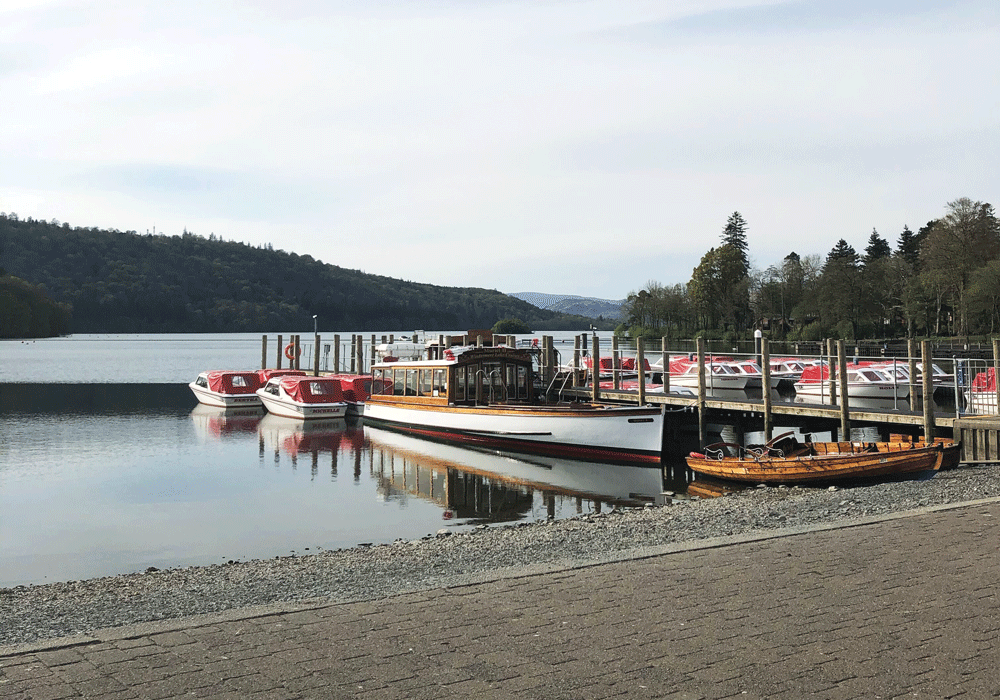
Talks at the branch ranged from world speed records to HR and decarbonisation.
From flagship international conferences to specialist technical seminars, RINA events bring together experts, innovators, and professionals to share knowledge and shape the future of naval architecture.
Explore Upcoming Events
Lorem ipsum dolor sit amet, consectetur adipiscing elit, sed do eiusmod tempor incididunt ut labore et dolore magna aliqua.
CLICK HERE
Lorem ipsum dolor sit amet, consectetur adipiscing elit, sed do eiusmod tempor incididunt ut labore et dolore magna aliqua.
CLICK HERE







Lorem ipsum dolor sit amet, consectetur adipiscing elit, sed do eiusmod tempor incididunt ut labore et dolore magna aliqua. Ut enim ad minim veniam, quis nostrud exercitation ullamco laboris nisi ut aliquip ex ea commodo consequat. Duis aute irure dolor in reprehenderit in voluptate velit esse cillum dolore eu fugiat nulla pariatur. Excepteur sint occaecat cupidatat non proident, sunt in culpa qui officia deserunt mollit anim id est laborum.

Dutch shipyard Royal Niestern Sander has launched Carbon Destroyer 1, the first CO2 carrier to be built in Europe. The vessel is a key part of the Project Greensand carbon capture and storage project in Denmark and was described by Sir Jim Ratcliffe, chairman of global petrochemicals company INEOS, as “an important next step for carbon capture and storage in Europe…demonstrating that carbon storage is commercially viable”.
Carbon Destroyer 1 is based on Wagenborg’s EasyMax design and has been specially adapted for handling CO2 under pressure and at low temperatures. The EasyMax concept is a multipurpose vessel with a cargo capacity of 14,000tonnes, jointly developed by Royal Wagenborg and Royal Niestern Sander.
Through Project Greensand, Denmark is positioning itself as a hub for CO2 storage in Europe. Carbon Destroyer 1’s role will be to connect CO2 emitters with permanent, commercial-scale offshore CO2 storage. The vessel will transport captured CO2 from across Europe, creating a ‘virtual pipeline’ between the point of capture and permanent storage deep beneath the seabed in the North Sea. The carrier will sail regular routes from Port Esbjerg to the Nini West platform, where the CO2 will be injected for safe and permanent storage to the Nini reservoir, approximately 1,800m beneath the seabed in geological formations that have contained hydrocarbons for millions of years.
The vessel’s launch follows a series of major developments in the Greensand project. In December 2024, INEOS and its partners Harbour Energy and Nordsøfonden took a final investment decision to move ahead with full-scale CO2 storage operations in the Nini Field. The project’s initial phase targets the permanent storage of 400,000tonnes of CO2 annually, with the potential to scale up to 8 million tonnes per year by 2030. The vessel is expected to be fully operational by the end of 2025 or early 2026, when Project Greensand is due to begin permanent commercial scale CO2 storage operations.
At the Port of Esbjerg in Denmark, construction is currently underway on a new CO2 terminal, which will serve as the onshore hub for receiving, storing, and loading liquefied CO2 onto the vessel. Once established, the terminal will include six large storage tanks and essential infrastructure to support continuous and scalable CO2 transport to the offshore storage site.
Naval architect and designer BMT and Singapore-based boatbuilder Penguin Shipyard International have delivered a fire and rescue vessel to the Singapore Civil Defence Force (SCDF). The Blue Dolphin MFV-R (standing for ‘multi-role fire vessels – rescue’) is the first of two 38m sisters for the SCDF, each featuring an aluminium monohull and an external firefighting system comprising three fire monitors and three pumps, capable of delivering a combined flow rate of 3,600m3 per hour.
Described as an evolution of the Red Dolphin MFV-R, which BMT and Penguin produced for the SCDF in 2019, the new vessel has 12,000litres of firefighting foam capacity. BMT comments: “This is further supported by a self-protection water curtain, giving the vessel a fully redundant and highly capable firefighting configuration that exceeds standard FiFi Class 1 requirements.”
The vessel also houses advanced chemical, biological and radiological (CBR) protection systems, plus a decontamination room, a first aid station and a rescue lounge for up to 30 survivors and eight firefighters. Infrared sensors enable the detection and classification of chemical warfare agents and toxic industrial chemicals at a range of up to 5km, BMT adds.
The Blue Dolphin MFV-R can comfortably sprint past the 30knot mark, and comes with biofuel-compatible engines and solar panel charging systems. The vessel also stores a high-speed RIB on board, which can be scrambled for search and rescue operations close to shore or in restricted waters. The ship is also equipped with a virtual anchoring system, designed to reduce the crew’s workload during station-keeping operations.
The first Blue Dolphin MFV-R was delivered to the SCDF at a commissioning ceremony hosted at the Republic of Singapore Yacht Club, and the second sister is earmarked for delivery to the SCDF in 2027.
Maritime healthcare provider VIKAND has cited disturbing statistics from Gard’s 2025 Crew Claims Report to raise awareness of the importance of safeguarding seafarer mental health.
The Gard stats – based on 2024 claims data and feedback from more than 6,000 seafarers – indicate that, between 2019-2023, 11% of all seafarer deaths were due to suicide, surpassing the number of deaths caused by onboard injuries.
“Suicide at sea is no longer the elephant in the room – it’s a harsh reality we can no longer ignore,” comments Ronald Spithout, MD of OneHealth by VIKAND. “The silence, the stigma and the systemic underreporting must end…together, we need to ensure a more structural approach and support for seafarers before more lives are lost.”
VIKAND also draws attention to research by Yale University, conducted in 2020 for the ITF Seafarers’ Trust, which found that 20% of surveyed crew members had experienced suicidal thoughts. VIKAND says: “Unique pressures of life at sea, including long isolation, communication challenges and cultural taboos, make seafarers especially vulnerable.
“Most suicides occurred among crew members under age 41, with officers disproportionately affected. Compensation exclusions for suicide further compound the trauma for grieving families.“
VIKAND’s statement includes the case of two Filipino crew members, both described by their colleagues as “outgoing, engaged and sociable” team players, who nonetheless took their own lives – one by hanging, the other by jumping overboard – following family and relationship problems, exacerbated by their isolation at sea. “Neither had a known mental health history or showed visible warning signs,” VIKAND writes. “In each case, psychological support and crew training were implemented – but only after the tragic events.“
The group also cites the case of a 28-year-old doctor who committed suicide in her cabin following a break-up: a tragedy that drove one of her colleagues to drink, leading to his dismissal “without receiving any follow-up mental health care or emotional support”, VIKAND notes.
VIKAND is now urging maritime industry leaders to improve reporting standards, step up mental health support services and push for a “cultural transformation” to remove the stigma about mental health issues, “so seafarers feel able to ask for help without fear of judgement or shame”.
This would involve greater use of pre-employment psychological screening, to identify vulnerabilities before crew members take to sea, and targeted training for officers and crew, helping them to spot early signs of distress among their colleagues and to react accordingly. “Fragmented, reactive approaches to mental health are no longer sufficient,” the group warns. “More effort must go into receiving even the faintest early warning signals.”
VIKAND has rolled out an AI-backed digital screening tool, Crew Wellness Pulse Check, which enables seafarers to anonymously complete surveys related to their mental health. This data can then be used to build up a bigger picture of the problem and to detect patterns and trends. VIKAND also provides 24/7 helplines for immediate support. “This isn’t about checking a box – it’s about proactively trying to save lives,” says Spithout. “Together, we can build a maritime culture where every seafarer feels seen, supported and safe.”
The new North Eastern Guardian IV had to be extremely capable and based on a proven, sub-24m design. So, what better architecture than an established crew transfer vessel (CTV)?
In fact, the North Eastern Inshore Fisheries and Conservation Authority (NEIFCA) had been planning a replacement for its forerunner, North Eastern Guardian III, for some years. As Chartwell Marine technical director Chris O’Neill relates, a trip out on a CTV sold NEIFCA on the platform’s suitability. Chartwell’s flagship CTV platform has a length of 24.4m and a beam of 8.87m. “It’s an extremely adaptable design,” says O’Neill. Despite this, there’s a big difference between wind farm support and fishery operations.
Further, while the hull spaces and working areas are designed to hold quite a bit of equipment, it was only when Chartwell got down to the details that it became clear how much the operating team wanted to pack in. The nub of the issue, O’Neill explains, was the need to fulfil two different functions: on one side there is research; on the other, fishery patrols. So, while there may be substantial survey work and data collection, there’s also comprehensive regulation enforcement: that requires radar and plotting systems to monitor fishing vessels around prohibited areas, along with the ability to move quickly. “We tried to keep the hull as similar as possible with regard to resistance and performance,” says O’Neill. “However, above deck the design changed quite significantly.”
One of NEIFCA’s main goals was to gain more load capacity. While the previous North Eastern Guardian III is a capable vessel, it’s a monohull with a much smaller rear deck tucked in behind the deckhouse. But taking a CTV platform, which normally operates from the bow, and creating a much larger aft deck meant relocating the superstructure, bringing it forward. While that involved “quite a lot of work on weight distribution”, says O’Neill, the result has been worth it: it’s opened up an 80m2 working space at the rear.
Despite this, North Eastern Guardian IV’s deckhouse has also remained sizeable, the floor area measuring 70m2. Its layout embraces a pantry, mess area, skipper and crew cabin, changing room, wet room, storage space, shower and comfort facilities, as well as access to the 35m2 wheelhouse above. Here, along with the skipper’s console and associated equipment, are both wing and aft operating stations, along with crew seats plus a sofa and table area.
For the full article, see the July 2025 issue of The Naval Architect
At the Battle of Trafalgar, nearly a quarter of Nelson’s fleet, bearing nearly a third of the fleet’s guns, was designed by Sir Thomas Slade (1703/4-1771), who is buried in Ipswich, Suffolk, writes Peter Turner.
Thomas Slade was born into a well-established family of Ipswich and Harwich shipbuilders, while his uncle, Benjamin Slade, was master shipwright at Plymouth Dockyard. He probably began his apprenticeship at Deptford Yard, on the River Thames, in 1718. He became the naval overseer to the building of fourth-rate Harwich in Harwich, in 1742, and two years later surveyed Sandwich harbour and helped the planning of improvements to Sheerness, after which he was appointed assistant master shipwright at Woolwich.
When Benjamin was ordered by Admiral Anson, First Lord of the Admiralty, to examine the lines of some French prizes, he commissioned Thomas to make plans of them. As a result, Thomas became the protégé of Anson and was moved in turn from Plymouth, where he had replaced his deceased uncle, to Woolwich, Chatham and finally to Deptford in 1753, from where he continued to advise Anson.
In 1747, Thomas Slade married Hannah Moore of Ipswich (d. 1763) and they had one son, Thomas Moore Slade. When, in 1755, the incumbent surveyor of the navy, Sir Thomas Allin, was taken ill, the Admiralty appointed Thomas Slade joint surveyor with William Bately. By this time, Thomas Slade was already designing ships and his early designs included the first British-designed ‘74’s: a new type that became the staple of the British fleet until after the Napoleonic Wars ended in 1815. These were an evolution of previous British ships built to compete with the new French vessels of the same number of guns. There were at least forty-six 74s built to his designs.
Slade started designing smaller ships in 1756 and developed the true frigate, which still comprised two decks but with an unarmed lower deck, and with guns on the upper deck of a larger size than those on previous ships of this rating.
It was Slade who designed HMS Asia, the first true 64-gun ship. As a result, the Royal Navy ordered no further 60-gun ships but instead commissioned more 64s. Because these incorporated alterations learned from trials with Asia, subsequent ships Slade designed were bigger and would become the Ardent class of 64-gun ships of the line.
The first HMS Ardent was ordered in 1761, and six more would built over the following two decades. These included HMS Indefatigable, which was converted to a 44-gun razee frigate before being launched from Buckler’s Hard in 1784. A razee frigate is one that has had the upper gun deck removed, based on the French word rasé. This was because time had shown that while these were excellent ships, they were too small for use in the line of battle and so were converted to successful frigates.
Indefatigable had a series of illustrious commanders, including Captain Edward Pellew’s action with the much larger French 74-gun Droits de l’Homme and Commodore Graham Moore’s capture of the Spanish treasure fleet in 1804, among many other actions. Both captains would rise later to admiral. Indefatigable would overall be credited with a part in 92 captures of enemy vessels.
Two more of these ships were involved in the career of Nelson: HMS Raissonable and HMS Agamemnon. Raissonable was built at Chatham and was Nelson’s first ship, although she only operated in the Medway at that point. Agamemnon was also built at Buckler’s Hard and was Nelson’s favourite ship, and where he spent most of his time as a captain. Nelson was on board Agamemnon from January 1793 to June 1796 and lost his eye while in command.
In 1756, Slade began work on the design of the ship most associated with Nelson. It was to be the only first rate that he designed and which would become HMS Victory (100 guns). Victory was not launched until 1765 but, despite having exceptionally good sailing qualities, she did not see service during Slade’s life.
Slade was a prolific ship designer, for which he was knighted in 1768, but he died in Bath in 1771. His designs continued to be used until well after his death, with Victory being Slade’s greatest memorial, as she is still preserved to this day, at Portsmouth Historic Dockyard. However, his designs of many of 74-, 64-, 32- and 28-gun ships were also very successful.
Peter Turner is the editor of The 1805 Club’s magazine ‘The Kedge Anchor’. The 1805 Club is a society, open to all, which was formed to preserve and care for the memorials and graves of those associated with the sailing state navy of the Georgian era. In recent years it has established the Trafalgar Way, which runs from Falmouth in Cornwall to the Admiralty in central London and follows the route of Lieutenant Lapenotiere’s journey to deliver news of the victory. For more info, see the July 2025 issue of The Naval Architect.
The UK is poised to lead in uncrewed surface vessel (USV) development, backed by strong technical expertise and government initiatives like the Ministry of Defence’s NavyX programme. However, regulatory hurdles are stifling progress, says Matthew Ratsey, MD of Plymouth-based Zero USV, one of two key UK USV developers who spoke to The Naval Architect for our July issue feature on uncrewed vessels.
The Maritime & Coastguard Agency (MCA) has been criticised for its lack of clarity and slow progress, set against the pace of development established by the USV manufacturers. Frustrated, Ratsey emphasises the transformative potential of USVs, particularly in swarm operations for tasks like offshore wind surveys and fisheries monitoring, but stresses that without a clear regulatory framework, the UK risks losing its edge in this innovative sector to more supportive markets abroad.
His views are echoed by James Williams, CEO of Cornwall-based Uncrewed Survey Solutions (USS). In fact, the lack of regulatory clarity led USS to register its new vessels under the San Marino flag for overseas operations, as the UK’s framework lacks proportionality for smaller USVs, applying the same rules to 1m and 24m vessels alike. The MCA’s recent marine guidance notes (MGN 702 and 705) offer exemptions for USVs under 4.5m, but these measures still limit the operational capacity of USS’ USVs by requiring the removal of payload modules to comply, reducing functionality. Don’t miss the July 2025 issue of The Naval Architect where Ratsey and Williams outline the extent of the problem and what needs to be done to fix it.
Dutch maritime decking specialist Bolidt recently completed its largest ever retrofit project, installing around 18,000m2 of decking on the Royal Caribbean International (RCI) cruise vessel Allure of the Seas. The sheer scale of the project presented a number of challenges, which the company worked with the client, the shipyard – Navantia Cadiz – and other subcontractors to overcome.
Delivered in 2010, the 362m-long, 5,500-pax-capacity Allure of the Seas was scheduled for a major refit just before COVID struck. However, this meant it had to be postponed by RCI, which last year decided to reactivate the project, to modernise the vessel and keep it competitive with new-generation ships now entering service.
Consequently, having been contracted by RCI to carry out the decking elements of the refit, Bolidt started the necessary preparatory work in July 2024. Gerben Smit, head of operations, global maritime business, says: “This was by some way the biggest project we had undertaken to date, surpassing our previous most extensive contract in the maritime sector, which involved a refit of RCI’s Adventure of the Seas. The lengthy preparation period…enabled us to build up a close understanding with not only the client and shipyard, but other subcontractors that were going to be working in the same spaces as us, to ensure the job went smoothly.”
Bolidt was contracted to supply a range of different products, including Bolideck Future Teak, Select Soft and Hard Soft, in 34 different areas on board, both indoors and outdoors, across decks 5 to 17. On the 4,000m2 pool deck, Bolidt installed its lightweight and hard-wearing Bolideck Future Teak, resurfacing existing installations, and fitted a new kids’ pool area with Bolideck Select in various designs. It also repaired and resanded the 1,950m2 jogging track, while installing Future Teak and Select Soft on 115 balconies spanning 1,900m2, and soundproofing a new 800m2 extension to the solarium on Deck 15.
To ensure that the work could be completed within the required time window, around 120 Future Teak-manufactured items were prefabricated in the Netherlands, in partnership with local resin systems specialist Boteka. In total, over 60 truckloads of components were moved between the Netherlands and Spain for this one project.
The preparation period also enabled the various stakeholders to iron out some potential issues well before the start date. One of the most significant was the fact that the 18,000m2 of new Bolidt materials would have added a significant amount of weight to the vessel. Consequently, Bolidt and RCI were able to plan for Bolidt technicians to remove around 10mm of the existing surfaces and underlay prior to installation of the new materials, to achieve a broad weight balance between the pre- and post-refit situation.
At the project’s peak, Bolidt had around 150 skilled technicians on Allure of the Seas and managing this team required intense support from Bolidt’s Netherlands-based operations team, who supervised all the necessary hotel, flight and other bookings to ensure the technicians could focus on the task in hand.
Smit adds: “The biggest challenge was the sheer scale of the project, which tested our capabilities in many different aspects, and required not only extensive pre-project preparation but ongoing liaison during the refit with all the other contractors. But, while you can plan for most things, you can’t plan for the weather, and the project was negatively impacted by a lengthy period of rain while the ship was in drydock. This required us to become even more agile and flexible, and to intensify cooperation with the other contractors, to ensure the project did not overrun.”
Allure of the Seas is one of nine RCI ships Bolidt has refurbished since mid-2024. However, the company is also involved in a number of newbuilding projects, one of the most notable being work on Accor’s Orient Express Corinthian, a 220m–long sailing yacht under construction at Chantiers de l’Atlantique, France. This will be the launch vessel for a new product, Bolideck Future Teak Signature Premium, that Bolidt has developed to provide a lightweight and hard–wearing synthetic material that is as close as possible in look and feel to real teak.
For the full story, see the July 2025 issue of The Naval Architect
The Italian Navy has placed a contract with Fincantieri to build two more PPA multipurpose combat vessels. The new vessels will replace those earmarked for transfer to Indonesia.
The contract for the new vessels, managed by the Organisation Conjointe de Coopération en matière d’Armement, was placed with a consortium comprising Fincantieri as lead contractor and Leonardo as its principal partner. The value of the contract for Fincantieri is approximately €700 million, including work already carried out on the units now destined for Indonesia.
The new PPA multipurpose combat ships will be delivered in the ‘Light Plus’ configuration by Fincantieri’s shipyards in Riva Trigoso and Muggiano. Deliveries are scheduled for 2029 and 2030, respectively. Fincantieri CEO Pierroberto Folgiero says: “The new units will bolster the national supply chain, ensuring production continuity and employment stability, while also strengthening Italy’s role as a central player in the global defence landscape, where shipbuilding is increasingly a key element of influence and international cooperation.”
The new vessels will be capable of undertaking multiple missions, including patrol, search and rescue and civil protection operations, and are considered first-line fighting vessels. The PPAs are designed to be ‘fitted for but not with’ so that additional capabilities can be integrated over time using a shared platform. They will have a length overall of 143m, speed in excess of 31 knots and a crew of 171, plus a combined diesel and gas turbine propulsion plant and an electric propulsion system.
BAE Systems has opened a new shipbuilding hall at its facility in Glasgow, in a bid to improve schedule performance while reducing typical times between ship deliveries.
Named the Janet Harvey Hall, in memory of a female electrician who worked in shipyards on the Clyde during WW2, the 170m-long, 80m-wide new space has the capacity to build two Type 26 frigates side-by-side. HMS Belfast and HMS Birmingham are currently under construction in the hall, BAE Systems says.
Janet Harvey Hall is also equipped with two 100tonne-capacity and two 20tonne-capacity cranes, and can accommodate up to 500 workers per shift. The opening of the hall is a first for Glasgow, enabling warship construction under cover for the first time, thus eliminating the need for downtime in harsh wind and rain.
The hall was established as part of BAE Systems’ £300 million modernisation and digitalisation programme. According to Stephen Charlick, MoD DE&S Type 26 resident project officer: “Protecting the UK and its interests from evolving global threats requires state-of-the-art vessels like the Type 26 frigate…the investment by our partner, BAE Systems, underscores the commitment to equipping our armed forces.
“The Janet Harvey Hall brings an improved approach to warship assembly and outfit, driving quality throughout the build, and this approach supports regular delivery of vessels in line with the Royal Navy need.”
Finnish ship designer Deltamarin has signed a contract with China Merchants Jinling Shipyard (Weihai) for six new methanol-compatible ro-pax vessels. Ordered by Grimaldi Group, the ferries will be built to the specs of the ‘Next Generation Med’ class and will cover Mediterranean routes serviced by the owner’s Grimaldi Lines and Minoan Lines subsidiaries.
Each newbuild will feature: a length of 229m; 3,300 lane metres for rolling freight; and the capacity for up to 2,500 passengers and 300 passenger vehicles. The design also includes more than 300 cabins to sleep at least 1,200 guests.
Deltamarin says: “The vessels will be powered by engines capable of running on methanol, making them the first ships in the Mediterranean designed specifically for this alternative fuel.” Additional green credentials will include advanced onboard power management systems, silicon-based hull coatings, shore power readiness, an optimised hullform and optimised propeller design. “These features will collectively reduce CO2 emissions per cargo unit by more than 50% compared to current vessels operating on similar routes,” Deltamarin claims.
Four of the six vessels will be operated by Grimaldi Lines under the Italian flag, while the remaining two will be operated by Minoan Lines and will sail under the Greek flag. The vessels will be delivered between 2028-2030.
Scandlines to convert ferries to hybrid operation
Copenhagen-based Scandlines is converting two of the ferries operating the Puttgarden-Rødby route to plug-in hybrid operation, involving an investment of around €31 million. The aim is to reduce CO2 emissions by up to 80%, the company states. The refit includes the installation of 5MWh battery systems on each ferry and charging facilities on board and at the Puttgarden and Rødby ferry berths. The in-port charging time will be just 12 minutes.
Scandlines has signed a contract with Western Shiprepair in Lithuania for the conversion work. The first ferry will arrive at Western Shiprepair at the end of August and the second in December. Both conversions will be completed in 2026.
New Jacksonville repair facility becomes operational
BAE Systems has officially opened a US$250 million ship lift and land-level ship repair facility in Jacksonville, Florida. The upgraded complex will support the maintenance and repair of both naval vessels and commercial ships in the region. With the capacity to lift vessels displacing up to 25,000tonnes and accommodate multiple vessels for maintenance simultaneously ashore, the new complex expands the shipyard’s capabilities by more than 300%.
The project, undertaken together with Pearlson Shiplift Corporation, Foth Engineering and Kiewit Infrastructure South Co, replaces an 80-year-old drydock that had reached the end of its life span. The new ship lift system’s platform, which spans 150m x 33.5m, is the largest of its type in the Americas.
Greek floating dock resumes operations
Piraeus Port Authority has announced the resumption of full operational activity at its floating dock Piraeus II at the Perama Ship Repair Zone, following completion of a series of extensive repair and maintenance works. The investment was carried out as part of a special survey, which was successfully concluded with the issuing of a new five-year operational certificate by the relevant classification society.
The dock’s return to operation was marked by the docking of the ro-pax vessel Poseidon. The upgrade of the dock – measuring 113m in length and 18.5m in internal width, and offering a lift capacity of 4,000tonnes – is one of a number of developments planned by the port authority to “radically transform” the Perama Ship Repair Zone and make it a more competitive option for ship repair projects in the Mediterranean.
The 85m x 15m Whitchampion has become the first bunker tanker certified to load, carry and blend fatty acid methyl ester (FAME) B100 on board, according to classification society Lloyd’s Register (LR). The 2003-built vessel, operated by UK-based John H. Whitaker (Tankers), secured this certification from LR on behalf of the Isle of Man Flag Administration, and under the International Bulk Chemical (IBC) Code and MARPOL Annex II regulations.
As a result, Whitchampion’s personnel can now perform onboard blending of biofuels with petroleum distillates and residual fuel oils within UK coastal waters. LR comments: “Bunker tankers certified under MARPOL Annex I are limited to carrying blends [of] no more than 30% FAME under IMO regulations. Oil fuels with higher bio-content fall under the IBC Code and MARPOL Annex II, typically requiring full chemical tanker status. That regulation has, in effect, frozen out a significant portion of the conventional bunker tanker fleet from supporting mid-to-high-range biofuel blending.
“Whitchampion is the first LR-classed vessel to bridge that gap. Through comprehensive gap analysis and risk assessment against the IBC Code and MARPOL Annex II requirements, LR developed an approach which involved mitigation of the assessed risks. This led to obtaining waivers/exemptions from the flag administration, allowing this Annex I bunker tanker to gain chemical certification to carry FAME as cargo, without needing to convert to full chemical tanker status.”
A second Whitaker tanker, Whitchallenger, will undergo a similar approval process, with certification anticipated later this year, LR adds.
The Hovercraft Society has published the first issue of its Light and Recreational Hovercraft Directory, created to place a spotlight on hovercraft-related events, rides, hire opportunities and service around the world, as well as sharing the details of internationally based hovercraft builders and suppliers.
Alan Bliault, technical secretary, The Hovercraft Society (and a contributor to articles on hovercraft and surface effect ship design in previous issues of Ship & Boat International and The Naval Architect), says: “Our primary aim with this directory is to enable people to connect with organisations that support activities related to recreational hovercraft. Formal and informal events are important to get to know what hovercraft are all about: the excitement and pleasure they can bring, whether piloting or in supporting or attending.”
The 50-page directory can be downloaded for free at https://www.thehovercraftsociety.org.uk/light-and-recreational-hovercraft-2/
Global political instability may now be the number one concern for shipowners, operators and C-suite personnel, according to the fourth and most recent edition of the International Chamber of Shipping’s (ICS’) Maritime Barometer Report. The 2024-2025 edition of the report indicates that this instability remains the biggest concern for respondents for the third consecutive year since the 2022-2023 edition.
In his introduction to the report, ICS chairman Emanuele Grimaldi comments: “Geopolitical instability is no longer a background factor; it is actively reshaping our operating conditions, redrawing trade routes and influencing commercial decisions across the globe.” Other significant identified threats include: malicious physical attacks; administrative burden; regulatory uncertainty (especially when it comes to decarbonisation, alternative fuels and emissions control); and cyber-attacks.
Grimaldi continues: “Geopolitics also underpins some of the growing threat we face on the cybersecurity front, with state-sponsored or linked attacks on the rise. It is vital that we continue to assess where our weaknesses lie and create robust response and recovery strategies that are well-communicated and understood across all strata of employees.” With regard to alt-fuels, the report hints that owner and operator respondents are currently more “bullish” on proven, conventional fuels, adding: “Methanol and ammonia remain key future fuel choices, but, as the realities hampering alternative fuel availability and infrastructure become clearer, leaders appear to be more comfortable planning operations around fuels with established infrastructure, known bunkering and safety procedures and clearer cost profiles.” It warns: “Shipping risks missing its decarbonisation targets without strong economic and regulatory signals plus increased public funding.”
Other, and newer, areas of concern include extreme weather events, financial instability and availability of crew and personnel, the latest report reveals.
The report was published shortly before the Shaping the Future of Shipping summit in Athens, hosted by ICS, the Greek Ministry of Maritime Affairs and the Union of Greek Shipowners. Grimaldi states: “Whether addressing the green transition and decarbonisation, cyber-threats or trade barriers, closer collaboration between industry and governments is essential. The solutions are within reach, but unity is critical.”
The design of the US Navy’s troubled FFG 62 Constellation-class frigate programme is further behind schedule than realised, and the ship is now much heavier than anticipated, which could compromise its performance.
According to a June 2025 report from the Government Accountability Office (GAO), 2025 Weapon Systems Annual Assessment, the US Navy continues to face challenges completing functional design of the vessel, which is needed to demonstrate design stability. More than two years after beginning lead ship construction, this persistent lack of design stability has stalled construction of the lead ship and poses the same risk to initial follow-on ships, the GAO said.
The US Navy currently plans to deliver the lead frigate in April 2029, three years later than the contracted delivery date. It continues to work with the shipbuilder to revise basic design documents – including the ship’s general arrangement drawings – and structural components of the ship.
The latest GAO report also suggests that functional design of the vessel is much further behind schedule than was reported only last year. In response to a recommendation the GAO made in a May 2024 report, the programme restructured its functional design metrics to more closely align with actual design progress. As a result, it was concluded that functional design progress was significantly less than the 92% complete reported in August 2023. In fact, as of December 2024, the programme reported that functional design was actually 70% complete, as measured with the restructured metrics. Programme officials told the GAO they expected to achieve a stable basic and functional design “by late spring 2025”, but the programme has yet to achieve its planned rate of design progress to meet this goal.
The frigate design is further complicated by unanticipated weight growth. In October 2024, the US Navy reported 759tonnes of weight growth from initial estimates, a near 13% increase, due in part to the underestimation of applying US Navy technical requirements to a foreign ship design. The GAO says US Navy personnel are working with the shipbuilder to reduce the ship’s weight, but weight growth has only become more pronounced over the last year. “Unplanned weight growth during construction can compromise capabilities…and such alterations may leave frigates less combat-capable, limit the ability to add capabilities to address evolving threats and reduce planned service lives,” the GAO noted.
As of November 2024, officials reported that the shipbuilder had submitted five requests for “equitable adjustment”, raising the potential for unbudgeted cost growth. Requests for equitable adjustment provide a remedy payable only when unforeseen or unintended circumstances – such as government modification of a contract – cause an increase in costs. The US Navy deemed the total costs of the five requests “not suitable for public release”. According to officials, these requests relate to government change orders and significant design changes from the frigate’s parent ship design.
Despite the unresolved issues identified above, the US Navy has proceeded full steam ahead with the programme, exercising options for the fifth and six ships in May 2024. In November 2024, the US Navy requested information seeking a second shipbuilder to build the frigates, and, in January 2025, began assessing industry responses to inform future acquisition strategies.
This year, the Worldwide Ferry Safety Association (WFSA) concluded its 12th International Maritime Student Design Competition, an annual initiative hosted to encourage students to create designs for safe, stable and affordable domestic ferries – and particularly for rivers and regions within developing countries, or which are prone to higher-than-average rates of accidents.
Last year, the contest called for a design for a ro-pax ferry for the River Niger in Nigeria, which was won by Team Nawasena from ITS, Indonesia. The Nigerian Inland Water Authority, which regulates some 3,000 waterways, has been working to combat an unacceptably high death toll – with 1,000 fatalities attributed to domestic ferry accidents in 2023 – within this network.
The 12th WFSA student design contest saw the association return to Nigeria, with David Okafor, a naval architect with the Nigerian Navy, again assisting in drawing up the specifications for the design teams. This year’s challenge called for a 200-pax electric ferry capable of navigating Lagos’ waterways, emphasising a 25km route linking Ikorodu, a northeastern business zone, to the CMS transport hub on Lagos Island. The student teams had to factor in constraints such as low-clearance bridges, shallow docking depths (2.5m is common, Okafor advised) and water hyacinths, the latter of which can block ferry channels and jetties and cause damage to boat propellers and engines.
This year’s winning entry was Naija Spirit, a 28m, double-deck aluminium catamaran, designed by Team Black Pearl of the Bangladesh University of Engineering and Technology (BUET). Team Black Pearl was captained by final-year student Md. Safayet Hossain Shishir – who, incidentally, was part of the BUET team that secured second-place in last year’s WFSA River Niger design competition.
Shishir tells The Naval Architect: “This edition of the competition allowed roughly three months to complete the entire project, which included everything from initial studies and literature reviews to developing preliminary plans, performing calculations, making critical design decisions and executing the final design. We overcame this challenge through effective coordination within the team, clearly assigning tasks with specific deadlines and managing our resources efficiently.”
Being based in Bangladesh made it difficult to obtain a comprehensive overview of Lagos’ riverine conditions. “To address this, we conducted extensive online research and gathered relevant information to ensure our design would be suitable for the region and aligned with international standards,” he says. “For instance, we paid special attention to ensuring the ferry’s speed would be competitive with local road transportation. To estimate road travel times accurately, we performed a detailed traffic analysis, using Google Maps over an entire day.”
One of the most critical challenges, though, Shishir highlights, was the design of the vessel’s electric battery pack. “It had to provide sufficient capacity for a complete round trip, while remaining as lightweight as possible to maintain vessel efficiency,” he says. “Another major focus was ensuring the ferry offered a clear travel time advantage over road transportation. This required identifying the optimal operating speed, minimising hydrodynamic resistance and targeting a one-way travel time of around 40 minutes.
“Additionally, balancing charging time with battery weight posed a significant engineering challenge. Achieving the right trade-off was essential to ensure efficient turnaround, sustained performance and overall operational viability.”
Naija Spirit would utilise an integrated electric propulsion system, comprising: two marine-grade, permanent magnet electric motors, rated 680kW at 1,200rpm apiece; a 584kW thruster with retractable, tiltable propellers; Sinus Penta 0457-series variable frequency drive inverters, with operating power bands spanning 1.3kW to 3,000kW; and switchboards provided by Stadt.
The set-up would also incorporate a hydrogen fuel cell system, to serve as an emergency power source while avoiding greenhouse gas (GHG) emissions. Shishir explains: “In the event of a failure in the main propulsion system, the ferry will rely on the hydrogen fuel cell to maintain a speed of up to 14knots, ensuring it can safely reach the nearest terminal.”
For Naija Spirit, the team chose two 1tonne Ballard hydrogen fuel cells, placed under the main deck at the demi hull. These would be paired with four Mahytec RGV500 hydrogen tanks, each with a 6.5kg capacity and weighing 0.185tonnes. Shishir adds: “Weight has always been a critical challenge…the main issue was finding a hydrogen fuel cell with a suitable height to fit within the under-deck space.”
Team Black Pearl also calculated that 168 battery modules would be required, constituting a combined weight of 14.66tonnes. EST-Floattech’s NMA-certified Octopus-branded batteries were selected. Shishir says: “The battery room is situated on the under deck.” Due to the battery pack’s weight, the room was “positioned around the midship, to ensure vessel stability,” he explains, adding: “The battery spaces are isolated using watertight bulkheads, and designated in compartments in both demi hulls symmetrically, also maintaining structural integrity.”
With the above propulsive arrangement, the team calculated that Naija Spirit would be capable of operating at a maximum speed of 20knots. “It can complete two trips – Ikorodu to CMS and back – covering 50km before requiring a recharge,” Shishir says. “The ferry can complete up to 10 trips within the 12-hour operating window, from 6am to 6pm, covering approximately 250km in total.”
Other clean energy features include a 55m2 spread of Solbian flexible solar panels, mounted on the roof and at points around the ferry. Each panel is rated 0.216kW, Shishir says, adding: “Assuming six hours of effective sunshine, the panels can generate a total of 71.28kWh – enough energy to power the ferry’s hotel loads on that day.” An additional 154kW of power would be generated by an underwater hydrokinetic turbine “with a diameter equal to the ferry’s draught, placed at the region of maximum flow velocity, identified by CFD analysis”, Shishir adds.
Japan’s offshore wind farm sector is gaining momentum as part of the country’s push for carbon neutrality by 2050. The country aims to install 10GW of offshore wind capacity by 2030, and as much as 30-40GW by 2040, with a focus on both fixed-bottom and floating turbines – the latter technology being particularly important due to the country’s deep coastal waters.
There have been a few short-term setbacks over the past five years, mainly related to supply chain glitches, inflation and technical challenges. However, Japan’s potential for an offshore wind infrastructure exceeding 9,000TWh per year has attracted OEMs, suppliers, service providers – and, of course, boat operator and builders. For example, this year saw Japanese operator Tokyo Kisen Co take delivery of the first of two bespoke aluminium crew transfer vessel (CTV) catamarans. The first in the new TK-27 class, designed exclusively for Tokyo Kisen by Australian naval architect Incat Crowther, completed its sea trials in late 2024, before being delivered to the operator in April 2025.
This vessel and her in-build sister have been constructed by Cheoy Lee in Hong Kong and classed domestically by ClassNK, with Tokyo Kisen also providing input into the duo’s design, to ensure that the boats were suited to their working environments off the coast of Japan – and to meet recently revamped but stringent local rules.
Incat Crowther elaborates: “The design was developed in compliance with ClassNK rules for High-Speed Craft, while also incorporating its newly introduced rule addition: Part O (12) – Wind Farm Support Vessels, which had recently been appended to the Rules for the Survey and Construction of Steel Ships. This led to conflicts between the High-Speed Craft and Steel Ship rules, with the latter being naturally unsuitable for a 27m aluminium catamaran.”
While resolving these conflicts proved somewhat challenging – not least with ClassNK being “relatively new to the CTV industry”, Incat Crowther tells The Naval Architect – the debut cat has become the first vessel to adopt this new amendment, thereby opening the door for further builds of this type.
The design of the cats has also been “future-proofed”, Incat Crowther explains, in terms of both occupancy and propulsion. For example, while each TK-27 cat will begin its working life carrying 12 turbine technicians, it will retain the flexibility to boost this number to 24 “as Japan’s regulatory framework evolves” and CTVs become more commonplace – and as the country’s network of turbines expands, the designer points out. Similarly, both cats have been prepped for future fuels. While each currently employs twin Yanmar 12AYM-WET main diesel engines, rated 1,220kW apiece and ensuring a top speed of 28knots, it will be possible to upgrade the boats to dual-fuel or even all-electric/pure-biofuel operations as these technologies gain pace. The Yanmar engines are combined with a controllable-pitch propeller (CPP) system supplied by Servogear.
Incat Crowther has designed nearly 50 CTVs over 25m, many of which operate in Europe’s offshore wind farm sector. While Japan’s offshore wind industry presents unique challenges, the designer notes that adapting vessels to Japanese weather and wave conditions was a manageable transition. “The conditions around the Japanese coastline were no more challenging than those typically encountered in European offshore wind farms,” the group reveals.
Each TK-27 cat offers a 45m2 useable foredeck cargo area and 18m2 of aft deck, both strengthened to accommodate a combined maximum payload of 35tonnes, and the superstructure is resiliently mounted for lower noise and vibrations. The TK-27 twins also incorporate Incat Crowther’s Resilent Bow Technology, developed to minimise impact loads at the wind turbine boat landings and to reduce onboard accelerations. Incat Crowther says: “This, combined with the high bollard pull, will provide a transfer wave height in excess of 2m” – thus extending the CTVs’ operational windows.
Each cat’s main deck houses a large mess area, two bathrooms and an internal storage and personnel change area. The upper deck features the elevated wheelhouse, a private mess and a pantry, while the lower decks offer two twin cabins, a workshop space and a utility room. Other onboard capacities include tankage for 25,400litres of fuel oil, 2,500litres of fresh water and 2,000litres of sullage.
These days of political unrest mean directly facing another set of challenges: how innovation meets the new realities of warfare. This isn’t just a matter for the UK’s military, but its industry and academic partners too. In fact, the recurring theme of the latest UK Naval Engineering Science & Technology (UKNEST) event made clear that difficult but necessary conversations are on the cards.
So, what is the issue? “Current procurement processes are risk-averse,” says UKNEST’s Science & Technology Working Group co-chair, Jake Rigby. He outlines how the speakers at the organisation’s Advanced Materials conference shared a clear message: this approach to risk can slow, or derail, the acceptance and integration of new technologies and materials at a moment when we may not be able to afford that luxury.
For example, Robin Oakley, principal materials and corrosion engineer at QinetiQ, asks of the many potential developments he’s seen over three decades: why is it that so many haven’t made good on their promise? You can have “brilliant new materials, lots of amazing benefits”, he says. But the inevitable question that follows is: “Are you sure you’re not bringing any new risks to our established design space?”
Submarine developments highlight all these risk concerns and add another dimension. “As we push the boundaries in terms of engineering scope and what’s expected from the actual ship or the boat, material, physical and mechanical properties are being pushed as well,” says Ben Turner, Copper Alloys MD. “With shock loads increasing with each class, we are finding traditional materials are simply not strong enough.” Therefore, Copper Alloys’ part in a case study on doubling the life of the Royal Navy’s Dreadnought-class submarine has focused on an alternative metal. Turner explains: “Just to give you an idea, on one of those boats there might be millions of components.” Problematically, the current offerings don’t necessarily last particularly long in situ. Turner adds: “You’d be surprised how much has to be replaced just to give [the submarine] an extra 10 or 15 years in the sea.”
Look closer, and the number of metals found in these parts is surprisingly low. That’s not because better alternatives can’t be found; it’s because the lists of ‘acceptable’ materials can be years or even decades out of date, claims Turner, adding: “Really, there are just five to 10 metals underpinning all of that complexity. If you could improve on just one of these [affordable, primarily copper-based alloys], you could indirectly improve the lifespan of tens of thousands of components.”
This is where a tougher material that can be manufactured at a reasonable cost, and to timeframes and at scale, comes in. CNC-1 (CuNi30Cr2) is a copper-nickel-chromium alloy in a wrought form, which quadruples the strength of the cast material. Combined with advances in machining capability, it has enabled the production of parts for an equivalent or lower cost than casting structures.
So, while CNC-1 can’t compete with the strength of nickel-based super alloys or super duplex stainless steel, it’s still the toughest of all the copper alloys, retaining electrochemical compatibility with onboard systems and resistance to biofouling. Plus, the expected lifespan of wetted parts is over 50 years.
Despite these benefits, there is no guarantee that CNC-1 will be adopted and used. “Design engineers have to work from a range of alloys that the organisation says is acceptable,” says Turner. “It’s like a straitjacket…this becomes the limiting factor.” Turner adds that it might be high time the sector begins “designing alloys around the engineering requirements instead of engineering requirements around the alloys”.
Even joining materials can be tangled in the web of risk-averse processes. “A lot of fabrication is actually done using arc welding because it’s tried and tested,” comments Robert Scudamore, former associate director of The Welding Institute. That’s despite the potential drawbacks of multiple passes, such as thermal stresses and distortions, and despite the availability of other alternatives.
However, Scudamore hopes that a crossover from friction stir welding (FSW) could make a difference. Initially developed for aluminium, FSW doesn’t melt the material itself, says Scudamore: “You have a pin plunged into the material and it stirs the joint together” – resulting in a thermo-mechanically forged join. Users are now beginning to adapt FSW for more challenging materials: “What we’re trying to do now is progress into steel,” Scudamore adds.
While FSW requires a very hard ‘pin’ and more robust equipment, there are advantages. Take plate strengthening, where the usual approach means adding molten metal into an angle. This requires multiple passes, which create a large heat-affected zone with potential for cracking. Neither are the resulting thick welds particularly easy to inspect. By contrast, the FSW method uses rolled T-sections with a symmetrical, one-shot butt weld and an extremely reduced heat zone. The result is higher-strength joins, increased consistency and reduced distortion. Moreover, Scudamore notes that the tensile strength of the joint is typically 25% higher than that of the parent material.
Updated guidance on tackling ‘non-traditional’ fires, including those involving batteries and alternative fuels, take prominence in the British Tugowners Association’s (BTA’s) recently published Use of Tugs in Firefighting e-doc, which offers industry-standard guidance for tug operators.
“In 2023, over 200 shipboard fires were reported globally, highlighting the urgent need for effective firefighting protocols,” the BTA says. “Additionally, with the growing prevalence of alternatively fuelled vessels, such as those powered by lithium-ion batteries, methanol and ammonia, the guide addresses a critical gap in practical marine firefighting procedures.”
The UK-specific guide (drawn up to comply with SOLAS and Merchant Shipping Act requirements) was developed with input from Lloyd’s Register, UK Harbour Masters, Hampshire Fire & Rescue, REACT Emergency Response, Artemas Academy and Multraship Towage and Salvage, among others. Additionally, Society for Gas as a Marine Fuel (SGMF) and Shipowners P&I contributed to the document. The contents include up-to-date information on areas such as: the legal obligation to assist persons in distress (as outlined in the abovementioned SOLAS/MSA requirements); the importance of conducting regular firefighting drills; and the different categories of FiFi-rated vessel, plus the equipment, monitor types and discharge rates required for each.
The guide notes: “As of May 2025, according to Clarkson’s World Fleet Register, 2,224 vessels in the global fleet [2%] were alternative-fuel-capable.” This is in addition to “an orderbook of 1,991 vessels, representing 52% of the tonnage in the global orderbook”. As such, the techniques traditionally employed to combat hydrocarbon-based fires may prove obsolete when up against alt-fuels like battery packs, LNG, LPG, methanol, ethanol, HVO/FAME, ammonia, hydrogen and even nuclear energy.
For example, the guide explains, while a lithium-ion (Li-ion) battery can store significant amounts of energy, it can be highly dangerous if it overheats and enters a state of thermal runaway, where it keeps producing more heat in a chain reaction. While Li-ion batteries are usually safe, problems occur if the battery becomes damaged, either due to physical impact, overcharging, extreme heat or issues with the battery’s control system.
“Thermal runaway generates large volumes of flammable gases that can catch fire very quickly and may also cause a vapour cloud explosion,” the guide warns. “Gases of a Li-ion battery fire are extremely white and should not be confused with a steam cloud.” When thermal runaway occurs, the battery can reach temperatures exceeding 1,600°C and violently release toxic gases, flames and pieces of the battery itself. This can spread to nearby batteries or flammable materials, rapidly making the fire more intense. The toxic gases form a vapour cloud that can easily explode if it builds up in a confined space without proper venting.
“Lithium-ion battery fires are extremely difficult to extinguish and boundary cooling of the affected area or vessel until the fire burns itself out is often the best course of action,” the guide advises. “The use of fixed firefighting systems on board and water jets for boundary cooling is the most effective known method for control.”
The guide recommends that tugs called in to assist casualty vessels in the event of a Li-ion battery fire consider three factors. Firstly, the internal location of the fire: “due to the intense heat, it is possible there will be structural damage or hull integrity compromised, which could be exasperated through thermal shocking from boundary cooling water”, the guide notes. Secondly, vapour cloud venting: “the assisting vessel should remain upwind, and where possible on the weather side, of the area where the vapour cloud is being vented due to the potential toxic gases and toxic soot”, the guide explains. Thirdly: “the assisting vessel should remain a safe distance from the casualty vessel due to the explosion risk from the vapour cloud”.
Li-ion battery fires are tricky because they can restart days after they seem to have been put out, due to leftover chemical energy in the battery. This means water needs to be applied for a considerable period, though too much water could affect a burning ship’s stability. The water used to fight these fires can also become polluted with toxic metals, which can harm the environment and people’s health, so protective gear is essential for anyone involved in its containment.
Liquid ammonia, meanwhile, is toxic when inhaled: high concentrations of ammonia vapour can cause immediate irritation to the eyes, nose, throat and respiratory system, and prolonged exposure can lead to death.
“A liquid ammonia leak or spill requires a larger exclusion zone than LNG or LPG due to ammonia’s high relative density, which causes the ammonia vapour cloud to sink and pool on the deck or water surface,” the guide says. “It is more persistent and takes longer to dissipate compared to LNG or LPG, requiring larger exclusion zones.”
The most effective way to extinguish ammonia fires, the guide recommends, is “applying water via water spray”. However, crew should be aware that “applying large quantities of water to an ammonia liquid pool will increase the evaporation rate, making the fire larger”. The guide continues: “Water spray on ammonia vapour should be applied with caution, as it may result in the formation of ammonium hydroxide, a corrosive by-product. Recondensing ammonia vapour, in certain scenarios, can reduce the intensity of the release but must be carefully managed to avoid further liquid release.”
Lorem ipsum dolor sit amet, consectetur adipiscing elit. Sed sapien sem, malesuada vitae vehicula eget, blandit eu nunc. Pellentesque gravida mi et nibh tincidunt, quis sollicitudin augue tempus. Sed sollicitudin diam et ipsum lacinia rhoncus. Vivamus sit amet velit urna. Nullam eleifend tellus nec elit cursus placerat id eu urna. Ut efficitur purus quis turpis porttitor, vitae egestas arcu faucibus. Donec vel scelerisque dui. In hendrerit, nulla at egestas mattis, erat mauris dapibus sem, ac luctus elit dui in dolor. Sed ut metus sed tellus consectetur vestibulum non sed augue.
Vivamus non lacus finibus, consectetur sapien a, gravida arcu. Aenean molestie, purus ut condimentum posuere, dui dolor volutpat enim, egestas faucibus metus massa sit amet dolor. Proin vulputate lectus ac ultrices eleifend. Integer ligula purus, bibendum vitae risus eget, laoreet blandit erat. Lorem ipsum dolor sit amet, consectetur adipiscing elit. Vivamus imperdiet lorem convallis, gravida ipsum vel, gravida neque. Vestibulum nec nulla ac nisi eleifend hendrerit sed blandit odio.
Vestibulum ante ipsum primis in faucibus orci luctus et ultrices posuere cubilia curae; Donec vestibulum finibus ante, ut elementum ante sagittis ac. Nullam eget facilisis elit, at porttitor ligula. Maecenas ut ex id nunc auctor mattis. Donec volutpat mi neque, eget elementum metus tristique sollicitudin. Donec et sem placerat, finibus nisl eget, ullamcorper massa. Ut sit amet nisi dignissim, tincidunt velit at, varius leo. Vestibulum ac lectus consequat, scelerisque tortor id, vulputate ex. Cras quis velit sit amet nunc dignissim blandit. In commodo ex sed lectus tristique malesuada.
Lorem ipsum dolor sit amet, consectetur adipiscing elit. Sed sapien sem, malesuada vitae vehicula eget, blandit eu nunc. Pellentesque gravida mi et nibh tincidunt, quis sollicitudin augue tempus. Sed sollicitudin diam et ipsum lacinia rhoncus. Vivamus sit amet velit urna. Nullam eleifend tellus nec elit cursus placerat id eu urna. Ut efficitur purus quis turpis porttitor, vitae egestas arcu faucibus. Donec vel scelerisque dui. In hendrerit, nulla at egestas mattis, erat mauris dapibus sem, ac luctus elit dui in dolor. Sed ut metus sed tellus consectetur vestibulum non sed augue.
Vivamus non lacus finibus, consectetur sapien a, gravida arcu. Aenean molestie, purus ut condimentum posuere, dui dolor volutpat enim, egestas faucibus metus massa sit amet dolor. Proin vulputate lectus ac ultrices eleifend. Integer ligula purus, bibendum vitae risus eget, laoreet blandit erat. Lorem ipsum dolor sit amet, consectetur adipiscing elit. Vivamus imperdiet lorem convallis, gravida ipsum vel, gravida neque. Vestibulum nec nulla ac nisi eleifend hendrerit sed blandit odio.
Vestibulum ante ipsum primis in faucibus orci luctus et ultrices posuere cubilia curae; Donec vestibulum finibus ante, ut elementum ante sagittis ac. Nullam eget facilisis elit, at porttitor ligula. Maecenas ut ex id nunc auctor mattis. Donec volutpat mi neque, eget elementum metus tristique sollicitudin. Donec et sem placerat, finibus nisl eget, ullamcorper massa. Ut sit amet nisi dignissim, tincidunt velit at, varius leo. Vestibulum ac lectus consequat, scelerisque tortor id, vulputate ex. Cras quis velit sit amet nunc dignissim blandit. In commodo ex sed lectus tristique malesuada.
Lorem ipsum dolor sit amet, consectetur adipiscing elit. Sed sapien sem, malesuada vitae vehicula eget, blandit eu nunc. Pellentesque gravida mi et nibh tincidunt, quis sollicitudin augue tempus. Sed sollicitudin diam et ipsum lacinia rhoncus. Vivamus sit amet velit urna. Nullam eleifend tellus nec elit cursus placerat id eu urna. Ut efficitur purus quis turpis porttitor, vitae egestas arcu faucibus. Donec vel scelerisque dui. In hendrerit, nulla at egestas mattis, erat mauris dapibus sem, ac luctus elit dui in dolor. Sed ut metus sed tellus consectetur vestibulum non sed augue.
Vivamus non lacus finibus, consectetur sapien a, gravida arcu. Aenean molestie, purus ut condimentum posuere, dui dolor volutpat enim, egestas faucibus metus massa sit amet dolor. Proin vulputate lectus ac ultrices eleifend. Integer ligula purus, bibendum vitae risus eget, laoreet blandit erat. Lorem ipsum dolor sit amet, consectetur adipiscing elit. Vivamus imperdiet lorem convallis, gravida ipsum vel, gravida neque. Vestibulum nec nulla ac nisi eleifend hendrerit sed blandit odio.
Vestibulum ante ipsum primis in faucibus orci luctus et ultrices posuere cubilia curae; Donec vestibulum finibus ante, ut elementum ante sagittis ac. Nullam eget facilisis elit, at porttitor ligula. Maecenas ut ex id nunc auctor mattis. Donec volutpat mi neque, eget elementum metus tristique sollicitudin. Donec et sem placerat, finibus nisl eget, ullamcorper massa. Ut sit amet nisi dignissim, tincidunt velit at, varius leo. Vestibulum ac lectus consequat, scelerisque tortor id, vulputate ex. Cras quis velit sit amet nunc dignissim blandit. In commodo ex sed lectus tristique malesuada.
I can’t remember the first time I covered the Worldwide Ferry Safety Association’s (WFSA’s) international student design contest for a safe, affordable domestic ferry, but our report on the 12th instalment of the competition in the June 2025 issue of The Naval Architect reminds me of the many winners that the dearly departed Ship & Boat International profiled over the past seven to eight years – to the point that the contest became an annual fixture of SBI‘s Ferries reports.
So, this year’s contest – the first to appear in The Naval Architect, in what I hope will become as regular a feature – saw Team Black Pearl of Bangladesh University of Engineering and Technology wow the WFSA judges with its design for a 200-pax aluminium catamaran, Naija Spirit, devised as a safe, affordable and eco-friendly ferry for the waterways of Lagos…and perhaps for other countries, including the team’s native Bangladesh.
It’s a shame we don’t have the space to feature the runner-up teams too; one could dedicate the best part of an issue to profiling most of the contest entrants’ original and innovative designs. What’s for sure: the WFSA’s annual contests demonstrate that skilled naval architecture is far from at risk of extinction. Anyone concerned about its future should follow these events closely: there’s no shortage of talent out there, and the WFSA deserves the utmost respect for encouraging students to get to grips with the processes of ferry design, from determining weight distribution, depth clearance and construction overheads, to assessing evacuation plans and financial/operational viability. Don’t miss the June issue for an in-depth interview with Team Black Pearl leader Md. Safayet Hossain Shishir, and a comprehensive overview of the winning design – published soon.
MPC Container Ships reports that it has installed Berg Propulsion’s green-fuel technology aboard its 150m, dual-fuel sister vessels NCL Nordland and NCL Vestland. As part of the contract, Berg also acted as “co-designer” for each ship’s engine room layout and propeller arrangement, comments Mattias Hansson, senior global sales manager at Berg.
Built this year by China’s Taizhou Sanfu Ship Engineering, NCL Nordland and NCL Vestland feature a 28.6m beam, a draught of 9.9m and 380 reefer plugs apiece. The vessels have been placed under a 15-year charter to North Sea Container Line (NCL), which will utilise them on a route linking Norway and Rotterdam.
Mattias Dombrowe, business manager for electric system integration at Berg, explains: “The hybridised set-up optimises energy use from gensets, the shaft alternator and 250kWh battery for load balancing during thruster or other peak loads, also accommodating the shore connector for zero emissions when the vessels are in port.” Both 1,300teu vessels can operate on methanol and/or MGO, and come equipped with Berg’s MPP 1410 controllable-pitch props and MTT bow and stern thrusters. Berg estimates that these propulsive systems could slash energy consumption per teu “by 63% per nautical mile compared to their predecessors”.
NCL has also signed a contract with Equinor to bunker bio-methanol, “initially running on a 5% blend, but increasing bio-methanol content over time to support carbon-neutral operations as the supply chain matures”, Berg says.
The UK Government is to build up to a dozen new attack submarines as part of the AUKUS programme, in response to “rapidly increasing threats”. The decision means that the UK’s conventionally armed, nuclear-powered submarine fleet will be significantly expanded.
In a statement, the government said: “The increase in submarines will transform the UK’s submarine-building industry…and deliver on the Plan for Change, supporting 30,000 highly skilled jobs up and down the country well into the 2030s, as well as helping to deliver 30,000 apprenticeships and 14,000 graduate roles across the next 10 years.”
Currently, the UK is set to operate seven Astute-class attack submarines, which will be replaced with an increased fleet of up to 12 SSN-AUKUS submarines from the late 2030s.
The boost to the SSN-AUKUS programme will see a major expansion of industrial capability at Barrow and Raynesway, Derby, with the build of a new submarine every 18 months in the future. To ensure the demands of this expanded programme can be met, government is working closely with industry partners to rapidly expand training and development opportunities, aiming to double defence and civil nuclear apprentice and graduate intakes.
The announcement came as the government prepared to unveil its Strategic Defence Review (SDR), an externally led review expected to recommend that the UK’s armed forces move to warfighting readiness to deter growing threats. Defence secretary John Healey MP said: “We know that threats are increasing and we must act decisively to face down Russian aggression. With new submarines patrolling international waters and our own nuclear warhead programme on British shores, we are making Britain secure at home and strong abroad.” The SDR also calls for significant investment into the UK sovereign warhead programme this parliament, while maintaining the existing stockpile.
As cruise ships grow in size and complexity, digitalizing onboard systems becomes increasingly critical – not only to improve operational efficiency and safety, but also to enhance the working environment for crews navigating these advanced ships at sea.
With the first delivery of its SeaQ Bridge system aboard the cruise vessel Mein Schiff Relax, built by Fincantieri, the subsidiary Vard Electro introduces a fully digitalized and ergonomically optimized solution that sets a new benchmark in bridge design and shipboard operations within the cruise industry. The group’s highest level of bridge integration is a bridge solution with an extended architecture, utilizing a combination of integrated solutions, combined with touch monitors to gather various systems into one operator station.
The project is the result of a close collaboration between shipowner, shipbuilder, technology supplier, navigational officers and the crew, ensuring a seamless integration of design, construction and system implementation tailored for the needs of a modern cruise vessel.
Type-approved design and custom function testing
The SeaQ Bridge is type-approved by DNV, one of the world’s leading classification societies, ensuring compliance with the highest maritime standards. For each project, a separate test is conducted in collaboration with class and ship owners, ensuring that the system meets specific operational requirements. The process has started to have approval in RINA as well.
Expandable integrated applications
What sets the SeaQ bridge as benchmark is its integration of key shipboard systems, including also third-party solutions, into a centralized human-machine-interface (HMI), operable via touchscreens featuring intuitive apps and drag-and-drop functionality.
This setup allows operators to configure personalized layouts, granting immediate access to critical functions. Importantly, the number and arrangement of screens on the bridge are now determined by customer requirements, rather than system limitations, offering a tailored solution that aligns with specific operational needs.
Designed for scalability, the SeaQ Bridge integrates additional applications – such as intercom directories and alarm management – and supports the development of new functionalities as operational needs evolve, while also allowing existing systems to expand.
Extended integration across the ship
The SeaQ Bridge system extends its advanced capabilities to the Safety Command Centre, featuring a large video wall composed of 55-inch multi-displays, each capable of four-way splits, providing operators with a complete overview of critical systems. Dedicated workstations ensure each operator access to essential controls and information.
This integrated SeaQ approach supports coordinated action and faster decision-making across the ship. The same concept is applicable to the Engine Control Room (ECR). All relevant systems from the traditional ECR are now integrated into a common interface. This redundant solution offers user-driven flexibility without compromising system reliability.
In every aspect, this installation demonstrates how digitalization, collaboration, and smart design can transform cruise ship automation and navigation systems. With Mein Schiff Relax, Vard Electro, TUI Cruises, and Fincantieri have created a solution that sets a new standard for future cruise ships.
Also, SeaQ contributes to Fincantieri’s strategy to evolve from Physical vessel design authority to Digital vessel design authority, strengthening its leadership position in technological innovation applied to shipbuilding and to the whole shipping industry.
Zero USV has launched the extra-long-range (XLR) version of its Oceanus12 USV, which is intended to ramp up the 20 days/2,500nm endurance of the original Oceanus12 to 60+ days/7,500nm+.
Zero USV says: “[The XLR Oceanus12] is built for missions in remote areas or regions where access to traditional fuelling points is limited, ensuring that operations can continue uninterrupted.” Other modifications include a lengthening of the USV, from 11.55m to 13m, and the drone’s fuel capacity has been increased, from 1,200litres to 4,000litres.
Matthew Ratsey, Zero USV founder and MD, comments: “Uncrewed vessels are a force multiplier. The ability to conduct sustained operations at sea without the need for regular refuelling or crew-related logistics is becoming increasingly crucial as operational pressure on resources and time become more demanding.”
The XLR Oceanus12 features an aluminium hull with a 2.33m beam. The vessel draws 1.76m, displaces 8tonnes and can accommodate a payload of up to 1tonne – enabling it to carry kit such as Marine AI’s GuardianAI suite, plus an autonomous sensor suite featuring an HD radar from Navtech. Powered by a hybrid diesel-electric powertrain, the USV has a cruising speed of 6knots and a sprint speed of 10knots, depending on payload.
The Naval Architect recently caught up with Mikal Bøe, CEO of CORE POWER, for an exclusive, in-depth interview focusing on the potential adoption of nuclear power within the commercial shipping sector.
Since its formation in 2018, CORE POWER has pushed the development and deployment of advanced nuclear energy technologies, specifically modular molten salt reactors (MSRs) and floating nuclear power plants (FNPPs).
“To save fuel and reduce emissions, the global shipping fleet is sailing at its slowest average speed since the launch of the first diesel engine,” Boe told The Naval Architect. “The fleet is becoming less competitive and, with the increased cost of emissions compliance, it will also become more expensive to run.
“Nuclear-powered ships are not constrained by fuel consumption or emissions concerns; they emit nothing and can operate at their design speed without refuelling, enabling faster transoceanic voyages with minimal downtime. Nuclear-powered ships offer a host of additional benefits, from reverse cold ironing to creating new career opportunities for the next generation of marine engineers and ship’s crews.
“The market opportunity for nuclear-powered ships is nearly US$3 trillion, as the global fleet ages and conventionally powered vessels are replaced by nuclear-powered ships to meet emission-reduction targets of 70% by 2040.”
In the interview, Bøe also addressed areas such as international regulations and insurance, waste disposal and best end-of-lifecycle practice, and especially public attitudes towards nuclear power.
Bøe is resolute in his belief that “fearlessly using nuclear technology is essential to combatting the real dangers we face, including water, food and energy shortages, and maintaining social stability”. Regarding nuclear energy’s relative pariah status compared to other alt-fuels, he added: “The historical record should be re-examined…an important question is how society has persisted with such a gross misperception for 70 years.
“The work to educate the public about the real effects of nuclear energy is not ours alone. We therefore strive to work with organisations and groups that are dedicated to scientific truth and good scientific communication.”
Turkish boatbuilder and tug specialist Sanmar Shipyards has launched what it describes as its first high-performance tugboat for a client in Greece. The newbuild, which was ordered by harbour towage and salvage fleet owner/operator NEMECA, is based on Canadian naval architect Robert Allan Ltd’s (RAL’s) RAstar 2900SX design, which was drawn up exclusively for Sanmar. This class features an overall length of 29.4m, a moulded beam of 13.3m and a moulded depth of 5.5m, and can accommodate a crew of up to 10.
The vessel is equipped to FiFi 1 firefighting capability and powered by a pair of CAT 3516E main engines, each rated 2,350kW at 1,800rpm. The builder says that this is sufficient to guarantee a bollard pull in excess of 80tonnes.
NEMECA’s fleet services Piraeus, Thessaloniki and Kavala, where, in addition to towage and salvage duties, it offers anchor-handling, rig-moving and supply-duty operations.
Rüçhan Çıvgın, commercial director at Sanmar, comments: “This is a relatively compact tug that punches well above its weight…outperforming larger rivals.”
A UK consortium comprising Morek Engineering, Solis Marine Engineering, Tope Ocean, First Marine Solutions and Celtic Sea Power has devised a new class of floating wind installation vessel, primed for energy efficiency and sustainable operations. Having formally unveiled the concept at a Society of Maritime Industries event in London in May, the partners say they are now “advancing toward the next design stage” in the hope of attaining approval in principle (AiP) for the concept from a major class society by December.
Dubbed the Future FLOW Installation Vessel (FFIV) (the ‘FLOW’ standing for ‘floating offshore wind’), the ship would run on methanol and would feature a hydrodynamically optimised hull, azimuth thrusters and a DP2-rated dynamic positioning system. The vessel would also feature expanded mooring line capacity, care of a sizeable below-deck cable tank for synthetic mooring ropes, and lockers capable of holding “kilometres of chain”, the consortium states.
The partners envisage a length of 95m overall (or 88m between perpendiculars), a moulded breadth of 25m and a draught of 8.5m, with onboard accommodation provided for 42 personnel. The FFIV will also feature a tow winch and anchor-handling winch, a work-class ROV and a bollard pull capacity of 104te.
The consortium adds: “[The vessel] will work with any of the three main anchor types for floating wind turbines being considered by the industry: drag embedment anchors, which require installation by high-bollard pull anchor-handling vessels; suction piles; and driven piles, which require large subsea cranes to install them into the seabed. In each case, the FFIV meets the requirements of the next phase by installing the mooring lines onto the installed anchors, enabling quick connection to floating foundations towed to the offshore site.”
The project was conducted as part of the Clean Maritime Demonstration Competition Round 4 (CMDC4), a £206 million initiative to decarbonise the UK domestic shipping sector, funded by the UK Department for Transport and delivered by Innovate UK. Catch the July 2025 issue of The Naval Architect for more on this vessel, including an interview with Bob Colclough, naval architect, MD and founder of project lead Morek Engineering.
Shipyards form green alliance
Four leading shipyards have co-founded the Global Green Shipyard Alliance (GGSA), an international coalition committed to accelerating the maritime industry’s sustainability transition. The alliance aims to fast-track clean technology adoption, improve environmental performance and set unified ESG standards across their global operations.
Dubai’s Drydocks World is one of the four founding members of the GGSA, alongside Astilleros Shipyard Group, Spain; BREDO Dry Docks, Germany; and IMC Shipyard Services Group, which has facilities in Singapore, China and Thailand. By creating a platform for knowledge sharing, joint development and scalable innovation, the GGSA says it seeks to deliver a range of practical solutions, from hybrid propulsion and energy-efficient retrofits to digital optimisation and emissions compliance.
Imran Inamdar, Drydocks World COO, comments: “Through the GGSA, we have an opportunity to work alongside our peers to drive measurable improvements across shipbuilding and retrofitting practices. This collaboration enables us to raise performance standards, improve operational outcomes and bring practical solutions to market faster.”
Seatrium secures FSRU conversion contract
The Singapore shipyard group Seatrium has confirmed a significant contract award from Höegh Evi for the conversion of the LNG carrier Höegh Gandria into a floating storage regasification unit (FSRU). The work scope includes the installation of a regasification skid and integration of critical supporting systems such as cargo handling, utilities, offloading, electrical and automation systems. Engineering work started in May this year, with the 18-month project culminating in the FSRU’s deployment to the LNG terminal at Port of Sumed, Egypt, under charter by Egyptian Natural Gas Holding Company (EGAS).
In recent months Seatrium has also completed six cruise ship retrofits: Norwegian Spirit from Norwegian Cruise Line; Queen Elizabeth from Carnival UK Maritime; Star Voyager from Star Cruises; Le Laperouse and Paul Gauguin from Ponant Explorations Group; and Regatta from Oceania Cruises. In addition to routine docking and maintenance, Seatrium carried out energy efficiency improvements and enhancements to the underwater propulsion systems.
Colombo Dockyard completes first-ever cable layer repair project
Colombo Dockyard recently completed drydocking repairs for Ile De Brehat, a 139.7m long cable lay vessel owned by Alcatel Marine Networks. The project was initiated by Louis Dreyfus Armateurs (LDA), the vessel’s technical managers.
While this is a first in terms of repairs for the Sri Lankan yard, Colombo Dockyard already has a proven track record in cable layer construction, having delivered two such vessels within the past five years to customers in Japan and France. Beyond routine drydock maintenance, Ile De Brehat underwent cable-laying equipment repairs, the replacement of cable strong points, A-frame and crane cylinder overhauls and the installation of the Nereus active heave compensation (AHC) and offshore burial lay systems (OBLS). Additionally, the shipyard carried out propulsion machinery overhauls and accommodation refurbishments.
As a developer of cruise missiles and recon systems, and with the US government as a key customer, it’s fair to say that Virginia-based Leidos has cut its teeth on defence solutions. However, the company’s latest unmanned unwater vehicle (UUV), the Sea Dart, is designed to support both naval and commercial customers, undertaking tasks ranging from mine countermeasures and battlespace preparation to undersea asset inspections (including around oil rigs and wind farms) and environmental sensing. The concept is for a modular, payload-agnostic bot, obviating the need to deploy separate UUVs for different applications.
The UUV is available in two configurations. The 1.63m-long Sea Dart-6, named for its full diameter of 6” (152mm), weighs 29.4kg, can descend to 600m and exceeds 12knots, with an endurance of 11-19 hours. The Sea Dart-9, meanwhile, weighs 54.3kg and features a length of 1.57m, a diameter of 9” (229mm) and a speed of 8knots. This model appears to be the pick for lengthier, higher-payload missions in less remote waters, given its 19-hour+ endurance and depth rating of 300m.
The Sea Darts are powered by lithium-ion batteries – rated 1.1kWh for the Sea Dart-6, 2.2kWh for the Sea Dart-9 – and each variant incorporates a direct-drive DC brushless motor with a three-bladed propeller, plus four control fins for pitch and yaw. A modular hull section measuring 26.5” (673mm) can be added, should end users require a larger battery spread for an endurance boost. The vehicles come with dual-band 2.4/5 GHz WiFi.
Dave Lewis, Leidos senior VP of sea systems, adds that the Sea Dart is compatible with the US Navy’s unmanned maritime autonomy architecture (UMAA) – a standardised, modular and scalable software framework designed to support both UUVs and USVs. Leidos’ portfolio includes medium-sized USVs such as the Sea Castle force multiplier and the 40knot-capable Sea Archer, a UUV designed for intelligence, surveillance and reconnaissance (ISR) work in high-risk waters.
Leidos is particularly keen to stress the Sea Dart’s relative affordability: with a base cost of approximately US$150,000, both variants of the vehicle will cost “up to 80-90% less than other small UUVs with similar performance”, the company claims. This cost efficiency is partly credited to the use of commercial off-the-shelf components to reduce production costs and speed up manufacturing times, and partly to the Sea Dart’s open architecture model, which allows it to integrate with various software systems and payloads without the need for proprietary or specialised hardware. The UUV also uses common tech elements across its two (and future) variants to reduce lifecycle costs and maintenance expenses.
As a result, Leidos envisages a strategy of high-volume production, stating that it aims to initially produce 180-200 Sea Dart units yearly. This should tie in with the US Department of Defense’s ongoing Replicator initiative, which is focused on the rapid scaling of unmanned systems, including sea drones and minimal-crew/zero-crew vessels, using commercial technologies. Although not explicitly confirmed by Leidos, the Sea Dart’s low cost and UMAA compatibility suggest it could support swarm tactics for operations such as minefield mapping, for example.
Now, a 12.75” (324mm)-diameter version of the vehicle is “under consideration”, Leidos reveals.
Having saved more than 6,400 lives in its 130+ year history, the Norwegian Sea Rescue Society (Redningsselskapet) is a cornerstone of maritime safety in Norway. Like many rescue agencies, though, the Society often must negotiate treacherous sea conditions at high speeds, raising the risk of severe slamming – a threat to volunteer first responders, onboard casualties and the boats alike – and this is especially the case off Norway’s rugged coastline.
Earlier this year, Redningsselskapet decided to make Hefring Marine’s Intelligent Marine Assistance System (IMAS) a staple of its operations, building on a relationship that goes back to 2020, “when the IMAS was still in its infancy” Hefring Marine’s head of sales, Michael Given, tells The Naval Architect. This long-standing partnership has also enabled Redningsselskapet to provide feedback to Hefring Marine, enabling the company to tweak the IMAS in response to end-user recommendations.
At the time of writing, eight Redningsselskapet vessels were reported to be using the IMAS, though the Society intends to roll the system out across its entire 50+ vessel fleet between now and 2026.
The IMAS was developed to undertake multiple human-machine interface (HMI)-related roles, such as helping crew to avoid excessive slamming and to keep tabs on their vessels’ energy consumption. In the case of the Redningsselskapet contract, the emphasis was on crew safety and rescue boat integrity.
The system’s key features include its ‘safety speed’ predictive AI model. Given explains: “The model captures various types of real-time information – such as the engine data, weather info or any other useful data from the onboard sensors – and then compares that to historical data and decides the safest speed for the vessel, based on the sea conditions it is currently in. This is to avoid high G-force impacts and potential damage to the vessel and people on board.”
This is important, Given adds, because there is no ‘one size fits all’ approach to determining a safe speed. “Some of the Redningsselskapet boats include ambulance vessels with critically ill patients on board, who really don’t want to experience slamming,” he says. “For these boats, users can set a G-force tolerance limit on the IMAS to minimise impacts at a specific location on board, such as a patient’s bed, using an additional sensor.
“But, on fast response vessels, crew need to set that limit a bit higher – to, say, 3-4Gs – because those vessels have a different operational profile: they’re going hell-for-leather and can accept a bit more punishment than ambulance boats. They just need to make sure the vessel isn’t damaged and to keep the crew safe.”
The IMAS console displays two speeds: the vessel’s current speed over ground and the ‘safety speed’ required to keep the boat and crew safe, which is calculated from the abovementioned data. “The safety speed fluctuates in real time,” Given says, “so, if you enter a rough-water area, that speed will come down. If your speed over ground exceeds the safe speed, the whole dial goes red and warns the operator that you need to slow down now or you’re likely to have an impact over your threshold.”
The alert is sent to the bridge but can also be relayed back to shore, via the cloud. “Red-alert impacts are recorded, so you can look back and see which conditions led to those impacts,” Given adds. “That’s something that can help with insurance concerns – but also can help naval architects and boatbuilders to redesign existing boats, for enhanced safety.”
As an example, Given recalls an incident off the coast of Iceland, where a search and rescue (SAR) boat was hit on the bow by a freak wave rolling out of harbour. The impact, which was measured at 7.8Gs, broke the boat’s engine mounts and cracked some of its welds.
“The IMAS was paramount in understanding what happened in that incident,” Given says. Using this info, which included a 3D model highlighting the velocity with which the wave hit the boat, the boatbuilder and naval architect were able to analyse the ‘weak points’ of the current design – in this case, the intersection between the cabin, the stringers and the beam – and to make modifications to refine the design to be more robust.
While avoiding heavy slamming is obviously a big issue, the IMAS can also help operators to reduce their energy consumption and emissions, care of the system’s ‘eco speed’ functionality.
Like the safety speed option, the system’s eco speed mode gathers real-time info on the most fuel-efficient speed to pursue in the boat’s current environment. As Given explains, Hefring Marine’s client base for the IMAS includes everything from “large fishing trawlers to small, fast RIBs” – and so, again, determining an eco-friendly speed depends on each individual vessel type and its operational environment.
Neoline’s dream is taking shape, writes Bruno Cianci. Following the January launch of Neoliner Origin, which took place at the RMK Marine facility in Tuzla, Istanbul, this 136m, sailing and diesel-electric ro-ro cargo vessel will enter service connecting the Atlantic coast of France with the port of Baltimore, making intermediate calls in St. Pierre & Miquelon and Halifax (Nova Scotia). Like the ship in question, this transatlantic route is a first of its kind, offering new destinations and involving a vast spectrum of rolling and non-standard freights, including refrigerated containers and oversized parcels.
The cargo carrier will have a commercial speed of 11knots and a monthly frequency. The distance between St. Nazaire and Baltimore will require 13 days of travel westbound and 15 days eastbound. Thanks to an extra 3knot speed margin to which the operator can resort in the event of delay, Neoline will ensure regularity and punctuality in departures and arrivals, thus meeting clients’ needs and deadlines.
Conceived in 2011, Neoline was born out of the determination of an informal group of nine professionals, led by ro-ro ship captain Michel Péry, all determined to create and optimise new propulsion methods and achieve a substantial drop in CO2 emissions. The team shared a conviction that sails are the only solution: immediately available and powerful enough to propel heavy cargo vessels. As well as exploiting the wind as its primary driving propulsion, though, the vessel is supported by auxiliary diesel-electric power, enabling the vessel to maintain its sailing schedule.
The ship is fitted with twin carbon-mast SolidSail rigs, designed by Chantiers de l’Atlantique, that can be folded down to clear bridges and to access most ports. Each mast can hoist one 1,050m2 SolidSail and one 450m2 jib (by Onesails), totalling 3,000m2 of canvas. Below surface, the ship features deep retractable anti-drift fins, designed by Fouré Lagadec, that prove efficient and particularly useful while sailing upwind.
Equipped with a 12m-wide loading ramp, Neoliner Origin can handle a wide range of parcel sizes and packaging in three loading areas (a 2,100m2 main garage, a 500m2 twin deck and a 950m2 lower garage), all weatherproofed. Its transport capacities are optimised to load both light freight (cars, pallets, etc) and oversized parcels, up to 9.8m high and 200tonnes in weight, without the need for lifting.
Neoliner Origin has two types of propulsion system: sails and a mechanical propeller. The latter comprises a controllable-pitch propeller connected to a PTI/PTO gearbox clutched to a diesel medium-speed, 3,200kW ABC engine and to a 900kW electric motor. This allows the powertrain to work efficiently in every possible configuration, and to integrate batteries in the future. Thus, there are three sail modes: exclusively sails; mechanical propulsion (mainly for manoeuvring); and hybrid.
Neoliner Origin aims to reduce its fossil fuel consumption by more than 80% compared to a same-sized conventional ship operating at 15knots. But there is more to the story, as Neoline technical manager Guilhem Péan explains: “Apart from fuel savings, our ship is much more silent than conventional motorised vessels, and therefore its impact on marine mammals and the environment is drastically lower. And of course, the less the engines and equipment are used, the less maintenance and spare parts or consumables are required. Besides, when the sails are in use, the vessel’s roll motion is dampened, and comfort thus improved.”
Neoline CEO Jean Zanuttini adds: “We are actively working on plans for other versions of Neoliner Origin. Our goal is to scale the concept and increase the capacity for cargo while progressing toward zero-emission shipping.”
From a US$3.5 billion push to become the world’s fully AI-native city by 2027, to this year’s roll-out of a fleet of self-driving robotaxis, tech vibes are strong in Abu Dhabi. Add recent reports of blockchain adoption, quantum research and a large-scale solar energy capture project, and the capital city of the UAE appears to be buzzing with innovation.
This tech-drive includes the launch this year of the UAE’s first dedicated remote operations centre (ROC) for USV testing, hiring and maintenance. Named ‘The Quarterdeck’ and scheduled to commence operations from Q3 2025, the ROC will be located at Addax Tower, a 60-storey commercial skyscraper located on Al Reem Island.
The Quarterdeck is the brainchild of long-term partners Nexus Remote Solutions and Janus Marine and Defense, and its chief aim is to enable start-ups and scale-ups to test-drive both commercial and defence-related USVs and UUVs. Jack Dougherty, owner of Janus Marine and Defense, tells The Naval Architect: “There just aren’t that many public ROCs out there. Currently, the UAE has three ROCs spanning the commercial and defence markets, yet all three are privately owned and closed to external contractors. The Quarterdeck is the first ROC in the UAE that will allow smaller-sized companies to get their hands on the same technology and facilities found in private ROCs, and to utilise a larger USV to its fullest capacity and take it offshore, including the use of satcomms, without having to invest in their own ROCs.”
John Woroniuk, Nexus founder, adds: “We’re open to small-to-medium-sized companies and surveyors who want to innovate USVs: mainly in the oil and gas industry but also the naval sector. The Quarterdeck is like an R & D centre where you can hire high-tech equipment and undertake vessel trials – and we can offer to operate manned or unmanned vessels for you. This enables companies to manage USV operations across the Gulf and beyond.”
What’s more, while attitudes toward USV development tend to vary from state to state in the US, and from country to country across Europe, Dougherty notes that the UAE offers “excellent conditions” for uncrewed vessel operations – most notably, an absence of red tape, while avoiding a literalistic interpretation of the SOLAS requirements. “The UAE government is especially receptive to technology that has the potential to boost health and safety,” Dougherty adds.
Last year saw the launch of the Nexus Janus (NJ) Portal, a hub developed by Janus, Nexus and Current Scientific Corporation to manage and integrate various USV sensors and payloads (including anything from cameras and side scan sonars to machine guns). The NJ Portal was first showcased at 2024 Autonomous Ship Expo and Conference in Amsterdam, where it was used to operate a pan-tilt-zoom electro-optical/infrared (PTZ EO/IR) camera based in Vancouver, plus a 12m USV in Abu Dhabi, simultaneously and in real time from a single laptop at the show. The NJ Portal’s reported benefits include the ability to compress and truncate high-speed data for seamless transfers between the USV and shore-based (or mothership-based) analysts.
The NJ Portal technology will be incorporated into The Quarterdeck. Dougherty explains that the facility will offer three soundproofed pods, each staffed by a trained USV pilot and two sensor operators. The Quarterdeck will also feature a larger conference room, for company presentations and live trials. The sensor operators will look after whatever payload gear needs to be demonstrated, whether that’s gripper tools, weaponry, a long-range acoustic device (LRAD) or a smaller ROV.
Dougherty says that users can either hire Unique’s USVs or run the tests on their own units, adding: “Another reason we established The Quarterdeck was that it seemed a missed opportunity for those companies shipping in their USVs for UAE shows like IMEX. They brought their USVs into the country at great cost but were then unable to test them or demonstrate them to clients – so we thought, you might as well keep them out here for a few months.” Similarly, he highlights: “Nobody in the UAE wants to fly all the way to Glasgow just to see how their USVs and their payloads perform in the North Sea.”
One ongoing issue with ROCs is the absence of international standards for pilots operating USVs remotely from another country. Regarding rules and regulations, Doughtery comments: “Obviously, if a ship is flagged in Panama and being run out of the North Sea, but the ROC is based in the GCC, that creates regulatory issues – but, to be transparent, nobody knows how to get over these yet. It took IMO four years to come up with its ‘four degrees of autonomy’ for maritime autonomous surface ships [MASS] labels, so, for now, I think we’ll have much more luck dealing with the local statutory and regulatory agencies.”
The global shipping fleet must adopt low- and zero-emission fuels to meet the climate goals set by IMO, writes Tore Stensvold. The goal is a 20% reduction in total GHG emissions by 2030, and a 70% reduction by 2040, both relative to 2008 levels, with the end goal of achieving net-zero emissions by 2050.
Ammonia and hydrogen are seen as two likely and possible fuel options. However, the properties of ammonia and hydrogen fuels introduce safety risks related to toxicity and flammability.
In March, DNV issued the whitepaper Safe introduction of alternative fuels – focus on ammonia and hydrogen as ship fuels. Linda Hammer, principal engineer at DNV Maritime, and one of the authors of the whitepaper, tells The Naval Architect that the paper was issued to support and assist shipowners who want to use the fuels before the IMO regulations are in place.
“IMO is working on developing regulations, but it is a long process,” says Hammer. “IMO has issued interim rules for ammonia and will proceed with interim rules for hydrogen. It will take many years before they are mandatory.” She explains that it is still possible to get ships approved with alternative fuels, but the process is more burdensome and time-consuming. One must use the risk-based approval process known as the alternative design approval (ADA) process and the regulatory framework for alternative fuels through the International Code of Safety for Ships Using Gases or Other Low-Flashpoint Fuels (IGF Code).
Hammer says that the exact requirements for the approval process may vary from case to case, depending on the flag administration’s acceptance of available interim guidelines and classification rules as their approval basis, and on factors relating to the design and its maturity.
DNV has aimed to develop ammonia and hydrogen classification rules with prescriptive requirements as far as possible, acknowledging that this will ensure increased predictability for owners, designers, and shipyards. “DNV issued class rules for ammonia in 2021 and for hydrogen in 2024,” Hammer continues. “If the flag administration agrees, those rules can be applied. It is very important that those who are building early contact the flag state to clarify the approval processes and scope – and whether they can use the classification rules.”
So far, only a couple of tugboats and one deep-sea vessel, Fortescue’s Green Pioneer, have been converted and use ammonia as the primary fuel in a dual-fuel engine. “Fortescue used the ADA process,” says Hammer. “We are also working with Eidesvik on the conversion of the [94.9m] platform supply vessel Viking Energy to ammonia operation, using our class rules for onboard installations and equipment.”
Of the global fleet of around 60,000 ships over 1,000gt, 20% account for about 80% of emissions, according to DNV’s Maritime Forecast 2024. This means the most significant impact will come from measures applied to the 12,000 largest ships. Currently, 98.8% of these ships use combustion engines that burn some form of heavy oil or marine distillates.
“It is extremely important that shipyards and suppliers are involved in the design phase,” says Hammer. “Technical safety barriers and safety margins must be incorporated into the plans as soon as the first drawings are available.” Equally important is that the crew knows how to handle the fuels, is aware of the risks and understands the system well to maintain and operate it. DNV recently issued a competence standard for those operating ships that will use ammonia as fuel.
“It’s not enough to build the ships and equipment safely if the crew doesn’t know how to handle and operate it and what to do in a given situation,” says Hammer. “We have extensive knowledge of ammonia-handling because it is shipped as a commodity on large gas carriers. Ammonia is also used as a refrigerant in refrigerated ships and fishing vessels.”
Visitors to Amsterdam will now be able to enjoy fine dining on the water free of smoke and noise, as the relaunched floating restaurant Henry Schmitz resumes operations, following an internal overhaul and conversion to electric power.
The 16.7m x 3.7m saloon boat, originally built in the early 1900s and now operated by Amsterdam Jewel Cruises, has been equipped with an electric motor and battery for zero-emissions dinner cruises on the city’s canals. The boat’s March relaunch appeared to be well-timed: 1 April saw the introduction of new emissions rules for Amsterdam’s inner-city waterways, effectively banning diesel or petrol boats within its canal network – although some exemptions exist for commercial boats with older permits.
Prior to its powertrain overhaul, Henry Schmitz had been powered by a marinised version of an old IVECO Alfo truck diesel engine. The refit, carried out at Shipyard Wed. Brouwer in Zaandam, saw this diesel replaced by an Deep Blue 50i electric motor and a Deep Blue Battery 40, both supplied by e-propulsion specialist Torqeedo. The shipyard removed the diesel and tank, while Torqeedo partner Kenco handled the electric installation and wiring.
Torqeedo tells The Naval Architect that shipwright Martijn Scheerman particularly deserves credit for artfully removing the boat’s wooden superstructure to enable the powertrain swap-out, thus “maintaining the grandeur of the original details”.
With its current engine and battery combo, Henry Schmitz’s weight is now estimated at 28tonnes. The boat can offer dinner cruises for up to 20 guests, accompanied by a captain/skipper and one to two hosts. “There’s a fairly big, copper bar right in the middle, and all tables carry two to three couverts [the plates, cutlery and bread laid out for guests] max, to keep it cosy and intimate,” Torqeedo says. Amsterdam Jewel Cruises adds that the boat will only lay out eight tables max, to achieve the same intimate effect.
The Deep Blue Battery 40 is rated approximately 40kWh and supplies the power required for both the e-motor and the boat’s galley. The battery type was developed to withstand harsh marine environments, with an IP67 waterproof rating and a rugged design, reflecting Torqeedo’s range of maritime applications, including installations aboard powerboats, workboats, water taxis and small yachts.
In terms of performance, “typically, canal cruises through Amsterdam take a leisurely pace – about 5knots or so”, Torqeedo says. “The canals are narrow and congested, and there are lots of things to see. On a typical trip, the guests will come aboard for a welcoming drink at 17:00 and then cruise around until 22:30-23:00 for dinner with a view.” Henry Schmitz usually sails daily, with passenger bookings taken a month or so in advance.
Torqeedo adds that a typical day’s sailing uses no more than 20% of the battery’s charge. The boat is docked overnight for charging. On rare occasions, when the boat ventures farther – such as crossing the busy River IJ to pick up a private party, for example – it will run at full speed, reaching a hull speed of 10knots for about an hour. “Even so, by the end of the day, the boat usually retains 55% of its charge,” Torqeedo says.
Meanwhile, Amsterdam looks set to build on its drive to reduce noise and CO2 emissions: the city has pledged to install a total of 2,500 charging points for electric boats by 2030, meaning that the likes of Henry Schmitz will have easier access to electric power than ever before, regardless of their itineraries.
UK high-speed boat and RIB-builder Marine Specialised Technology (MST) Group reports that it has secured a £6 million funding package from domestic bank NatWest. Ben Kerfoot, group managing director, tells The Naval Architect: “The funding will be used to finance the build stage of projects that are increasingly larger and more complex, to satisfy the growing needs of the global maritime defence and security markets.”
The arrangement with the bank appears to have been highly cordial. Kerfoot adds: “Working in a specialist industry as we do, NatWest really took the time to understand our business, and we look forward to having this enhanced financial capability to scale our operations and meet rapidly accelerating demand. This is a milestone moment for us.”
Founded in 2002, and currently employing 135 staff at its 35,000m2 waterside facility in Bromborough, Merseyside, MST Group specialises in producing small boats for military clients. In addition to building the boats, the company offers bespoke training for vessel operation, technical support and boat maintenance/repair services, as well as handling spare parts and boat upgrades.
MST Group’s boat lines include the SEABOAT class, the first of which was delivered to the German Coast Guard in 2003. Since then, the company has gone on to secure contracts with the Netherlands’ Defence Materiel Organization (now COMMIT) and the UK Ministry of Defence, among others, and recently delivered the first in its FIC-1700 range of 17m fast interceptors to a Mediterranean client.
The FIC-1700 is powered by four 600hp (447kW) Mercury Verado engines, and was designed specifically for visit, board, search and seizure (VBSS) tasks, being capable of a top speed in excess of 55knots, a 650nm range and “what we suspect will be a class-beating 0-50knot acceleration”, Kerfoot reveals. He adds: “The second unit is undergoing factory testing and will then join its sister boat already in active service.”
In a statement issued earlier this week, MST Group said: “[Our] services and operations also tie in with metro mayor Steve Rotherham’s stated aim to grow the economy through three key clusters within the Liverpool Combined Authority region, one of which is ‘advanced manufacturing’.”
The Finnish Transport Infrastructure Agency has selected Aker Arctic to design a next-generation Baltic icebreaker as part of the Winter Navigation Motorways of the Sea III (WINMOS III) project, co-financed by the EU. In addition to initial design, technical evaluation and concept comparisons, the contract includes model tests and the development of a final concept design package.
The working title for the new icebreaker design – ‘B+’– reflects its classification between the largest A-class and mid-tier B-class icebreakers in terms of vessel size and capability and an icebreaker capable of being deployed in the Bothnian Bay at the beginning of the icebreaking season when icebreaker assistance is required primarily by smaller commercial vessels. Later in the season, the new icebreaker could be relocated south to the Bothnian Sea or the Gulf of Finland, as required.
The initial design phase will include the evaluation of alternative fuels and machinery configurations. In addition, Aker Arctic will investigate the use of electrical energy storage systems to balance out fluctuating loads on the icebreaker’s propulsion system based on likely operational profiles required of a Baltic Sea assistance icebreaker.
The first phase will also include the comparison of three alternative vessel concepts in terms of performance and costs, including acquisition, in-service and maintenance costs over the lifetime of the vessel. The performance of at least two concepts will be evaluated with model tests. The final concept design package will be completed in early 2026.
Aker Arctic CEO Mika Hovilainen says the design will highlight the need for a vessel with the ability to “operate in more dynamic and fragmented ice fields”, as well as demonstrating good seakeeping characteristics and low fuel consumption in open water transit.
The Offshore Renewable Energy (ORE) Catapult reports that it has selected nine UK companies for its 2025 Launch Academy technology acceleration programme, created to provide “wraparound support” to innovative companies working in the offshore wind segment. The nine-month programme is also being supported by EDF Renewables UK and Ireland, bp and ScottishPower Renewables.
The annual Launch Academy was initially rolled out in 2020, and has since supported 57 companies in raising a combined £26.7 million in private investment and £8.4 million in grant funding. Assistance is provided through various modules, focusing on areas such as legal, marketing, export, accountancy, intellectual property (IP), investor readiness, technology assessment and business case reviews – support “worth up to £60,000 per company”, ORE Catapult says. When the programme draws to a close, each company will have the opportunity to pitch to ORE Catapult’s network of private investors and industry members.
Following the company selection announcement, which was hosted in Blyth, Northumberland on 30 April, Teresa Enriquez, offshore innovation manager at ScottishPower Renewables, commented: “Continuing to grow and develop our domestic supply chain to support the offshore wind industry is a must for our sector. Innovative SMEs – like the latest Launch Academy cohort – are right at the heart of that.
“The Launch Academy is a win-win programme, providing companies with tailored support to help them thrive in this sector – especially those transitioning from other industries – while developing innovative solutions that address the real-life challenges being faced by developers like us on a daily basis. It’s great to be part of such a positive programme.”
The nine companies include: Cornwall-based engineering firm Reflex Marine, developer of the JAVELIN anchoring system for floating offshore wind installations; Heavy Lift Projects, Edinburgh, which provides marine and quayside heavy-lift equipment; Zero USV, Plymouth, developer of the Oceanus12 autonomous surface vessel class; and London-based engineering consultancy Bora Engineering, which has developed an optimised storage solution for shipboard mooring line reels.
The other five companies include: METOL Ltd, Loughborough, which offers a thermoplastic polymeric oligomer compound for the manufacture of recyclable composite structures (such as wind turbine blades); Glaswegian project solutions provider Interocean; Edinburgh-based data platform and software developer Vekta Group; project scenario planning and analysis specialist Unasys; and Murcott Energy, Worcester, developer of the Murb – a portable vertical-axis floating turbine, designed to serve as a quick-to-deploy, temporary offshore power source.
Largest suction sail installation completed
Bound4blue has completed the installation of the world’s largest suction sails, with four 26m-high eSAILs being fitted to Atlantic Orchard. Chartered by Louis Dreyfus Company (LDC) and owned by Wisby Tankers of Sweden, the specialised juice carrier had the sails fitted in a single stop already scheduled for its 10-year special survey at Astander Shipyard in Spain.
The four eSAILs were installed in under a day per unit. This installation marks the third so far this year for bound4blue and is the latest in a series of installations that has seen the DNV type-approved suction sails fitted to vessels ranging from MR tankers to general cargo and RoRo vessels.
Drydocks World and Cochin Shipyard to explore ship repair opportunities
Dubai’s Drydocks World has entered into a memorandum of understanding (MoU) with Cochin Shipyard Limited, with the aim of developing ship repair clusters within India. The aim is to bring global best practices to the ship repair sector in the country and add significant new capacities for this type of work, to meet local demand.
Two locations, Kochi and Vaidinar, have been identified for special focus, as having the potential to become new ship repair centres to be developed under the terms of the new MOU.
Steelpaint secures multiple vessel contract
German coatings firm Steelpaint has secured an order to supply its Stelpant system to 20 dry bulk vessels operated by one of the world’s largest shipping companies. An additional 19 bulkers are scheduled for application next year.
The Singapore-based shipping group, which manages a fleet of large bulkers totalling 16 million dwt, has opted to apply the coating to 39 ships as part of a fleet maintenance initiative focused on steel preservation, reduced downtime and operational efficiency. Vessels ranging from 70,000-200,000dwt will undergo coatings work at Chinese shipyards Youlian (Zhoushan), Youlian (Shekou) and Qingdao Beihai. Application will focus primarily on tank tops and lower hopper regions, where frequent impact from grabs and bulldozers can cause wear and damage to conventional coatings. It is anticipated Stelpant will also be applied to hatch coamings and inner bottom plating.
Madeira Island’s Regional Agency for the Development of Research, Technology and Innovation (ARDITI) has ordered two Autosub Long Range-branded AUVs from the UK’s National Oceanography Centre (NOC) to aid its research and ocean scientific activities off the coast of Portugal, and further afield.
The AUVs are designed for multi-month endurance without the need for research vessel back-up, and both come equipped with scientific sensors. One of the vehicles, a 3.6m unit rated for depths of 1,500m, will undertake oceanographic and biogeochemistry-related surveys of the water column, using a turbulence probe. Equipped with rechargeable batteries, this AUV has range of up to 1,330km.
The other AUV, measuring 4m in length and rated for depths of 6,000m, will focus on seabed mapping. Also powered by batteries, this vehicle has a range of up to 600km.
Located in the middle of the Atlantic Ocean, Madeira Island’s waters deepen to approximately 1,000m within 10km of the shoreline, while water depth exceeds 3,000m beyond 15km.
Rui Caldeira, principal scientist at ARDITI, comments: “The data [the AUVs] gather will support our and our partners’ research and help regional and national governments enforce EU Directives. Combined with USVs and traditional ships, they will also help to make Madeira Island an attractive ultra-deep-sea location for testing for international partners.”
NOC says it is also building additional AUVs for its own fleet and expects to have eight Autosub Long Range vehicles at its disposal by the end of 2026.
Benetti’s Livorno yacht factory has delivered the first model in the builder’s B.Now 67 series, christened Iryna, to her unspecified owner. Co-designed by RWD, the 66.2m x 11.2m, six-deck vessel has a steel hull, an aluminium superstructure and a maximum draught of 3.1m, and displaces 1,150tonnes at full load.
The megayacht incorporates Benetti’s Oasis Deck concept, which spans 190m2 of surface area and features open-out wings to extend the deck’s width, while offering “an unobstructive 270° view towards the stern”, Benetti says. Overall, Iryna boasts 500m2 of useable outdoors space, while interior features include a 65m2 main salon and a full-beam owner’s suite on the upper deck. Two VIP cabins are arranged on the main deck, and four on the lower deck, enabling the vessel to accommodate up to 15 guests.
The hull and superstructure colouring takes in three different shades of grey. “The boat is also characterised by extensive, mainly curved glazing that covers up to 70% of the overall vertical surface area,” Benetti adds.
Powered by twin Caterpillar 3512E engines, Iryna has a range of 5,000nm at a cruise speed of 12knots. The vessel is also equipped with a Naiad 200kW bow thruster. Onboard capacities include 115,000litres of fuel oil and 33,000litres of fresh water. The project took around three years to complete, Benetti says, with classification having been handled by Lloyd’s Register.
Turkey’s tug output is showing no signs of a let-up, whether for domestic or overseas customers – and with Robert Allan Limited’s designs very much at the forefront for the steady stream of newbuilds.
A report published on Statista, titled Export value of tugs and pusher craft from Turkey between 2012 and 2023, claims that Turkey exorted new tugs and pushers to the value of just over US$416 million in 2023, representing an increase of nearly 36% on the previous year. The country has also been pioneered a number of eco-friendly tug firsts, designing vessels capable of running on alternative fuels. Examples include the 2014 launch of the twins Borgøy and Bokn, hailed as the first two pure-LNG-fuelled tugs in the world, and the 2020 delivery of the 18.7m ‘zero emissions electric tug’ (ZEETUG) by Navtek: a vessel powered by lithium-ion batteries.
One major Turkish player is Uzmar, originally founded in 1972 as a pilotage and towage services firm, before coming to build tugboats for its own requirements from 1993. In February this year, the builder delivered the 32m x 13.2m tug TIGER to Italy-headquartered tug and barge operator Ocean SRL. This vessel will be used for operations including towing, pushing, firefighting, vessel escort, ship rescue and stand-by duties. Uzmar says that it managed to complete TIGER just eight months after the contract with Ocean SRL was signed.
TIGER was built to the specs of the RAstar 3200 class, provided by Canadian naval architect Robert Allan Limited (RAL). RAL’s tug designs – including the RAstar, RAmparts and VectRA series (and their offshoots) – have proven popular with Turkish shipbuilders such as Uzmar, Sanmar and Med Marine, covering a range of applications, from harbour towing to offshore support.
TIGER features a depth of 5.5m and has a the capacity to store 199m3 of fuel and 40m3 of fresh water. The tug is powered by twin Caterpillar 3516E main engines, each rated 2,350bkW at 1,800rpm and featuring IMO Tier III-certified aftertreatment systems. Propulsion-wise, the vessel is fitted with two Kongsberg US255 Z-drives with 2.8m fixed-pitch propellers, while deck equipment includes an Ibercisa split drum escort forward winch, an aft towing winch and a towing pin, supplied by Data Hidrolik, to support vessel escorting and towing operations. Uzmar reports that TIGER has a bollard pull capacity of 80tonnes and carries the class notations Escort Tug, Recovered Oil Second Line (FP>60°C) and Firefighting 1.
Uzmar is now working on a battery-methanol tug for port and terminal services supplier Svitzer, scheduled for handover in the second half of 2025. The tug will incorporate a 6MWh battery, manufactured by AYK Energy, to assist it in providing zero-emissions escort tug duties in the Port of Gothenburg. This vessel is based on Svitzer’s TRAnsverse design – which, as the name implies, features additional design input from RAL. AYK Energy explains: “The battery will be supported by dual-fuel methanol engines for back-up and range extension. The escort duty tug is expected to conduct more than 90% of its operations using its battery-electric powertrain.”
The 806gt vessel will feature an overall length of 34.9m, a bollard pull ahead of 85tonnes and the capability to reach speeds up to 14knots. It will also utilise escort steering and braking forces, rated 150tonnes and 200tonnes respectively, measured at 10knots.
Meanwhile, Turkish builder Sanmar Shipyards recently completed the sea trials for the third fully electric tugboat constructed for SAAM Towage. Sanmar has stated that the newbuild effectively constitutes “the first fully electric tugboat to operate in Latin America”, as well as marking the eighth all-electric newbuild produced by Sanmar,
The builder adds that it has another six fully electric tugboats under construction at its facility in Tuzla. The newcomer follows the ElectRA 2300-class tugs SAAM Volta and Chief Dan George, which Sanmar delivered to SAAM Canada in Q4 2023, for operations in the Port of Vancouver (see Significant Small Ships of 2023).
This latest launch is based on RAL’s ElectRA 2500SX design, provided to Sanmar on an exclusive basis. The boat features an overall length of 25.4m, a 12.86m beam and a draught of 5.6m, and has a maximum battery capacity of 3,616kWh. Rüçhan Çıvgın, commercial director of Sanmar Shipyards, says: “It was extremely important, when we were developing the ElectRA series with RAL and [battery manufacturer] Corvus Energy, that the move to electricity and other alternative fuels should not come with any loss of power or performance.” According to the partners, the ElectRA 2500SX exhibits a bollard pull of at least 70tonnes and a speed of 12.5knots – which certainly seems to have pleased the operator.
The International Association of Classification Societies (IACS) has published a new recommendation, Rec. 186, which has been developed to help determine a standardised approach to integrating additive manufacturing (AM), AKA 3D printing, into marine and offshore applications.
IACS comments: “AM has emerged as an alternative to traditional manufacturing processes by fusing materials to produce objects from a digital 3D model into a series of 2D cross sections for layer-by-layer physical prints, ultimately producing a 3D object.” The association notes that AM’s benefits include “greater design freedom”, along with reduced material waste and a higher degree of flexibility when it comes to on-demand production and customisation.
In particular, IACS adds, ‘Rec. 186: Additively Manufactured Metallic Parts for Marine and Offshore Applications’ establishes a framework for “the qualification, approval and certification of additively manufactured metallic parts”, including guidance on part design, feedstock selection, AM processes, post-processing and inspections and testing. The association adds: “By incorporating recognised international standards such as ISO/ASTM 52900 and AWS D20.1, it aligns AM technology with existing Unified Requirements [UR], particularly UR W for materials and welding, ensuring equivalent reliability and safety.”
Rec. 186 outlines several “key areas” for the “safe and effective adoption of AM in the marine sector”. These include: AM processes such as powder bed fusion, directed energy deposition and binder jetting, as well as detailed parameters for each of these processes; the introduction of tiered testing levels – referred to here as ‘AM Levels 1-3 – for class and certified items; “rigorous qualification processes” and recycling protocols for AM feedstocks (such as powder, wire and binder feedstocks); maritime-specific qualifications for parts, which would also involve pre-build simulations; and non-destructive testing (NDT) methods, such as CT scans.
The recommendation is intended to assist not only shipyards and vessel operators but OEMs in using AM to develop safety-critical marine components. Alexandre Astruc, chair of IACS’ expert group on materials and welding, comments: “3D printing is increasingly becoming a valuable tool for the marine sector, offering a flexible, speedy and customisable solution for environments where the consequences for safety, sustainability or operational uptime can otherwise be significant.
“While [AM’s] potential for rapid production is notable, its true strength lies in its ability to provide innovative, on-demand solutions tailored to complex maritime challenges. In developing Rec. 186, IACS is seeking to safeguard the benefits offered by AM by ensuring it is underpinned by a standardised framework for verification and certification that gives confidence to all parties.”
Further details on Rec. 186 can be accessed at https://iacs.org.uk/resolutions/recommendations/181-200/rec-186
The IMO Carbon Intensity Indicator (CII) gives ship operators wide freedoms on how to reduce their vessel and fleet carbon intensity. However, according to recent analysis carried out by Wärtsilä Marine, 47% of the global merchant fleet will need to upgrade its emissions performance to avoid slipping into the C to E CII bands across their expected lifetime.
Companies can choose to change the fuels they use, implement operational measures such as reducing speed, or install one or more of the 44 energy-saving measures listed in IMO’s fourth Greenhouse Gas Study. The key challenge for owners and operators, then, is not just to familiarise themselves with these measures – a daunting task given the number available – but also to decide when it makes sense to invest in them.
According to Peter Hanstén, director for business development at Wärtsilä Marine: “The question of timing is key because CII compliance requires only a few percentage points in improvement each year. That means, for many vessels, the targets could be met by installing new technologies or employing operational solutions every year or few years, to deliver incremental gains.
“Alternatively, several years’ worth of targets could be banked in a single jump – for example, by switching to clean fuels.”
Which options work best for a company will depend on many factors, says Hanstén, not least the vessel’s current carbon intensity, its remaining lifetime and the operator’s ability to invest. Considerations will also need to include fuel availability and market expectations. It is clear, for example, that reducing reliance on fossil fuels and substituting them with alternative fuels will be the big change needed for vessels to meet the long-term carbon intensity reductions required by CII. But that shift will be expensive and its timing uncertain, as the widespread availability of alternative fuels remains unsettled.
Similarly, reducing vessel speed may be an effective way of conserving energy for some vessels, but will be impractical for the many that rely on speed to fulfil contracts and remain competitive. Hanstén suggests: “On the other hand, stacking marginal energy gains from other measures can keep ships compliant with short- and medium-term targets. These can be planned in advance so that investments are made in line with the required stepped improvements.
“Beyond compliance, these measures cut current fuel costs and give operators an optimised baseline of vessel efficiency that will minimise future fuel costs once vessels do make the leap to cleaner power. This also needs to be factored into calculations of return on investment [ROI].”
The starting point for developing a longer-term CII investment plan needs to involve a rigorous analysis of the existing fleet. “This is the approach adopted by Wärtsilä Decarbonisation Services when supporting shipowners including Princess Cruises, Dubai-based Tristar Eships and Brazilian energy company Raizen,” says Hanstén. “Together, we build a complete picture of the current state of play by gathering data from a variety of sources, including vessel operational profiles, technical characteristics and fuel consumption reports, or from Wärtsilä data collection units installed onboard. Machine-learning techniques are then used to process this data and predict how vessels’ emission performance will degrade over time.” Once processed, the data can be used to build a digital model of each vessel, which is used to simulate the effects of different energy saving measures, or different combinations of technologies and how they interact with each other.
Big efficiency gains can come from some surprising areas, which are sometimes overlooked, Hanstén points out, one example being the propeller. He says: “Propellers are typically designed at newbuild stage to meet a single speed point that may not remain optimised to the vessel’s operating profile in later years. A new propeller design, along with reduced vessel speeds and engine power, can lead to combined propulsive efficiency improvements of up to 15%.” Another high-gain area that Wärtsilä believes is often overlooked is the harnessing of wind power to assist propulsion. Rotor sails, for example, can reduce a vessel’s fuel consumption and associated GHG emissions by up to 30%, based on Wärtsilä’s experience through its license and cooperation agreement with Anemoi Marine Technologies for the latter’s Rotor Sail system.
EGCS retrofit combines carbon capture technology
Value Maritime (VM) has installed its combined exhaust gas cleaning system (EGCS) and carbon capture unit aboard the 75,000dwt Nexus Victoria, an LR1-type product tanker owned by Mitsui O.S.K. Lines (MOL).
VM’s 15MW next-generation EGCS Filtree system can filter sulphur and ultra-fine particulate matter, and can capture 10% of the vessel’s CO2 emissions, with the potential to further increase this to 30% if needed. The retrofit installation of the technology was completed in Singapore under the supervision of VM’s technical team.
LNG retrofits surge
Lloyd’s Register’s (LR’s) Engine Retrofit Report 2025 highlights a resurgence of LNG retrofits in 2024, as shipowners sought immediate carbon reductions to navigate regulatory requirements. However, while LNG offers a near-term compliance solution, the report warns that deeper emissions reductions will be necessary beyond the next decade.
Supply chain readiness is another important factor highlighted in the report. It warns that, without improved coordination between engine manufacturers, fuel system suppliers and shipyards, lead times for conversion projects could stretch beyond 18 months.
Another significant issue identified in LR’s initial report, published in 2024, was the limited capacity of shipyards capable of undertaking alternative fuel conversions. While the number of capable yards has increased, the latest report identifies that current retrofit capacity is still only approximately 465 vessel conversions annually, well below the projected peak requirement of more than 1,000 conversions a year.
The LR Engine Retrofit Report 2025 can be downloaded from www.lr.org
FPSO refurb contract secured by Drydocks World
Drydocks World Dubai has been awarded a contract for the refurbishment and life extension of the FPSO Baobab Ivorien by Modec Management Services. Scheduled to commence in May, the eight-month project will involve 1,000tonnes of steel renewal, 250,000m2 of tank coating, and 11,500m of new piping.
The work scope also covers enhancements to crew living quarters and the integration of technologies to enhance its operational efficiency and reliability. Upon completion, the vessel’s lifespan will be extended by 15 years on its return to deployment offshore West Africa.
Demand for dependable research, survey and intervention vessels is booming, positioning this sector as one of the fastest-growing in the maritime industry. This demand is being driven by numerous factors, including: a surge in offshore wind farm projects, necessitating detailed seabed mapping and environmental impact assessments prior to turbine installations; ongoing exploration needs within the oil and gas sector; and the growing requirement for vessels capable of supporting research projects focused on ocean health, climate change and biodiversity.
Formed in 2008, Norwegian operator Reach Subsea specialises in deploying work-class ROVs to gather ocean data for clients. “We were looking for something that could make us a bit more competitive in this market,” Bjørg Mathisen Døving, VP for the REACH REMOTE fleet at Reach Subsea, tells The Naval Architect, “and we also wondered why we were utilising a big vessel for what were quite easy ROV deployment tasks.” An encounter with Kongsberg Maritime in 2015 led Research Subsea to consider the use of a remote-controlled USV.
This uncrewed craft would not only taxi a work-class ROV from site to site, but also act as an ‘energy carrier’, providing the power required by the ROV for its offshore tasks. The USV and ROV would be operated from remote operations centres (ROCs), on land or on another ship. This concept would evolve into Reach Subsea’s REACH REMOTE 1 USV, which was launched in January 2025.
“We started off with a pilot programme, using a pool at the Norwegian University of Science and Technology in Trondheim, where we tested the vessel’s hull and the ROV, and their movements,” says Døving. “From there, we worked with Kongsberg on a field study. At Reach Subsea, we have years of experience and knowledge of ROV operations, so we were able to add a lot of details for the final concept, especially regarding the onboard ROV launch and recovery system [LARS].”
For Døving, the vessel offers numerous benefits compared to traditional crewed vessels. For instance, the smaller overall vessel size (think no need for heads, crew berths, fresh-water tanks or a galley), combined with the use of hybrid electric propulsion, spells lower rates of fuel consumption per operation, minimising the boat’s environmental impact. Reach Subsea and Kongsberg restricted the USV’s length to just under 24m, to meet the UK Maritime & Coastguard Agency’s (MCA’s) Workboat Code 3 requirements.
From a safety perspective, moving operations to onshore ROCs also removes the dangers faced by human crews in rough offshore environments. Additionally, as smaller, quieter vessels, USVs significantly reduce underwater noise, minimising disturbance to sea life.
There is also the benefit of reducing unplanned downtime by using shipboard predictive maintenance technologies to keep tabs on the performance of vital equipment and systems. Moreover, remote-controlled operations open up new job opportunities for a more diverse workforce, including people who may be restricted from travelling offshore, due to disabilities or family commitments, for example.
Kongsberg then contracted shipbuilder Trosvik Maritime to fabricate the USV. This was an unusual arrangement for Kongsberg. As Marthe Kristine Sand, Kongsberg senior project manager, explains: “Normally, Kongsberg would supply the systems directly to the yard for outfitting – but this time, the yard acted as our subcontractor. This meant we were able to offer REACH REMOTE 1 as a complete package, including the vessel, its systems and navcom package.” Sand, Døving and Kongsberg senior ship designer Erik Leenders (who headed up the USV’s design) oversaw the development of the newbuild from the earliest design phase to the fabrication stage.
REACH REMOTE 1 isn’t just dependent on its ROV for underwater tasks; the USV can also perform its own surveys, using two Kongsberg EM2040 multibeam echosounders and a Topas PS120 sub-bottom profiler, which can gather data up to 500m-deep. The ROV is an electric work-class ZEEROV model, produced by Norwegian tech specialist Kystdesign. Rated 150hp (112kW), the vehicle measures 2.75m x 1.7m x 1.69m, weighs 3,800kg and can carry up to 600kg of sensors and scientific equipment. The ZEEROV can descend to depths of 2,000m, and has been specially developed for 30 days’ worth of prolonged immersion, matching the USV’s range.
Described by Leenders as “the heart of the vessel”, the ROV LARS has been customised for crew-free operations, deploying the ROV beneath the surface through a 5m x 3m moonpool. Døving adds: “The umbilical that runs with the ROV is also a lifting umbilical with a SWL of 8.6tonnes. So, in principle, it acts like a winch. We could use the LARS with any drone or underwater vehicle that fits.”
The engine room houses two Volvo Penta diesel engines with permanent magnet motors, which provide power for both the vessel and the ROV. Kongsberg supplied the USV’s two lithium-ion battery banks, which can be used for peak shaving and added redundancy in the event of engine failure, or to power the vessel in pure-electric mode. Running solely on batteries would limit the vessel’s endurance somewhat – perhaps to between half a day and a day, Leenders estimates – but this is an important feature should the boat have to enter eco-sensitive areas. The USV uses two ZF azimuthing thrusters, one fore and one aft, to maintain its DP2 dynamic positioning capability.
One of the most significant shifts in the maritime sector has been the consideration of nuclear energy as a potential fuel for commercial vessels. In just six to seven years, this idea has transformed from an unlikely prospect to one gaining considerable support in various circles.
A fuel energy comparison produced by class society Lloyd’s Register has concluded that uranium and thorium, both potent nuclear fuels, can generate over 80.6 million MJ and 79.4 million kilojoules (KJ)/kg respectively, compared to 142KJ/kg for hydrogen, 46KJ/kg for diesel fuel and 19KJ/kg for liquid ammonia. In the energy stakes, nuclear power clearly has a lot to deliver to an industry that’s up against fast-approaching emissions deadlines and, in many cases, tight budgets.
One expert watching these developments closely is Jonathan E. Stephens, professional nuclear engineer and manager at BWX Technologies (BWXT), who delivered a presentation, Nuclear Technology for Commercial Maritime Propulsion, at the RINA President’s Invitation Lecture in London in November 2024. For Stephens, it’s not a case of whether the wider maritime sector embraces nuclear power, but when.
“We’ve seen a definite shift in civil maritime, driven by the IMO decarbonisation mandates,” Stephens tells The Naval Architect. “A lot of shipping companies are looking at ways they can meet the 100% decarbonisation target and concluding that there are no other viable options.
“The only ways operators can meet that target is either with e-fuels, such as hydrogen and ammonia, or an onboard nuclear plant. With the former, you need to show that you’re generating those fuels with emissions-free sources of energy – and that’s an entire other challenge. So, many ship operators are concluding that it’s at least worth looking at onboard nuclear plants, especially as this technology has been installed on vessels before.”
Nuclear power at sea is nothing new, of course. Navies have been tapping this energy source to fuel submarine and aircraft carrier operations since the 1950s. It’s not as simple as transferring submarine reactor tech to the ferry, cruise ship, yacht and container ship sectors, though. Stephens explains: “Naval vessels can run on nuclear plants for a very long time without refuelling – up to 20 years, typically – but that’s because they are using highly-enriched uranium [HEU].” In fact, he adds, most of these military ships use what we might call ‘weapon-grade’ uranium, having been enriched to contain more than 90% of the uranium-235 (U-235) isotope. “That’s the type of stuff that, if you have the wherewithal to do so, you can use to build a bomb,” Stephens says, “so, for proliferation reasons, it’s not really on the table for commercial use.”
In contrast, most commercial powerplants on land use low-enriched uranium (LEU), which usually features U-235 isotope content as low as 5%. For commercial vessels, though, Stephens sees highassay low-enriched uranium (HALEU) as the most viable option. This is uranium that has a U-235 content higher than 5% but lower than 20%, which can be added to the ‘Gen-IV’ range of advanced reactors and small modular reactors (SMRs).
“HALEU is enriched to just under 20% because that’s the threshold at which it’s considered a proliferation issue,” says Stephens. “So, most of the advanced reactor concepts out rely on the use of HALEU. The downside is that HALEU features one-fifth of the enrichment of HEU, so you’re also going to get shorter cycle lengths out of it.” While not widely used commercially yet, HALEU is steadily being adopted by various industries; to produce medical isotopes, for example.
A major advantage of nuclear power for ships is that once a nuclear reactor has been installed on board, the ship has enough fuel to last for the entire operational lifespan of the reactor’s design cycle, Stephens says. This contrasts with sourcing e-fuels such as ammonia and hydrogen at regular intervals, as the supply chains for these alternative fuels are still underdeveloped in places. “For the earlier reactors that are out there, I would guess we’re talking five-year cycles,” he adds. “Ideally, you would line that up with the vessel’s overhaul schedule anyway, and either replace the reactor’s entire core or refuel the core – but you wouldn’t need to do anything fuel-wise in the interim.”
Stephens is especially excited about some of the opportunities that the emergent Gen-IV reactors may offer. “Some of the advanced reactor concepts out there aren’t quite ready for prime time yet,” he says, “but we envision that one day we’ll have reactors capable of continuous online refuelling.” This is a design feature where the operator can keep the reactor running at full power while adding new fuel and removing spent fuel, thereby avoiding downtime. It would also enable users to extend the reactor’s operational cycle – just as one tops up a car with diesel as required, without first draining the whole tank.
“These reactors would either take fuel in the form of billiard-ball-sized pieces, or in a liquid form,” Stephens predicts. However, he concedes, continuous online refuelling at sea would be a technically challenging process, and comes with safety and training issues. “I think we’re years away from that at the moment,” he says.
Another key issue for shipowners considering nuclear power is deciding from where they would obtain the nuclear reactors or fuel. As Stephens points out, this would largely depend on each shipowner’s location and their country’s government policy, in the absence of an international regulatory framework. “There are still a lot of unanswered questions,” says Stephens. “This is why we’re trying to push this first inside the US or UK; it’ll be easier than trying to figure out how this will work internationally, especially when you start talking about countries that don’t even have a nuclear regulator.”
Additionally, he sees the reactor installation process as being hassle-free. “The thinking is, you would build the vessel without the nuclear reactor in it, then bring the vessel to either an existing port in the US or UK that has been outfitted to support it – or maybe to a special port built specifically for the purpose of installing nuclear reactors,” he says. “These advanced reactors are largely factory-manufactured, so it wouldn’t take a big construction effort on site.
“The manufacturer would make the package and then you would ‘drop it in’ to where it’s going to go aboard the vessel. So, it’s a relatively straightforward operation, especially given what these vessels and shipyards are used to doing in terms of handling installations. There’s no radioactivity in a fresh reactor core, so there would be no real problem regarding exposure to radiation.”

Lorem ipsum dolor sit amet, consectetur adipiscing elit, sed do eiusmod tempor incididunt ut labore et dolore magna aliqua. Ut enim ad minim veniam, quis nostrud exercitation ullamco laboris nisi ut aliquip ex ea commodo consequat. Duis aute irure dolor in reprehenderit in voluptate velit esse cillum dolore eu fugiat nulla pariatur. Excepteur sint occaecat cupidatat non proident, sunt in culpa qui officia deserunt mollit anim id est laborum.
Lorem ipsum dolor sit amet, consectetur adipiscing elit, sed do eiusmod tempor incididunt ut labore et dolore magna aliqua. Ut enim ad minim veniam, quis nostrud exercitation ullamco laboris nisi ut aliquip ex ea commodo consequat. Duis aute irure dolor in reprehenderit in voluptate velit esse cillum dolore eu fugiat nulla pariatur. Excepteur sint occaecat cupidatat non proident, sunt in culpa qui officia deserunt mollit anim id est laborum.
Lorem ipsum dolor sit amet, consectetur adipiscing elit, sed do eiusmod tempor incididunt ut labore et dolore magna aliqua. Ut enim ad minim veniam, quis nostrud exercitation ullamco laboris nisi ut aliquip ex ea commodo consequat. Duis aute irure dolor in reprehenderit in voluptate velit esse cillum dolore eu fugiat nulla pariatur. Excepteur sint occaecat cupidatat non proident, sunt in culpa qui officia deserunt mollit anim id est laborum.
Lorem ipsum dolor sit amet, consectetur adipiscing elit, sed do eiusmod tempor incididunt ut labore et dolore magna aliqua. Ut enim ad minim veniam, quis nostrud exercitation ullamco laboris nisi ut aliquip ex ea commodo consequat. Duis aute irure dolor in reprehenderit in voluptate velit esse cillum dolore eu fugiat nulla pariatur. Excepteur sint occaecat cupidatat non proident, sunt in culpa qui officia deserunt mollit anim id est laborum.
Lorem ipsum dolor sit amet, consectetur adipiscing elit, sed do eiusmod tempor incididunt ut labore et dolore magna aliqua. Ut enim ad minim veniam, quis nostrud exercitation ullamco laboris nisi ut aliquip ex ea commodo consequat. Duis aute irure dolor in reprehenderit in voluptate velit esse cillum dolore eu fugiat nulla pariatur. Excepteur sint occaecat cupidatat non proident, sunt in culpa qui officia deserunt mollit anim id est laborum.
Lorem ipsum dolor sit amet, consectetur adipiscing elit, sed do eiusmod tempor incididunt ut labore et dolore magna aliqua. Ut enim ad minim veniam, quis nostrud exercitation ullamco laboris nisi ut aliquip ex ea commodo consequat. Duis aute irure dolor in reprehenderit in voluptate velit esse cillum dolore eu fugiat nulla pariatur. Excepteur sint occaecat cupidatat non proident, sunt in culpa qui officia deserunt mollit anim id est laborum.
text one
Lorem ipsum dolor sit amet, consectetur adipiscing elit, sed do eiusmod tempor incididunt ut labore et dolore magna aliqua. Ut enim ad minim veniam, quis nostrud exercitation ullamco laboris nisi ut aliquip ex ea commodo consequat. Duis aute irure dolor in reprehenderit in voluptate velit esse cillum dolore eu fugiat nulla pariatur. Excepteur sint occaecat cupidatat non proident, sunt in culpa qui officia deserunt mollit anim id est laborum.
RINA’s inaugural Ship Energy Efficiency Conference brought together shipowners, operators and industry partners to share real-world case studies and measurable outcomes from vessel efficiency projects.
Below are summaries of two presentations.
Metis: building trust in fleet performance analytics
As the maritime industry increasingly relies on data-driven decision-making, the quality and transparency of that data are critical.
The Metis platform ingests high-frequency telemetry data, integrating noon reports, ERP data, weather feeds and AIS positioning into a cloud-based analytics environment. Its Scoring concept consolidates KPIs across four domains – Emissions, Operations, Performance and Machinery – into a single normalised Vessel Score.
Underpinning the platform is the Metis Confidence Framework, developed in response to the ‘Garbage In, Garbage Out’ problem, which takes on added significance when poor data produces erroneous analytics that generate misleading AI-driven insights. The framework operates across three layers: infrastructure-level connectivity monitoring with self-healing capabilities; data conditioning using machine learning to detect sensor anomalies and quantify signal quality through a Data Health metric; and a transparency layer delivering analytics with explicit confidence ratings, including error and bias figures.
 |
|---|
ICS: Energy efficiency and underwater noise
Most energy efficiency measures being adopted to meet IMO greenhouse gas (GHG) regulations will also reduce underwater radiated noise (URN), according to research presented by Chris Waddington, technical director of the International Chamber of Shipping (ICS) and chair of its URN working group.
Shipping is the principal anthropogenic source of underwater noise, and ship-generated acoustic spectra closely overlap the frequency ranges used by fish and marine mammals for communication, hunting and reproduction.
Waddington noted that a 3dB per decade increase in background ocean noise levels represents a doubling of sound energy per decade.
A VARD study examining more than 100 energy efficiency measures found that around two thirds produced a concurrent URN reduction. A subsequent NAVISON study, sponsored by the European Maritime Safety Agency, forecast a 30% reduction in URN energy density across European waters as a direct consequence of IMO GHG compliance.
A case study involving Tallink Group’s ro-pax vessel Baltic Queen illustrated the synergy in practice. Following a speed reduction to meet GHG requirements, replacement propeller blades optimised for the new operating condition were fitted at a cost of €13,640, delivering a low-frequency URN reduction of up to 15dB and average fuel savings of approximately 17%.
Waddington identified three efficiency measures that conflict with URN reduction: propeller blade area ratio optimisation, slow running of controllable pitch propellers, and ultrasonic antifouling systems. Careful management of these areas should allow other efficiency measures to drive down ambient URN in aggregate.
This article appeared in Events, TNA May/June 2026.
Rob Hayes MRINA is based in Auckland, where he runs a consultancy, Maritime Systems Engineers. Rob studied MEng Ship Science at Southampton, graduating in 2014, and his career has taken him from the UK, to Australia, and now to New Zealand. He reflects on the importance of continuing professional development (CPD).
Writing and presenting
CPD is incredibly important, both for personal development and for the general advancement of the industry and profession. We are a small, niche industry, and CPD makes up a vast proportion of how you can widen your experience and knowledge.
While I have approached a diverse range of CPD throughout my career, my go-to method is to write papers and present at conferences. My first opportunity to present was in 2015 at a small conference (Hybrid Marine Power & Propulsion), on optimising vessel design for hybrid propulsion. I refined the topic over the next two to three years and presented at two further conferences, including the International Maritime Conference, Sydney, in 2017.
As my research interests and project exposure shifted, I have been able to present on different topics at an array of conferences. My advice: you don’t need to target large or international events. Presenting at your local RINA branch can be just as rewarding, and a fantastic opportunity to get in front of a crowd without too much pressure.
 |
|---|
 |
Why invest the time?
Pursuing CPD can be a challenge, especially if you are in a remote area. However, conferences have a reasonable lead-in time, allowing you to plan around the event.
There are several benefits. Researching and writing papers teaches you a lot, often in a subject area outside your usual course of work. Depending on your employer, there may be funding and opportunities to travel overseas to present. Finally, writing a paper and attending a conference can rack up a significant proportion of your required CPD hours for the year.
It is tempting to focus on CPD only when you are seeking professional registration (e.g. chartership) or maintaining it (e.g. RPEQ in Queensland, Australia), but CPD is much more than an obligation. It is how you help shape the industry, and every person reading this article has the potential to participate in CPD activities that put them at the leading edge of the profession. For those at the start of their career, CPD is also a great way to learn and develop your knowledge, skills and experience.
What I get out of it
Conferences are a fantastic way to meet like-minded people, and to enlighten people from different backgrounds. Presenting on a topic still in its infancy is rewarding. You feel like you are contributing to the advancement of the industry and profession, generating discussion, and spurring others to think about topics they have not considered before.
What’s next?
With the recent rise of artificial intelligence across all sectors, I am currently working on a paper exploring its adoption into the profession: Pattern Recognition at Scale: Why Naval Architecture’s AI Moment Hasn’t Arrived Yet. The paper argues that small maritime industries with an ageing workforce, such as New Zealand, could act as a testbed for early adoption of AI tools to offset impending workforce shortages. I will be presenting it at my local RINA branch (Auckland, New Zealand) on 1 October 2026, and considering where else to take it from there.
Contact Rob Hayes via maritimesystems.co.nz
This article appeared in Members, TNA May/June 2026.
L3Harris Technologies has received a contract from the US Defense Innovation Unit to deliver its Torpedo Tube Launch and Recovery (TTLR) system, which deploys and retrieves autonomous underwater vehicles (AUVs) through existing submarine torpedo tubes without the submarine needing to surface or expose personnel to risk.
The system deploys and retrieves the company’s Iver4 900 AUV and has been validated by US and allied navies for intelligence, surveillance, reconnaissance, mine detection and seabed warfare missions. The TTLR launcher and multiple Iver4 900 AUVs will be built at L3Harris’s Fall River, Massachusetts facility. Neither contract price nor duration has been disclosed.
The engineering significance of the TTLR lies in its use of existing submarine infrastructure. The modular system is compatible with both attack and ballistic submarine classes and multiplies force capacity from existing hulls without requiring new construction. It also delivers the first US Navy submarine and aviation-approved AUV lithium-ion battery technology, enabling longer-duration missions with hot-swap capability for continuous operations. NiMH cells provide a range of 40nm over 20 hours, while lithium-ion packs extend that to 80nm over 40 hours.
The Iver4 900 itself is a compact vehicle around 2.5m long, with a titanium and carbon-fibre pressure housing rated to 300m depth and a weight of under 104kg, dimensions that allow it to be handled through a standard torpedo tube. It carries modular payload bays typically equipped with dual-frequency side-scan and bathymetric sonars, with navigation provided by an inertial and DVL suite, surface Wi-Fi and Iridium communications, and an acoustic modem for subsurface use.
The TTLR’s interoperability across multiple submarine classes and allied platforms advances the US Navy’s manned-unmanned teaming vision and supports AUKUS Pillar 2 collaboration between the US, UK and Australia.
The UK operates the related Iver4 580 for unmanned minehunting and survey operations, underlining the system’s relevance to allied navies including the Royal Navy.
| STATS: IVER4 900 is a compact autonomous underwater vehicle around 2.5m long, with a titanium and carbon-fibre pressure housing rated to 300m depth and a weight of under 104kg. |
|---|
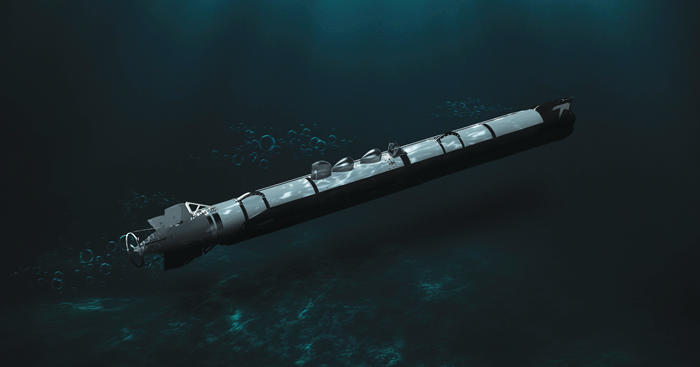 |
This article appeared in Technical, TNA May/June 2026.
Sukant Kumar, a senior naval architect at Lloyd’s Register (LR), has won the RINA Contribution to STEM Award for 2026, in recognition of his outstanding commitment to engaging young people with maritime and engineering careers.
Kumar’s work at Lloyd’s Register centres on ship safety, regulations and emergency response. He contributes to global regulatory development through the IMO and IACS, supporting technical papers, regulatory amendments, interpretations and implementing them within LR. He also advises shipowners and operators on compliance and technical decision-making, and supports the LR Ship Emergency Response Service, applying stability and longitudinal strength analysis to assist vessels during time-critical incidents. Together, this work helps ensure that ships operating worldwide remain safe, compliant and resilient.
That professional credibility is central to what makes his school visits effective. When Kumar stands in front of a class and describes what a naval architect actually does, he is speaking from direct experience of a technical, consequential and modern profession.
Kumar has been a volunteer with Inspiring the Future since 2022. The platform connects professionals with schools and colleges across the UK, and asks participants to give just one hour a year. He has given more than 23, attending 10 school engagements and reaching more than 1,700 young people. Inspiring the Future has recognised him as one of its most outstanding volunteers.
The scale of impact is reflected in the feedback from a London International Shipping Week event attended by 120 Year 10 students. Following the session, 94% said they had encountered a maritime job they had not previously heard of, 96% reported new knowledge of maritime careers, and 92% felt more confident that those careers were accessible regardless of gender or background.
 |
|---|
His motivation is personal. Growing up, Kumar lacked exposure to engineering role models, and that absence shaped his awareness of what was possible. He is guided by the principle that you cannot be what you do not see, and his outreach is a direct response to that experience. He says: “Talent is everywhere, but awareness is not, and even small moments of exposure can change the direction of a life.”
That commitment to honest engagement is evident in a session he delivered to primary school children on the Titanic. When a pupil asked why only women and children had been saved first, Kumar responded with care, explaining that in maritime, the priority is to protect those who cannot protect themselves. It is the kind of moment that illustrates why his engagements leave a mark.
Beyond school visits, Kumar serves as a governor at a local primary school and has supported a youth leadership programme affiliated with a Toastmasters club, helping college students develop the confidence and public-speaking skills that underpin careers in engineering and beyond.
The RINA nominations committee described the impact of his outreach as immense and impressive, noting that Kumar embodies the spirit of the award and surpasses its requirements.
“I plan to continue visiting schools,” he says, “and to spend more time mentoring young naval architects as they begin their careers.”
The RINA Awards
Sukant Kumar is the first in a series of award winners that The Naval Architect will be profiling this year. The RINA Awards recognise outstanding contributions and achievements across the naval architecture and maritime engineering community, spanning technical excellence, education, research and professional development.
This article appeared in Members, TNA May/June 2026.
The Joint branch of RINA and IMarEST in Singapore delivers a rich programme of technical events at one of the world’s great maritime hubs.
Decarbonisation was the dominant theme in 2025. In March, a webinar with the Society of Naval Architects and Marine Engineers Singapore (SNAMES) and the Singapore Shipping Association examined biofuels as a near-term emissions reduction pathway.
Rajesh Madhavan of Alfa Laval drew on 16 years of maritime sector experience to address practical decarbonisation strategies, while colleague Franciska Kjellström discussed fuel treatment solutions and contributions to the ISO 8217:2024 marine fuel specification.
The fuel transition conversation continued with a technical evening on ammonia in May, sponsored by Lloyd’s Register and WinGD. Liam Blackmore of Lloyd’s Register and Lars Hansen of WinGD presented on the latest developments in ammonia-powered engine systems, addressing the fuel’s potential to deliver safe, sustainable decarbonisation and the technical and infrastructural challenges that remain.
The regulatory dimension sharpened in September with a webinar by Saunak Rai, head of FueLNG, examining LNG bunkering against the backdrop of IMO MEPC 83’s newly approved mid-term greenhouse gas (GHG) measures. The package, comprising a binding fuel-GHG standard and a global pricing mechanism, both due in 2027, tightens well-to-wake requirements and raises the compliance bar for all fuels.
 |
|---|
| Dr Sridev Mookerjea FIMarEST, FRINA is chair and group managing director of Blossom Group. Contact him at chair.sing@branches.imarest.org or sm@blossomgroup.com.sg |
Professional development has also been an important strand of the branch’s work. At a members’ night at NUSS Suntec City Guild House, Professor John Chudley, rector of MLA College and chair of the Engineering Council UK, outlined the full range of academic and experiential routes to Engineering Council registration.
He highlighted how vocational education, flexible CPD frameworks, and step-on/step-off career progression can support marine professionals at every stage. He also addressed the Engineering Council’s ongoing Registration Review, including future professional titles and the long-term integrity of the engineering register.
Youth engagement has been a priority too. The branch attended the Singapore Maritime Foundation’s Maritime Youth Forum, presented to naval architecture and marine engineering students at the Singapore Institute of Technology’s induction briefing, and sponsored the Nanyang Technological University Maritime Business Society’s 21st Anniversary Dinner. Branch chair Dr Mookerjea gave the welcome address.
The youth engagement programme culminated in December with the signing of a Memorandum of Understanding with YoungShip Singapore, formalising a partnership designed to increase the flow of young professionals into the maritime sector.
In February, the branch hosted a SNAMES Tech Talk, with LNG Alliance’s Dr Wie Min Gho covering the fatigue and fracture of marine structures.
A branch webinar in May 2026 featured Christopher Koek, from the Jason Marine Group, whose presentation focused on the Hatran SINS-FOG-C001, a new-generation IMO-certified fibre-optic gyroscope designed to be robust, maintenance-free and easy to install.
With the Joint Branch’s 25th anniversary in November 2026, and future technical sessions already planned on topics including carbon capture, digitalisation and cybersecurity, the committee is well placed to build on a landmark year.
Vice-chair: Michael Watt FIMarEST
Honorary secretary: Rasim Asgarov FRINA, FIMarEST
Assistant honorary secretary: Dr Mimi Gao MRINA
Treasurer: Roxanne Lek MIMarEST
Assistant treasurer: Chong Wan Seong
Social chair: Ivan Stoytchev MRINA
Business development chair: Srinivas Indana FIMarEST
Technical chair: Nischey Chopra FIMarEST
Social media chair: Dr Evan Cheok AMIMarEST
Youth chairs: Sarah Long SIMarEST, and Muhammad Marzooq SIMarEST
Co-opted member: Mizan Al Kabir
STATS
The joint branch of RINA and IMarEST has more than 1,700 active members and is one of the most significant professional maritime organisations in the region.
This article appeared in Members, TNA May/June 2026.
The RINA Cumbria Branch delivered a varied programme of talks and events in 2025 and into 2026, held mainly at Barrow Town Hall, Barrow-in-Furness, with one event at the Coniston Institute. Speakers covered a wide range of topics, from history to the future of decarbonisation, to the Titanic, to the engineering behind world speed records.
In September 2025, James Royston, head of projects at the Isle of Man Steam Packet Company, gave a talk on the specification and acquisition of Manxman, its latest ferry serving the Heysham to Douglas route with some quite stringent infrastructure and environmental constraints and Return to Port requirements.
Martin Thody, a chartered ergonomics and human factors specialist, fellow and president of the Chartered Institute of Ergonomics and Human Factors, and senior engineering consultant for Human Systems Integration at BAE Systems Submarines, gave a talk on 1 October 2025 titled ‘The Evolution of Human Factors in the Maritime Industry: From the Age of Sail to the Modern Day’, exploring people-centred design and operational performance across the maritime sector.
The following month, the branch presented an evening of talks centred on Coniston Records Week, held at the Coniston Institute on 4 November 2025. Organisers and participants described the engineering behind their vessels and their pursuit of world speed records on Coniston Water, with attendees encouraged to watch the racing during the day ahead of the evening session.
The new year opened on 7 January 2026 with Steve Bee, group commercial director of Veritas Petroleum Services, and a chemist by background. His insightful talk addressed maritime decarbonisation, outlining the company’s testing and advisory work across a fleet of almost 13,000 vessels, with a focus on protecting vessels, crew and the environment while improving operational efficiency.
On 28 January 2026, John Hudson CBE, FREng, FRINA, past managing director of Barrow shipyard, delivered ‘Surviving Perestroika: The Impact of the End of the Cold War on Barrow’s Shipyard’, charting the yard’s response to the post-Cold War defence landscape, its industrial rationalisation, and its eventual refocusing on the UK submarine programme.
In ‘Barrow and the Great Liners’ on 10 March 2026, Dr Stephen Payne OBE, FRINA examined the shipyard’s historic role in the construction of great ocean liners. Payne had previously delivered a talk to the branch on his work as the chief designer of Queen Mary 2.
Forthcoming events include talks by Dr Stephen Payne on Titanic Revisited, Alan Phizacklea on 50 years at Barrow shipyard and Jerry Turner on the stability of large sailing yachts. The branch also has a networking evening planned at Windermere Motor Boat Racing Club and a visit to Barrow Lifeboat Station.
Chair: David Hooper MRINA
Vice-chair: Adam Cowley MRINA
Secretary: Crayston Renner MRINA
Treasurer: Simon Newby AMRINA
Honorary member: Jason Dobb MRINA
Members: Nick Heather FRINA; Aaron Willis AMRINA; and Sheldon Keizner AMRINA
The RINA Cumbria Branch works closely with the Barrow and District Association of Engineers (BDAE) and Professional Engineers South Cumbria (PESC) to contribute about one talk per month to a series of weekly talks from September to April. Aside from talks and events, the branch also provides Professional Review Interview interviewers for RINA members looking to progress their professional status within the Institution.
 |
|---|
This article appeared in Members, TNA May/June 2026.
Nominate a colleague, a mentee or a friend for one of our prestiguous Naval Architecture Awards. Chosen by our Committees, the winners will be announced at our Annual Dinner attended by more than 300 maritime professionals, industry leaders and academics. Taking place on 28th May, this will be an evening of celebration at the historic De Vere Grand Connaught Rooms in London.
Nominations deadline: on 31st December. Award categories include Innovation, Safety and Diversity.