CONTINUING PROFESSIONAL DEVELOPMENT

The Institution requires that all Fellows, Members, Associate-Members and Associates who are in or seeking active work are required to take all reasonable steps to maintain and develop their professional competence and knowledge after election as Corporate Members. 

Summary of RINA Policy on CPD

  • The requirement is obligatory, i.e. it places the responsibility for compliance on the individual.
  • The Institution sets guidelines recommending what should be done. It does not set specific penalties for non-compliance, although failure to carry out CPD could be interpreted as professional misconduct for which the penalties prescribed by the Institution in the By-Laws could ultimately be imposed. CPD achievement is measured in input terms, specifically in hours.
  • Recommendations are made for the amount that a specific type of CPD activity may count towards the overall requirement.
  • CPD achievement should be recorded and authenticated
  • The Institution reserves the right to monitor a member's CPD achievement, through inspection of the CPD Record.

Introduction 

During the early years following graduation, Graduate Members' focus will be on meeting the Institution's requirements for Corporate Membership. However, as their career develops, they will need to identify the professional development needed to keep themselves employable and enhance their career prospects. Such professional development is also necessary if they are to continue to benefit from the standing and recognition they have already achieved as a Corporate Member. The Institution obliges all members to carry out CPD in order to maintain their professional competence.

If a member's career is to be fulfilling and successful, it is vital that they maintain and build upon the professional competencies they have developed. This remains the case whether it is intended to seek promotion, greater responsibility, a change in career direction, or simply to maintain employability.

Increasing demands for accountability, tighter regulations, wider legislation, new technologies and, of course, business needs affect the employability of all professionals. Whilst members' employers may help with professional development through mechanisms such as an annual appraisal system, members' needs may go beyond their employer's business objectives and so it is necessary that members are able to be able to plan and direct their own development, and to do it methodically.

Identifying Continuing Professional Development Objectives

The Institution sets out the professional development objectives which all members are required to achieve before becoming Corporate Members of the Institution. These are aimed at providing a sound foundation for a career in naval architecture/marine technology. However, beyond this point members' professional development objectives will be much more individual in nature and will be determined by both their employers business needs, and their own ambitions and career goals.

Members' employers may operate an annual appraisal scheme that will encompass employee development. As a result, members may well be set development targets by their employer. However, the objectives identified for members by their employer are likely to be focused on the employers' business needs. Members may not give the member the breadth needed to maintain all of their skills or the opportunity to develop the new skills that they will need should they wish to take their career in new directions. It is therefore likely that members will have to identify further development objectives for themselves.

The Institution's Requirements

If members are seeking or are in employment, membership obliges them to take all reasonable steps to maintain and develop their professional competence and knowledge, and to that end members are expected to achieve a minimum of 35 hours of CPD activity per annum. However, it is anticipated that in practice most members will significantly exceed that amount.

Professional development can be achieved through a range of activities, both in and outside of the workplace. However, for any activity to be considered as contributing towards development in relation to meeting the Institution's requirements for CPD, it must be related to the member's own career as a professional naval architect.

For many members, CPD activities will include both technical and non-technical topics. Non- technical topics might include management, accounting, law, economics and foreign languages if they are necessary to enable you to do your job. However, functions that are routinely performed as a part of a member's existing employment will not normally qualify as CPD activities. For instance, university lecturers cannot consider the lectures they present as part of their normal duties to be activities that will count towards their CPD.

The number of hours spent on each of the various activities will vary, depending on a members' circumstances and requirements. Only activities which relate to their requirements may be counted as part of their total CPD activity. It therefore follows, for example, that not all the time spent at a conference or training course may count. It is also important to ensure that wherever possible the activities which contribute towards CPD reflect a balanced input and come from a range of different sources.

Types of CPD Activity

The types of activity which contribute towards meeting the Institution's requirements, and the extent to which they should normally contribute towards a member's Continuing Professional Development, are described below.

Formal Education and Training
This includes formal face-to-face education, distance learning, short courses and formal on-the-job training. Most activities of this type will involve assessment.

For face-to-face education, the actual hours of lectures attended and/or research a member undertakes will count towards the CPD requirement. For distance learning, the equivalent number of hours of face-to-face education that would have been involved should be estimated.

It is recommended that formal education and training contributes a maximum of 50% towards a member's total annual CPD activity, except where a member is undertaking a higher degree or post-graduate course.

Informal Learning
Informal learning activities include the reading of books, journals, manuals, etc and familiarisation with the operation of technological aids, computer programmes, equipment, etc. Informal learning activities include on-the-job learning that takes place because of workplace requirements, and private study where a member can exercise complete discretion. On-the-job learning requirements usually arise where a new project or job is undertaken and there is a need to extend the competency base. Private study is an opportunity for a member to direct the way in which their professional career develops.

It is recommended that informal learning activities contribute a maximum of 75% towards a member's total annual CPD activity.

Conferences and Meetings
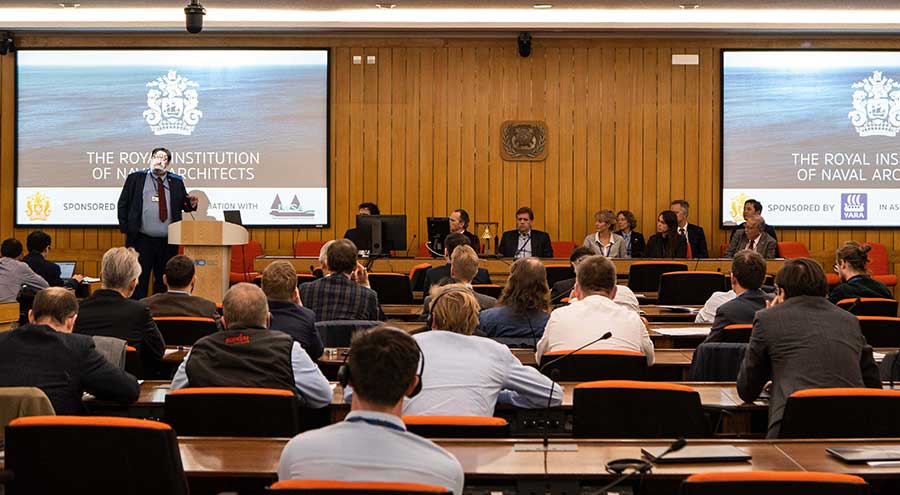
These include conference, workshops, symposia and technical meetings, either at Headquarters or the Branches, at which papers are presented. All such events run by the Institution meet the CPD requirements, as do those run by other organisations provided that their content relates to and furthers the development of the your professional career. The hours claimed should be those attended at the presentations and discussions relevant to a member's professional career.

It is recommended that conferences and meetings contribute a maximum of 50% towards a member's total annual CPD activity.

Presentations and Papers
The preparation and presentation of material for courses, conferences, workshops, seminars and symposia can be claimed if these activities contribute towards the advancement of the engineering related competencies of others. The time spent in the preparation of papers which are published in journals and transactions or material designed to promote the awareness of engineering and its benefits to society can also be claimed.

It is recommended that presentations and papers contribute a maximum of 50% towards a member's total annual CPD activity.

Institution Activities
Institution activities may count towards CPD where they contribute to the continuing professional development of others. This includes membership of Institution standing committees and groups, Professional Review interviews, acting as a mentor, course accreditation, refereeing of technical papers before publication, co-ordinating conferences and the technical aspects of work undertaken on or for other national or institution committees and bodies.

It is recommended that Institution activities contribute a maximum of 25% towards a member's annual CPD activity.

Industry Involvement (per academia)
Members employed in an academic position are expected to foster links with industry to the benefit of engineering education, research and practice. This requirement also ensures that such members are exposed to developments in engineering and management practice outside of academia.

Industry involvement may be achieved through a range of activities, including consultancy services and the supervision of industry sponsored research and design projects. The preparation and presentation of training courses specifically designed to further the continuing professional development of individuals in industry may also be claimed.

Professional engineers in academic positions should aim to achieve at least 25% of their annual CPD requirement through industry involvement.

CPD Plan and Record

The Institution requires members to plan and record their CPD. The Institution may request to see a member's CPD Plan and Record at any time. A member will also be required to provide evidence of CPD activity when applying for transfer to Fellow.

CPD Plan
A personal CPD Plan will provide a structured framework within which a member's career objectives can be identified, progress achieved and personal development measured. It should cover personal and professional development and be updated regularly as a member's career develops. The CPD Plan is therefore a personal and unique document that should lead the member through the professional development necessary to enable them to face change with confidence and to develop their career.

CPD Record
A member should maintain a record of CPD activities undertaken and the hours claimed. Evidence of CPD activity should also be included where appropriate, authenticated by either by the mentor or employer, or by certificates issued on satisfactory completion of conferences or training courses.

There is no prescribed format for the CPD Record, which should be comprehensive and include the date and type of the activity, a description of the activity and the hours claimed for it. 

Mentor

The Institution recommends that a member seeks agreement of a suitably experienced and qualified engineer, preferably a member of the Institution to act as their mentor. The role of the mentor, who may be a line manager or supervising engineer, is to provide the member with specific guidance on the formation and development of their CPD Plan, and to advise them on achieving your CPD. A member's mentor may also authenticate their CPD. As a member become more experienced, the relationship with their mentor should become less formal. The function may then be carried out by a member's immediate superior or a suitably qualified colleague who can assist them in carrying out a periodic review of their career. [Guidance for mentors (PDF)]   [Guidance for Graduate Members (PDF)]

 
Home
Institution
Membership
Publications
Events
Technical Forum
Maritime Directories
Careers
Careers in Naval Architecture
Professional Development
About Professional Development
Professional Development Forum
Courses
Jobs
Work Experience
Members Only
IMO

Marine Web Directory

transparent

Bakker
Wolfson Unit
GRC
Hamworthy
IHC
BMT Fleet Technology
BCTQ
PBCF
VUYK

Spurs Line & Net Cutters

Sailor
Hercus
KVH
Liferaft Systems Australia
NERA Telecommunications

544
RN Type 45

See also ...

Blue Square About Professional Development
Blue Square

Initial Professional Development

Blue Square

Professional  Review

Blue Square Courses
Blue Square Educational & Professional Development Forum

 
BMT Group
Visit the DNV Software Website
CIBA Design
Kerstholt
Enraf
Giro
Jaure
Solar Solve
Veth Motoren BV
Iguana
Litton Marine Systems
MJP Waterjets
C Tramblay
Vosper International

Maritime Web Directory

transparent

transparent

Hale Hamilton

 
    Copyright © RINA 2008 | Site Map

RINA, 10 Upper Belgrave Street, London, SW1X 8BQ, UK    E-mail:

 
www.intergage.co.uk